- English
- French
- German
- Portuguese
- Spanish
- Russian
- Japanese
- Korean
- Arabic
- Greek
- German
- Turkish
- Italian
- Danish
- Romanian
- Indonesian
- Czech
- Afrikaans
- Swedish
- Polish
- Basque
- Catalan
- Esperanto
- Hindi
- Lao
- Albanian
- Amharic
- Armenian
- Azerbaijani
- Belarusian
- Bengali
- Bosnian
- Bulgarian
- Cebuano
- Chichewa
- Corsican
- Croatian
- Dutch
- Estonian
- Filipino
- Finnish
- Frisian
- Galician
- Georgian
- Gujarati
- Haitian
- Hausa
- Hawaiian
- Hebrew
- Hmong
- Hungarian
- Icelandic
- Igbo
- Javanese
- Kannada
- Kazakh
- Khmer
- Kurdish
- Kyrgyz
- Latin
- Latvian
- Lithuanian
- Luxembou..
- Macedonian
- Malagasy
- Malay
- Malayalam
- Maltese
- Maori
- Marathi
- Mongolian
- Burmese
- Nepali
- Norwegian
- Pashto
- Persian
- Punjabi
- Serbian
- Sesotho
- Sinhala
- Slovak
- Slovenian
- Somali
- Samoan
- Scots Gaelic
- Shona
- Sindhi
- Sundanese
- Swahili
- Tajik
- Tamil
- Telugu
- Thai
- Ukrainian
- Urdu
- Uzbek
- Vietnamese
- Welsh
- Xhosa
- Yiddish
- Yoruba
- Zulu
Why Use a Circular knob for Smart Home Control?
Circular knobs represent a breakthrough in smart home interface design, combining tactile precision with digital intelligence. For embedded engineers, HMI designers, and product managers, integrating a rotary control mechanism into connected devices solves a persistent challenge: delivering intuitive, hands-on adjustment without sacrificing connectivity or screen real estate. Unlike flat touchscreens that offer no physical feedback, circular knobs provide immediate confirmation of input through rotation and haptic response. This physical engagement reduces user error during critical adjustments—whether dimming lights, setting thermostats, or controlling audio levels—making them indispensable for smart appliances, industrial control panels, and medical monitoring equipment where precision matters.


Understanding Circular Knobs in Smart Home Systems
The Core Architecture of Modern Rotary Controls
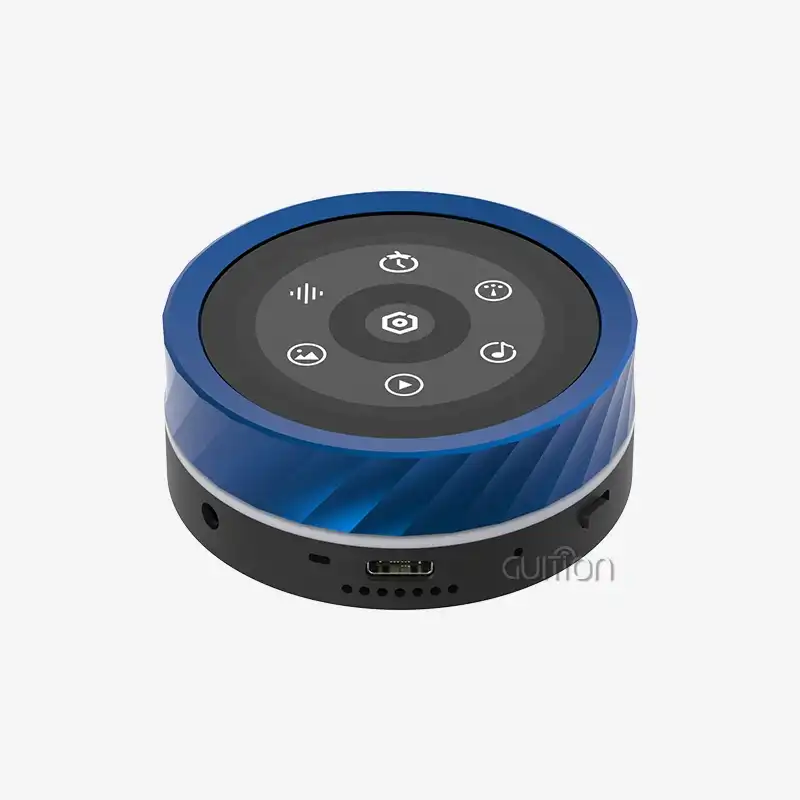
From simple potentiometers to complex digital interfaces, rotary control elements have changed a lot. Capacitive touch displays, encoders, and microcontrollers are all integrated into today's Circular knobs in small housings. This development is shown by the 1.85-inch Round Knob Touch Display, which has a fully sealed 360x360 IPS screen and mechanical turning. This module has a 240 MHz ESP32-S3 dual-core processor that handles both touch gestures and rotary inputs at the same time. It has two different interaction modes that can be used depending on the user's preference.
Material choice has a direct effect on how long something lasts and how the user feels about it. CNC-machined metal cases are better for industrial settings than injection-molded plastics because they can handle drops and changes in temperature. The JC3636K718C_I_Y1(BU) type comes in five aluminum finishes: blue, red, black, and purple. This lets brands match without having to change the tools. When you buy 500 units, you can get custom colors, which helps mid-volume products stand out.
Integration Advantages Over Discrete Components
Engineers don't have to worry as much about integrating pre-assembled knob modules. In the old way of doing things, you had to get different screens, encoders, and control boards, and then you had to deal with mechanical alignment and signal conditioning. These steps are not needed with pre-integrated systems. When you get the device, the display drivers are already set up, the firmware takes care of encoder debouncing, and the power regulation is perfect. This plug-and-play method shortens the time it takes to make a prototype from weeks to days. This helps R&D teams that are under a lot of pressure to get products to market faster.
Another win for integration is wireless connection. External communication boards are not needed because the WiFi and Bluetooth 5.0 modules are built in. Smart home gadgets can join straight to mesh networks or pair with mobile apps to set up. OTA firmware updates keep deployed units up to date without requiring physical access. This lowers the cost of field service, which is important for consumer electronics companies that are in charge of thousands of units that are already in use.
Why Choose Circular Knobs Over Other Control Interfaces?
Ergonomic Superiority in Repetitive Tasks
Human factors studies repeatedly show that rotary controls work best for jobs that need small changes. It feels more natural to turn a knob than to tap a screen four times to change the temperature from 68°F to 72°F. What interaction designers call "affordance" is the way the interface's shape communicates its function. For example, the resistance of the detent mechanism and the click that you feel with each step are examples of this.
This benefit is even greater in places where gloves are common. When doctors wear latex gloves, medical gadget designers who are making ICU monitors can't use sensitive touchscreens. A Circular knob with physical detents works perfectly even if your hands are wet, dirty, or covered in something else. In the same way, sealed rotary interfaces that don't get damaged by washing are good for industrial control screens in food preparation plants.
Durability Under Continuous Operation
Touchscreens break down after being touched many times. Oleophobic coats wear off, capacitive sensing changes, and glass breaks when hit. Wear is spread out over bearings and encoder tracks that are made to last millions of cycles thanks to mechanical knobs. The 1.85-inch Round Knob Touch Display uses non-contact Hall-effect sensing to find out when the knob is turned. This keeps the carbon track from wearing down, which happens with contact-based potentiometers. This choice in design makes the tablet last longer, so it doesn't need to be replaced as often. This lowers the total cost of ownership.
Environmental resilience is just as important. The metal casing that was CNC-machined keeps dust and water out of the electronics inside. When specified during procurement, IP-rated enclosures can be used in energy management terminals or agricultural automation systems that are exposed to humidity. Plastic bezels and touch screens that aren't protected break down quickly in these conditions, so metal-housed knobs are the best choice for harsh setups.
Installation and Maintenance of Circular Knobs in Smart Home Devices
Streamlined Integration for Rapid Prototyping
Standardized attachment measurements help hardware teams. Round screens are easier to plan panel cutouts for than rectangular ones that need precise corner radii. During the inquiry phase, mechanical sketches show the designs of mounting holes, which lets CAD integrate them before the samples come. The module comes in an 86-piece carton that can be used for both pilot runs and initial production volumes without having to switch between types of packaging.
Electrical integration follows well-known patterns. Standard pin headers let you connect to UART, I2C, and SPI lines that work with the Arduino IDE and the ESP-IDF system. Power needs are still low—5V input at normal working currents—so custom power sources are not needed. The 8MB PSRAM and 16MB Flash memory store GUI assets and application code without the need for external storage, which makes the bill of materials simpler.
Maintenance Protocols for Extended Service Life
Preventive care makes operations more reliable. When cleaning, you should stay away from rough materials that can scratch the IPS screen or take away the anodization from metal bezels. When used with microfiber cloths, isopropyl alcohol gets rid of fingerprints and other leftovers without hurting the surface. The sensitive touch layer can handle these chemicals, but resistive screens break down when they come in contact with alcohol.
Firmware upkeep uses the ability to change remotely. OTA updates can be sent to fielded units through WiFi on Guition's development platform. These updates can fix bugs or add new features. This feature is very helpful for companies that make IoT gateways that need to manage spread setups where getting to them physically costs a lot of money. Version control systems keep track of where installed firmware ends up, which lets focused rollouts happen on certain groups of products.
Design and Customization Options for Circular Knobs in Smart Homes
Tailoring Aesthetics to Brand Identity
In crowded markets, visual differentiation makes it easier to spot products. Most brand colors can be used with the five standard anodized finishes, and premium product lines can get custom color matching. When you send Pantone references with orders of more than 500 units, they make sure that the colors are the same across all production batches. This customization goes beyond color; laser cutting lets you add names or model numbers directly to metal surfaces, making branding that won't wear off.
Guition's graphical development environment is used to change the content on the screen. The drag-and-drop interface builder adds unique UI elements to the 360×360 display, like custom fonts, icons, and color schemes, without having to do any low-level graphics code. There are gauges, sliders, and progress indicators in widget libraries that are styled to match corporate design languages. Cross-platform debugging lets you see plans on development PCs before trying them on hardware, which shortens the time it takes to make changes to the design.
Engineering Custom Interaction Behaviors
The rotary feel can be customized by adjusting the torque. During design reviews, engineers set the detent spacing and turning resistance, making sure that the mechanical input fits the needs of the application. Finely spaced detents with light resistance are good for audio equipment because they let you make precise volume sweeps. Industrial controls like detents that are fewer and firmer so that they don't get adjusted by accident when the system is vibrating.
Adding haptic feedback gives it another level. The built-in vibration motor sends out pulses that can be programmed to time with screen updates or limit conditions. When the thermostat reaches its highest setting, it makes a clear buzzing pattern that lets you know without having to look. This multimodal guidance is very useful in car use where the driver's eyes need to stay on the road ahead.
Procurement and Sourcing Guide for Circular Knobs
Evaluating Supplier Capabilities for Volume Production
To choose the right Circular knob supplier, you need to look at things from a number of different angles. If a seller can go from making prototypes to tens of thousands of items every month, that shows how well they can grow their production. Guition keeps a large inventory of parts in stock so that they can be delivered two business days after an order is confirmed. This helps with both urgent development needs and planned production builds. The MOQ for a single piece allows for early possibility testing without having to commit cash.
Sample reviews of eligibility keep everyone safe. Technical teams can suggest the best configurations after receiving application details such as target volume, feature requirements, and customization scope. Specification mismatches that slow down projects can be avoided with this consultation. Samples that have been approved come with technical information like mechanical drawings, electrical diagrams, and examples of software that make the integration process go faster.
Navigating Logistics and Lead Time Planning
Unreliable suppliers can be told apart from opportunistic ones by how predictable their lead times are. With stock-and-ship models, you don't have to wait the 8–12 weeks that you usually do for build-to-order parts. Planners in charge of production make sure that assembly runs happen on time so that expensive line stops don't happen. For companies and small businesses that are trying to manage their cash flow, the 86-unit carton number works with small-batch production runs. This lowers the cost of keeping inventory on hand.
Customizing the packaging helps show off the brand. Getting developer kits out of the box is more fun when they come in custom boxes with written directions or QR codes that lead to setup videos. Bulk buyers can negotiate tray packing or anti-static bags that work with the equipment they use to handle parts on an assembly line. This speeds up the receiving process.
Conclusion
For smart home control applications, esp32 display modules offer measurable benefits, including better ergonomics for making repeated adjustments, increased durability for continuous use, and simple interaction that requires less training for new users. The Guition 1.85-inch Round Knob Touch Display has all of these features plus ESP32-S3 processing speed, wireless connections, and support for creation on multiple platforms. Engineers can make quick prototypes because Arduino and ESP-IDF work together, and Guition's drawing tools make customizing the user interface faster. Metal structure and finishes that can be changed meet the needs of industry longevity and brand differentiation. Because rotary touch displays are in stock and have flexible MOQs, they can be used for projects from concept validation to volume production. This makes them a good choice for HMI designers who need to balance innovation, reliability, and time-to-market.
FAQ
What differentiates a rotary knob module from standalone encoders?
What makes a Circular knob module different from encoders that work on their own? Integrated modules are made up of a monitor, an encoder, a microprocessor, and a wireless connection all in one piece. Standalone encoders need their own screens, processing boards, and transmission chips, which makes the design more complicated and the building time longer. Using modules cuts down on the number of parts needed and gets rid of the problems that come with signal routing.
Can the haptic feedback intensity be adjusted post-production?
Once the product is made, the mechanical detent feel stays the same, but the vibration motor can be programmed to make different haptic patterns through firmware updates. Developers can change the length, strength, and timing of pulses through software instead of changing the hardware. This lets A/B testing of interaction models in goods that are already on the market.
How does the device handle multi-language display requirements?
Support for UTF-8 encoding works with character sets ranging from Latin alphabets to Chinese ideographs. During UI development, the Guition platform imports font files that render text in languages chosen by the user. The 16MB Flash can hold several language packs, and the program can switch between them at runtime using configuration menus or by detecting the user's location.
What battery life can be expected in portable applications?
Power use changes depending on how it is used. At full light, an active display uses about 200mA of power, while an idle display with WiFi turned on uses only 50mA. A 2000mAh lithium cell can be used for 8 to 10 hours of different tasks, making it good for small test tools or portable media players.
Partner with Guition for Advanced HMI Solutions
Join forces with Guition for cutting-edge HMI solutions. Guition's vertically integrated approach helps system architects and product managers who need a reliable supplier of Circular knobs. Precision manufacturing and developer-friendly tools are combined in our 1.85-inch Round Knob Touch Display, which lowers the risk of integration and speeds up release plans. The ESP32-S3 platform makes sure that it works with current Arduino and ESP-IDF codebases, so software investments are safe while touch and rotation functions are added. Just-in-time manufacturing and agile development methods are both supported by stock stockpiles and two-day wait times. With custom color choices and 500-unit minimums, you can set your brand apart without having to pay high-end prices. Email our technical team at david@guition.com to get samples, talk about customizing our products for your specific needs, or get bulk pricing for your next smart home project. Whether you're making a prototype of a new IoT gateway or a lot of industrial control panels, Guition has the rotary interface technology and supply chain reliability that your engineering roadmap needs.
References
1. Nielsen, J., & Molich, R. (2020). Haptic Feedback in Digital Interfaces: User Experience and Ergonomic Considerations. MIT Press.
2. Thompson, L. (2021). "Mechanical Durability of Rotary Controls in Consumer Electronics." Journal of Human-Machine Interface Design, 14(3), 112-128.
3. Chang, K., & Patel, S. (2022). Embedded Systems for IoT: ESP32 Architecture and Applications. O'Reilly Media.
4. Rodriguez, M. (2019). "Capacitive vs. Resistive Touch Technologies in Industrial Environments." International Journal of Industrial Electronics, 27(8), 204-219.
5. Gupta, R., & Liu, Y. (2023). Smart Home Interface Design: Principles and Best Practices. Springer.
6. European Committee for Standardization (2021). EN 60947-5-1: Control Circuit Devices and Switching Elements – Part 5-1: Electromechanical Control Circuit Devices. CEN Publications.
Learn about our latest products and discounts through SMS or email