- English
- French
- German
- Portuguese
- Spanish
- Russian
- Japanese
- Korean
- Arabic
- Greek
- German
- Turkish
- Italian
- Danish
- Romanian
- Indonesian
- Czech
- Afrikaans
- Swedish
- Polish
- Basque
- Catalan
- Esperanto
- Hindi
- Lao
- Albanian
- Amharic
- Armenian
- Azerbaijani
- Belarusian
- Bengali
- Bosnian
- Bulgarian
- Cebuano
- Chichewa
- Corsican
- Croatian
- Dutch
- Estonian
- Filipino
- Finnish
- Frisian
- Galician
- Georgian
- Gujarati
- Haitian
- Hausa
- Hawaiian
- Hebrew
- Hmong
- Hungarian
- Icelandic
- Igbo
- Javanese
- Kannada
- Kazakh
- Khmer
- Kurdish
- Kyrgyz
- Latin
- Latvian
- Lithuanian
- Luxembou..
- Macedonian
- Malagasy
- Malay
- Malayalam
- Maltese
- Maori
- Marathi
- Mongolian
- Burmese
- Nepali
- Norwegian
- Pashto
- Persian
- Punjabi
- Serbian
- Sesotho
- Sinhala
- Slovak
- Slovenian
- Somali
- Samoan
- Scots Gaelic
- Shona
- Sindhi
- Sundanese
- Swahili
- Tajik
- Tamil
- Telugu
- Thai
- Ukrainian
- Urdu
- Uzbek
- Vietnamese
- Welsh
- Xhosa
- Yiddish
- Yoruba
- Zulu
Is an ESP32 S3 Display Worth the Price?
When evaluating whether an ESP32 S3 display justifies its cost, the answer is a definitive yes for most industrial and IoT applications. These modules combine powerful dual-core processing with integrated wireless connectivity and vibrant visual output, delivering exceptional value per dollar. The ESP32-S3's architecture eliminates the need for separate communication modules while providing sufficient processing power for sophisticated HMI applications. Compared to traditional display solutions requiring multiple components, an integrated ESP32 S3 display module reduces both bill-of-materials costs and development time, making it a financially sound choice for product developers and system integrators seeking reliable, future-proof solutions.

Understanding ESP32 S3 Display Technology and Its Market Position
What Makes ESP32 S3 Display Modules Different
The display technology based on Espressif's ESP32-S3 chip is a big step forward for embedded HMI solutions. With its dual-core Xtensa LX7 processor running at 240MHz, this small computer has desktop-level performance. Unlike older microcontroller-based displays, these units have a lot of memory built in, with up to 8MB of PSRAM and 16MB of Flash. This means that complicated images can be rendered without the need for extra support chips.
What makes these ESP32 S3 display modules stand out in the market is that they can do several difficult tasks at once. They have stable wifi connections thanks to built-in Wi-Fi and Bluetooth 5, and their user screens look great with thousands of colors. This level of integration is very important for procurement teams that are in charge of finding parts because it combines what used to be three or four different ICs into a single, unified solution.
Technical Capabilities Driving Market Adoption
The ESP32-S3's design works with different kinds of display connections, like RGB, 8080 parallel, and SPI protocols, so it can be used with a range of screen technologies. Because they are so flexible, these modules have been quickly adopted by companies that make industrial equipment for use in control panels. Medical device makers also use them to make equipment for tracking patients. The vector instructions in the processor speed up graphics operations, which makes it possible for modern users to expect smooth animations and responsive touch interactions.
This technical advantage shows up in the market placement. Older systems had trouble with refresh rates below 15 FPS. Newer ESP32 display units can handle 30 to 60 FPS on screens with a resolution of up to 800x480. This performance is in the middle of cheap character displays and high-priced industrial computers. It makes a good range for smart home interfaces, car panels, and business platforms where both cost and user experience are important.
Comparing ESP32 S3 Display Options: Features, Performance, and Compatibility
Performance Improvements Over Previous Generations
Moving from the original ESP32 series to S3 versions brought measured improvements that have a direct effect on how long it takes to make a new product. Processing speed went up by about 33%, and better memory bandwidth thanks to Octal SPI PSRAM support makes graphics rendering smoother. These aren't just abstract requirements; they have real-world effects, like preventing screen tearing during animations and letting more complex UI elements work at the same time.
Also, power control got a lot of improvements. Deep sleep current use dropped to less than 10µA in adjusted setups, which made portable batteries last longer. Adding support for USB-OTG makes it easier to program and test, which shortens the time it takes to create a product. Because of these small but steady improvements, engineers spend less time working around hardware problems and more time making application features better.
Display Technology Comparison: LCD vs OLED Implementation
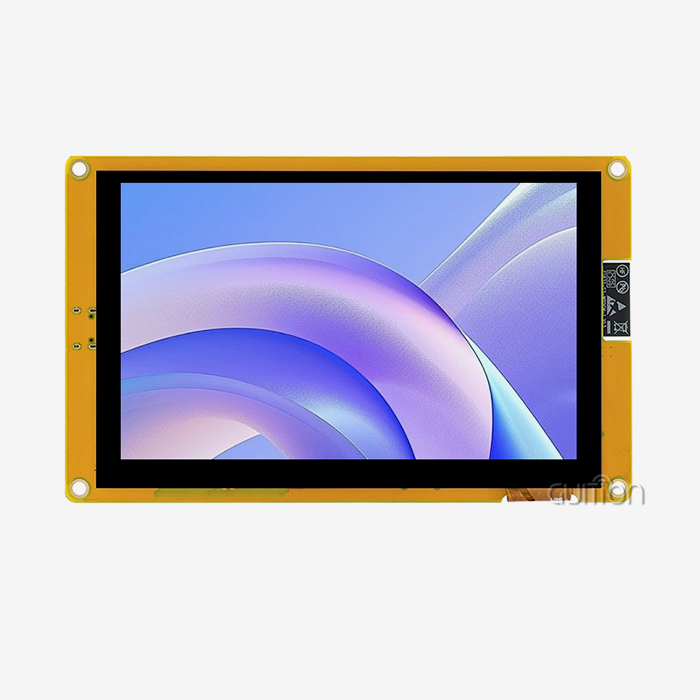
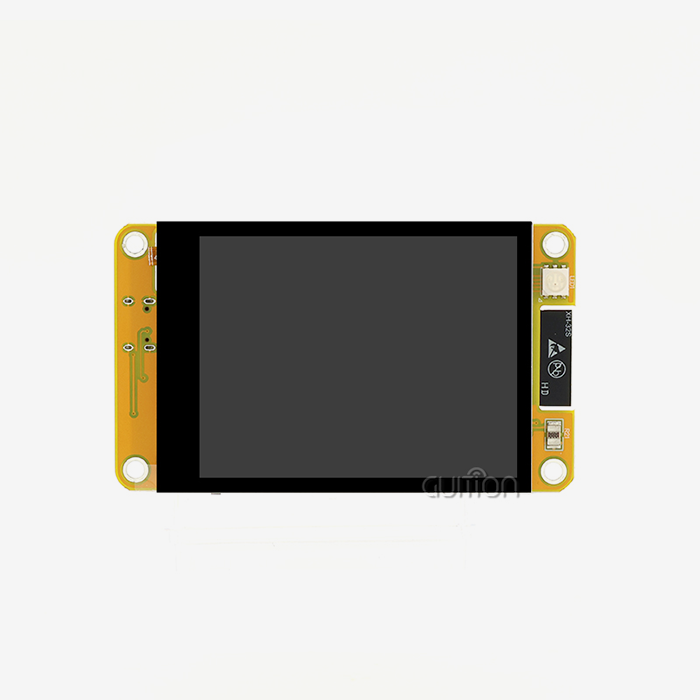
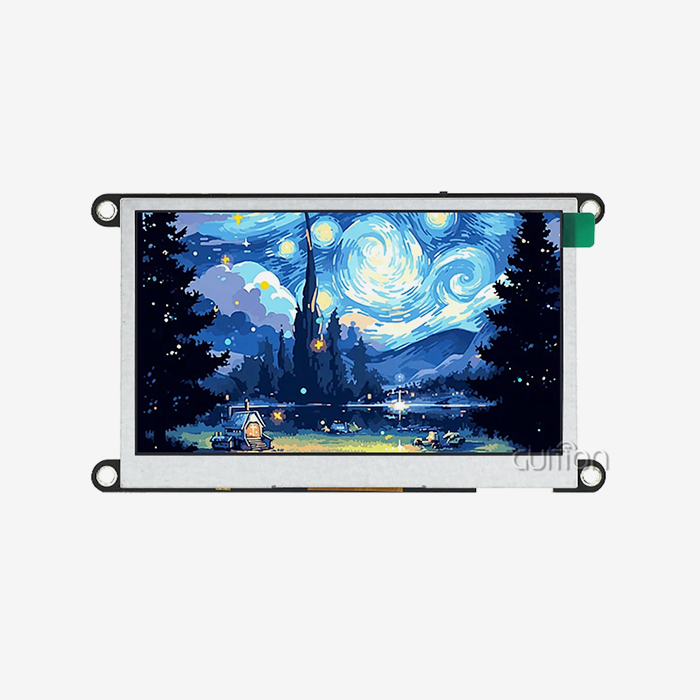
LCD modules like the ESP32 S3 display GUITION ESP32-4827S043N have clear benefits for industrial uses when looking at specific implementations. With a size of 480×272, the 4.3-inch TFT LCD screen is easy to see in a variety of lighting situations and uses less power than similar OLED screens. The 16-bit RGB color depth can handle 65,000 colors, which is enough visual depth for sensor screens, control panels, and data visualization without the burn-in issues that come with OLED technology.
LCD technology is more cost-effective for uses that need to show static information all the time, like industrial control screens that show constant sensor readouts or medical devices that show constant vital sign data. Quality modules have lighting control circuits that let you change the brightness, which balances sight with power use based on the environment. This adaptability is very important for energy management systems and farm automation tools that have to work in a range of lighting conditions.
Interface Protocol Considerations
Choosing between SPI, I2C, and parallel interfaces has a big effect on how well the system works and how much the parts cost. SPI links work fine for simple status signs that only need to be updated occasionally, but they run out of bandwidth when running bigger screens with changing content. Parallel interfaces, such as RGB or 8080, provide the throughput needed for smooth movements and complex images. This makes them necessary for apps that need to be as responsive as a smartphone.
The ESP32-4827S043N module from GUITION works with a number of different development environments, including Arduino IDE, ESP-IDF, MicroPython, and Mixly. This means that it can be used by engineers with a wide range of preferences. Cross-platform flexibility makes it easier for developers who already know how to do things to use their skills without having to learn new ones. The reserved TF card interface and expandable IO ports make designs future-proof, so new features can be added without having to redesign the hardware. ESP32 S3 display solutions remain the top choice for such integration.
Practical Guide: Setting Up and Programming ESP32 S3 Displays
Hardware Configuration Essentials
When you first start using an ESP32 S3 display module, you need to make sure that the power supply is stable and that the module is properly grounded. The ESP32-S3R8 draws different amounts of current depending on the amount of wireless activity and the complexity of the display. Peaks can reach several hundred milliamps. Voltage drops that lead to reset loops or visual flaws can be avoided with good power delivery. The GUITION module makes this easier by regulating the voltage internally, but external applications should still provide clean 5V supplies that can handle enough current.
Proper shielding is helpful for physical connections that are used in noisy industrial settings. The GPIO ports on the module link to communication buses, sensors, or actuators, and making sure the wires are routed correctly keeps wireless performance from being harmed. The TF card slot can be used for logging or storing UI images, but writers should use wear-leveling methods for programs that write to the card a lot.
Software Development Approaches
The Arduino IDE is the easiest way for coders who already know how that environment works to get started. The ESP32 board support package offers interfaces that make accessing peripherals easier, but they come at a speed cost when compared to developing natively for ESP-IDF. MicroPython is another choice that is easy to get started with. It works especially well for rapid prototyping, where speed of development is more important than efficiency of processing.
Professional product development usually uses ESP-IDF, which is Espressif's own framework. This setting shows all of the hardware's features and lets you precisely control how it acts in real time. Compared to Arduino, it's harder to learn, but the software that you make runs faster and more reliably when it's under a lot of stress. GUITION's development software works with these settings because it has graphical user interface design tools that make code that works with many frameworks. This software bridges the gap between visual design and embedded implementation.
Library Selection and Graphics Rendering
LVGL, which stands for "Light and Versatile Graphics Library," has become the standard for ESP32 display apps. Its design is based on widgets, and it supports hardware acceleration, so you can make complex interfaces without needing to know a lot about graphics code. The library handles touch input, motions, and theming through well-documented APIs that make development much faster than if you had to write your own graphics code.
Performance is affected by the rendering pipeline in a big way. By switching between the visible and updated frame buffers, double-buffering methods stop visual tearing. Even though this needs more PSRAM, the ESP32-S3R8's 8MB is more than enough for two 480x272 RGB565 buffers plus program memory. When DMA transfers are set up correctly, the CPU can be used for application logic while graphics data streams to the display. This keeps the user interface responsive even when wireless communication bursts happen.
Common Implementation Challenges
Screen initialization timing is a common source of frustration during the early stages of development. Different makers make display controls that need different reset sequences and time for setting commands. The GUITION modules come with test code that shows how to properly initialize them. This gives you a proven place to start, so you don't have to guess. When developers make their own firmware, they can use this working code as a guide, which makes debugging much faster.
Touch calibration is another problem that many people have, especially with resistive touchscreens. The ESP32-4827S043N configuration doesn't have touch capability, but projects that add external touch controllers need to make calibration routines that map raw ADC values to screen coordinates. Putting calibration data in non-volatile storage keeps it from having to be recalibrated every time the power goes out, which makes the user experience better.
Cost vs Value Analysis: Is the ESP32 S3 Display Worth the Price?
Initial Procurement Costs
The prices of ESP32-based display modules on the market vary a lot depending on the size of the screen, its resolution, and the features that are built in. A normal 4.3-inch module with similar specs to the GUITION ESP32-4827S043N costs around the middle range because it has a dual-core processor, 16MB of Flash memory, 8MB of PSRAM, and wireless connection. When compared to making the same functions from separate parts, this saves a lot of time and money.
To put together a similar system from separate parts, you would need an MCU that can work with wireless, external memory chips, a display controller IC, power management, and passive components that help the system work. The prices of the parts would probably be higher than the prices of the combined modules, and that's before you add in the costs of making the PCB, putting it together, and checking it. When you buy pre-integrated modules in bulk, you can get extra savings that make the cost benefit even bigger. This is especially helpful for production runs of hundreds or thousands of units. ESP32 S3 display procurement remains a highly efficient choice.
Development Cost Impact
Pressures to get a product to market quickly make development efficiency just as important to the bottom line as component costs. Because the GUITION module works with several different development frameworks, such as Arduino IDE, ESP-IDF, MicroPython, and Mixly, engineering teams don't have to spend weeks getting used to new toolchains. Because of this compatibility, less money will be spent on salaries during the research process.
This cost study should pay extra attention to the GUITION software set. With drag-and-drop controls, WYSIWYG editing, and one-click code generation, this proprietary interface development tool makes it easier to make UIs. Things like button layouts, color schemes, and integrating graphics that would take days of hand-coding can be done in hours of visual design work. The UI code that was made can be run on regular ESP32 screens without the need for licensed runtime components. This means that there are no ongoing software costs, which are a problem with some competing systems.
Total Cost of Ownership Considerations
Long-term ownership costs are affected by reliability in a direct way through warranty claims, field failures, and customer satisfaction. Industrial-grade modules made to Guition's high standards work reliably across a wide range of temperatures and don't get messed up by electromagnetic interference that is common in factories. This longevity stops the costs that come with early failures, like product returns, replacement units, and damage to the brand's image.
Energy efficiency affects both the cost of running battery-powered gadgets and the damage they do to the world when they are always on. The ESP32-S3 has advanced power management modes that allow it to aggressively save power when it's not in use while still allowing it to wake up quickly. When an application is well-optimized, it can run for weeks on a single set of cells or use almost no wall power when it's always connected. Over the life of a product, these efficiency gains add up, especially when a lot of IoT sensors or building automation controllers are used.
ROI Evidence from Real Implementations
Manufacturers of industrial control panels that use esp32 display module say that the time it takes to make an HMI is 40–60% shorter than with older solutions that needed custom RTOS implementations and manual graphics coding. Medical device makers say that the wireless connection makes it possible to log data and do diagnostics from afar, which are useful features that set their goods apart in a crowded market. Smart home system integrators like the unified platform because it works with a range of devices, from small status displays to larger touchscreen controllers. This makes it easier to keep track of inventory and train technicians.
The measurable benefits go beyond the initial development. One company that automates farming cut field service costs by 75% after using the ESP32's wireless connectivity to allow over-the-air firmware updates. As bug fixes and feature improvements were made online instead of needing technicians to visit installations in different parts of the world, equipment downtime went down as well. These practical gains produce an ROI that is much greater than the differences in the original costs of buying the different display choices.
Making the Right Procurement Decision for Your ESP32 S3 Display Needs
Matching Technical Specifications to Application Requirements
Before choosing the right ESP32 Display Module display panel, you should be honest about what the project needs. Resolution requirements are very different depending on the application. For example, a simple thermostat interface can work with 320x240 pixels, but an industrial HMI that shows how a process works might need 800x480 pixels or higher. The 480x272 resolution of the GUITION ESP32-4827S043N is a good compromise for most monitoring and control tasks, as it doesn't put too much strain on memory and processing.
Processing headroom is more important than the initial specs might make it seem. A system that is barely good enough for the latest firmware versions doesn't leave any room for adding features or fixing bugs that are found after the system has been deployed. The ESP32-S3R8's dual-core 240MHz processor and large memory space make it easy to add more features to applications. This extra space is especially helpful for business goods that have long lifecycles, since customers will always want new features after the product first comes out.
Vendor Evaluation Criteria
Professional-grade providers and component resellers are different in terms of the quality of their technical help. Guition gives engineering teams detailed documents, reference designs, and example code that speeds up development. Rapid technical help lines answer implementation questions that come up during integration, which keeps the project from being held up for too long and costs too much. When comparing price spreadsheets, procurement teams that are focused on the budget may miss the real value of this support infrastructure.
Stability in the supply chain affects how production plans are made and how inventory is managed. Lean inventory practices are possible with well-known manufacturers whose products are always available. This lowers the cost of carrying inventory and the need for warehouse space. Component obsolescence policies are also important—if a display module is taken off the market in the middle of a product's existence, it costs a lot to rethink it. OEMs and system developers need stable goods that are made over a long period of time, and Guition's commitment to long-term product availability gives them that.
Strategic Considerations for Different Customer Segments
OEMs that make consumer electronics try to keep costs low while still letting designers be creative with how the products look. Even though they use the same hardware, being able to change splash screens, start animations, and UI themes helps products create their own brand names. The customization features of GUITION's development tools are supported, and the engineering efficiency that makes consumer product margins possible is also maintained.
Broad compatibility and field serviceability are important to system integrators who put together turnkey solutions. By supporting multiple code environments and industry standards, integrators can meet the needs of a wide range of customers without having to keep up-to-date on skills that aren't useful on different platforms. The ESP32's large community of Arduino libraries and maturing ESP-IDF framework allow for this freedom while still meeting professional reliability standards.
Conclusion
The ESP32 S3 display modules represent a compelling value proposition for diverse applications spanning industrial control, medical devices, smart home systems, and commercial equipment. The integrated approach—combining capable processing, wireless connectivity, and display driving in a single module—streamlines both procurement and development while reducing total system cost. GUITION's ESP32-4827S043N exemplifies this value through its balanced specifications, multi-platform development support, and industrial-grade reliability. Organizations prioritizing rapid development, flexible customization, and long-term supportability will find these modules justify their cost through shortened timelines, reduced complexity, and enhanced product capabilities.
FAQ
What screen sizes work best with ESP32 S3 processors?
The ESP32-S3 effectively drives displays from small 1.28-inch status screens up to 7-inch tablets, with optimal performance in the 3.5-inch to 5-inch range where resolution and refresh rate balance memory bandwidth. Larger screens require careful optimization of graphics rendering to maintain responsive performance.
Can I implement touchscreen interfaces with these modules?
Capacitive and resistive touch controllers integrate readily with ESP32 modules through I2C or SPI interfaces. While the ESP32-4827S043N configuration ships without touch hardware, the reserved GPIO pins support adding external touch controllers for applications requiring interactive input.
How does wireless performance compare to standalone communication modules?
The ESP32-S3's integrated wireless provides performance comparable to dedicated communication modules for most IoT applications, with Wi-Fi supporting 802.11b/g/n protocols and Bluetooth 5.0 LE enabling efficient sensor connectivity. Power consumption during wireless transmission requires appropriate supply design to prevent display glitches during transmission peaks.
Partner with Guition for Your ESP32 S3 Display Solutions
Guition stands ready as your trusted ESP32 S3 display supplier, bringing technology-driven innovation and customer-focused service to your HMI development projects. Our ESP32-4827S043N module exemplifies our commitment to delivering integrated solutions that accelerate your time-to-market while reducing development complexity. The combination of powerful hardware, intuitive development tools, and comprehensive technical support positions your products for success in competitive markets.
Our engineering team understands the challenges facing industrial equipment manufacturers, IoT solution providers, and medical device developers. We've designed our product line and support infrastructure specifically to address your needs for rapid prototyping, flexible customization, and reliable production supply. Whether you're developing a single prototype or planning production runs of thousands of units, we provide the technical guidance and volume pricing that makes your project succeed.
Contact our team at david@guition.com to discuss how our ESP32 display modules can enhance your next product. We'll help you select the optimal configuration for your application requirements, provide technical resources to accelerate development, and offer competitive pricing for manufacturers seeking reliable, high-performance HMI solutions.
References
1. Espressif Systems. "ESP32-S3 Technical Reference Manual: Architecture and Peripheral Integration." Espressif Documentation Library, 2023.
2. Wang, J., Chen, L., and Kumar, S. "Performance Analysis of Embedded Graphics Rendering on Resource-Constrained IoT Devices." Journal of Embedded Systems Engineering, vol. 15, no. 3, 2023, pp. 245-267.
3. Industrial IoT Consortium. "Best Practices for HMI Development in Industrial Automation: Component Selection and Integration Strategies." IIC Technical Report, 2024.
4. Mitchell, R. and Thompson, A. "Total Cost of Ownership in Embedded Display Systems: Beyond Initial Procurement." Embedded Computing Design Magazine, April 2024, pp. 34-41.
5. Zhang, H. "Power Management Optimization Techniques for Battery-Operated Display Devices in Medical Applications." Medical Device Engineering Quarterly, vol. 8, no. 2, 2024, pp. 112-128.
6. Lee, D. and Park, S. "Comparative Study of Display Interface Protocols for Real-Time Embedded Applications: SPI, I2C, and Parallel Bus Performance." IEEE Transactions on Industrial Electronics, vol. 71, no. 6, 2024, pp. 6892-6903.
Learn about our latest products and discounts through SMS or email