- English
- French
- German
- Portuguese
- Spanish
- Russian
- Japanese
- Korean
- Arabic
- Greek
- German
- Turkish
- Italian
- Danish
- Romanian
- Indonesian
- Czech
- Afrikaans
- Swedish
- Polish
- Basque
- Catalan
- Esperanto
- Hindi
- Lao
- Albanian
- Amharic
- Armenian
- Azerbaijani
- Belarusian
- Bengali
- Bosnian
- Bulgarian
- Cebuano
- Chichewa
- Corsican
- Croatian
- Dutch
- Estonian
- Filipino
- Finnish
- Frisian
- Galician
- Georgian
- Gujarati
- Haitian
- Hausa
- Hawaiian
- Hebrew
- Hmong
- Hungarian
- Icelandic
- Igbo
- Javanese
- Kannada
- Kazakh
- Khmer
- Kurdish
- Kyrgyz
- Latin
- Latvian
- Lithuanian
- Luxembou..
- Macedonian
- Malagasy
- Malay
- Malayalam
- Maltese
- Maori
- Marathi
- Mongolian
- Burmese
- Nepali
- Norwegian
- Pashto
- Persian
- Punjabi
- Serbian
- Sesotho
- Sinhala
- Slovak
- Slovenian
- Somali
- Samoan
- Scots Gaelic
- Shona
- Sindhi
- Sundanese
- Swahili
- Tajik
- Tamil
- Telugu
- Thai
- Ukrainian
- Urdu
- Uzbek
- Vietnamese
- Welsh
- Xhosa
- Yiddish
- Yoruba
- Zulu
Why Is MIPI DSI Display Module Preferred in Smartphones?
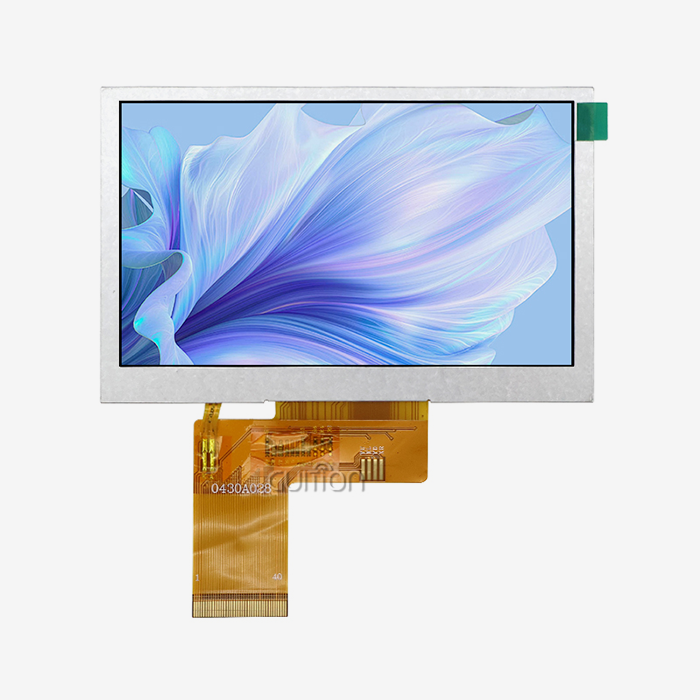
MIPI DSI (Mobile Industry Processor Interface Display Serial Interface) has emerged as the dominant display connectivity standard in modern mobile devices, answering the escalating demands for sharper visuals and energy efficiency. A MIPI DSI display module utilizes high-speed serial communication protocols that enable processors to transmit pixel-rich content to display panels with remarkable efficiency. Smartphones today require resolutions reaching 2K and 4K, refresh rates climbing beyond 120Hz, and battery optimization strategies that extend usage time—all factors that converge in display module selection. This article provides B2B procurement professionals, embedded engineers, R&D managers, and OEMs with comprehensive insights into why DSI-based solutions outperform legacy alternatives, examining technical architecture, industry applications, and sourcing considerations that directly impact product success and time-to-market.
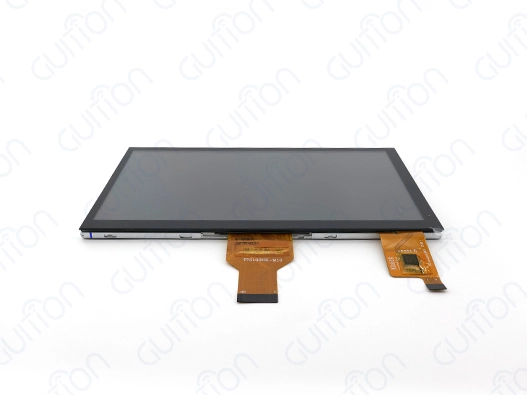
Understanding MIPI DSI Display Modules
Core Architecture and Operation
The foundation of an MIPI DSI display module lies in its serial data transmission architecture. Unlike parallel RGB interfaces that require upwards of 24 data pins plus control signals—consuming valuable PCB real estate and generating electromagnetic interference DSI operates through differential lane pairs. A standard setup has one to four data lanes and a separate clock lane. This cuts down on the number of pins needed and allows for gigabit-per-second throughput. The physical layer, known as D-PHY, implements low-voltage differential signaling (LVDS) principles where voltage swings remain minimal, typically 200 mV, translating to substantial power savings compared to 3.3 V parallel buses.
Signal integrity becomes paramount when data rates exceed 1 Gbps per lane. The differential nature of transmission inherently cancels common-mode noise, making the interface resilient in RF-dense environments typical of smartphones packed with WiFi, Bluetooth, and cellular transceivers. Engineers appreciate this robustness during integration because it minimizes crosstalk and allows flexible FPC routing without extensive shielding requirements.
Dual Operating Modes
The protocol defines two distinct operational modes that address different application scenarios. Video Mode enables continuous streaming of pixel data directly from the application processor's frame buffer to the display panel, similar to traditional RGB interfaces. This approach suits dynamic content such as video playback or gaming, where constant screen updates occur. On the other hand, Command Mode uses the internal frame memory of the display driver IC. The host processor transmits frame data in bursts, then enters low-power states while the display refreshes itself from local RAM. This operational model delivers significant energy savings for static or infrequently changing content—such as e-reader displays or dashboard instrumentation—by allowing the main processor to sleep between updates. The ability to select between these modes provides system architects with flexibility in balancing performance against power consumption based on specific use-case requirements.
Key Technical Specifications
Modern DSI implementations support data rates ranging from 80 Mbps to 2.5 Gbps per lane under D-PHY v1.2 specifications, with newer C-PHY variants pushing beyond 5 Gbps. Impedance matching at precisely 100 ohms differential ensures signal integrity across the typical 10-15cm flexible printed circuit connections. The protocol also defines precise timing parameters—setup times, hold times, and escape mode sequences—that must be meticulously followed during initialization to prevent the blank screen issues commonly encountered during development.
Comparing MIPI DSI with Other Display Interfaces
Interface Technology Landscape
Choosing the best display interface requires understanding each technology's trade-offs. In the 2000s, laptop displays and industrial panels relied on LVDS (Low-Voltage Differential Signaling) for noise protection through differential couples. However, LVDS requires numerous pairs (generally 4-8 lanes) to obtain sufficient bandwidth, making cable size and connector complexity impractical for small smartphones. The interface lacks common command structures for initializing panels from different manufacturers, limiting supply chain flexibility.
HDMI and eDP serve different markets. HDMI's TMDS encoding and strong equalization circuitry work well in consumer devices connecting external screens over many meters. HDMI's power consumption and connector size make internal smartphone integration problematic. Laptops and tablets benefit from embedded DisplayPort (eDP)'s bandwidth economy and adaptive sync. EDP's electrical standards and packet architectures are geared for larger devices, not smartphones' ultra-compact, power-sensitive environments. In contrast, SPI-based display interfaces are simple, low-cost serial connections suitable for monochrome or basic color screens under 2 inches. This technology cannot meet smartphone display requirements due to its low data speeds (usually under 50 Mbps, even with quad-SPI variations). SPI solutions exist in industrial HMI applications with low resolution and cost-sensitive procurement decisions.
Performance Metrics Comparison
Bandwidth efficiency is a key performance indicator. A 60Hz 1080p monitor with 24-bit color requires 3 Gbps of raw pixel data. A 4-lane MIPI DSI interface at 1 Gbps per lane handles this load with overhead and blanking margins. To match LVDS performance, we need multiple differential pairs and higher per-lane speeds, which in turn increases power demand and PCB complexity. The table below shows that DSI interfaces draw 50-80 mW during active transmission, compared to 120-150 mW for LVDS implementations, affecting mobile device battery runtime. Gaming and touch response depend on latency. Frame buffer to pixel illumination buffering delays are typically under 1 ms with DSI's simplified approach. Immediacy helps premium smartphones deliver a smooth user experience. Legacy parallel connections' level shifters and synchronization algorithms add latency, reducing responsiveness during rapid screen transitions.
Key Features Driving MIPI DSI Adoption in Smartphones
The mobile industry's preference for DSI technology stems from multiple converging advantages that align with smartphone design imperatives. Resolution scalability stands paramount—the same interface architecture seamlessly scales from qHD (960x540) through Full HD (1920x1080) to Quad HD (2560x1440) and beyond, merely by adjusting lane counts and clock rates. This scalability lets manufacturers keep the same PCB layouts across different product tiers. Instead of redesigning the basic architecture, they can choose different display panels to set their products apart. Procurement teams benefit from supply chain simplification when the same interface standard spans entry-level through flagship device categories.
Power Efficiency and Battery Life
Smartphone users consistently rank battery longevity among their top priorities, placing immense pressure on engineers to optimize every milliwatt. Display subsystems typically consume 30–40% of total device power during active use. The low-voltage signaling inherent to DSI interfaces directly addresses this challenge. During Low Power mode, control signals operate at mere tens of milliwatts, while high-speed burst transfers complete rapidly and then return to idle states. This burst-and-sleep pattern, particularly effective in Command Mode operation, significantly extends battery runtime compared to interfaces requiring continuous clock toggling. Advanced power management features within the MIPI specification include ULPS (Ultra Low Power State), where lane modules essentially shut down between frame updates, drawing microamperes of leakage current. Modern smartphone SoCs exploit these states aggressively during always-on display modes, where the screen shows clock and notification information while the main application processor sleeps. Such scenarios would prove impractical with power-hungry parallel interfaces that lack defined low-power states.
Compact Physical Footprint
Smartphone industrial design trends relentlessly pursue thinner profiles and higher screen-to-body ratios, leaving minimal internal volume for connectors and flex cables. The reduced pin count of DSI technology enables remarkably compact flexible printed circuit designs—often 20-30 pins total compared to 40-60 for equivalent parallel interfaces. This decrease means that the bezels are narrower and more space is given to the battery cells. The compact 0.4mm pitch connectors commonly employed in DSI implementations measure barely 3mm in width, fitting within the tight hinge areas of foldable displays and the slim bezels of edge-to-edge screens. Engineering teams also appreciate the simplified PCB routing when only 4–6 differential pairs require careful impedance control, versus 24+ parallel traces demanding matched lengths. This makes the design process faster and increases production success by lowering the chances of mistakes in wiring or signal problems during manufacturing.
High-Resolution and Refresh Rate Support
Consumer expectations for visual quality continue escalating, driven by content ecosystems delivering 4K video and high-frame-rate gaming. A MIPI DSI display module readily accommodates these demands through bandwidth headroom. A setup using 4 lanes at 2.5 Gbps each gives about 10 Gbps total speed, which is enough for 4K resolution at 60Hz, while still leaving room. Emerging C-PHY variants promise even greater bandwidth density, supporting 120 Hz refresh rates at QHD resolution—critical for competitive mobile gaming experiences. Variable refresh rate (VRR) capabilities, now appearing in flagship smartphones, leverage DSI's command structure to dynamically adjust panel update rates between 1Hz and 120Hz based on content. Static images refresh at minimal rates, conserving power, while action sequences ramp to maximum rates, ensuring smooth motion. This adaptive behavior requires tight integration between the display controller and panel driver IC, facilitated by DSI's standardized command set, which is unavailable in simpler parallel interfaces.
Cross-Industry Versatility
While smartphones drove initial adoption, the technical advantages of DSI extend across diverse application domains. Automotive digital cockpits increasingly deploy DSI-connected displays for instrument clusters and center stack infotainment, benefiting from the interface's EMI resistance, crucial in electrically noisy vehicle environments. Industrial control panels leverage the same technology for HMI solutions where vibration and temperature extremes demand robust connectivity. Medical imaging devices utilize DSI's high bandwidth for transmitting ultrasound or endoscopy visuals with diagnostic-grade fidelity. IoT gateways and smart home controllers employ DSI when screen size and resolution requirements exceed what SPI interfaces can deliver economically. This broad applicability creates economies of scale in component pricing and supplier expertise. Procurement professionals sourcing for industrial or medical applications benefit from the mature supply chains originally developed for smartphone volumes, accessing competitive pricing and extensive technical resources that niche interface technologies cannot match.
Procurement Considerations for MIPI DSI Display Modules
Sourcing the appropriate display module requires balancing technical specifications against commercial factors such as lead times, customization capabilities, and supplier reliability. The decision framework begins with defining core requirements—screen diagonal, resolution, touch technology, and environmental ratings—then expands into supply chain considerations that impact production schedules and total cost of ownership.
Technical Specification Assessment
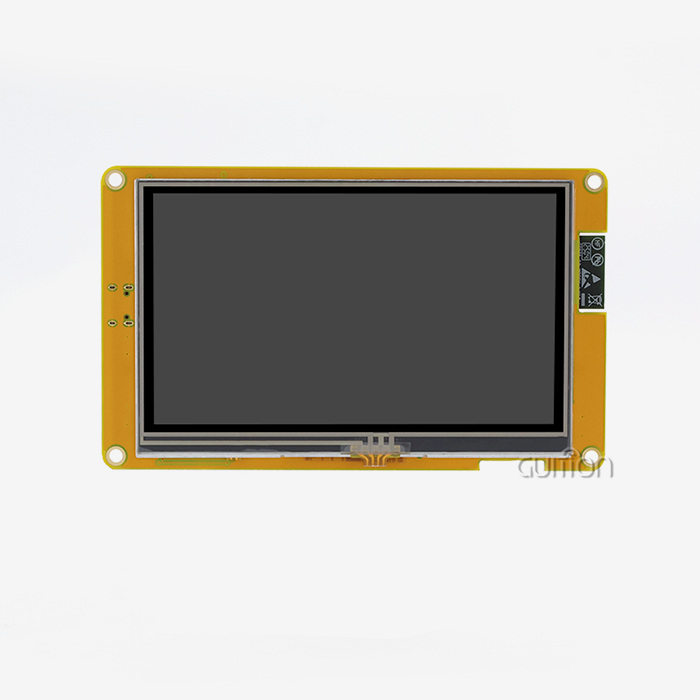
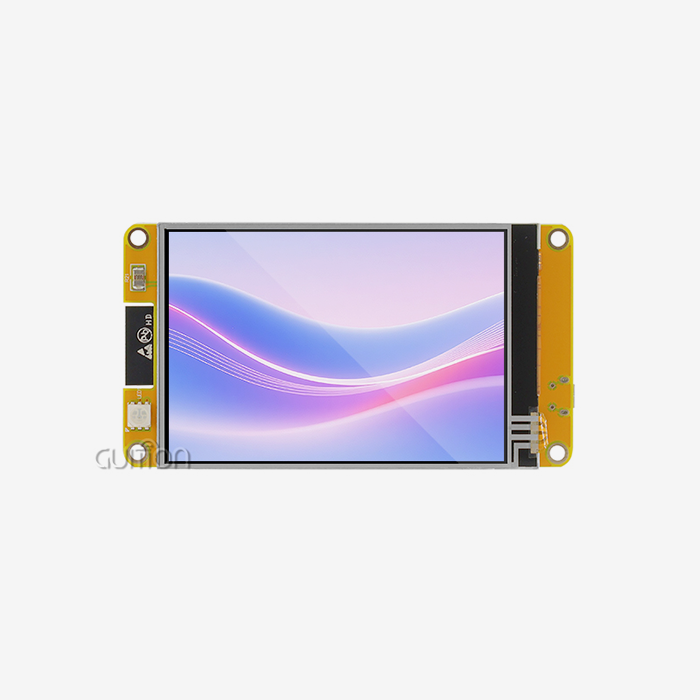
Engineers must first characterize their application's display requirements precisely. Resolution determination involves calculating pixel density appropriate for typical viewing distances—industrial control panels viewed from 50 cm may require only 800x480 resolution at 7 inches, achieving comfortable readability while minimizing processing demands. The GUITION JC1060M070C_I exemplifies this balanced approach, delivering 800x480 resolution across a 7.0-inch diagonal with capacitive touch integration. This configuration proves ideal for 3D printer control interfaces, EV charging station displays, and medical aesthetic equipment where operators interact at arm's length. Touch technology selection significantly impacts user experience and cost structures. Capacitive touch panels provide the multi-gesture support and responsiveness users expect from smartphone interactions, albeit at a higher cost than resistive alternatives. The projected capacitive technology employed in quality modules like the JC1060M070C_I detects touches through 1-2mm protective glass, enabling durable construction suitable for industrial environments where gloved operation or cleaning protocols demand robust interfaces.
Choosing the right driver IC affects how hard it is to set up and what features are available. The JD9165 driver powering the GUITION module provides comprehensive command set support for brightness control, gamma adjustment, and partial display updates—capabilities valuable in power-sensitive applications. Engineers should verify the availability of driver IC documentation and community support during component selection, as inadequate datasheets frequently cause development delays when obscure initialization sequences go undocumented.
Supplier Evaluation and Partnership
Supplier selection extends beyond component specifications into relationship factors that determine long-term success. Established manufacturers demonstrate their commitment through comprehensive technical documentation, responsive engineering support, and transparent communication regarding product lifecycles. When evaluating potential partners, procurement teams should request detailed datasheets, including initialization code examples, timing diagrams, and mechanical drawings with precise tolerances. Customization capabilities differentiate commodity suppliers from strategic partners. Projects often require modified aperture ratios, integrated backlighting configurations, or strengthened bonding suitable for high-vibration installations. Suppliers that provide OEM and ODM services work together during the design stage to improve how displays fit together, which may include testing custom optical bonding or special coatings that make screens easier to read in bright sunlight or reduce glare in medical lighting. Guition has established itself as a technology-driven supplier serving industrial equipment manufacturers, smart device developers, and medical device OEMs across the United States market. The company's product portfolio spans 1.28 inches through 21.5 inches, providing sizing flexibility across diverse application categories. Guition's own software makes it easier to create HMI by using simple drag-and-drop tools and a variety of control options, helping engineering teams get their products to market faster, even when they are
Pricing and Lead Time Dynamics
Display module pricing varies considerably based on volume commitments, customization complexity, and current market dynamics. Standard catalog modules typically command lower per-unit costs but offer limited flexibility for differentiation. Custom solutions involve non-recurring engineering charges offset by optimized bills of materials that eliminate unnecessary features. Procurement strategies should balance development investment against production volumes—low-volume production runs may justify catalog parts despite higher unit costs, while annual volumes exceeding 10,000 units warrant custom optimization. Lead times depend on customization depth and supplier capacity. Standard modules may ship within 2-4 weeks, while custom optical bonding or specialized driver IC sourcing extends timelines to 8-12 weeks. Prudent project planning incorporates lead times for display components into critical path analysis, potentially initiating procurement activities during detailed design phases to prevent schedule impacts during production transition. Establishing framework agreements with suppliers guarantees capacity allocation during component shortages, a consideration particularly relevant given recent global supply chain volatility.
Overcoming Common Challenges with MIPI DSI Display Modules
Successful integration of DSI technology requires navigating several technical challenges that frequently perplex development teams. Understanding these pitfalls and their solutions accelerates development cycles and improves product reliability in field deployment.
Signal Integrity and Timing Compliance
The high-speed differential signaling employed by DSI demands careful consideration of signal integrity during PCB layout and cable selection. Trace impedance must maintain a 100-ohm differential across the entire path from the SoC to the display connector. Layout tools should perform electromagnetic field solving to verify impedance, accounting for dielectric constants and copper weights specific to the selected PCB stack-up. Via transitions between layers introduce discontinuities that can degrade signal quality at multi-gigabit rates—best practices include using via-in-pad techniques or short stubs to minimize reflections. Cable length limitations frustrate designers accustomed to meter-long HDMI connections. The FPC connecting the processor to the display panel must remain under 15 cm for reliable operation at full data rates, with shorter lengths preferred. Applications requiring greater separation might employ display modules with integrated timing controllers that accept LVDS or eDP inputs, converting locally to DSI for panel communication. This approach adds cost but solves mechanical layout constraints in devices like laptop-style industrial terminals.
Initialization Sequence Debugging
The correct startup process needed to wake display driver ICs from reset states is a typical development challenge. Reset timing, pulse lengths, and command packet sequences broadcast within millisecond timing windows are typical for DSI panels. Departures from manufacturer specifications cause blank or corrupted screens with little diagnostic information. Before software inquiry, oscilloscope testing verifies power rail sequencing and reset signal timing. Decoding MIPI D-PHY protocols with logic analyzers helps evaluate packet structure and instruction sequences. DCS (Display Command Set) standard instructions can initialize many driver ICs, but panel-specific factors like gamma curves and source driver timing require manufacturer-provided initialization tables. A close connection with display vendors during bring-up speeds the solving of obscure startup issues.
Environmental and Reliability Validation
Industrial and automotive screens experience environmental stressors beyond smartphone circumstances. LCD materials and electronic components in display modules struggle to operate at temperatures ranging from -40°C to +85°C. The GUITION JC1060M070C_I specifies operation from -20°C to 70°C, suitable for most indoor industrial situations but requiring supplementary thermal control for outdoor installations or vehicle applications with sun-soaked dashboards. MIL-STD-810 or automotive AEC-Q100 vibration and shock testing ensures mechanical attachment integrity and flex cable and connection operational stress. Medical equipment undergoing chemical sterilization requires touch panel bonding to resist thermal cycling delamination. Comprehensive validation processes discover failure mechanisms during development, not after field deployment, when warranty claims and brand reputation damage skyrocket.
Real-World Applications: GUITION JC1060M070C_I in Action
The GUITION JC1060M070CI demonstrates the practical application of DSI technology across multiple industries that demand reliable visual interfaces. This 7-inch display module combines 800x480 resolution with capacitive touch sensing, powered by the JD9165 driver IC supporting the complete 16.7 million color palette. The module's flexibility comes from its well-thought-out features that meet typical industrial HMI needs without including expensive extras that aren't needed for these uses.
Industrial Control and Automation
Manufacturing floors are unpleasant due to temperature variations in process equipment, machinery vibration, and material handling impacts. The JC1060M070C_I capacitive touch interface performs in typical industry environments from -20°C to 70°C, despite industrial gloves or minor surface contamination. An 800x480 resolution and 16.7M color depth provide color-coded status displays and graphical process monitoring in machine tool controls, packing line HMIs, and robotic cell interfaces. Industrial projects with short time-to-market require simple integration. The standard DSI interface works with NXP i.MX, Rockchip, and Allwinner industrial computer modules. Guition's companion development software makes it easier to create HMI by offering ready-made templates for things like gauges, trend charts, and alarm signals, so automation integrators who focus on machine control rather than display driver development would like this toolkit.
Medical Device Interfaces
Medical equipment manufacturers face technological and regulatory challenges. The JC1060M070C_I's clear visuals complement diagnostic equipment, where doctors use display output to make patient care decisions. Laser therapy devices and ultrasound machines employ these monitors for parameter change and real-time visualization. Clinicians can employ consumer-style motions with the capacitive touch interface, reducing training and improving throughput. In medical applications, device failures disrupt patient care, making reliability critical. Medical device makers trust the GUITION module's industrial-grade build and extensive testing. Technical documentation and timely engineering support enable design verification and validation for FDA and foreign regulatory approvals.
Smart Infrastructure and IoT
Display module quality is rising in electric vehicle charging stations. Despite outdoor ambient light, station interfaces must display charging status, payment information, and session scheduling. The JC1060M070C_I's powerful backlight and anti-glare coatings facilitate reading in direct sunlight, and its wide working temperature range accommodates installations from Arizona summers to Minnesota winters. Even in extreme temperatures that impede resistive touch, capacitive touch interfaces provide a consistent user experience across deployment locations. Smart building management and energy monitoring systems benefit from the module's capabilities and affordability. Energy consumption, HVAC system status, and occupancy analytics dashboards require a screen area for information density and usability. To monitor data-rich dashboards comfortably, the 7-inch diagonal takes up little wall space, and the 800x480 resolution produces crisp text and graphics.
Conclusion
Mipi DSI display module smartphone screens due to its bandwidth efficiency, battery consumption, and compactness, which meet mobile device needs. These qualities also apply to industrial HMI, medical devices, and smart infrastructure applications where visual interfaces must work well in harsh settings. Understanding DSI design, its advantages over other interfaces, and project success factors like integration benefits, engineers and procurement experts. The GUITION JC1060M070C_I shows how deliberately chosen display modules meet real-world industrial needs while leveraging mature supply chains and technological expertise from enormous smartphone production volumes. The right display technology and supplier agreements affect development timeframes, product performance, and field reliability.
FAQ
What advantages does MIPI DSI offer over LVDS for smartphone applications?
DSI interfaces require significantly fewer pins than LVDS implementations—typically 8-10 total connections versus 20-30 for comparable bandwidth. This reduction enables slimmer device profiles and simplified PCB routing. Low-voltage differential signaling and clearly defined low-power modes cut power use by about 40%. The standardized command set simplifies panel initialization and control compared to LVDS's manufacturer-specific implementations.
Can MIPI DSI modules integrate with embedded platforms like Raspberry Pi or Arduino?
Standard Raspberry Pi boards expose DSI connectors supporting direct display attachment, though configuration requires device tree modifications. Arduino platforms lack native DSI support due to processing limitations, though specific modules feature dedicated DSI-to-RGB converter chips enabling connectivity. Industrial single-board computers from manufacturers like Toradex or Variscite commonly include DSI interfaces compatible with standard displays.
How do I request samples or custom specifications for DSI display modules?
Reputable suppliers maintain technical sales teams that process sample requests and evaluate customization requirements. Initial contact should specify application requirements—size, resolution, environmental conditions, and annual volumes—enabling appropriate product recommendations. Sample orders typically ship within 2-4 weeks for catalog items, while custom evaluations may require 6-8 weeks, including prototype tooling.
Partner with Guition for Advanced Display Solutions
Experienced MIPI DSI display module providers who understand technical needs and economic realities help embedded engineers and product managers design industrial HMI systems. Guition supports US automation system integrators, medical device developers, and smart infrastructure suppliers as a manufacturer. From concept to production, our engineering team provides cross-platform debugging tools, extensive initialization examples, and timely communication to speed up development.
By integrating reliable JD9165 driver technology, solid construction, and an economical price for large-scale manufacturing, the GUITION JC1060M070C_I exhibits our commitment to effective industrial solutions. Drag-and-drop controls and WYSIWYG preview enable rapid UI iteration with our unique development platform, which avoids complex low-level coding. Comprehensive APIs and documentation enable modification without embedded graphics expertise for secondary development.
Contact our sales team at david@guition.com to discuss your specific display requirements, request technical documentation, or arrange sample evaluation units. Whether you're sourcing display modules for 3D printer interfaces, EV charging stations, or medical equipment, our application engineers provide tailored recommendations addressing your exact specifications. We welcome inquiries from R&D managers evaluating suppliers for new product development and procurement professionals seeking reliable manufacturing partners for ongoing production.
References
1. Mobile Industry Processor Interface Alliance, "MIPI Display Serial Interface Specification Version 2.0," 2023.
2. Chen, Y., and Wang, L., "Low-Power Display Interfaces for Mobile Devices: A Comparative Analysis," Journal of Display Technology, vol. 18, no. 4, 2022, pp. 234-247.
3. International Display Working Group, "Display Interface Standards: Technical Comparison and Application Guidelines," 2023.
4. Kumar, R., et al., "Signal Integrity Challenges in High-Speed Display Interfaces," IEEE Transactions on Consumer Electronics, vol. 69, no. 2, 2023, pp. 156-168.
5. Anderson, M., "Industrial Display Systems: Engineering Considerations for Harsh Environments," Industrial Electronics Magazine, vol. 16, no. 3, 2022, pp. 42-55.
6. Global Display Industry Association, "Display Module Market Analysis and Technology Trends Report," 2024.
Learn about our latest products and discounts through SMS or email