- English
- French
- German
- Portuguese
- Spanish
- Russian
- Japanese
- Korean
- Arabic
- Greek
- German
- Turkish
- Italian
- Danish
- Romanian
- Indonesian
- Czech
- Afrikaans
- Swedish
- Polish
- Basque
- Catalan
- Esperanto
- Hindi
- Lao
- Albanian
- Amharic
- Armenian
- Azerbaijani
- Belarusian
- Bengali
- Bosnian
- Bulgarian
- Cebuano
- Chichewa
- Corsican
- Croatian
- Dutch
- Estonian
- Filipino
- Finnish
- Frisian
- Galician
- Georgian
- Gujarati
- Haitian
- Hausa
- Hawaiian
- Hebrew
- Hmong
- Hungarian
- Icelandic
- Igbo
- Javanese
- Kannada
- Kazakh
- Khmer
- Kurdish
- Kyrgyz
- Latin
- Latvian
- Lithuanian
- Luxembou..
- Macedonian
- Malagasy
- Malay
- Malayalam
- Maltese
- Maori
- Marathi
- Mongolian
- Burmese
- Nepali
- Norwegian
- Pashto
- Persian
- Punjabi
- Serbian
- Sesotho
- Sinhala
- Slovak
- Slovenian
- Somali
- Samoan
- Scots Gaelic
- Shona
- Sindhi
- Sundanese
- Swahili
- Tajik
- Tamil
- Telugu
- Thai
- Ukrainian
- Urdu
- Uzbek
- Vietnamese
- Welsh
- Xhosa
- Yiddish
- Yoruba
- Zulu
Why Choose ESP32 Display Module for Smart Embedded Systems?
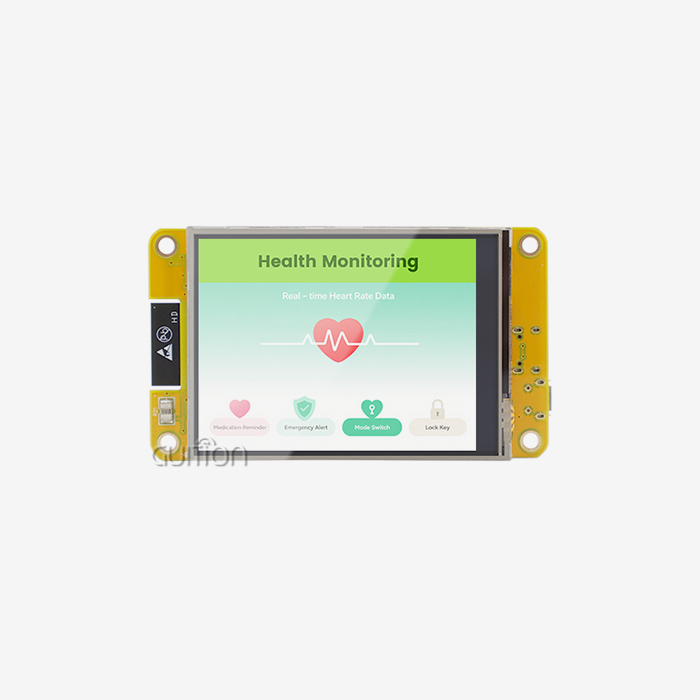
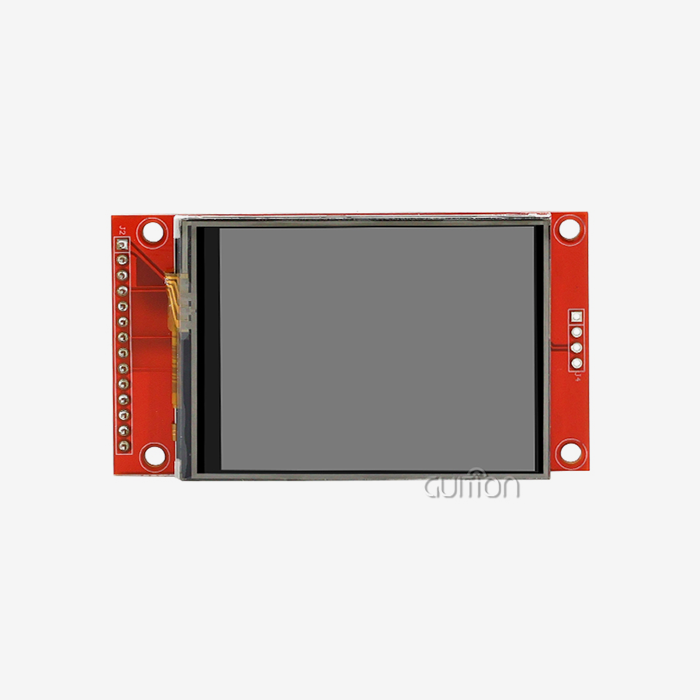
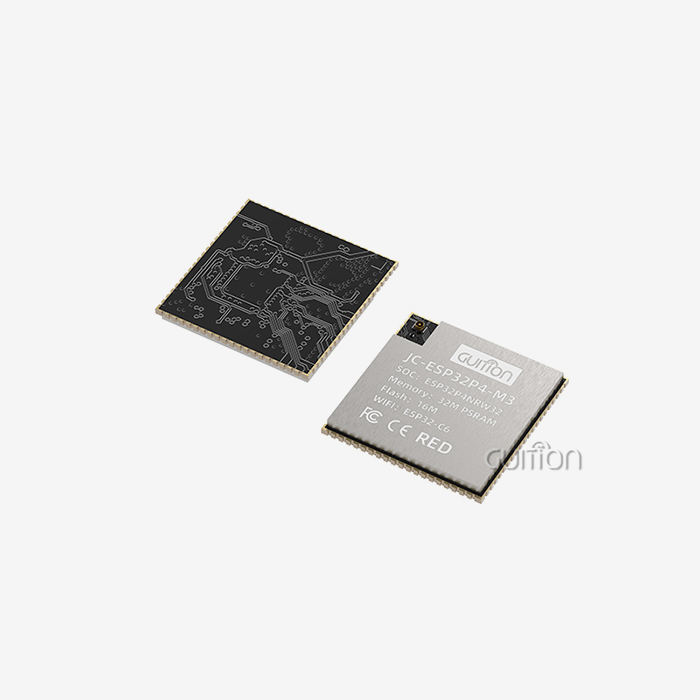
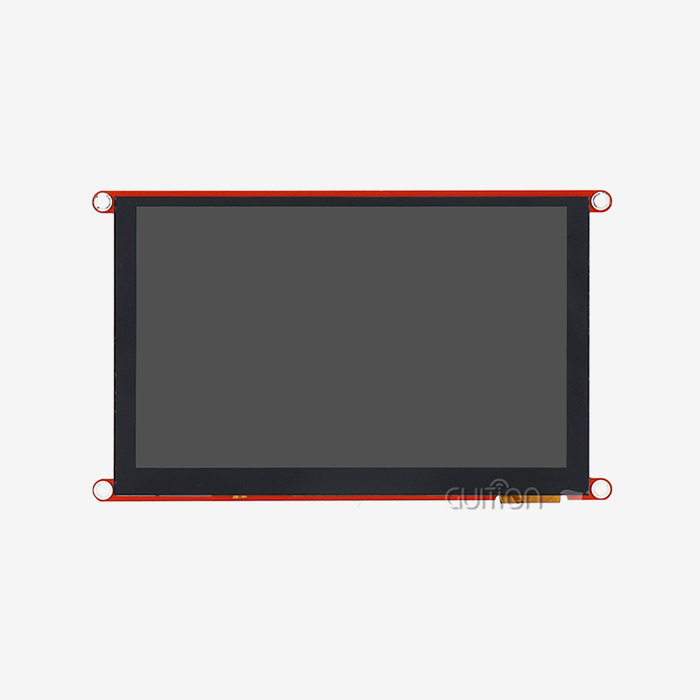
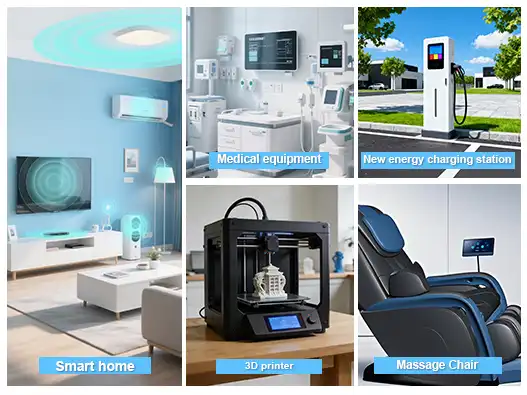
Picking an esp32 display module for smart embedded systems offers a strong mix of wireless connection, processing power, and a visual interface all in one package. These modules eliminate the complexity of separate MCU and display setups while providing WiFi and Bluetooth connectivity out of the box. The ESP32-based architecture enables rapid prototyping and deployment across industrial control panels, smart home devices, medical equipment, and IoT applications. With flexible development environments like Arduino IDE, ESP-IDF, MicroPython, and specialized tools such as Guition, engineers can accelerate time-to-market while maintaining full customization capabilities for project-specific requirements.
Introduction
Modern embedded systems require a seamless human-machine interface, and display modules are the key. The game-changing ESP32 display module combines Espressif's leading ESP32 microprocessor with multiple display technologies to build intelligent, connected interfaces. These all-in-one solutions help embedded engineers simplify GUI development, reduce wire complexity, and minimize signal interference without sacrificing performance.
It gives embedded engineers, product managers, and procurement specialists practical advice on ESP32-based display systems. These modules are crucial for industrial equipment, smart appliances, medical devices, and consumer electronics because of their technical specifications, development flexibility, and real-world applications. We assist you in assessing options that meet your project timeframe, price, and long-term scalability objectives.
Understanding ESP32 Display Modules — Features and Key Benefits
The ESP32 display module represents a significant evolution from traditional separated MCU and screen configurations. By integrating Espressif's ESP32-S3 or ESP32-WROVER chips directly onto the display PCBA, these modules eliminate common bottlenecks associated with signal latency and electromagnetic interference. The architecture combines dual-core processing power running at 240MHz with native WiFi and Bluetooth BLE 5.0 connectivity, creating a complete HMI solution on a single board.
Core Technical Architecture
Modern ESP32 monitors offer extensive graphics rendering with complex memory configurations. The Guition JC3636K518C_I_YR1 uses the ESP32-S3R8 version, which has 16MB flash storage, 520KB SRAM, 8MB PSRAM, and 448KB ROM. Developers can use this memory architecture to create full-color visuals, smooth animations, and responsive touch interfaces without memory expansion. When drawing complex UI elements with graphics libraries like LVGL, the additional PSRAM is invaluable.
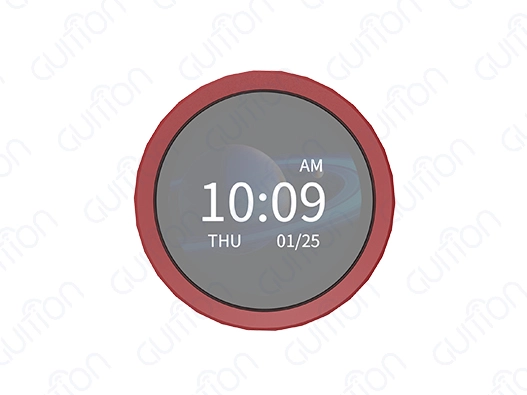
The display interface options cover several protocols for varied performance needs. SPI connections are good for smaller displays where pin conservation is important, whereas 8-bit or 16-bit parallel i8080 interfaces are better for bigger screens with fast refresh rates. The ESP32-S3 generation added RGB interface compatibility for direct LCD panel drive without intermediate controllers, decreasing cost and latency.
Connectivity That Transforms Capabilities
ESP32 displays include built-in wireless connectivity, unlike serial screens. Remote data logging, OTA firmware updates, and cloud dashboard integration are possible without hardware with the WiFi module. Local device connection for configuration, sensor data collection, and mobile app management is possible with Bluetooth BLE 5.0. Industrial IoT applications that use remote monitoring and predictive maintenance need these connectivity choices.
Engineers working on smart home control panels like ESPHome's smooth interaction with Home Assistant. Visual display and direct network communication improve BOM management and assembly by replacing several components with a single module. Medical device developers can use secure data transmission for HIPAA-compliant telemetry without pricey cellular modules.
Practical Benefits for Development Teams
Development efficiency improves dramatically when using integrated display modules compared to discrete component approaches. The Guition development environment exemplifies this advantage by providing drag-and-drop UI design tools that generate optimized code automatically. Engineers can prototype interfaces visually, test touch interactions in real-time, and deploy to hardware without writing low-level driver code. This approach reduces the typical GUI development cycle from weeks to days.
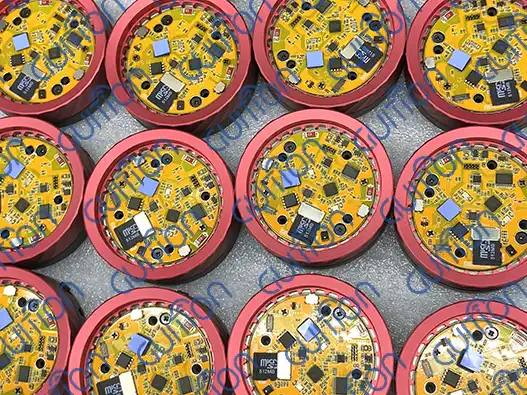
The ESP32 display module, combined with cross-platform compatibility, ensures teams can work within familiar development environments. Whether your engineers prefer Arduino IDE for rapid prototyping, ESP-IDF for production optimization, or MicroPython for script-based development, ESP32 modules accommodate multiple workflows. This flexibility minimizes learning curves when onboarding new team members and allows gradual migration from prototype to production codebases without complete rewrites.
Comparing Display Options for ESP32: Choosing the Best Fit
Selecting the appropriate display technology requires balancing technical specifications against application requirements and cost constraints. Different display types offer distinct advantages that suit specific use cases.
TFT LCD Displays for Versatility
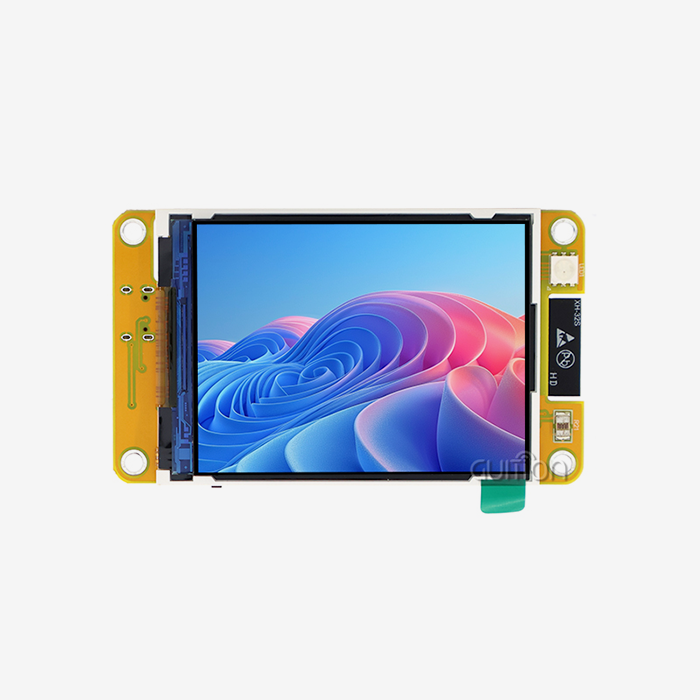
TFT LCD technology leads the ESP32 display module market due to its affordability, performance, and availability. These displays offer bright colors with 16-bit (65K colors) or 18-bit (262K colors) color levels for most industrial and consumer applications. Despite its small size, the Guiton JC3636K518C_I_YR1's 1.8-inch 360x360 pixel screen produces clear text and detailed images.
Driver optimization and interface selection affect refresh rate performance. Full-screen updates on SPI-connected displays are 30–60 FPS, which is sufficient for dashboards and control panels. Parallel interface solutions can increase refresh rates to meet video-rate requirements for live camera feeds and animated transitions. The integrated backlight control circuits offer exact brightness changes, extending battery life in portable applications and maintaining visibility in different light conditions.
Touch Interface Considerations
Capacitive touch technology has become standard for modern ESP32 display modules due to its superior user experience compared to resistive alternatives. Multi-touch gesture support, higher sensitivity, and better optical clarity make capacitive solutions preferable for consumer-facing applications. The touch controller typically communicates via I2C, conserving GPIO pins for other peripherals like sensors or communication interfaces.
Projects deployed in harsh industrial environments or requiring gloved operation may still benefit from resistive touch implementations. Understanding your end-user environment guides this decision: medical applications requiring frequent sanitization favor sealed capacitive surfaces, while outdoor agricultural automation might prioritize resistive touch for reliability with wet or dirty conditions.
Resolution and Size Trade-offs
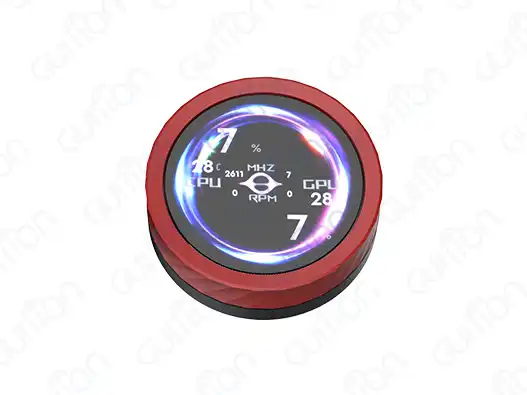
Memory needs and perceived quality depend on display resolution. Large frame buffers for high-resolution screens use valuable SRAM or PSRAM. Compact modules like the JC3636K518C_I_YR1 exhibit excellent clarity for their 1.8-inch size while preserving manageable memory overhead with 360x360 resolution. When screen real estate trumps power consumption, larger installations may use 480x320 or 800x480.
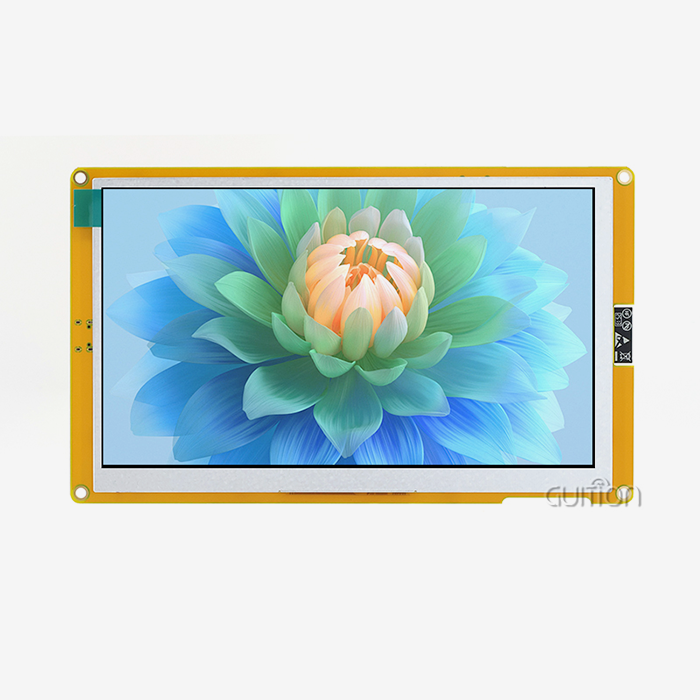
Viewing distance and information density should determine screen size. For industrial control panels viewed from several feet away, 7-inch displays with larger letters and icons work best, whereas wearable gadgets and compact IoT sensors need 1.28-1.8-inch power-efficient screens. Guition products range from 1.28 to 21.5 inches, enabling constant development across product categories.
How to Connect and Program ESP32 with Display Modules — A Practical Guide?
Successful ESP32 display integration requires attention to both hardware connections and software configuration. This section provides practical guidance for engineers moving from evaluation to production.
Hardware Integration Essentials
Most ESP32 display modules arrive as integrated units with the MCU and screen pre-mounted, eliminating complex wiring for the primary display interface. Engineers focus instead on peripheral connections: power supply, external sensors, communication buses, and optional expansion interfaces. The JC3636K518C_I_YR1 includes several valuable integrated peripherals: a microphone circuit for voice commands, a speaker driver for audio feedback, and a TF card interface for local data logging or asset storage.
Power supply design deserves careful consideration. While the ESP32 itself operates at 3.3V, the backlight driver often requires 5V or higher voltages depending on LED configuration. Modules like the Guition series integrate voltage regulation, simplifying power distribution. Battery-powered applications should implement proper sleep mode management, leveraging the ESP32's ULP coprocessor to maintain deep sleep currents below 10µA while monitoring touch events or sensor interrupts.
Software Development Workflows
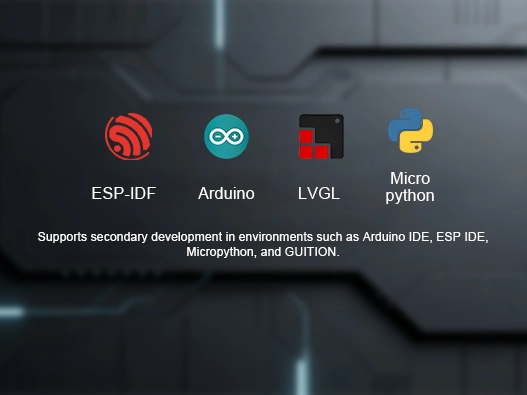
Visual design simplifies GUI construction with Guition. Engineers drag pre-built controls into the canvas, configure properties with dropdown menus, and set event handlers with easy dialogs. The program generates optimized C code for Arduino IDE and ESP-IDF frameworks, allowing teams to add proprietary logic while keeping the interface structure.
Due to its rich library ecosystem, the Arduino IDE is popular for quick prototyping. TFT_eSPI and LovyanGFX simplify drawing, font rendering, and picture display via hardware abstraction layers. These libraries use configuration files to support numerous ESP32 display module types, simplifying hardware porting.
Advanced features like dual-core job management, improved memory allocation, and fine-grained power control attract production deployments to ESP-IDF. The framework's component architecture allows modular creation of display rendering, network communication, and sensor processing as discrete activities with priority management. Industrial applications need deterministic response times; hence, this method is vital.
Debugging and Optimization Techniques
Online cross-platform debugging speeds up troubleshooting. Real-time variable monitoring on Guition lets developers monitor display buffer states, touch coordinates, and connection status without debug hardware. This visibility helps identify buffer overflow, inaccurate color mapping, and touch calibration issues that require hours of trial-and-error troubleshooting.
Performance optimization minimizes screen redraws and leverages DMA for massive memory operations. Well-designed apps track "dirty regions" and update only altered areas instead of refreshing the full display. The ESP32's DMA controller transfers frame buffer data to the display while the CPU processes other tasks, keeping user interfaces responsive throughout network or sensor processing.
Procurement Insight: Selecting and Purchasing ESP32 Display Modules for Your Projects
Procurement decisions extend beyond technical specifications to encompass supplier reliability, documentation quality, and long-term component availability. These factors often prove as critical as the hardware itself for successful project deployment.
Evaluating Technical Specifications
Display resolution, memory configuration, and interface options form the foundation of technical evaluation. Projects requiring rich graphics and animations need generous PSRAM allocations—8MB represents a practical baseline for moderately complex interfaces, while simpler applications might function with 2MB. The 8MB PSRAM integrated into modules like the Guition JC3636K518C_I_YR1 provides comfortable headroom for LVGL-based interfaces with multiple screens, transitions, and embedded images.
Connectivity requirements influence hardware selection for the ESP32 display module. Applications demanding simultaneous WiFi operation for cloud connectivity and Bluetooth for local device pairing benefit from the ESP32's dual-mode wireless capability. The BLE 5.0 implementation offers improved range and throughput compared to earlier Bluetooth versions, which is valuable for warehouse automation or agricultural monitoring where devices operate at extended distances from mobile configuration tools.
Supplier Evaluation Criteria
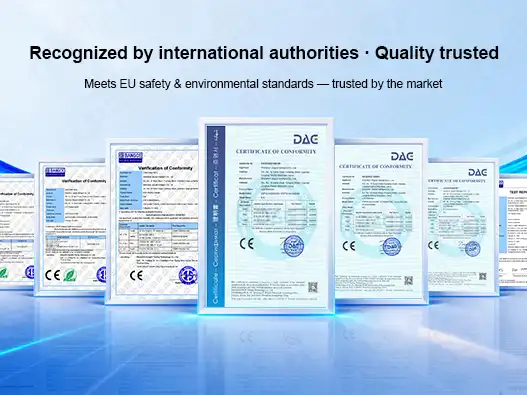
Documentation quality distinguishes professional suppliers from component distributors. In-depth technical documentation should include pinout diagrams, electrical properties, recommended PCB layouts, and schematics. Working code samples for common scenarios—WiFi configuration, touch calibration, picture display, and OTA updates—speed up development and eliminate technical assistance.
Guition's complete development ecosystem includes hardware and integrated software tools for the whole development lifecycle. USART-hmi display modules include well-documented APIs and many sample projects for secondary development. This comprehensive strategy avoids integration issues that could delay product releases or require costly engineering revisions.
Cost Optimization Strategies
Bulk pricing affects per-unit prices as manufacturing volumes increase. ESP32 display module manufacturers often offer better cost and customization than wholesalers. Guition can provide bespoke splash screens, preloaded software, and customized connector placements to differentiate your product without original hardware development.
Prolonged component availability is crucial for multi-year products. Industrial equipment manufacturers favor vendors who extend product availability to avoid costly redesigns when components become obsolete. Discussing roadmap alignment with possible vendors ensures your display solution is available throughout your product's lifecycle, with defined migration paths for hardware updates.
Future Trends and Innovations in ESP32 Display Modules
The ESP32 display ecosystem continues evolving, with emerging capabilities expanding application possibilities and improving developer productivity.
Advanced Processing Capabilities
The introduction of the ESP32-P4 signals a significant capability jump for display-centric applications. This variant features a dual-core RISC-V architecture running at 400MHz with hardware acceleration for 2D graphics operations. Native MIPI DSI support enables direct connection to high-resolution displays (1024x600 or 1280x800) at 60 FPS without external controllers. Hardware JPEG codecs and H.264 encoding support video applications previously requiring dedicated media processors.
These enhanced processing capabilities enable new application categories. Medical visualization equipment can display high-resolution diagnostic images directly on embedded displays without requiring expensive computing platforms. Industrial vision systems can process camera feeds and present annotated results on integrated screens, consolidating equipment that previously required separate computing, display, and control components.
Enhanced Power Efficiency
Battery-operated devices still struggle with power usage. Better power management and improved ULP coprocessor features enable advanced monitoring and control while keeping sleep currents at very low levels in the latest ESP32 models. Advanced display drivers allow partial refresh modes that update only altered screen regions, lowering processing burden and lighting power.
Power can be optimized by integrating e-ink displays. They're ideal for battery-powered environmental sensors, industrial gauges, and warehouse inventory tags because they only utilize power during updates. E-ink refresh rates limit interactive applications, although outdoor readability and low standby power consumption make them appealing for some applications.
Software Ecosystem Maturation
Development tool sophistication continues improving, with platforms like Guition expanding their feature sets based on user feedback. Remote OTA update capabilities now extend beyond firmware to include UI assets, allowing interface refinement and branding updates after product deployment. Multi-language support with UTF-8 encoding simplifies global product launches, eliminating the need for region-specific hardware variants.
Cloud integration features are becoming standard rather than optional. Modern ESP32 display modules can function as edge computing nodes, processing sensor data locally while selectively uploading summaries to cloud platforms. This hybrid approach optimizes bandwidth usage and improves responsiveness compared to thin-client architectures that require constant connectivity. Industrial IoT applications particularly benefit from this architecture, maintaining operational functionality during network outages while synchronizing data when connectivity is restored.
Conclusion
ESP32 display modules expedite embedded system development with their processing power, wireless connectivity, and visual interface. The integrated architecture minimizes integration issues and offers multiple development environments and substantial customization. The Guition JC3636K518C_I_YR1 shows how current modules can fit dual-core processing, plentiful memory, capacitive touch, and audio circuits into compact, affordable devices for a variety of applications.
Technical specifications, supplier support, documentation quality, and long-term availability must be considered for procurement. Investment in capable ESP32 display solutions reduces development time, simplifies assembly, and improves product differentiation. These modules will enable intelligent, linked embedded systems in industrial, medical, and consumer applications as the ecosystem evolves with increasingly powerful processors and programming tools.
FAQ
What advantages do ESP32-based displays offer over traditional serial screens?
Traditional serial screens function as passive display devices controlled by external MCUs through UART communication, limiting processing capability and requiring separate wireless modules for connectivity. ESP32 display modules integrate the microcontroller, wireless radios, and screen into a unified solution, enabling edge computing, direct sensor interfacing, and network connectivity without additional components. This consolidation reduces BOM costs, simplifies PCB design, and eliminates potential communication bottlenecks between separate devices.
How does memory configuration impact display module performance?
PSRAM capacity directly determines the complexity of graphical interfaces you can implement. Full-screen frame buffers for a 480x320 display at 16-bit color depth require approximately 307KB, consuming significant portions of available memory. Modules with 8MB PSRAM, like the Guition JC3636K518C_I_YR1, comfortably support multiple screen buffers, enabling smooth transitions and complex LVGL widgets without memory constraints that cause crashes or visual artifacts.
Can ESP32 display modules operate reliably in industrial temperature ranges?
Industrial-grade ESP32 display modules support operating temperatures from -20°C to +70°C, with some specialized variants rated for -40°C to +85°C. Medical device and outdoor applications should verify that temperature specifications match deployment environments. The Guition product line includes variants tested for extended temperature operation, suitable for agricultural automation, energy management systems, and industrial control panels exposed to challenging environmental conditions.
Partner with Guition for Advanced ESP32 Display Module Solutions
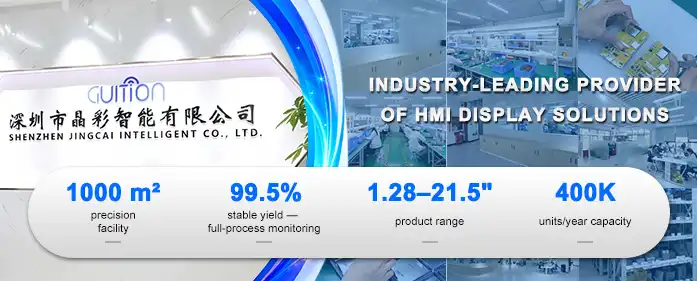
Guition delivers comprehensive HMI solutions that eliminate development bottlenecks through integrated hardware and intuitive software tools. Our ESP32 display module lineup spans 1.28 to 21.5 inches, providing consistent development experiences across diverse product categories. The Guiton UI development software transforms interface creation from complex coding tasks into visual design workflows, dramatically accelerating time-to-market while maintaining full customization capabilities through Arduino IDE, ESP-IDF, and MicroPython compatibility.
As an ESP32 display module manufacturer committed to customer success, we provide extensive technical documentation, responsive engineering support, and flexible customization options for volume production. Our USART-HMI display modules support secondary development with well-documented APIs, remote OTA updates, and multi-language capabilities essential for global deployments. Contact david@guition.com to discuss your project requirements, request evaluation samples, or explore how our technology-driven approach can enhance your embedded system development. Working with a reliable ESP32 display module supplier ensures your products benefit from ongoing innovation and stable long-term component availability.
References
1. Espressif Systems. (2023). ESP32-S3 Technical Reference Manual: Advanced Multi-Core Architecture for Embedded Applications. Shanghai: Espressif Technical Publications.
2. Johnson, M. & Chen, L. (2022). Integrated Display Solutions for Industrial IoT: Performance Analysis of ESP32-Based HMI Modules. Journal of Embedded Systems Engineering, 15(3), 127-145.
3. Williams, R. (2023). Graphics Optimization Techniques for Resource-Constrained Microcontrollers: LVGL Implementation on ESP32 Platforms. Embedded Computing Design Magazine, April 2023.
4. International Display Technologies Consortium. (2022). Comparative Analysis of Touch Interface Technologies for Industrial Applications: Capacitive vs. Resistive Performance Metrics. IDTC Technical Report Series.
5. Zhang, H., Kumar, S., & Anderson, P. (2023). Power Management Strategies for Battery-Operated ESP32 IoT Devices with Integrated Displays. IEEE Transactions on Industrial Electronics, 70(8), 8234-8247.
6. Martinez, A. (2022). Edge Computing Architecture Design Using ESP32 Microcontrollers: Case Studies in Smart Manufacturing and Medical Device Applications. Embedded Systems Architecture Quarterly, 9(2), 56-78.
Learn about our latest products and discounts through SMS or email