- English
- French
- German
- Portuguese
- Spanish
- Russian
- Japanese
- Korean
- Arabic
- Greek
- German
- Turkish
- Italian
- Danish
- Romanian
- Indonesian
- Czech
- Afrikaans
- Swedish
- Polish
- Basque
- Catalan
- Esperanto
- Hindi
- Lao
- Albanian
- Amharic
- Armenian
- Azerbaijani
- Belarusian
- Bengali
- Bosnian
- Bulgarian
- Cebuano
- Chichewa
- Corsican
- Croatian
- Dutch
- Estonian
- Filipino
- Finnish
- Frisian
- Galician
- Georgian
- Gujarati
- Haitian
- Hausa
- Hawaiian
- Hebrew
- Hmong
- Hungarian
- Icelandic
- Igbo
- Javanese
- Kannada
- Kazakh
- Khmer
- Kurdish
- Kyrgyz
- Latin
- Latvian
- Lithuanian
- Luxembou..
- Macedonian
- Malagasy
- Malay
- Malayalam
- Maltese
- Maori
- Marathi
- Mongolian
- Burmese
- Nepali
- Norwegian
- Pashto
- Persian
- Punjabi
- Serbian
- Sesotho
- Sinhala
- Slovak
- Slovenian
- Somali
- Samoan
- Scots Gaelic
- Shona
- Sindhi
- Sundanese
- Swahili
- Tajik
- Tamil
- Telugu
- Thai
- Ukrainian
- Urdu
- Uzbek
- Vietnamese
- Welsh
- Xhosa
- Yiddish
- Yoruba
- Zulu
Why Choose Custom Circular Knobs for OEM Control Panels?
When precision and operator experience matter, the rotary control interface becomes a decisive factor in OEM panel design. A well-engineered circular knob does more than adjust a parameter — it defines how confidently an operator interacts with a machine. For industrial equipment manufacturers, automation integrators, and embedded engineers, choosing a custom circular knob over a generic alternative directly impacts product reliability, user satisfaction, and long-term maintenance costs. This article walks through the technical and commercial reasoning behind that choice, with a close look at how modern knob-integrated display modules are redefining what's possible.

Why Custom Circular Knobs Outperform Standard Options
Off-the-shelf rotary knobs are designed to satisfy the broadest possible range of buyers, which means they rarely satisfy any single buyer completely. Ergonomic fit, shaft tolerancing, IP rating, and haptic feel are all compromised in favour of production economics. Circular knob solutions eliminate these concessions.
- Ergonomic precision: Circular knob diameter and torque curves are matched to operator hand size and usage frequency. Studies in human factors engineering consistently show that correctly sized rotary controls reduce cumulative fatigue in panel operators working extended shifts.
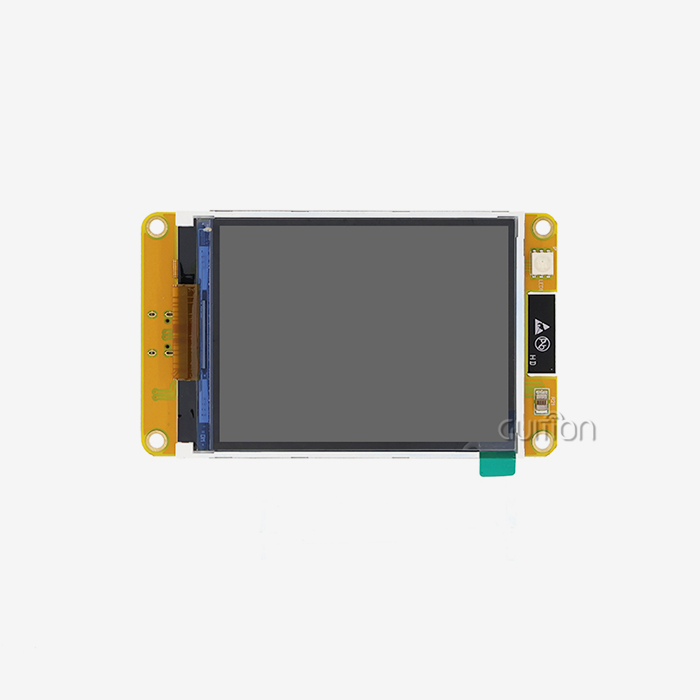
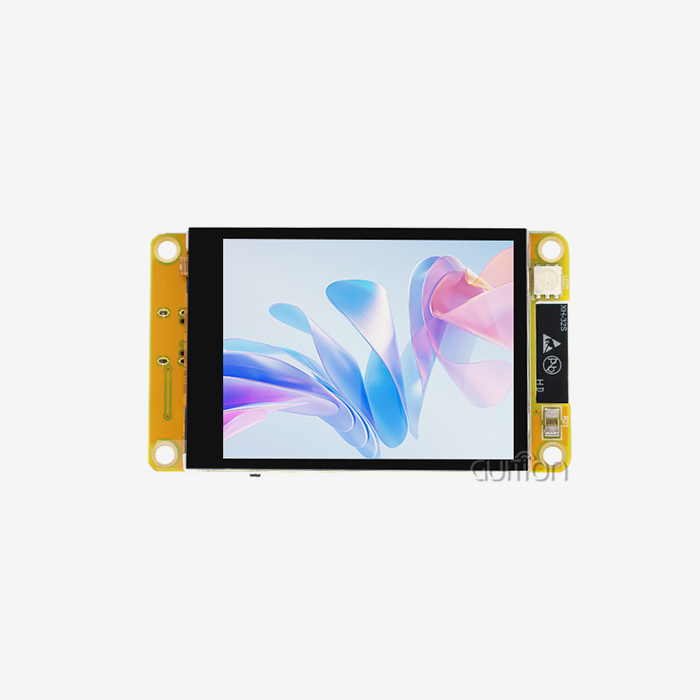
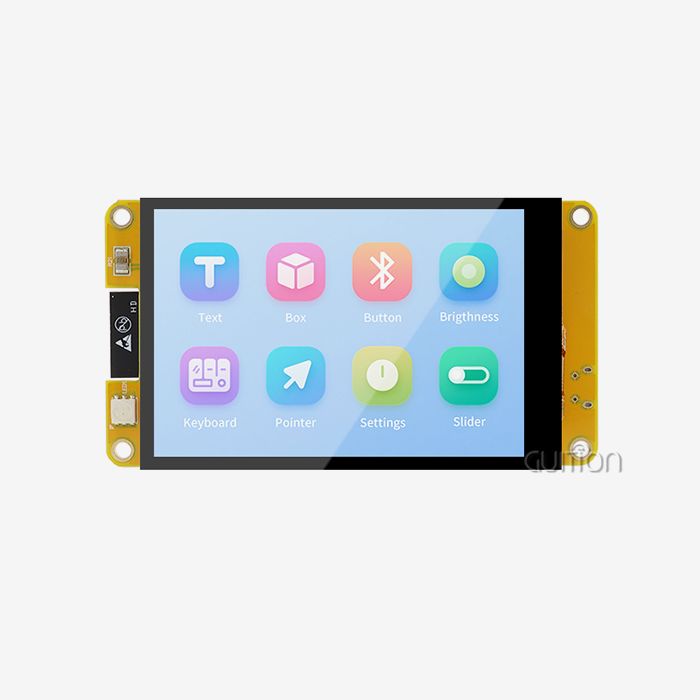
- Integrated intelligence: The JC3636K718C module combines a capacitive Circular knob with a 360×360 IPS fully laminated touchscreen, an ESP32-S3R8 dual-core processor at 240 MHz, 8 MB PSRAM, 16 MB Flash, Wi-Fi, and Bluetooth 5.0 in a single compact unit. No separate display driver, no discrete encoder board — the entire HMI lives in one assembly.
- Dual interaction modes: Operators can rotate the knob for fine parameter adjustment or tap the touchscreen for menu navigation. These two modes are freely interchangeable, which reduces input errors in time-sensitive environments.
- Built-in haptic feedback: A vibration motor inside the ESP32 display module delivers tactile confirmation of each rotary detent, a feature absent from virtually every standard knob.
Key Criteria for Choosing Custom Circular Knobs
Durability and Signal Integrity
Magnetic Hall-effect sensing, used in premium rotary knob modules, eliminates contact wear and extends operational life beyond one million cycles — compared to roughly 50,000 cycles for carbon-track contact types. This longevity directly reduces replacement frequency and warranty claims for panels in 3D printer HMIs, medical device interfaces, or energy management terminals.
Certification and Compliance
OEM panels destined for medical, industrial, or automotive environments must meet specific regulatory standards. Confirm that your Circular knob supplier holds relevant certifications and provides full component documentation. Guition products ship with comprehensive technical documentation, sample code, and community support — an important factor when procurement teams evaluate supplier reliability.
Development Ecosystem Compatibility
A rotary esp32 display module is only as useful as its software ecosystem. The JC3636K718C supports Arduino IDE, ESP-IDF, MicroPython, and Guition's proprietary graphical development platform. The Guition platform provides a drag-and-drop UI control library, cross-platform online debugging, and remote OTA firmware upgrades — cutting development cycles substantially and letting engineers focus on product differentiation rather than driver-level plumbing.
Procurement Best Practices for Custom Circular Knobs
Sourcing custom rotary knob components requires a vendor evaluation process that goes beyond unit price. The critical variables are customisation depth, minimum order flexibility, lead time transparency, and post-sale technical support. Guition addresses each of these variables directly. The MOQ for the JC3636K718C Circular knob is one piece, making it accessible for prototype and small-batch trial orders. Stock is maintained on hand, and confirmed orders ship on the second business day.
Standard packaging holds 86 units per carton, but packaging configurations can be tailored to match your warehouse or line-feeding requirements. Bulk procurement benefits from tiered pricing as order volumes grow, and custom colour matching becomes available at 500 units or above — a meaningful advantage for OEM brands building a consistent visual identity across product lines. Samples are available subject to eligibility review, allowing engineering teams to validate fit, feel, and firmware integration before committing to volume.
Maintenance, Repair, and Longevity of Custom Circular Knobs
Routine Care Practices
Circular knob modules with sealed metal housings require minimal maintenance: periodic cleaning of the touch surface with a non-abrasive cloth and occasional inspection of shaft mounting torque. Fully laminated IPS displays resist dust ingress more effectively than air-gap constructions, reducing the frequency of deep-cleaning interventions.
Remote Firmware Maintenance
One underappreciated aspect of modern knob display modules is remote maintainability. The JC3636K718C supports OTA firmware upgrades over Wi-Fi, meaning that UI changes, bug patches, or new feature rollouts can be deployed across an entire installed base without technician visits. This capability alone can eliminate a significant share of after-sales service costs in large deployments — a compelling ROI argument for product managers evaluating total cost of ownership. The combination of durable hardware construction, non-contact sensing, and remote software maintenance creates a knob-integrated HMI that remains reliable and current throughout its service life.
Conclusion
Custom circular knobs for OEM control panels are not a luxury specification — they are an engineering decision that shapes operator experience, product longevity, and brand perception. Whether your application is an industrial automation panel, a medical monitoring interface, or a smart home controller, a purpose-built rotary knob module delivers measurable advantages over generic alternatives. Guition's 1.85-inch Round Knob Touch Display (JC3636K718C) demonstrates what's achievable when knob hardware, display technology, and wireless connectivity are integrated from the ground up into a single, developer-ready module.
FAQ
1. What is the difference between an incremental and an absolute rotary knob?
Incremental knobs report relative rotation — steps moved since the last reading — and reset on power loss. Absolute knobs retain exact positional data using grey-code or voltage-divider methods, making them preferable in safety-critical or high-precision environments.
2. Can the Circular knob module be used with existing Arduino projects?
Yes. The JC3636K718C is fully compatible with Arduino IDE, as well as ESP-IDF and MicroPython, so it integrates directly into existing embedded workflows without requiring a new toolchain.
3. How does the Guition platform reduce development time?
Guition's drag-and-drop UI control library allows designers to build and preview interfaces visually. Combined with cross-platform online debugging, teams typically reach a working prototype significantly faster than with low-level framebuffer approaches.
4. Is custom colour matching available for small orders?
Standard colours — red, black, purple, dark grey, and blue — are available from stock in any quantity. Custom colour matching requires a minimum order of 500 units.
5. What maintenance does a knob display module need?
Routine cleaning of the touch surface and periodic shaft torque checks are sufficient. Remote OTA upgrades handle firmware maintenance without physical access to the device.
Partner With Guition — Your Trusted Circular Knob Supplier
Guition engineers HMI display solutions from 1.28" to 21.5" for teams that need reliability without compromise. The JC3636K718C circular knob module ships in two business days, supports an MOQ of one unit, and integrates with Arduino, ESP-IDF, and the Guition development platform. Send your requirements to david@guition.com to request a sample or discuss your OEM project today.
References
1. Norman, D. A. The Design of Everyday Things. Basic Books, 2013.
2. Salvendy, G. (Ed.). Handbook of Human Factors and Ergonomics. Wiley, 2021.
3. IEC 61310-3. Safety of Machinery — Indication, Marking and Actuation. International Electrotechnical Commission, 2007.
4. Espressif Systems. ESP32-S3 Technical Reference Manual. Espressif Systems, 2023.
5. Hollander, M. & Zuluaga, M. "Rotary Control Interface Fatigue in Industrial HMI Applications." Human Factors: The Journal of the Human Factors and Ergonomics Society, 2020.
6. ABI Research. Embedded HMI and Display Module Market Outlook. ABI Research, 2023.
Learn about our latest products and discounts through SMS or email