- English
- French
- German
- Portuguese
- Spanish
- Russian
- Japanese
- Korean
- Arabic
- Greek
- German
- Turkish
- Italian
- Danish
- Romanian
- Indonesian
- Czech
- Afrikaans
- Swedish
- Polish
- Basque
- Catalan
- Esperanto
- Hindi
- Lao
- Albanian
- Amharic
- Armenian
- Azerbaijani
- Belarusian
- Bengali
- Bosnian
- Bulgarian
- Cebuano
- Chichewa
- Corsican
- Croatian
- Dutch
- Estonian
- Filipino
- Finnish
- Frisian
- Galician
- Georgian
- Gujarati
- Haitian
- Hausa
- Hawaiian
- Hebrew
- Hmong
- Hungarian
- Icelandic
- Igbo
- Javanese
- Kannada
- Kazakh
- Khmer
- Kurdish
- Kyrgyz
- Latin
- Latvian
- Lithuanian
- Luxembou..
- Macedonian
- Malagasy
- Malay
- Malayalam
- Maltese
- Maori
- Marathi
- Mongolian
- Burmese
- Nepali
- Norwegian
- Pashto
- Persian
- Punjabi
- Serbian
- Sesotho
- Sinhala
- Slovak
- Slovenian
- Somali
- Samoan
- Scots Gaelic
- Shona
- Sindhi
- Sundanese
- Swahili
- Tajik
- Tamil
- Telugu
- Thai
- Ukrainian
- Urdu
- Uzbek
- Vietnamese
- Welsh
- Xhosa
- Yiddish
- Yoruba
- Zulu
What Makes a Smart LCD Module Ideal for IoT Applications?
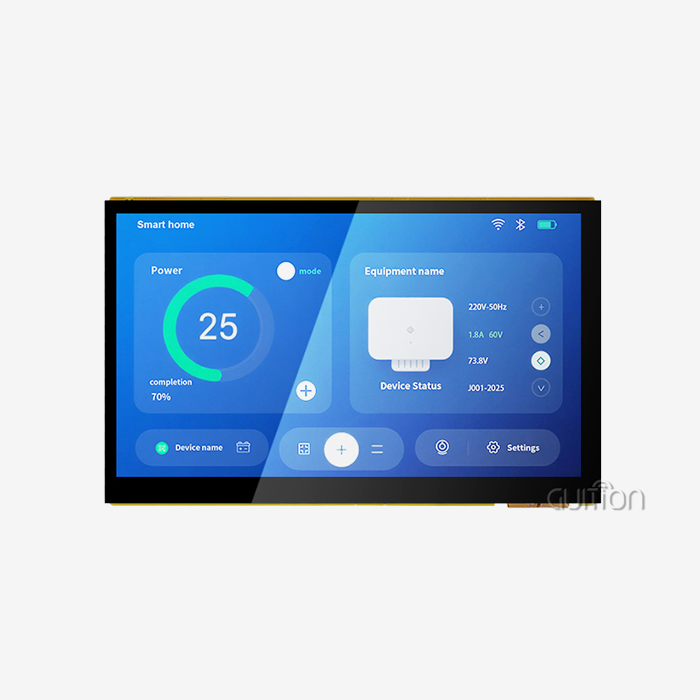
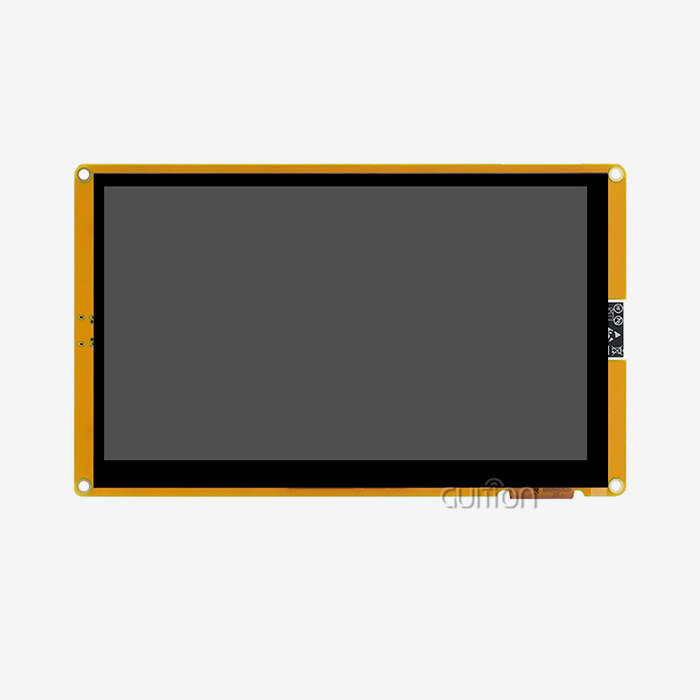
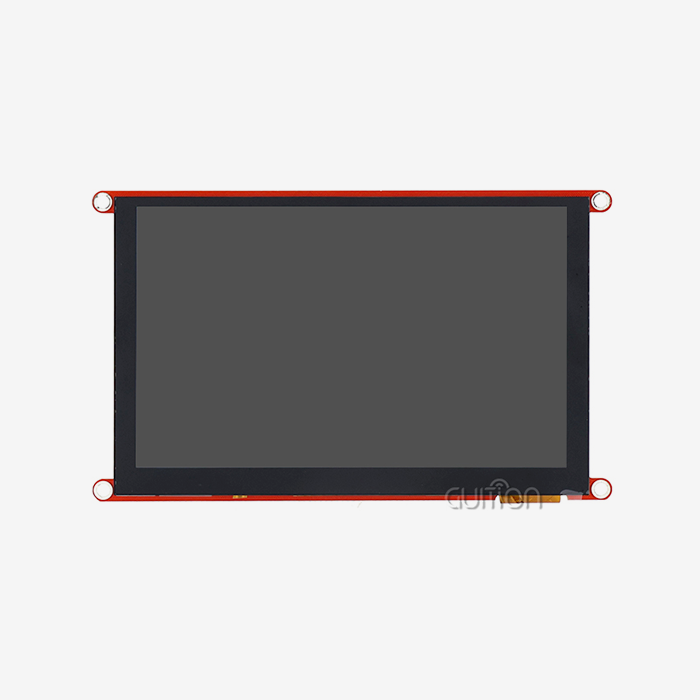
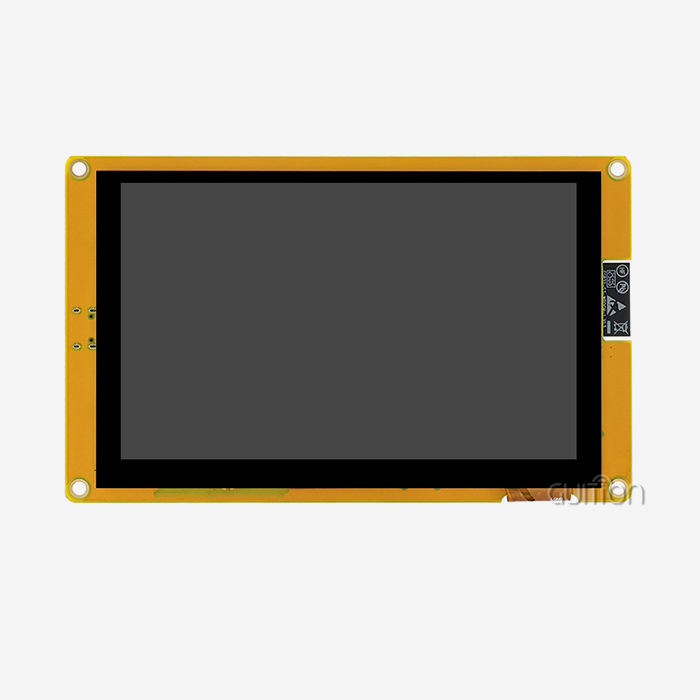
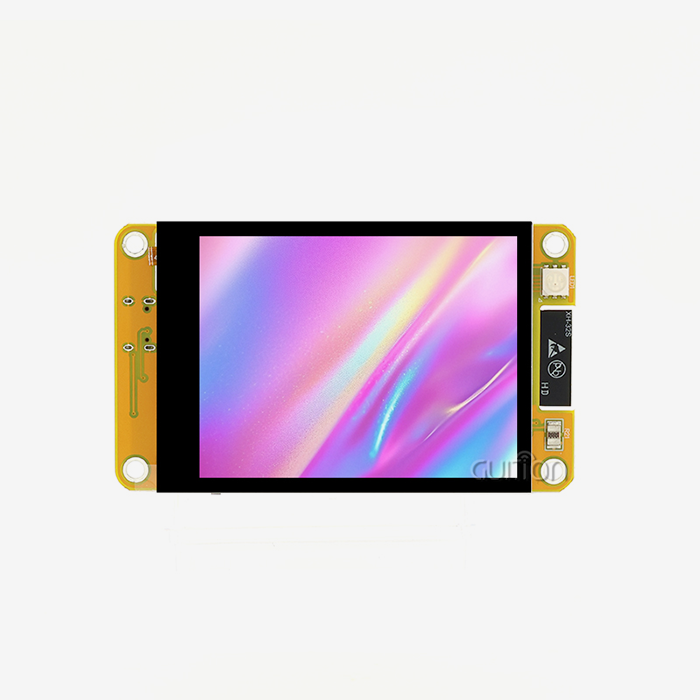
A Smart LCD Module is an integrated display subsystem that combines a graphics controller, communication interface, and backlight circuitry into a single compact assembly. This design lets engineers skip low-level driver work and focus on application logic instead. For IoT devices that require reliable real-time feedback, low pin usage, and remote upgrade capability, a display module built around serial communication protocols is the practical answer. Guition's JC2432S028N, a 2.8-inch TFT LCD module driven by the ILI9341 IC, shows exactly why this architecture fits connected applications across industries.

Understanding Smart LCD Modules and Their Role in IoT
What Separates a Smart Display Module from a Raw Panel
For a raw TFT panel to work, the host MCU has to handle every touch event, pixel refresh, and font rendering. That uses up CPU cycles and requires a lot of knowledge about firmware. A smart display module moves the graphics processing to a separate controller on board. This lets the host MCU send and receive simple orders and state information. This separation keeps the main control loop clean and quick to respond, which is very important for IoT devices that do communication tasks and sensor polling at the same time.
Why Serial Communication Protocols Matter
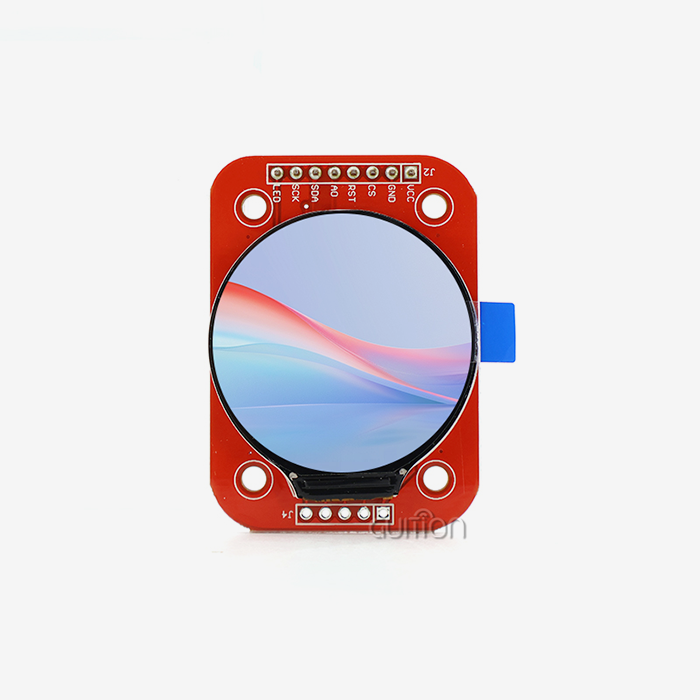
There are only a few GPIO pins used by the GUITION JC2432S028N, its 4-wire SPI interface, and the ILI9341 driver IC. Together, they provide a resolution of 240x320. SPI throughput at standard clock rates is fast enough for seamless UI updates on a 2.8-inch screen, and fewer pins mean sensors, switches, and wireless modules can plug into more I/O ports. Fewer wires means fewer errors during assembly and a reduced incidence of field failure for thousands of IoT actions.
Real-World Deployment Evidence
A 2022 IHS Markit study on the display industry said that serial-interface display modules cut the time it took to create integrated user interfaces by up to 40% compared to parallel-bus TFT solutions. When industrial IoT platforms used LCD panels that were built in, system uptime went up significantly because software errors related to displays did not spread to the main control code. These numbers show why experts in the medical, smart home, and automation industries keep using serial LCD display units in their new designs.
Comparing Smart LCD Modules with Other Display Technologies for IoT
LCD vs. OLED for Connected Devices
OLED panels have a thin profile and a high contrast, but their organic materials break down faster when they are used continuously, which is a real problem for industrial HMI panels that are used 24 hours a day, seven days a week. LCD technology, especially TFT LCD, keeps the brightness the same for tens of thousands of hours. The Smart LCD Module JC2432S028N's LED backlight circuit is designed to last a long time, which makes it a cost-effective choice for production runs where replacement logistics are important.
SPI vs. I2C vs. UART Interface Trade-offs
I2C moves data more slowly than SPI, so SPI is better for updating a 240x320 screen with changing content. UART-based smart display units have an MCU built in, which handles rendering on its own, making host interaction even easier. The JC2432S028N's SPI method is just right: it's fast enough for responsive UI updates and easy enough that any engineer who knows how to use Arduino or ESP-IDF can add it in just a few hours. Picking the right interface affects both how hard it is to create and how much it costs to maintain over time.
Procurement Risk and Supplier Reliability
Business-to-business buyers should check to see if a supplier of display modules keeps a steady supply on hand, offers certifications that can be checked, and has a history of providing support after the sale. Guition, which was made by Shenzhen Jingcai Intelligent Co., Ltd., puts out datasheets, sample code, and cross-platform programming tips for all of its products. This openness lowers the risk of buying in bulk and boosts trust among engineering teams during the design-in process.
Key Selection Criteria for Procurement of Smart LCD Modules in IoT
Resolution, Refresh Rate, and Power Budget
The JC2432S028N has a resolution of 240x320, which is good enough for status reports, parameter menus, and warning screens in both industrial and household IoT devices. The resolution should match the size of the panel; putting too many pixels on a small screen makes it harder to read instead of easier. Power use is also important. The backlight control circuitry in the module allows PWM dimming, which lets designers change the brightness to fit device power budgets without using extra parts.
Touch Options and Environmental Compliance
The JC2432S028N from Guidance is the Smart LCD Module that comes with customizable touch screen control circuits. This lets product teams choose between touch and non-touch versions based on the needs of the application. When people wear gloves, resistive touch works consistently on medical monitoring tools and industrial control panels. Also, buyers should make sure that the LCD display module they choose meets the RoHS and CE standards for the market they want to sell to, especially for items sold in the US and EU.
Vendor Evaluation Checklist
Before making a large order for a TFT display module, these are the main things that every procurement manager should check when finding one:
- Sample availability: Request evaluation units before committing to production quantities. The JC2432S028N is available for sample testing with full documentation.
- Lead time transparency: Confirm that the supplier can maintain consistent lead times across reorder cycles.
- Technical documentation: Datasheets, schematic files, and example code should ship with every module—Guition provides these for Arduino, IDF, and Guition development modes.
- After-sales support: Responsive engineering support reduces debugging cycles and protects project timelines.
(Technical documentation): Every module should come with datasheets, design files, and example code. For Arduino, IDF, and Guition development modes, Guision gives you these.
Troubleshooting and Maintaining Smart LCD Modules in IoT Deployments
Diagnosing Common Display Faults
When the screen flickers on SPI LCD modules, it's usually because of an unstable power rail or ground loop, not a broken panel. Most EMI-related restart events can be avoided by keeping the display power source away from inductive loads like relays. Communication problems between the host MCU and the ILI9341 IC are usually caused by wrong SPI clock polarity settings or timing problems, which can be fixed by editing configuration registers instead of making hardware changes.
Firmware Updates and Remote Maintenance
Remote upgrade support is one thing that sets a modern LCD display module apart from older ones that use fixed firmware. Through the wireless connection of the host MCU, Guition's platform lets project firmware be updated over the air. This feature gets rid of the cost of service visits for things that are already out in the field, like smart appliances, energy management terminals, and commercial kiosks. Version control and release are handled by the Guition UI development tool from a PC environment.
Extending Module Service Life
Controlling the backlight duty cycle and managing the temperature are the most important parts of preventative maintenance for the Smart LCD Module. When you set the lights to a 70–80% duty cycle instead of full brightness, the LEDs last a lot longer, and service times are often pushed past 40,000 hours. Guition provides application notes that include thermal design suggestions for closed containers. This is especially useful for people who are making medical devices or working on industrial systems and need to keep track of reliability data.
Future Trends and Innovations in Smart LCD Modules for IoT Applications
AI Integration and Edge Intelligence
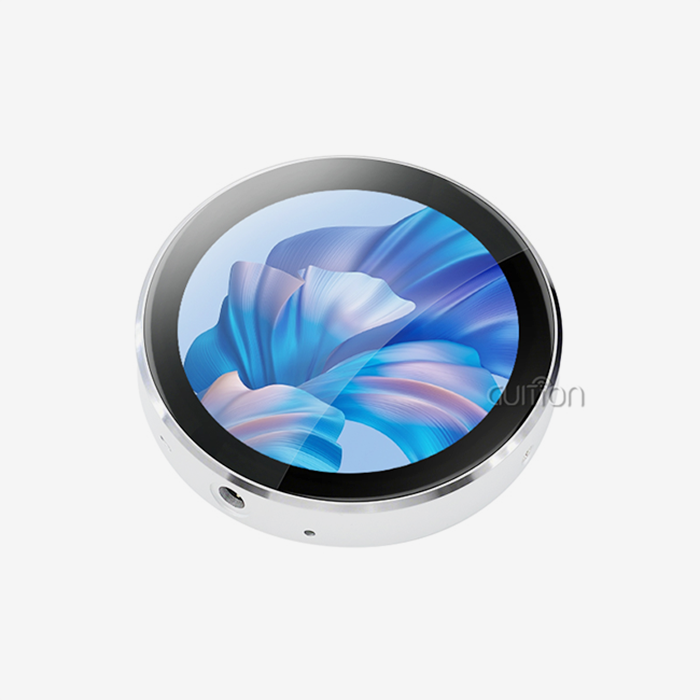
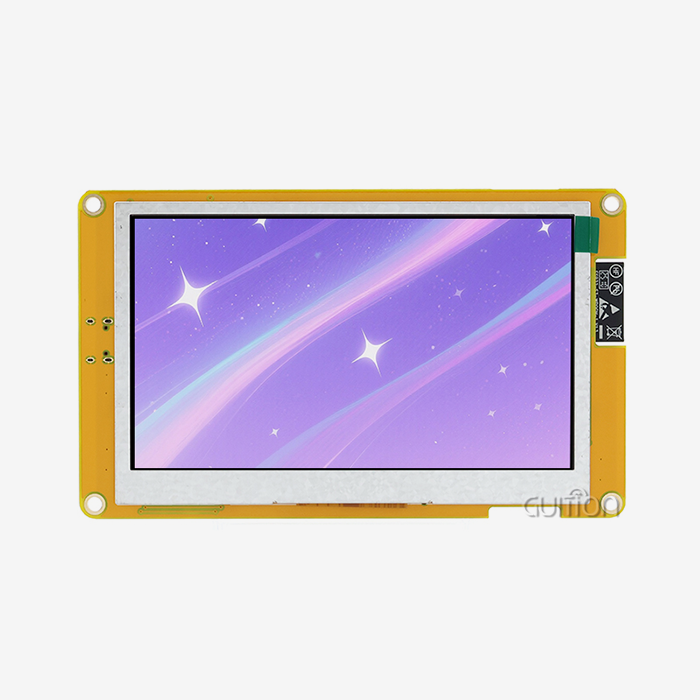
More and more display modules are getting processing power built in, which lets them support local AI inference for things like gesture recognition and adaptive user interface adaptation. The JC2432S028N is focused on fast serial communication and user interface rendering. Guition's wider product line, which includes screen sizes from 1.28" to 21.5", lets the company meet higher-computing display needs as edge AI needs rise in smart manufacturing and medical tests.
Sustainability and Energy Efficiency
Engineers have to define low-power display options because of rules and goals for companies to be more environmentally friendly. In many duty-cycle situations, TFT LCD modules with PWM lighting control and sleep-state software use a lot less power than OLED modules that are always on. Current environmental standards are taken into account when Guition designs its display modules. This helps product teams that need to show lifecycle energy compliance in paperwork they send to certification bodies.
Connectivity Expansion
Guition's community of display modules has built-in WiFi and Bluetooth that let devices link directly to cloud platforms and local networks without the need for extra radio modules. With UTF-8 encoding and multi-language support, the same hardware can be sent to markets in North America, Europe, and Asia without having to have the software redesigned. This saves money on costs for global product sales.
Conclusion
A well-specified Smart LCD Module cuts down on engineering work, speeds up the time it takes to go from prototype to production, and supports the workflows for remote maintenance that modern IoT deployments need. This is shown by the GUITION JC2432S028N, which has an ILI9341-driven SPI architecture, a small 2.8-inch form factor, and works with Arduino, ESP-IDF, and the Guition development environment. If a team is looking for a Smart LCD Module provider, Guition's documented hardware, multi-platform software support, and quick expert help make it a good choice for both current projects and future product versions.
FAQ
What communication interface does the JC2432S028N use?
The ILI9341 driver IC and the JC2432S028N talk to each other through a 4-wire SPI interface. This limits the use of pins while still allowing enough data to flow for a 240x320 TFT display.
Does the module support touch input?
On the JC2432S028N, you can choose not to have touch screen control hardware. Buyers can choose between touch and non-touch configurations based on the needs of the application.
Can I update the firmware remotely after deployment?
Yes, over-the-air firmware updates can be done through the host MCU's wireless connection on Guition's platform. This is useful for products that are already out in the field.
Which development environments are compatible?
The module can be used with Arduino, ESP-IDF, and the Guition mode for programming. For all three platforms, there is sample code and instructions.
What is the recommended backlight duty cycle for extended service life?
Running at 70–80% PWM duty cycle instead of full brightness can make an LED backlight last a lot longer than the usual rated hours, which lowers the cost of long-term upkeep.
Ready to Source Your Next Smart LCD Module? Contact Guition Today
Guition, which was founded by Shenzhen Jingcai Intelligent Co., Ltd., is a reliable Smart LCD Module company that makes screens from 1.28" to 21.5". Our engineering team is ready to help you with your project from the evaluation stage through production, whether you need a sample of the JC2432S028N or want to place a large order. To get samples and specs, email us at david@guition.com or go to https://jingcaizhineng.aixdb.cn/.
References
1. IHS Markit — Global Display Module Market Report, 2022.
2. IEEE Transactions on Industrial Electronics — Serial Interface Architectures for Embedded HMI Systems, 2021.
3. Journal of Electronic Imaging — TFT LCD Reliability in Industrial Environments, 2020.
4. IEC 61000-4-2 — Electromagnetic Compatibility: Electrostatic Discharge Immunity Test, International Electrotechnical Commission, 2008 (revised 2023).
5. Embedded Computing Design — Selecting Display Modules for IoT Edge Devices, 2023.
6. ISO 13406-2 — Ergonomics Requirements for Work with Visual Displays Based on Flat Panels, International Organization for Standardization, 2001.
Learn about our latest products and discounts through SMS or email