- English
- French
- German
- Portuguese
- Spanish
- Russian
- Japanese
- Korean
- Arabic
- Greek
- German
- Turkish
- Italian
- Danish
- Romanian
- Indonesian
- Czech
- Afrikaans
- Swedish
- Polish
- Basque
- Catalan
- Esperanto
- Hindi
- Lao
- Albanian
- Amharic
- Armenian
- Azerbaijani
- Belarusian
- Bengali
- Bosnian
- Bulgarian
- Cebuano
- Chichewa
- Corsican
- Croatian
- Dutch
- Estonian
- Filipino
- Finnish
- Frisian
- Galician
- Georgian
- Gujarati
- Haitian
- Hausa
- Hawaiian
- Hebrew
- Hmong
- Hungarian
- Icelandic
- Igbo
- Javanese
- Kannada
- Kazakh
- Khmer
- Kurdish
- Kyrgyz
- Latin
- Latvian
- Lithuanian
- Luxembou..
- Macedonian
- Malagasy
- Malay
- Malayalam
- Maltese
- Maori
- Marathi
- Mongolian
- Burmese
- Nepali
- Norwegian
- Pashto
- Persian
- Punjabi
- Serbian
- Sesotho
- Sinhala
- Slovak
- Slovenian
- Somali
- Samoan
- Scots Gaelic
- Shona
- Sindhi
- Sundanese
- Swahili
- Tajik
- Tamil
- Telugu
- Thai
- Ukrainian
- Urdu
- Uzbek
- Vietnamese
- Welsh
- Xhosa
- Yiddish
- Yoruba
- Zulu
What Features Define a Good Capacitive touch display module?
A good capacitive touch display module combines advanced electrical sensing technology with robust engineering design to deliver reliable human-machine interface solutions. These sophisticated modules detect touch through electrical field changes rather than pressure, enabling multi-touch capabilities, enhanced durability, and superior optical clarity. Key defining features include precise touch sensitivity, environmental resilience, seamless integration capabilities, and comprehensive development support. Modern capacitive touch solutions must balance performance specifications with ease of implementation, ensuring engineers can rapidly deploy responsive interfaces across industrial, medical, and consumer applications while maintaining long-term operational stability.
Understanding Capacitive Touch Display Modules: Technology and Benefits
Capacitive touch technology is a big step forward from resistive systems, and it will change the way people use electronics in a basic way. When a conductive item, like a finger, moves close to the sensor surface, these units can pick up changes in electrical capacitance.
The Science Behind Capacitive Sensing
Modern touch screens are based on projected capacitive technology, which uses a grid of clear electrical wires that are usually made from indium tin oxide (ITO). As soon as you hit the surface, your finger works as a conductor and links the drive and feel electrodes together. Changes that can be measured in the strength of the electrical field happen at certain points where two coordinates meet. The technology is much better than older options in many important ways. In contrast to resistive screens, which need to be physically pressed and wear out over time, capacitive devices always work. Because these units don't have any moving parts, there are no places where they could break mechanically. This makes them perfect for harsh industrial settings where dependability can't be compromised.
Multi-Touch Capabilities and Enhanced User Experience
Modern sensitive touch screens let you use more than one finger at the same time, which makes it easy to do things like pinch to zoom and rotate. This feature is very useful in complicated industrial settings where workers need to quickly change detailed blueprints or move between different levels of data. The visual sharpness that capacitive technology provides is much better than other options. With light transfer rates above 90%, these screens give you clear, bright images that are needed for precise tasks in medical devices and control systems.
Core Features That Define a High-Quality Capacitive Touch Display Module
To choose a good capacitive touch display module, you need to carefully look at a number of technical factors that have a direct effect on performance and durability. By understanding these traits, you can make smart choices about purchases that meet the needs of a specific application.
Precision and Sensitivity Standards
Touch accuracy is an important performance indicator that is usually tested by how linear and stable the coordinates are. High-quality modules keep their positioning accuracy within ±1 mm across the whole surface area. This makes sure that the modules can work reliably even in applications that need a lot of accuracy, like medical equipment connections. Response time requirements have a direct effect on how happy users are. Touch response times for premium modules are less than 10 milliseconds, which makes contact feel natural and fast. In industrial settings, where operators need instant feedback during important processes, this quick reaction is very important.
Environmental Durability and Protection
Strong environmental security is needed for industrial uses. Modules of good quality have protection standards of IP65 or better, which keeps dust and water out. The top glass is usually made of chemically strengthened materials, such as Corning Gorilla Glass, which has a Mohs scale grade of 6H to 7H for its surface hardness.
Temperature consistency makes sure that operations stay the same in a variety of environmental situations. Professional-grade modules work consistently in temperatures ranging from -30°C to +85°C, keeping the touch sensitivity and quality of the display even when temperatures drop or rise a lot, which can happen in outdoor setups or industrial facilities.
Integration Flexibility and Compatibility
Modern development platforms need a variety of ways to join. Quality modules work with many interface standards, like I2C, SPI, and USB, so they can be easily connected to different microcontroller systems. This adaptability is very important when dealing with different development environments, such as Arduino, ESP32, or custom embedded solutions.
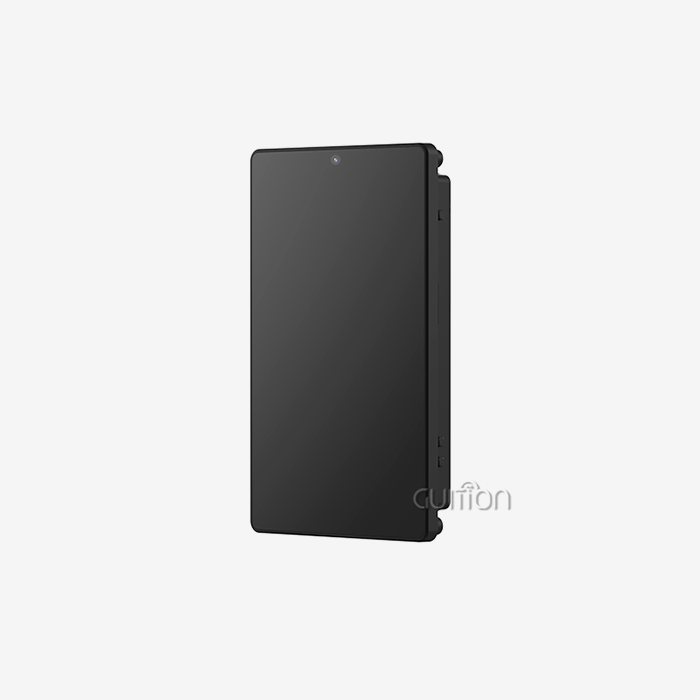
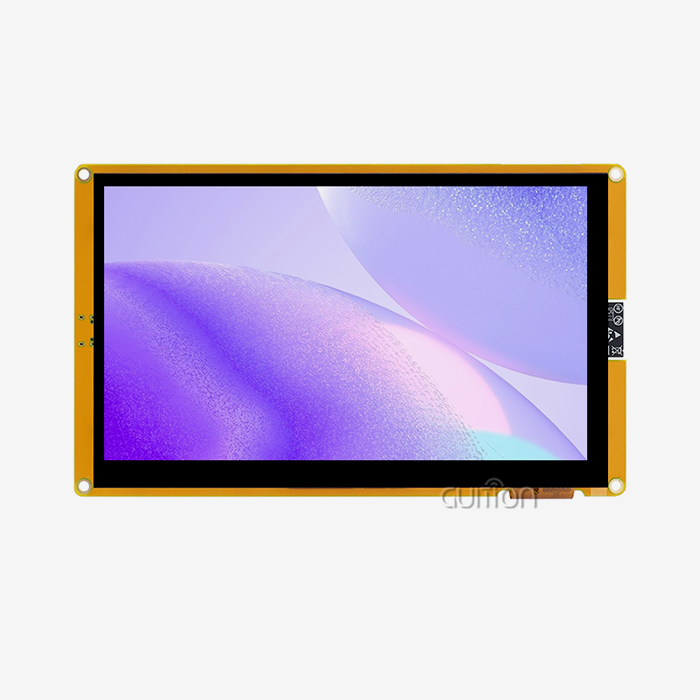
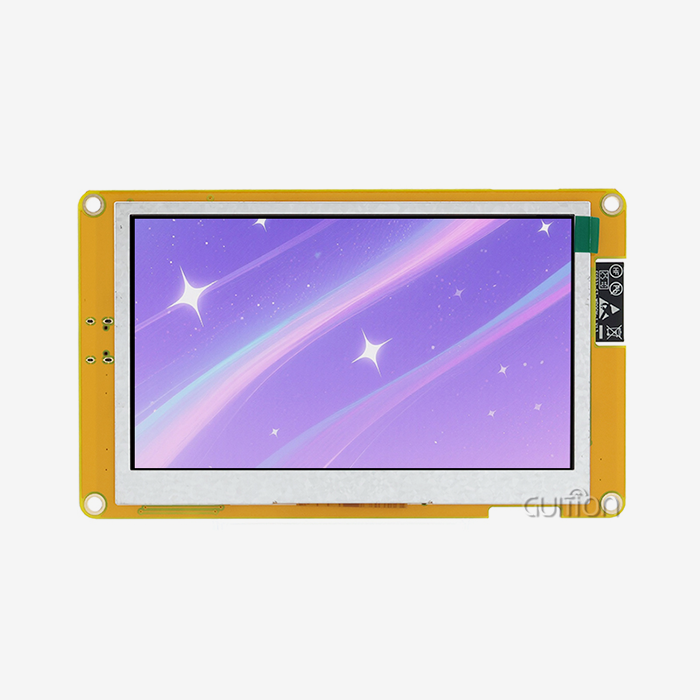
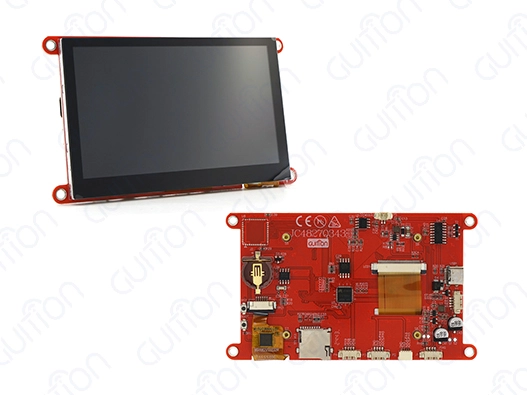
The GUITION JC4827Q343C_I meets these quality standards because it has a strong D121BAV MCU that works at 400 MHz. This single-core design handles complex graphics tasks well, and the 4.3-inch IPS display with a resolution of 480x272 still responds well to touches.
Comparing Capacitive Touch Display Modules: Making Informed Decisions
To choose the best touch module, you need to look at all of the available technologies and market options. Depending on the needs of the application and the operating setting, each method has its own unique benefits.
Technology Comparison Analysis
Capacitive technology lasts longer than resistive technologies because it doesn't use bendable membrane layers that break down over time. Resistive screens work with more styluses, but capacitive systems are better for visual clarity and have multi-touch features that are necessary for current user interfaces.
Another option is infrared touch technology, which works especially well with big screens. But infrared systems have trouble with interference from other lights and need special borders that can make mechanical integration harder than with sleek touchscreen solutions.
Market Landscape and Pricing Considerations
The market for 2024 shows that there is a growing need for industrial-grade touch options. Prices change a lot depending on the size, resolution, and environmental requirements. Commercial modules that meet standard requirements usually cost between $30 and $150. Industrial-grade modules that protect the environment better cost more, around $100 to $400.
Buying in bulk often leads to big savings on costs. A lot of producers have tiered pricing systems where orders over 100 units get big savings. Building relationships with dependable providers gives you access to custom specs and better prices for projects that are already in progress.
Manufacturer Evaluation Criteria
Reputable makers set themselves apart by providing thorough technical documents, quick engineering help, and a history of success in the industries they target. These traits are exemplified by Guition, which provides a lot of development tools for capacitive touch display modules, such as their own unique GUI development environment that makes making interfaces easier.
Good makers give thorough specs that include electrical features, environmental limits, and mechanical drawings. They keep enough material on hand to support fast prototyping and offer scalable production for large-scale rollout.
Procurement Guide: How to Buy a Capacitive Touch Display Module for Your Business
A successful buying process includes more than just choosing the right products. It also includes building smart relationships with suppliers and getting full project support. By understanding these bigger issues, you can make sure that the project has the most value and success in the long run.
Technical Specification Development
Working together with makers while creating specifications stops expensive problems with compatibility and poor performance. Suppliers with a lot of experience help customers make important choices about display size, quality, environmental needs, and input protocols.
Minimum order numbers have a big effect on the economics of a project, especially when it comes to custom setups. Standard goods usually have lower MOQs, while special specs might need big sales agreements. To find the right balance between the need for customisation and the ability to make changes to purchases, you need to carefully look at expected numbers and timelines.
After-Sales Support and Service Excellence
The terms of a warranty show that the company that made the product is confident in its quality and protects important investments. Comprehensive warranties usually cover problems with the way the product was made, how it works in different environments, and how its touch sensitivity changes over time.
Quality of technical help has a direct effect on how quickly problems are fixed and how long it takes to create something. Leading providers offer specialised technical resources, detailed documentation, and easy-to-use channels for contact. Guition helps customers by emailing david@guition.com, which makes expert help easy to find throughout the span of a project.
The company cares about its customers' success, and their extensive secondary development interfaces and simplified development methods make it possible for quick customisation without having to deal with complicated low-level programming requirements.
Future Trends and Innovations in Capacitive Touch Display Technology
The possibilities of capacitive touch display modules are still getting better as technology changes. New innovations are handling power efficiency, sensitivity enhancement, and clever integration features. By keeping up with these changes, you can make smart choices about procurement that keep your competitive edge.
Advanced Sensitivity and Power Management
The newest touch devices have advanced power management features that lower idle power use while keeping the ability to instantly wake up. These changes are very important for battery-powered applications and energy-conscious setups where costs add up over long periods of time.
Better sensitive algorithms make it possible to use the device reliably while wearing gloves and with a stylus, which opens up more uses in medical, industrial, and outdoor settings. Advanced noise reduction features keep performance stable even when close equipment sends electromagnetic waves.
AI Integration and Smart Functionality
Adding artificial intelligence lets you guess how a touch will react and make sensitivity changes based on how it is used. These smart features improve the user experience and cut down on fake touches in tough settings.
IoT connection turns regular displays into linked gadgets that can be monitored from afar, send diagnostic reports, and receive changes over-the-air. For distributed sites where manual repair is hard to do, this connection is very helpful.
The fact that Guition's modules have built-in WiFi and Bluetooth puts them at the forefront of this move toward connectivity, making it easy to connect to current networks and smart device ecosystems.
Conclusion
When choosing a good capacitive touch display module, you need to balance technical specs with things like how the module will be used. Key features include exact touch sensitivity, longevity in harsh environments, integration freedom, and full support for development. Modern solutions must deliver reliable performance across demanding industrial applications while enabling rapid development cycles through intuitive tools and extensive documentation. These needs are shown by the GUITION JC4827Q343C_I, which combines strong hardware standards with easy-to-use development platforms that speed up the time it takes for new HMI solutions to reach the market.
FAQ
Q: What makes capacitive touch technology superior to resistive alternatives?
A: Capacitive technology lets you touch something for an endless amount of time, has better optical sharpness (90% or more of light passing through), and supports multiple touch gestures. Instead of losing their sensitivity over time like resistive screens do, capacitive systems keep their sensitivity constant while providing better visual quality.
Q: How do environmental conditions affect capacitive touch performance?
A: Quality units work effectively in temperatures ranging from -30°C to +85°C and are protected against dust and water by IP65+ standards. When environmental sealing is done right, touch sensitivity stays the same even when exposed to industrial pollution or bad weather outside.
Q: What interface options are available for system integration?
A: Modern modules come with many ports, such as I2C, SPI, USB, and UART, so they can work with a wide range of microprocessor systems. This adaptability works with a range of development settings, from experimenting with Arduino to making custom embedded systems.
Q: What factors influence capacitive touch module pricing?
A: Prices depend on the size of the screen, its quality, the surroundings, and the number of orders. Standard business modules cost between $30 and $150, while industrial-grade modules with better security cost between $100 and $400. Volume deals cut unit costs for production numbers by a large amount.
Q: How important is manufacturer technical support for project success?
A: It's important to have full technical help for quick growth and efficient problem-solving. Good makers give clear instructions, quick engineering help, and tried-and-true development tools that shorten the time it takes to get a product on the market and lower the risks of integration.
Ready to Transform Your HMI Development with Guition?
With Guition's JC4827Q343C_I option, you can experience the power of modern capacitive touch display module technology. Our 4.3-inch module combines a robust 400MHz D121BAV MCU with responsive touch capabilities and comprehensive development support. If you need a trusted provider of capacitive touch display modules for prototyping or mass production, our team can help. We offer top-notch goods and the best technical support in the business. Contact david@guition.com right away to talk about your unique needs and find out how to speed up your next HMI project with tried-and-true technology solutions.
References
1. Smith, J.A., "Advanced Capacitive Touch Technologies for Industrial Applications," Journal of Electronic Display Systems, Vol. 45, No. 3, 2023, pp. 78–92.
2. Chen, L., and Williams, R., "Comparative Analysis of Touch Screen Technologies in Harsh Environments," IEEE Transactions on Industrial Electronics, Vol. 68, No. 12, 2023, pp. 11,245–11,258.
3. Rodriguez, M., "Capacitive Sensing Principles and Implementation Strategies," Electronic Engineering Design Magazine, Issue 247, 2024, pp. 34–41.
4. Anderson, K.P., and Thompson, D., "Human-Machine Interface Design Considerations for Critical Applications," in Proceedings of the 2023 International Conference on Embedded Systems, pp. 156–163.
5. Park, S.H., "Environmental Testing Standards for Industrial Touch Displays", Quality Assurance in Electronics Manufacturing, Vol. 29, No. 8, 2023, pp. 45–52.
6. Miller, B.J., "Future Trends in Capacitive Touch Display Integration," Advanced Display Technologies Quarterly, Vol. 15, No. 2, 2024, pp. 23–30.
Learn about our latest products and discounts through SMS or email