- English
- French
- German
- Portuguese
- Spanish
- Russian
- Japanese
- Korean
- Arabic
- Greek
- German
- Turkish
- Italian
- Danish
- Romanian
- Indonesian
- Czech
- Afrikaans
- Swedish
- Polish
- Basque
- Catalan
- Esperanto
- Hindi
- Lao
- Albanian
- Amharic
- Armenian
- Azerbaijani
- Belarusian
- Bengali
- Bosnian
- Bulgarian
- Cebuano
- Chichewa
- Corsican
- Croatian
- Dutch
- Estonian
- Filipino
- Finnish
- Frisian
- Galician
- Georgian
- Gujarati
- Haitian
- Hausa
- Hawaiian
- Hebrew
- Hmong
- Hungarian
- Icelandic
- Igbo
- Javanese
- Kannada
- Kazakh
- Khmer
- Kurdish
- Kyrgyz
- Latin
- Latvian
- Lithuanian
- Luxembou..
- Macedonian
- Malagasy
- Malay
- Malayalam
- Maltese
- Maori
- Marathi
- Mongolian
- Burmese
- Nepali
- Norwegian
- Pashto
- Persian
- Punjabi
- Serbian
- Sesotho
- Sinhala
- Slovak
- Slovenian
- Somali
- Samoan
- Scots Gaelic
- Shona
- Sindhi
- Sundanese
- Swahili
- Tajik
- Tamil
- Telugu
- Thai
- Ukrainian
- Urdu
- Uzbek
- Vietnamese
- Welsh
- Xhosa
- Yiddish
- Yoruba
- Zulu
LCD Panel Module vs Display Assembly: Key Differences
When engineers and procurement managers evaluate display components, the distinction between an Lcd panel module and a full display assembly shapes every downstream decision — from BOM cost to integration timeline. An LCD panel module combines the TFT-LCD cell, backlight unit, and driver ICs into a ready-to-integrate component, while a display assembly adds housing, touch overlays, and controllers for a turnkey solution. Knowing which fits your project determines your development speed, customization depth, and total cost of ownership.

Understanding LCD Panel Modules and Display Assemblies
What Is an LCD Panel Module?
The TFT-LCD cell, the backlight unit (BLU) with LED arrays and optical plates, and the driver IC—often connected via COG or COF—are the three main parts that make up an LCD panel module, a finished display component. The module's MCU or parallel interface provides a calibrated visual output, and it's ready to be put into a host circuit board. Engineers have full control over brightness settings, refresh rates, and signal protocols because they can directly access the hardware. This architecture works well for embedded systems, industrial HMI panels, and other uses that need a small footprint and a lot of design options.
What Is a Display Assembly?
By enclosing the LCD panel module inside a structural housing, bonding a touchscreen overlay (resistive or capacitive), and building in a display controller, a display assembly increases its functionality. The end result is a plug-and-play unit that makes integration a lot easier. But the extra layers make it harder to get to the heat areas, raise the cost of each unit by 30–60% compared to similar basic modules (IHS Markit Display Supply Chain Report, 2023), and make them harder to fix. Commercial kiosks, consumer gadgets, and point-of-sale systems often use display kits because they can be set up quickly and don't need to be customized.
Key Differences Between LCD Panel Modules and Display Assemblies
The difference between these two display types in real life includes cost, complexity, lead time, and the ability to be serviced over time. Knowing these differences helps procurement teams make sure that their sourcing strategy fits with the limits of the project.
Here is an organized list of the most important differences:
- Cost Structure: LCD panel modules have a lower unit price because they don't include frames, bonded touch layers, or controls that have already been put together. This difference in cost grows a lot for orders over 500 units, which is why modules are the best choice for OEM manufacturers who are trying to meet tight BOM targets.
- Customization Depth: With a module-based design, engineers can pick their own controller IC, set the display parameters using firmware, and use MCU interfaces that work with their platform, like Arduino, ESP-IDF, or a custom RTOS. When display assemblies are shipped, the controller firmware is fixed, which limits access to parameters.
- Integration Complexity: Modules need skilled embedded engineering during bring-up; they need careful attention for power scheduling, signal switching, and backlight current control. This problem is greatly reduced by assemblies, but they make you rely on the supplier's software plan.
- Repairability and Lifespan: Modules are better for industrial use because parts like the BLU or driver board can be fixed without having to throw away the whole unit. When a bonded assembly fails, the whole unit usually has to be replaced, which raises the cost of service after the sale.
- Lead Times and Logistics: Distributors keep more modules in stock, so they can ship them out more quickly. Time-to-market is slowed down by the fact that production runs for custom assemblies with bonded touch and specific housing often take 4–8 weeks.
Because of these changes, you can choose the format that best fits your job. While low-volume consumer goods with strict aesthetic requirements may warrant an assembly method, rapid development cycles and volume cost sensitivity point toward LCD panel modules.
Choosing the Right Solution for Your Business Needs
To choose between an LCD panel module and a display unit, you must compare the project's technical requirements with its actual requirements. Five things are looked at in the F-1 criteria screening method: resolution, interface compatibility, environmental rating, integration complexity, and unit cost at goal volume.
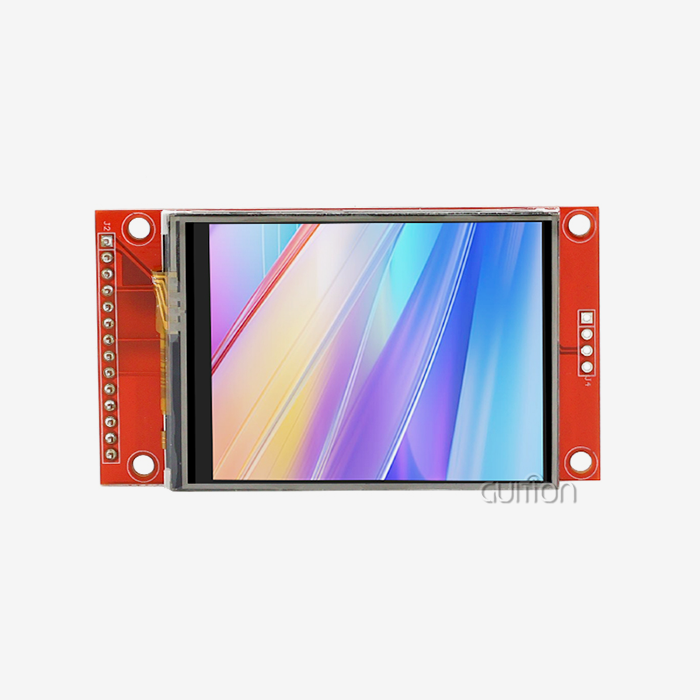
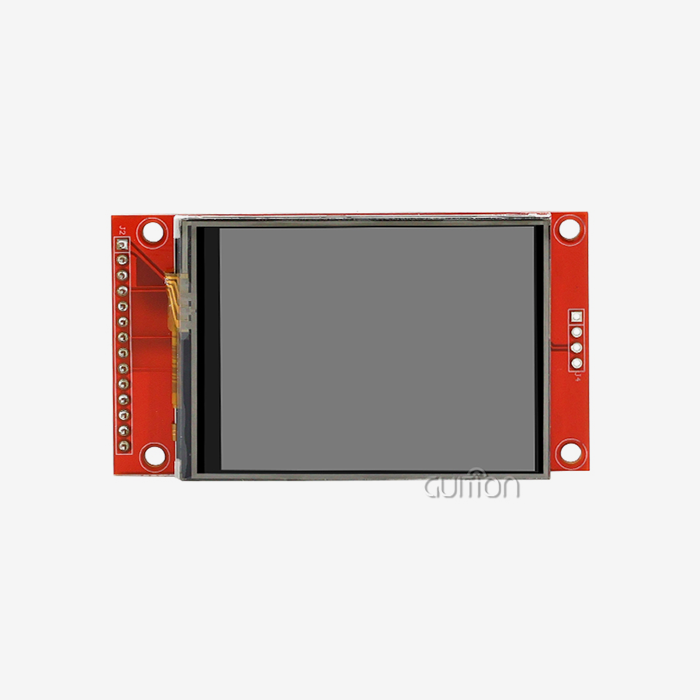
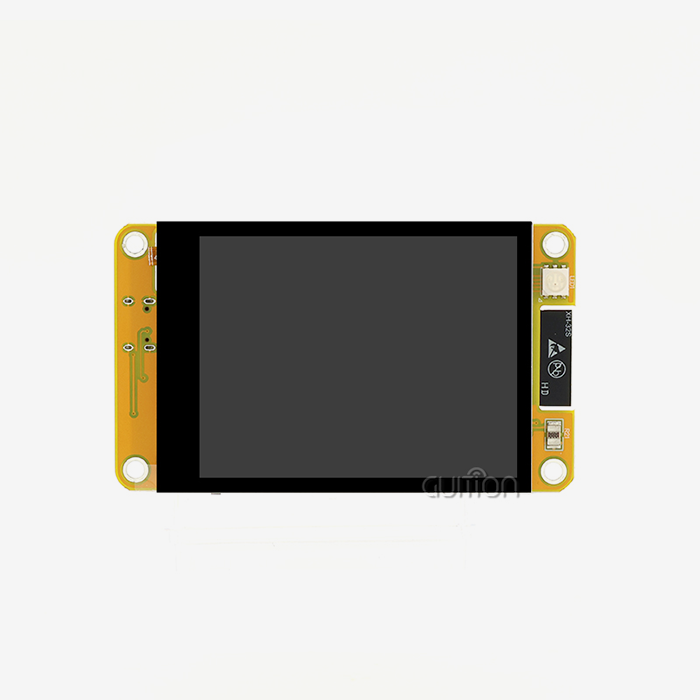
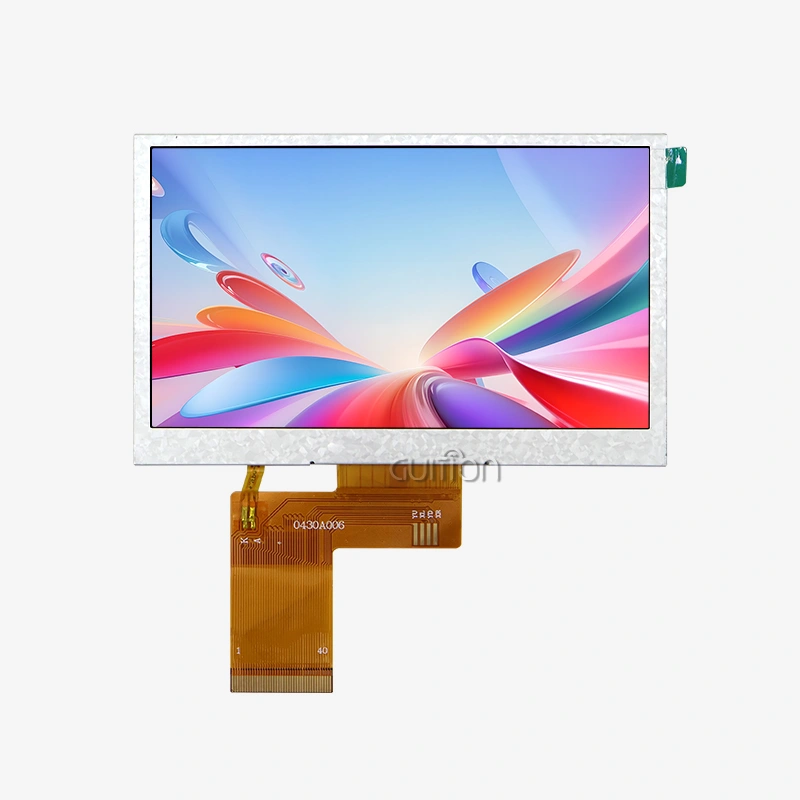
A high-quality LCD panel module with a dependable driver IC provides the stability your product needs when it is used in an industrial or medical setting, where operating temperatures can range from -20°C to +70°C, EMI shielding is important, and product life cycles of 5+ years are common. This group is shown by the GUITION JC4827Q043N_I. The bright, constant display quality required by 3D printers, EV charging stations, and medical aesthetic devices is achieved by this 4.3-inch LCD panel module, which is powered by the ST3401A driver IC and provides 800x480 resolution with 16.7M color depth through an MCU interface.
Here are the core advantages this module brings to embedded development:
- ST3401A Driver IC: Provides stable signal processing and accurate color rendering across the full 16.7M color range, getting rid of the banding effects that are common in lower-end driver solutions.
- MCU Interface Compatibility: Connects easily to Arduino, ESP-IDF, and Guition development environments, which speeds up the time it takes for cross-platform engineering teams to bring up new firmware.
- 16.7M Color Output: This feature renders UI elements as accurately as a picture, which is very important for medical data displays and EV charging status screens where color accuracy affects what users choose to do.
- Compact 4.3-Inch Form Factor: The small 4.3-inch form factor means that it can fit into panel cutouts in industrial enclosures, charging station fascias, and 3D printer control bezels without changing the layout.
Embedded engineers and product managers put a lot of weight on development efficiency and visual performance, and these benefits directly meet those needs. The JC4827Q043N_I takes the worry out of choosing a monitor.
Market Overview: Top Brands and Suppliers of LCD Panel Modules and Display Assemblies
The global LCD display module market was worth USD 18.4 billion in 2023. It is expected to grow at a rate of 5.2% CAGR until 2030 [Grand View Research, Display Module Market Report, 2023]. The open-cell supply chain is dominated by panel makers like BOE, Innolux, AUO, Samsung Display, and Tianma. HMI-focused module makers then put these panels together to make solutions that are ready to use.
In this landscape, GUITION stands out in a special way. Instead of selling generic panels, Guition engineers put together hmi display modules that range from 1.28" to 21.5" and pair them with their own Guition UI creation tools. These modules can be used with a number of different connectivity standards, such as WiFi and Bluetooth. This distinguishes Guition as an LCD panel module producer focused on providing solutions rather than reselling individual components.
When purchasing from suppliers, purchasing managers should make sure the supplier is ISO 9001 certified, ask for aging test data (24–72 hours of burn-in according to IEC standards), and check the supplier's status as an authorized distributor to avoid getting fake driver ICs, which is a known problem in the secondary market [IPC-A-610 Acceptability of Electronic Assemblies, 2020].
Troubleshooting and Optimizing LCD Panel Module Usage in Your Products
Common Issues and Diagnostics
The majority of LCD panel module field issues are caused by backlight failure and brightness non-uniformity (Mura). Mura happens when the light guide plate is put together unevenly or when the LED drive current is not stable. A uniformity test at different brightness levels must be done before the system is integrated, not after.
A lot of the time, response lag in MCU-driven modules is caused by incorrectly set refresh timing registers instead of a hardware problem. Most timing problems can be fixed in a single debug session by checking the driver IC initialization sequence against the ST3401A datasheet.
Maintenance and Environmental Considerations
When modules are used in industrial settings, a conformal coating on the driver PCB helps keep moisture out. According to LED thermal management guidelines [IEEE Transactions on Components, Packaging and Manufacturing Technology, 2021], running the backlight at 70–80% of its maximum rated current instead of full drive makes the LEDs last 40% longer. By letting software updates and UI changes be made without physically accessing the deployed device, Guition's remote OTA upgrade feature cuts down on maintenance visits even more.
Conclusion
Depending on your project's design needs, budget, and integration schedule, an LCD panel module or a display assembly may be the better option. When it comes to industrial HMI, medical devices, and embedded IoT applications, modules are the best because they give engineers more freedom, lower bill of materials (BOM) costs, and long-term serviceability. In exchange for faster mechanical coupling, display systems give up those benefits. A well-specified display module like the GUITION JC4827Q043N_I speeds up development without lowering quality for teams making scalable, reliable products. It does this by providing better visual performance and platform support.
FAQ
1. Can an LCD panel module be used without a touchscreen?
Yes. A lot of industrial and embedded applications, like 3D printers and charging stations for electric vehicles, only need physical tools or remote connections to work. Because it is a non-touch LCD panel module, the GUITION JC4827Q043N_I is ideal for uses where touch input would be expensive or could cause contamination.
2. What factors matter most when selecting a display module for industrial use?
The important factors are the operating temperature range, the security of the driver IC, the compatibility of the interfaces, and the quality of the provider support. It is much safer to integrate a module that has a tried-and-true driver IC like the ST3401A and an MCU interface that works with multiple platforms.
3. How do lead times differ between modules and assemblies?
Within 5–10 business days, standard LCD panel modules are shipped from distributor stock. It usually takes 4–8 weeks to make custom bonded display assemblies with specific housing and touch integration. Modules are a clear logistical advantage for projects that need to be done quickly.
4. Is a remote upgrade possible with display modules?
Guition's HMI display units support over-the-air (OTA) upgrades, which means that UI updates and firmware versions can be made without having to be serviced on-site. This is a big benefit for industrial and business equipment that is already in use.
Partner with Guition for Your Next Display Project
Ready to source a proven LCD panel module for your next industrial or embedded application? Guition delivers display modules from 1.28" to 21.5", backed by the proprietary Guition development software, cross-platform compatibility, and dedicated technical support. The GUITION JC4827Q043N_I is available now — reach out to our team to request specifications, pricing, or a sample. Contact Us at david@guition.com to explore our full LCD panel module supplier catalog.
References
1. Grand View Research. (2023). Display Module Market Size, Share & Trends Analysis Report. Grand View Research.
2. IHS Markit. (2023). Display Supply Chain Report: Cost Structure Analysis of LCD Modules vs. Assembled Display Units. IHS Markit Technology.
3. IPC. (2020). IPC-A-610H: Acceptability of Electronic Assemblies. IPC Standards.
4. IEEE. (2021). LED Thermal Management and Lifespan Optimization in Display Backlighting.
5. IEC. (2019). IEC 60068-2: Environmental Testing for Electronic Components and Assemblies.
6. DisplayMate Technologies. (2022). LCD Display Technology Evaluation: Panel Module Performance Benchmarks.
Learn about our latest products and discounts through SMS or email