- English
- French
- German
- Portuguese
- Spanish
- Russian
- Japanese
- Korean
- Arabic
- Greek
- German
- Turkish
- Italian
- Danish
- Romanian
- Indonesian
- Czech
- Afrikaans
- Swedish
- Polish
- Basque
- Catalan
- Esperanto
- Hindi
- Lao
- Albanian
- Amharic
- Armenian
- Azerbaijani
- Belarusian
- Bengali
- Bosnian
- Bulgarian
- Cebuano
- Chichewa
- Corsican
- Croatian
- Dutch
- Estonian
- Filipino
- Finnish
- Frisian
- Galician
- Georgian
- Gujarati
- Haitian
- Hausa
- Hawaiian
- Hebrew
- Hmong
- Hungarian
- Icelandic
- Igbo
- Javanese
- Kannada
- Kazakh
- Khmer
- Kurdish
- Kyrgyz
- Latin
- Latvian
- Lithuanian
- Luxembou..
- Macedonian
- Malagasy
- Malay
- Malayalam
- Maltese
- Maori
- Marathi
- Mongolian
- Burmese
- Nepali
- Norwegian
- Pashto
- Persian
- Punjabi
- Serbian
- Sesotho
- Sinhala
- Slovak
- Slovenian
- Somali
- Samoan
- Scots Gaelic
- Shona
- Sindhi
- Sundanese
- Swahili
- Tajik
- Tamil
- Telugu
- Thai
- Ukrainian
- Urdu
- Uzbek
- Vietnamese
- Welsh
- Xhosa
- Yiddish
- Yoruba
- Zulu
Why Choose an ESP32 P4 display module for Smart Interfaces?
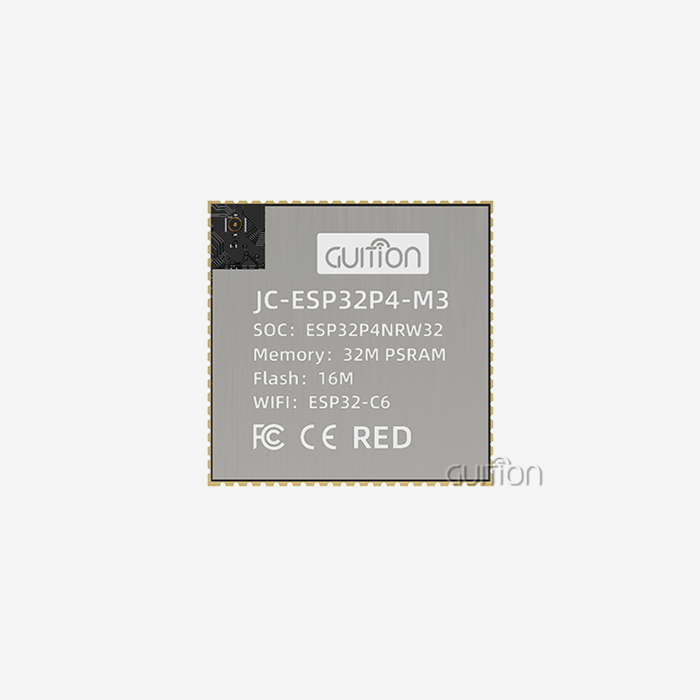
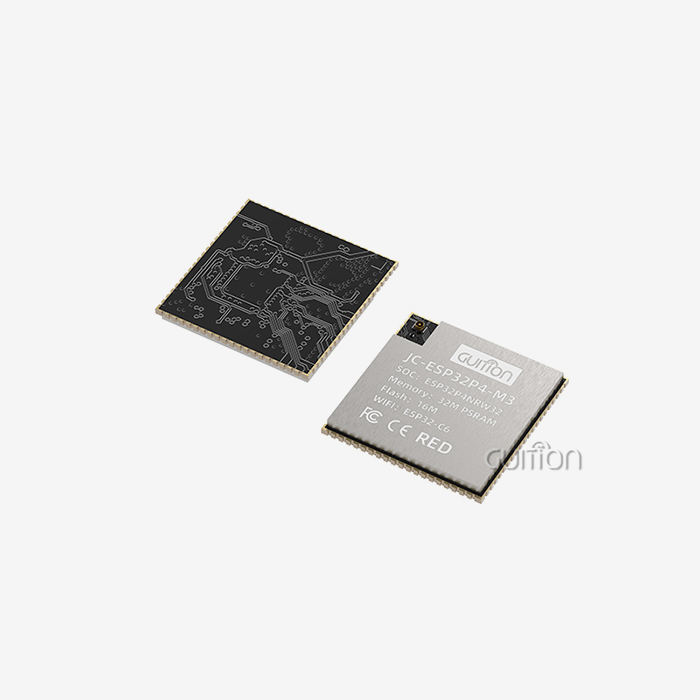
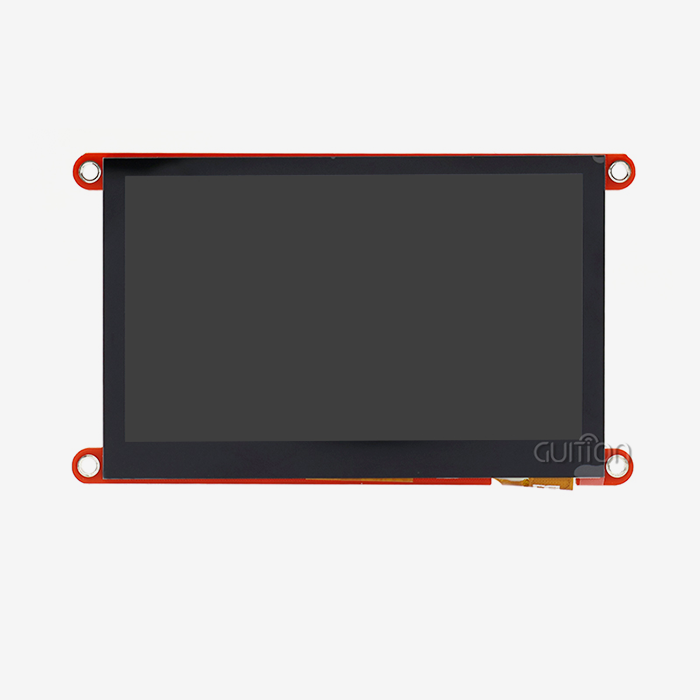
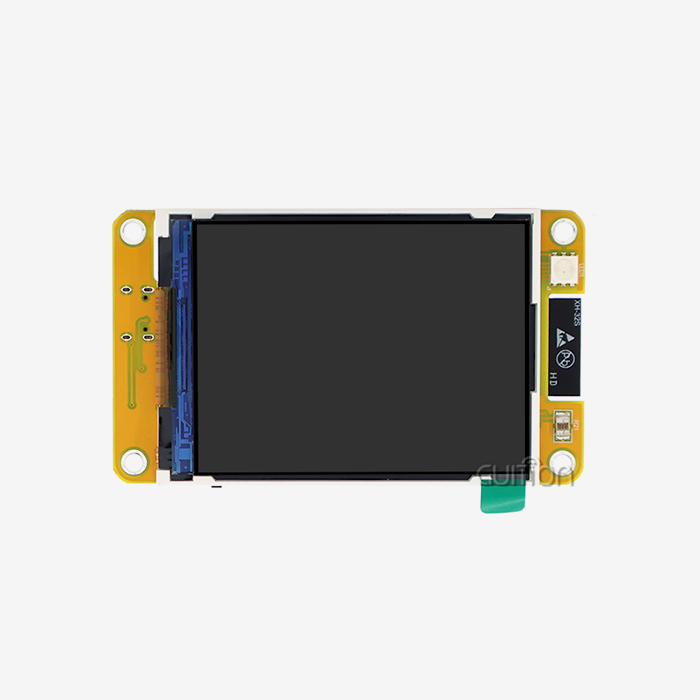
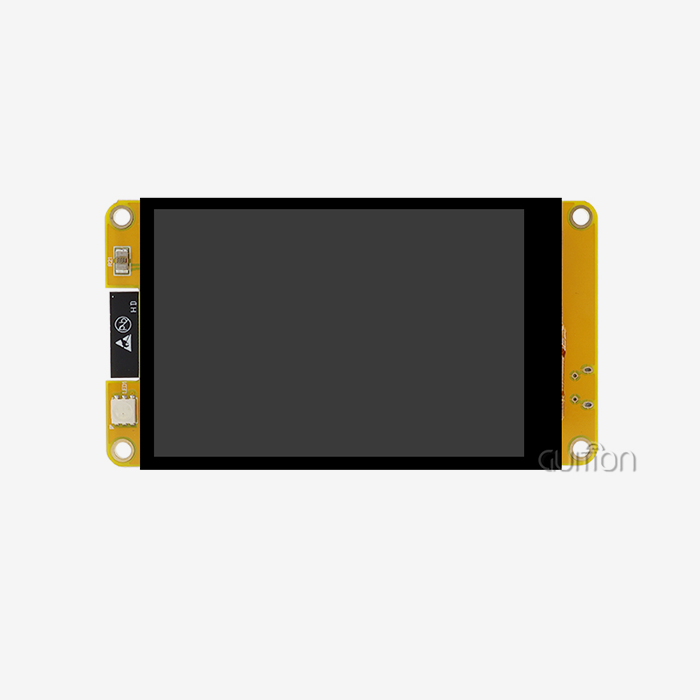
If you are evaluating display solutions for your next embedded or IoT project, the ESP32 P4 display module deserves serious attention. Built on Espressif's dual-core RISC-V architecture running at 400MHz, this module bridges the gap between low-cost MCU displays and power-hungry Linux-based systems. The GUITION model JC-ESP32P4-M3-C6 integrates an ESP32-C6 companion chip, delivering Wi-Fi 6 and Bluetooth 5 connectivity in a 27×27×3.4mm footprint — making it a compelling choice for industrial HMI panels, medical monitors, smart home dashboards, and commercial kiosks alike.

Understanding the ESP32 P4 Display Module
What Makes the JC-ESP32P4-M3-C6 Different?
There is something different about the GUITION JC-ESP32P4-M3-C6 HMI board. It pairs the ESP32-P4 processor with an integrated ESP32-C6 for wireless communication. This means that your product doesn't need any extra devices to get high-performance local processing and next-generation connections. The dual-core HP RISC-V CPU works at 400MHz and has up to 32MB of PSRAM, which is important for smoothly buffering high-resolution framebuffers. Layer blending, scaling, and rotation are all taken care of by a separate hardware 2D Pixel Processing Accelerator (PPA), which makes the main CPU's rendering work a lot easier.
Rich Interface Ecosystem
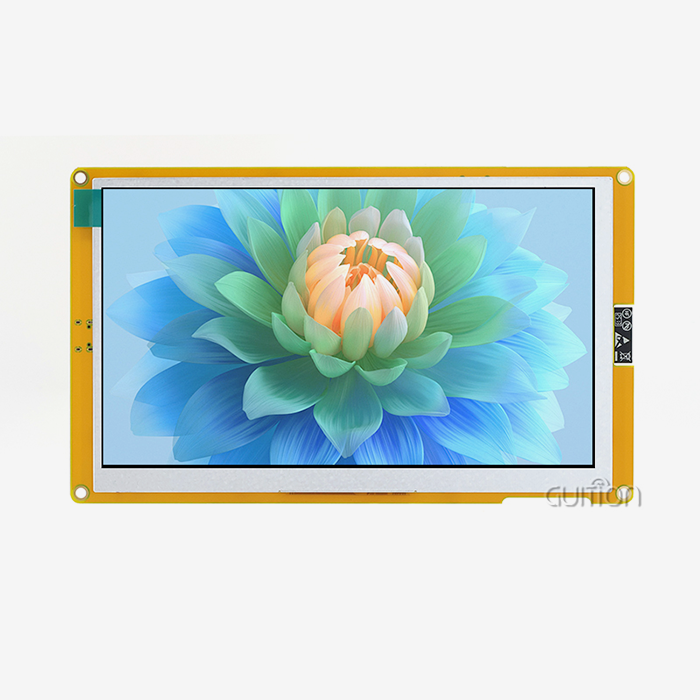
The module provides a wide range of hardware connections for transmission. MIPI-CSI has an integrated ISP that lets cameras be used for visual chat or machine vision applications, and MIPI-DSI runs high-resolution panels with up to 800x1280 pixels. Other add-ons include SPI, I2S, I2C, LED PWM, MCPWM, RMT, ADC, UART, TWAI, and USB OTG 2.0 HS. These cover almost all of the integration needs engineers face in business and industrial settings. Support for H.264 video encoding makes multimedia-rich interfaces even possible without an external media engine.
Built-In Security Architecture
It's important to keep data safe, especially in medical and business settings. The ESP32-P4 has a digital signature device and a separate unit for managing keys built right in. Secure Boot and Flash Encryption keep software from being changed without permission, and the World Controller lets trusted operation settings work. This security architecture is in line with the rules set out in IEC 62443 for industrial control systems. This gives procurement teams faith in the safety of operations in the long run.
Comparing the ESP32 P4 Display Module with Other Display Technologies
ESP32 P4 vs. Traditional SPI/TFT Displays
Traditional TFT screens that are linked via SPI are cheap, but they have a known problem with GUI latency. Driving a 480x320 screen at 60 FPS over SPI uses a lot of CPU bandwidth, so there isn't much room for program logic. The ESP32 P4 display module's MIPI-DSI interface sends pixel data at a much higher throughput. This lets LVGL animations run smoothly on screens up to 800x1280 without frame tearing, which is a common problem that makes people less likely to trust professional products.
OLED panels have great contrast, but they can only be made in small sizes and don't last long when they are constantly turned on at full brightness. The ESP32 P4 platform, on the other hand, works with different panel sizes and types, so it can be used for anything from small handheld devices to large industrial control panels that are mounted on the wall. At scale, cost-effectiveness also goes up because one hardware base can handle more than one product line.
Touch vs. Non-Touch Variants
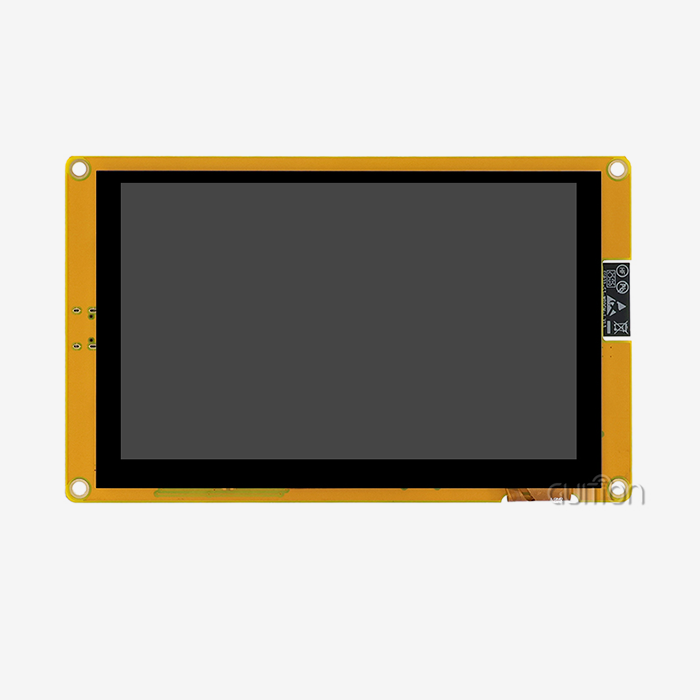
Adding capacitive touch is very important for making the interface dynamic. Automated testing standards say that touch response times must be less than 10ms and there must be no ghost touches. This is especially important when the CPU is doing multiple tasks at once, like Modbus communication or edge inference. The JC-ESP32P4-M3-C6 architecture reliably handles these multiple tasks at the same time, keeping touch linearity even when processing loads are high. This is a useful feature that sets it apart from lower-level ESP32 variants that use software-driven display drivers.
Key Benefits of the ESP32 P4 Display Module for Smart Interfaces
Product managers and engineering teams always ask the same thing: does this platform cut down on time to market without lowering reliability? The JC-ESP32P4-M3-C6 solves that question with a number of benefits that can be measured.
Here are the core strengths that set this module apart from alternatives:
- Processing headroom for complex UIs: The 400MHz dual-core processor and hardware PPA accelerator can handle rich LVGL interfaces, real-time data visualization, and H.264 video streams all at the same time. By getting rid of the need for a separate media processor, the bill of materials (BOM) cost and board complexity are both cut in a single design choice.
- Instant-on boot behavior: The ESP32 P4 display module usually has a working user interface (UI) in milliseconds, while Linux-based SOMs take 10 to 30 seconds to get to a functional state. This feature can't be changed in medical monitoring equipment or industrial safety panels where starting up slowly could cause problems.
- Industrial temperature resilience: The platform works reliably from -40°C to +85°C in industrial temperatures. This was proven by 168 hours of burn-in testing at 85°C and 85% humidity. Automated read/write cycle testing checks the integrity of the BGA solder joint and the stability of the PSRAM under temperature stress. This makes sure that the device will work reliably in harsh conditions.
- Wi-Fi 6 and Bluetooth 5 via ESP32-C6: OFDMA and Target Wake Time (TWT) are new features in Wi-Fi 6 that make networks less crowded and extend battery life in dense IoT deployments. When compared to Bluetooth 4.2, Bluetooth 5 has twice the range, which means it can be used in smart homes and commercial facilities with a wider area.
All of these benefits shorten development times and lower the costs of support after the sale. These are two metrics that R&D managers and product managers use to directly measure how profitable a project is.
Procurement Guide: How to Source ESP32 P4 Display Modules for B2B
Working with an Authorized Supplier
If you buy from a verified ESP32 P4 display module manufacturer, you can be sure that your supply chain is safe from fake parts and that you can get real firmware support. GUITION does its own research and development, production, and sales. It offers OEM customization, sample evaluation programs, and volume pricing structures that are designed to meet the needs of industrial buyers. By asking for a pre-production sample, your engineering team can make sure that the parts work together before committing to a production order. This is a standard procedure that greatly lowers the risk of the project.
Long-Term Supply Reliability
Procurement workers who make 5–10 year product roadmaps worry about how long a product will last. The Guition development platform connects all of GUITION's products, which have screens ranging from 1.28" to 21.5". They all share the same software environment. Because of this, future versions of the product will be able to use the same UI assets and firmware libraries. This will protect your engineering investment across multiple product generations.
Programming and Integration: Getting Started
Guition Development Platform and SDK Support
GUITION made the Guition UI development software on their own. It lets you build drag-and-drop interfaces without having to know how to code graphics at a low level. Engineers can add tools with just one click, place them exactly where they need to be, and see the effects right away. The platform works with Arduino, ESP-IDF, and the built-in Guition development mode, so it can be used by teams that prefer different toolchains.
Cross-platform online debugging cuts the cycle of iterations down by a large amount. Remote over-the-air (OTA) upgrade lets you change software on deployed devices without physically accessing them. This feature lowers the cost of running large-scale deployments like EV charging networks or farm automation systems after the sale. Support for multiple languages and UTF-8 encoding makes sure that all versions of a product share the same codebase. This makes localization easier for teams that are trying to reach customers in more than one region.
Conclusion
The GUITION ESP32 P4 display module is a stable, production-ready option for teams that need better display performance than what standard MCU platforms offer, but don't want the cost and complexity of Linux-based SOMs. Industrial HMI, medical monitoring, smart home control, and commercial terminals can all use its 400MHz dual-core RISC-V processor, hardware PPA, MIPI-DSI output, Wi-Fi 6 connectivity, and built-in security architecture. When combined with the Guition development platform, it cuts down on engineering costs and time to market across the entire product lifecycle.
FAQ
What display resolutions does the JC-ESP32P4-M3-C6 support?
Through the MIPI-DSI interface, the module can drive screens with up to 800x1280 pixels, and it can also handle Parallel RGB output. The hardware PPA accelerator keeps rendering smooth at normal refresh rates of 60 FPS, which works for both small handheld devices and bigger industrial control panels.
Is the module compatible with Arduino development environments?
Yes. You can use Arduino, ESP-IDF, or the built-in Guition programming mode with the JC-ESP32P4-M3-C6. This makes it possible for teams with varying levels of experience to work together and lets them add to existing codebases without having to start from scratch.
How does the module perform in harsh industrial conditions?
From -40°C to +85°C, the ESP32-P4 can work. Over 168 hours of burn-in validation at 85°C and 85% humidity check the integrity of the BGA solder and the stability of the PSRAM. This makes sure that the modules can handle the high temperatures needed by factory automation and outdoor energy management systems.
Does the module support remote firmware updates?
It is possible to upgrade devices remotely over the air (OTA), which lets teams send new firmware versions to devices that are already in use across a network. This function is especially useful for big deployments where maintenance on-site is not possible or would be too expensive.
What security features protect sensitive application data?
Secure Boot, Flash Encryption, a digital signing peripheral, and a key control unit are all built into the ESP32-P4. These features keep firmware from being changed without permission and keep data private in medical and industrial settings.
Partner with Guition — Your Trusted ESP32 P4 Display Module Supplier
GUITION is a partnership that brings together strong R&D, tried-and-true manufacturing, and quick technical support. Our team is ready to help you whether you need sample units to test a prototype or volume pricing for a full production run. You can email our experts at david@guition.com or go to https://jingcaizhineng.aixdb.cn/ to set up a meeting, learn more about the JC-ESP32P4-M3-C6, and find out how our skills as an ESP32 P4 display module maker can help you get your next product to market faster.
References
1. Espressif Systems. (2024). ESP32-P4 Technical Reference Manual. Espressif Documentation Portal. https://docs.espressif.com/projects/esp-idf/en/latest/esp32p4/index.html
2. Espressif Systems. (2024). ESP32-P4 Datasheet v0.4. Espressif Official Website. https://www.espressif.com/sites/default/files/documentation/esp32-p4_datasheet_en.pdf
3. IEC. (2022). IEC 62443-4-2: Security for Industrial Automation and Control Systems – Technical Security Requirements for IACS Components. International Electrotechnical Commission. https://www.iec.ch/homepage
4. LVGL LLC. (2024). LVGL – Light and Versatile Graphics Library Documentation. LVGL Official Documentation. https://docs.lvgl.io/master/index.html
5. Arduino Foundation. (2024). Arduino IDE 2.x Documentation and ESP32 Board Support. Arduino Official Website. https://docs.arduino.cc/software/ide-v2
6. Espressif Systems. (2023). ESP32-C6 Wi-Fi 6 and Bluetooth 5 Feature Overview. Espressif Blog. https://www.espressif.com/en/news/ESP32_C6
Learn about our latest products and discounts through SMS or email