- English
- French
- German
- Portuguese
- Spanish
- Russian
- Japanese
- Korean
- Arabic
- Greek
- German
- Turkish
- Italian
- Danish
- Romanian
- Indonesian
- Czech
- Afrikaans
- Swedish
- Polish
- Basque
- Catalan
- Esperanto
- Hindi
- Lao
- Albanian
- Amharic
- Armenian
- Azerbaijani
- Belarusian
- Bengali
- Bosnian
- Bulgarian
- Cebuano
- Chichewa
- Corsican
- Croatian
- Dutch
- Estonian
- Filipino
- Finnish
- Frisian
- Galician
- Georgian
- Gujarati
- Haitian
- Hausa
- Hawaiian
- Hebrew
- Hmong
- Hungarian
- Icelandic
- Igbo
- Javanese
- Kannada
- Kazakh
- Khmer
- Kurdish
- Kyrgyz
- Latin
- Latvian
- Lithuanian
- Luxembou..
- Macedonian
- Malagasy
- Malay
- Malayalam
- Maltese
- Maori
- Marathi
- Mongolian
- Burmese
- Nepali
- Norwegian
- Pashto
- Persian
- Punjabi
- Serbian
- Sesotho
- Sinhala
- Slovak
- Slovenian
- Somali
- Samoan
- Scots Gaelic
- Shona
- Sindhi
- Sundanese
- Swahili
- Tajik
- Tamil
- Telugu
- Thai
- Ukrainian
- Urdu
- Uzbek
- Vietnamese
- Welsh
- Xhosa
- Yiddish
- Yoruba
- Zulu
Is Touch Screen HMI with PLC the Future of Industrial Automation?
How makers handle machine control and operator contact has changed significantly thanks to Touch screen HMIs with PLC integration. By combining logic processing and visualisation into a single design, these systems get rid of the need for different control units and offer real-time responsiveness. Modern versions use strong embedded processors and easy-to-use graphical user interfaces to make things run more smoothly on packaging lines, in medical equipment, and in smart industrial settings. The convergence fixes important problems like less cabinet room, easier wiring, and faster testing times that have a direct effect on project ROI.

Understanding Touch Screen HMI with PLC: A Comprehensive Overview
What Defines Modern HMI-PLC Integration?
Putting human-machine interfaces and programmable logic controllers together makes a control system that works well together. Operators can use visual screens to connect directly with machine logic. Integrated solutions talk to each other through fast internal buses that keep delay to a few microseconds, while legacy systems need separate operator screens and control boxes. This design works especially well for programmes that need to change parameters quickly during production runs.
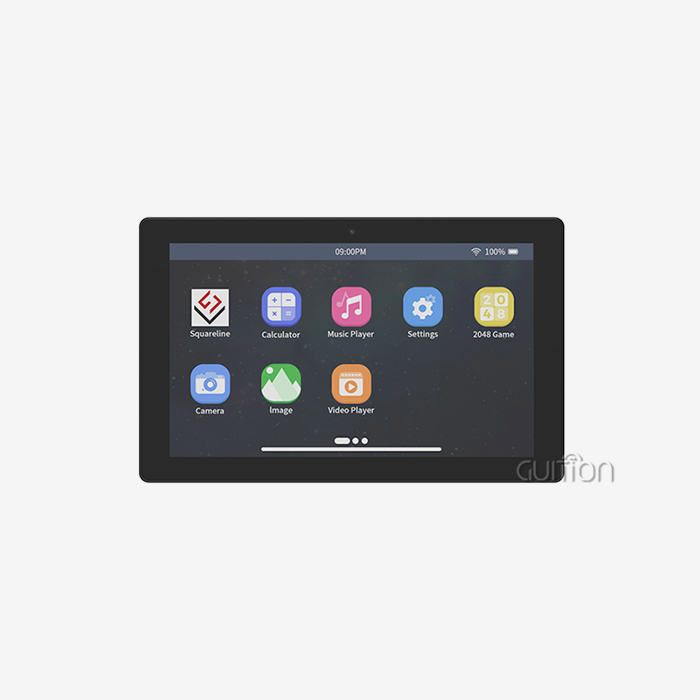
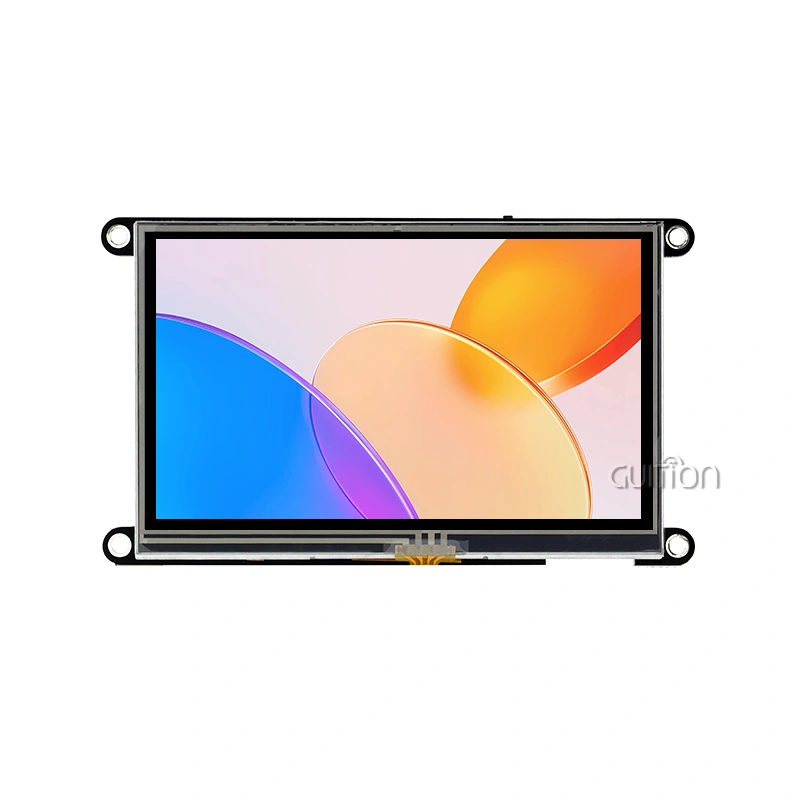
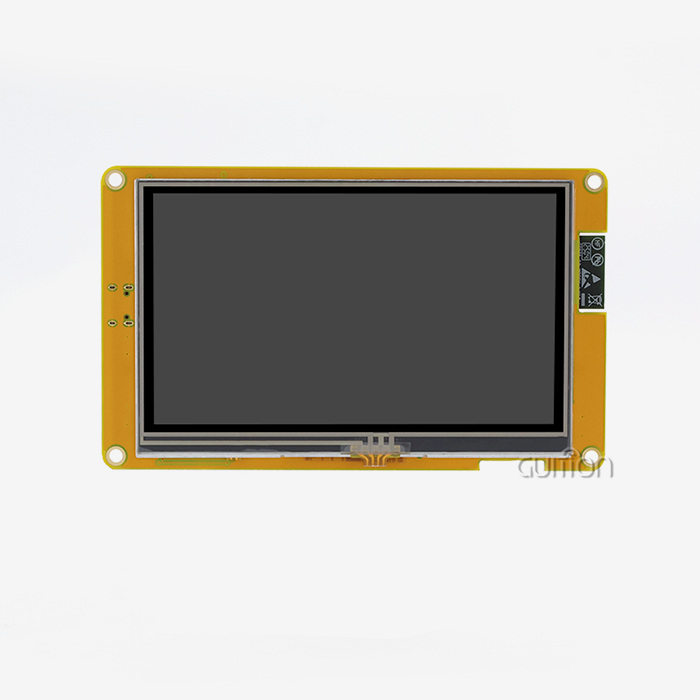
As an example, the Guition JC8048Q350C_I 5.0-inch display module shows how modern designs match the power of processing with the beauty of the interface. It is based on the D121BBV single-core MCU that runs at 400MHz and handles complicated logic processing while rendering 800x480 IPS graphics at the same time. When setting up packaging machines or medical monitoring tools, the capacitive touch interface reacts right away to user input, which is a very important feature.
Core Capabilities That Matter to Engineers
Touch screen HMIs with PLC systems that work well in factories are based on three functional bases. As always, visual clarity is very important. Displays must be able to be read in bright conditions and include images that make the process progress clear. The IPS technology in the Guiton module provides 178-degree viewing angles, allowing multiple workers to check the state without having to move.
How complex your control code and interface can get depends on how much processing space you have. The JC8048Q350C_I has 8MB of PSRAM and 16MB of Flash, so it can handle complicated PID loops, recipe management, and data logging without slowing down. Connectivity choices, such as dedicated ports for WiFi and Bluetooth modules, make IIoT integration possible, which is something that modern facilities are asking for more and more.
Accessibility for development has a huge effect on time-to-market. With its drag-and-drop interface, the Guition software system gets rid of low-level code problems. Engineers who already know how to use Arduino, ESP-IDF, or their own custom frameworks can use their current skills while also taking advantage of visual development processes that cut weeks of UI coding down to days.
Why Is a Touch Screen HMI with PLC Is Transforming Industrial Automation?
Limitations of Legacy Control Architectures
Traditional automation screens split the control brain from the operator interface. This makes troubleshooting harder and increases the need for more parts. When a display stops working without the PLC, output stops until techs figure out if the problem is with the panel hardware, the communication cable, or the settings for the controller protocol. This split also takes up important cabinet space and needs a lot of wiring between devices, which can lead to failure points.
The displays on older button-and-lamp screens can't be changed as processes change. Adding a new parameter display means making changes to the actual panel, like drilling holes, placing signs, and running lines, which slows down production. Because fixed connections are static, makers can't reply as quickly to changes in product specs or government rules.
Efficiency Gains Driving Adoption
Touch screen HMIs with PLC systems integrate what used to require several parts into a single unit. This consolidation cuts down on installation time by getting rid of the need for interconnection cables. It also makes testing easier by using a single computing environment. Maintenance teams are glad that they don't have to keep as much product on hand because they only need to keep one extra unit instead of different displays and controls.
When processes happen quickly, changes in response time can be seen and felt. When a person changes a medical steriliser's temperature setpoint, the combined design quickly processes the input and changes the control outputs. Delays in contact between different touchscreen HMIs with PLC units can cause lag that lowers the quality of the process in time-sensitive situations.
The ability to visualise changes how workers understand how machines are running. Touch screen HMIs with PLC interfaces display live images that illustrate the entire process, eliminating the need for workers to interpret the meanings of various indicator lights. Trend screens show how parameters have changed over the last few production runs. This lets you make changes before quality problems happen. The Guition development tool comes with gauge, chart, and alarm widgets that make interfaces faster.
Alignment with Industry 4.0 Imperatives
Access to data and the ability to control things from afar are important parts of modern manufacturing tactics. Without the need for specific hardwiring, touchscreen HMIs with PLC solutions can wirelessly transmit real-time production data to supervisory systems. Because it has WiFi and Bluetooth, the Guition JC8048Q350C_I can easily connect to MES platforms and cloud data services.
Supporting equipment that is spread out physically is becoming more difficult. Remote repair ability solves this problem. Because the module can be upgraded remotely, tech teams can make changes to installed machinery's firmware and user interface without having to go to the site. This feature has been very helpful in recent years, when travel restrictions made on-site service harder, and it continues to be useful by lowering the costs of after-sales support.
Choosing the Right Touch Screen HMI with PLC Solution
Defining Your Operational Requirements
Effective design begins with a true appraisal of application demands. Will the interaction be in direct sunlight, chemically exposed, or at high or low temperatures? Display brightness, enclosure grade, and working temperature vary by product line. The Guiton JC8048Q350C_I's flexible design helps you construct custom enclosures for its IPS display, which is viewable in bright workplaces.
Complex applications require additional processing. Simple ON/OFF control with progress screens requires less processing power than coordinated motion control with recipe management. The 400MHz MCU in Guition's module can handle multi-axis coordination and tracking with lots of data without a problem.
Building communication systems alters protocols. Older devices may communicate using Modbus RTU, whereas modern ones use Ethernet. The JC8048Q350C_I's Arduino and IDF interoperability allows developers to create unique communication drivers for varied equipment scenarios.
Evaluation Metrics That Impact Long-Term Value
The total cost of ownership includes more than just the original purchase price. It also includes the work that goes into growth, the cost of upkeep, and the ability to grow. Solutions that need a lot of custom code raise engineering costs and make release times longer. Drag-and-drop interface development on the Guition platform cuts the time it takes to make a UI from weeks to days. This speeds up project finish and lowers the cost of labour.
Display clarity affects how well operators do their jobs and how often mistakes happen. Higher resolution and colour detail make it easier to understand what the state is—for example, subtle colour changes can show when parameter limits are getting close before alarms go off. Guition's module has a resolution of 800x480 pixels and supports 65K colours, which is enough complexity for complicated process visualisation while still being affordable for mid-range uses.
How well you handle development problems depends on how well your suppliers support your communities. When problems come up out of the blue, it takes less time to fix them when there is thorough documentation, quick technical help, and busy user groups. Guidance gives engineers a lot of detailed technical information and lets them choose from different development modes to suit their needs and levels of skill.
Comparing Established Brands and Emerging Solutions
Manufacturers who want proven technology without paying a lot for it will like Schneider Electric and Omron's mid-range options, which balance capability with cost-effectiveness. Delta Electronics focuses on low-cost products that need good performance, building a strong foothold in Southeast Asian markets.
Focused innovation helps new sellers like Guition fill specific gaps in the market. The JC8048Q350C_I is a great deal because it combines powerful hardware with easy-to-use software tools at a reasonable price. This role is good for system integrators and original equipment makers (OEMs) that want to stand out by offering custom interfaces without having to deal with complicated development tools. Cross-platform development support and the ability to update remotely are features that are usually only found in higher-tier products, but the prices are still reasonable for large-scale apps.
Practical Guide to Implementing and Maintaining Touch Screen HMI with PLC
Development Environment Configuration
Setting up the right tools is the first step to a successful application. The Guition software lets you create online, so you don't have to worry about installing it on your computer. Engineers can access the design environment through web browsers, so the experience is the same on Windows, Linux, and macOS. Multiple workers can work on interface parts at the same time without version issues with this method, which makes it easier for the team to work together.
The drag-and-drop interface maker speeds up the process of making the first plan. Instead of writing down numbers by hand, engineers use their eyes to place buttons, gauges, and data displays. With WYSIWYG, there are fewer iterations because what you design is exactly what users see. This approach gets rid of the need for trial and error that comes with text-based UI descriptions. Pre-built control libraries come with tools that are often needed, such as numeric entry fields, trend records, and warning lists. These can be easily added by setting up a few parameters.
Modern coding environments are different from older tools because they can test on multiple platforms. The Guition platform lets you test in real time, so when the interface changes, the gear that is linked to it updates right away. This live debugging process cuts development times by a huge amount because you can find and fix logic mistakes or interface problems right away instead of waiting for long rounds of compile, download, and test. The module comes with test programs that are already loaded from the factory. These programmes make sure that the hardware works before custom development starts. This keeps your development base strong.
Communication Protocol Implementation
Touch screen HMI with PLC connection requires proper protocol setup and device infrastructure. Modbus RTU is straightforward to use and compatible with many devices; the industry still uses it. Implementation requires careful consideration of baud rates, parity settings, and register mapping. If these are wrong, electrical noise can randomly disrupt communication.
Ethernet protocols speed up remote systems and simplify wiring. Modbus TCP integrates Modbus logic into networking. Engineers experienced with RTU implementations find integration easier. Guition works with common communication libraries on Arduino and IDF platforms; therefore, you can implement the protocol using well-documented code examples and community libraries.
Sometimes, unique tools or outdated machines require a specialised procedure. A flexible programming environment supports low-level serial connection code. This enables engineers to use manufacturer-specific protocols not supported by conventional tools. This function helps when modernising existing production lines, and buying new equipment is too expensive.
Troubleshooting Common Integration Challenges
Integration problems that cause communication timeouts are often caused by wrong addressing, baud rate mismatches, or electrical noise interference. First, a systematic diagnosis checks the health of the physical layer. This includes making sure that the wire shielding, grounding, and termination resistors on RS-485 networks are all correct. Logic analysers or protocol monitors show how data is actually sent and received, showing whether devices are transmitting at all or if data is being changed while it's being sent.
Display problems can sometimes show up as flickering, problems with touch response, or strange images. These problems are usually caused by a power source that isn't strong enough—displays need a stable voltage and enough current, especially when the backlight is on. In the technical documents for the Guition JC8048Q350C_I, the power requirements are made very clear. Making sure that your power source meets these requirements stops voltage-sag-related instability.
Software logic mistakes can cause confusing symptoms like screens showing wrong values or not updating even though they are communicating properly. Putting in diagnostic screens that show both processed data and raw register readings helps figure out if the problem is in the data processing code or the communication layers. Real-time debugging in the Guition development environment lets you set breakpoints and look at variable states while the program is running, which speeds up the process of finding the root cause.
Benefits and ROI of Touch Screen HMI with PLC in Industrial Automation
Quantifiable Productivity Improvements
Manufacturers of touchscreen HMI/PLC solutions always suggest that switching products is faster. Touch interfaces allow operators to modify recipe settings instead of nested button menus or potentiometers. A packing tool firm achieved 40% faster changeovers after implementing graphical interfaces that displayed all important parameters on one screen and arranged them logically.
Faster diagnosis and debugging reduce downtime. Modern interfaces provide useful warnings to help techs discover the problem. Instead of a broad "motor fault" indicator, comprehensive displays reveal working temperature, current draw, and runtime hours to pinpoint the issue. Maintenance teams focus on fixing issues rather than investigating them.
Clearer processes improve quality. Operators who observe trend screens can spot modest changes in parameters before items exceed expectations. This prevents scrap and reduces rework costs. A medical device manufacturer reported 25% fewer quality holds after using an updated touchscreen HMI with PLC interfaces to track sterilisation settings.
Cost Structure Transformations
Although combination alternatives cost more upfront than basic indication panels, they are cheaper to buy over time. Combined hardware requires only one unit to install and connect, instead of a panel, controller, and wires. Using unified programming environments instead of HMI and PLC development tools reduces commissioning time.
As unified sections replace parts, maintenance inventory costs decrease. Facilities with supplementary displays and controllers for older systems might save money on inventory costs by holding fewer uniform spares. Standards make it easy for technicians to understand one platform instead of many vendor-specific systems with diverse programming and problem-solving methods.
Remote repairs save money over time. Engineering teams can modify deployed equipment without travelling or stopping operations. Remote updates in the Guiton module demonstrate this value. Network connectivity can send interface improvements and new functionality to field equipment, eliminating the need to visit remote installations.
Scalability for Future Requirements
Touch screen HMIs with PLC solutions that are well-designed can handle growth without having to be replaced all at once. When production areas get bigger, modular interfaces let you add more screens to control systems that are already in place. The Guition platform's flexible development environment lets interface complexity grow. As practical needs change, simple implementations can turn into complicated visualisations.
IIoT integration gets buildings ready for advanced data and repair plans that can be planned ahead of time. Modules that have WiFi and Bluetooth built in send production data to cloud platforms, where machine learning algorithms look for ways to make things better. This easy access to data turns equipment from separate production tools into linked information sources that help with efforts to keep getting better.
Capable touchscreen HMIs with PLC solutions are developing as edge processing nodes due to the convergence of edge computing and standard control systems. Local intelligence makes quick choices about control and sends relevant data sets to enterprise analytics tools. This design strikes a balance between being flexible in real time and having a bigger picture view. It does this by laying the groundwork for manufacturing methods that can change with the times.
Conclusion
How makers apply machine control and operator contact is fundamentally altered by Touch screen HMIs with PLC integration. Combining processing and visualisation gets rid of unnecessary complexity and makes it possible for complicated interfaces that boost productivity, cut down on downtime, and speed up debugging. Solutions like the Guition JC8048Q350C_I show how easy-to-use programming platforms and powerful hardware can work together to offer professional-level features at very low prices. Integrated architectures give facilities a long-term competitive edge through operating success and the ability to keep getting better as a result of Industry 4.0 efforts that require connectivity and remote control as normal practice.
FAQ
What distinguishes integrated HMI-PLC solutions from separate components?
Integrated designs combine logic processing and display into a single module. This module communicates with itself through internal high-speed buses, which gets rid of the need for exterior wiring and lowers latency. Compared to systems that use different HMI screens and Touch screen HMIs with PLCs linked through external wires, this method makes installation easier, takes up less cabinet space, and is easier to maintain.
How does the Guiton development platform reduce engineering time?
The platform lets you build an interface by dragging and dropping elements, and it comes with pre-built control sets and WYSIWYG design previews. Engineers can make professional interfaces without having to write a lot of code, and cross-platform live debugging lets them try and fix bugs in real time. Support for multiple development modes, including Arduino, IDF, and custom frameworks, lets the team use their current skills without having to make changes to the tools.
Can these solutions integrate with existing factory equipment?
Modern touchscreen HMIs with PLC modules connect to various equipment ecosystems and support common industrial protocols like Modbus RTU and TCP. Because the development platforms are flexible, custom protocol handlers can be made for private or old devices. This makes it possible to gradually update systems without having to buy all new ones. Integrating devices from different vendors reliably requires setting up the protocols correctly and checking the physical layers.
Ready to Modernise Your Industrial Control Systems with Guition?
Manufacturers and system developers across the country can get Touch screen HMIs with PLC options from Guition that match capability and ease of use. Our JC8048Q350C_I module has a powerful 400MHz processor and easy-to-use drag-and-drop development tools that cut down on the time it takes to finish projects and the money it costs to build them. We give your team the technical help and paperwork they deserve, whether you're an embedded engineer looking for flexible development options or a product manager comparing Touch screen HMIs with PLC suppliers for large-scale uses. Talk to david@guition.com right away about how our display units can make your next automation project easier.
References
1. Industrial Automation Systems and Integration — Human-Machine Interface Standards, International Electrotechnical Commission Technical Committee 65, 2019.
2. Programmable Controller Programming Languages and Application Design Practices, National Electrical Manufacturers Association Industrial Control Systems Group, 2021.
3. Human Factors in Industrial Control System Design: Cognitive Engineering Approaches to Interface Optimisation, American Society of Mechanical Engineers Manufacturing Engineering Division, 2020.
4. Economic Analysis of Industrial Automation Technology Adoption: Total Cost of Ownership Models for Control System Investments, Institute of Industrial and Systems Engineers Technology Conference Proceedings, 2022.
5. Communication Protocols for Industrial Networks: Performance Comparison and Implementation Guidelines for Manufacturing Environments, International Society of Automation Standards and Practices Committee, 2021.
6. Industry 4.0 Integration Strategies: Connecting Legacy Equipment to Modern Manufacturing Execution Systems, Society of Manufacturing Engineers Technical Research Report, 2023.
Learn about our latest products and discounts through SMS or email