- English
- French
- German
- Portuguese
- Spanish
- Russian
- Japanese
- Korean
- Arabic
- Greek
- German
- Turkish
- Italian
- Danish
- Romanian
- Indonesian
- Czech
- Afrikaans
- Swedish
- Polish
- Basque
- Catalan
- Esperanto
- Hindi
- Lao
- Albanian
- Amharic
- Armenian
- Azerbaijani
- Belarusian
- Bengali
- Bosnian
- Bulgarian
- Cebuano
- Chichewa
- Corsican
- Croatian
- Dutch
- Estonian
- Filipino
- Finnish
- Frisian
- Galician
- Georgian
- Gujarati
- Haitian
- Hausa
- Hawaiian
- Hebrew
- Hmong
- Hungarian
- Icelandic
- Igbo
- Javanese
- Kannada
- Kazakh
- Khmer
- Kurdish
- Kyrgyz
- Latin
- Latvian
- Lithuanian
- Luxembou..
- Macedonian
- Malagasy
- Malay
- Malayalam
- Maltese
- Maori
- Marathi
- Mongolian
- Burmese
- Nepali
- Norwegian
- Pashto
- Persian
- Punjabi
- Serbian
- Sesotho
- Sinhala
- Slovak
- Slovenian
- Somali
- Samoan
- Scots Gaelic
- Shona
- Sindhi
- Sundanese
- Swahili
- Tajik
- Tamil
- Telugu
- Thai
- Ukrainian
- Urdu
- Uzbek
- Vietnamese
- Welsh
- Xhosa
- Yiddish
- Yoruba
- Zulu
How to Choose a Capacitive touch display module Supplier
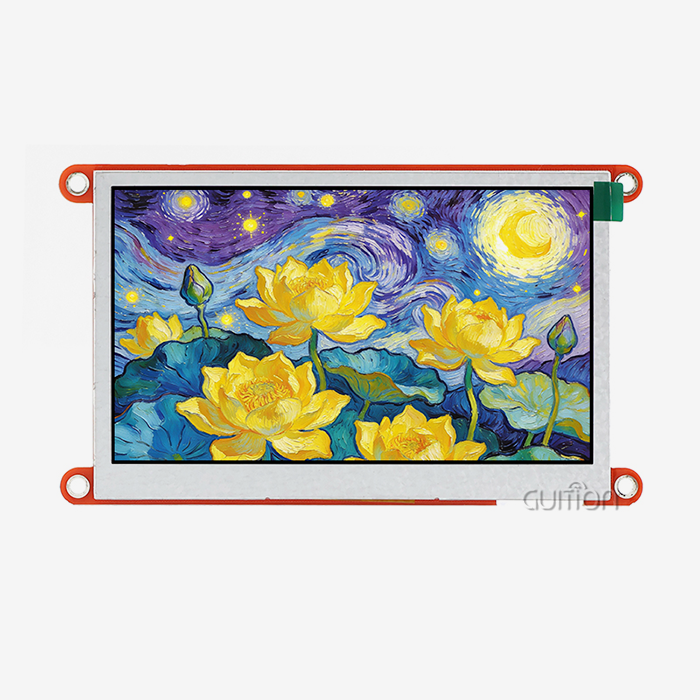
Choosing the right capacitive touch display module supplier shapes your product's reliability, development timeline, and long-term cost structure. A capable supplier delivers more than just hardware — they provide stable USART-hmi display modules, responsive technical support, and development tools that accelerate time-to-market. When evaluating options, prioritize suppliers offering certified components, flexible customization, cross-platform compatibility, and proven supply chain consistency. GUITION's JC4827Q343C_I is a strong example: a 4.3-inch capacitive touch display module built on a 400MHz MCU with integrated WiFi, Bluetooth, and an intuitive drag-and-drop GUI development environment.

Understanding Capacitive Touch Display Modules: Key Concepts for Procurement
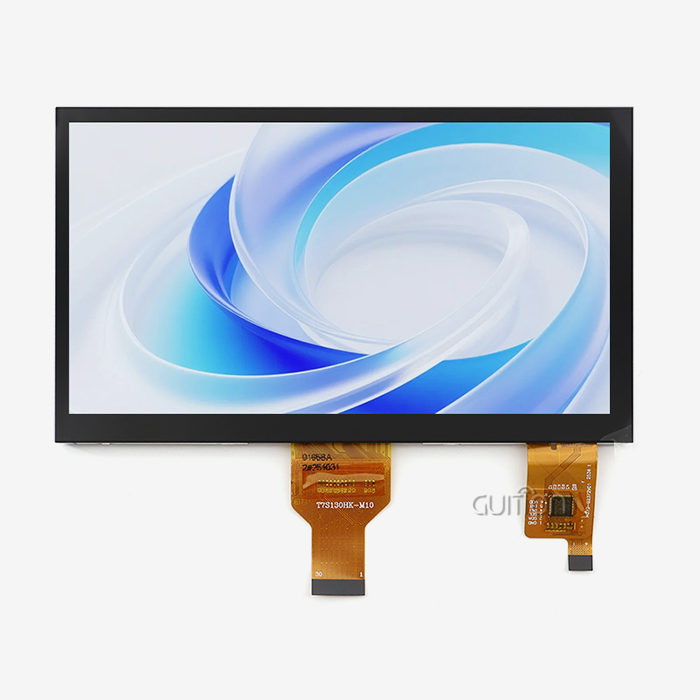
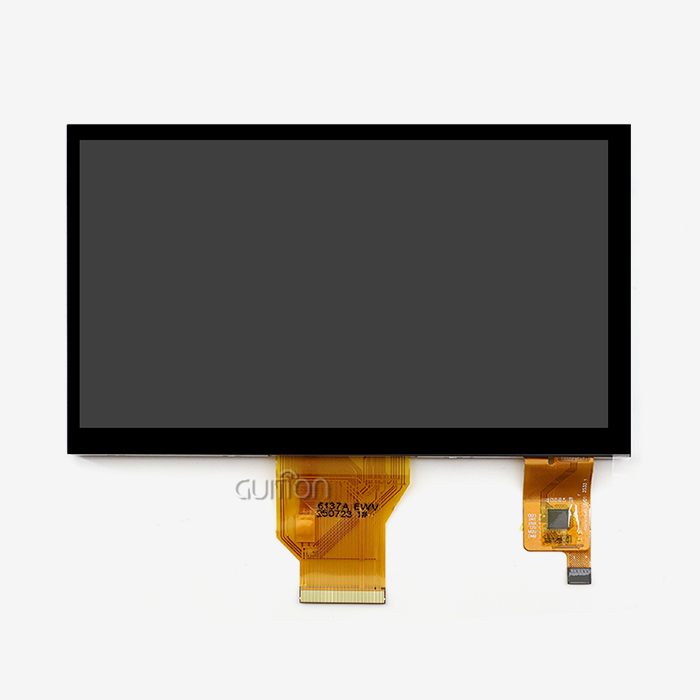
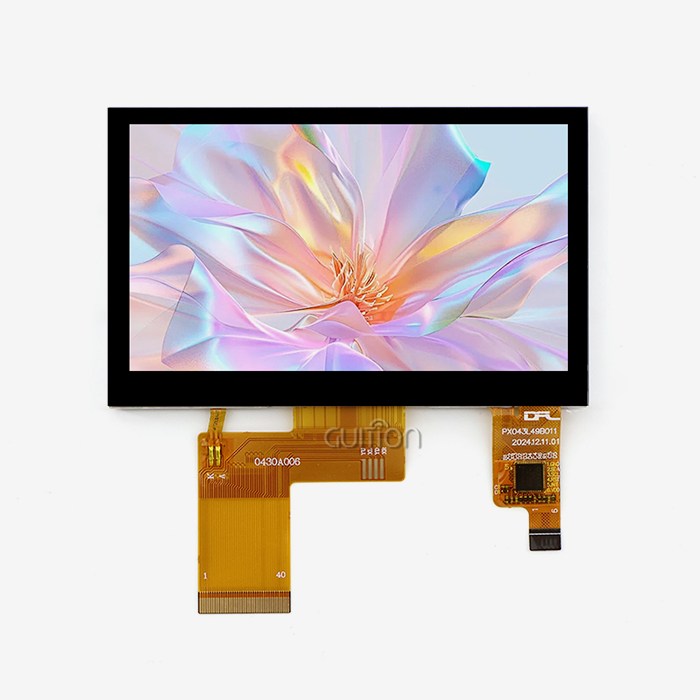
Projected Capacitive touch display modules can tell when your finger touches an ITO electrode grid by changing the capacitance. These modules are more accurate, last longer, and can handle multiple touches than resistive options. Capacitive panels record touch events with almost no mechanical wear, unlike resistive screens that depend on physical pressure. This means that industrial panels, medical monitors, and smart home devices will last longer.
What Makes a Touch Display Module "Industrial-Grade"?
EMI from heavy machinery must not affect industrial-grade HMI display modules. They must also be able to work in temperatures ranging from -20°C to +70°C or higher and pass ESD tests at ±8kV contact discharge. Cover glass is usually between 6H and 7H Mohs hard, and optical bonding stops internal reflection and dust ingress, which are important things that buying teams should check before agreeing to a seller.
Key Specifications Every Buyer Should Evaluate
The display quality, the type of interface (I2C for small modules, USB for bigger screens), the touch controller IC (Goodix, EETI, Ilitek), and the bonding method (air vs. optical) all affect how hard it is to integrate the system. Make sure that the signal-to-noise ratio and sensitivity threshold of the module meet the glove or wet-touch needs of your application.
Defining Your Procurement Criteria: What Matters Most When Choosing a Supplier?
The success of procurement relies on matching technology requirements with real-world operations. A lot of engineers don't think about how much bad supplier documentation can hurt them later on. For example, unclear datasheets often make integration cycles take longer by weeks.
The most important factors in the buying process are:
- Certifications and compliance: Make sure the product has RoHS, CE, and FCC certifications. These must be met in order to enter the U.S. and European markets, and they show that manufacturers are serious about following the rules.
- Customization depth: A reliable Capacitive touch display module provider should allow for touch sensitivity tuning, cover glass surface treatments (AG/AR/AF), and custom interface maps without having too high of a minimum order quantity (MOQ).
- Development toolchain quality: When suppliers bundle purpose-built GUI software, like GUITION's drag-and-drop development environment, they cut engineering costs by a huge amount. Teams with short deadlines can't afford toolchains that need low-level hardware knowledge just to draw a button.
- Sample availability and documentation: Before making a commitment, ask for functional samples and full datasheets. If a supplier doesn't want to share samples or specialized documents during the review stage, they probably won't get better after the sale.
- Logistics and lead time transparency: Shipments going to the U.S. need suppliers who have experience exporting, can keep their lead times, and know how to handle customs paperwork.
All of these criteria lower the risk of procurement and set the stage for a long-term relationship with the supplier.
Comparing Capacitive Touch Display Module Suppliers: Key Factors for B2B Buyers
Beyond raw specifications, what sets a trustworthy long-term partner apart from a transactional vendor is the credibility of the supplier. Managers in charge of buying things should look at records of audits of factories, the track record of OEMs, and customer references from similar industries.
Some performance standards that you might want to compare are touch linearity (how well you can draw diagonal lines), jitter stability under long-term use, and thermal consistency across all operating conditions. IHS Markit's research on display components says that one of the main reasons for field returns in industrial HMI applications is that touch accuracy decreases when exposed to high temperatures.
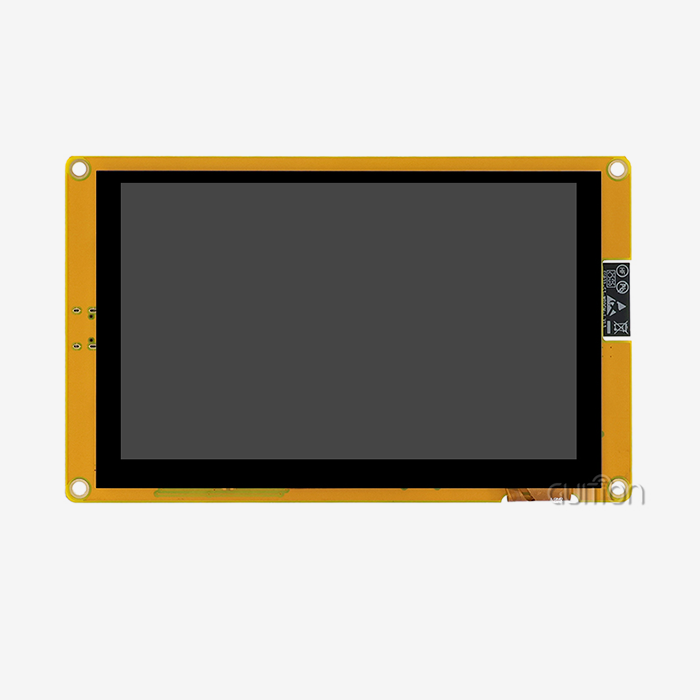
A well-designed Capacitive touch display module can meet all of these requirements, as shown by GUITION's JC4827Q343C_I. It runs on a 400MHz single-core Artinchip D121BAV MCU and has a 480x272 IPS screen with 65K color output and wide viewing angles. The module comes factory-programmed with test apps, so engineers can start prototyping right away. This is a big plus when iteration speed determines where you stand in the competition.
Why Processor Speed Matters for HMI Applications
A 400MHz processor can render animations, handle touch events, and communicate at the same time without any frame drops. Smooth UI responsiveness has a direct effect on user trust and error rates in applications like medical tracking interfaces or screens for managing energy use.
How to Assess Supplier Reliability and Long-Term Partnership Potential?
Assessing a supplier's reliability is more than just looking at the quality of their products; it also looks at how they handle problems. Warranty terms, how often software updates happen, and how quick a seller is after the sale say more about how they run their business than any marketing document.
The standard is strict quality control procedures. Some trustworthy providers test their Capacitive touch display modules in high temperatures and high humidity (60°C/90% RH for 240–500 hours), as well as subject them to thermal shock cycles (-40°C to +85°C) and drop-ball impacts on the cover glass. Not only are these required, they are also the basic standard for parts used in field settings.
GUITION allows over-the-air (OTA) firmware changes, which let tech teams send updates to devices that are already in use without having to physically reach them. This feature alone can get rid of big costs for service after the sale for goods that are sold in many places. With support for multiple languages and UTF-8 encoding, the JC4827Q343C_I was designed from the start to be used around the world.
MOQ structures that are flexible also show the possibility of a partnership. A supplier who is willing to give prototype orders the same technical support as large-scale production shows that they care about the buyer's success.
Step-by-Step Procurement Process for Capacitive Touch Display Modules
A organized approach to buying Capacitive touch display modules cuts down on mistakes that cost a lot of money and time spent choosing a supplier.
Write down what your application needs: the temperature range, the size of the screen (GUITION covers 1.28" to 21.5"), how sensitive it needs to be to touch, how it needs to connect (WiFi or Bluetooth), and the target development platform (Arduino, ESP-IDF, or Guition IDE). This standard sheet is used as a screen for all conversations with suppliers.
Cross-referencing certifications, product catalogs, and online expert sites will help you narrow down the list of sellers. Ask your top candidates for datasheets and functional samples. Compare each example to the standards for your app's touch accuracy, visual clarity, and integration complexity.
Use a matrix to compare scores for technical performance, quality of documents, price, wait time, and responsiveness of support. Before signing the contract, talk about the shipping terms and what the guarantee covers. Set up touchpoints for production monitoring to catch quality problems early and keep shipments on schedule.
Conclusion
Technical rigor, procurement discipline, and a clear understanding of the long-term value of the relationship are necessary when choosing a Capacitive touch display module provider. Not only does the right provider offer a low unit price, they also offer approved, reliable hardware along with useful development tools and quick customer service. GUITION is a reliable partner for embedded engineers, HMI designers, and product teams making the next generation of smart industrial and consumer interfaces because it is based on engineering and has a wide range of products. Carefully consider your needs, ask for samples early, and give priority to suppliers whose skills truly match the needs of your application.
FAQ
What is the difference between a capacitive and resistive touch display module?
Capacitive screens pick up on the electrical qualities of human skin, which lets you use multiple touches and improves the clarity of the image without causing any mechanical wear. Because resistive screens respond to touch, you can use gloves or styluses on them. However, the surface is likely to wear down over time, and less light can pass through. Capacitive technology gives users a better experience and lasts longer in most current HMI apps.
How do I verify a touch display module supplier's quality standards?
Ask for compliance certificates (RoHS, CE, FCC), test reports that cover ESD, thermal shock, and HTHH testing, and look over the product documentation in detail. When suppliers give detailed datasheets and sample units early on in the evaluation process, they are more likely to keep their manufacturing standards high.
Can capacitive touch modules work with gloves?
Yes. Modern touch IC controllers let you change the sensitivity threshold so they can sense changes in capacitance through gloves that are up to 5 mm thick. During the sample evaluation phase, make sure that your supplier can do this.
Does the GUITION JC4827Q343C_I support cross-platform development?
Yes. The JC4827Q343C_I works with Arduino, ESP-IDF, and GUITION's own development modes, so it can be used with a variety of engineering workflows without having to switch platforms.
Partner With a Trusted Capacitive Touch Display Module Supplier — Contact Guition Today
Guition has many Capacitive touch display module options, ranging from 1.28" to 21.5". These come with the Guition drag-and-drop GUI creation tool, support for over-the-air (OTA) upgrades, and the ability to work with multiple languages. The JC4827Q343C_I is ready to help your next HMI job go faster. To get samples, datasheets, and competitive prices from a Capacitive touch display module manufacturer built for serious development teams, email our team at david@guition.com or go to https://jingcaizhineng.aixdb.cn/.
References
1. Bhalla, M. R., & Bhalla, A. V. (2010). Comparative Study of Various Touchscreen Technologies. International Journal of Computer Applications, 6(8), 12–18.
2. European Commission. (2023). RoHS Directive 2011/65/EU: Restriction of Hazardous Substances in Electrical and Electronic Equipment.
3. IHS Markit. (2022). Display Components & Systems Market Intelligence Report.
4. Karray, F., Alemzadeh, M., Saleh, J. A., & Arab, M. N. (2008). Human-Computer Interaction: Overview on State of the Art. International Journal on Smart Sensing and Intelligent Systems, 1(1), 137–159.
5. IEC. (2021). IEC 60068-2: Environmental Testing for Electronic Equipment.
6. Supply Chain Management Review. (2023). Best Practices in Electronic Component Procurement for Industrial Applications.
Learn about our latest products and discounts through SMS or email