- English
- French
- German
- Portuguese
- Spanish
- Russian
- Japanese
- Korean
- Arabic
- Greek
- German
- Turkish
- Italian
- Danish
- Romanian
- Indonesian
- Czech
- Afrikaans
- Swedish
- Polish
- Basque
- Catalan
- Esperanto
- Hindi
- Lao
- Albanian
- Amharic
- Armenian
- Azerbaijani
- Belarusian
- Bengali
- Bosnian
- Bulgarian
- Cebuano
- Chichewa
- Corsican
- Croatian
- Dutch
- Estonian
- Filipino
- Finnish
- Frisian
- Galician
- Georgian
- Gujarati
- Haitian
- Hausa
- Hawaiian
- Hebrew
- Hmong
- Hungarian
- Icelandic
- Igbo
- Javanese
- Kannada
- Kazakh
- Khmer
- Kurdish
- Kyrgyz
- Latin
- Latvian
- Lithuanian
- Luxembou..
- Macedonian
- Malagasy
- Malay
- Malayalam
- Maltese
- Maori
- Marathi
- Mongolian
- Burmese
- Nepali
- Norwegian
- Pashto
- Persian
- Punjabi
- Serbian
- Sesotho
- Sinhala
- Slovak
- Slovenian
- Somali
- Samoan
- Scots Gaelic
- Shona
- Sindhi
- Sundanese
- Swahili
- Tajik
- Tamil
- Telugu
- Thai
- Ukrainian
- Urdu
- Uzbek
- Vietnamese
- Welsh
- Xhosa
- Yiddish
- Yoruba
- Zulu
Where Can You Source a Reliable Colour lcd display module?
If you are sourcing a reliable colour lcd display module for industrial, medical, or smart device applications, the most dependable path is to work directly with established manufacturers or certified HMI solution providers. Brands like GUITION offer vertically integrated solutions — from panel engineering to embedded software — giving procurement teams access to complete technical documentation, stable supply chains, and responsive after-sales support. Choosing a manufacturer with a proven product line, such as the GUITION JC3248S035R, ensures your colour lcd display module procurement is backed by real engineering expertise and long-term availability.

Understanding Colour LCD Display Modules — Key Features and Applications
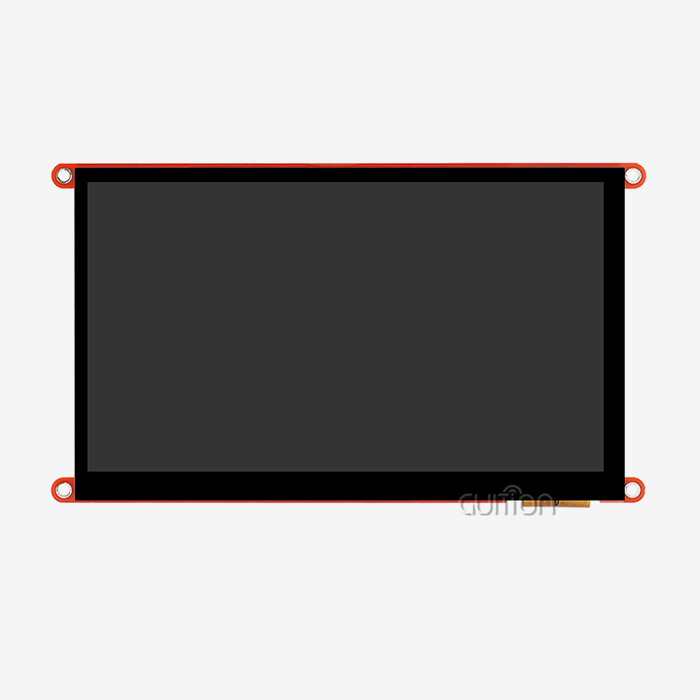
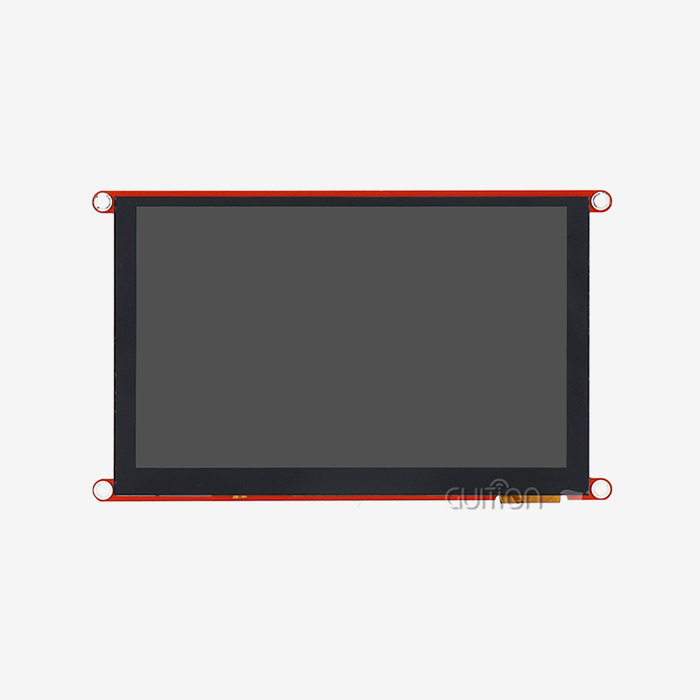
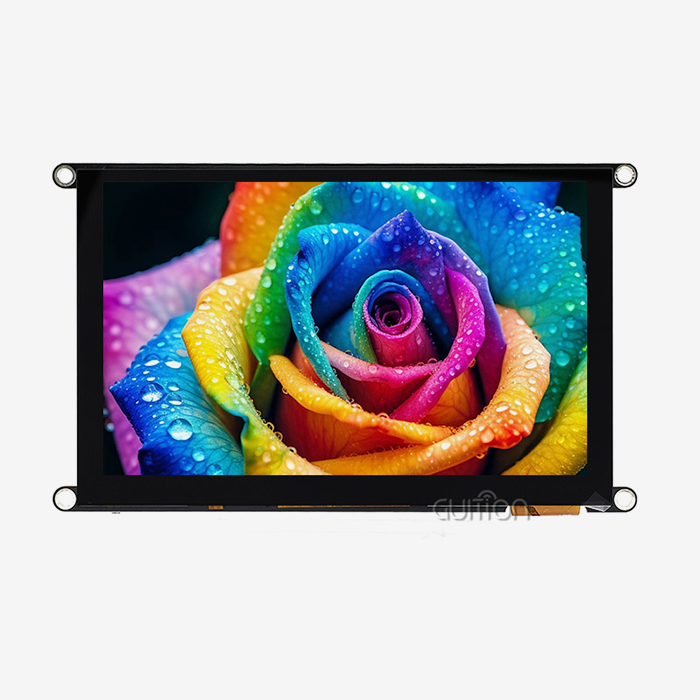
A Colour lcd display module is far more than just a glass panel. There is a TFT liquid crystal screen, driver ICs, backlight control circuits, and often a touch interface all built into one fully integrated optoelectronic unit. Each pixel in the active matrix architecture has its own transistor, which makes it possible to accurately display colours from 65K (16-bit) to 16.7M (24-bit).
Where Are These Modules Actually Used?
You can find TFT Colour lcd display modules in business kiosks, portable medical monitors, farm automation systems, and industrial HMI control panels. Outdoor infrastructure and car telematics are two new industries that are quickly growing their needs for screens that can be read in direct sunlight and at high temperatures. Grand View Research estimated that the global LCD display market was worth more than USD 116 billion in 2023. The medical and industrial segments were responsible for the market's steady growth.
SPI vs. RGB vs. MIPI — Matching Interface to Application
The choice of interface has a direct effect on how hard and fast merging is. For small screens under 3.5 inches with mostly static GUI content, SPI interfaces work best, using the least amount of GPIO. RGB parallel connections can handle resolutions in the middle, which means that video changes are smoother. LVDS and MIPI DSI protocols work with high-resolution modules that are 7 inches or bigger, and they keep electromagnetic interference to a minimum over longer cable runs. When you match the interface to your processing platform early on in the design process, you don't have to do expensive redesigns later on.
Criteria for Choosing a Reliable Colour LCD Display Module
Not every TFT screen on the market can be called "reliable." Purchasing managers have to look at many factors at once, such as the screen's optical performance, electricity compatibility, stability in harsh environments, and support for software ecosystems.
Some important technology specs that you should carefully look over are:
- Resolution and pixel density: A higher pixel density (measured in PPI) makes text and icons look clearer, which is important for medical and industry diagnostics.
- Viewing angle technology: IPS panels show the same colour from 178° in all directions, while TN panels show colour shifts beyond 45°, which makes them less useful for shared-use computers.
- Brightness and outdoor readability: Standard market units give off 200 to 350 nits. With anti-glare or anti-reflection finishes, industrial outdoor versions can hit 800 to 2500 nits.
- Touch technology: Resistive touch panels can be used with gloves on and in rough conditions. Capacitive panels let you use multiple touch movements, which works well for displays that people see.
- Environmental grade: The commercial grade works at temperatures between 0°C and 50°C. This is extended to –30°C to +85°C for industrial grade, which is necessary for use in factories and farms.
When put together, these factors tell us if a Colour lcd display module will work reliably for years in the field, not just during lab tests. If a module meets the optical requirements but doesn't have the right environmental approval, it will fail early in real-world deployments, which will cost a lot in guarantee claims and cause production delays.
Leading Sources and Suppliers of Colour LCD Display Modules
Panel manufacturers, module integrators, and value-added resellers make up the global supply chain for Colour lcd display modules. Panel makers with a lot of experience, like Tianma, BOE, and Innolux, sell raw TFT glass to module integrators further down the line, who then add driver ICs, backlights, and touch layers. Distributors like Digi-Key and Mouser sell certified modules from Adafruit and Newhaven Display, which can be used for prototyping and small-batch production.
Working with a fully integrated HMI maker is the best way to get custom firmware, UI software tools, and long-term supply agreements for large-scale purchases. GUITION works exactly in this area, creating, making, and supporting colour display modules from 1.28 inches to 21.5 inches. Their products come with full secondary development instructions and cross-platform software.
Why GUITION JC3248S035R Stands Out
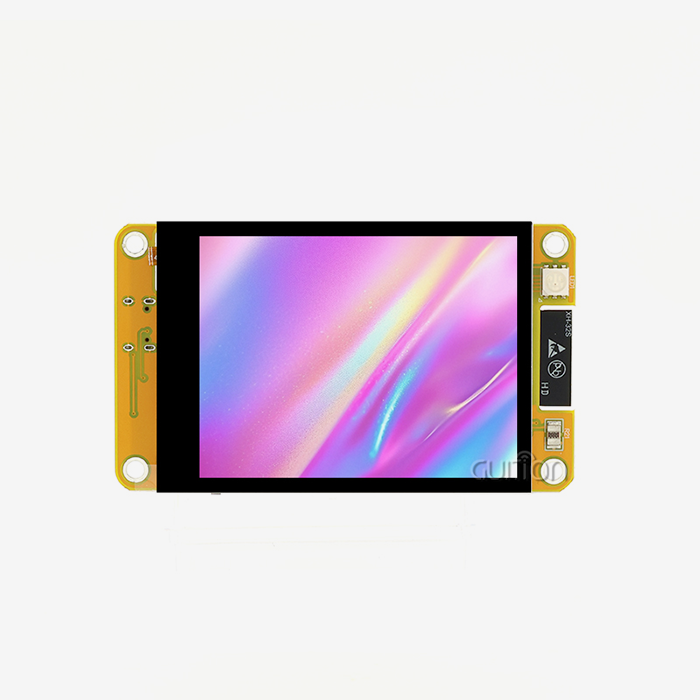
The GUITION JC3248S035R is a 3.5-inch TFT Colour lcd display module that is based on the ILI9488 driver IC and has a size of 320x480 pixels and a colour depth of 16 bits and 65K. It communicates using a 4-wire SPI interface, which reduces the amount of GPIO used by host microcontrollers. This is a big plus for small embedded designs where pin resources are limited. The module has circuitry for controlling the backlight and an optional resistive touch panel, so it can be used on its own for interactive HMI applications.
Here are the core advantages this module brings to embedded development teams:
- Minimal wiring overhead: Fewer links are needed for the 4-wire SPI bus compared to parallel interfaces, which makes PCB planning easier and lowers the chance of assembly mistakes.
- ILI9488 driver compatibility: This widely supported driver IC works well with Arduino, ESP-IDF, and Guition development modes, which speeds up the time it takes to make prototypes.
- Built-in SD card slot: This lets you add more storage, which lets you load dynamic assets like logos, icons, and firmware payloads without using extra modules.
- Optional resistive touch: The touch layer lets you use your fingers while wearing gloves, which meets the needs of industry and medical use.
- Compact PCB footprint: The precisely sized board fits naturally into enclosure designs with limited space, which cuts down on the mechanical engineering work that needs to be done.
These benefits directly address the problems that embedded engineers face when they have to work with limited hardware resources and tight deadlines. In the past, teams had to spend weeks fixing problems with display drivers. Now, when the driver IC, datasheet, and example code all come from the same confirmed source, integration goes faster.
Troubleshooting and Maintaining Your Colour LCD Display Module
Even high-quality TFT Colour lcd display modules have problems from time to time. Flickering is usually a sign of a backlight power supply that isn't stable or PWM frequency conflicts. Interface failures, like blank screens after initialization, are generally caused by wrong SPI timing settings or the RESET signal polarity not matching up, which can be checked against the ILI9488 datasheet [2]. In older units, backlight failure is usually caused by a failing LED driver rather than the LCD panel itself. This means that the backlight circuit should be the first thing that is checked.
Preventive maintenance makes modules last a lot longer. ITO trace rust can be avoided by keeping the relative humidity below 60% RH and staying away from mist. This is a known way for things to fail that is spelled out in the IEC 60068-2-38 environmental testing standards. Most intermittent display faults in field-deployed equipment can be avoided by making sure the connectors are securely seated and that the FPC cables have strain relief. If the problems still happen after these tests, calling the module's serial number and datasheet version to the manufacturer's technical support team usually fixes the problem without having to change any hardware.
Cost and Purchase Considerations for B2B Procurement
Screen size, image level, touch technology, and brightness standard all have a significant impact on the price of a Colour lcd display module. A basic 3.5-inch SPI module that doesn't have touch usually costs between USD 8 and 18 per unit when bought in small amounts. Costs go up by 20–40% when you add a resistive touch layer and an industrial-grade temperature rating. If you buy 500 or 1,000 units in bulk, the price per unit can drop by 15 to 30 percent, based on how much the supplier can make.
Purchasing managers should ask for detailed quotes that include the unit price, shipping terms (EXW vs. DDP), length of warranty, and minimum order quantity. Over the three to five years that a product is used, its total cost of ownership goes down by a lot if the company has clear rules for returns, repairs, and software updates.
Conclusion
Sourcing a reliable Colour lcd display module demands more than just comparing spec sheets. It requires checking the supplier's level of engineering knowledge, the quality of their documentation, their ability to work with different platforms, and their promise of long-term availability. The JC3248S035R from GUITION is a great example of a production-ready TFT display module. It has a tested driver IC, a flexible SPI interface, support for both touch and SD cards, and full support from the Guition software environment. Choosing the right module and supplier is what makes or breaks a project, whether it's for an industrial HMI panel, a medical monitor, or an interface for a smart appliance.
FAQ
What distinguishes a colour LCD display module from a monochrome display?
In order to support complicated GUI elements like icons, charts, and photos, a Colour lcd display module uses RGB colour filters and active matrix transistor control to display millions of colours. Monochrome displays can only show two levels of brightness: on and off. This means they are good for simple text readouts but not good enough for current HMI applications that need to be able to tell the difference between things visually.
How do I verify pinout compatibility before purchasing?
Before you place an order, you should always ask for the full information and reference diagram. Make sure that the MOSI, SCLK, CS, DC, and RST SPI pin assignments match the GPIO on your target microcontroller. There is a lot of public initialization code for Arduino and ESP-IDF that works with the ILI9488-based modules and shows that the signal levels are compatible.
Which display technology is best for outdoor or sunlight-readable applications?
When you mix optical bonding to get rid of air-gap reflections with high-brightness TFT modules that are over 1000 nits, they work reliably in full sunlight. Ambient light is used as extra lighting by reflective panels, which lowers the amount of power used by the backlight. In outdoor settings, both methods work better than standard commercial-grade modules.
Can the GUITION JC3248S035R support remote firmware updates?
The Guition development platform supports over-the-air (OTA) upgrades, which means that the Guition product ecosystem as a whole can be used to maintain projects online without having to physically access deployed hardware.
Partner with GUITION for Your Colour LCD Display Module Procurement
GUITION delivers engineering-grade Colour lcd display module solutions backed by full documentation, cross-platform software, and dedicated technical support. As a trusted Colour lcd display module manufacturer, we serve embedded engineers, R&D teams, and product managers across industrial, medical, and smart device sectors. Contact our team to request a quotation, access datasheets for the JC3248S035R, or discuss custom display configurations tailored to your production requirements.
Email us: david@guition.com
References
1. Grand View Research. (2023). LCD Display Market Size, Share & Trends Analysis Report. Grand View Research.
2. Ilitek. (2022). ILI9488 TFT LCD Single Chip Driver Datasheet. Ilitek Co., Ltd.
3. International Electrotechnical Commission. (2021). IEC 60068-2-38: Environmental Testing — Combined Humid Heat Cyclic Test. IEC.
4. Mordor Intelligence. (2024). TFT LCD Module Market — Growth, Trends, and Forecasts. Mordor Intelligence.
5. Espressif Systems. (2023). ESP-IDF Programming Guide — SPI Master Driver. Espressif Systems.
6. Society for Information Display. (2023). Display Week 2023 — Sunlight-Readable and High-Brightness Display Technologies. SID.
Learn about our latest products and discounts through SMS or email