- English
- French
- German
- Portuguese
- Spanish
- Russian
- Japanese
- Korean
- Arabic
- Greek
- German
- Turkish
- Italian
- Danish
- Romanian
- Indonesian
- Czech
- Afrikaans
- Swedish
- Polish
- Basque
- Catalan
- Esperanto
- Hindi
- Lao
- Albanian
- Amharic
- Armenian
- Azerbaijani
- Belarusian
- Bengali
- Bosnian
- Bulgarian
- Cebuano
- Chichewa
- Corsican
- Croatian
- Dutch
- Estonian
- Filipino
- Finnish
- Frisian
- Galician
- Georgian
- Gujarati
- Haitian
- Hausa
- Hawaiian
- Hebrew
- Hmong
- Hungarian
- Icelandic
- Igbo
- Javanese
- Kannada
- Kazakh
- Khmer
- Kurdish
- Kyrgyz
- Latin
- Latvian
- Lithuanian
- Luxembou..
- Macedonian
- Malagasy
- Malay
- Malayalam
- Maltese
- Maori
- Marathi
- Mongolian
- Burmese
- Nepali
- Norwegian
- Pashto
- Persian
- Punjabi
- Serbian
- Sesotho
- Sinhala
- Slovak
- Slovenian
- Somali
- Samoan
- Scots Gaelic
- Shona
- Sindhi
- Sundanese
- Swahili
- Tajik
- Tamil
- Telugu
- Thai
- Ukrainian
- Urdu
- Uzbek
- Vietnamese
- Welsh
- Xhosa
- Yiddish
- Yoruba
- Zulu
How to Assess Production Capacity for a 4 inch ESP32S3 display module?
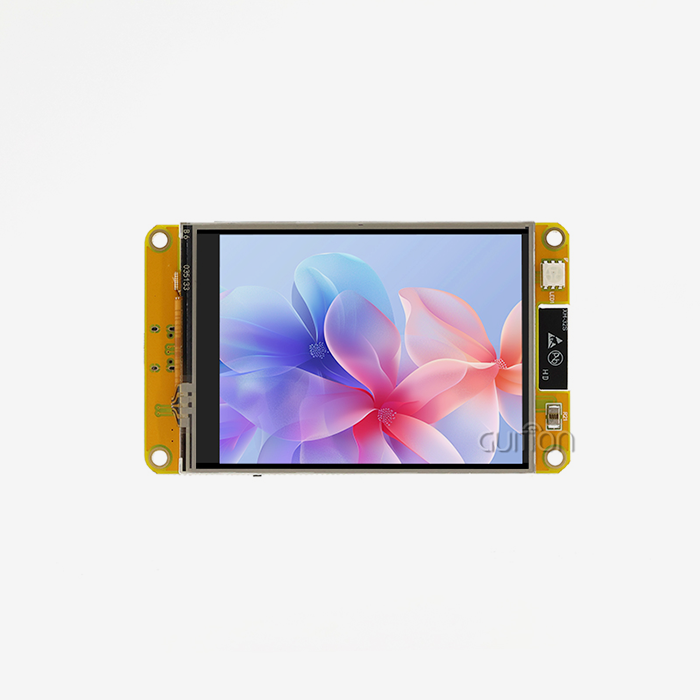
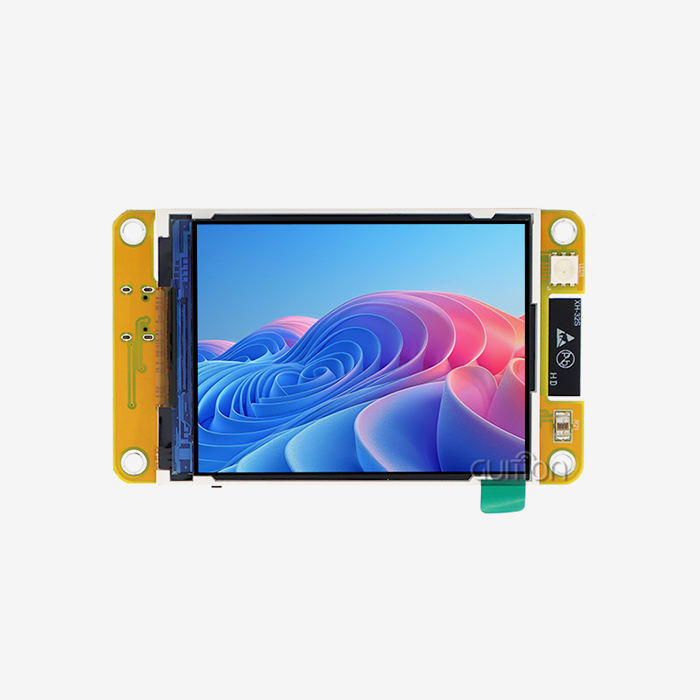
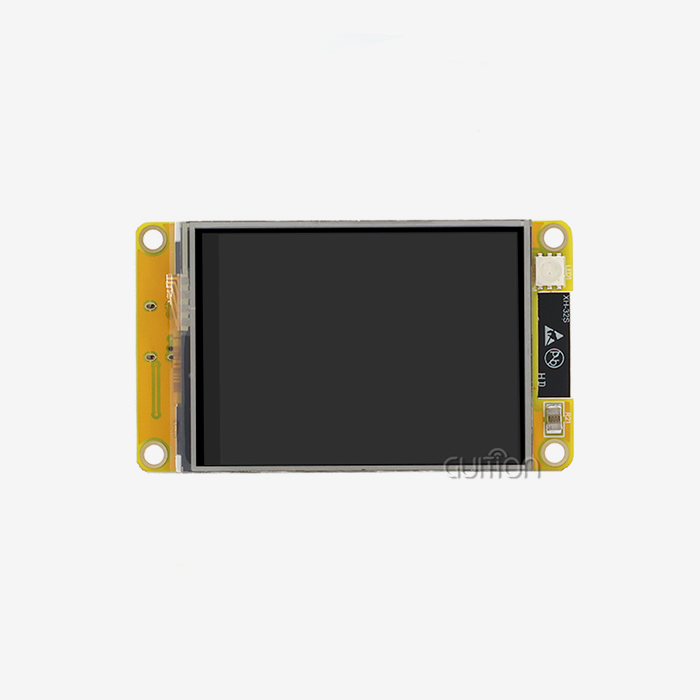
To gage the manufacturing capability of a 4 inch ESP32S3 display module, obtain the supplier’s confirmed monthly output data, examine factory audit reports, factor in lead times for bulk orders, and ensure quality certifications are in place. Also, ask for sample units for hands-on testing. The GUITION ESP32-4848S040C_I is a powerful benchmark – based on the ESP32-S3R8 dual-core MCU with 16MB Flash, 8M PSRAM, 480×480 capacitive touch IPS display, and built-in WiFi and Bluetooth – showing what a production-ready ESP32-S3 display module should be able to produce.The market for tiny integrated display modules is increasing rapidly. According to MarketsandMarkets, the worldwide HMI market is anticipated to surpass $7.8 billion by 2027, driven by the use of IoT and industrial automation. For procurement managers and R&D leaders buying an ESP32-S3 touch display module at scale, knowing how a supplier’s manufacturing capacity matches up with your project timetable is not optional – it’s a must.

Understanding Production Capacity: Definition and Importance
What "Production Capacity" Actually Means
Production capacity is the maximum number of units that a corporation can produce in a specific period of time, generally every month or three months. This covers PCB assembly, display bonding, firmware flashing, quality testing and packaging for an integrated display module such as a 4 inch ESP32-S3 HMI screen. The factory’s “theoretical capacity” is the number on paper, but “actual capacity” factors in things like downtime, shortage of resources and missed yields.
Why the Gap Between Stated and Real Capacity Matters
Most procurement teams don’t identify this gap until major purchases are already made. A vendor may declare they can ship 50,000 units per month but you may only get 30,000 because they can’t locate enough capacitive touch ICs or ESP32-S3R8 chips. Knowing the actual throughput protects the launch date of your product.
How Capacity Affects Your Supply Chain Decisions
Lead times and unit pricing are directly determined by capacity, as well as the quantity of buffer stock need to maintain. A supplier that can provide a steady volume of 480x480 touch display modules is in a better position to provide better pricing, quicker restocking, and more reliable OEM partner contracts.
Core Metrics and Criteria to Evaluate Production Capacity
Monthly Output Volumes and Lead Time Data
Request documented monthly production figures for the specific SKU — not general factory output. For a 4 inch ESP32S3 display module with capacitive touch and WiFi/Bluetooth integration, ask for rolling 6-month production data. Typical lead times for NPI orders range from 4 to 6 weeks; volume orders should ship within 2 to 3 weeks from a well-organized factory.
Quality Assurance Rates and Certifications
A reliable 4 inch ESP32-S3 display module supplier maintains defect rates below 0.5% at AQL 1.0. Look for ISO 9001 certification, CE/FCC compliance, and RoHS conformance. The GUITION ESP32-4848S040C_I meets military-grade process standards, which means it passes burn-in testing and environmental stress screening before shipment.
Factory Transparency and Audit Readiness
Reputable manufacturers welcome third-party audits. Audit criteria should cover SMT line capacity, ESD control protocols, incoming material inspection, and finished goods testing. Suppliers who provide audit reports proactively demonstrate accountability and process maturity.
Comparative Analysis of Production Capacity Among Leading Suppliers
There are several companies that make 4 inch ESP32-S3 display units, and each one has its own pros and cons. Waveshare is known for having a lot of SKUs available and paperwork that is easy for developers to understand, but their main customers are hobbyists and small businesses. LilyGo has competitively priced modules that work well together, but it has traditionally only taken smaller orders. M5Stack is great at supporting ecosystems and making modular accessories, but it's more geared toward prototyping than mass OEM production.GUITION, on the other hand, is built around B2B and OEM supply. The ESP32-4848S040C_I is a 480x480 IPS display module with ESP32-S3R8, 16MB Flash, 8M PSRAM, a TF card slot, and support for development on multiple platforms. It comes factory-programmed and ready to use right out of the box. Here are the things that make GUITION different in a capacity comparison:
- Multi-platform development support: The module supports Arduino IDE, ESP-IDF, MicroPython, and the proprietary Guition development environment, reducing integration work for engineering teams across different toolchains.
- Factory pre-loaded test firmware: Every unit ships with test programs pre-loaded, allowing immediate functional verification on arrival — a significant time saver for incoming QC teams.
- TF card and IO port interfaces: Reserved expansion ports mean the module adapts to diverse application architectures without hardware revision, lowering your per-project NRE cost.
- OTA and remote upgrade support: The built-in WiFi connectivity enables over-the-air firmware updates, reducing field maintenance costs for deployed products.
*Over-the-air (OTA) and online update support: Over-the-air firmware updates are possible thanks to the built-in WiFi. This lowers the cost of maintaining products that have already been sent out into the field.
Step-By-Step Guide to Assess Production Capacity for Your Procurement Needs
Step 1 — Define Your Demand Profile and Technical Specs
Before you contact providers, write down your exact needs for a 4 inch ESP32S3 display module, such as the screen size (4 inches), resolution (at least 480x480), interface type (SPI or RGB), connectivity (WiFi + Bluetooth), compatibility with development environments, and expected monthly numbers over the next 12 months. This paper will be the basis for your RFQ.
Step 2 — Analyze Supplier KPIs and Request Audit Reports
Ask each possible provider for their ESP32-S3 display module's output KPIs, such as the number of units they make each month, their yield rate, the number of on-time deliveries, and the MTBF data. Look over any third-party audit reports that are available. For GUITION, their official website has technical documentation and development resources that can be used. This lets procurement teams see how mature the product is.
Step 3 — Conduct Sample Testing and Factory Validation
Get engineering samples before you commit to a large order. Check the 4 inch ESP32-S3 display module's WiFi speed, Bluetooth connection reliability, touch response time, display symmetry in full-screen white and gray patterns, and power use in deep sleep mode. Schedule a virtual or in-person tour of the factory if you can to see for yourself how the lines work and how much space they take up.
Emerging Trends and Future Outlook in 4 Inch ESP32S3 Display Module Production
Automation and AI-Assisted Manufacturing
Leading manufacturers are adding AI-based defect classification and automated optical inspection (AOI) to SMT lines. This lowers the chance of mistakes made by hand when making PCBAs for 4 inch ESP32S3 display module products and raises the yield rates of fine-pitch ESP32-S3 packages. This means that quality will be more consistent at higher volumes for procurement teams.
Supply Chain Digitization and JIT Production
Mid-sized to big HMI module providers are starting to use digital inventory systems and just-in-time manufacturing models as normal. This lets buyers get their 4 inch display modules faster without having to keep a lot of extras on hand. When suppliers offer EDI or ERP integration, procurement teams can see the schedule for production at any time.
Sustainability Standards in Display Module Manufacturing
Compliance with RoHS is now a standard requirement in most business-to-business contracts. Forward-thinking providers are also using ISO 14001 to control the environment and source materials for IPS panels and PCB substrates that are free of conflict. Buyers who want to sell in the US and EU should check these certifications when they sign up a new supplier.
Conclusion
By checking a supplier's production capacity for an ESP32-S3 touch display module, including a 4 inch ESP32S3 display module, correctly, you can keep your project on track, keep costs down, and lower supply chain risk. The main steps are easy to understand: list your requirements, ask for verified output data, test samples, check out the factory, and agree on clear production guarantees. With its 480x480 IPS screen, dual-core ESP32-S3R8 processor, built-in WiFi and Bluetooth, and support for Arduino, ESP-IDF, MicroPython, and the Guition IDE, the ESP32-4848S040C_I is perfect for the stable, scalable production partnerships that B2B buyers need.
FAQ
What is a realistic monthly production volume for a 4 inch ESP32S3 display module supplier?
For a single SKU, well-known manufacturers usually make between 10,000 and 100,000 units per month. With the help of automated SMT lines and component pre-qualification tools, GUITION keeps the ESP32-4848S040C_I's output capacity steady.
How can I verify a supplier's capacity claims before placing a large order?
Ask for ongoing output records, audit reports from a third party, and contact information for current OEM users. First, place a test order for 100 to 500 units. Before scaling up, look at the rate of on-time deliveries and the standard of each unit.
What certifications should a 4 inch ESP32-S3 display module carry for US market entry?
As a general rule, products must meet FCC Part 15 (for WiFi and Bluetooth), CE marking (for EU), and RoHS compliance. Having an ISO 9001 factory adds another level of process assurance.
Does multi-platform development support affect production lead times?
Not right away. But modules that come pre-loaded with firmware, like the GUITION ESP32-4848S040C_I, cut down on the time it takes to inspect arriving parts and speed up the testing of the first product, which shortens the total lead time of your project.
Partner With GUITION for Your Next ESP32-S3 Display Module Project
GUITION offers 4 inch ESP32S3 display module solutions that are ready for production and are made for business-to-business buyers who need a reliable supply chain and quick development cycles. A 480x480 IPS sensitive touch screen, 16MB Flash, dual-core 240MHz processing, and multi-platform IDE support are all features of the ESP32-4848S040C_I, which comes from a trusted maker. As a reliable provider of 4 inch ESP32S3 display modules, GUITION offers technical documentation, over-the-air (OTA) upgrades, and quick engineering support. To get samples and pricing information right away, email us at david@guition.com or go to https://jingcaizhineng.aixdb.cn/.
References
1. MarketsandMarkets. Human Machine Interface (HMI) Market — Global Forecast to 2027. MarketsandMarkets Research, 2022.
2. Espressif Systems. ESP32-S3 Technical Reference Manual. Espressif Systems, 2023.
3. IPC Association. IPC-A-610: Acceptability of Electronic Assemblies. IPC, 2020.
4. International Organization for Standardization. ISO 9001:2015 Quality Management Systems — Requirements. ISO, 2015.
5. Grand View Research. Embedded Display Market Size, Share & Trends Analysis Report, 2023–2030. Grand View Research, 2023.
6. Supply Chain Management Review. Digital Transformation in Electronics Manufacturing Supply Chains. Supply Chain Management Review, 2022.
Learn about our latest products and discounts through SMS or email