- English
- French
- German
- Portuguese
- Spanish
- Russian
- Japanese
- Korean
- Arabic
- Greek
- German
- Turkish
- Italian
- Danish
- Romanian
- Indonesian
- Czech
- Afrikaans
- Swedish
- Polish
- Basque
- Catalan
- Esperanto
- Hindi
- Lao
- Albanian
- Amharic
- Armenian
- Azerbaijani
- Belarusian
- Bengali
- Bosnian
- Bulgarian
- Cebuano
- Chichewa
- Corsican
- Croatian
- Dutch
- Estonian
- Filipino
- Finnish
- Frisian
- Galician
- Georgian
- Gujarati
- Haitian
- Hausa
- Hawaiian
- Hebrew
- Hmong
- Hungarian
- Icelandic
- Igbo
- Javanese
- Kannada
- Kazakh
- Khmer
- Kurdish
- Kyrgyz
- Latin
- Latvian
- Lithuanian
- Luxembou..
- Macedonian
- Malagasy
- Malay
- Malayalam
- Maltese
- Maori
- Marathi
- Mongolian
- Burmese
- Nepali
- Norwegian
- Pashto
- Persian
- Punjabi
- Serbian
- Sesotho
- Sinhala
- Slovak
- Slovenian
- Somali
- Samoan
- Scots Gaelic
- Shona
- Sindhi
- Sundanese
- Swahili
- Tajik
- Tamil
- Telugu
- Thai
- Ukrainian
- Urdu
- Uzbek
- Vietnamese
- Welsh
- Xhosa
- Yiddish
- Yoruba
- Zulu
How Can an Ips display module Improve Visual Performance?
An IPS display module improves visual performance by aligning liquid crystal molecules horizontally within the panel, which produces wider viewing angles, more accurate color reproduction, and better contrast consistency. Unlike TN panels that shift colors when viewed off-axis, an IPS display module maintains stable gamma curves at up to 178°/178° horizontal and vertical angles. For industrial HMI designers, embedded engineers, and medical device developers, this translates directly into fewer operator errors, cleaner UI presentation, and longer device service life across demanding deployment environments.

Understanding the Challenges in Traditional Display Technologies
Before looking at what IPS technology has to offer, it's helpful to know why older screen technologies don't work well in business settings.
TN Panels: Narrow Angles, Inconsistent Colors
Twisted Nematic panels are cheap, but they give up a lot of visual quality in exchange for that. Beyond a 45° viewing angle, color clarity drops sharply, and grayscale flipping happens a lot. In a plant control room with multiple workers sharing one screen, this is a real problem for getting things done.
VA Panels: Contrast Without Consistency
Vertical Alignment panels make contrast ratios better, but when placed off-center, they cause obvious color shifts. Also, response times are longer, which makes motion blur more noticeable in dynamic HMI interfaces or video-based monitoring apps.
The Procurement Risk of Substandard Displays
Using low-quality display technology in business-to-business (B2B) goods leads to more service requests, more returns, and a worse image for the brand. A study from 2022 by Display Supply Chain Consultants (DSCC) says that a lot of industrial device warranty claims are linked to display failures in the field. This makes the realistic case for investing in better panel technology from the start even stronger.
What Is an IPS Display Module and How Does It Work?
When you understand how IPS technology works, you can see why it always performs better than other options in business settings.
Liquid Crystal Alignment in IPS Panels
When voltage is applied to an Ips display module, the liquid crystal molecules lie flat against the glass substrate and rotate in the same plane. This in-plane rotation keeps colors and brightness the same across a wide range of viewing angles. This is very different from how TN and VA technologies align the pixels perpendicularly.
No "Water Ripple" Effect on Touch Surfaces
If you press on an IPS panel, you won't see the liquid ripple effect that happens on softer TN screens because the molecular structure is more mechanically stable. Because of this, the IPS display module is the best choice for capacitive touch apps, where people hit the screen surface many times during the day.
Integration Into Industrial and Embedded Systems
These days, IPS modules connect using standard interfaces like MIPI DSI, RGB, and LVDS. This means that they can work with many host processors and software platforms. This wide flexibility makes it easier for embedded engineers to integrate code that works with Arduino, ESP-IDF, or their own custom software.
Key Ways IPS Display Modules Improve Visual Performance
In B2B applications, the visual improvements that come from moving to an IPS display module are quantifiable and directly related to product quality.
Color Accuracy That Supports Critical Decisions
Most IPS screens cover more than 100% of the sRGB color space, and the best ones go as high as 72% NTSC or higher. Accurate color modeling is not just for looks; it is necessary in medical esthetics equipment, where skin tones are checked on-screen, and in quality control stations, where color variation leads to rejection.
Wide Viewing Angles for Shared Environments
Multiple team members can read the same screen at the same time without moving thanks to an IPS display module's 178°/178° viewing ability. This is important in places like energy management control rooms, commercial kiosks, and agricultural automation terminals where people use the interface from various angles.
Faster Response Times and Stable Motion Clarity
IPS screens have fast black-to-white response times, which lowers motion blur in apps that show live sensor feeds, real-time data, or dynamic UI elements. This is especially important for screens at EV charging stations and 3D printer interfaces where dynamic material changes quickly. These performance characteristics deal with real problems in engineering. They make it easier to make changes to displays after release, lower the number of mistakes made by users, and make sure that the standard of the UX is the same across production batches.
Spotlight: GUITION JC4848B040C_I — A Practical IPS Display Module Example
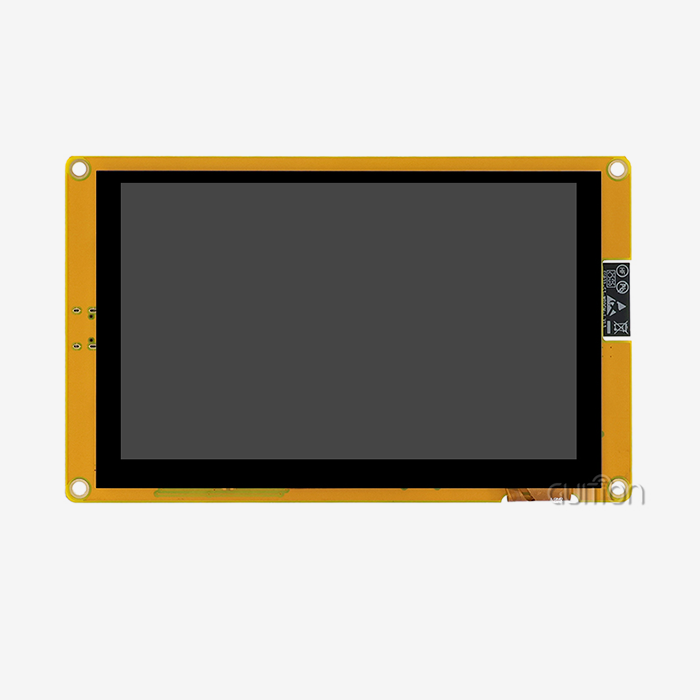
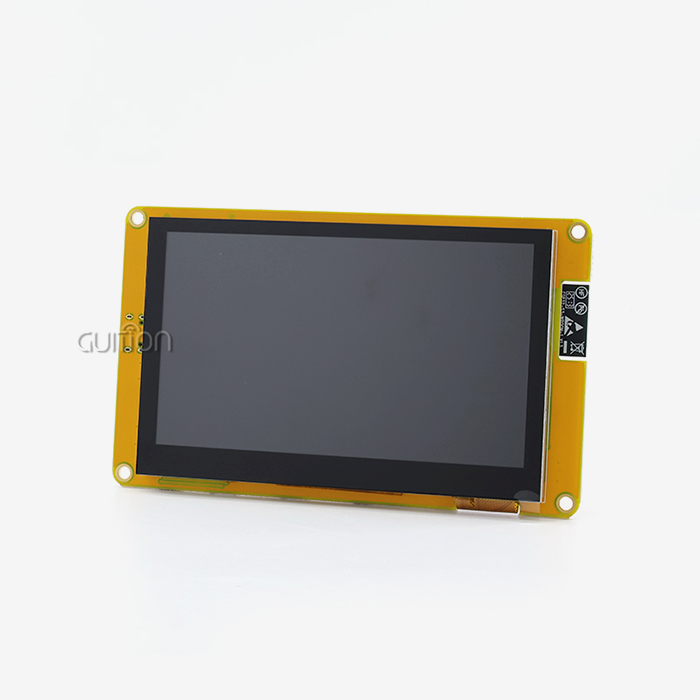
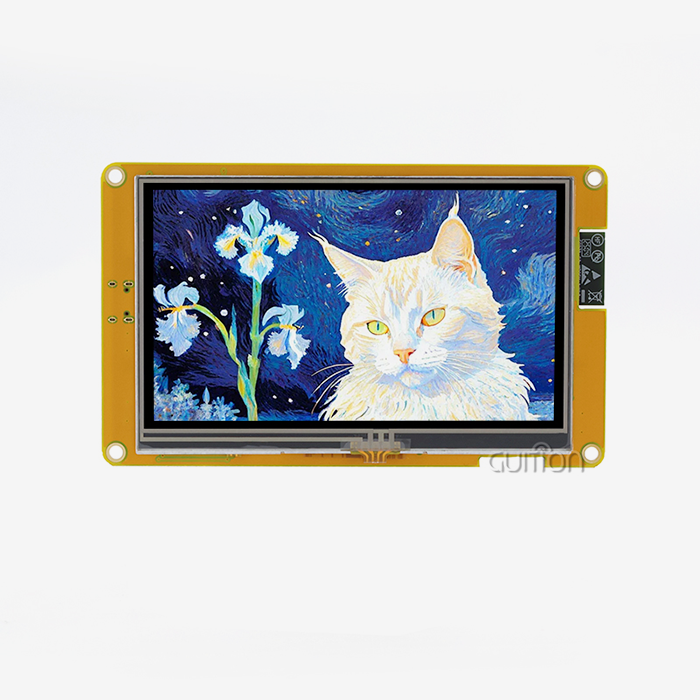
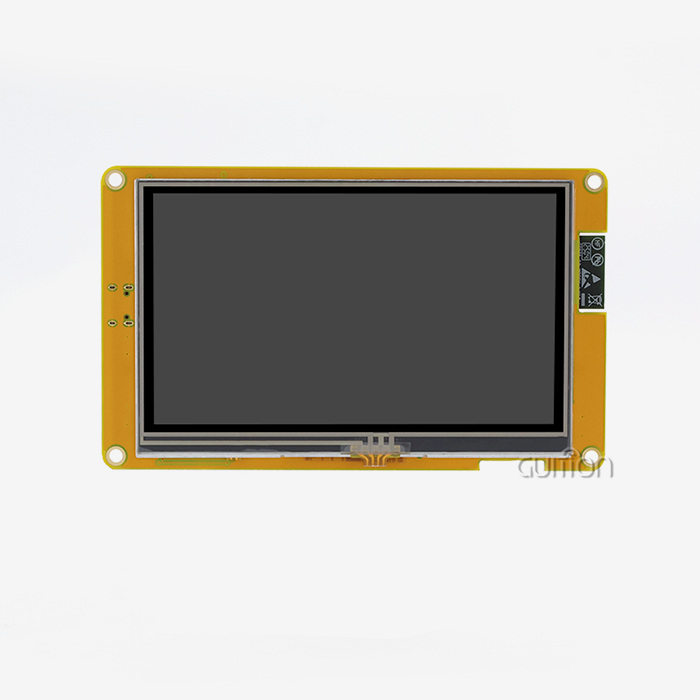
A properly defined IPS display module is shown in the GUIDE JC4848B040C_I.
Core Technical Specifications
This 4.0-inch IPS display module has a resolution of 800x480 and 16.7M colors through 24-bit RGB. It uses the ST7701 driver chip. It has a capacitive touch screen that responds quickly and accurately to input and links through a MIPI DSI interface. Because it can work in temperatures ranging from -20°C to +70°C, it can be used in both cold storage and high-temperature commercial areas.
Applications Across Multiple Industries
All of these uses need the same thing: a screen that works right the first time and stays that way throughout the product's lifecycle. Remote over-the-air (OTA) updates, multilingual encoding, and cross-platform debugging are all possible with the Guition development platform. This makes after-sales support a lot easier.
- 3D Printers and Industrial Control Panels: The 800×480 resolution displays print parameters, progress bars, and control menus with sharp clarity. Operators can read the screen from the side without color distortion, which reduces input errors during calibration.
- EV Charging Stations and Energy Management Systems: Charging stations need displays that remain readable in variable lighting conditions and withstand temperature swings. The wide operating range and bright IPS panel handle both requirements without additional hardware modifications.
- Medical Aesthetics and Therapeutic Equipment: Clinicians rely on accurate on-screen information to set treatment parameters. The 16.7M color depth and stable gamma curve of this IPS display module support precise visual feedback for both operators and patients.
- Smart Home and IoT Devices: The compact 4.0-inch form factor fits wall-mounted panels and handheld controllers. Combined with Guition software support for Arduino and IDF development modes, integration into connected device ecosystems is straightforward.
- Commercial Kiosks and Security Terminals: High-traffic environments demand touch surfaces that remain responsive after thousands of interactions. The capacitive touch panel on the JC4848B040C_I maintains accuracy without degradation under repeated use.
These applications share a common requirement: a display that works the first time correctly and continues working without drift over the product lifecycle. The Guition development platform supports remote OTA upgrades, multi-language encoding, and cross-platform debugging, which reduces after-sales intervention significantly.
Evaluating IPS Display Modules for Your Procurement Needs
When picking the right display module for your product, you need to look at more than just price. You need to compare the module's specs to the needs of your application.
IPS vs. OLED vs. VA: A Practical Comparison
In consumer uses, OLED has better contrast, but it costs more and has a higher risk of burn-in in static industrial displays. While VA panels have deep blacks, they also have color shift when the screen is off-axis. The Ips display module has a good mix of color accuracy, angular stability, and lifetime reliability, making it suitable for most B2B uses, especially those where parallel lcd display total cost of ownership is more important than peak contrast performance.
Key Selection Criteria for B2B Buyers
The main technical factors are the resolution, brightness (nits), contrast ratio, type of touch technology, operating temperature, and interface standard. In addition to the requirements, the quality of the documentation, the availability of development tools, and the responsiveness of the seller all have a direct effect on project timelines and the costs of assistance after launch.
ROI From Investing in Quality Display Technology
Field returns, user training time, and the number of times you need service after the sale are all decreased when you choose a better IPS display module. As production volumes rise, these savings add up, making the extra cost of a better panel a smart financial move for most OEM and system integrator uses.
Future Trends in IPS Display Modules and Visual Performance Optimization
Optical Bonding and Sunlight Readability
By attaching the cover glass directly to the IPS screen, optical bonding gets rid of the air gap that causes internal reflections. When bonded IPS modules are combined with backlights that are brighter than 1,000 nits, they make it possible to read screens outside, making them suitable for agricultural automation terminals and outdoor commercial kiosks.
Expanding Color Gamut and Power Efficiency
Mini-LED arrays and quantum dot enhancement films are examples of advances in backlight technology that are making IPS panels more color gamut-friendly while using less power. This directly helps IoT devices that run on batteries and portable medical equipment that doesn't have a lot of display power.
Integration With Smart Connectivity Platforms
Remote interface updates, real-time data visualization, and over-the-air firmware improvements are all possible with IPS display panels equipped with WiFi and Bluetooth connectivity, as provided by the Guition product ecosystem. This feature cuts down on on-site repair trips and helps extend the product lifecycle for devices that are already in use.
Conclusion
The most common visual performance issues in industrial and commercial products—poor viewing angles, inaccurate colors, and erratic touch response—can be fixed by switching to a high-quality Ips display module. Engineers and product teams can use the GUITION JC4848B040C_I, which is a well-documented, cross-platform option that comes with Guition's development tools and provider support. Whether you're making a 3D printer, an EV charging station, a medical device, or a smart home panel, the right IPS display module or Parallel LCD Display will make your product easier to use and lower the costs of long-term support.
FAQ
Why does an IPS display module outperform TN panels for touch applications?
The IPS molecular arrangement resists physical deformation under finger pressure. TN panels produce a visible "water ripple" effect when touched, which degrades both visual quality and panel longevity. IPS panels maintain a clean image surface during touch interaction.
Can an IPS display module be used outdoors?
Standard IPS panels rated at 300–400 nits may wash out in direct sunlight. High-brightness variants exceeding 1,000 nits, combined with optical bonding, achieve acceptable outdoor readability. Always check the brightness specification against your ambient light conditions before specifying a module.
What is the typical operational lifespan of an IPS display module?
The LED backlight unit determines lifespan in most cases, typically rated between 30,000 and 50,000 hours to half-brightness. The IPS panel itself has no moving parts and degrades primarily through backlight aging and polarizer wear.
Does an IPS display module consume more power than TN?
IPS panels require a stronger backlight to achieve the same brightness due to a lower aperture ratio. Power consumption is moderately higher than TN, though advances in LTPS backplane technology are reducing this difference in newer product generations.
How do I prevent image retention on an IPS display module?
Image retention on IPS panels is usually temporary. During quality control, calibrate V-com voltage correctly for the specific panel. In software, implement pixel-shifting routines or screen-saver functions to prevent static UI elements from remaining on-screen for extended periods.
Partner With Guition for Your Next IPS Display Module Project
Guition offers IPS display modules ranging from 1.28" to 21.5" for use in business, medicine, and industry. The GUITION JC4848B040C_I IPS display module for sale has a 4.0-inch screen, an 800x480 resolution, a ST7701 driver, sensitive touch, and a MIPI DSI interface. It was designed to work in harsh settings. Right out of the box, the Guition development tool works with Arduino, IDF, and remote over-the-air (OTA) updates. This speeds up the creation process. To get details, samples, or technical advice right away, email our team at david@guition.com.
References
1. Display Supply Chain Consultants (DSCC). Global Display Technology Market Report. 2022.
2. Society for Information Display (SID). Information Display Journal: IPS Panel Technology Advances. 2021.
3. Bhowmik, A. K., Li, Z., & Bos, P. J. Mobile Displays: Technology and Applications. Wiley, 2008.
4. Lueder, E. Liquid Crystal Displays: Addressing Schemes and Electro-Optical Effects. Wiley, 2010.
5. IHS Markit. Industrial Display Module Market: Technology and Procurement Trends. 2023.
6. International Electrotechnical Commission (IEC). IEC 62341: Organic Light Emitting Diode (OLED) Displays — Part 6-2: Measurements of Optical and Electro-Optical Parameters. IEC, 2020.
Learn about our latest products and discounts through SMS or email