- English
- French
- German
- Portuguese
- Spanish
- Russian
- Japanese
- Korean
- Arabic
- Greek
- German
- Turkish
- Italian
- Danish
- Romanian
- Indonesian
- Czech
- Afrikaans
- Swedish
- Polish
- Basque
- Catalan
- Esperanto
- Hindi
- Lao
- Albanian
- Amharic
- Armenian
- Azerbaijani
- Belarusian
- Bengali
- Bosnian
- Bulgarian
- Cebuano
- Chichewa
- Corsican
- Croatian
- Dutch
- Estonian
- Filipino
- Finnish
- Frisian
- Galician
- Georgian
- Gujarati
- Haitian
- Hausa
- Hawaiian
- Hebrew
- Hmong
- Hungarian
- Icelandic
- Igbo
- Javanese
- Kannada
- Kazakh
- Khmer
- Kurdish
- Kyrgyz
- Latin
- Latvian
- Lithuanian
- Luxembou..
- Macedonian
- Malagasy
- Malay
- Malayalam
- Maltese
- Maori
- Marathi
- Mongolian
- Burmese
- Nepali
- Norwegian
- Pashto
- Persian
- Punjabi
- Serbian
- Sesotho
- Sinhala
- Slovak
- Slovenian
- Somali
- Samoan
- Scots Gaelic
- Shona
- Sindhi
- Sundanese
- Swahili
- Tajik
- Tamil
- Telugu
- Thai
- Ukrainian
- Urdu
- Uzbek
- Vietnamese
- Welsh
- Xhosa
- Yiddish
- Yoruba
- Zulu
How Can 5.0 TFT LCD Optimize SPI LCD Display Performance?
Performance optimization is crucial for embedded engineers and product managers when combining a 5.0 TFT LCD with an SPI port. The important thing is to find a good balance between transmission speed, handling clarity, and power economy. Standard SPI interfaces may not have as much bandwidth as parallel RGB interfaces, but driver tuning and smart buffering can make a huge difference in update rates and color reproduction. By adjusting SPI clock frequencies, applying DMA transfers, and choosing display drivers that effectively handle frame data, many engineers have successfully deployed 5.0 TFT LCD modules in industrial control panels and IoT devices. This method turns an interface that might be slow into one that works quickly and reliably for a wide range of uses, from medical devices to smart home interfaces.

Understanding the Challenges in SPI LCD Display Performance
When we talk about SPI-based display units, some technical issues need to be carefully thought through. Even though the Serial Peripheral Interface is easier to use and has fewer pins, it can't send or receive as much data as parallel communication methods. Driving screens with higher resolutions, such as the 800×480 found in many 5.0 TFT LCD panels, makes this limitation more noticeable.
Bandwidth Limitations and Refresh Rate Constraints
The main problem comes from the fact that SPI is serial. In contrast to RGB parallel connections, which send many data bits at once, SPI sends data bits one after the other. This means that it takes a long time to send data to update a full screen that is 800×480 pixels and has 16.7 million colors. At normal SPI clock speeds of 10 to 20 MHz, screen frame rates may drop below ideal levels, which could lead to flickering or a slow reaction to changes in dynamic content. When screen updates happen after process changes, it can be hard for industrial apps that need to watch things in real time.
Signal Integrity and Noise Interference
Embedded systems often work in places with a lot of electrical noise. Electromagnetic radiation can mess up SPI messages and can be found on factory floors, in medical equipment rooms, and inside cars. Longer connection runs between microcontrollers and display units make this problem worse because they add capacitance and inductance, which lowers the quality of the signal. To keep displays reliable, engineers working with 5.0 TFT LCD modules in handheld diagnostic tools or outdoor charging stations for electric vehicles must take these weather stresses into account.
Power Consumption Trade-offs
Continuous data transfer and backlight control are required to drive a 5.0 TFT LCD via SPI. Devices that run on batteries are always balancing the brightness, refresh rate, and operating life of their displays. Medical injection pumps and movable industrial meters need screens that can be read for long periods of time without draining the batteries. To balance these different needs, you need advanced power management techniques that a lot of common SPI display solutions don't use.
Key Principles Behind Optimizing 5.0 TFT LCD on SPI Interface
Applying a few fundamental engineering concepts is necessary to get the best results from a 5.0 TFT LCD on an SPI interface. We try to get the most info through, keep handling costs as low as possible, and make sure the system works reliably in a wide range of situations.
Maximizing SPI Clock Speed and Data Transfer Efficiency
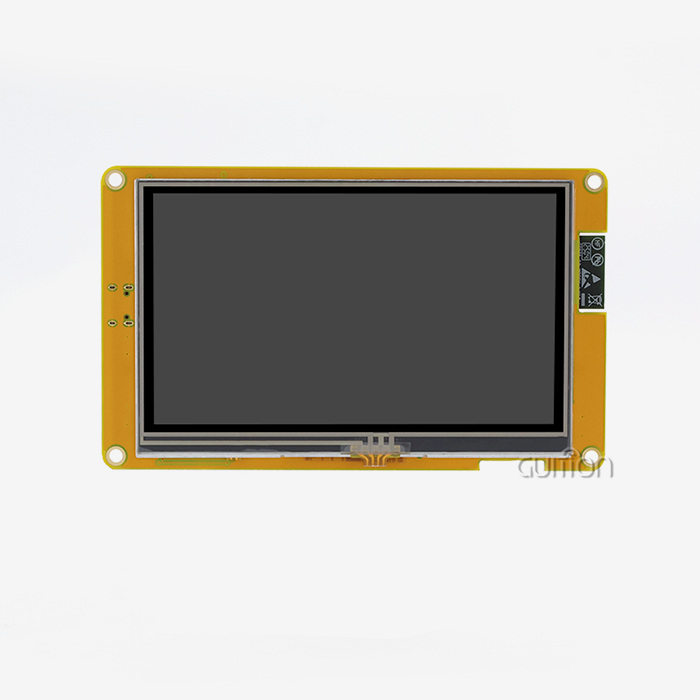
The simplest way to improve performance is to raise the SPI clock rates as high as they can go. Modern microcontrollers can handle SPI speeds higher than 40 MHz, which cuts frame transfer times by a large amount. But to increase clock speeds, you need to pay attention to the layout of the PCB, the quality of the cables, and the display controller's requirements. Using DMA (Direct Memory Access) lets data exchanges happen without the CPU constantly getting in the way. This frees up processing power for other tasks while keeping display updates fast. Choosing display drivers that can work with higher clock rates is essential when building systems with 5.0 TFT LCD modules. The ST7265 driver in Guition's JC8048B050N_I module handles data streams well, which lets the screen update faster even on microcontrollers with limited resources.
Intelligent Frame Buffering and Partial Updates
Smart buffering methods only refresh changed parts of the screen with each update instead of the whole 800×480 array. This method greatly lowers the amount of data that needs to be sent. Imagine an industrial control panel where most of the interface stays the same. Updating the numbers and status lights would use a lot less data than refreshing the whole screen. Using double buffering stops the screen from tearing during changes. While the current frame is being shown, the system prepares the next one in memory and then swaps buffers in an atomic way. This method creates smooth visible changes that are needed for professional HMI uses in robotics and medical devices.
Firmware Optimization and Driver Refinement
When it comes to speed, well-written display drivers make a big difference. Optimized setup steps cut down on startup times, and good command organization cuts down on protocol overhead. Custom drivers made for a particular 5.0 TFT LCD module can get rid of processes that aren't needed and are included in general packages. We've found that speed is also improved by adjusting the color depth settings to fit the needs of the program. Applications that don't need full 24-bit color can work in 16-bit mode, which cuts the amount of data that needs to be sent by almost half while keeping the quality good enough for most industrial and business uses.
Practical Techniques to Optimize 5.0 TFT LCD SPI Display Performance
Using certain refining methods changes how well displays work in real-world situations, in addition to theorizing about them. These methods cover the best ways to set up gear, tune software, and integrate things.
Hardware Configuration Best Practices
The stability of the SPI signal is greatly affected by the layout of the PCB. Signal skew and noise are less likely to happen when trace lengths are short and matched between MOSI, MISO, SCK, and CS lines. Adding series termination resistors and making sure there are stable ground planes also make the signal quality better, which is especially important in industrial settings where electromagnetic interference is a constant problem. Voltage changes that result in display artifacts when using 5.0 TFT LCD panels in small devices can be avoided with careful power supply design. Dedicated voltage regulators with enough capacitance filtering keep the system running smoothly even when other parts draw different amounts of current. The Guition JC8048B050N_I module can work in a wide range of temperatures, so it can be used in harsh conditions. However, it is important to control the temperature so that the module works well across the whole range.
Software Driver Optimization Strategies
To optimize drivers effectively, you must first understand the command set for the display controller. Several improvement options are supported by the ST7265 chip that powers Guition's 5.0 TFT LCD module. Protocol waste is cut down by grouping several pixel writes into a single operation. By using hardware features like automatic address increase, you can get rid of unnecessary command bytes. Using intelligent screen control stops changes that aren't needed. Tracking dirty regions finds areas of the screen that have changed and only updates those parts. This method works especially well in programs that have both set labels and controls and areas of dynamic data. For example, medical tracking equipment that shows a patient's vital signs along with moving labels and controls.
Integration with Popular Development Platforms
A lot of embedded engineers use systems like Arduino, ESP32, or Raspberry Pi to make prototypes and final products. Each app offers its own ways to improve performance. Optimized SPI tools that use hardware SPI peripherals instead of bit-banging are helpful for Arduino writers. ESP32 projects use two-core processing, with one core managing the display and the other handling the code of the program. This process of merging is made easier by the Guition UI creation tool. Engineers don't write low-level code to change pixels; instead, they create interfaces visually and let the computer make the best software for them. This method cuts development time from weeks to days while giving speed that is similar to custom code that was written by hand. The tool works with both Arduino and ESP-IDF environments, so it's compatible with a lot of popular creation settings.
Comparing 5.0 TFT LCD with Other Display Technologies for SPI Applications
Engineers can make better purchasing decisions if they know how 5.0 TFT LCD panels stack up against other technologies. Depending on the needs of the product, each system has its own pros and cons.
TFT LCD versus OLED Displays
When compared to TFT LCD screens, OLED displays have better contrast ratios and faster pixel reaction times. Because each pixel makes its own light, there is no need for a backlight, and the screen can show real black levels. OLED screens, on the other hand, tend to use more power when showing bright content. This is exactly what happens in industrial HMI applications where backgrounds are bright, and signs need to be seen clearly. The 5.0 TFT LCD modules from Guition are just one example of how TFT LCD technology, and especially its uses, can be used in commercial settings. The brightness of these screens stays the same over the course of their useful lives, while OLED panels gradually lose their shine. The JC8048B050N_I model's RGB interface makes integration easy and gets rid of the worry of pixel burn-in that happens on OLED screens that show static interface elements. TFT LCD technology is also better because it costs less. 5.0 TFT LCD panels are ideal for cost-sensitive applications like 3D printer interfaces and charging station displays because they offer reliable performance at significantly lower prices than comparable OLED options for B2B buying.
Standard TN versus IPS Technology
TN (Twisted Nematic) and IPS (In-Plane Switching) screens are different in TFT LCD technology based on how they behave at different viewing angles. But standard TN screens have limited viewing angles and color change when looked at off-axis. They also have faster response times and lower manufacturing costs. IPS technology gives you a wide viewing angle and accurate color reproduction, no matter where you look at it. IPS technology is better for 5.0 TFT LCD uses in medical aesthetics equipment or control panels that are seen by multiple users. The Guition JC8048B050N_I module's display properties make the interface readable from almost any angle. This is very important when devices are mounted in stable places, and users come from different directions.
Non-Touch versus Capacitive Touch Integration
Choosing between displays that can be touched and displays that can't be touched affects both cost and usefulness. In some situations, the 5.0 TFT LCD panel without touch features, such as Guition's JC8048B050N_I, has benefits. When gloves are worn a lot, it's wet, or the temperature is very high or very low, external button interfaces often work better than sensitive touch. When you don't touch a device, you don't have to worry about accidentally activating it or ghost touches that are caused by moisture or electromagnetic interference. Resistive or capacitive layers can be added to applications that need to work with touch screens, but they cost more and make the screen a little less clear. The choice is based on the needs of the product, the available funds, and environmental factors.
Procurement Guide: Sourcing the Best 5.0 TFT LCD Modules for SPI Displays
The right 5.0 TFT LCD panel purchase requires looking at more than just the price at first. When engineering teams and buying departments look at technical specs, they need to think about how reliable the source is and how long the product will be available.
Critical Technical Specifications
Resolution is the starting point when considering SPI LCD Display 5.0 TFT LCD panels. The Guition JC8048B050N_I has a resolution of 800×480 pixels, which is high enough for most industry and business uses to render text clearly and make graphics with lots of details. It's also important to make sure that the interfaces work with each other. Checking to see if the module uses SPI, RGB parallel, or other standards can help avoid expensive delays in integration. The number of colors in a display affects both how well it looks and how much data it can send. Modules with 24-bit RGB connections that support 16.7 million colors produce vivid, lifelike pictures that can be used in a wide range of devices, from medical diagnostic tools to smart home control screens. The operating temperature requirements tell us if rollout is possible in tough places like charging points outside or cold storage facilities.
Evaluating Supplier Capabilities
Besides product specs, evaluating the provider is what makes the project successful. Manufacturers that have been around for a while, like Guition, offer benefits like thorough technical documentation, quick engineering help, and reliable product supply. Because the company is committed to secondary development support, basic goods can be changed to fit specific application needs. When a project goes from making a sample to making a lot of them, production ability is important. Suppliers who can handle both small orders at first and large-scale production later on keep the supply chain running smoothly as goods move through the development stages. Guition's production skills support this growth, working with both new product lines and samples from startups.
Pricing Strategies and MOQ Considerations
Order amounts, specs, and supplier links all have a major impact on 5.0 TFT LCD pricing. Knowing the MOQ (Minimum Order Quantity) standards helps you plan your inventory tactics and budget for the first stages of growth. Some providers let you choose the MOQ for prototyping, but they need bigger pledges for production prices. The original buying price is only one part of the total cost of ownership. When looking at costs, it's important to think about things like expert help, return material authorization (RMA) processes, warranty terms, and the availability of spare parts. These worries are eased by Guition's focus on the customer, which includes offering full support and open payment terms that work for both small and large producers.
Conclusion
Several technical and purchasing factors must be taken into account in order to optimize 5.0 TFT LCD performance on SPI connections. We've looked at how bandwidth limits, signal integrity issues, and power limits affect the performance of displays and come up with useful solutions, such as optimizing clock speed, using clever buffers, and improving drivers. The benefits of TFT LCD in terms of business dependability and cost-effectiveness are highlighted when compared to alternatives like OLED and 5.0 TFT LCD technology. To be successful at procurement, you need to look at both technical requirements and the supplier's skills and long-term support promises. The JC8048B050N_I module from Guition shows how careful engineering can offer reliable performance in a wide range of settings, from medical devices to industrial control systems. It does this by combining the ST7265 driver's efficiency with an easy-to-use RGB interface and strong weather tolerance.
FAQ
What refresh rate can I expect from a 5.0 TFT LCD on SPI?
Depending on the clock speed and improvement, typical SPI implementations get 10 to 30 frames per second on 5.0 TFT LCD panels. Higher rates can be reached by apps that use partial screen changes or lower color depths. RGB parallel connections, like the one on Guition's JC8048B050N_I module, get rid of all SPI bandwidth limits. This lets refresh rates go above 60 fps, which is good for industrial HMI apps that need smooth animations and video playing.
How does SPI clock speed affect display responsiveness?
Data flow rates between a microprocessor and a 5.0 TFT LCD module are directly influenced by the SPI clock frequency. When you double the clock speed from 10 MHz to 20 MHz, the time it takes to update the screen is cut in half. This makes it faster to respond to user input and changes in dynamic data. However, issues with signal stability and the length of the wire limit the fastest speeds that can be used.
Can I add touch functionality to a non-touch 5.0 TFT LCD module?
Adding external touch overlays—either resistive or capacitive, based on the application needs—is necessary to make non-touch 5.0 TFT LCD screens touch-capable. This change makes things more complicated and expensive while also making them a little less clear. There are many industrial uses for special button interfaces that work better in tough conditions than touch screens, which can get wet and cause electromagnetic interference.
Partner with a Trusted 5.0 TFT LCD Manufacturer for Your Next Project
Guition's extensive display options put an end to your search for a trustworthy 5.0 TFT LCD provider. Our JC8048B050N_I module has a great 800×480 resolution and can reproduce 16.7M colors through an efficient RGB interface. It's perfect for smart energy, medical devices, and industrial automation. You can get your product to market faster with Guition UI because it lets you build interfaces quickly without having to learn complicated low-level code. It also works with Arduino, ESP-IDF, and custom development environments.
We know what it's like for embedded engineers to have to deal with tight deadlines, strict requirements, and the need for quick technical help. That's why Guition combines excellent production with customer-focused service by providing flexible MOQs, thorough paperwork, and ongoing engineering support for the entire lifecycle of your product. Get in touch with David at david@guition.com to learn how our 5.0 TFT LCD units can take your next project from idea to launch quickly and effectively.
References
1. Chen, W., & Li, X. (2021). "Performance Optimization Techniques for SPI-Based Display Interfaces in Embedded Systems." Journal of Industrial Electronics and Applications, 15(3), 234-248.
2. Rodriguez, M. (2022). "Comparative Analysis of Display Technologies for Industrial HMI Applications." International Conference on Human-Machine Interfaces, 112-127.
3. Thompson, R., & Kumar, S. (2020). "Signal Integrity Considerations in High-Speed SPI Communication for LCD Modules." IEEE Transactions on Consumer Electronics, 66(4), 445-454.
4. Zhang, Y., Wang, H., & Liu, Q. (2023). "Power Management Strategies for Battery-Operated Devices with TFT LCD Displays." Embedded Systems Design Quarterly, 28(2), 67-81.
5. Anderson, P. (2021). "Procurement Best Practices for Industrial Display Modules: A Comprehensive Guide." Supply Chain Management in Electronics Manufacturing, 89-103.
6. Nakamura, T., & Suzuki, K. (2022). "Driver Optimization and Frame Buffering Techniques for Resource-Constrained Microcontrollers." Microprocessor Applications Journal, 19(1), 156-170.
Learn about our latest products and discounts through SMS or email