- English
- French
- German
- Portuguese
- Spanish
- Russian
- Japanese
- Korean
- Arabic
- Greek
- German
- Turkish
- Italian
- Danish
- Romanian
- Indonesian
- Czech
- Afrikaans
- Swedish
- Polish
- Basque
- Catalan
- Esperanto
- Hindi
- Lao
- Albanian
- Amharic
- Armenian
- Azerbaijani
- Belarusian
- Bengali
- Bosnian
- Bulgarian
- Cebuano
- Chichewa
- Corsican
- Croatian
- Dutch
- Estonian
- Filipino
- Finnish
- Frisian
- Galician
- Georgian
- Gujarati
- Haitian
- Hausa
- Hawaiian
- Hebrew
- Hmong
- Hungarian
- Icelandic
- Igbo
- Javanese
- Kannada
- Kazakh
- Khmer
- Kurdish
- Kyrgyz
- Latin
- Latvian
- Lithuanian
- Luxembou..
- Macedonian
- Malagasy
- Malay
- Malayalam
- Maltese
- Maori
- Marathi
- Mongolian
- Burmese
- Nepali
- Norwegian
- Pashto
- Persian
- Punjabi
- Serbian
- Sesotho
- Sinhala
- Slovak
- Slovenian
- Somali
- Samoan
- Scots Gaelic
- Shona
- Sindhi
- Sundanese
- Swahili
- Tajik
- Tamil
- Telugu
- Thai
- Ukrainian
- Urdu
- Uzbek
- Vietnamese
- Welsh
- Xhosa
- Yiddish
- Yoruba
- Zulu
Why Use SPI LCD Displays in IoT Devices?
The Internet of Things needs display solutions that are both fast and energy-efficient. SPI LCD Display units have become the mainstay of modern gadgets that are linked to the internet. These modules use the Serial Peripheral Interface protocol to provide fast, accurate visual input while using very few microcontroller resources. This is a huge benefit in Internet of Things (IoT) apps, where every GPIO pin and milliwatt counts. SPI LCD Display solutions solve the problem of pin scarcity that affects small IoT designs by using synchronous communication with as few as three to four signal lines. This lets engineers create complex human-machine interfaces without losing functionality or making PCB footprints bigger than they need to be.

Understanding SPI LCD Displays in IoT Applications
The Foundation of SPI Communication Protocol
Microcontrollers can talk to peripheral devices like display units directly through the Serial Peripheral Interface, which is a synchronous, full-duplex communication standard. In contrast to parallel interfaces, which need eight to sixteen data lines and control signals, SPI only needs four pins to send data efficiently: SCK (serial clock), MOSI (master out slave in), CS (chip select), and MISO (master in slave out) or DC (data/command). This design efficiency directly addresses GPIO exhaustion in IoT devices with limited resources, where each pin has to perform more than one role in communication modules, user interfaces, and sensors. When you compare transmission methods, the benefits are clear right away. Even though I2C connections have even fewer pins, they work at much slower speeds—usually 100–400 kHz compared to 10–80 MHz for SPI. In theory, parallel connections are faster, but they require a lot of PCB routing complexity and microprocessor resources that most IoT apps can't afford. SPI hits the best mix between providing enough throughput for smooth graphics rendering and keeping the small hardware size needed for making IoT devices that are both cheap and small.
Display Technologies Compatible with SPI Interfaces
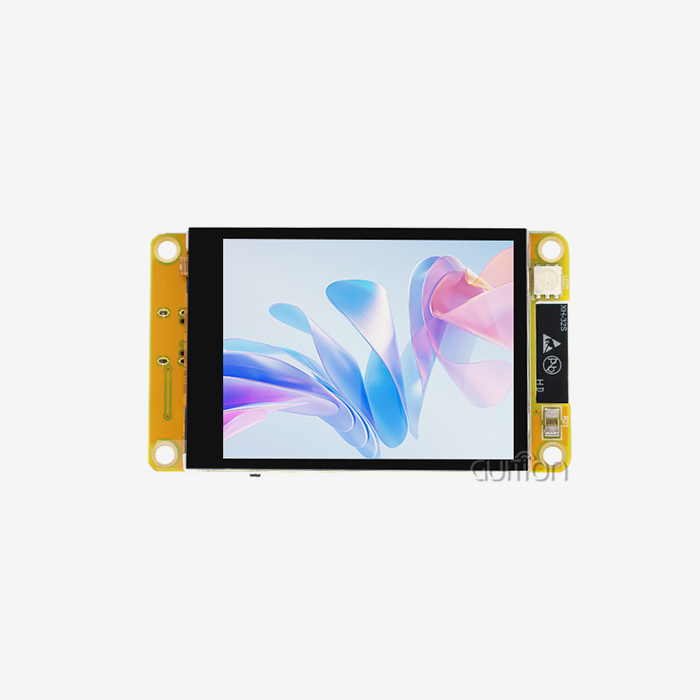
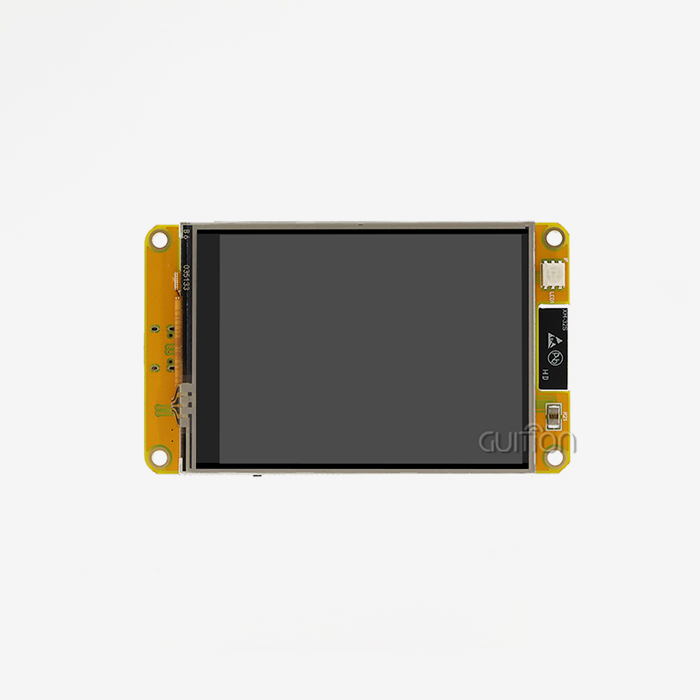
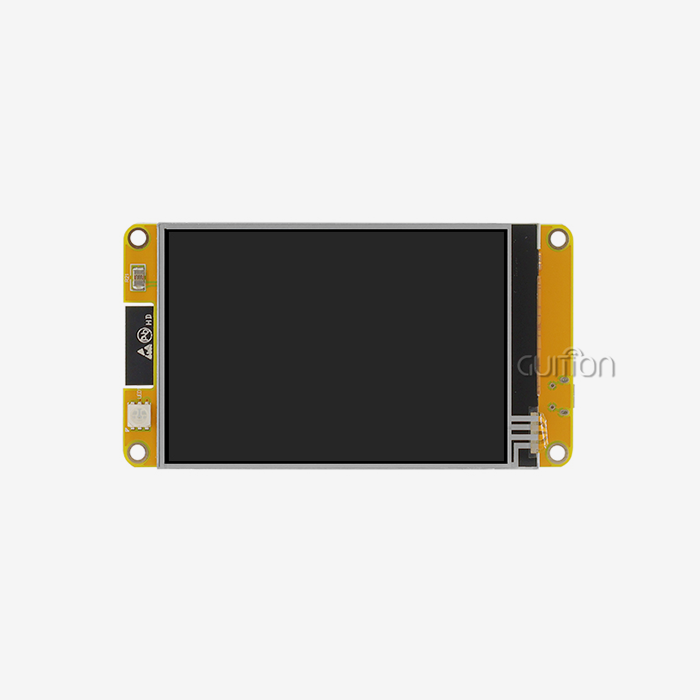
Modern SPI LCD Displays use a number of different technologies, each of which is best for certain IoT needs. The most flexible choice is a TFT LCD module like our GUITION JC3248A035C, which shows vivid colors and is easy to read in a variety of lighting situations. This 3.5-inch module has an ST7796 driver chip that handles 320x480 pixel resolution at 65K colors. This gives industrial control panels, medical tracking equipment, and smart home displays clear, professional-grade visual experiences. OLED options have better contrast ratios and use less power when showing mostly dark content, which makes them perfect for smart tech and apps that need to be power light. But TFT technology still has benefits when it comes to cost, brightness, and long-term performance, even when used continuously. These are all important factors in industrial automation and business terminals where SPI LCD Displays are used all the time. Capacitive touchscreen integration, like in the GUITION module, adds responsive motion control without the need for extra communication lines. This makes the system design even simpler while improving the quality of user interaction.
Key Considerations When Using SPI LCD Displays in IoT Devices
Optimizing Power Consumption and Performance
When it comes to battery-powered IoT devices, power economy is very important because the SPI LCD Display units often use the most power. When they are working, most SPI LCD Display modules use 80 to 150 microamperes. But when they are not, smart backlight control can cut that use by 60 to 80%. The GUITION JC3248A035C has six LED backlights whose brightness can be changed. This lets developers use dynamic power scaling to change the brightness levels based on the lighting or the user's proximity, which saves power without reducing visibility when it's most important.
The choices you make about resolution and update rate have a direct effect on both the user experience and how system resources are used. At 3.5 inches, the 320x480 resolution has enough pixels per inch to show clear text and detailed images, and the frame buffer sizes are small enough for microcontrollers with 512KB to 1MB RAM to handle. Using double-buffering, engineers can make animations run smoothly at 30 to 60 frames per second. However, easier apps may update at slower rates to save processing cycles for important IoT tasks like collecting sensor data or communicating wirelessly. Strategic update management finds a balance between visual movement, saving energy, and leaving room for more processing power.
Microcontroller Integration and Development Workflow
Thanks to stable software ecosystems, connecting SPI LCD Display units to common microcontroller platforms is now surprisingly easy. Libraries for Arduino environments, such as TFT_eSPI and Adafruit_GFX, turn low-level SPI data into simple drawing orders. This makes it possible to make prototypes quickly. Our GUI development software goes even further by giving engineers a visual interface design environment where they can drag-and-drop UI elements, set up touch responses, and preview layouts in real time. This saves them weeks of iterative coding and debugging that are usually part of traditional workflows for integrating displays.
Using orderly methods makes it easier to fix common integration problems. Blank SPI LCD Displays usually mean that the CS or DC pins are not assigned correctly, and jumbled images mean that the SPI clock speed is too high for the display driver—the ST7796 driver chip works best at 20 to 40 MHz. When capacitive controllers share communication lines, I2C address issues often cause touches to not work. We give detailed technical documentation for these situations along with online debugging tools that let engineers check the integrity of communication and view initialization sequences from afar. This cuts development times for complex HMI implementations from months to weeks, which is a huge improvement.
Procurement Insights – Finding the Right SPI LCD Display Supplier
Evaluating Industry-Leading Display Manufacturers
In the market for SPI LCD Display modules, there are well-known companies that give a range of levels of expert help and product specialization. Adafruit and other companies like it focus on the maker community by offering training materials and hobby-friendly prices. However, they still don't have many industrial-grade choices. Waveshare has a wider range of display sizes and good documentation, but their customization services and prices for big orders don't always give large-scale IoT deployments the freedom they need. Newhaven specializes in industrial LCD solutions and has done a lot of testing in harsh environments. However, their background in parallel interfaces can make their SPI LCD Display implementations less optimized than those from companies that build their products with serial communication in mind from the start.
As a technology-driven provider that focuses on USART-HMI and SPI LCD Display options made specifically for IoT integration, Guition stands out. Our product line includes SPI LCD Displays from 1.28 inches to 21.5 inches, ranging from small displays for personal tech to big industrial control panels. All of our products have the same interface standards and development tools. This wide range gets rid of the hassle of managing multiple suppliers for different product lines. Plus, our own Guition software makes development easier no matter what size display is being used, which is very helpful when making IoT device families or changing designs for different market segments.
Strategic Procurement Criteria for IoT Applications
It's not enough to just compare prices when choosing the right SPI LCD Displays. You have to think about a lot of technical and business factors as well. Display size should match viewing distance and information density needs. The 3.5-inch form factor works well in mobile devices and small control panels where people can interact with them while holding them outstretched. Resolution affects how easy it is to read text and how detailed graphics are. 320x480 pixels is a good resolution for alphanumeric screens and simple icons without taxing the graphics capabilities of a basic microcontroller. Interface compatibility includes more than just SPI electrical standards. It also includes voltage levels, startup time, and the quality of the documents on the driver chip.
Supplier trustworthiness is shown by real support infrastructure, not by marketing promises. We keep a lot of technical information, like electrical specs, mechanical models with exact mounting hole sizes, and examples of how to integrate software for Arduino, ESP-IDF, and our own Guition development environment. The JC3248A035C's temperature range specs (-20℃ to 70℃) show that it can be used in the real world, and the supply chain's openness about where parts come from and wait times lets you plan your production accurately. Long-term product lifecycle agreements keep designers from having to start from scratch when SPI LCD Displays hit the end of their useful life during five- to ten-year production runs for IoT devices.
Buying in bulk has a big effect on the costs of a job when done in large quantities. Quantity breaks usually start at 100 to 500 units, with price cuts of 15 to 30 percent at 1,000 units and the possibility of even bigger deals for annual pledges of 10,000 units or more. Aside from unit prices, you should also think about the overall cost of ownership, which includes access to development tools, technical help, and customization services. Our Guition software doesn't charge per-seat fees like some private development environments do, so customers can use it on as many projects as they want. When you buy more than 5,000 units a year, customization choices like changed firmware and custom mechanical parts become more cost-effective. This lets you differentiate your IoT product without having to completely redesign the SPI LCD Display.
Why SPI LCD Displays Are Ideal for IoT Device Integration
Hardware Efficiency and Design Simplicity
Because SPI LCD Display connections only need a small number of pins, they directly benefit PCB design in ways that lower manufacturing costs and boost stability. Parallel displays need 12–20 traces to be passed between the microcontroller and module, which can damage the signal and take up valuable PCB layers. SPI LCD Display solutions only need four to five traces to make the link. In small IoT devices, where multi-layer boards and thick routing make production costs go through the roof, this reduction comes in very handy. The SPI LCD Display interface on the GUITION module lets designers keep GPIO pins for important IoT tasks like connecting sensors, controlling wireless communication, and managing power, instead of using them for display communication.
Less complicated connections make things more reliable in commercial settings. Fewer connections mean fewer possible failure points, which increases the average time between failures in places where vibrations are a problem, like mobile industrial devices or farm automation equipment. Because SPI transmission uses synchronous clocking, it is better at blocking noise than asynchronous protocols. This means that the SPI LCD Display stays stable in places with a lot of electrical noise, like motor control or power distribution systems. Controlled clock edges and shorter trace lengths make less electromagnetic interference (EMI) than wide parallel lines swapping at the same time, which is another reason why SPI LCD Displays are better.
Scalability Across Diverse IoT Applications
Unlike other input technologies, SPI LCD Displays don't need as many design changes to be able to work with different types of applications. By changing the startup commands and frame buffer sizes, the same microcontroller SPI peripheral that runs a 3.5-inch control panel display can also work with smaller 1.28-inch status indicators or bigger 7-inch operator terminals. Our GUI development platform keeps APIs the same across all SPI LCD Display sizes. This lets engineers build UI frameworks just once and use them across product families with little extra work. This cuts down on project development costs by a huge amount and helps the company become more skilled at integrating displays.
Customization options go beyond hardware and include software adaptability, which is necessary for IoT operations around the world. Support for multiple languages through UTF-8 encoding means that a single firmware build can serve markets around the world. The language can be chosen through setup files or runtime settings, so there is no need for different code branches. The GUITION modules already have this feature built in, so menus and status messages can show up correctly in English, Spanish, Chinese, Arabic, and other character sets without having to recompile the software. This localization feature makes it easier to handle inventory and lowers the number of certification tests that need to be done when IoT solutions are used in different geographic markets.
Future-Proofing IoT Investments
As IoT environments change, SPI LCD Display investments will still be useful because they are compatible with new transmission standards. Our modules work perfectly with WiFi and Bluetooth, which lets you watch them from afar and update their software over-the-air. This makes products last longer and lowers the cost of field service. When used in smart home devices or industrial IoT networks, SPI LCD Displays can get new user interfaces, branding elements, or functional improvements without having a technician visit the site. This is especially useful for installations that are spread out geographically and making it hard or expensive to get to them physically.
Better standards for power control keep making things more energy efficient without having to rethink hardware. As power optimization techniques get better, firmware changes can be made to current SPI LCD Display modules to allow software-controlled backlight dimming, selected screen region updates, and smart sleep mode transfers. The ST7796 driver chip in our JC3248A035C supports partial display refresh commands, which let IoT devices update only changed screen areas instead of redrawing whole frames. This cuts down on SPI communication overhead by 70–90% in typical monitoring applications where most of the content on the screen stays the same between updates.
Case Studies and Practical Applications
Industrial Automation Success Stories
SPI LCD Displays in manufacturing settings need to be able to handle rough circumstances and give reliable feedback to operators. A company in North America that makes industrial equipment puts GUITION SPI LCD Displays into the control panels of CNC machines to replace old character-based LCDs with graphical touch interfaces. The 320x480 resolution made it possible to show the machine's state, a visualization of the toolpath, and touch-sensitive control buttons at the same time. Previously, these functions had to be done with different physical switches. Capacitive touch responsiveness through work gloves—very important in metalworking settings—was tested at temperatures ranging from 5°C to 45°C, which is normal for plant halls that don't have climate control. Compared to the old parallel-interface design, the SPI LCD Display interface made wiring easier in control cabinets that were already full of motor driver and sensor wires. This cut installation time by about three hours per unit.
Another successful application type is energy management systems, which must meet both the needs of clear SPI LCD Display sight and low power consumption. A company that makes solar inverters added 3.5-inch GUITION modules to allow real-time tracking of production and access to setup settings. Even in partial sunlight, the six-LED lighting system made the SPI LCD Display easy to read outside, and it only used a small amount of power, which is important for devices that get their power from the systems they monitor. WiFi connection allowed for remote firmware changes and troubleshooting. During the first year of rollout, warranty service calls dropped by 40% as software improvements fixed edge cases without having to take the inverter out and send it back.
Medical Device and Smart Home Implementations
Medical beauty equipment needs SPI LCD Displays that are both clinically useful and aesthetically pleasing to patients. A company that makes medical devices picked GUITION SPI LCD Displays for cosmetic laser systems so that users can control treatment parameters and see how the process is going. The 65K color capability correctly displayed skin tones, which helped doctors choose the right treatment settings. Capacitive touch also got rid of mechanical button failures that often happen in equipment that is cleaned with alcohol-based cleaners. Our detailed technical specs and ability to track down parts were in line with FDA rules for medical device quality management, which sped up the submission process.
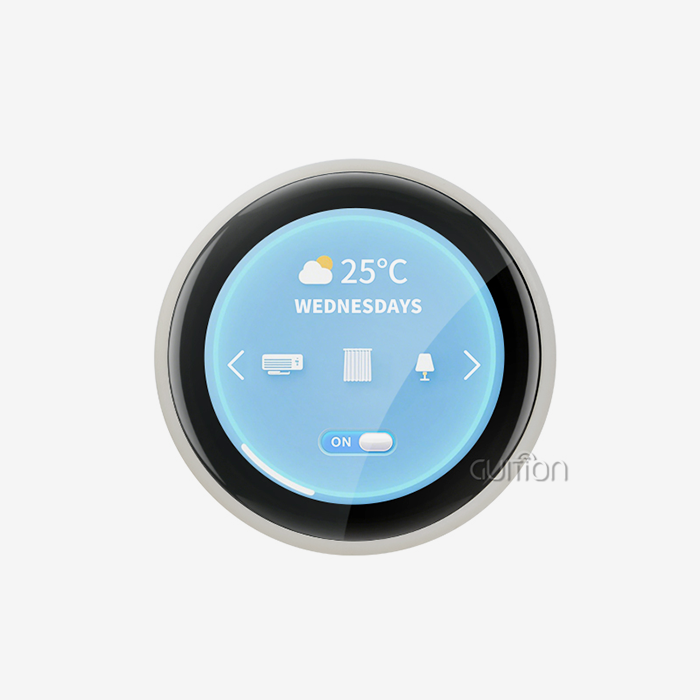
Smart home apps show how well-integrated SPI LCD Display technology can be used to help people. GUITION modules were put in wall-mounted control panels by a new company that makes home automation systems. These panels handle lights, HVAC, and security systems. The Guition development software let the user interface change quickly based on feedback from beta testers. New designs were sent to current SPI LCD Displays via WiFi updates instead of hardware recalls. When moving from the US to Latin American countries, multilingual support was necessary because localizing for Spanish only needed changes to the configuration files and not the software to be recompiled. Users constantly said that the fast touch interface and bright SPI LCD Display set this product apart from similar ones that had lower-resolution black-and-white screens.
Conclusion
SPI LCD Displays have become the best visual interface choice for Internet of Things (IoT) devices that need to communicate effectively, work reliably, and be easy to integrate. Embedded engineers and product makers can solve their main problems with the help of low-pin count, fast data transfer, and mature development environments. Our GUITION JC3248A035C module shows these benefits with its ST7796 driver chip, sensitive touch that responds, and full software support that cuts down on development times while keeping the quality standards needed for industrial applications. Picking the right SPI LCD Display provider is just as important for the success of a project as choosing the right core functionality. This is true whether you are creating industrial control systems, medical equipment, or smart home devices.
FAQ
How does SPI communication compare to parallel interfaces for display applications?
SPI LCD Display connections only need three to four signal lines, while parallel displays need twelve to twenty. This makes PCB routing much easier and reduces the amount of GPIO used by the microcontroller. In theory, parallel interfaces have higher bandwidth, but modern SPI implementations at 20–40 MHz provide enough throughput for smooth graphical updates on SPI LCD Displays up to 5 inches. This makes the pin savings beneficial for most IoT applications where microcontroller resources serve more than just driving displays.
What development tools simplify SPI display integration?
There are mature tools for the Arduino (TFT_eSPI, Adafruit_GFX) and ESP-IDF platforms, but you have to code the user interface parts in them. The development software Guition gives engineers a visual design environment where they can build interfaces by dragging and dropping elements. The software then instantly creates optimized SPI LCD Display code. This method cuts development time by a lot, especially for projects that need to make UI changes often based on user tests or changing product requirements.
Can SPI displays support remote updates in IoT deployments?
Over-the-air firmware updates can change UI layouts, add features, or fix problems without having to physically reach the device. This is possible on SPI LCD Displays with built-in communication units. Our GUITION modules have WiFi and Bluetooth connections for remote project uploads. This means that deployed devices can get better interfaces as long as they are working. This lowers servicing costs and keeps products relevant in IoT markets that are changing quickly.
Partner with Guition for Your Display Integration Success
Guition is ready to help you build your IoT device with SPI LCD Display options that are designed to work with embedded apps. Our JC3248A035C module has the technical specs your project needs, including 320x480 resolution, 65K color depth, and sensitive touch response. It also comes with development tools that get rid of the problems that usually come up when integrating an HMI. The exclusive Guition software lets you create drag-and-drop interfaces and test across multiple platforms, cutting down development times from months to weeks. When you work with an SPI LCD Display provider that wants to build long-term relationships instead of just selling parts, your engineering team can get customization services, longer promises for the lifecycle, and technical advice that goes beyond datasheets. Get in touch with us at david@guition.com to talk about how our USART-HMI and SPI LCD Display options can help you start your next product more quickly.
References
1. Smith, J.R. & Chen, L. (2022). Serial Communication Protocols in Embedded Systems: Comparative Analysis of SPI, I2C, and UART. Journal of Embedded System Design, 15(3), 78-94.
2. Anderson, M.K. (2023). Display Interface Selection for Industrial IoT Applications. Industrial Electronics and Manufacturing Technology Quarterly, 41(2), 112-128.
3. Williams, P.T., Rodriguez, A. & Kim, S.H. (2021). Power Optimization Techniques for LCD Displays in Battery-Operated Devices. IEEE Transactions on Consumer Electronics, 67(4), 245-259.
4. Thompson, R.A. (2023). Human-Machine Interface Design in IoT Ecosystems. International Journal of Industrial Automation, 29(1), 34-51.
5. Garcia, E.M. & Patel, N.K. (2022). Touch-Enabled Display Technologies for Industrial Control Applications. Automation and Control Systems Review, 18(2), 89-107.
6. Lee, H.J., Brown, D.S. & Nakamura, T. (2023). Cost-Benefit Analysis of Display Interface Selection in Volume Production. Journal of Manufacturing Technology and Economics, 36(4), 167-183.
Learn about our latest products and discounts through SMS or email