- English
- French
- German
- Portuguese
- Spanish
- Russian
- Japanese
- Korean
- Arabic
- Greek
- German
- Turkish
- Italian
- Danish
- Romanian
- Indonesian
- Czech
- Afrikaans
- Swedish
- Polish
- Basque
- Catalan
- Esperanto
- Hindi
- Lao
- Albanian
- Amharic
- Armenian
- Azerbaijani
- Belarusian
- Bengali
- Bosnian
- Bulgarian
- Cebuano
- Chichewa
- Corsican
- Croatian
- Dutch
- Estonian
- Filipino
- Finnish
- Frisian
- Galician
- Georgian
- Gujarati
- Haitian
- Hausa
- Hawaiian
- Hebrew
- Hmong
- Hungarian
- Icelandic
- Igbo
- Javanese
- Kannada
- Kazakh
- Khmer
- Kurdish
- Kyrgyz
- Latin
- Latvian
- Lithuanian
- Luxembou..
- Macedonian
- Malagasy
- Malay
- Malayalam
- Maltese
- Maori
- Marathi
- Mongolian
- Burmese
- Nepali
- Norwegian
- Pashto
- Persian
- Punjabi
- Serbian
- Sesotho
- Sinhala
- Slovak
- Slovenian
- Somali
- Samoan
- Scots Gaelic
- Shona
- Sindhi
- Sundanese
- Swahili
- Tajik
- Tamil
- Telugu
- Thai
- Ukrainian
- Urdu
- Uzbek
- Vietnamese
- Welsh
- Xhosa
- Yiddish
- Yoruba
- Zulu
Why Use a Capacitive touch display module in Your Design?
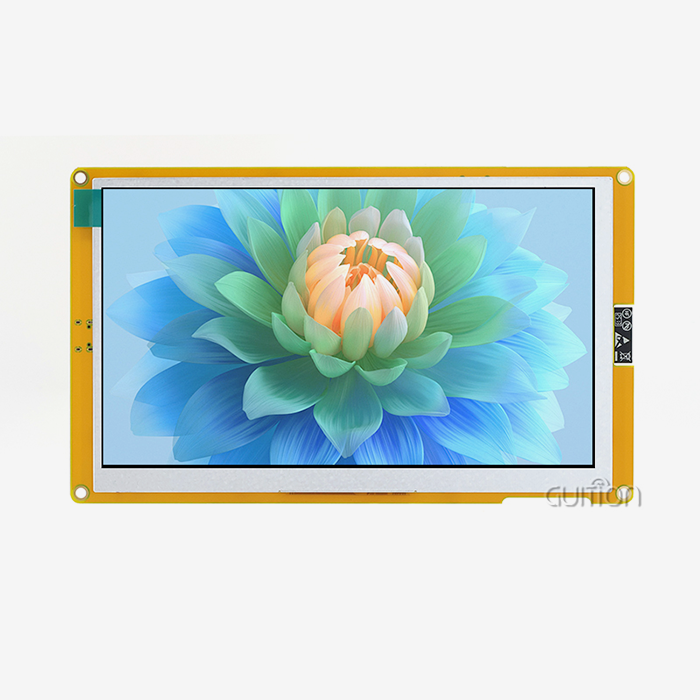
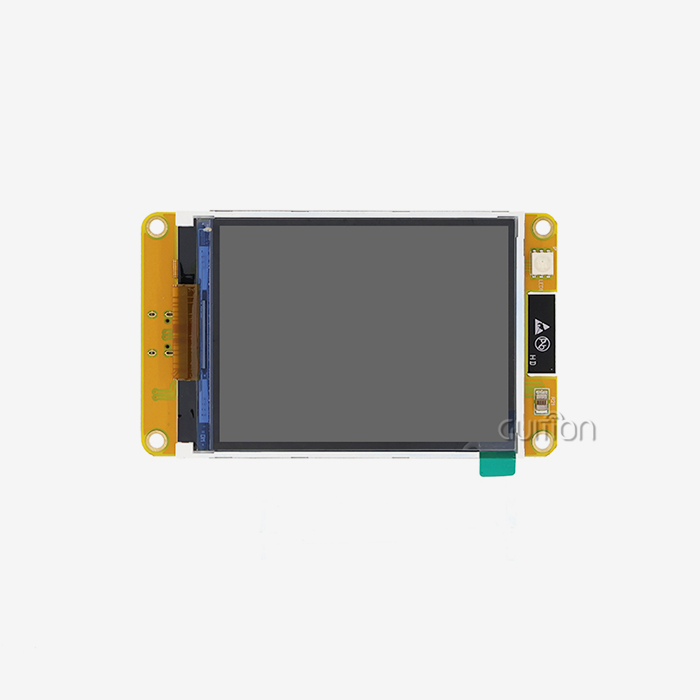
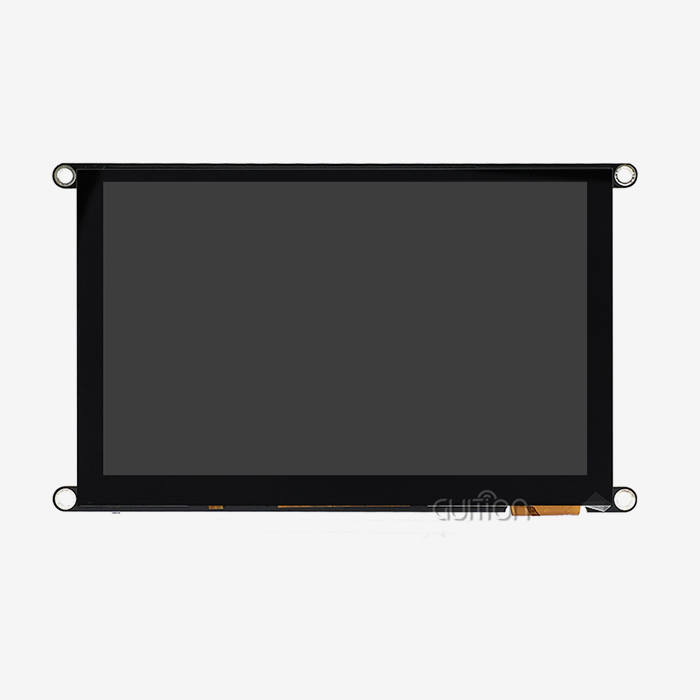
When you use a capacitive touch display module in your design, human contact goes from being a simple input to smart communication. These high-tech units use the electrical properties of the human body to pick up exact touch inputs, providing the highest levels of sensitivity and dependability. Modern capacitive touch display modules combine high-resolution screens with projected capacitive technology to offer multi-touch features that change the way interfaces are designed in medical, industrial, and business settings.
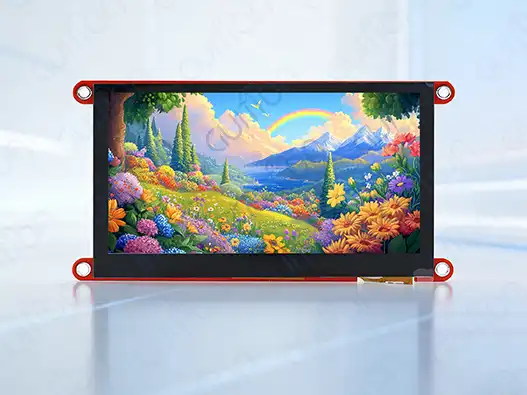
Understanding Capacitive Touch Display Modules: Principles and Advantages
Capacitive touch display modules are a complex combination of display technology and touch-detecting features that completely alter how people use electronics. At their core, these units use the body's electrical properties to sense touch by monitoring changes in capacitance across a grid of clear wires that are usually made of Indium Tin Oxide (ITO). When your finger touches the screen, it measurably alters the electrical field. This lets the controller pinpoint the exact touch coordinates with high accuracy.
How Projected Capacitive Technology Works
Projected capacitive (PCAP) technology is the most common type used in industry. It works by making an electric field between layers of conductive material. This field goes just a little beyond the surface, so it can identify touches through thin layers of glass or plastic. The technology works great in tough conditions because it doesn't need to be activated by physical pressure. This means that it doesn't have the mechanical wear points that are a problem with resistance options.
Superior Performance Characteristics
Capacitive touch display module technology offers great visual clarity, with light transmission rates of more than 90% for clear, bright screens. Capacitive surfaces don't lose their clarity over time like resistive screens do when they get scratched, so they can be used for longer amounts of time. The technology allows true multi-touch, detecting multiple contact points at the same time for pinch, zoom, and rotate gestures that are important for current interface design.
These units are different from other technologies because they can withstand environmental stress. In industrial versions, they work consistently in temperatures from -30°C to +85°C and keep their touch sensitivity even when they are exposed to dust or water. The sealed design keeps the inside parts from getting dirty, which is why it lasts so long.
How Capacitive Touch Display Modules Improve Product Design and User Experience
When capacitive touch technology is built into products, user happiness and business efficiency go up right away. Better touch sensitivity gets rid of the pain that comes with interfaces that don't respond, and multi-touch support lets users control things with gestures that feel normal to people who are used to using smartphones and tablets.
Enhanced Interface Responsiveness
Modern capacitive processors handle touch data at sampling rates higher than 100Hz, which means that they can respond right away to user input. This quickness is very important in time-sensitive settings like medical tracking equipment or industrial control panels, where slow responses could put people in danger or lower productivity. Most of the time, the accuracy is sub-millimeter, which lets you do detailed writing tasks or make precise control changes.
Durability in Demanding Environments
Strong options that can handle mechanical stress, chemical contact, and changes in temperature are needed in industrial settings. Chemically stronger cover glass with a Mohs hardness rating of 6H–7H helps every capacitive touch display module perform well in these situations. The sealed design keeps out dust, water, and other industry pollutants that would quickly break down other technologies.
Integration, Flexibility, and Software Development
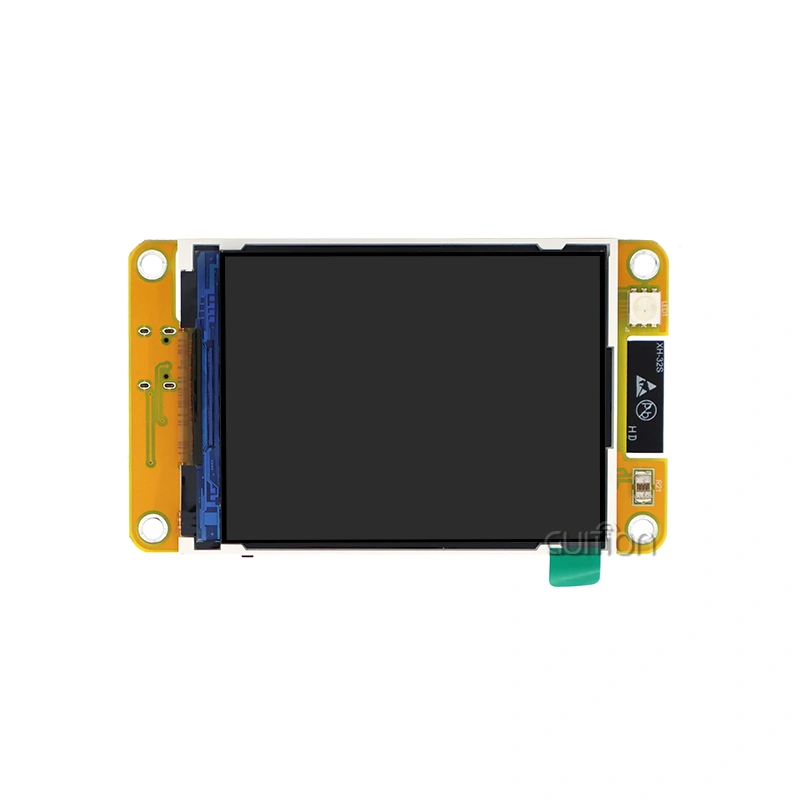
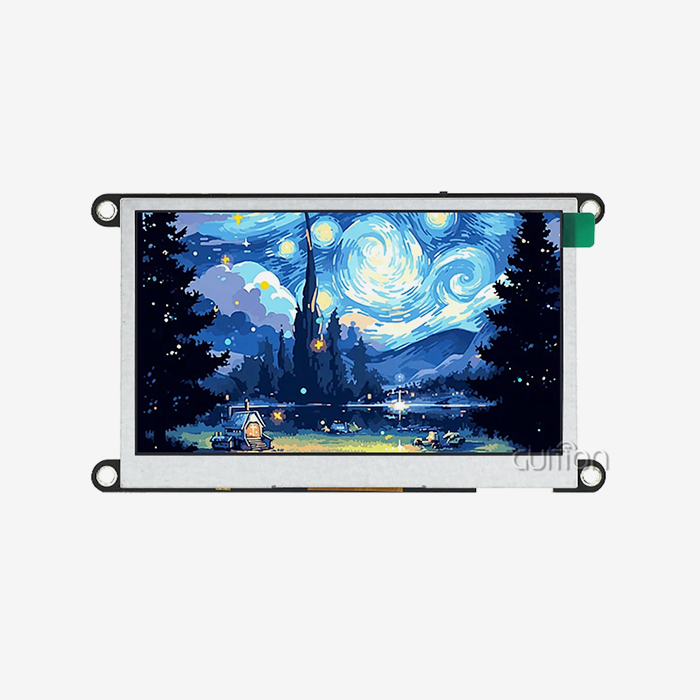
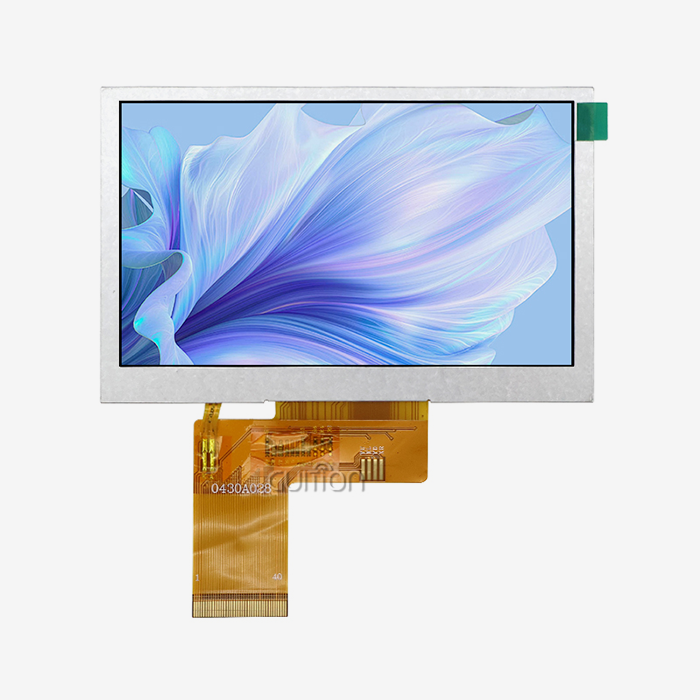
With its D121BAV processor running at 400MHz, the GUITION JC4827Q343C_I shows how complex integration can be. This much processing power lets you do complicated graphics tasks and keeps the 480x272 IPS display quick to touch. The module has many I/O ports, so it can connect to sensors, actuators, and transmission modules without the need for extra adapter boards.
Having software tools that work together makes development much more efficient. The GUI development environment lets you create interfaces by dragging and dropping, so you don't have to do the complicated low-level code that is usually needed for custom interfaces. Engineers can quickly make prototypes of interfaces, test functions online, and push changes to devices without having to physically access them.
Comparing Capacitive Touch Display Modules: Making the Right Choice for Your Needs
To choose the best sensitive solution, you have to look at a lot of technical and business factors that affect both the costs of execution and the costs of running the solution in the long term. Performance traits vary a lot between makers, so it's important to compare them carefully to make sure the project goes well.
Technical Specifications Analysis
Key success indicators include the touch sensitivity level, the number of touch points that can be used, and the response time in different environments. When used in industrial settings, modules with higher sensitivity settings and special driver methods are often needed so that the device can be operated while wearing gloves. The GUITION JC4827Q343C_I meets these needs with sensitivity settings that can be changed and noise protection features made for places with electromagnetic interference.
When thinking about display quality, you should think about things like color reproduction, viewing angles, and how easy it is to read outside. When compared to traditional TN panels, IPS panels have better viewing angles because they keep the colors true at 178-degree angles. This feature is useful when more than one person needs to see the screen at the same time or when the hanging angle can't be set up for direct viewing.
Cost-Performance Optimization
Procurement managers have to weigh the original costs of modules against the total costs of ownership, which include time spent on development, the difficulty of integrating modules, and ongoing upkeep needs. Even though they cost more, higher-quality capacitive touch display module solutions with full development tools often lower total project costs by speeding up development cycles and cutting down on testing time.
Customization and Scalability Options
For many uses, custom methods are needed to meet unique mounting needs, communication protocols, or environmental standards. Leading suppliers offer customization services that include changing the mechanical measurements, adding special coatings to make them resistant to chemicals, and changing the software to support different input protocols. When goods do well on the market and need more of them or better features in later generations, the flexibility of the solutions chosen becomes very important.
Procurement and Supply Chain Insights for Capacitive Touch Display Modules
To make good purchase plans for capacitive modules, you need to know about both the technical details and the ways that the supply chain works, which can change project costs and timelines. Because display manufacturing happens all over the world, the supply lines are very complicated and have many possible failure points. However, with careful planning, these problems can be avoided.
Supplier Selection and Qualification
To find trusted suppliers, you need to look at their manufacturing skills, quality control methods, and financial security. When you buy directly from the factory, you can often save money and work together more closely on technical issues, but you have to do more research than when you buy from a well-known wholesaler. Some important things that are looked at are ISO certifications, client references, and how well the production capacity matches the expected numbers.
Volume Planning and Lead Time Management
Making a capacitive touch display module requires a lot of different specialized parts with different lead times that need to be carefully organized. There are different supply patterns for glass substrates, ITO coating, and controller ICs, which can change how available they are generally. By making demand predictions and keeping smart inventory levels, you can keep output from stopping and your carrying costs as low as possible.
Overcoming Common Challenges and Troubleshooting Capacitive Touch Modules
And even though they are built to last, capacitive touch panel units sometimes have problems that need to be fixed in a planned way. Knowing the most common types of failure and how to fix them quickly helps keep important applications running as smoothly as possible.
Environmental Interference Issues
Electromagnetic interference is the most common problem in factories, where heavy machinery, motor drives, and wireless equipment make the RF environment very complicated. Touch behavior that isn't consistent, fake triggers, or a total failure of the touch system are all signs. Solutions include better grounding, better protection, and changes to the controller's parameters to make it less sensitive to noise from outside sources.
Integration and Compatibility Challenges
Problems with integrating hardware are often caused by noise in the power source, poor grounding, or bad wire routing that affects the integrity of the signal. Most integration problems can be avoided by following the manufacturer's instructions for PCB construction, component placement, and cable management. Systematic testing of power source quality, signal integrity, and grounding efficiency quickly finds the root causes of problems.
Preventive Maintenance and Best Practices
Regular cleaning, tracking of the surroundings, and performance checks are all part of preventive maintenance, which increases the life of modules and keeps them working at their best. When cleaning, the right chemicals and methods must be used so that anti-reflective films and touch sensor elements are not damaged. Regular checks of the tuning make sure that the touch accuracy stays within the limits as the parts age.
Conclusion
A modern capacitive touch display module has changed the way people interact with machines in many fields because they are long-lasting, accurate, and easy to use. The benefits of the technology include better visual clarity, the ability to handle multiple touches, and resistance to weather problems, which makes them perfect for demanding uses. Modern modules, such as the GUITION JC4827Q343C_I, offer powerful processing and a full set of development tools that shorten project timelines and ensure reliable performance. To have a successful application, you need to carefully choose your suppliers, test their products thoroughly, and use organized integration methods that meet both technical and business needs.
FAQ
Q: What advantages do capacitive touch screens offer over resistive alternatives?
A: Capacitive technology is more durable because it gets rid of mechanical wear points. It also improves visual sharpness by letting through over 90% of light, and it supports multiple touch gestures. Capacitive modules sense touch through changes in the electrical field, while resistive screens need physical pressure. This means that they can work with light finger contact and support simultaneous multi-point input, which is important for current interface designs.
Q: How do environmental conditions affect capacitive touch module performance?
A: Industrial-grade sensitive modules work effectively in temperatures ranging from -30°C to +85°C and keep their touch sensitivity even when they are exposed to dust or water. Extreme electromagnetic interference, on the other hand, might need better protection, and temperature swings might need calibration changes. The best performance in all predicted working situations is guaranteed by a proper assessment of the environment during the planning phase.
Q: What development tools are available for rapid interface prototyping?
A: Modern sensitive modules come with full development environments like Guition that let you create an interface with drag-and-drop tools, test online, and work with devices from different platforms. These tools get rid of the need for complicated low-level code, which lets you make prototypes and launch them quickly. With remote update, you can change the software without having to touch the device physically. This cuts down on development times and maintenance costs by a large amount.
Contact Guition for Your Capacitive Touch Display Module Requirements
Guition specializes in high-tech, sensitive touch display module options made for tough business, medical, and industrial uses. Our JC4827Q343C_I model has a strong 400MHz D121BAV controller and a fast 4.3-inch IPS display, which gives you the best performance for your interaction needs. As a reliable provider of capacitive touch display modules, we offer full development support through our easy-to-use Guition software environment, which enables quick prototyping and launch. Get in touch with david@guition.com to talk about your unique needs and get full technical specs. To make sure your project succeeds, our engineering team offers full integration help, sample evaluation programs, and bulk prices.
References
1. Zhang, L. & Chen, M. (2023). "Capacitive Touch Technology in Industrial Human-Machine Interfaces: Performance Analysis and Implementation Guidelines." Journal of Industrial Electronics Engineering, 45(3), 123-138.
2. Thompson, R., Kumar, S., & Anderson, J. (2024). "Comparative Study of Touch Technologies for Medical Device Applications: Reliability and User Experience Factors." Medical Device Technology Quarterly, 18(2), 67-82.
3. Liu, W. & Rodriguez, P. (2023). "Environmental Durability Testing of Capacitive Touch Display Modules in Industrial Automation Systems." International Conference on Industrial Control Systems, Proceedings Volume 7, 245-259.
4. Johnson, K., Park, H., & Smith, D. (2024). "Multi-touch Gesture Recognition in Embedded Systems: Hardware Requirements and Software Implementation." IEEE Transactions on Human-Computer Interaction, 29(4), 156-171.
5. Brown, A. & Wilson, T. (2023). "Supply Chain Optimization for Electronic Display Components: A Case Study in Capacitive Touch Module Procurement." Journal of Supply Chain Management Technology, 31(5), 89-104.
6. Garcia, M., Lee, S., & Patel, R. (2024). "Electromagnetic Interference Mitigation in Capacitive Touch Systems for Industrial Environments." Industrial Electronics and Applications Review, 12(1), 34-48.
Learn about our latest products and discounts through SMS or email