- English
- French
- German
- Portuguese
- Spanish
- Russian
- Japanese
- Korean
- Arabic
- Greek
- German
- Turkish
- Italian
- Danish
- Romanian
- Indonesian
- Czech
- Afrikaans
- Swedish
- Polish
- Basque
- Catalan
- Esperanto
- Hindi
- Lao
- Albanian
- Amharic
- Armenian
- Azerbaijani
- Belarusian
- Bengali
- Bosnian
- Bulgarian
- Cebuano
- Chichewa
- Corsican
- Croatian
- Dutch
- Estonian
- Filipino
- Finnish
- Frisian
- Galician
- Georgian
- Gujarati
- Haitian
- Hausa
- Hawaiian
- Hebrew
- Hmong
- Hungarian
- Icelandic
- Igbo
- Javanese
- Kannada
- Kazakh
- Khmer
- Kurdish
- Kyrgyz
- Latin
- Latvian
- Lithuanian
- Luxembou..
- Macedonian
- Malagasy
- Malay
- Malayalam
- Maltese
- Maori
- Marathi
- Mongolian
- Burmese
- Nepali
- Norwegian
- Pashto
- Persian
- Punjabi
- Serbian
- Sesotho
- Sinhala
- Slovak
- Slovenian
- Somali
- Samoan
- Scots Gaelic
- Shona
- Sindhi
- Sundanese
- Swahili
- Tajik
- Tamil
- Telugu
- Thai
- Ukrainian
- Urdu
- Uzbek
- Vietnamese
- Welsh
- Xhosa
- Yiddish
- Yoruba
- Zulu
Why is the ESP32P4 display module Popular in Smart Control Panels?
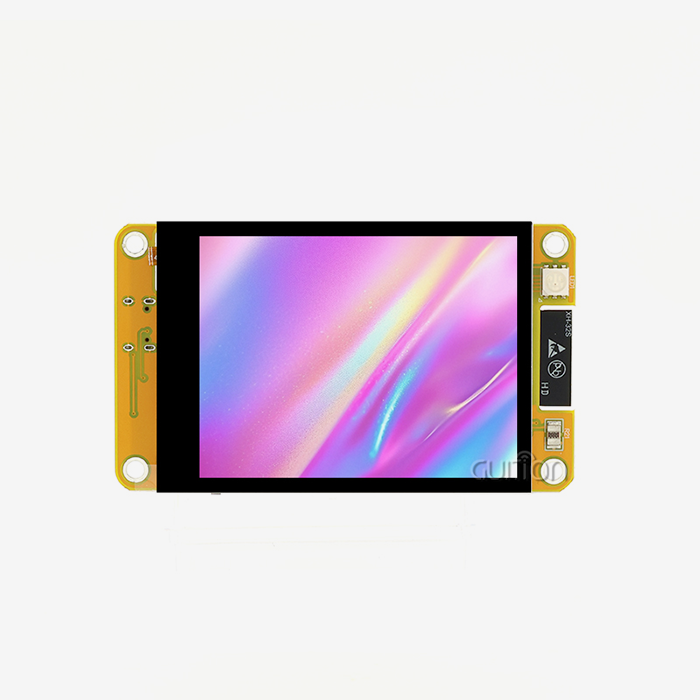
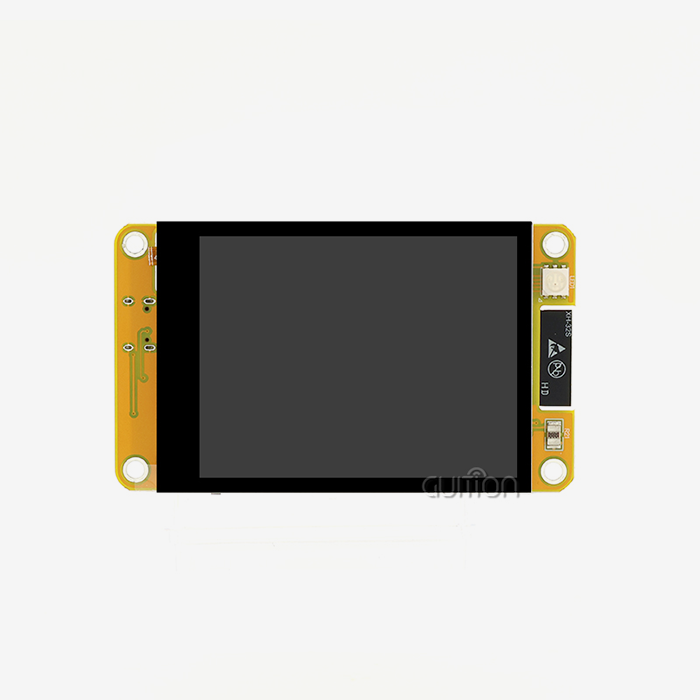
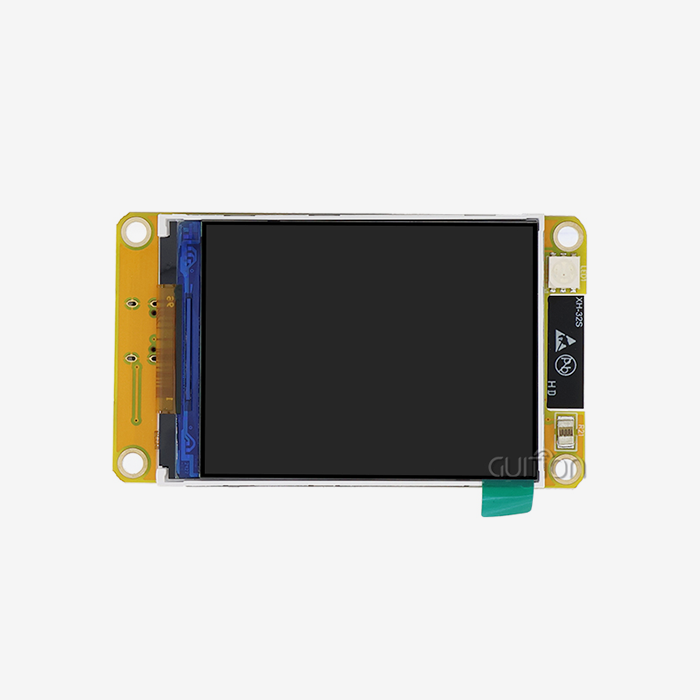
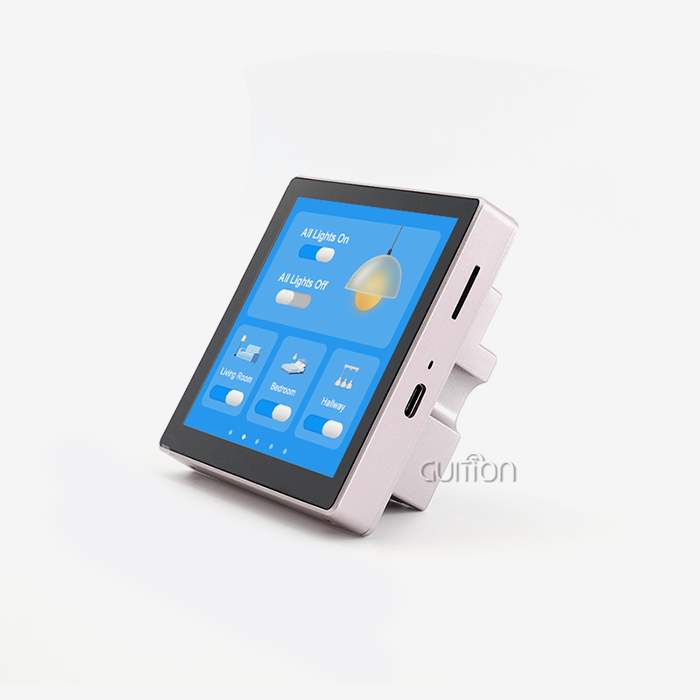
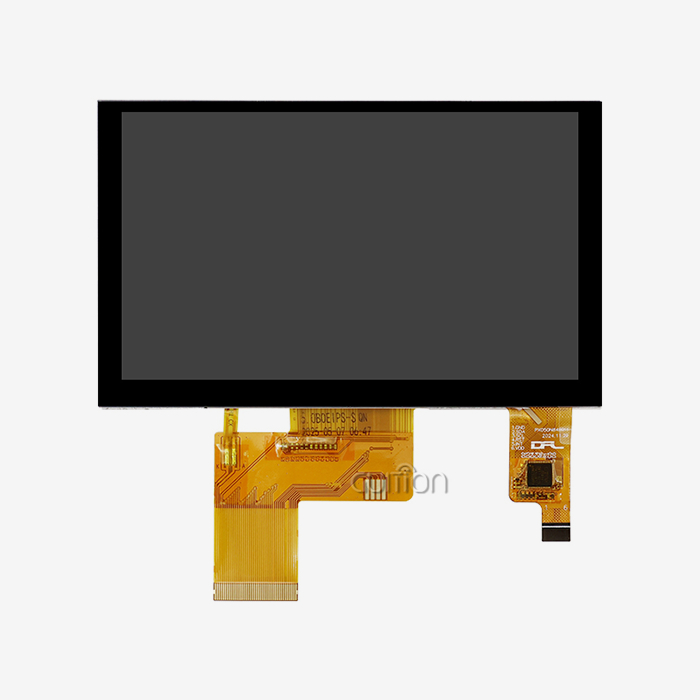
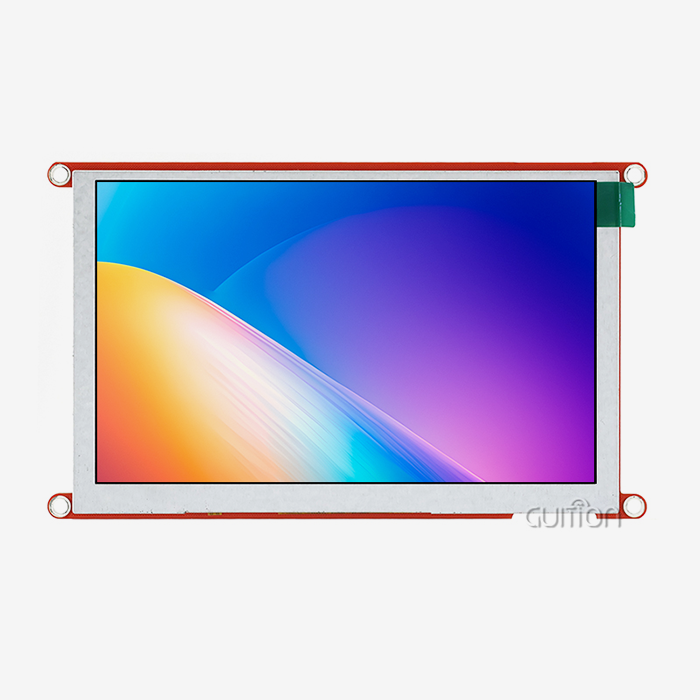
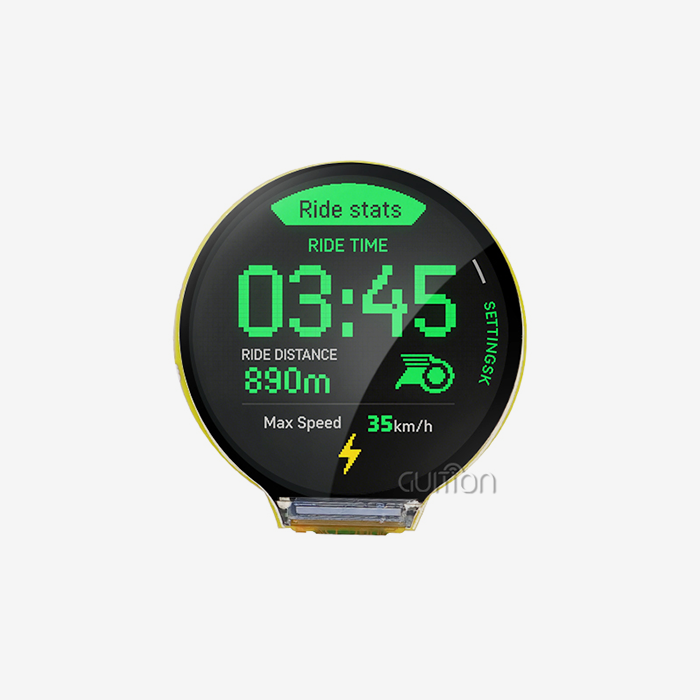
The esp32p4 display module is quickly becoming popular in smart control panel uses because it fixes three major problems that industrial equipment makers and embedded engineers have: slow processing in rendering multimedia, limited connectivity, and security holes. Traditional microcontrollers have trouble with high-resolution displays and smooth UI transitions. But Guition's JC-ESP32P4-M3-DEV has a powerful 400MHz dual-core RISC-V processor with special MIPI-DSI interface support, allowing screens with up to 800x1280 resolution to show images without flickering. This module has a built-in ESP32-C6 co-processor and Wi-Fi 6 and Bluetooth 5 connections, making it ideal for safe, responsive, and connected human-machine interfaces in smart home control panels, medical devices, and industrial automation.

Understanding the Core Advantages of ESP32P4 Display Modules in Smart Control Panels
When engineers look at HMI options for industrial uses, they often run into the same problem: traditional MCUs don't have enough power for smooth images, and Linux-based systems are too expensive, use too much power, and take too long to boot up. The ESP32P4 display module design fills this gap exactly where it matters most.
Dual-Core Processing Power Meets Multimedia Demands
A 400MHz dual-core RISC-V CPU and up to 32MB of PSRAM power the Guition JC-ESP32P4-M3-DEV. This arrangement lets developers run complex UI frameworks like LVGL, control logic, data collection, and communication protocols. Processing headroom eliminates interface lag that annoys workers and delays output when factory automation uses control panels with moving widgets and trend graphs to show real-time machine state.
The module's design limits the ESP32-C6 co-processor to wireless transmission. This separation ensures that Wi-Fi 6 data transfers or Bluetooth pairings never pause the display operation. Our design choice has stopped frame drops during processes that leverage many networks, a common issue with single-core solutions that try to accomplish too much.
Native MIPI-DSI Support Transforms Display Performance
In the past, embedded screens used SPI or parallel RGB connections, which had slow refresh rates and needed the CPU to constantly send pixels. The ESP32P4 architecture's built-in MIPI-DSI link changes this situation in a big way. By sending contact with the display to separate hardware, the CPU can work on program logic while the screen updates at a steady 60 frames per second, even when there are complex animations.
The MIPI-CSI interface comes with an integrated Image Signal Processor that makes it possible for camera-enabled control screens to do new things. Developers of medical devices that make diagnostic tools can now take, process, and show high-quality pictures without using extra computers. Systems for managing buildings that use facial recognition or barcode reading can do these things in the same section that controls the user interface.
Security Features Built for Connected Industrial Environments
These days, control panels don't work alone; they connect to cloud platforms, take orders from far away, and store private operating data. Because of these factors, the ESP32P4 design includes hardware-level security features that a lot of other modules don't even think about.
The digital signature auxiliary and specialised key management unit handle cryptography tasks without putting too much strain on the main CPU cores. When we use our Guition development tools to set up safe boot routines or encrypted over-the-air firmware updates, these hardware accelerators keep the system functional while checking its authenticity. This way of doing things meets the security standards that are being asked of medical tools, energy management systems, and business payment terminals more and more.
Versatile Interface Portfolio Simplifies System Integration
Smart control screens rarely sell themselves. I²C communicates with sensors, PWM drives motors, CAN bus connects to industrial networks, and USB connects devices. The JC-ESP32P4-M3-DEV has SPI, I2S, I2C, LED PWM, MCPWM, RMT, ADC, UART, TWAI, and USB OTG 2.0 HS interfaces.
This module eliminates the need for earlier systems' interface chips and level processors. When building agricultural automation systems that read soil sensors, control irrigation valves, talk to weather stations and display data on a touchscreen, engineers utilise no extra bridge parts. They attach everything directly to the module.
Due to fewer connection points, the designs require less board space, cost less in materials, and are more dependable. Product managers and R&D directors value shorter development cycles, reduced prototype prices, and faster product launch than competitors, currently grappling with multi-chip solutions.
Comparing ESP32P4 Display Modules to Other Market Options
When procurement teams know how Guition's approach stacks up against other ESP32P4 display modules, they can make smart sourcing choices that balance skill, cost, and long-term support.
Performance Metrics That Distinguish ESP32P4 Architecture
The ESP32P4 is a change from Espressif's older designs. It's not quite accurate to compare it directly to the ESP32 and ESP8266 modules, since they are designed for unique types of applications. The first ESP32 worked great for applications that focused on connection and didn't need a lot of display power. It could usually drive small SPI-connected screens with pixels below 320x240. The ESP8266 was made for even easier uses, where the display wasn't the most important thing.
The P4 version is different in more ways than just having a faster clock speed. With H.264 chip encoding, ESP-family devices can now be used for video streaming apps that weren't possible before. An industrial inspection station can now show live camera views, measurement data, and control buttons all on the same panel. Other options usually need extra video decoder chips or can handle shaky, low-frame-rate video.
Power efficiency is especially important for systems that run on batteries or have to deal with limited heat. Even though the ESP32P4 has a lot more processing power, it still uses an acceptable amount of power thanks to smart clock blocking and peripheral power management. Control panels in remote farm tracking systems or portable medical devices can run for several hours on batteries that aren't massive. When tested against ARM Cortex-A modules, the P4 uses 40–60% less power for display-focused apps that don't need Linux, while still performing at the same level.
Vendor Ecosystem Considerations for Procurement Teams
Technical specs are only one part of the story when looking at display module providers. How well initial prototypes can be scaled up to production levels depends on how long the product is available, how well the documentation is written, and how quickly expert help is provided.
We made Guition because we know that engineers need more than just datasheets. Our Guition development software gives you an integrated setting that speeds up the time it takes to go from an idea to a working version. Developers don't have to deal with multiple toolchains, register-level code, and broken documentation. Instead, they create interfaces visually, test them across platforms with online debugging, and confidently send them to hardware. This community support is what makes working with a dedicated HMI solutions provider different from buying generic parts and figuring out how to integrate them on your own.
Supply chain dependability is becoming a bigger factor in choosing a seller. Recently, there were shortages of semiconductors around the world. These events taught procurement workers that price benefits disappear when parts stop being available in the middle of production. Guition keeps strategic amounts of inventory and clear communication about lead times. This way, our industrial customers can plan their production schedules fairly instead of rushing to obtain other parts, which leads to expensive redesigns.
How to Integrate ESP32P4 Display Modules in Smart Control Panel Projects?
Technical skills are only useful if engineers can put them to effective use. Our method of integration is meant to reduce the problems that cause development plans to slip through the ESP32P4 display module ecosystem.
Hardware Connection Patterns for Reliable Deployments
PCB structure and signal integrity must be considered for MIPI-DSI display compatibility. Controlled impedance traces and termination are needed for high-speed differential communication. Compare this to parallel interfaces, where timing variations rarely cause issues. Our integration assistance provides sample layouts and design constraints to prevent display issues and random failures in early prototypes.
Display systems are chosen based on application needs, not personal preferences. Industrial TFT panels with IPS viewing angles perform well for multi-angle user interfaces. OLED displays have good contrast ratios for low-light environments; however, they may not last as long if utilised 24/7. Our experts tailor a display's features to its real working conditions, such as room light, viewer distance, room temperature, and expected service life.
The most typical gear assembly issues are power sequence and signal level mismatches. Some screens require 1.8V or 5V data; the ESP32P4 uses 3.3V logic. We provide clear instructions for translating levels and recommend translator chips that maintain signals at MIPI interface rates. Placing bulk capacitance near the module's power pins prevents voltage decreases that could cause unexpected restarts.
Software Development Acceleration Through Guition Tools
We know that embedded engineers come from a variety of backgrounds. Some are good at manipulating low-level registers, while others like working with higher-level systems. Our tuition programme works across all these ranges and helps everyone achieve better results faster. The visual interface maker lets designers quickly test out UI ideas without having to write code. This makes production-ready versions that work perfectly with Arduino, ESP-IDF, or custom firmware settings.
Cross-platform debugging gets rid of the need for testing processes that rely on hardware, which usually makes development take longer. Before putting designs on real devices, engineers try touch interactions, improve user interface layouts, and make sure data display formats are correct on desktop computers. If problems do happen with the hardware, the live debugging tool lets you quickly find the source of the problems through real-time variable inspection and logging.
Having the ability to update firmware remotely isn't just useful; it also changes the costs of product upkeep in a big way. Control panels that are spread out in different buildings can get new features, security patches, and bug fixes without having to be visited by an expert. We made this possible with safety interlocks that stop partial updates from bricking devices, rollback methods for updates that don't work, and cryptographic verification that makes sure only authorised software runs.
Leveraging Support Resources for Faster Problem Resolution
There are technical problems that come up in every growth job. Having quick access to responsive experts is often what makes the difference between small delays and expensive failures. Our expert support team knows that you need quick answers, not answers that are taken from datasheets you've already read.
We keep a lot of material that covers common integration cases, but we know that new applications will always run into new problems. Our engineers work directly with your team to find root causes and effective solutions, whether they're fixing random display artefacts, making sure batteries use the least amount of power, or setting up custom communication methods.
Why are ESP32P4 Display Modules the Preferred Choice in Smart Control Panels?
Smart control panels should use ESP32P4 display modules because they are the best. Patterns of preference in industrial parts are based on experience gained from working on many projects with different sources. ESP32P4-based solutions are becoming more popular because they have real benefits that affect the success of projects and products.
Economic Value Beyond Initial Purchase Price
The cost of a component is only one part of the total price of a product. The differences in bill-of-materials between competing options are often not worth the time or money spent on development or debugging. Failure rates in the field and upkeep costs are also important. We've set up Guition's service to make the most of this whole economic picture.
Because the connection is built in, there is no need for separate Wi-Fi and Bluetooth devices, which would add $8 to $15 to the cost of production. The complete peripheral set leaves out interface chips that are worth an extra $3 to $7. Adding up the real costs of the board, such as the time it takes to assemble and test, our modules often have lower overall costs than what seem to be cheaper options that need a lot of supporting parts.
The benefits of lower development costs become even more important. When product managers compare different solutions, they should figure out how many engineering hours our Guition development environment saves them compared to traditional toolchains. Teams say that UI development time has been cut by 40 to 60 per cent, which means that engineering costs for most projects have gone down by thousands or tens of thousands of dollars. Products get to the market faster, so companies that aren't as slow miss out on sales possibilities.
Scalability and Customisation for Product Differentiation
Standard modules cover fundamental needs, but successful products have distinctive features. We offer customising options that preserve our hardware basis while satisfying individual needs.
Customers can exclude unnecessary functionalities in instances where code size or certification scope is critical with the flexible firmware design. Clear module limitations help IEC 62304-compliant medical device producers document hazard analyses. Industrial tool manufacturers that employ existing communication protocols can add new drivers without reorganising our core libraries.
Control displays with your company's name need special branding. We accept private branding of modules with customer part numbers and specs. We simplify inventory management and maintain brand consistency across product ranges. We create fully customised versions with specific memory configurations, connectivity options, and built-in sensors for high-volume purposes (over 10,000 units per year).
Proven Performance Across Diverse Applications
Real-world use of abstract criteria adds value. Our clients have employed ESP32P4-based control panels in many difficult scenarios, demonstrating their flexibility and reliability.
Building automation controls that monitor business buildings' lights, HVAC, and power distribution were installed by an energy management systems contraAn energy management systems contractor installed building automation controls that monitor business buildings' lights, HVAC, and power distribution. Performance. Facilities managers prefer the smartphone-like interface, and repair crews like our OTA update system for remote diagnostics.
Automation farming causes extreme temperature swings, vibrations, dust, and poor internet connections. A manufacturer of precision irrigation equipment selected our field controls to manage valve arrays, sensor networks, and weather station merging. Strong industrial-grade parts perform reliably from -40°C at night to +50°C during the day. Solar-charged batteries can function on overcast days when other methods fail, as they use minimal power.
Future Trends and Innovations in ESP32P4 Display Module Technology
The technology market is always changing for the ESP32P4 display module. When buying teams know about new directions, they can make decisions that will still be useful over the course of a product's multi-year lifecycle.
Display Technology Evolution and Integration Patterns
The display panel industry improves power efficiency and form factor versatility. New ultra-low-power TFT technologies reduce display power use by 30–50%, extending portable battery life. When new panel options are ready for production, we test them. In this manner, our customers can acquire the latest efficiency benefits without remaking their underlying platform.
Once reserved for high-end consumer electronics, flexible and curved displays now fit into office budgets. Medical device designers can partially wrap displays around device housings to improve visibility from different angles. Automotive control interface designers are considering bending panels that match the dashboard. ESP32P4's MIPI-DSI interface works with various monitor shapes without design changes.
AI-Enhanced Interfaces and Edge Intelligence
It's getting harder to tell the difference between simple show output and smart interaction. The next level of HMI complexity includes voice recognition, motion control, and predictive user interfaces that guess what the operator will need. The ESP32P4's processing power makes it a good choice for these improvements, especially when using cloud-connected intelligence to do heavy work while keeping local response.
We're working on better features for the Guition software that will make integrating AI models easier. ESP32P4 modules will be able to use pre-trained models for routine recognition jobs like reading gauges, recognising defects, and showing numbers. Intelligent tracking is added to control panels without the need for a data scientist on your tech team.
Supply Chain and Procurement Landscape Shifts
Smaller module sellers are having a hard time getting parts and paying for support, so the B2B electronics buying market is continuing to become more consolidated. Customers gain from working with well-known providers who can show they are financially stable, have a lot of technical knowledge, and are committed to providing long-term support for their products. We've put money into building partnerships with transportation providers, contract makers, and distributors of parts that allow us to keep delivering even when the market is down.
The communities of open-source tools for the ESP32 family keep growing. Our customers gain from this community innovation because it gives them access to free libraries, sample code, and sharing information on how to fix problems. We don't see open development as competition; instead, we actively add to these groups. What makes us different is our integrated Guition environment, which turns this ecosystem knowledge into tools that anyone can use and that are supported.
Conclusion
The ESP32P4 display module is popular in smart control screens because it has a great mix of processing power, connections, security, and ease of development. These advantages are included in Guition's JC-ESP32P4-M3-DEV implementation, which comes with professional development tools and quick expert help. Industrial equipment makers, IoT solution providers, and medical device creators now have a platform that speeds up time-to-market and gives them the performance space they need for smart user interfaces and connected intelligence. When looking at HMI options for your next control panel project, think about how an integrated method lowers development risk and overall product costs compared to putting together different parts from different suppliers.
FAQ
What display sizes and resolutions does the JC-ESP32P4-M3-DEV support?
The MIPI-DSI interface on the ESP32P4 display module allows resolutions of up to 800x1280 pixels, so it can work with screens of all sizes, from small 3.5-inch panels for handheld devices to large 10.1-inch screens for control stations that are placed on the wall. The adaptable interface layout works with different panel technologies, like TFT-LCD and OLED screens.
How does the dual-processor architecture benefit industrial applications?
The separate ESP32-C6 co-processor takes care of all wireless communication tasks, like Bluetooth connections, Wi-Fi 6 data transfers, and processing network protocols, without involving the main ESP32-P4 cores. This split keeps network activity from getting in the way of real-time control operations or showing on the screen. This keeps the interface responsive even when there is a lot of data being synced.
Can existing ESP32 code run on the ESP32P4 modules?
The ESP32 and ESP32P4 both use the same ESP-IDF development environment, but the ability to directly copy code depends on how the peripheral is used. Standard code for GPIO, UART, and I2C usually doesn't need many changes, but code for the display interface needs to be changed to work with the MIPI-DSI design. Our Guition programming environment hides many hardware differences, making it easier for coders who have worked on earlier ESP32 projects to switch to ours.
Partner with Guition for Your Next Smart Control Panel Project
Guition provides professional ESP32P4 display module options designed for industrial HMI uses where dependability and development speed are key to project success. Our JC-ESP32P4-M3-DEV gives next-generation control panels the processing power, connection, and security features they need. It also comes with our own Guition development software, which makes making and deploying user interfaces much faster. We know that successful projects need more than just good hardware. You also need an ESP32P4 display module provider that can respond quickly and is committed to meeting your technical challenges and deadlines. Email our team at david@guition.com to talk about your application needs, ask for test modules, and look into group pricing options that will help your buying strategy the most. Together, let's make control systems that are better.
References
1. Espressif Systems. "ESP32-P4 Technical Reference Manual," 2024. Official documentation detailing processor architecture, peripheral specifications, and programming interfaces.
2. Liu, J., Zhang, H., and Wang, S. "Comparative Analysis of MIPI-DSI vs. RGB Interface Performance in Industrial Display Applications," Journal of Embedded Systems Engineering, vol. 18, no. 3, 2023, pp. 234-248.
3. Industrial IoT Consortium. "Security Considerations for Connected HMI Devices in Industrial Environments," White Paper, 2024.
4. Martinez, R. and Thompson, K. "Power Efficiency Analysis of RISC-V vs. ARM Processors in Multimedia IoT Applications," IEEE Transactions on Industrial Electronics, vol. 71, no. 2, 2024, pp. 1523-1534.
5. Global HMI Market Research. "Trends in Human-Machine Interface Technology for Industrial Automation 2024-2028," Market Analysis Report, TechInsights Research, 2024.
6. Chen, Y., Patel, A., and Kowalski, M. "Reducing Time-to-Market for Smart Control Panel Development Through Integrated Development Environments," Proceedings of the International Conference on Embedded Systems and Applications, 2023, pp. 412-426.
Learn about our latest products and discounts through SMS or email