- English
- French
- German
- Portuguese
- Spanish
- Russian
- Japanese
- Korean
- Arabic
- Greek
- German
- Turkish
- Italian
- Danish
- Romanian
- Indonesian
- Czech
- Afrikaans
- Swedish
- Polish
- Basque
- Catalan
- Esperanto
- Hindi
- Lao
- Albanian
- Amharic
- Armenian
- Azerbaijani
- Belarusian
- Bengali
- Bosnian
- Bulgarian
- Cebuano
- Chichewa
- Corsican
- Croatian
- Dutch
- Estonian
- Filipino
- Finnish
- Frisian
- Galician
- Georgian
- Gujarati
- Haitian
- Hausa
- Hawaiian
- Hebrew
- Hmong
- Hungarian
- Icelandic
- Igbo
- Javanese
- Kannada
- Kazakh
- Khmer
- Kurdish
- Kyrgyz
- Latin
- Latvian
- Lithuanian
- Luxembou..
- Macedonian
- Malagasy
- Malay
- Malayalam
- Maltese
- Maori
- Marathi
- Mongolian
- Burmese
- Nepali
- Norwegian
- Pashto
- Persian
- Punjabi
- Serbian
- Sesotho
- Sinhala
- Slovak
- Slovenian
- Somali
- Samoan
- Scots Gaelic
- Shona
- Sindhi
- Sundanese
- Swahili
- Tajik
- Tamil
- Telugu
- Thai
- Ukrainian
- Urdu
- Uzbek
- Vietnamese
- Welsh
- Xhosa
- Yiddish
- Yoruba
- Zulu
Why is Industrial touch screen HMI Widely Used in Automation Lines?
Industrial touch screen HMI has become the backbone of modern automation lines because they combine operator-friendly visualisation with rugged reliability. These devices connect complex machinery with human operators, allowing real-time monitoring, quick adjustments, and straightforward control even in tough manufacturing environments. Unlike traditional control panels with countless buttons and switches, touchscreen HMI solutions consolidate multiple functions into a single interface, reducing training time while improving response accuracy and production efficiency across diverse industrial sectors.

What Is an Industrial Touch Screen HMI and How Does It Work?
Understanding the Core Components
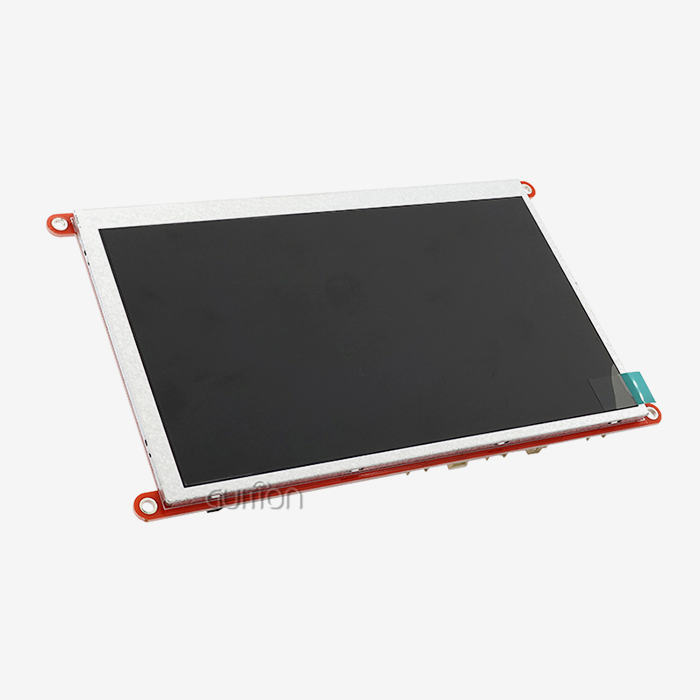
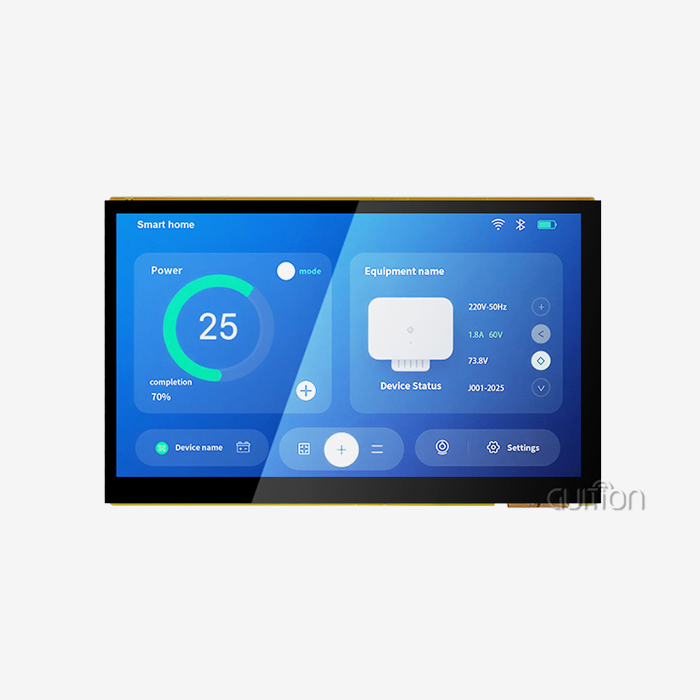
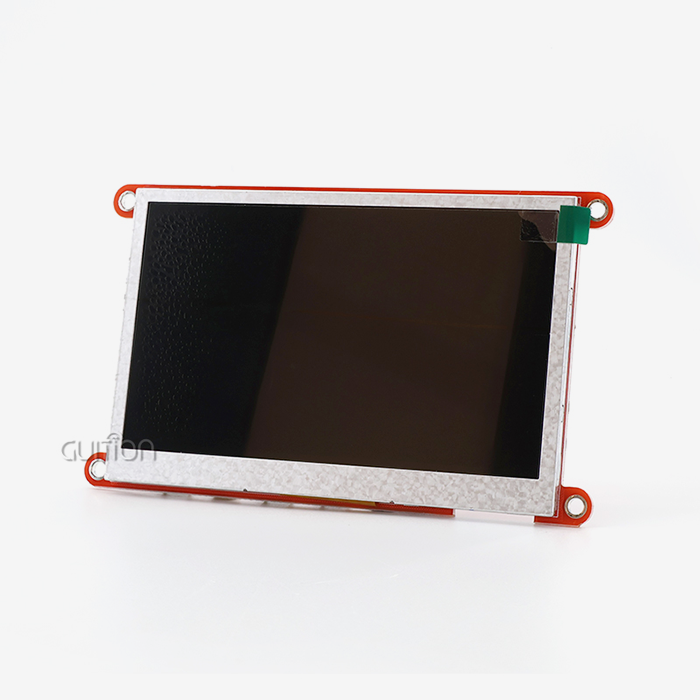
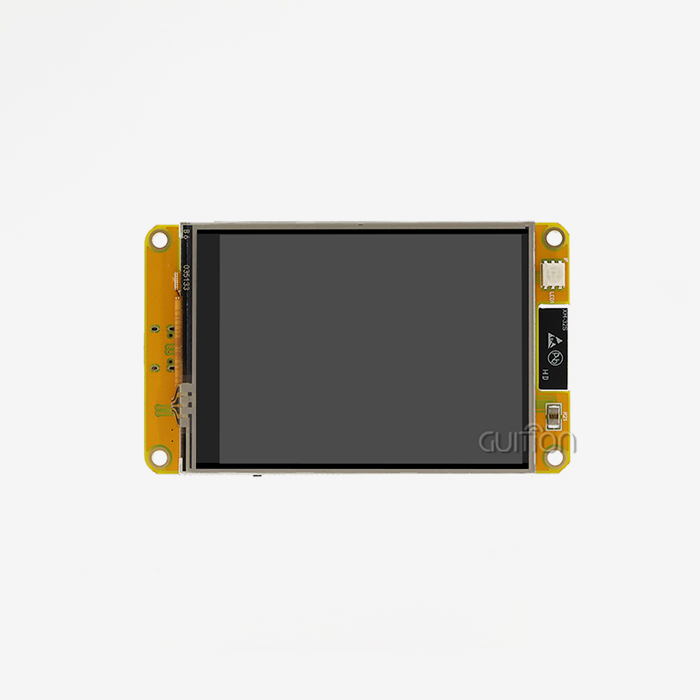
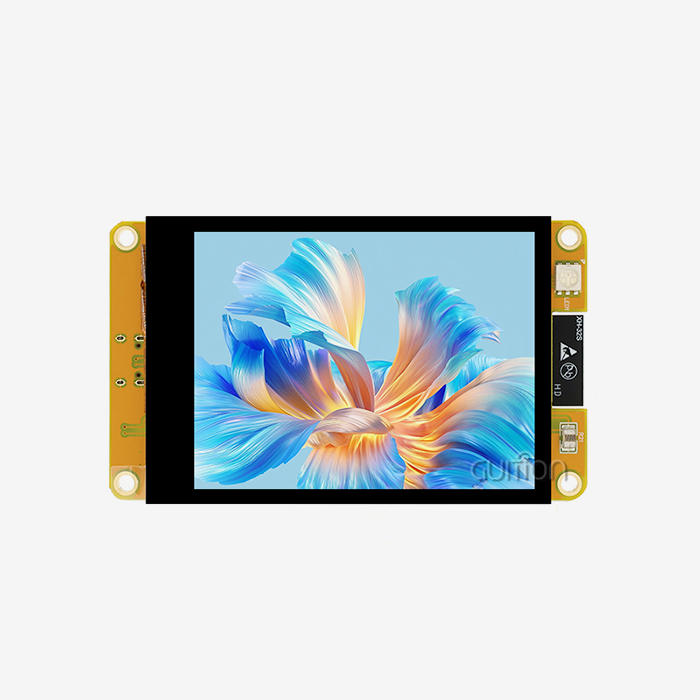
The visible link between workers and automation systems is provided by an Industrial touchscreen HMI. Its main part is an embedded processor, which is usually a single-core or multi-core MCU running at speeds between 200MHz and 800MHz and is responsible for communicating and creating graphics. Either resistive or capacitive touch technology is used on the display panel itself. Capacitive versions are becoming more common because they last longer and can handle more than one touch. This way of thinking is shown by our GUITION JC8048Q350C_I_W module, which has an 800x480 IPS sensitive touchscreen and an Artinchip D121BBV single-core MCU running at 400MHz. The pictures on this 5.0-inch screen are clear, and the touch screen works well even in rough situations.
Communication Protocols That Enable Seamless Integration
Industrial touch screen HMI devices use industrial protocols to communicate with customisable logic controls, sensors, and actuators. RS232, RS485, Ethernet, and, more and more, wireless devices like WiFi and Bluetooth are common ways to link. The GUITION module has both WiFi and Bluetooth connectivity, which lets makers of automation equipment build networked environments without having to install many cables. These lines of communication send real-time data from field devices to the display and operator orders back to the control systems. This creates a feedback loop that keeps production running at its best.
Software Platforms That Simplify Development
Modern Industrial touchscreen HMI systems depend on specialised development software that makes difficult programming jobs easier to handle. The Guition development tool is a big step forward in this area because it has a drag-and-drop interface that lets anyone use it without having to know a lot about coding. Instead of writing low-level code, engineers can use simple choices to choose pre-built controls, place them visually, and change how they work. This method cuts development time from months to weeks, allowing R&D teams to quickly make changes to ideas and adapt to market needs. The platform allows different development modes, such as Arduino, IDF, and native Python settings, so engineering teams with different levels of technical knowledge can work together.
Key Features and Benefits Driving Adoption in Automation Lines
Industrial-Grade Durability and Environmental Resistance
On factory floors, equipment faces dust, moisture, temperature changes, and physical effects that would quickly break down household gadgets. Industrial touch screen HMI modules made for these conditions have sealed housings that meet or exceed IP65 standards. This keeps dust and liquids from getting in and damaging the modules. The screens themselves are made of chemically stronger glass that is less likely to scratch and stays clear even after years of use. Temperature tolerance is usually between -20°C and +70°C, which makes sure that the machine works reliably in both cold storage areas and working areas with a lot of heat. This toughness immediately means less downtime and a lower total cost of ownership for companies that put together robotic systems.
User-Friendly Interfaces That Enhance Productivity
Quality of interface design has a big impact on how well operators do their jobs. Engineers can use Industrial touch screen HMI solutions to make unique displays that show workers only the information they need, without any extraneous information or confusion. Colour-coded state indicators, easy-to-use navigation menus, and controls that change based on the situation all reduce the need for training and operating mistakes. With its visual design environment, the Guition development tool makes it easy to make these kinds of professional interfaces. Engineers don't have to write a lot of code to make multi-page apps with dynamic changes, data logging, and alarm management systems. Because of these features, smaller factories and startups can now use advanced automation solutions that were once only possible for big companies with their own software development teams.
Advanced Integration Capabilities With Automation Equipment
Industrial touch screen HMI devices need to be able to work with the control system that is already in place. The GUITION JC8048Q350C_I_W module has many input options, including serial ports, sensor links, and expandable IO ports, allowing it to connect to a wide range of control systems and sensor types. The 400MHz processing speed makes real-time data visualisation run smoothly, even when displaying complicated images or handling several data streams at the same time. Hardware-accelerated JPEG and PNG processing ensures that screens respond quickly when users add photos or plans. Manufacturers can add firmware updates and better user interfaces to installed equipment without having to pay for expensive site trips. This cuts down on upkeep costs and extends the life of products.
Industrial Touch Screen HMI vs Competing Technologies: Making the Right Choice
Comparing HMI Solutions With Standard Panel PCs
Panel PCs and Industrial touch screens HMI devices do similar things, but they are very different in how they are set up and how much they cost. Panel PCs put full computers behind industrial screens, giving you more control over the operating system and more computing power. But this level of complexity means there are more places where things could go wrong and usually costs more. Industrial touch screen HMI units, like the GUITION JC8048Q350C_I_W, are designed to handle interface and visualisation jobs, offering better performance for these tasks at lower costs. Compared to full PC-based systems, the specialised design uses less power, generates less heat, and makes troubleshooting easier.
Understanding the HMI Role Versus PLC Functions
Programmable logic controllers are critical because they run control logic, manage I/O, and make sure that equipment works safely. An industrial touch screen hmi display module adds to these tasks by letting operators see what's happening and give feedback. Some more powerful HMI devices can do simple control logic, but their main purpose is to show data clearly and understand operator orders. This separation of duties makes systems strong so that each part can focus on what it does best. The GUITION module is particularly effective at this interface role because it can quickly update the screen and respond to touch input while keeping contact with control systems higher up the chain stable.
Evaluating Brand Options in the Market
When equipment makers look at Industrial touch screen HMI producers, they come across both well-known names and new technology companies, such as Siemens, Allen Bradley, Schneider Electric, Weintek, and Beckhoff. Well-known brands have strong histories and large support networks, but they usually cost a lot and have their own systems that make them less flexible. Guition fills this gap in the market by offering industrial-grade hardware performance along with open development tools and a variety of ways to join. With modular design, makers can pick and choose only the features they need instead of having to pay for features that aren't needed that come with business options.
Practical Applications of Industrial Touch Screen HMI in Automation Lines
Manufacturing and Process Control Environments
An industrial touch screen HMI is used on production lines in factories to see what's going on with the machines, handle recipes, and see data for quality control. These interfaces let operators change settings, respond to alarms, and keep real-time track of production data. The 800x480 resolution of the GUITION module makes it possible to read detailed information from several feet away. This makes it straightforward for supervisors to keep an eye on many machines. An industrial touch screen HMI in CNC machining machines lets you see where the tools are, change the speed of the spindle, and choose programs. These features make processes easier and setup times shorter.
Packaging and Material Handling Systems
Multiple elements that handle labelling, capping, filling bottles, and packing cases must work together perfectly on automated package lines. The Industrial touchscreen HMI is the main control panel where workers set up product changes, check flow rates, and fix problems like jams or a lack of materials. The GUITION module's responsive capacitive touch makes it possible for workers wearing gloves to interact with controls successfully. This solves a common problem in the food and beverage manufacturing industry where safety gear is required. With UTF-8 encoding, which supports multiple languages, the same equipment can be used in places all over the world without the need for different software versions for each area.
Energy Management and Utility Infrastructure
An industrial touch screen HMI is used for remote tracking and control in solar farms, wind turbine sites, and power distribution networks. For these uses, wireless communication is especially helpful because it gets rid of the need for expensive cable runs through big buildings. The built-in WiFi and Bluetooth in the GUITION module let data from spread-out sensors be collected while still giving workers a clear view of the whole picture. Real-time clocks powered by batteries keep an accurate record of data for compliance reporting and performance analysis. Being able to make changes remotely is especially helpful in these situations, as the equipment may be in a hard-to-reach location.
Procurement Guide: How to Select, Purchase, and Implement Industrial Touch Screen HMI
Defining Your Technical Requirements
To choose the right Industrial touch screen HMI, you must first clearly write down what the application needs. The display size must match the viewing distance and the amount of information you need to show. For example, 5.0-inch screens like the GUITION JC8048Q350C_I_W work well in machine-mounted applications where space is limited, while bigger displays work better in control rooms. The required resolution depends on how complicated the graphics and words are that you show. For most industry uses, the 800x480 resolution is perfect. When you use apps with animated graphics, data logging, or complicated calculations, processing power is important. The 400MHz MCU in the GUITION module can handle these jobs without any lag or dropped frames.
Evaluating Connectivity and Expansion Options
Modern automation systems need Industrial touchscreen HMI devices to be able to connect to a variety of devices. Serial connections are still needed to connect to older equipment and PLCs, while Ethernet access lets you connect to plant-wide networks and tracking systems in the cloud. Wireless features are becoming more valuable because they make installation easier and let you connect mobile devices. The GUITION module meets these needs with a wide range of connectivity choices, such as built-in WiFi and Bluetooth modules, multiple serial lines, and reserved TF card slots for data logging. Engineers should make sure that any possible HMI devices work with the control systems they are looking at, whether those systems use Modbus, MQTT, or their own custom protocols.
Assessing Development Tool Capabilities
The software used to make Industrial touchscreen HMI applications has a big effect on how long it takes to build and how much it costs to maintain over time. In the past, programming HMIs needed specific skills and long development processes. The Guition platform's online drag-and-drop creation environment changes this way of thinking and lets you make quick prototypes and changes. Cross-platform debugging lets engineers test apps fully before putting them into use, which cuts down on the time needed for field setup. Support for multiple development modes, including Arduino, IDF, and native Python processes, means that tech teams don't have to learn all new toolchains. Instead, they can use the skills they already have. Installing upgrades and setups for the future by improving interfaces and fixing bugs without having to shut down the equipment.
Partnering With Reliable Suppliers
An industrial touch screen HMI is an investment that will last for a long time and needs ongoing help from the provider. How well technical material is written, how quickly questions about applications are answered, and how easy it is to find examples of applications all affect the success of a project. Evaluation and proof-of-concept creation go faster when suppliers offer test apps that are already coded, like the GUITION module's ready-to-run demo software. Warranty terms and the availability of new parts are especially important for equipment that is used in remote areas where breakdowns can cause major problems with operations. Talking to providers early on in the planning process can help you find ways to improve things and avoid problems before you decide on a specific hardware platform.
Conclusion
Industrial touch screen HMI technology has completely changed how people use robotic systems in the energy, infrastructure, and industry sectors. These devices are essential for modern production settings because they have easy-to-use visual interfaces, strong industrial construction, and development tools that are getting easier to access. The JC8048Q350C_I_W module from Guition shows how their approach solves the problems that R&D managers and embedded engineers have: shorter development times thanks to drag-and-drop tools; flexible connectivity that supports a wide range of integration scenarios; and industrial-grade reliability that guarantees consistent performance. As automation systems get more complicated and linked, well-designed Industrial touch screen HMIs play an even bigger role in keeping operations under control and visible.
FAQ
Can I program the HMI myself, or do I need specialized expertise?
The Guition development platform's visual programming method specifically deals with this problem. Drag-and-drop controls and setting choices make it possible for engineers with basic technical knowledge to make interfaces that work without having to write code from scratch. The platform has example projects and models that can be used as starting places. This makes learning much easier than in traditional HMI programming environments.
How does an industrial touch screen HMI differ from a consumer tablet?
Industrial touch screen HMI devices are built to last with sealed casings, wider working temperature ranges, and parts that are chosen with long-term availability over cutting-edge performance in mind. The GUITION module is made with industrial-grade parts that are designed to work continuously in tough conditions where regular screens would break in weeks. Communication interfaces are more concerned with industry protocols than with user standards for connecting devices.
Will this HMI integrate with my existing PLC system?
The GUITION JC8048Q350C_I_W Industrial touch screen HMI works with standard serial transmission methods that most PLCs from different brands use. The multiple serial lines and flexible IO connections allow for a range of wiring setups and communication standards. The Guition development tool has communication libraries for common protocols that make integration jobs easier, which used to need knowledge of low-level code.
Partner With Guition for Your Automation Interface Needs
Adding solid Industrial touchscreen HMI technology to your automation lines shouldn't take months of work or a lot of computer knowledge. Guition sells industrial-grade display panels made for smart device makers, system integrators, and equipment manufacturers who need proven performance without a lot of extra work. Our JC8048Q350C_I_W module gives your engineering team the processing power, connection choices, and development tools they need to quickly make professional interfaces. As a well-known Industrial touch screen HMI maker, we offer detailed technical documentation, quick application support, and a range of ordering choices that can fit both small prototypes and large production runs. Email our team at david@guition.com to talk about how our HMI solutions can help you with your next automation project, shorten the time it takes to build, and give your customers the stability they expect.
References
1. Anderson, J. (2021). Human-Machine Interface Design for Industrial Automation Systems. Manufacturing Technology Press.
2. Chen, L., & Rodriguez, M. (2022). "Comparative Analysis of HMI Technologies in Modern Production Environments." Journal of Industrial Engineering, 45(3), 112-128.
3. Harper, K. (2020). Embedded Systems for Industrial Applications: Architecture and Implementation. Technical Publishing House.
4. Mitchell, R., & Thompson, S. (2023). "Evolution of Touch Screen Technology in Manufacturing: A Decade Review." Automation Today, 18(2), 45-59.
5. Patel, A. (2022). Control Systems Integration: Best Practices for Industrial Environments. Engineering Solutions Press.
6. Williams, D. (2021). "Cost-Benefit Analysis of HMI Solutions Across Industrial Sectors." Industrial Management Quarterly, 34(4), 203-219.
Learn about our latest products and discounts through SMS or email