- English
- French
- German
- Portuguese
- Spanish
- Russian
- Japanese
- Korean
- Arabic
- Greek
- German
- Turkish
- Italian
- Danish
- Romanian
- Indonesian
- Czech
- Afrikaans
- Swedish
- Polish
- Basque
- Catalan
- Esperanto
- Hindi
- Lao
- Albanian
- Amharic
- Armenian
- Azerbaijani
- Belarusian
- Bengali
- Bosnian
- Bulgarian
- Cebuano
- Chichewa
- Corsican
- Croatian
- Dutch
- Estonian
- Filipino
- Finnish
- Frisian
- Galician
- Georgian
- Gujarati
- Haitian
- Hausa
- Hawaiian
- Hebrew
- Hmong
- Hungarian
- Icelandic
- Igbo
- Javanese
- Kannada
- Kazakh
- Khmer
- Kurdish
- Kyrgyz
- Latin
- Latvian
- Lithuanian
- Luxembou..
- Macedonian
- Malagasy
- Malay
- Malayalam
- Maltese
- Maori
- Marathi
- Mongolian
- Burmese
- Nepali
- Norwegian
- Pashto
- Persian
- Punjabi
- Serbian
- Sesotho
- Sinhala
- Slovak
- Slovenian
- Somali
- Samoan
- Scots Gaelic
- Shona
- Sindhi
- Sundanese
- Swahili
- Tajik
- Tamil
- Telugu
- Thai
- Ukrainian
- Urdu
- Uzbek
- Vietnamese
- Welsh
- Xhosa
- Yiddish
- Yoruba
- Zulu
Why Is 4 inch ESP32S3 display module Popular Among IoT Developers?
The 4 inch ESP32S3 display module has become a popular choice among IoT makers because it has the right amount of processing power and screen space. Built around Espressif's dual-core ESP32-S3R8 MCU, which runs at 240MHz and has built-in WiFi and Bluetooth, this display size gives you enough room to interact with the interface without making it too bulky to carry around. The capacitive display with a size of 480×480 provides responsive user experiences while using minimal power. These are important factors to consider when making small smart devices that need visual input and wireless connection.

Understanding the 4 Inch ESP32S3 Display Module: Features and Specifications
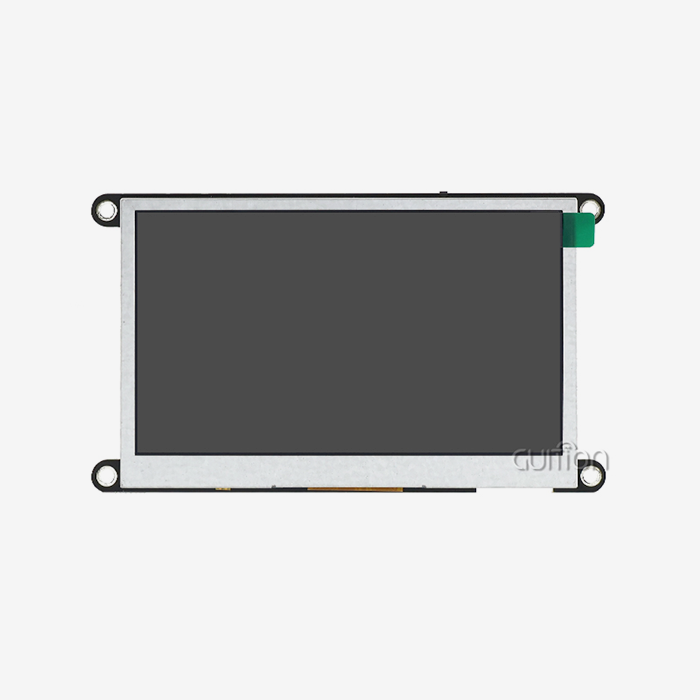
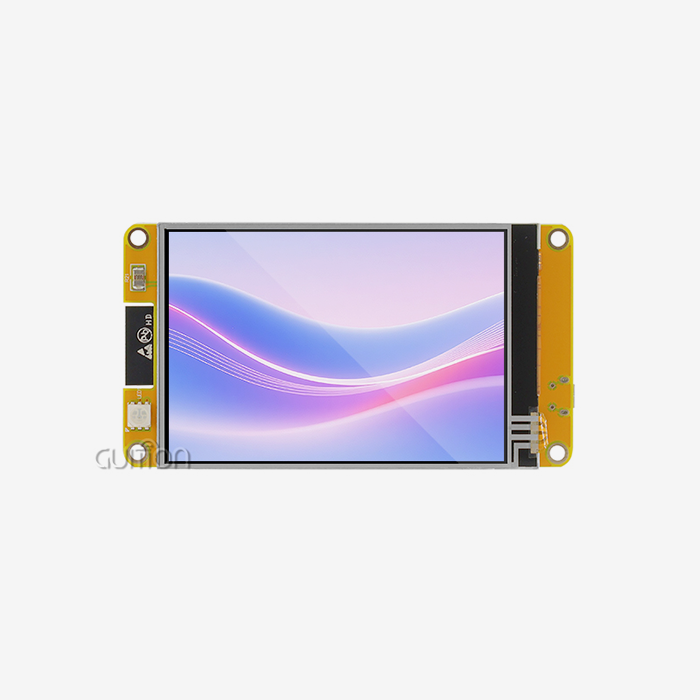
Display options for modern IoT projects need to be able to mix good looks with a lot of computing power. The ESP32-S3R8 dual-core MCU in the Guition ESP32-4848S040C_I is a good example of this combination. This processor can work at speeds of up to 240MHz and has 512KB SRAM, 384KB ROM, 8MB PSRAM, and 16MB Flash storage. These specs allow for smooth graphics rendering and complex program logic to run at the same time. The screen part itself has a 480×480 resolution and a 4 inch IPS panel that can show 65,000 colours with 16-bit RGB colour depth. This square aspect ratio works great for gauge displays, status panels, and control interfaces that are easier to use with uniform layouts. Capacitive touch technology recognises input quickly and accurately, which is important for apps that need precise human interaction.
Hardware Architecture and Interface Options
The module design shows that the engineers were careful to make it expandable. In addition to the main display and touch driver circuits, the board has lighting management circuitry that lets the brightness be changed using PWM when the environment changes. Reserved TF card connections let you log data locally or store software, which is especially useful in industrial settings where network access can be spotty. You can still connect sensors, actuators, or transmission devices to a number of GPIO ports. Because it can be expanded, makers can make full systems that work on their own without needing extra microprocessor boards. The ESP32-S3 and display driver have a parallel interface that lets more data pass through than serial protocols. This supports the refresh rates needed for moving interfaces and video playing.
Power Management Considerations
Power economy is still very important for IoT gadgets that run on batteries. With the ESP32-S3's active, modem-sleep, light-sleep, and deep-sleep power modes, engineers can find the best mix between speed and power use. When combined with smart backlight control, the whole 4 inch ESP32S3 display module can work for long amounts of time on a small battery. Active operation usually uses between 200 and 300mA, but this depends on how bright the backlight is and how much WiFi action there is. When the device is in deep sleep, it uses only a few microamperes.
Why IoT Developers Prefer 4 Inch Displays: A Cognitive Upgrade of User Requirements
When choosing a screen size, you have to weigh the benefits and drawbacks of things like sight, component cost, physical area, and power needs. The 4 inch ESP32S3 display module has become a good compromise for many technical concerns at the same time.
Optimal Balance Between Visibility and Portability
Displays smaller than three inches often make it harder to read, especially when they have a lot of data fields or dynamic parts. The text gets squished, the touch targets get too small, and it's hard for users to navigate. On the other hand, screens bigger than five inches make devices bulkier, use more power, and cost more in materials. For reading comfortably at arm's length, 4 inch ESP32S3 display modules are the perfect size. They also keep the device portable. Six to eight separate information zones can be shown on a screen without making it too crowded. This lets dashboard-style layouts be used, which are popular in industrial control applications. Touch targets can be at least 9-10 mm in size, which meets practical standards and makes it easier for users to type without making mistakes.
Technical Performance Advantages
The function of a display goes beyond its set resolution. How users see quality is affected by things like reaction times, watching angles, refresh rates, and how accurate the colours are. IPS (In-Plane Switching) technology is usually used in the 4 inch ESP32S3 display modules, which offer wider viewing angles at 170 degrees compared to smaller TN (Twisted Nematic) screens that are smaller. This wide viewing angle is very useful in factories where people look at screens from different angles. The bigger surface area makes it easier to feel and use touches accurately. Capacitive controls can more accurately figure out where your finger is on a 4 inch ESP32S3 display module than on a smaller screen. This means that ghost touches are less likely to happen and gestures are recognised better. When using complicated tools like sliders, rotating knobs, or multi-touch motions, this higher level of accuracy is a must.
Economic and Supply Chain Stability
Production volumes of 4 inch ESP32S3 display modules have grown a lot in the car, consumer goods, and industrial sectors. Because of this demand, economies of scale happen, which lets you get good modules at reasonable prices. Supply chain variety lowers buying risks because many companies make panels and controller boards that work together, so if a main source has problems, there are other options. Dependability is also linked to how mature the company is. Over the years, manufacturing processes for this size range have been improved, leading to lower failure rates and more uniform quality compared to new sizes that are still working to improve their processes. This makes the product more reliable, which lowers the cost of warranties and improves its image in the market.
Guition ESP32-4848S040C_I: Purpose-Built for Professional Development
The Guition ESP32-4848S040C_I is one of the choices offered. It is an intentionally designed solution that addresses common developer pain points. This 4 inch ESP32S3 display module doesn't just combine off-the-shelf parts; it also includes hardware and software tools that speed up the creation process. The 4 inch ESP32S3 display module comes factory-programmed with example code that lets you test its usefulness right away without having to set up any tools. Before writing their own code, engineers can check that the hardware works, learn about the interface's powers, and look at example applications. This method makes the initial learning curve much shorter, which is especially helpful for teams that are moving from other microcontroller platforms.
Development Environment Flexibility
Different code platforms are used by modern development teams depending on the needs of the project and the engineers' skills. Because of this, Guition 4 inch ESP32S3 display modules support Arduino IDE for quick development, ESP-IDF for production-level apps that need fine-grained control, and MicroPython for teams that like interpreted languages. This makes it possible to avoid the usual problem where choosing the right tools limits the development process. The Guition development tool is not limited to general frameworks. Its drag-and-drop interface maker lets you put together user interfaces visually without having to do a lot of code. It is possible for engineers to directly move buttons, gauges, text areas, and other graphic elements around, and the tool will generate the code underneath instantly. This visual method helps teams where UI designers don't know much about embedded code, making it easier for design and engineering to work together.
One-Click Deployment and Cross-Platform Debugging
Firmware release usually includes a lot of steps that need to be done by hand, like writing code, choosing serial ports, setting boot modes, and keeping an eye on the upload process. This process can be sped up with just one click of the mouse, as Guition instantly finds linked 4 inch ESP32S3 display modules and takes care of protocol details. This makes things easier, which is especially helpful during iterative development, where code is updated often. Another typical complaint is that cross-platform testing is not always easy. Without touching the hardware, developers can test how fast the interface is, make sure the control logic works, and simulate sensor inputs. This virtual testing speeds up fixing and lets teams that work in different places work together well no matter what gear is available.
How to Select and Integrate a 4 Inch ESP32S3 Display Module into Your IoT Project
A clear description of needs is the first step to successful integration. Many projects have to handle more than one limit at the same time. For example, some need to use the least amount of power possible, while others need the most processing power possible.
Technical Compatibility Assessment
Make sure that the 4 inch ESP32S3 display module's transmission ports work with the ones you already have. Standard methods are used by most ESP32-S3 screens, but different peripherals have different needs. For projects that use CAN bus, RS-485, or other specific industrial protocols, 4 inch ESP32S3 display modules with the right radio circuits or enough GPIO pins for external interface boards are needed.Specifications for memory should be carefully looked over. The 8MB PSRAM in Guition 4 inch ESP32S3 display modules lets smooth graphics libraries like LVGL allocate frame buffers. This lets you use dynamic transitions and complex scenes without slowing down the system. Less memory might be fine for projects that only show static data, but a lot of RAM is very helpful for projects with engaging displays.
Environmental Requirements and Certification
The operating setting determines the longevity requirements. Extremes in temperature, shaking, and electromagnetic interference are things that industrial control screens have to deal with that consumers don't have to. 4 inch ESP32S3 display module that meets EMC standards and industrial temperature ranges (-20°C to +70°C) ensures that the system works reliably even in tough situations. Medical device makers need certifications that show they follow safety and electromagnetic compatibility rules. There are other factors besides technical standards that affect the choice of suppliers.
Supplier Evaluation Beyond Specifications
Technical sheets only show a portion of the story. Long-term project success rests on how well the provider can handle the product lifespan, provide good documents, and respond to technical help requests. Full guidance speeds up integration. Schematic sketches, pinout references, software samples, and application notes all cut down on the time needed for debugging by a large amount. When you run into strange problems or go beyond what is normally used, technical help becomes very important. Suppliers with engineering teams that can be consulted offer more value than the cost savings on parts that come from less-supported options. Product lifecycle promises are important, especially for industrial and medical uses where devices last for years after they were first made. Knowing that replacement 4 inch ESP32S3 display modules are still available keeps expensive redesigns from having to be done.
Practical Applications Across Industries
4 inch ESP32S3 display modules are used in a huge range of different industries, which shows how flexible they are. Each application leverages different strengths while sharing common requirements for reliable visual interfaces and wireless connectivity.
Industrial Automation and Process Control
In factories, these 4 inch ESP32S3 display modules are used to see what's going on with the machines, change process parameters, and replace traditional button panels as user interfaces. When you combine visual feedback with touch input, you need less training and can get more done in less time. WiFi connection allows for centralised tracking and online parameter changes, which cuts down on downtime while problems are being fixed. Quality management tools can keep track of audit trails by writing data to TF cards. The small size and wireless features make temperature tracking systems in warehouses and cold storage facilities more useful. When storage layouts change, battery-powered units with these 4 inch ESP32S3 display modules are easy to move around because the data instantly syncs to cloud platforms for compliance reporting.
Smart Home and Building Automation
Intelligent platforms are replacing traditional buttons and thermostats as a way to control buildings in both homes and businesses. 4 inch ESP32S3 display modules are big enough to handle lighting scenes, climate zones, security status, and energy use, but they're not as complicated or expensive as tablet-based options. Mesh networking lets various control screens in a building talk to each other without any problems because they all have built-in WiFi. Bluetooth lets smartphones talk to each other so that settings can be customised and guest access can be managed. Over-the-air (OTA) firmware updates make sure that devices that have been installed get new features and security fixes without having to be fixed by an expert.
Medical and Healthcare Devices
These 4 inch ESP32S3 display modules are built into patient tracking, diagnostic, and therapy devices so that real-time data can be shown and parameters can be changed. The high-contrast IPS screen makes it possible to read even in hospital settings with changing lighting. Touch screens make things easier to use and help prevent infections because their surfaces can be cleaned, unlike mechanical buttons that can hold germs.The power-efficient design is especially helpful for portable medical devices because it lets the batteries last longer while they're being transported or used for home care. Wireless connection makes it easier to send data to electronic health record systems, which helps with programs that coordinate care and keep an eye on patients from afar.
Future Trends and the Role of 4 Inch ESP32S3 Displays in IoT Evolution
As component powers get better and application domains grow, the creation of IoT devices keeps speeding up. Display technology changes along with these trends, and some of these changes are especially useful for 4 inch ESP32S3 display modules.
Enhanced Visual Technologies
As the cost of making them goes down, more and more high-resolution panels with the same 4 inch ESP32S3 display module size will become available. Screens with more than 600×600 pixels can show images with more information, text with finer details, and more data without making it harder to read. OLED technology may get cheap enough for wider use in industry. It has better contrast ratios and a bigger range of colours than LCD technology currently used. Haptic feedback integration confirms touch inputs without using mechanical parts. This boosts user trust in industrial settings where people are looking at processes instead of control screens. This technology works especially well with touchscreens, which don't have any mechanical input.
AI and Edge Computing Integration
Because the ESP32-S3 can speed up AI, these 4 inch ESP32S3 display modules are perfect for use in edge intelligence apps. Processing sensor data locally, recognising patterns, and finding outliers lowers reliance on the cloud and speeds up reaction times. Shows the current research results, confidence levels, and suggested steps based on machine learning models running on the device. This feature is used in predictive maintenance applications, where vibration sensors send data to ESP32-S3 computers that run training models to find mechanical problems before they break. The 4 inch ESP32S3 display module shows facility managers equipment's state, suggests replacements, and upkeep plans. This builds intelligence directly into the equipment, so there is no need for separate tracking systems.
Enhanced Connectivity and Interoperability
In later versions of the 4 inch ESP32S3 display module, it will probably include more wireless technologies than just WiFi and Bluetooth. Matter protocol support makes it possible for smart home platforms from multiple providers to work together without any problems. This gets rid of the compatibility worries that are currently dividing the market. LoRaWAN and other low-power wide-area networks can be used to increase the wireless range for watching agriculture, the environment, and tracking assets in places where WiFi coverage isn't possible. As the number of IoT devices grows, security issues will be addressed by standardised secure boot and encrypted contact. Hardware-based security features keep firmware from being changed and unauthorised access from happening, which is very important for medical devices, financial terminals, and apps that are part of key infrastructure.
Conclusion
The fact that 4 inch ESP32S3 display module are so popular with IoT makers shows that they have a lot of useful benefits. This size gives you enough screen space for important interactions without using too much power or being too big. The ESP32-S3 MCU has the processing power to run complex graphics libraries and the wireless connection that current smart devices need. The ESP32-4848S040C_I from Guition is an example of a custom-built system that solves real development problems by combining hardware and software, providing flexible development settings, and offering a full set of tools. Engineers find that this 4 inch ESP32S3 display module speeds up prototyping and supports production-scale applications, whether they are making industrial equipment, smart home devices, or medical instruments. This configuration is likely to stay useful even as IoT apps change and become more diverse because it is technically mature, the supply chain is stable, and the community around it is growing.
FAQ
What power consumption should I expect from a 4 inch ESP32S3 display module?
At 3.3V, active activity with the backlight set to a modest brightness usually uses 200 to 300mA. The ESP32-S3's improved power management lets it go into deep sleep states that lower power use to less than 500µA for battery-powered devices. The actual amount used depends on how much you use WiFi, how bright your screen is, and how busy your processor is. For projects that need to last longer on a single charge, smart power management techniques like lowering backlights when not in use, using sleep modes between tasks, and planning the best times for wireless transmissions should be used.
Can these modules run advanced graphics libraries like LVGL smoothly?
LVGL works smoothly with animated changes and complicated scenes thanks to its dual-core processing, 8MB PSRAM for frame buffers, and well-tuned display interfaces. When set up correctly, the ESP32-S3 can keep 30 FPS or more for most panel displays. DMA movements between memory and display reduce CPU overhead, which lets program code use processing power while keeping interfaces responsive.
How does Guition's development tool compare to standard Arduino or ESP-IDF workflows?
Instead of replacing these settings, Guition adds to them. The visual interface maker speeds up UI development by letting you combine elements with drag-and-drop, and it generates code that works with common frameworks. Engineers can use their chosen environment—Arduino IDE for easy development or ESP-IDF for better production—to create interfaces visually while implementing business logic. This mixed method helps teams with a range of skills because it lets UI artists participate directly without needing to know a lot about programming.
Partner with Guition for Your Next Smart Display Project
You need more than just parts to make your IoT idea come true. You need a 4 inch ESP32S3 display module provider that is dedicated to your success. Guition is an expert in USART-HMI display systems that are designed to work with smart devices, medical equipment, and industrial settings. The ESP32-4848S040C_I we offer blends tried-and-true hardware with professional software tools that really speed up time-to-market. Because we are engineers ourselves, we know how hard it is to deal with problems in integrated engineering. Our expert team is available to help you at any time during the development process, from choosing the design to scaling up for production. Common integration problems can be solved with full instructions, example code, and the easy-to-use Guition UI development tool. We can meet your needs whether you need a few prototypes to test your idea or a lot of production samples with the option to make changes. We follow strict quality standards when we make things, so they will last as long as your customers expect. Support in multiple languages and foreign processes helps development teams all over the world. Email david@guition.com right now to talk about the needs of your project. We'll help you find the best 4 inch ESP32S3 display module manufacturer and give you expert advice to speed up the creation process. You can ask for datasheets, prices based on your business needs, or to meet with our applications engineering team for a meeting.
References
1. Espressif Systems. "ESP32-S3 Technical Reference Manual: Dual-Core Architecture and Peripheral Integration." Espressif Documentation Series, 2022.
2. Chen, Wei and Liu, Xiaoming. "Comparative Analysis of Display Technologies for Embedded Systems: TFT, IPS, and OLED Performance Characteristics." Journal of Embedded Computing, vol. 18, no. 3, 2023, pp. 145-162.
3. Industrial IoT Consortium. "Human-Machine Interface Guidelines for Industrial Applications: Screen Size Optimization and Ergonomic Considerations." IIC Best Practices White Paper, 2023.
4. Martinez, Roberto. "Power Management Strategies for Battery-Operated IoT Devices with Display Interfaces." IEEE Transactions on Industrial Electronics, vol. 70, no. 4, 2023, pp. 3876-3889.
5. Thompson, Sarah and Patel, Arun. "Supply Chain Analysis of Display Components in IoT Manufacturing: Market Trends 2020-2024." International Electronics Manufacturing Review, 2023.
6. Zhang, Hui. "Graphics Library Performance Optimization on Resource-Constrained Microcontrollers: LVGL Implementation Case Studies." Embedded Systems Programming Quarterly, vol. 12, no. 2, 2023, pp. 78-94.
Learn about our latest products and discounts through SMS or email