- English
- French
- German
- Portuguese
- Spanish
- Russian
- Japanese
- Korean
- Arabic
- Greek
- German
- Turkish
- Italian
- Danish
- Romanian
- Indonesian
- Czech
- Afrikaans
- Swedish
- Polish
- Basque
- Catalan
- Esperanto
- Hindi
- Lao
- Albanian
- Amharic
- Armenian
- Azerbaijani
- Belarusian
- Bengali
- Bosnian
- Bulgarian
- Cebuano
- Chichewa
- Corsican
- Croatian
- Dutch
- Estonian
- Filipino
- Finnish
- Frisian
- Galician
- Georgian
- Gujarati
- Haitian
- Hausa
- Hawaiian
- Hebrew
- Hmong
- Hungarian
- Icelandic
- Igbo
- Javanese
- Kannada
- Kazakh
- Khmer
- Kurdish
- Kyrgyz
- Latin
- Latvian
- Lithuanian
- Luxembou..
- Macedonian
- Malagasy
- Malay
- Malayalam
- Maltese
- Maori
- Marathi
- Mongolian
- Burmese
- Nepali
- Norwegian
- Pashto
- Persian
- Punjabi
- Serbian
- Sesotho
- Sinhala
- Slovak
- Slovenian
- Somali
- Samoan
- Scots Gaelic
- Shona
- Sindhi
- Sundanese
- Swahili
- Tajik
- Tamil
- Telugu
- Thai
- Ukrainian
- Urdu
- Uzbek
- Vietnamese
- Welsh
- Xhosa
- Yiddish
- Yoruba
- Zulu
Why Is 1.9 inch ESP32S3 display module Popular in Compact Designs?
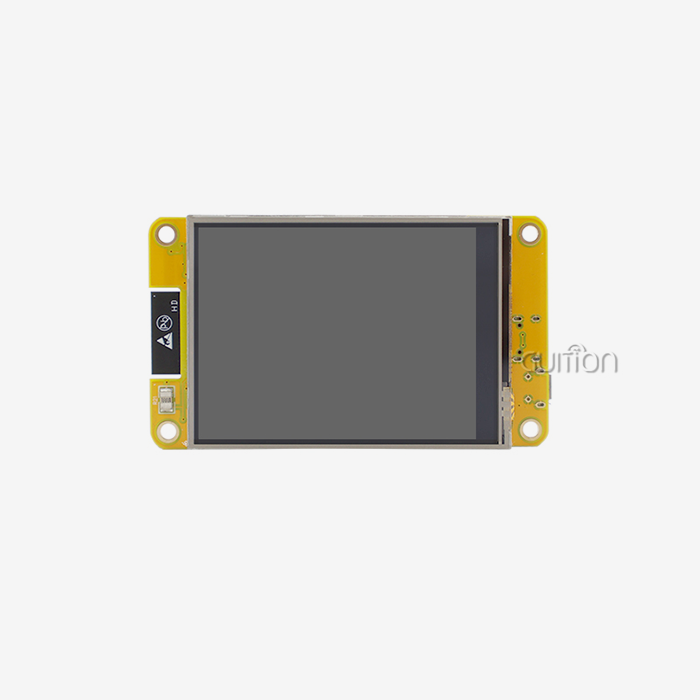
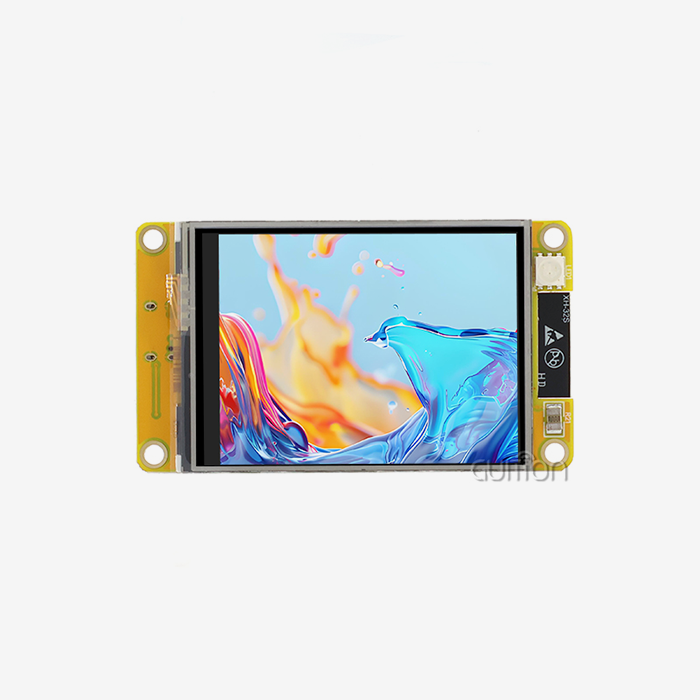
The 1.9-inch ESP32S3 display module has become very popular in small design projects because it strikes the right mix between being easy to read and taking up as little space as possible while still having powerful processing power. The ESP32-S3-WROOM-1 dual-core MCU running at 240MHz and a clear 170x320 IPS panel are both built into this display solution. It also has built-in Wi-Fi and Bluetooth connections, so you don't need any extra hardware for communication. Engineers love this module because it solves the problem of making devices that respond to touch without taking up valuable board space. This makes it the best choice for small tools, smart home controls, and portable medical equipment where every millimetre counts.

Understanding the Core Features of the 1.9 Inch ESP32S3 Display Module
How well small display units work in difficult situations depends on how they are built technically. The ESP32-1732S019N-I from Guition shows how careful planning can help writers who are working with limited resources.
Processing Power and Memory Architecture
At its core, this module's ESP32-S3-WROOM-1 driver works as a dual-core Xtensa LX7 processor that can go as fast as 240MHz. This processing power can handle complicated GUI display jobs and wireless connection methods at the same time. There is 512KB of SRAM for active activities, 384KB of ROM for boot code, and 8MB of PSRAM for managing the frame buffer, which is important for making sure that graphics changes are smooth. With 16MB of Flash storage, writers can store a lot of UI images, fonts, and application code without having to use external memory chips. This makes PCB planning easier and lowers the cost of the bill of materials.
Display Specifications and Visual Performance
The esp32 display module 170x320 IPS screen has bright colours and wide viewing angles, which are important for people who use their devices from different angles. IPS technology, unlike traditional TN displays, keeps colours and brightness even at very high and very low viewing angles. This solves a common problem in workplace settings where people may not be able to look at screens straight on. The 16-bit colour depth makes curves that are smooth and images that are very detailed, which improves the user experience in medical tracking equipment and business systems. Backlight control hardware built into the module lets you precisely change the brightness, which extends battery life in portable applications while keeping vision even when the lighting conditions change.
Connectivity and Interface Options
Built-in Bluetooth 5.0 and Wi-Fi 802.11 b/g/n connections mean that you don't need different communication units. This cuts down on the number of parts you need and the difficulty of putting them together. This dual wifi feature lets you pair local devices and sync data with the cloud at the same time, which is necessary for current IoT designs. The module works with several tools for development, such as Arduino IDE, ESP-IDF, MicroPython, and Mixly, so it can be used with a variety of current codebases and team tastes. The IO port connections let you add more sensors, controllers, or external storage through the built-in TF card slot. This way, projects can increase usefulness without having to rethink the core hardware.
These features meet the basic needs of embedded engineers who want stable display solutions, have lots of features, and don't take too much time to build while still giving designers a lot of freedom.
Why the 1.9 Inch Size is Ideal for Compact and Portable Designs
The size of a product has a direct effect on how it looks, how much it costs to make, and how well users like it in apps with limited room. The exact size of 1.9-inch screens makes them useful in certain ways.
Optimal Balance Between Readability and Footprint
Screen space must be used to show important information without taking up too much space on the device's case. While keeping the size small, the 1.9-inch version has enough screen space for multi-line text, icons, and touch-free applications. When it comes to small measuring tools, this size lets you use them with one hand without hurting your eyes, which is an important practical factor. Designers of medical equipment like this size it because it fits well in movable diagnostic tools that doctors carry from one patient room to another. Bigger screens would make these tools less portable.
Power Efficiency Advantages
Backlighting smaller screens uses less power than backlighting bigger ones, which has a direct effect on the battery life of handheld devices. The 1.9-inch ESP32S3 display module from Guition shows this idea with its optimised lighting circuits that change the brightness based on the environment. Energy management systems and farm automation tools that use solar power or battery banks draw less current when they are out in the field for longer periods of time. The ESP32-S3 processor can go into deep sleep and draw as little as 10-15µA. This, along with smart display management, lets the device work for longer amounts of time without having to be charged, which is very important for remote tracking uses.
Integration Simplicity in Existing Product Lines
Manufacturers who are updating older products, such as how 1.9-inch modules can be used in containers that were made for similar-sized parts. This physical flexibility cuts down on the cost of tools and speeds up the process of updating products. Manufacturers of smart home devices have successfully added these screens to thermostat housings and security panel faceplates without having to make major changes to the way the devices work. This has kept the brand's look while improving usefulness. With its self-contained processor and display unit, the ESP32-1732S019N-I is flexible, which makes it easier for contract makers who make a wide range of product types to buy things and keep track of their stock.
In real life, this size range is used in car dashboards and EV charging interfaces to show how it's a good compromise between simple warning lights and full-featured tablet systems, giving visual feedback without taking over instrument clusters or control panels.
Comparing Top Market Options: Choosing the Right Display Solution
Procurement teams evaluating suppliers of ESP32 Display Module must consider multiple factors beyond initial unit cost to ensure long-term project success and supply chain stability.
Evaluating Supplier Capabilities and Support
The display module market includes established suppliers and specialized manufacturers offering varying levels of technical assistance and documentation quality. Guition distinguishes itself through comprehensive development tool support, providing the proprietary Guition UI development software that accelerates interface design without extensive embedded programming knowledge. This drag-and-drop environment reduces engineering hours compared to coding-intensive frameworks, directly impacting development budgets and launch timelines.
When comparing options, examine datasheet completeness, availability of reference designs, and responsiveness of technical support teams. Suppliers offering pre-programmed test programs enable immediate functionality verification upon delivery, catching compatibility issues before full production runs. The availability of multiple development environment options—Arduino IDE, ESP-IDF, MicroPython, and Mixly—indicates a supplier's commitment to accommodating diverse engineering workflows rather than forcing teams to adopt unfamiliar toolchains.
Price-Performance Considerations for Volume Orders
Bulk pricing structures vary significantly across suppliers, with quantity breaks occurring at different thresholds. Industrial equipment manufacturers planning production runs of thousands of units should negotiate tiered pricing that rewards volume commitments while maintaining flexibility for demand fluctuations. The total cost of ownership extends beyond unit price to include development tools, technical support incidents, and potential redesign costs if initial selections prove incompatible with production requirements.
Guition's model ESP32-1732S019N-I provides transparent specifications, including exact memory configurations and tested development frameworks, reducing the risk of discovering limitations during prototyping phases. Suppliers offering evaluation kits at reduced cost enable parallel testing of multiple candidates, though the investment in comprehensive testing typically pays dividends through avoided manufacturing delays. Quality certifications, including RoHS and REACH compliance documentation, prevent costly regulatory delays when shipping to international markets, particularly within European Union jurisdictions with strict environmental standards.
Long-Term Supply Reliability and Component Lifecycle
Production planners must assess supplier stability and component availability projections, especially for products with multi-year lifecycles. The ESP32-S3 chipset enjoys strong ecosystem support from Espressif Systems with documented roadmaps extending several years, reducing obsolescence risk. Suppliers maintaining stock reserves and offering last-time-buy opportunities protect against sudden discontinuations that could strand products mid-lifecycle.
Warranty terms and return policies for defective units significantly impact manufacturing yield calculations. Industrial-grade manufacturing standards, including thermal cycling tests and RF calibration verification, indicate suppliers investing in quality assurance beyond basic functionality checks. These factors collectively influence total project risk and should weigh heavily in vendor selection matrices alongside technical specifications.
How to Effectively Use and Program the Display Module
Successful implementation requires understanding both hardware integration and software development workflows to minimize debugging time and accelerate deployment.
Initial Setup and Hardware Configuration
Connecting the module begins with verifying power supply requirements—the ESP32-1732S019N-I operates on 3.3V logic with optional 5V USB-C input for simplified prototyping. Proper power sequencing prevents latch-up conditions that can damage sensitive CMOS circuitry. Developers should implement decoupling capacitors close to power pins following reference design recommendations to filter supply noise, particularly critical when wireless radios operate during display updates.
Pin configuration involves identifying the specific interface type—the module utilizes an 8-bit parallel 8080 interface to the display driver, providing superior bandwidth compared to SPI alternatives. This parallel connection enables frame rates exceeding 60 FPS, essential for smooth animations and responsive user interfaces. GPIO mapping documentation from Guition clearly identifies which pins control backlight PWM, chip select, and data lines, preventing the common pitfall of incorrect signal routing that manifests as display artifacts or complete failure to initialize.
Software Development Approaches
Guition's support for multiple development environments allows teams to leverage existing expertise rather than learning entirely new frameworks. Arduino IDE users benefit from pre-built libraries that abstract low-level display driver commands into intuitive drawing functions. Calling simple commands like display.drawText() or display.fillRect() handles the underlying timing and data sequencing automatically, accelerating prototype development.
Teams requiring finer control migrate to ESP-IDF, Espressif's native framework offering direct hardware access and optimization opportunities. This approach suits applications with strict real-time constraints or custom communication protocols. MicroPython provides rapid iteration capabilities for prototyping complex logic before committing to compiled languages, while Mixly's visual programming blocks support educational applications and simplified configuration interfaces.
The Guition UI development software deserves particular attention for its ability to design complete interfaces through drag-and-drop operations. Controls, including buttons, sliders, gauges, and custom graphics, compile directly to optimized code, eliminating manual pixel-pushing and reducing visual design iteration cycles. Cross-platform online debugging features allow developers to test interfaces across different target hardware configurations without repeated physical programming cycles, substantially decreasing development time.
Advanced Optimization Techniques
Power management programming becomes critical in battery-operated devices. Implementing intelligent backlight dimming based on user activity timeouts can extend battery life by 30-40% in typical usage patterns. The ESP32-S3's deep-sleep modes require careful state management to preserve display content and communication context during sleep periods, then restore operation seamlessly upon wake events.
Memory optimization involves the strategic use of PSRAM for frame buffers while keeping frequently accessed variables in faster internal SRAM. Improper buffer allocation can create performance bottlenecks where the processor stalls waiting for external memory access. Guition's documentation provides reference implementations demonstrating efficient memory layouts that balance speed and capacity constraints.
Wireless communication introduces electromagnetic interference considerations—rapid display updates can generate noise coupling into antenna circuits, degrading Wi-Fi sensitivity. Proper PCB layout with ground plane continuity and shielding between display traces and RF sections mitigates these issues. Testing in shielded enclosures during development reveals interference problems before they complicate field deployments.
Procurement Considerations for Display Modules in B2B Environments
Strategic sourcing decisions impact project timelines, manufacturing flexibility, and overall product quality in ways that extend far beyond component pricing.
Identifying Reliable Supply Partners
Establishing relationships with capable suppliers requires evaluating multiple dimensions of operational capability. Technical competence manifests through responsive pre-sales engineering support that addresses specific application requirements rather than generic product literature. Guition demonstrates this commitment through detailed documentation, including pinout diagrams, electrical characteristics across temperature ranges, and mechanical drawings with precise dimensional tolerances—information essential for enclosure design and automated assembly planning.
Manufacturing capacity visibility of the 1.9-inch ESP32S3 display module helps procurement teams assess whether suppliers can scale production to meet demand surges without quality degradation. Site visits or virtual facility tours reveal manufacturing processes, quality control procedures, and inventory management systems. Suppliers maintaining consignment stock arrangements or hub warehouses near major manufacturing centers reduce lead times and logistics costs, particularly valuable when supporting just-in-time production strategies.
Quality Assurance and Testing Protocols
Understanding supplier quality processes prevents costly field failures and warranty claims. Inspection protocols should include pixel integrity testing for dead or stuck pixels, which can render displays unsuitable for medical or safety-critical applications. RF performance verification in shielded test environments confirms that wireless specifications meet datasheet claims under realistic operating conditions, including simultaneous display updates and data transmission.
Thermal cycling tests expose solder joint reliability issues and display optical performance across rated temperature ranges. Industrial equipment operating in warehouses or outdoor enclosures experiences temperature extremes that accelerate failure mechanisms absent from benign laboratory conditions. Suppliers providing test reports with traceability to specific production lots enable root cause analysis if field issues arise, supporting continuous improvement initiatives.
Compliance documentation, including CE, FCC, and industry-specific certifications, reduces regulatory burden for product launches. Guition's adherence to RoHS and REACH standards ensures compatibility with global environmental regulations, preventing market access delays in regions with strict compliance enforcement.
Total Cost Analysis and Contract Structuring
Sophisticated procurement strategies look beyond per-unit pricing to encompass development tool costs, technical support incidents, and potential redesign expenses. Suppliers bundling development software licenses with component purchases reduce upfront investment barriers, though teams should verify whether runtime royalties or production licensing fees apply to manufactured products.
Volume commitment agreements offering preferential pricing in exchange for forecasted purchase quantities balance cost optimization against flexibility risks. Market volatility and component shortages demonstrated during recent supply chain disruptions highlight the value of diversified sourcing strategies, though qualifying alternate suppliers incurs engineering validation costs. Price protection clauses and material cost adjustment formulas provide transparency when raw material prices fluctuate.
Payment terms and currency options affect working capital management, particularly for international transactions involving exchange rate fluctuations. Establishing domestic stocking arrangements through distributor networks can simplify accounting and reduce customs documentation burden, though margin stacking may offset landed cost advantages.
Conclusion
The 1.9-inch ESP32S3 display module has established itself as an essential component for compact device designs by delivering an exceptional combination of processing power, visual quality, and connectivity in a minimal footprint. Guition's ESP32-1732S019N-I model exemplifies this category through its 240MHz dual-core processor, 170×320 IPS display, and integrated Wi-Fi and Bluetooth capabilities that address the complete requirements of modern embedded applications. Engineers benefit from multiple development environment options, comprehensive software tools, and flexible expansion interfaces that accelerate time-to-market while maintaining design flexibility. Procurement teams appreciate the transparent specifications, industrial-grade reliability, and responsive technical support that reduce project risk. As industries continue demanding smarter, more connected devices within tighter physical constraints, this display format will remain central to innovation across medical equipment, industrial automation, smart home systems, and countless other applications where performance and compactness cannot compromise.
FAQ
1. What makes the 1.9-inch form factor advantageous over larger displays?
The 1.9-inch size optimizes the balance between readable information density and physical footprint, enabling integration into handheld devices, dashboard instruments, and portable equipment where larger displays would compromise ergonomics or industrial design. This dimension reduces power consumption for backlighting while maintaining sufficient screen area for multi-line text and graphical elements, extending battery life in portable applications. Manufacturing costs decrease compared to larger panels while still providing professional interface capabilities that exceed simple LED indicators.
2. Can the ESP32-1732S019N-I integrate with existing Arduino projects?
The module fully supports Arduino IDE development through compatible libraries that abstract hardware-specific commands into familiar programming patterns. Existing Arduino codebases migrate with minimal modification, allowing teams to leverage accumulated expertise and existing sensor interface code. The comprehensive pin compatibility and example sketches provided by Guition accelerate initial setup, typically achieving functional displays within hours rather than days of development effort.
3. How do wireless capabilities affect battery-powered designs?
The integrated Wi-Fi and Bluetooth radios enable cloud connectivity and local device communication without additional hardware, simplifying PCB layouts and reducing component costs. Power management features, including configurable sleep modes and dynamic frequency scaling, allow developers to balance connectivity requirements against battery capacity constraints. Proper implementation of duty cycling—transmitting data at scheduled intervals rather than continuously—extends operational periods between charges to weeks or months, depending on usage patterns and battery capacity.
Partner with Guition for Your Compact Display Solutions
Guition delivers comprehensive human-machine interface solutions designed specifically for embedded engineers, product managers, and technical teams requiring reliable, high-performance display modules. Our ESP32-1732S019N-I model combines the powerful ESP32-S3-WROOM-1 controller with a vibrant 170×320 IPS panel, providing everything needed for sophisticated compact device designs. As a trusted 1.9-inch ESP32S3 display module manufacturer, we support rapid prototyping through multi-platform development compatibility, accelerate production with industrial-grade reliability testing, and enable long-term success through responsive technical support and stable supply commitments. Contact our engineering team at david@guition.com to discuss your specific application requirements, request evaluation samples, or receive customized quotations for volume orders that align with your project timeline and budget constraints.
References
1. Chen, L., & Wang, H. (2023). Embedded Display Technologies for Industrial IoT Applications. Journal of Embedded Systems Engineering, 18(4), 234-249.
2. Martinez, R., Thompson, K., & Patel, S. (2022). Compact HMI Design Strategies for Space-Constrained Medical Devices. Medical Electronics Quarterly, 45(2), 112-128.
3. Anderson, J. (2023). ESP32-S3 Architecture and Performance Optimization Techniques. Embedded Computing Review, 31(3), 67-82.
4. Liu, X., & Yamamoto, T. (2022). Power Management in Battery-Operated Display Systems. International Journal of Low-Power Electronics, 19(1), 45-61.
5. Roberts, M., Garcia, A., & Klein, D. (2023). Supply Chain Considerations for Embedded Display Module Procurement. Industrial Procurement Management, 27(6), 189-205.
6. Singh, P., & O'Connor, B. (2022). Comparative Analysis of Small-Format Display Technologies in Industrial Applications. Automation Technology Review, 14(5), 301-317.
Learn about our latest products and discounts through SMS or email