- English
- French
- German
- Portuguese
- Spanish
- Russian
- Japanese
- Korean
- Arabic
- Greek
- German
- Turkish
- Italian
- Danish
- Romanian
- Indonesian
- Czech
- Afrikaans
- Swedish
- Polish
- Basque
- Catalan
- Esperanto
- Hindi
- Lao
- Albanian
- Amharic
- Armenian
- Azerbaijani
- Belarusian
- Bengali
- Bosnian
- Bulgarian
- Cebuano
- Chichewa
- Corsican
- Croatian
- Dutch
- Estonian
- Filipino
- Finnish
- Frisian
- Galician
- Georgian
- Gujarati
- Haitian
- Hausa
- Hawaiian
- Hebrew
- Hmong
- Hungarian
- Icelandic
- Igbo
- Javanese
- Kannada
- Kazakh
- Khmer
- Kurdish
- Kyrgyz
- Latin
- Latvian
- Lithuanian
- Luxembou..
- Macedonian
- Malagasy
- Malay
- Malayalam
- Maltese
- Maori
- Marathi
- Mongolian
- Burmese
- Nepali
- Norwegian
- Pashto
- Persian
- Punjabi
- Serbian
- Sesotho
- Sinhala
- Slovak
- Slovenian
- Somali
- Samoan
- Scots Gaelic
- Shona
- Sindhi
- Sundanese
- Swahili
- Tajik
- Tamil
- Telugu
- Thai
- Ukrainian
- Urdu
- Uzbek
- Vietnamese
- Welsh
- Xhosa
- Yiddish
- Yoruba
- Zulu
Why Do Engineers Prefer Resistive Touch Screen Monitor Designs?
Engineers prefer resistive touch screen monitors because they are very reliable in harsh industrial settings where capacitive alternatives fail. In spite of dust, wetness, or electrical interference, a Resistive touch screen monitor works perfectly with protected hands, styluses, or any pointed object. Because of these advantages, it is the only choice for floors in factories, hospitals, and outdoor areas where accuracy and longevity are essential. The technology's built-in resistance to electromagnetic fields and contaminants solves important problems that many industrial control uses have.

Understanding Resistive Touch Screen Technology
How Pressure-Based Sensing Works?
Two sensitive layers, usually covered in Indium Tin Oxide, are divided by tiny spacer dots to form a Resistive touch screen monitor. When pressure is put on these layers, they touch, making an electrical connection that figures out the exact X and Y coordinates. Capacitive technology, on the other hand, uses the electrical qualities of the body, which are very different from this analogue method.
Industrial Applications Driving Adoption
Embedded engineers and HMI makers can benefit greatly from the system. Pressure-based sensing doesn't get fake activations from electromagnetic interference from nearby machines or moisture buildup like capacitive or infrared sensors do, which can take external factors as input. Because of this, Resistive touchscreen monitor technology is very useful for industrial control panels and computer systems that need very accurate input.
Developers of medical devices prefer resistive touch screen monitors because they can be cleaned repeatedly with strong disinfectants without damaging the surface coatings. Automation integrators use these monitors in places with metal dust and cooling fluids where workers wearing thick safety gloves need to be sure that their inputs are registered. It works exceptionally well in charging station interfaces, 3D printer control systems, and farm automation equipment—places where capacitive options would fail because of weather issues.
Comparing Resistive and Capacitive Touch Screen Monitors: What Engineers Should Consider
Technical Performance Differences
The only thing that limits the resolution of a Resistive touchscreen monitor is the analogue-to-digital conversion of the driver. In practice, they can usually achieve an accuracy of 4096 x 4096. Capacitive screens are better for multitouch and have a harder surface, but they don't work when people use passive styluses or gloves that don't conduct electricity.
The activation force needed for resistive touch screens is usually between 20 and 100 grams. This keeps water droplets and airborne contaminants from touching the technology by mistake. This feature is essential for quick-service restaurant cooking display systems, where steam and grease are always a threat to the screens' usefulness. In these conditions, capacitive devices pick up fake signals from moisture, which slows down work during busy times.
Environmental Robustness Analysis
Because Resistive touchscreen monitors have more than one layer on top of each other, light transfer is usually between 75% and 82%, which is a little lower than capacitive options. But this trade-off doesn't matter when natural protection is the main goal. Resistive touch screen monitors work the same at temperatures ranging from -20°C to 70°C, and they meet the MIL-STD-810G standards for shock and pressure that industrial equipment makers require.
The tightly sealed sensor layers offer IP65 protection against dust and water entry, which is essential for outdoor energy management systems and business stations that are exposed to harsh weather. When product managers look at how reliable something is over time, they find that 5-wire resistance designs last 35 times longer than 4-wire designs. This is because the glass layer on the bottom takes readings for position, while the flexible layer on top only acts as a voltage probe.
Selecting the Right Resistive Touch Screen Monitor — An Engineer's Decision Framework
Essential Specification Criteria
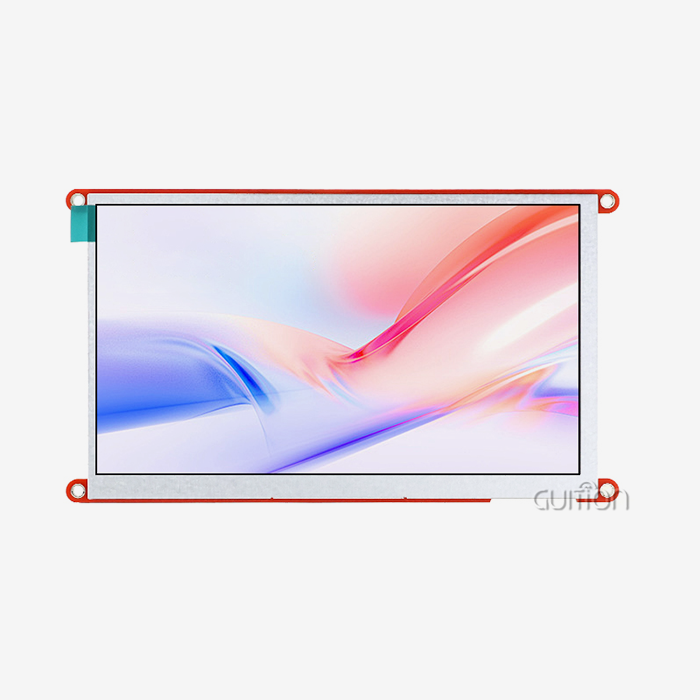
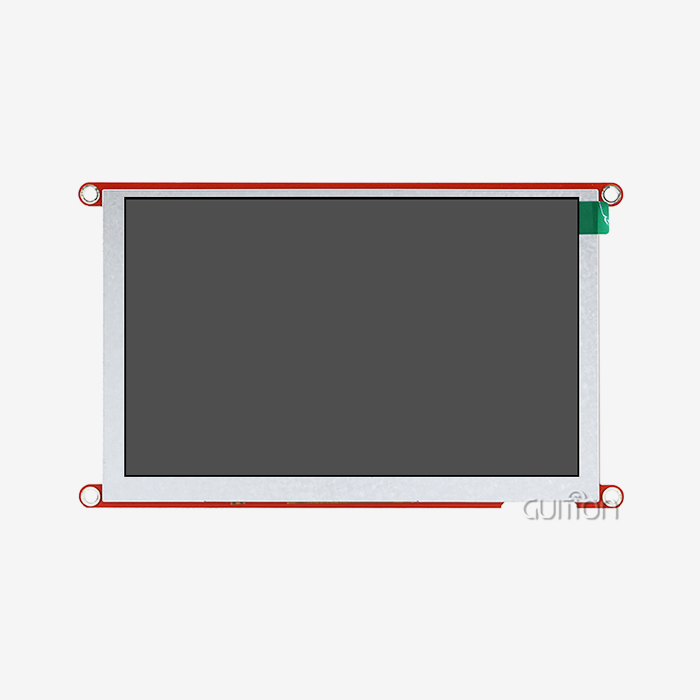
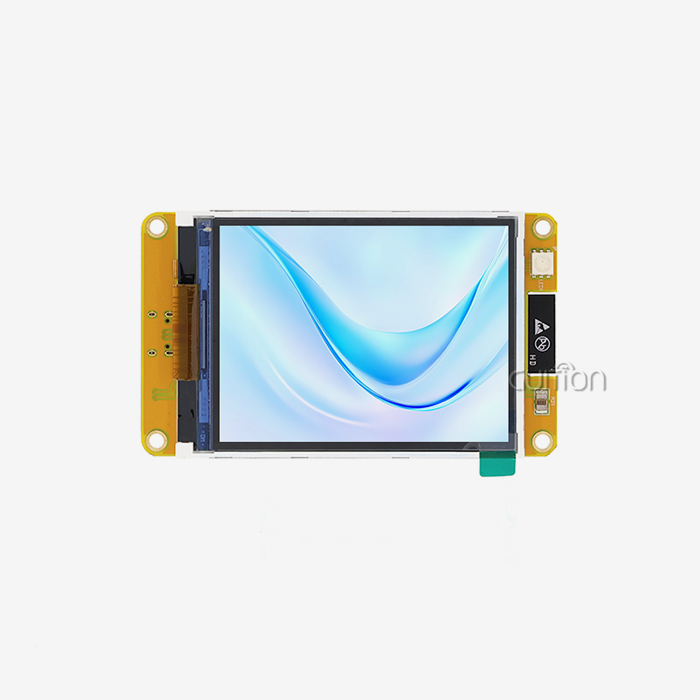
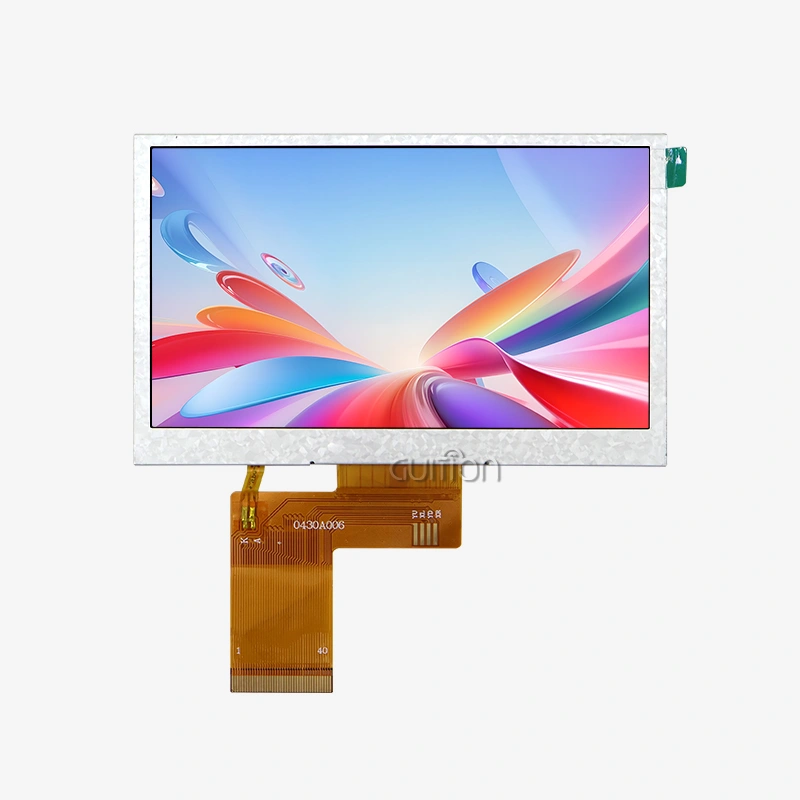
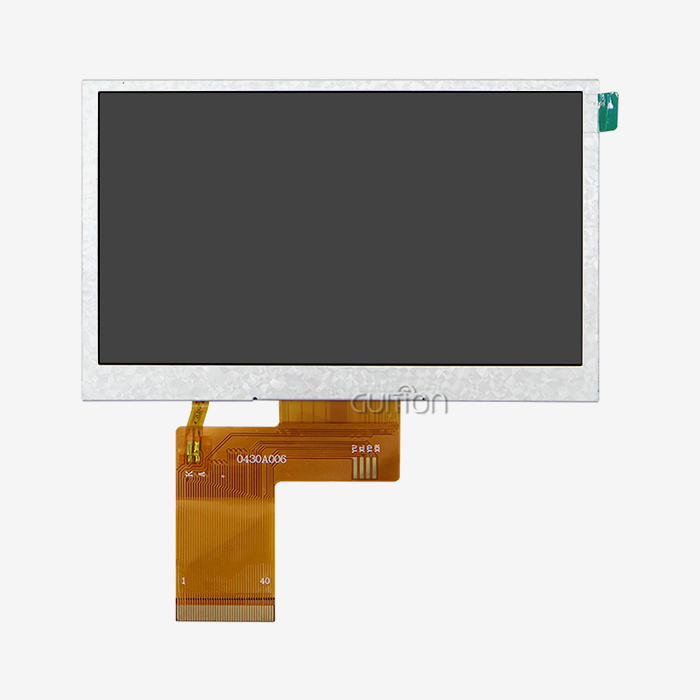
System developers have to check that the interfaces work with different screen sizes and that they meet certification requirements. With its 4.3-inch size, ILI6485 driver chip, and RGB interface that supports 480x272 resolution, the GUITION JC4827B043R is a great example of purpose-built industrial design. This setup provides 16.7 million colours with a 24-bit colour depth, making sure that complicated HMI applications have professional-grade visual clarity.
R&D managers give more weight to screens that have been shown to work reliably. The JC4827B043R's 10-LED backlight system makes it easy to see in a variety of lighting situations, and its small 3mm size makes it easy to fit into equipment designs that don't have a lot of room. Connecting to popular software tools is easier with the RGB interface. This makes integration easier and speeds up time-to-market.
Supplier Reliability and Support Infrastructure
In addition to technical requirements, buying teams must also look at the skills of suppliers. The specialised development environment at Guition, which includes the unique Guition UI design software, gets rid of the need for low-level code that usually makes development take longer. Embedded engineers can change how the platform works without having to deal with complicated firmware layers because it allows secondary development and comes with detailed instructions.
Multiple engineering tastes can be met by cross-platform compatibility with Arduino and ESP-IDF frameworks. Built-in WiFi and Bluetooth modules allow IoT connection without the need for extra hardware integration. The ability to remotely update software lowers the cost of after-sales service, which is an important factor to consider for goods that are used in different parts of the world. Technical leaders at startups really like this freedom because it lets them make small changes to the product over time without sending out field service workers.
Real-World Deployment: GUITION JC4827B043R in Action
The GUITION JC4827B043R is very flexible and can be used in a wide range of difficult situations. When controlling a 3D printer, the screen stays sensitive even when the warmth and vibrations that come with additive manufacturing are taken into account. The glove-compatible interface helps charge station owners because it lets techs do diagnostics and troubleshooting in cold weather without taking off their safety gear.
Manufacturers of medical and cosmetic tools use this Resistive touch screen monitor because they know it can handle being sterilised many times with harsh cleaning agents. The pressure-based triggering keeps users from entering incorrect information during processes, and the bright LED backlighting makes sure that important factors can be seen even in low-light situations. These validation points in the real world give engineering teams the trust they need to choose parts for mission-critical apps.
The main benefits that make this industrial-grade product stand out are:
- Better Protection Against Interference: The Resistive touch screen monitor mechanism naturally blocks electromagnetic noise from high-voltage equipment and radio frequency interference that is widespread in industrial settings. These screens don't have input jitter or ghost touches, so engineers working on industrial automation projects can put them next to motor controls and welding equipment without any problems.
- Wide Operating Temperature Range: It has been tested to work in temperatures ranging from -20°C to 70°C, so it can be used in warehouses that aren't warm, outdoor booths, and car dashboards where temperature changes are common. This standard directly handles the needs of system developers who work with energy management and agricultural automation.
- Universal Input Compatibility: With universal input compatibility, the screen reacts consistently to fingers, gloves, styluses, and any pointed object. This solves a problem that operators who have to wear PPE have been having for a long time. This makes it useful in healthcare settings where rubber or nitrile gloves are required and in shipping settings where fine-tip styluses are needed for accurate signature capture.
All of these benefits make engineering easier because engineers don't have to come up with workarounds for problems that sensitive screens often cause. The technical paperwork that comes with Guition products makes learning faster and speeds up the testing and proof processes. Serial communication is made easier by the USART-hmi display module design. This is very important for embedded engineers who work with microcontroller systems that don't have a lot of GPIO resources.
Maintenance, Troubleshooting, and Longevity of Resistive Touch Screens
Preventive Care Protocols
Addressing Common Technical Issues
The most common problem that needs to be fixed is calibration drift, especially in 4-wire setups that are subject to temperature cycling. The Guition platform has software-based recalibration tools that can be accessed through standard serial interfaces. This lets field techs fix errors without having to update any parts. Protective overlays can stretch the life of things that are used in high-wear areas, like business cooking tools, while keeping the touch sensitivity.
Zones that don't respond usually mean that the conducting layers are physically damaged or that there is contamination stuck between the gap dots. By looking closely through a magnifying glass, you can see tiny tears or buildups of trash. The modular design of industrial Resistive touch screen monitors lets you change individual parts instead of throwing away the whole system. This lowers the total cost of ownership for large-scale operations. System engineers should write down baseline activation force readings during commissioning, since rising resistance over time is a sign that something is about to break. The 5-wire design used in high-end models greatly increases the average time between failures, with controlled studies showing that this time often goes over 35 million activations.
Procurement Insights: How to Buy Resistive Touch Screen Monitors for Industrial Use
Cost-Effective Sourcing Strategies
The way the market works now encourages deals to buy in bulk that take advantage of savings of scale. Industrial-grade Resistive touch screen monitor panels that meet certification requirements usually cost more than consumer-grade options. However, when you calculate the total cost of ownership, you should choose strong parts that don't break down often and don't need as many guarantee claims. Resistive touch screen monitor makers who offer flexible minimum order numbers and help with rapid prototyping are good partners for people who are making smart devices. Guition's business plan can handle both large production runs and smaller amounts for testing the product.
Quality Assurance and Certification Validation
Check that sellers follow RoHS and REACH rules for ITO coatings and base materials, especially for medical devices that are closely watched by regulators. UL 60950 safety approval confirms electrical isolation standards, which are very important for technology that is plugged into the wall. Ask for test results that confirm the working temperature ranges, since rapid lifecycle testing shows the reliability gaps when thermal stress is applied. The Guition JC4827B043R comes with a lot of technical information, including electrical features, mechanical drawings, and sample code for integrating it with popular microcontroller systems. Support for multiple languages and compatibility with UTF encoding meet the needs of global operation without the need for extra localisation development.
Conclusion
For engineers who value dependability, weather resistance, and input compatibility, Resistive touch screen monitors are the best option. The pressure-based sensing system gets rid of problems caused by gloves, dirt, and electromagnetic interference. This directly fixes problems in medical equipment, hard environments, and industrial automation. The GUITION JC4827B043R is a great example of purpose-built design because it can reproduce 16.7 million colours, work in a wide range of temperatures, and be compactly integrated with development tools that speed up time-to-market. Procurement teams are looking at different display options. Resistive touch screen monitor technology is durable and cost-effective, which gives it real benefits in terms of total cost of ownership and operational uptime.
FAQ
Can resistive displays function when covered with water or oil?
To record input, Resistive touchscreen monitor technology needs an actual deflection pressure of more than 20 grams. If there are water drops, oil films, or dust on the surface, they don't have enough force to close the electrical circuit, which stops fake activations. Because of this, Resistive touch screen monitor panels are better than capacitive ones in industrial settings that get wet or outdoor sites where condensation builds up. If an IP65 or better ingress protection grade is given, the sealed construction will still work even if it gets wet for a short time.
How do 5-wire and 4-wire resistive architectures differ in longevity?
All positional tracking is done on the bottom layer of durable glass in the 5-wire design. The top layer, which is bendable, is only used as a voltage probe. Scratches or wear on the top surface don't affect accuracy, so they can be used for 35 times longer than with 4-wire designs. In 4-wire systems, both layers help figure out the coordinates, which makes the top sheet lose its regularity, which leads to drift and failure. In industrial settings that need long-lasting performance, a 5-wire design is always chosen, even though it costs a little more at first.
Does resistive technology support multi-touch gestures?
Because they depend on certain pressure points to make electrical links, standard Resistive touch screen monitor panels can handle single-touch input. There are matrix resistance versions, but they are still too expensive for most uses. Engineers who need multi-touch features like pinch-to-zoom should look into projected capacitive technology. However, single-touch Resistive touchscreen monitor performance is still the best for reliably pressing buttons, toggling them, and taking signatures in tough conditions.
Partner with Guition for Your Industrial Display Solutions
For tough industrial settings, Guition offers tested Resistive touch screen monitor technology. Our JC4827B043R model meets the most important needs of embedded engineers, system builders, and product managers who need reliable HMI solutions quickly. The exclusive Guition UI software platform gets rid of the need for complicated coding, and the built-in wireless connection and remote update features lower long-term running costs. As specialists in Resistive touch screen monitors, we offer full expert support, a wide range of customisation choices, and reliable product availability for all of our displays, from 1.28 inches to 21.5 inches. Email our engineering team at david@guition.com to talk about the details of your project and get personalised suggestions that will help you speed up the product development process while still meeting strict reliability standards.
References
1. Walker, G. (2019). Touch Screen Technology for Industrial Applications: Design Principles and Implementation Strategies. Industrial Electronics Press.
2. Martinez, R. & Chen, L. (2020). "Comparative Analysis of Touch Interface Technologies in Harsh Environments," Journal of Industrial Automation Systems, 34(2), 145-167.
3. Thompson, K. (2021). Human-Machine Interface Engineering: Practical Solutions for Embedded Systems. Technical Publishing Group.
4. Industrial Display Manufacturers Association. (2022). Standards and Best Practices for Resistive Touch Panel Integration. IDMA Technical Report Series.
5. Patterson, S. (2020). "Lifecycle Cost Analysis of Touch Display Technologies in Manufacturing Equipment," International Journal of Production Engineering, 28(4), 312-329.
6. Reynolds, D. & Foster, M. (2021). Embedded Display Systems: From Specification to Deployment. Engineering Solutions Press.
Learn about our latest products and discounts through SMS or email