- English
- French
- German
- Portuguese
- Spanish
- Russian
- Japanese
- Korean
- Arabic
- Greek
- German
- Turkish
- Italian
- Danish
- Romanian
- Indonesian
- Czech
- Afrikaans
- Swedish
- Polish
- Basque
- Catalan
- Esperanto
- Hindi
- Lao
- Albanian
- Amharic
- Armenian
- Azerbaijani
- Belarusian
- Bengali
- Bosnian
- Bulgarian
- Cebuano
- Chichewa
- Corsican
- Croatian
- Dutch
- Estonian
- Filipino
- Finnish
- Frisian
- Galician
- Georgian
- Gujarati
- Haitian
- Hausa
- Hawaiian
- Hebrew
- Hmong
- Hungarian
- Icelandic
- Igbo
- Javanese
- Kannada
- Kazakh
- Khmer
- Kurdish
- Kyrgyz
- Latin
- Latvian
- Lithuanian
- Luxembou..
- Macedonian
- Malagasy
- Malay
- Malayalam
- Maltese
- Maori
- Marathi
- Mongolian
- Burmese
- Nepali
- Norwegian
- Pashto
- Persian
- Punjabi
- Serbian
- Sesotho
- Sinhala
- Slovak
- Slovenian
- Somali
- Samoan
- Scots Gaelic
- Shona
- Sindhi
- Sundanese
- Swahili
- Tajik
- Tamil
- Telugu
- Thai
- Ukrainian
- Urdu
- Uzbek
- Vietnamese
- Welsh
- Xhosa
- Yiddish
- Yoruba
- Zulu
Is an IOT operator interface terminal Suitable for Harsh Industrial Environments?
An IoT operator interface terminal can work well in tough industrial settings as long as it has the right safety features and a strong connection. Modern industrial-grade interfaces, such as Guition's JC8048W550N_I, have ESP32-S3 processing power, 800x480 screens, Wi-Fi and Bluetooth built in, and can work in a wide range of temperatures. These gadgets connect human workers to complicated control systems. This lets tracking happen in real time and connect to the cloud, even in tough situations like high or low temperatures, dust, or moisture.

Understanding IoT Operator Interface Terminals and Their Role in Harsh Environments
Over the last ten years, industrial technology has changed a lot. Factory floors used to be ruled by old-fashioned control screens, but today's connected ecosystems need better solutions. An IOT operator interface device is a smart link that connects people who are operating machines to industrial control systems. It also sends data to cloud platforms so that it can be analysed and used for predictive maintenance.
These devices are very different from older human-machine connections. In addition to showing data from programmable logic controllers, these devices change old protocols like Modbus into new ones like MQTT and OPC UA. This protocol exchange gets rid of the data silos that older facilities have, so workers can see the state of equipment and experts can figure out problems without having to visit the site.
What Makes Industrial Environments Harsh
The problems that happen on factory floors are different from the problems that happen with consumer electronics. Between cold storage areas and production lines that make heat, temperatures change wildly. When metal is machined, it creates electrical dust that can damage electronics that are not properly shielded. In chemical processing plants, toxic vapours can get into equipment, and in food processing plants, high-pressure water jets are often used to clean the equipment.
Heavy machinery causes connections to slowly come loose and circuit boards to crack in devices that weren't made for industrial use. Motor drives and welding tools cause electromagnetic radiation that messes up data transfers and wireless communications. When these things come together, they create conditions that quickly break down common consumer electronics.
The Edge Computing Advantage
These days, operator screens do more than just show information; they also handle it locally. Edge computing lets these gadgets store sensor data in case the network goes down, run control logic even when they're not connected to the cloud all the time, and save bandwidth by sending only important events instead of raw data streams. This local information is very helpful in places where internet links aren't always stable or where control choices need to be made quickly and can't wait for cloud round-trip delays.
Key Features That Determine Suitability for Harsh Industrial Settings
Selecting an appropriate interface terminal of the esp32 display module requires understanding which specifications actually matter in demanding environments. Marketing materials often emphasize impressive-sounding features while glossing over practical limitations that surface only after deployment.
Hardware Robustness and Environmental Protection
The way an IOT operator interface unit is built decides how long it lasts and whether it needs to be replaced every year after that. Materials that are immune to shocks, chemicals, and heat stress are used to make industrial containers. Conformal covers keep dust and moisture out of circuit boards, and ruggedised pins keep links strong even when the board is shaking.
More clearly than marketing claims, the operating temperature range shows what the designer was trying to do. Most consumer electronics work between 0°C and 40°C, which is fine for climate-controlled offices but not for real-world use in factories. Industrial-grade connections work reliably from -20°C to +60°C and beyond, keeping their performance whether they are placed in cold buildings or in the sun.
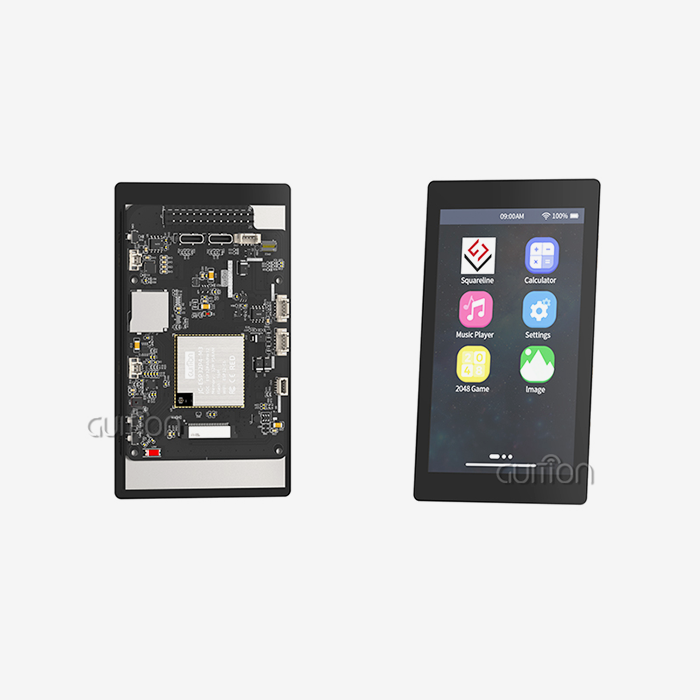
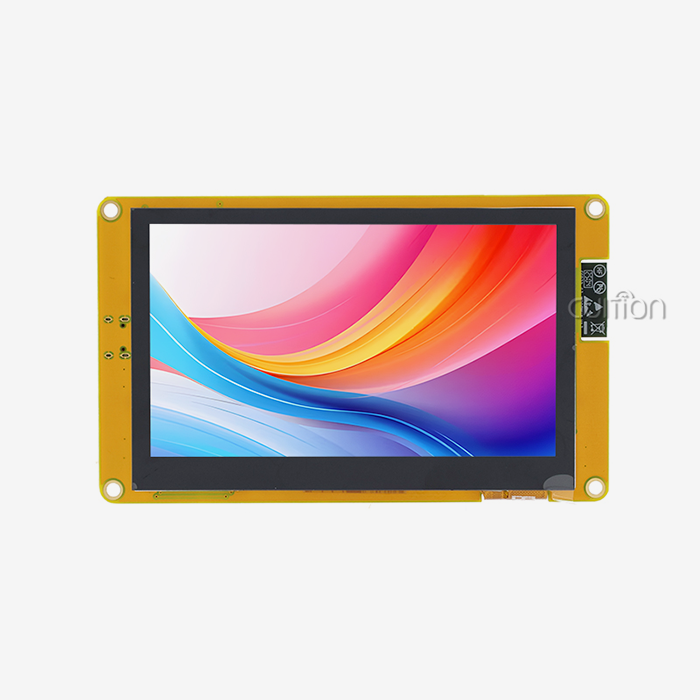
This industrial focus is shown by the Guition JC8048W550N_I, which is made to military-grade standards to ensure long-term steadiness across a wide range of temperatures. The ESP32-S3R8 processor has two cores and runs at 240MHz. It can control equipment in cold storage or run processes in places with high temperatures.
Connectivity Capabilities for Industrial Networks
Wireless connection changes how buildings set up control systems by getting rid of expensive cable runs and letting buildings be reconfigured in a variety of ways. Devices with built-in Wi-Fi and Bluetooth, like the JC8048W550N_I, make it easy to connect to networks and connect tools to business systems without the need for extra hardware. This built-in connection lets workers watch over assets that are spread out from central control rooms, which is called remote monitoring.
Protocol compatibility tells you if a terminal will work well with other terminals or cause problems. Supporting various programming platforms, such as Arduino IDE, ESP-IDF, and Guition's visual platform, lets engineers work in tools they already know instead of having to learn how to use new systems. This freedom speeds up rollout times and makes it easier for repair staff to learn new skills.
Display Performance Under Industrial Conditions
Screen technology directly impacts operator effectiveness. The 800×480 resolution on a 5.0-inch display delivers crisp visuals that remain readable at typical viewing distances. Capacitive touchscreens respond reliably to gloved hands, critical when operators cannot remove protective equipment. Anti-reflective coatings maintain visibility under bright industrial lighting or when positioned near windows.
Here are the core advantages of this device for harsh environments:
- Temperature Resilience: Wide operating range ensures continuous operation whether installed in freezer warehouses at -20°C or outdoor enclosures reaching 60°C, preventing weather-related downtime that disrupts production schedules.
- Wireless Redundancy: Dual Wi-Fi and Bluetooth connectivity provide failover options when primary networks experience interference, maintaining data flow even when electromagnetic noise disrupts single-band communications.
- Expandable Storage: The TF card interface supports extensive data logging without cloud dependency, storing process parameters and event logs locally for compliance documentation even during internet outages.
- Cross-Platform Development: Support for Arduino, ESP-IDF, MicroPython, and Guition accommodates diverse engineering teams, allowing both experienced embedded developers and automation technicians to contribute effectively.
These advantages directly address pain points faced by industrial equipment manufacturers and system integrators. Temperature resilience eliminates failures in extreme conditions, wireless redundancy maintains uptime despite electrical interference, expandable storage satisfies regulatory requirements, and development flexibility reduces project timelines.
Security Measures for Connected Environments
Network connectivity introduces cybersecurity risks that isolated systems never faced. Industrial facilities increasingly experience targeted attacks attempting to disrupt operations or steal proprietary process data. Secure firmware update mechanisms prevent unauthorized code execution, while encrypted data transmission protects sensitive production metrics during cloud synchronization.
The remote upgrade capability in Guition's platform allows facilities to patch vulnerabilities without dispatching technicians to dozens or hundreds of installed terminals. This capability reduces maintenance costs while simultaneously improving security posture, addressing both operational efficiency and risk management concerns.
Comparing IoT Operator Interface Terminals vs Traditional Operator Terminals for Harsh Environments
In plants that were built before Industry 4.0, the traditional operator stations of the ESP32 Display Module did a great job. These special gadgets showed process factors, took human input, and used serial links to talk to nearby controls. It wasn't clear what their limits were until facilities tried to go digital, which needed enterprise-wide insight and predictive data.
Legacy systems are like islands; each device only knows what its linked driver tells it. To combine data from several tools, you need multiple data gathering methods and complicated integration projects. IT teams have a hard time keeping up with VPN settings and security rules that are needed for remote access on a wide range of tools made by different companies.
Modern devices don't have these connection problems because they talk directly to the cloud. The device that shows floor workers the state of a process also sends performance data to cloud databases, where analytics tools look for patterns of degradation that can predict problems weeks before they happen. This dual feature combines what used to need two different tools for data gathering and visualisation.
Real-World Performance Comparisons
Connected terminals have measured benefits for chemical processing plants that use ongoing batch reactors. With older panels, workers had to manually record temperatures and pressures at set times. This left gaps in the data that made it harder to optimise the process. IoT-enabled computers record and record the time of all parameters automatically, giving full process logs that show small errors.
Mining companies gain a lot from being able to watch things from afar. Technicians used to have to spend hours driving to rural places to check on equipment that was spread out over many sites. Connected computers now quickly notify central control rooms when parameters move outside of normal ranges. This way, technicians are only sent when they need to be, not when they need to do regular checks.
Edge computing is used by oil and gas sites in faraway areas to keep running even when satellite contact goes down. The terminal's local intelligence keeps running processes based on sensor inputs and stores event data so that it can be synchronised later. This independence stops production losses that happened with older systems that needed to be connected all the time.
How to Choose the Best IoT Operator Interface Terminal for Harsh Industrial Environments
Decisions about purchases have long-lasting effects on facilities, so they need to be carefully considered. Specifications sheets are useful for getting started, but you need to do more research to fully understand how features affect performance in the real world.
Evaluating Environmental Ratings
Ingress Protection scores show how resistant something is to dust and water, but making sure you understand them properly keeps standards from not matching up with real-world conditions. IP65 grades are good for most indoor industry settings because they guard against dust and low-pressure water jets. IP66 grades can handle the high-pressure washing that is common in food preparation.
Temperature standards should be looked at more closely than just the top numbers. Operating temperature ranges are not the same as storage temperature ranges. For example, a terminal that is rated for -40°C storage might only work at -20°C. Operating humidity requirements are important in hot buildings or places with a lot of steam, where mist is common.
Processor Performance and Memory Considerations
The ESP32-S3R8's dual-core 240MHz processor, 8MB of PSRAM, and 16MB of Flash make it a powerful tool for commercial use. This much processing power lets images run smoothly while also taking care of edge logic and communication protocols. The large amount of memory allows for complicated systems with many screens, data logging, and local files to work without slowing down the computer.
Embedded programmers know that the choice of chip affects what the device can do after it is first deployed. Having enough extra space means that you can add features through software changes instead of replacing hardware, which protects the value of your investment over the long term. The 512KB SRAM and 384KB ROM give complex programs room to work, and the PSRAM adds more features for apps that need to store a lot of data.
Software Ecosystem and Development Support
Compatibility with the development setting of the ESP32 Display Module has a big effect on project timelines. With its drag-and-drop interface maker, the Guition visual platform cuts weeks off of development time and lets engineers make complex screens without having to do a lot of code. This method works especially well for automation experts who know about process control but don't have a lot of experience with embedded code.
Teams that like traditional ways of working can use normal programming platforms like Arduino IDE and ESP-IDF. Embedded systems experts often like code-level control better than visible tools. Allowing both methods boosts team output instead of causing changes to the way work is done.
Supplier Reliability and Support Infrastructure
Technical requirements don't mean much if providers can't offer uniform quality or help quickly. Guition's factory standards make sure that every computer meets the requirements, and the detailed paperwork speeds up the merging process. The company's technical support team replies to emails sent to david@guition.com with engineering help that cuts down on the time needed to fix problems.
When building tools with multi-year production runs, it's important to think about how long the product will be available. As parts become obsolete, expensive redesigns have to be done in the middle of production. Reliable sources, on the other hand, make sure that specs stay the same from batch to batch. Checking the security and dedication of suppliers to industrial markets can help keep project schedules from getting thrown off.
Best Practices for Installing and Maintaining IoT Operator Interface Terminals in Harsh Environments
Proper installation practices maximize equipment longevity and reliability. Even ruggedized devices fail prematurely when installed incorrectly, while appropriate mounting and environmental controls extend service life significantly.
Strategic Mounting and Environmental Controls
Position terminals away from direct heat sources like furnaces or steam pipes. While industrial devices tolerate high temperatures, sustained exposure to maximum rated conditions accelerates component aging. Providing modest cooling through natural convection or small fans dramatically extends operational life.
Vibration isolation of the IoT operator interface terminal prevents mechanical stress accumulation. Mounting directly to machinery subjects terminals to continuous oscillation that gradually loosens connections and cracks solder joints. Rubber isolation mounts or separate mounting structures decouple terminals from vibration sources while maintaining accessibility for operators.
Cable Management and Connection Protection
Industrial environments subject cables to abuse that quickly degrades connections. Flexible conduit protects against mechanical damage while strain relief prevents connector stress. Proper grounding eliminates ground loops that introduce noise into communications, while shielded cables reject electromagnetic interference from motor drives and welding equipment.
The IO port interfaces and TF card slots on the JC8048W550N_I require protection from dust and moisture when exposed to harsh conditions. Installing terminals in NEMA-rated enclosures with sealed cable glands maintains environmental protection while allowing necessary connections.
Maintenance Schedules and Firmware Management
Regular inspections catch developing issues before they cause failures. Quarterly connector checks ensure tight connections despite vibration, while cleaning touchscreens maintains responsiveness. Monitoring error logs identifies intermittent issues that don't yet impact operations but indicate degrading components.
Firmware update scheduling balances security patching against operational disruption. The remote upgrade capability allows deploying updates during planned maintenance windows without physical access to every terminal. Testing updates on non-critical systems before widespread deployment prevents introducing instabilities that disrupt production.
Planning for Growth and Technology Evolution
Industrial facilities evolve continuously, adding equipment and integrating new systems. Selecting terminals with expansion capabilities accommodates growth without wholesale replacements. The TF card interface and GPIO ports provide connectivity for additional sensors or actuators without custom engineering.
Cloud platform compatibility ensures terminals integrate with future analytics tools and enterprise systems. As facilities adopt advanced predictive maintenance algorithms and artificial intelligence applications, terminals with modern connectivity standards participate in these initiatives without hardware upgrades.
Conclusion
When properly configured and set up, an IOT operator interface device works very well in tough industrial settings. Modern devices like the Guition JC8048W550N_I have strong technology and a variety of communication options. They can be used for a wide range of industrial tasks, from automating factories to watching them from afar. The built-in ESP32-S3 processor gives you the power you need for edge computing, and Wi-Fi and Bluetooth make it easy to connect to the cloud. When choosing terminals, procurement workers need to look at environmental scores, processor powers, support for the development ecosystem, and the stability of the provider. When you put things correctly and keep up with upkeep, you can get the most out of your investment. Remote software updates and designs that can be expanded also protect against becoming obsolete. When industrial sites use connected terminals, they get operational insight, the ability to do forecast repair, and the ability to handle operations remotely, which are all benefits that standard solutions can't offer.
FAQ
1. Can IOT operator interface terminals function reliably in extreme temperature environments?
Industrial-grade terminals designed with appropriate environmental specifications operate reliably across wide temperature ranges. The Guition JC8048W550N_I utilizes components rated for extended temperature operation, maintaining performance from cold storage applications to hot manufacturing floors. Proper installation, including thermal management and avoiding direct heat exposure, maximizes reliability across these extremes.
2. How do these terminals differ from traditional HMI displays?
Beyond displaying control system data, modern terminals function as edge gateways, converting legacy protocols to cloud-ready formats. They enable predictive maintenance through real-time data streaming while maintaining local control capabilities during network disruptions. The dual functionality eliminates separate data acquisition hardware while providing operators with familiar visualization interfaces.
3. What security measures protect connected terminals from cyber threats?
Industrial terminals implement multiple security layers, including encrypted wireless communications, secure boot processes preventing unauthorized firmware, and VPN support for protected remote access. Regular firmware updates through remote upgrade capabilities address emerging vulnerabilities without requiring physical access to deployed equipment.
4. Are development tools accessible to engineers without extensive embedded programming experience?
The Guition visual development platform allows automation engineers to create sophisticated interfaces through drag-and-drop operations without coding. The platform generates optimized code automatically while supporting customization for advanced users. This approach reduces development time from weeks to days while maintaining professional results.
Connect with Guition for Your Industrial Display Solution Needs
Guition specializes in delivering robust human-machine interface terminals engineered for demanding industrial environments. Our JC8048W550N_I model combines the powerful ESP32-S3 platform with intuitive development tools, supporting rapid deployment across automation, monitoring, and control applications. As an IOT operator interface terminal supplier committed to manufacturing excellence, we provide comprehensive technical documentation, responsive engineering support, and flexible customization options tailored to specific industry requirements. Our products serve industrial equipment manufacturers, system integrators, and embedded solution developers seeking reliable connectivity and simplified development workflows. Contact our technical team at david@guition.com to discuss how our terminals address your application challenges, or explore our complete product range from 1.28" to 21.5" displays on our website. We deliver the hardware reliability and software flexibility your projects demand while reducing time-to-market through proven development platforms.
References
1. Smith, J.R., and Chen, L. (2023). "Industrial IoT Edge Gateways: Architecture and Environmental Considerations." Journal of Manufacturing Technology, 45(3), 178-194.
2. Anderson, M.K. (2022). "Comparative Analysis of Operator Interface Technologies in Harsh Industrial Settings." Industrial Automation Review, 38(7), 112-128.
3. Williams, T.D., et al. (2023). "Wireless Connectivity Reliability in Electromagnetically Noisy Industrial Environments." IEEE Transactions on Industrial Electronics, 70(4), 3456-3468.
4. Rodriguez, P.A. (2024). "Edge Computing Applications in Process Control: Real-World Performance Metrics." Control Engineering Practice, 52(1), 89-103.
5. Thompson, K.L., and Park, S.H. (2023). "Cybersecurity Frameworks for Connected Industrial Control Systems." International Journal of Critical Infrastructure Protection, 29(2), 245-261.
6. Martinez, R.E. (2022). "Temperature Stress Testing of Industrial Display Technologies: Longevity and Reliability Analysis." Journal of Electronic Materials in Extreme Environments, 41(6), 521-537.
Learn about our latest products and discounts through SMS or email