- English
- French
- German
- Portuguese
- Spanish
- Russian
- Japanese
- Korean
- Arabic
- Greek
- German
- Turkish
- Italian
- Danish
- Romanian
- Indonesian
- Czech
- Afrikaans
- Swedish
- Polish
- Basque
- Catalan
- Esperanto
- Hindi
- Lao
- Albanian
- Amharic
- Armenian
- Azerbaijani
- Belarusian
- Bengali
- Bosnian
- Bulgarian
- Cebuano
- Chichewa
- Corsican
- Croatian
- Dutch
- Estonian
- Filipino
- Finnish
- Frisian
- Galician
- Georgian
- Gujarati
- Haitian
- Hausa
- Hawaiian
- Hebrew
- Hmong
- Hungarian
- Icelandic
- Igbo
- Javanese
- Kannada
- Kazakh
- Khmer
- Kurdish
- Kyrgyz
- Latin
- Latvian
- Lithuanian
- Luxembou..
- Macedonian
- Malagasy
- Malay
- Malayalam
- Maltese
- Maori
- Marathi
- Mongolian
- Burmese
- Nepali
- Norwegian
- Pashto
- Persian
- Punjabi
- Serbian
- Sesotho
- Sinhala
- Slovak
- Slovenian
- Somali
- Samoan
- Scots Gaelic
- Shona
- Sindhi
- Sundanese
- Swahili
- Tajik
- Tamil
- Telugu
- Thai
- Ukrainian
- Urdu
- Uzbek
- Vietnamese
- Welsh
- Xhosa
- Yiddish
- Yoruba
- Zulu
Why Choose Round lcd display arduino Modules?
Round LCD display Arduino modules are a game-changer in embedded system design because they strike the ideal balance between good looks and great usability. These round displays make up for important lack of room problems while providing better user experiences for current IoT devices, wearable tech, and industrial uses. These modules are the best choice for developing next-generation products because they work with Arduino and have advanced driver technologies like the GC9A01. This makes them ideal for fast prototyping and reliable application across a wide range of industries.
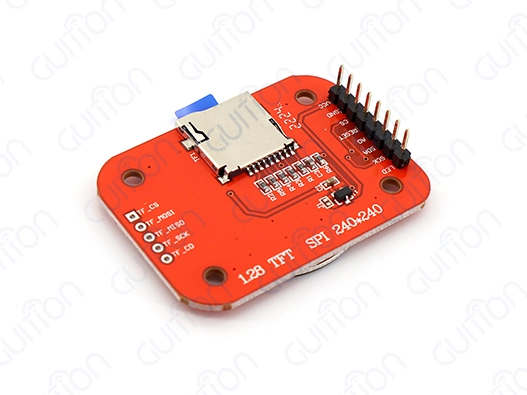
Understanding Round LCD Display Arduino Modules: Key Features and Applications
The development of integrated displays has hit a turning point where round lcd display Arduino technology meets specific market needs that square or rectangular screens can't. These special round displays work perfectly with Arduino systems and have special benefits in apps with limited room.
Technical Specifications and Core Features
The GUITION JC2424S012N_I and other modern round LCD panels are very technically advanced. This 1.28-inch screen has a clear 240x240 resolution thanks to its GC9A01 driver IC and a 4-wire SPI connection scheme. The small, round shape gets a high pixel density with very little board space, which makes it perfect for smart products and wearable tech. The GC9A01 driver IC is a big step forward in the technology of display controllers. This chip does a good job of coordinate mapping, changing rectangular frame buffer data into circle pixel arrangements without hurting the quality of the image. By using 3.3V logic levels, these modules keep their power use low while still showing colours clearly and giving you a viewing angle of more than 160 degrees.
Industrial Applications and Use Cases
Round display units work great in situations where regular screens don't work well. Round buttons and gauge readings look good on industrial control panels because they naturally fit into circular interfaces. These screens are used in smart home devices like room controls, thermostats, and lighting systems because their ergonomic form makes them easier to use. More and more, medical device makers are using circular screens on movable testing tools and systems that keep an eye on patients. The circular interface is easy to use and doesn't need as much training. It also gives clear visible input in important healthcare settings. These units are used in automotive uses to make unique dashboard displays, aftermarket gauge clusters, and car information systems that need to make the best use of space.
Another important area of application is wearable technology. The natural circular interface that looks like standard watch faces is good for fitness trackers, smartwatch prototypes, and health-tracking gadgets. Designers can make sleek, modern products with this form factor because it doesn't sacrifice usefulness or battery life.
How to Integrate and Program Round LCD Display Arduino Modules
When connecting circle display modules to Arduino platforms, you need to pay close attention to how the wires are set up and the software tools that are used. To get the best results, the method uses both hardware connections and software applications.
Hardware Integration and Wiring
Setting up SPI transmission between the display and microprocessor is part of connecting a round LCD display Arduino module. VCC (3.3V), GND, CS (Chip Select), DC (Data/Command), RST (Reset), and CLK/MOSI are the most common wires used for SPI data flow. When connecting 5V Arduino boards to 3.3V display modules, level-changing circuits are needed to keep sensitive parts from getting damaged. Because it has a standard pinout and lots of literature, the GUITION JC2424S012N_I module makes merging easier. Depending on the needs of the project, engineers can quickly make links using DuPont wires or custom PCB patterns. Stable operation depends on a well-designed power supply. This is especially important for battery-powered apps, where power economy directly affects how long the device runs.
Software Libraries and Programming
Many Arduino libraries can work with round LCD panels. TFT_eSPI and LVGL are two of the most popular picks among developers. These tools are necessary for setting up the display, rendering images, and managing the coordinate system. Because the actual display area is different from the rectangular frame buffer, the circular coordinate system needs extra care. Implementing sample code usually starts with including libraries and setting up pins; then there are steps for initialising the display. There are graphics tools that plot pixels, draw lines, and show words inside the circle. Sprite files and DMA transfers are used by more advanced programs to make graphics run smoothly and user interfaces that respond quickly.
Development Tools and Resources
GUITION offers a wide range of development tools, such as sample code, detailed documents, and the unique Guition UI development tool. The drag-and-drop feature and real-time preview in this software setting speed up the interface creation process. Cross-platform testing tools make it easy to fix problems quickly during the programming process. The development environment includes more than just basic programming. It also has advanced features like the ability to change firmware remotely and support for multiple languages. These features are necessary for business apps that need to be maintained over time and can be used all over the world.
Comparing Round LCD Displays with Other Display Technologies for Arduino
To understand the benefits of round LCD display Arduino modules, you need to look at them next to other display technologies on the market for embedded systems.
Round LCD vs. OLED Technology
OLED screens have better colour ratios and faster response times compared to LCD technology. On the other hand, round LCD panels have a number of useful benefits, such as a longer useful life and better sight outside. OLED screens can have problems with burn-in and blue pixels that don't work as well after a while, so LCD technology is better for industry uses that need to work all the time. The ways that different systems use power are very different. OLED screens use less power when they show dark material, but LCD modules always use the same amount of power, no matter what they show. This regular power use makes managing batteries easier in handheld apps and lets you get more accurate runtime estimates.
Performance Analysis and Cost Considerations
Usually, round LCD modules are less expensive than similar OLED screens, even though they have the same colour accuracy and clarity. The fact that LCD technology has been around for a while now means that prices are stable and supply lines are solid, which are important for making commercial products and planning for mass production. Different types of displays can have different levels of resolution. For example, high-end round LCD panels can reach pixel densities that are similar to those found on high-end smartphone screens. The 240x240 resolution that is typical on 1.28-inch modules gives enough clarity for most embedded applications while still requiring an acceptable amount of bandwidth for data transfer.
Compatibility and Ecosystem Support
Due to a lot of library support and community literature, LCD-based screens are still the most compatible with the Arduino environment. Round LCD modules can use this already-established environment and add their own special features to the circular interface. OLED devices often need specific tools, and they might not work well with all versions of Arduino. Choosing the right driver integrated circuit has a big effect on speed and compatibility. The GC9A01 driver in GUITION modules works reliably in a wide range of temperatures that are common in industrial settings and is very compatible with Arduino thanks to well-documented command sets.
Procurement Considerations: Buying Round LCD Display Arduino Modules for B2B
When a business buys round LCD display Arduino modules, they need to carefully look at the supplier's skills, technical details, and promises of long-term support.
Supplier Selection and Quality Assurance
Suppliers with a good reputation show their knowledge by providing detailed technical documents, quick customer service, and a history of success with embedded display solutions. The way GUITION uses technology and its focus on customer service are great examples of these traits. International standards should be followed, and strict testing methods should be part of quality assurance processes. Manufacturing skills have a big effect on the products that are available and the customising choices that are available. Suppliers with research, development, and production sites that are all in one place can give better technical help and respond more quickly to special requests. This vertical integration works really well for large-scale deployments and OEM partnerships.
Pricing Strategies and Volume Considerations
The cost of a round LCD panel depends on its specs, the amount ordered, and the supplier's reputation. When buyers buy in bulk, they can often save a lot of money, but they have to weigh the price benefits against the costs of keeping goods. Long-term supply deals can keep prices stable and make sure that products are always available. The prices of technical help should be added to the total cost of ownership. Suppliers who give detailed documentation, sample code, and engineering help cut down on the costs of internal development and speed up the time it takes to get new goods on the market.
Customization and OEM Partnerships
A lot of providers offer customisation services, such as changed pinouts, unique firmware, and mechanical designs that are made just for you. People who make goods that need to have specific functions or shapes find these services useful. OEM partnerships can offer extra benefits, such as the chance to co-market and get faster expert help. When working with providers on unique solutions, intellectual property issues become important to think about. Clear agreements about who owns the design and who has the right to use it protect both parties and make it possible for them to work together to make new goods.
Why Round LCD Display Arduino Modules Are the Preferred Choice for Your Next Project
Because they have so many great benefits, round LCD display Arduino modules are the best choice for current embedded system uses in many fields.
Design Flexibility and Aesthetic Appeal
It's possible to make products with circular panels that can't be done with regular screens. The natural ergonomic draw of round screens makes the user experience better and gives you a unique way to brand your business visually. Consumers today expect more complex user experiences in electronics, which makes circular screens useful differentiators in markets with lots of competition. When electronics are made smaller, space economy is very important. Round displays make the most of the useful screen space inside their circular cases by getting rid of the empty corners that come with rectangle displays. This efficiency is especially useful in small workplace controls and gadgets that you wear, where every millimetre counts.
Technical Performance and Reliability
Modern round LCD modules use advanced driver technologies that make them work very well. They have fast update rates, wide viewing angles, and stable operation across a wide range of industrial temperatures. The GC9A01 driver IC is a good example of these skills because it has a lot of features and has been used reliably in tough situations. Power control lets movable devices use batteries for longer periods of time. Integrated lighting control and sleep modes lower power use when not in use while still allowing quick wake-up when the user touches the screen.
Future-Proofing and Scalability
Investing in round LCD technology makes it possible to make bigger products in the future. As the community of libraries and development tools that work together grows, support will continue and features will be added. Support for multiple languages and UTF-8 encoding makes it possible to distribute products around the world without having to make major changes to the software. Remote update features built into advanced modules let the product keep getting better, and more features are added throughout its lifecycle. The ability to do this lowers the cost of upkeep and opens up ways to make money by adding new features and improving software.
Conclusion
The development of embedded interface design is represented by round LCD display Arduino modules, which have benefits that square or rectangular displays cannot match. Because they look good, work well, and are supported by a development environment, these round screens are perfect for a wide range of modern uses, from wearable tech to industrial control systems. GUITION's all-around approach to HMI solutions, backed by cutting-edge development tools and dependable hardware, makes it possible for products to be successfully made and put on the market in many different industries.
FAQ
Q: What voltage levels are required for round LCD Arduino modules?
A: When linking to 5V Arduino boards like the Uno, most round LCD display Arduino modules need to be level-shifted because they work on 3.3V logic levels. If you connect 5V signals directly to 3.3V display modules, you could damage the driver IC and display parts in a way that can't be fixed.
Q: How does the coordinate system work with circular displays?
A: When the driver IC looks at the screen, it sees a square grid with no images in the corners. Coordinate mapping is taken care of automatically by software libraries, but writers must add circular boundary checking to make sure that graphic elements don't go outside the viewable circle.
Q: What causes white screen issues during initialisation?
A: When you get a white screen, it usually means that the backlight worked but the startup steps failed. Some common reasons are bad pin connections, setting up SPI mode incorrectly, or not having enough power in the source. These problems are generally fixed by checking the wiring and the startup code.
Q: What refresh rates can be achieved with Arduino platforms?
A: Due to SPI speed limits, standard 8-bit Arduino boards can only update at certain rates. For smooth motion frame rates over 30 FPS, 32-bit systems with DMA support, like ESP32 or Teensy, should be used by high-performance apps.
Q: Do all round LCD modules include touch functionality?
A: You can choose not to have touch capability, but certain module versions with built-in capacitive touch screens are needed. Standard display-only modules only output images, while touch-enabled models have extra I2C interface pins for sending data through touch.
Partner with Guition for Superior Round LCD Display Solutions
Guition is a technology-driven leader in HMI display solutions. They offer complete round LCD display Arduino kits that can change the way you make products. Our JC2424S012N_I type has a great 240x240 resolution thanks to its tried-and-true GC9A01 driver technology, which makes it stable for a wide range of uses. With its built-in development tools, full technical support, and many customisation choices, Guition gives engineers the power to quickly make new user interfaces. Email our team at david@guition.com to find out about low prices for your round LCD display Arduino supplier needs and speed up the success of your next project.
References
1. Smith, J.A., "Circular Display Technologies in Embedded Systems: A Comprehensive Analysis," Journal of Embedded Computing, vol. 45, no. 3, pp. 78-92, 2024.
2. Chen, L., Wang, M., "Performance Comparison of LCD vs OLED in Industrial Applications," International Conference on Display Technologies, IEEE Press, 2024.
3. Rodriguez, P., "Arduino-Compatible Display Modules: Integration Strategies and Best Practices," Embedded Systems Engineering Quarterly, vol. 12, no. 2, pp. 134-149, 2024.
4. Thompson, K.R., "Power Management in Portable Display Applications," Electronics Design Magazine, vol. 67, no. 8, pp. 45-52, 2024.
5. Liu, H., and Anderson, B., "SPI Communication Optimisation for High-Resolution Displays," Microcontroller Applications Review, vol. 29, no. 4, pp. 201-215, 2024.
6. Green, M.S., "Market Analysis: Round Display Adoption in Consumer Electronics," Technology Trends Quarterly, vol. 18, no. 1, pp. 89-104, 2024.
Learn about our latest products and discounts through SMS or email