- English
- French
- German
- Portuguese
- Spanish
- Russian
- Japanese
- Korean
- Arabic
- Greek
- German
- Turkish
- Italian
- Danish
- Romanian
- Indonesian
- Czech
- Afrikaans
- Swedish
- Polish
- Basque
- Catalan
- Esperanto
- Hindi
- Lao
- Albanian
- Amharic
- Armenian
- Azerbaijani
- Belarusian
- Bengali
- Bosnian
- Bulgarian
- Cebuano
- Chichewa
- Corsican
- Croatian
- Dutch
- Estonian
- Filipino
- Finnish
- Frisian
- Galician
- Georgian
- Gujarati
- Haitian
- Hausa
- Hawaiian
- Hebrew
- Hmong
- Hungarian
- Icelandic
- Igbo
- Javanese
- Kannada
- Kazakh
- Khmer
- Kurdish
- Kyrgyz
- Latin
- Latvian
- Lithuanian
- Luxembou..
- Macedonian
- Malagasy
- Malay
- Malayalam
- Maltese
- Maori
- Marathi
- Mongolian
- Burmese
- Nepali
- Norwegian
- Pashto
- Persian
- Punjabi
- Serbian
- Sesotho
- Sinhala
- Slovak
- Slovenian
- Somali
- Samoan
- Scots Gaelic
- Shona
- Sindhi
- Sundanese
- Swahili
- Tajik
- Tamil
- Telugu
- Thai
- Ukrainian
- Urdu
- Uzbek
- Vietnamese
- Welsh
- Xhosa
- Yiddish
- Yoruba
- Zulu
Why Choose a Custom tft display module?
Choosing a custom TFT display module fundamentally transforms how you approach product development in industrial and commercial environments. Unlike generic off-the-shelf screens, these specialized displays offer precise modifications—from screen dimensions to interface protocols—that align perfectly with your engineering requirements. When developing medical equipment, industrial control panels, or smart IoT devices, the ability to specify every detail saves significant time during integration. You avoid costly redesigns that occur when standard components don't match your enclosure specifications or fail to meet environmental durability standards. The flexibility to customize brightness levels, touch sensitivity, and communication protocols means your final product performs exactly as intended without compromising on quality or reliability.


Understanding Custom TFT Display Modules
Custom TFT display modules are special thin-film transistor liquid crystal displays that were made to meet specific technical requirements that regular consumer-grade screens can't meet. These units are very different from the common displays you can find in tech stores.
What Defines a Custom Display Solution
A Custom TFT display module lets you change important parts like the Flexible Printed Circuit (FPC) interface, the structure of the backlight unit, the size of the cover glass, and how the touch sensor is integrated. These changes fix mechanical problems that happen when standard rectangular bezels don't fit into small industrial housings. Better brightness levels—from 300 nits to 1500+ nits that can be read in direct sunlight—and special surface treatments like Anti-Glare (AG), Anti-Reflective (AR), and Anti-Fingerprint (AF) coatings can close gaps in optical performance. You can change the electrical connections so they work with MCU, SPI, RGB, MIPI DSI, LVDS, and eDP. This makes sure that they work well with your host CPUs.
Core Technical Specifications
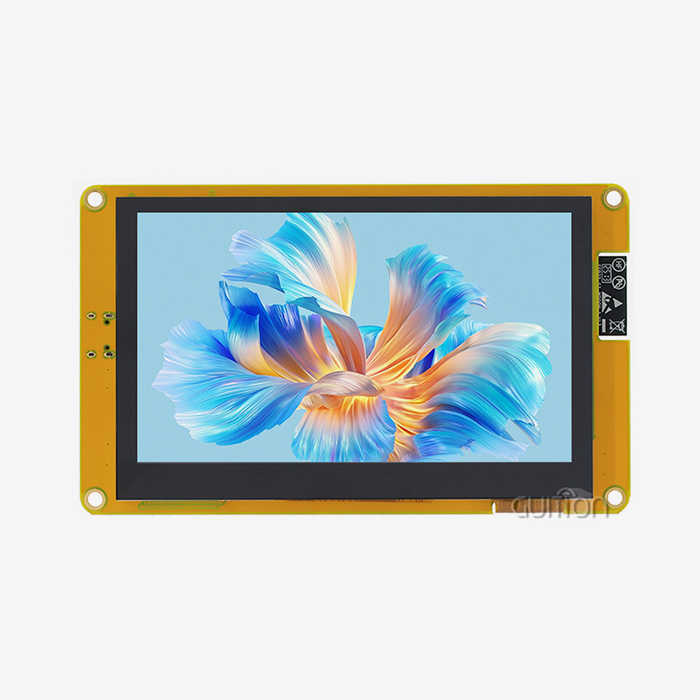
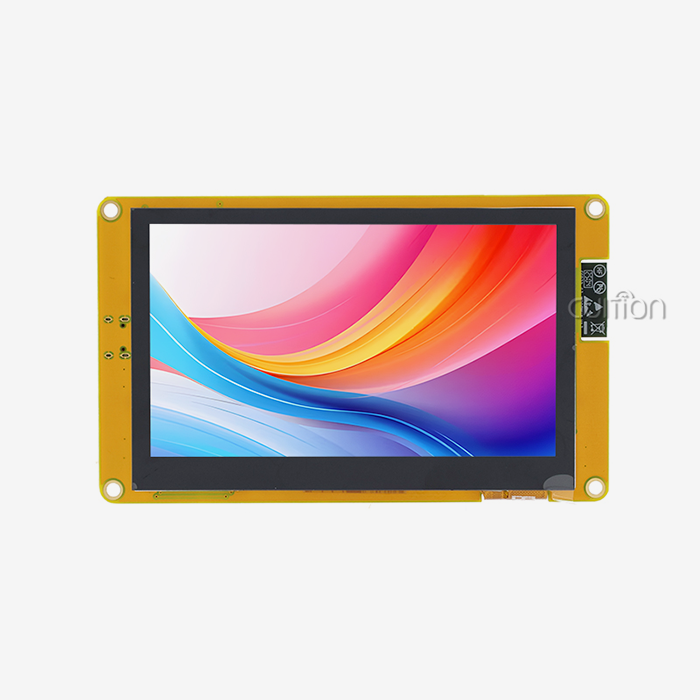
Physical customization lets you choose active area sizes that go from 0.96 inches to more than 15 inches, and it can be shaped in a variety of ways, such as in a circle, a bar, or a square. The cover lens is given a special treatment that gives it 2.5D edges and chemical strength through Gorilla Glass technology. When O-film or IPS technology is used to achieve 85/85/85/85 viewing angles, reading is possible from a variety of positions. When putting screens into embedded systems, these requirements have a direct effect on how the user feels and how long the product lasts. The GUITION JC8048W550C_I is a good example of this approach. Its 5.0-inch format and 800x480 resolution through IPS technology make images look great from any angle while keeping its small size good for applications that need to save space.
How Customization Differs from Standard Products
Standard screens need extra connector boards and mechanical redesigns, which adds to the time and money needed to make the product. By putting bridge ICs right on the FPC, custom modules get rid of these problems and make contact with existing mainboards easy. This way of integrating cuts down on the number of parts and possible failure points. Optical bonding uses optical resin to fill in the gaps between the TFT and touch glass. This stops internal reflection, raises contrast ratios by 400% in bright light, and stops condensation. These improvements are especially helpful in industrial settings where screens have to deal with tough conditions like temperature changes, vibrations, and direct sunlight.
Why Opt for a Custom TFT Display Module?
The choice to use Custom TFT display modules came from the fact that standard commodity screens have basic flaws. In industrial settings where performance and dependability must not be compromised, generic displays rarely meet the strict requirements.
Addressing Industrial Application Challenges
Standard displays keep giving industrial equipment makers problems, like not being bright enough for outdoor use, not having enough temperature ranges for harsh environments, and mechanical mismatches that need expensive enclosure redesigns. Custom screens, which are made to fit your needs, solve these issues. When making medical tracking tools, the screen has to work reliably in hospital lighting, while also being able to be used while wearing gloves and not getting messed up by saline solutions. For outdoor farm automation systems, high-brightness backlights and transflective technology make sure that the screens can be read in full sunlight. IK07+-rated ruggedized glass protects against impact and vibration. These changes directly lead to fewer problems in the field and lower warranty costs.
Performance Advantages Over Standard Options
When you compare custom modules to normal LCDs and OLEDs, you can see that they work very differently. Standard displays usually only work in a small temperature range, from 0°C to 50°C. However, for extreme environment applications, customized solutions can work in temperatures ranging from -30°C to +80°C. In medical images and quality control systems, where mistakes in color representation can lead to wrong diagnoses or parts being thrown away, color accuracy is very important. Custom tuning makes sure that delta E values stay within very narrow ranges for the whole life of the monitor.
Touch Interface Customization Benefits
Choosing between sensitive and resistive touch technologies has effects on how easy they are to use, how long they last, and how much they cost. Capacitive touch is great for consumer-facing apps like smart home control screens and business terminals because it can handle multiple touches and is clear to the eye. When people work in factories that require pressure-sensitive input and wear gloves or styluses, resistive touch works very well. Custom implementations can adjust touch sensitivity to fit different use cases. For example, medical devices need to be able to reject accidental touches from liquids, while outdoor kiosks need higher sensitivity to account for protective screen covers. These improvements make users happier and lower the costs of fixing problems with touch input.
Long-Term Reliability and Lifecycle Management
Lifecycle control may be the most important reason to choose custom display options. In the consumer electronics market, parts become obsolete very quickly, and End-of-Life (EOL) notices show up out of the blue, forcing expensive redesigns. By carefully choosing glass cells from major producers like BOE, Tianma, and AUO, custom display relationships with companies like Guition ensure that their products will be available for 5 to 7 years. Important processor ICs are stocked up to make sure there is a steady supply. When makers have to change parts that can't be avoided, they make drop-in replacements that keep the form, fit, and function of the original part. This stability is very important for companies that make medical devices that need to get FDA approval and for companies that sell industrial tools that need to keep extra parts on hand.
How to Choose the Right Custom TFT Display Module for Your Business
To choose the right Custom TFT display modules, you need to carefully look at the technical requirements, the supplier's abilities, and the total cost. When you rush through this process, mistakes happen that cost a lot of money to fix.
Assessing Technical Requirements
Get started by writing down the working temperature ranges, humidity levels, and dust or liquid exposure that need specific Ingress Protection grades for your esp32 display module application. The size and resolution of the screen must balance the need for readability with the amount of space and money that can be spent on the enclosure. Higher resolutions make controllers more complicated and use more power, but they also make the quality seem better and let you show more specific information. The brightness level depends on the amount of light around it. For example, 250 to 400 nits are usually enough for indoor use, but 800 to 1500+ nits are needed for outdoor or high-light areas.
Evaluating Supplier Capabilities
Not every company that makes displays lets you really customize them. When judging them, you should look at how good their engineering support is, how flexible their prototyping is, and how willing they are to make changes during development. Ask for detailed technical information, such as timing specs for the interface, mechanical models with tolerances, and data on the optical performance across a range of temperatures. Quality certifications that are relevant to your business, like ISO 13485 for medical devices, IATF 16949 for automotive uses, or UL/CE marks for markets in North America and Europe, show that quality management systems are in place. Warranty terms should be longer than the usual one year, which shows that you trust the product to last for a long time. After-sales assistance, such as expert hotlines, firmware updates, and the ability to get new parts, keeps costs low when problems happen.
Understanding Cost Structures
The prices of custom displays are very different from those of standard items. The non-recurring engineering (NRE) fees pay for the costs of making tools for custom FPC designs, changes to the backlight housing, and patterns for capacitive touch sensors. Depending on how complicated the job is, these one-time fees can be anywhere from a few thousand dollars to tens of thousands of dollars. While unit prices may be higher than off-the-shelf options, the total cost of ownership is often cheaper because of things like getting rid of external adapter boards, redesigning the hardware, and fewer problems in the field. Minimum Order Quantities (MOQ) are very different.
Development Platform Considerations
Time-to-market is greatly sped up when complete creation tools are available. The GUITION JC8048W550C_I works with many programming platforms, such as the Arduino IDE, the ESP IDF, MicroPython, and its own platform, Guition. This allows for different engineering teams' tastes and current codebases to be used. The Guition drag-and-drop GUI creation tool gets rid of complicated low-level code, so UI designers can make interfaces by putting controls in places that are easy to understand. With one-click download and pre-loaded test tools, you can start validating modules as soon as you get them. Cross-platform online debugging cuts down on the time needed to fix problems, which has a direct effect on development costs and project schedules.
Procurement Best Practices for Custom TFT Display Modules
Choosing the right technical specifications is only one part of a successful procurement process. Knowing about logistics, legal requirements, and negotiation tactics will help you keep your investment safe and make sure the project goes well.
Sample Request and Evaluation Process
Before placing a factory order, you should always ask for examples. When you try a sample, you should make sure it works in all of your application's possible working conditions, not just the normal ones. Check that the touch sensitivity meets the needs of the user in real-life situations, such as when wearing gloves. Instead of relying only on datasheet specifications, use calibrated equipment to measure the actual brightness and contrast ratios. Check the time gaps of the interface to make sure that you can still communicate reliably with your host processor even when the temperature and voltage change. Write down right away any problems or strange behaviors you notice, and give suppliers detailed feedback so they can fix things before the production tooling is made.
Negotiating Terms and Volume Pricing
When you're negotiating with Custom TFT display module providers, keep in mind that their price structures are not the same as those in commodity markets. There are popular breakpoints of 1,000 units, 5,000 units, and 10,000 units or more where volume savings start to show up. When buying something internationally, the payment terms should balance reducing risk with the supplier's need for cash flow. A 30% deposit is usually required, and the remaining 70% is due before the shipment. For bigger sales, Letters of Credit can be used. Ask for detailed quotes that break down NRE costs from unit prices and make it clear what changes the NRE covers and whether it includes multiple prototype iterations. Make sure you know the exact lead times for samples, the first production run, and repeat orders. Keep in mind that custom parts need longer production processes than standard goods.
Managing Import Compliance and Logistics
When display units come into the United States, they have to follow FCC rules about electromagnetic pollution. Make sure that your supplier gives you test reports that show they are following the rules, or set aside money for third-party testing. Duty rates are based on how the goods are classified under the Harmonized Tariff Schedule codes. Depending on their level of integration and usefulness, screens usually fall under the HTS 8531 or 9013 groups. Working with expert freight forwarders who know how to handle electronics safely, including keeping the temperature stable during shipping and protecting against ESD, is important. Air freight cuts down on transit time but costs a lot more than ocean shipping.
Building Long-Term Supplier Relationships
When buying Custom TFT display modules, the best tactics focus on building partnerships instead of just doing business. Get suppliers involved early on in the planning process, and use their knowledge to improve specs before you set the final requirements. Share predictions openly so that providers can plan their capacity and make sure they have enough parts. Give quick feedback on quality problems with specific data that lets you figure out what went wrong and how to fix it. When parts become obsolete, or there are chances to cut costs, collaborative approaches find ways to keep performance high while also making the business more profitable. When suppliers take the time to understand your application needs, they become valuable extensions of your engineering team. They can suggest improvements and let you know about new technologies that will be useful for future product generations.
Leading Custom TFT Display Module Manufacturers and Suppliers
Choosing the right manufacturing partner has a huge effect on how well a product does. Figuring out what makes leading suppliers different helps you make good decisions about partnerships.
Evaluating Manufacturer Capabilities
Top display makers have a wide range of skills, including choosing the right glass cells, designing backlights, integrating touch sensors, and writing controllers. They get the raw materials they need from well-known fabricators, which guarantees consistent quality and long-term availability. In-house programming teams offer quick technical help by answering questions about integration and fixing problems right away. When scaling up, facilities that are too small may have trouble keeping up with demand, while facilities that are too big may mean that the business is financially unstable. Quality management systems that are certified to meet industry standards show that an organization is dedicated to consistent processes and ongoing improvement.
What to Expect from Guition as Your Display Partner
Guition is a technology-driven company that focuses on USART-hmi display modules and human-machine interface display solutions. Our product range goes from 1.28 inches to 21.5 inches, so it can easily meet the needs of a wide range of industries, from small gadgets to big industrial panels. We made the professional interface development software Guition on our own, which breaks down traditional development bottlenecks by letting you make UIs quickly without having to worry about complicated code. This makes development much more efficient and speeds up the cycles of product iteration. Our modules help with secondary development by providing full interfaces and detailed technical instructions, which lets you change the functions to fit your specific application needs. Built-in rich tools let you add things with just one click and move them around using drag-and-drop for WYSIWYG design.
Customer Support and Technical Resources
Professional-grade suppliers are different from commodity vendors because they have detailed paperwork. It is possible to expect thorough datasheets that include electrical features, timing graphs, mechanical specs with tolerances, and optical performance curves for a range of temperatures. Software libraries for common microcontroller platforms make integration faster. For example, Arduino libraries, ESP-IDF components, and example code that shows how to use key features cut development time from weeks to days. Online debugging support lets you fix problems from afar, which is especially helpful when engineering teams work in different places.
Initiating Partnerships and Communication
Setting up good communication routes from the start of the job makes sure it goes smoothly. Make clear specifications that list all of your needs, such as mechanical limitations, electrical interface details, operating conditions, and expected quantities. Share industrial design drawings or CAD models that show how screens fit into your product. This will help suppliers understand your goals for both looks and functionality. Be clear about your budget and deadlines so that providers can come up with solutions that balance performance and cost. During the development stages, hold regular status meetings to keep track of the prototype's progress and deal with problems as soon as they come up. Set quality standards and inspection criteria before production starts to make sure that the work always meets your standards. Misunderstandings slow down projects and cost more money when they happen.
Conclusion
Choosing Custom TFT display modules is a strategic choice that will affect how well the product works, how long it takes to develop, and how successful it is in the long run. It gives you a competitive edge that generic displays can't match because you can define exact sizes, improve optical properties, adjust electrical connections, and make sure that parts will be available for a long time. Custom solutions may require bigger initial investments in the form of NRE fees and possibly higher unit costs, but the total cost of ownership is often cheaper in the long run because of fewer adapter boards, redesigns, and failures in the field. The GUITION JC8048W550C_I shows how careful integration—combining powerful ESP32-S3R8 processing, full connectivity, flexible development platforms, and production-ready firmware—speeds up your time to market and makes sure your products work reliably in tough industrial settings.
FAQ
What determines the cost of customizing a display?
The main things that drive up costs are one-time engineering fees that pay for tools for making custom FPC designs, changes to the backlight housing, and patterns for capacitive touch sensors. Even though the unit price is higher than that of normal off-the-shelf parts, the total cost of ownership is often lower because external expansion boards and mechanical redesigns are not needed. When it comes to mask changes, semi-custom changes need MOQs of 500 to 1,000 units, while fully custom mask changes need much higher volumes of 10,000 to 50,000+ units because of the costs of setting up the glass fabrication.
Can display interfaces be modified for different processors?
Of course. Manufacturers can put bridge ICs, like RGB to MIPI or SPI to RGB converters, right on the display's FPC. This lets it communicate with your current mainboard without the need for extra converter boards. Adding this makes the system design easier to understand and the signals more reliable.
How does optical bonding improve display performance?
Optical bonding uses optical resin to close off the air gap between the TFT panel and the touch glass. This process gets rid of internal reflections, which raises contrast ratios by 400% in bright light, stops condensation in damp places, and makes structures last longer by gluing layers together, making an assembly that is stronger and less likely to break when it hits something or vibrates.
What support exists for product lifecycle management?
Leading manufacturers buy glass cells from big fabricators with long production schedules and keep important controller ICs on hand. They promise that the product will be available for 5 to 7 years and make replacement parts that can be dropped in if necessary. This keeps the form, fit, and function compatibility that is important for goods that last a long time on the market.
Partner with Guition for Your Display Integration Needs
Guition offers complete human-machine interface solutions that cover all kinds of display problems in the industrial world. The JC8048W550C_I Custom TFT display module we sell has powerful ESP32-S3R8 processing, built-in wireless connectivity, and open programming platforms that work with MicroPython, Arduino, and our own Guition software. With display sizes ranging from 1.28" to 21.5", we can make a screen that is exactly the right size for you while our engineering team customizes the optical and mechanical properties. Our dedication to technology-driven innovation and customer-centered service makes sure that you get not only parts but also whole solutions, which shortens the time it takes to get your product to market. Email david@guition.com to talk to our technical team about your project needs and find out how our display modules and development tools can help you make your product idea a reality that is ready for the market.
References
1. Chen, W., & Liu, M. (2022). "Advanced TFT-LCD Technologies for Industrial Applications." Journal of Display Technology Research, 18(3), 145-162.
2. Morrison, P. R. (2021). "Custom Display Integration in Medical Device Development: Best Practices and Case Studies." Medical Electronics Engineering Quarterly, 34(2), 78-95.
3. Zhang, H., Kumar, S., & Anderson, T. (2023). "Optical Bonding Techniques and Performance Enhancement in Industrial Display Modules." International Journal of Optoelectronics, 27(1), 112-129.
4. Williams, K. (2022). "Procurement Strategies for Custom Electronic Components in B2B Markets." Supply Chain Management Review, 41(4), 203-218.
5. Nakamura, Y., & Schmidt, F. (2021). "ESP32-Based Embedded Display Systems: Architecture and Implementation Considerations." Embedded Systems Engineering, 15(6), 334-351.
6. Thompson, R. A. (2023). "Lifecycle Management and Component Obsolescence Mitigation in Industrial Display Systems." IEEE Transactions on Industrial Electronics, 70(8), 8234-8247.
Learn about our latest products and discounts through SMS or email