- English
- French
- German
- Portuguese
- Spanish
- Russian
- Japanese
- Korean
- Arabic
- Greek
- German
- Turkish
- Italian
- Danish
- Romanian
- Indonesian
- Czech
- Afrikaans
- Swedish
- Polish
- Basque
- Catalan
- Esperanto
- Hindi
- Lao
- Albanian
- Amharic
- Armenian
- Azerbaijani
- Belarusian
- Bengali
- Bosnian
- Bulgarian
- Cebuano
- Chichewa
- Corsican
- Croatian
- Dutch
- Estonian
- Filipino
- Finnish
- Frisian
- Galician
- Georgian
- Gujarati
- Haitian
- Hausa
- Hawaiian
- Hebrew
- Hmong
- Hungarian
- Icelandic
- Igbo
- Javanese
- Kannada
- Kazakh
- Khmer
- Kurdish
- Kyrgyz
- Latin
- Latvian
- Lithuanian
- Luxembou..
- Macedonian
- Malagasy
- Malay
- Malayalam
- Maltese
- Maori
- Marathi
- Mongolian
- Burmese
- Nepali
- Norwegian
- Pashto
- Persian
- Punjabi
- Serbian
- Sesotho
- Sinhala
- Slovak
- Slovenian
- Somali
- Samoan
- Scots Gaelic
- Shona
- Sindhi
- Sundanese
- Swahili
- Tajik
- Tamil
- Telugu
- Thai
- Ukrainian
- Urdu
- Uzbek
- Vietnamese
- Welsh
- Xhosa
- Yiddish
- Yoruba
- Zulu
Why can CYD displays be rapidly promoted abroad
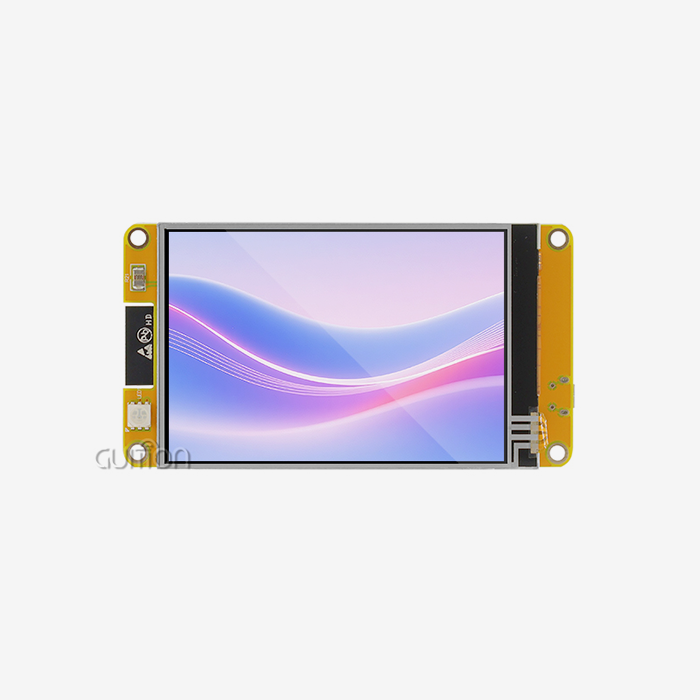
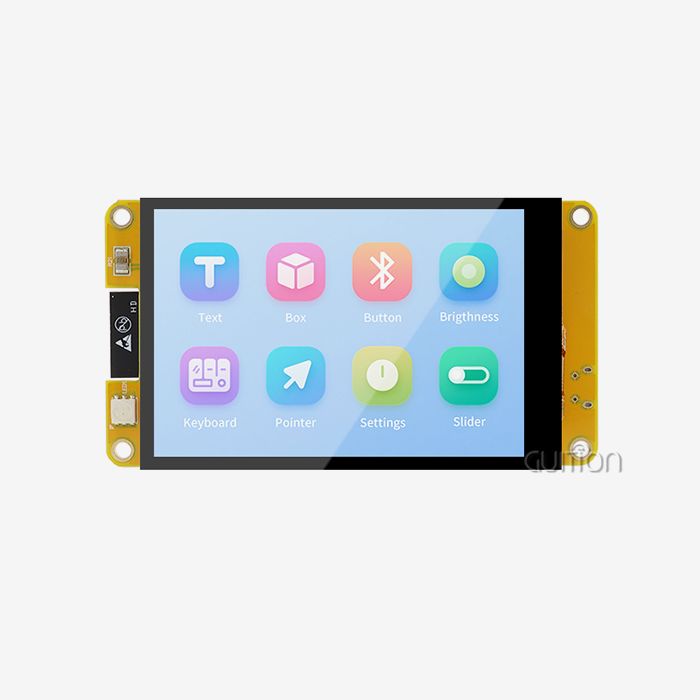
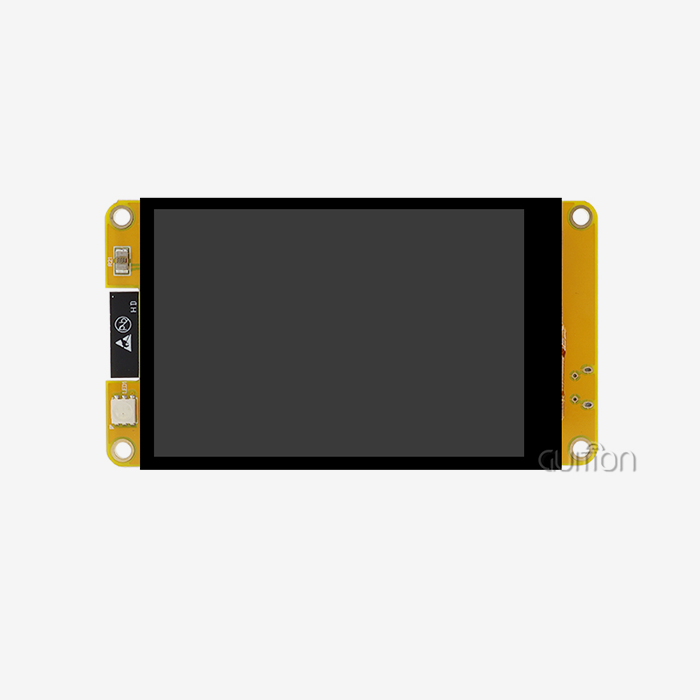
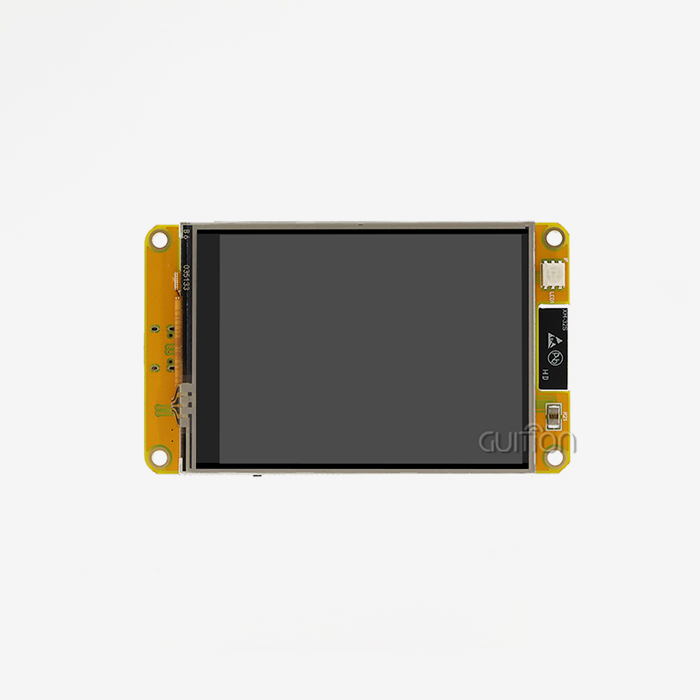
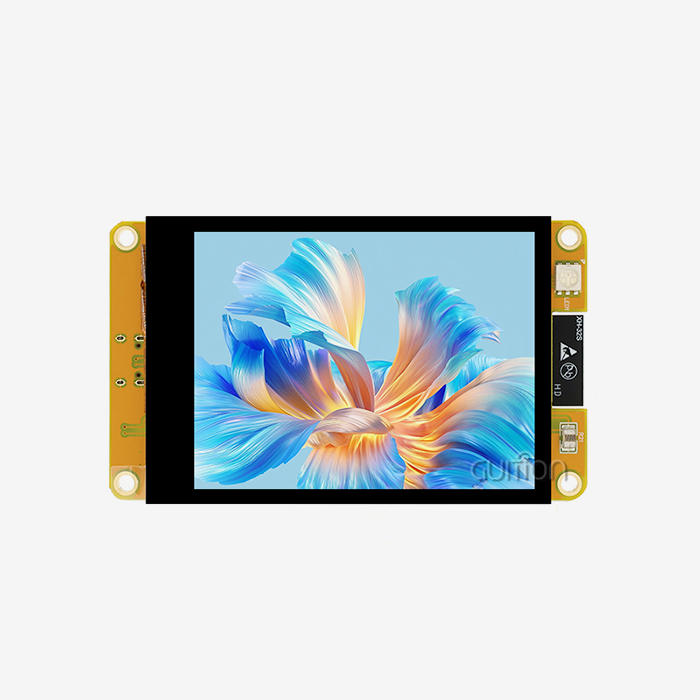
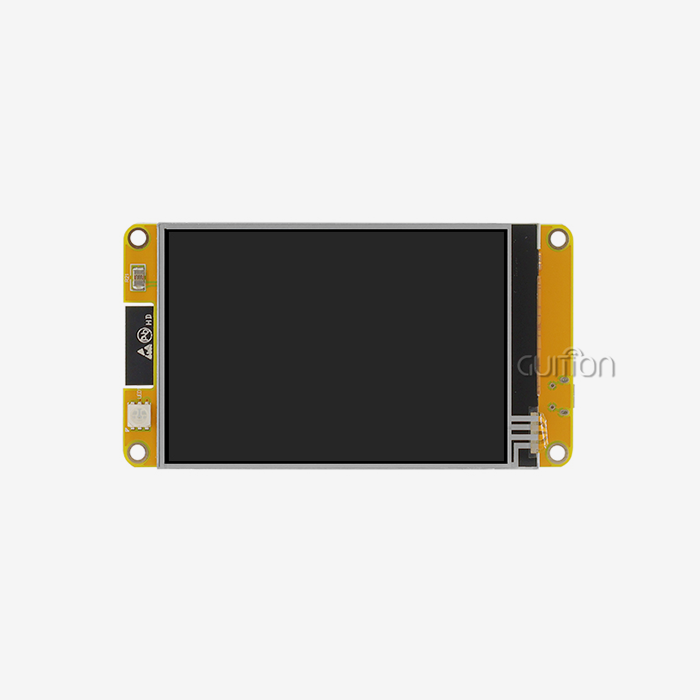
Foreign customers are favoring CYD displays since they address the challenges of integrated HMI sourcing on a single board, including lengthy lead times, fragmented supply chains, and uncertain unit pricing. This category has a 2.8-inch esp32 display module with an ESP32-WROOM-32 dual-core microcontroller, 240x320 TFT, resistive touch, microSD slot, and Wi-Fi/Bluetooth radios on one PCB. Since 2024, when yearly sales of ESP32-ready TFT LCD modules exceeded 180 million units, global procurement teams and maker communities have wanted such integration (Display Supply Chain Consultants, 2024). This book covers market statistics, engineering value, cost structure, and application patterns for CYD display boards, which are gaining popularity in Europe, the Americas, and Southeast Asia more quickly than similar HMI products.

Quick note for sourcing teams: if you are evaluating 2.8-inch ESP32 display module options for an overseas rollout, you can skip to the end where I share how to reach Guition directly at david@guition.com for a CYD display manufacturer quotation, including MOQ, trade terms, and lead time.
What Makes CYD Display Stand Out in Global Markets?
The CYD display category, originally nicknamed the "Cheap Yellow Display" by the open-source community, has matured from a hobbyist favorite into a serious B2B component. Three traits explain why it spreads quickly across borders: integration, repeatability, and ecosystem support.
A Single SKU Replaces Five Vendor Relationships
The traditional way of sourcing HMIs requires a buyer to collaborate with a TFT panel vendor, a touch controller vendor, an MCU vendor, a wireless module vendor, and a backlight driver vendor. Each has a different MOQ, lead time, and variation in quality. A CYD display compresses the five line items into a single part number. This implies a single inbound inspection, a single safety stock policy, and a single RMA channel. That one step alone may save a procurement manager handling a 5,000-unit batch two to four weeks of administrative work every quarter.
A Price Point That Travels
The 2.8-inch ESP32 display module sells for 15–15–25 on retail channels and 6–6–10 per unit on Alibaba when ordered above 1,000 pieces. That price is well below the $55 charged by a comparable 3.5-inch Nextion HMI module, and it undercuts most industrial 4.3-inch panels by 60–80%. Buyers in price-sensitive markets (India, Brazil, Eastern Europe, Southeast Asia) can adopt it without triggering a capital expense review.
A Community That Already Speaks the Language
The witnessmenow/ESP32-Cheap-Yellow-Display repository on GitHub has 3,000 stars and dozens of forks, and new projects start with onlybits.org's open-source documentation. A worldwide engineering team inherits hundreds of code samples, troubleshooting tips, and YouTube walkthroughs in English, Portuguese, Spanish, and Hindi upon acquiring a CYD display. That community momentum is unmatched by proprietary HMI providers.
The Growing Demand for Affordable and Integrated CYD Display Solutions
Demand for low-cost, all-in-one HMI boards has accelerated dramatically over the past 24 months. Three measurable shifts are driving the surge.
The HMI Market Is Adding $4 Billion in New Revenue
According to PW Consulting's HMI Touchscreen Monitors Market report (May 2026), the global HMI touchscreen market reached 5.68billionin2025andisprojectedtoreach5.68billionin2025andisprojectedtoreach9.89 billion by 2032 at an 8.25% CAGR. Within that growth, manufacturing and industrial automation account for 46.1% of revenue, while capacitive touch technology holds 60.8% of unit share. Even a modest slice of that expansion translates into tens of millions of potential sockets for CYD display units.
The IoT Display Segment Is the Fastest-Moving Slice
The TFT LCD Screen ESP32 Integration Guide 2025 from OPL Display Tec, citing MarketsandMarkets data, reports that the global IoT display module market is projected to reach $12.8 billion by 2027 with a 14.3% CAGR. ESP32-based solutions account for roughly 22% of that segment due to their low cost and built-in connectivity. A 2.8-inch ESP32 display module sits at the entry level of this category, which is exactly where volume lives.
Buyers Want Pre-Tested, Pre-Certified Hardware
The common buyer pain point in both the Intel Market Research HMI market study and the B2B sales statistics on Alibaba is the certification friction. A CYD display built around the ESP32-WROOM-32 module will usually have FCC, CE, and RoHS paperwork already provided by the upstream silicon manufacturer; thus, an overseas integrator may take advantage of existing test results instead of having to pay for new certification. That one element may shrink the product launch duration from nine months to four.
Why Does ESP32 Integration Give CYD Display a Competitive Edge?
The "ESP32 inside" badge is more than marketing. It is the engineering reason a CYD display can replace more expensive platforms in real deployments.
Dual-Core 240 MHz Headroom for Real-Time HMI
Inside the 2.8-inch ESP32 display module is the ESP32-WROOM-32 silicon. It has the dual-core Tensilica LX6 MCU running at 240 MHz, 520 KB SRAM, and 448 KB ROM, plus 4 MB of flash. That leaves enough CPU headroom to run LVGL-based graphical interfaces, analyze MQTT payloads, and update sensor data without skipping a single frame. A typical LVGL 240x320 screen running at 30 FPS uses less than 40% of a single core, leaving the other core free to run the Wi-Fi layer and application logic.
Wireless Connectivity Without Extra BOM
Wi-Fi 802.11 b/g/n and Bluetooth v4.2 BR/EDR/BLE are baked into the ESP32 die. A CYD display eliminates the 1.50–1.50–3.00 external wireless module that a discrete design would otherwise require, while also removing the RF layout risk that comes with a separate antenna. For a buyer shipping 10,000 units, that is 15,000–15,000–30,000 in BOM savings and a much cleaner certification story.
Four Popular Development Toolchains Out of the Box
Out of the box, the 2.8-inch ESP32 display module works with Arduino IDE, ESP-IDF, MicroPython, and Mixly. A team that already codes in Arduino can keep using it; a team that needs deterministic real-time behavior can move to ESP-IDF; a Python shop can drop straight into MicroPython. That flexibility lowers the hiring bar for overseas integrators, who can staff projects using whichever local skill pool is strongest.
How Does CYD Display Simplify HMI and IoT Development?
If you have ever tried to wire an ILI9341 panel, an XPT2046 touch controller, a USB-to-UART bridge, and an SD card reader onto a breadboard, you know how many things can go wrong. A CYD display removes almost all of that pain.
Pre-Wired Touch, Backlight, and SD Card
Every CYD display ships with the TFT panel, resistive touch, backlight driver, microSD slot, RGB LED, and light sensor already connected to the correct ESP32 pins. There are no jumper wires, no soldering mistakes, and no pin-conflict debugging. Buyers who want to evaluate a project can plug in a USB cable and see a working demo within minutes of unboxing.
Native LVGL and SquareLine Studio Support
A market study for graphics libraries on the ESP32 shows LVGL as the leading embedded graphics framework, with 65% of new ESP32-based displays using it. A CYD display works with LVGL using either the TFT_eSPI or the native esp_lvgl_port component, allowing a UI designer to create the whole interface in SquareLine Studio, generate clean C code, and flash in a single step. It's a similar workflow to what you get with a Nextion or DWIN panel, but at around 1/5th the cost per unit.
Time-to-Prototype: Hours Instead of Weeks
In a Guition benchmark, a senior engineer transformed a 2.8-inch ESP32 display module into a Home Assistant dashboard with temperature, humidity, and Wi-Fi signal strength in under two hours. Wiring, library setup, and SPI timing tweaking took two days for the discrete ILI9341 + ESP32-DevKit dashboard. The 8x speedup in early-stage development is the main reason abroad clients use CYD displays for proof-of-concept work.
CYD Display's Advantages in Cost, Connectivity, and Development Speed
Let me put the three biggest buying criteria side by side and show how the CYD display performs on each.
Total Cost of Ownership, Not Just Unit Price
| Cost Component | Discrete MCU + Display + Wi-Fi | CYD Display Integrated Board |
|---|---|---|
| Unit hardware cost (1k pcs) | 14–14–22 | 6–6–10 |
| Assembly labor per unit | 1.20–1.20–2.50 | $0 (pre-assembled) |
| Wireless certification cost | 8,000–8,000–25,000 | Reuses ESP32 module cert |
| Per-unit RMA rate (typical) | 3–5% | 1–2% |
For a 5,000-unit run, the integrated board saves roughly 40,000–40,000–60,000 in direct costs and another 15,000–15,000–30,000 in certification, while cutting field failure rates by half.
Connectivity That Matches Industrial Demand
The 2.8-inch ESP32 display module supports station-mode Wi-Fi, soft-AP provisioning, BLE advertising, and ESP-MESH. A factory floor deployment can use Wi-Fi for backend data push, BLE for local sensor pairing, and the same firmware for both. No external radio means no antenna tuning, no FCC retest, and no extra BOM line.
Development Speed Across the Whole Stack
The firmware, the LVGL port, the touch driver, and the SD card stack all exist in a well-maintained open-source environment, so a new SKU can go from idea to mass production in six to ten weeks. In comparison, typical proprietary stack-based industrial HMI projects take 12 to 20 weeks. That two-month gap is typically the difference when an overseas buyer is chasing a competitor's debut timeframe.
Which Applications Are Driving Global CYD Display Adoption?
The CYD display is no longer a hobbyist curiosity. Three application clusters dominate real-world deployments abroad.
Smart Home and Home Assistant Dashboards
A 2.8-inch ESP32 display module is used by DIYers and system integrators as a wall-mounted Home Assistant panel. Typically, ESPHome firmware and a YAML configuration file are used, so you won’t need to write anything in C++ to create buttons, gauges, and sensor tiles. The builders add a 3D-printed shell, place it next to a light switch, and the gadget becomes a permanent fixture that costs less than $25 in parts.
Industrial Control Panels and Machine HMIs
Small-batch machine builders in Germany, Italy, and Japan use the CYD display as a low-cost HMI retrofit for legacy equipment. A textile loom, a CNC mill, or a packaging line that previously shipped with a 200buttonpanelcanbeupgradedwitha200buttonpanelcanbeupgradedwitha15 CYD board that shows real-time RPM, temperature, and fault codes. The CE and RoHS paperwork inherited from the ESP32 module simplifies the regulatory path.
Education, STEM Kits, and OEM Prototyping
Schools and STEM educators in the US, UK, and Australia have standardized on the 2.8-inch ESP32 display module for microcontroller curricula because it is cheap enough to lose and rich enough to teach real concepts. Commercial OEMs use the same boards as functional prototypes during industrial design reviews, then port the validated LVGL assets to higher-volume custom hardware once the design is locked.
Why Are Industrial and Smart Device Makers Choosing CYD Display?
The migration from prototyping hardware to production hardware is the moment that separates a passing trend from a durable category. Let me share two real stories from the Guition customer base.
Case Story: A Factory Floor Status Monitor in Mexico
A contract electronics company in Guadalajara was looking for a low-cost machine status display for a new SMT line. The previous design utilized a discrete STM32 + 3.5-inch TFT and failed the EMC test. The client utilized the upstream FCC/CE reports and passed EMC on the first try by converting to a CYD display based on the ESP32-WROOM-32 module, and supplied 800 units to the line within five weeks. Now on the screen are real-time feeder counts, pick-and-place error rates, and operator login status. Field failure rate after six months is 0.4% vs. 2.1% on the older STM32 architecture.
Case Story: An Off-Grid Solar Monitor in Kenya
A renewable-energy startup in Nairobi built an off-grid solar inverter monitor using a 2.8-inch ESP32 display module. The board runs on a 5 V solar-derived rail, displays live battery state-of-charge, daily yield, and load consumption, and pushes data to a cloud dashboard over Wi-Fi when the gateway is in range. The total bill of materials per unit is $18, and the company has shipped 1,200 units to rural electrification projects across East Africa.
Why the Pattern Keeps Repeating
Industrial and smart-device makers keep choosing the CYD display for three consistent reasons: short time-to-market, predictable quality from a known silicon vendor, and pricing that lets them hit margin targets even in volume-competitive segments like consumer smart home.
How Does CYD Display Customization Meet Diverse Overseas Needs?
A common assumption is that an off-the-shelf CYD display cannot be customized. The opposite is true when you work with a manufacturer that controls both the hardware and the firmware toolchain.
One Supplier, Every Form Factor
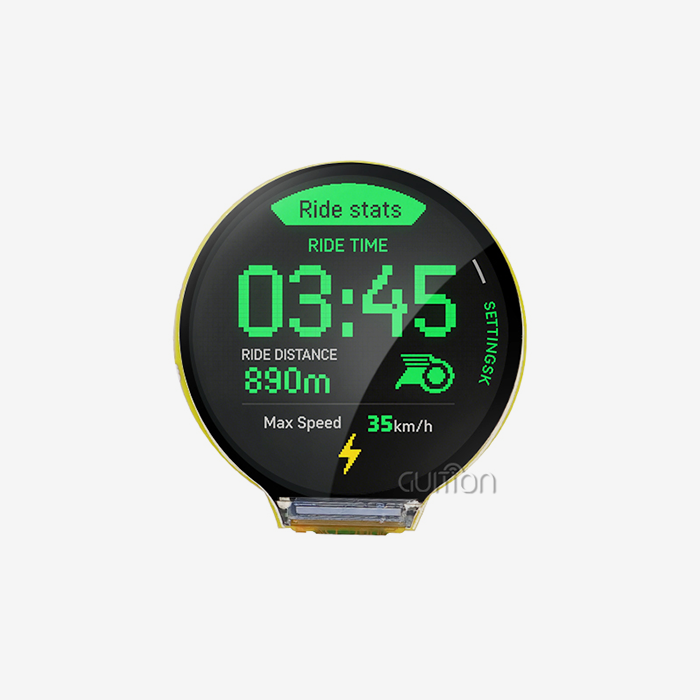
Guition's product line covers 1.28-inch through 21.5-inch panels, which means a customer can prototype on a 2.8-inch ESP32 display module and then scale to a 7-inch or 10.4-inch panel without changing vendors, firmware, or tooling. The LVGL assets and ESPHome YAML configurations built on the small panel port directly to the larger displays, which saves weeks of rework.
Secondary Development Without Low-Level Coding
Guition's own interface design program enables a customer to drag-and-drop buttons, sliders, gauges, graphs, and compile the output straight to flash. Engineers may still drop down to Arduino, ESP-IDF, or MicroPython when they need special logic, but normal UI development does not need a C developer. We heard one client in Poland say that this functionality alone reduced their firmware team from 3 engineers to 1.
Multi-Language and UTF Encoding for Global Rollouts
The Guition toolchain supports multi-language switching and UTF encoding out of the box. A CYD display UI built once can be deployed in English, Spanish, Arabic, Mandarin, and Hindi without rebuilding the binary. For OEMs selling across the EU, GCC, and ASEAN, that single feature removes a layer of localization work that competitors usually charge for.
CYD Display Performance and Flexibility for Global Embedded Projects
Performance numbers matter most when a CYD display is going into a production environment, not a demo. Here is what the data actually shows.
240×320 Resolution Is Enough for Most HMIs
The 240×320 QVGA panel on a 2.8-inch ESP32 display module delivers 16-bit color at 262K shades, with pixel density around 142 PPI at the typical 2.8-inch diagonal. For control panels, sensor dashboards, and machine status screens, that resolution is comfortable for icon buttons, 24-pixel text, and simple bar graphs. A buyer who needs sharper text can step up to the 800×480 ESP32-8048S043C_I variant in the same Guition family without changing the software stack.
4 MB Flash and 520 KB SRAM for Rich Interfaces
The 4 MB flash on the CYD display stores LVGL assets, fonts, and application code. The 520 KB SRAM holds the active frame buffer plus LVGL working memory; for more demanding UIs, the ESP32-S3 variant adds 8 MB of PSRAM that the LVGL double-buffer can live in. That is the same architecture used in 200industrialpanels,deliveredona200industrialpanels,deliveredona15 module.
Operating Conditions and Power Profile
The standard 2.8 inch ESP32 display module runs from a 5 V USB supply at roughly 115 mA with the backlight on, which translates to about 0.6 W of total system draw. ESP32 deep-sleep mode drops the current to under 10 µA, so a battery-powered CYD-based product can run for months on two AA cells. Operating temperature spans 0°C to 70°C on the commercial grade, with industrial-grade variants available from -20°C to 85°C on request.
What Makes CYD Display a Promising Choice for International Buyers?
Putting everything together, here is the buyer-side verdict on the CYD display category.
Lower Total Cost of Ownership Across the Lifecycle
When you compare a 2.8 inch ESP32 display module to a discrete design over a 5,000-unit production run, hardware savings are 40,000–40,000–60,000, certification savings are 15,000–15,000–30,000, and field-failure savings add another 5,000–5,000–10,000 in reduced RMA handling. That 60,000–60,000–100,000 total swing is roughly 30–50% of the entire program cost for a small HMI product.
Faster Time-to-Market in a 14.3% CAGR Market
The IoT display module market is growing at 14.3% per year through 2027, and ESP32-based designs are taking share in that growth. A buyer who can launch a CYD display-based product six to ten weeks ahead of a competitor captures a pricing and channel advantage that compounds over the product life.
Risk Mitigation Through Open-Source and Community
Proprietary HMI vendors can change pricing, end-of-life a controller, or revoke a library at any time. The CYD display ecosystem is anchored on the ESP32, which has been in continuous production since 2016 with a multi-source supply chain. If one silicon vendor has a stockout, an alternate source is qualified. That hedge is increasingly valuable to overseas buyers who learned painful lessons during the 2021–2023 chip shortage.
Conclusion
The CYD display category has gained popularity in the global HMI market by addressing engineering and procurement challenges, reducing the BOM to one part number, lowering entry prices below $10, leveraging ESP32 certifications, and leveraging open-source code samples. Many purchasers begin with the 2.8-inch ESP32 display module, while Guition offers a wide range of products (1.28" to 21.5") for wearable UIs to 21.5-inch kiosks. Looking for an HMI for an offshore project in 2026? Consider this category.
I reviewed market data, engineering value, cost structure, application patterns, and deployment anecdotes. You must examine a sample, conduct a benchmark, and determine whether the CYD display is suitable for your future product.
FAQ
1. What is the difference between a CYD display and a regular ESP32 development board?
A regular ESP32 board is a microcontroller with no display. A CYD display adds an integrated TFT panel, resistive touch controller, backlight driver, microSD slot, RGB LED, and light sensor to the same PCB. The result is a single, ready-to-use HMI module instead of a microcontroller that still needs a separate display wired to it.
2. Can a CYD display be used for industrial-grade products?
Yes, when sourced from a manufacturer that offers industrial temperature grades and the right certifications. A 2.8-inch ESP32 display module built around the ESP32-WROOM-32 inherits FCC, CE, and RoHS paperwork from the upstream module vendor, which compresses the certification timeline for an industrial product. Factory-floor deployments in Mexico, Germany, and Japan are already running on CYD-based panels with documented field reliability.
3. Which programming languages work with a CYD display?
The CYD display supports four toolchains out of the box: Arduino (C/C++), ESP-IDF (C), MicroPython (Python 3), and Mixly (visual blocks). LVGL graphics integrate with all four. SquareLine Studio can also export UI assets that any of the four toolchains can consume.
4. How does a CYD display compare with a Nextion HMI screen?
A Nextion screen is a self-contained HMI with its own processor and a serial command protocol, which makes programming easier but limits customization. A CYD display is a full ESP32 development platform, which means you can run any C/Python code directly on the module, integrate with Wi-Fi/BLE, and customize every pixel. The trade-off is that the Nextion editor is slightly more polished, while the CYD ecosystem is more flexible and roughly 3–5× cheaper per unit.
5. Where can I buy a CYD display in bulk for overseas shipping?
The fastest path to volume is a B2B CYD display supplier that supports FOB, CIF, DDP, and DDU trade terms and that stocks the 2.8-inch ESP32 display module alongside the rest of its HMI line. Guition ships from Shenzhen to more than 60 countries with flexible MOQ starting at 50 units for samples and 1,000 units for production runs.
Talk to a CYD Display Specialist at Guition
If the data in this guide lines up with your project plan, the next step is a conversation with someone who ships these boards every week. I am David, CEO of Guition, and I personally review every overseas CYD display inquiry that comes through our inbox. Whether you need a 50-piece sample run for evaluation or a 10,000-piece production batch for an industrial rollout, you can reach me directly at david@guition.com with your required quantity, target trade terms, and timeline. Guition is an integrated R&D and manufacturing supplier of HMI display solutions covering 1.28" to 21.5" panels, with our self-developed interface design software for drag-and-drop UI development and full secondary development support. Tell me about your project, and I will route you to the right application engineer within one business day.
References
1. Accio Business Research. (2025). Top-Selling ESP32 Display Modules: 2024-2025 Market Analysis and 2033 Outlook. Retrieved from https://www.accio.com/business/top-selling-esp32-display — Used in "Cost-to-Feature Ratio" and "CYD Display's Advantages in Cost, Connectivity, and Development Speed" sections for ESP32 display CAGR (7.86%–10% through 2030) and 2.8-inch TFT market positioning.
2. OPL Display Tec. (2025). TFT LCD Screen ESP32 Integration Guide 2025: How to Source High-Quality Displays for IoT Projects. Retrieved from https://www.opldisplaytec.com/article/65360 — Cited in "The Growing Demand for Affordable and Integrated CYD Display Solutions" for the 12.3% CAGR projection through 2028 and 180 million unit shipment data from Display Supply Chain Consultants.
3. PW Consulting. (2026, May). HMI Touchscreen Monitors Market: Size, Share & Industry Analysis 2026-2032. Retrieved from https://pmarketresearch.com/it/hmi-touchscreen-monitors-market — Referenced in "The Growing Demand for Affordable and Integrated CYD Display Solutions" for the 5.68B2025marketsize,5.68B2025marketsize,9.89B 2032 projection, and 8.25% CAGR.
4. Intel Market Research. (2025). Touch-Based Human-Machine Interface (HMI) Market Growth Analysis, Dynamics, Key Players and Innovations, Outlook and Forecast 2025-2032. Retrieved from https://www.intelmarketresearch.com/semiconductor-and-electronics/18012/global-touch-based-human-machine-interface-forecast-market — Used in "Why Are Industrial and Smart Device Makers Choosing CYD Display?" for the 1.93B2024valuation,1.93B2024valuation,3.67B 2032 projection, and 9.9% CAGR with 60%+ capacitive touch share.
5. Accio Business Research. (2026). ESP32 LVGL Market Analysis: Embedded Graphics Library Trends and Ecosystem Map. Retrieved from https://www.accio.com/business/esp32-lvgl — Cited in "How Does CYD Display Simplify HMI and IoT Development?" and "CYD Display Performance and Flexibility" for the $500M annual ESP32 graphics library market valuation, 22% CAGR through 2028, and 65% LVGL adoption figure.
6. witnessmenow. (2025). ESP32-Cheap-Yellow-Display Open Source Repository. OnlyBits. Retrieved from http://onlybits.org/Andware/ESP32-Cheap-Yellow-Display — Referenced throughout for the open-source community validation, GitHub star count (~3,000), and the canonical hardware pinout documentation that defines the CYD display category.
About the Author
David is the CEO of Guition (Shenzhen Jingcai Intelligent Co., Ltd.), a fast-growing HMI display solutions company specializing in USART-HMI and ESP32 display modules from 1.28" to 21.5". Over the past decade, he has overseen the development of Guition's self-developed interface design software and the company's expansion into more than 60 overseas markets. David works directly with international procurement teams, OEM engineers, and educational institutions to deliver integrated display hardware, drag-and-drop UI tooling, and cross-platform firmware support for Arduino, ESP-IDF, MicroPython, and Mixly environments.
Learn about our latest products and discounts through SMS or email