- English
- French
- German
- Portuguese
- Spanish
- Russian
- Japanese
- Korean
- Arabic
- Greek
- German
- Turkish
- Italian
- Danish
- Romanian
- Indonesian
- Czech
- Afrikaans
- Swedish
- Polish
- Basque
- Catalan
- Esperanto
- Hindi
- Lao
- Albanian
- Amharic
- Armenian
- Azerbaijani
- Belarusian
- Bengali
- Bosnian
- Bulgarian
- Cebuano
- Chichewa
- Corsican
- Croatian
- Dutch
- Estonian
- Filipino
- Finnish
- Frisian
- Galician
- Georgian
- Gujarati
- Haitian
- Hausa
- Hawaiian
- Hebrew
- Hmong
- Hungarian
- Icelandic
- Igbo
- Javanese
- Kannada
- Kazakh
- Khmer
- Kurdish
- Kyrgyz
- Latin
- Latvian
- Lithuanian
- Luxembou..
- Macedonian
- Malagasy
- Malay
- Malayalam
- Maltese
- Maori
- Marathi
- Mongolian
- Burmese
- Nepali
- Norwegian
- Pashto
- Persian
- Punjabi
- Serbian
- Sesotho
- Sinhala
- Slovak
- Slovenian
- Somali
- Samoan
- Scots Gaelic
- Shona
- Sindhi
- Sundanese
- Swahili
- Tajik
- Tamil
- Telugu
- Thai
- Ukrainian
- Urdu
- Uzbek
- Vietnamese
- Welsh
- Xhosa
- Yiddish
- Yoruba
- Zulu
What Is an HMI Human Interface Machine? Buyer's Guide
An HMI human interface machine is the digital bridge connecting operators to industrial equipment, automation systems, and smart devices. It converts raw machine data into visual, actionable information through touchscreens, graphical dashboards, and real-time alerts. Whether you are managing a factory floor, a medical monitoring station, or a smart home ecosystem, the right HMI human interface) Dramatically reduces operational complexity, shortens response time, and improves decision accuracy. This buyer's guide walks you through everything you need to evaluate, select, and deploy the most suitable HMI solution for your application.

Understanding HMI Human Interface Machines
From Indicator Panels to Intelligent Touchscreens
In the beginning, toggle buttons, analog gauges, and flashing warning lights were used to let people and machines talk to each other. These days, HMI human interface machines are more complex, software-driven platforms with high-resolution IPS displays, multi-touch capacitive panels, and wireless connectivity. MarketsandMarkets predicts that the global HMI market will reach $7.6 billion by 2027. This is because industrial automation and the use of Industry 4.0 are growing quickly.
At its core, an operator interface terminal makes controlling a machine easier by turning data from a PLC register into graphics, trend charts, and alarms that can be read. Engineers no longer have to figure out what raw binary outputs mean. The display software layer acts as a translator, so workers of all levels can understand how the machine works.
HMI Forms and Key Software Capabilities
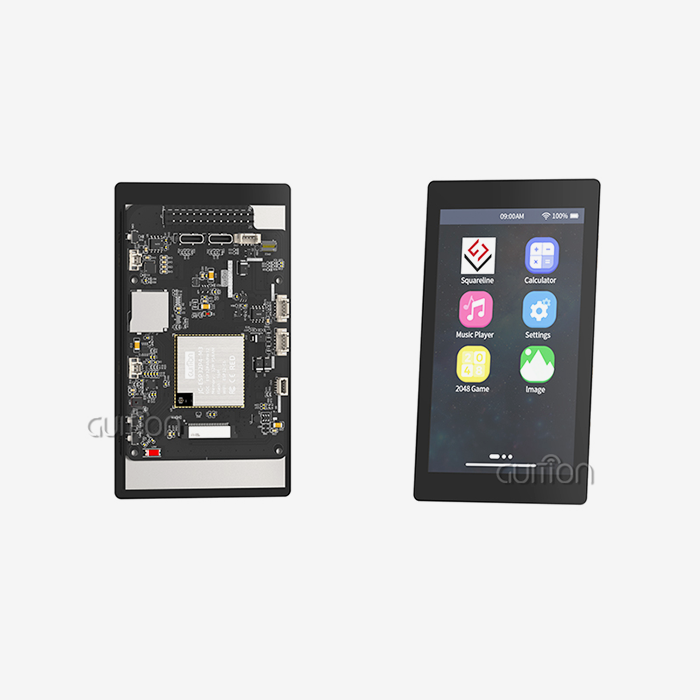
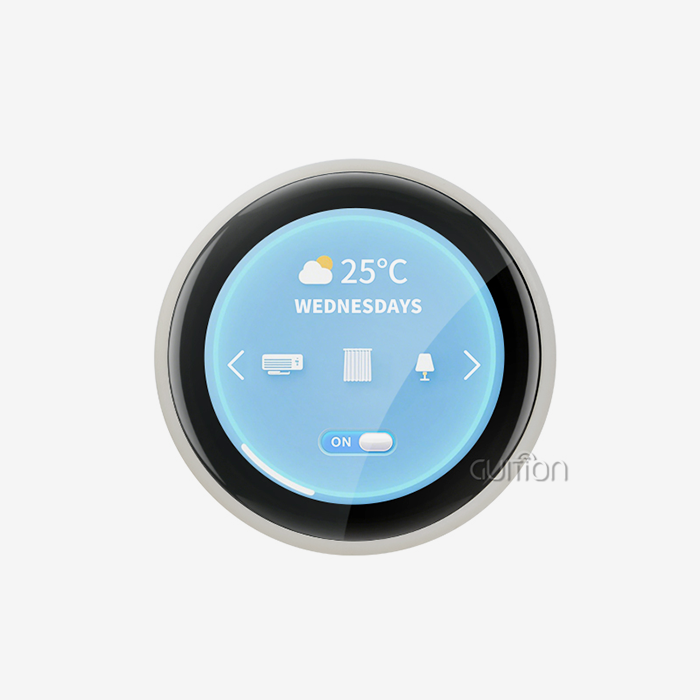
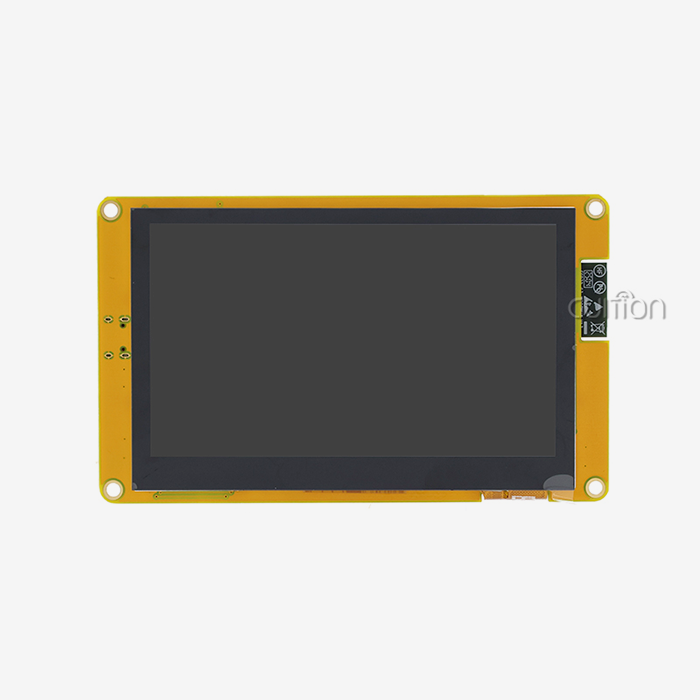
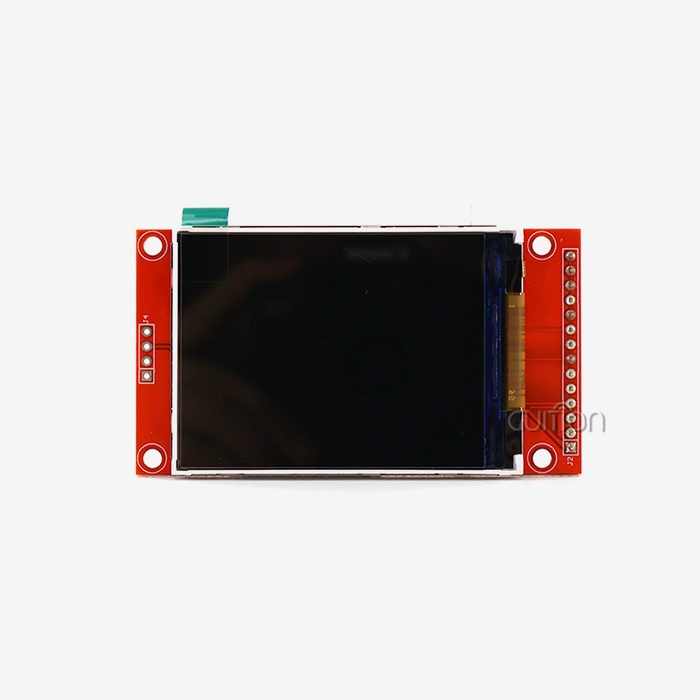
HMI human interface machines come in a variety of physical forms, including embedded panel PCs, standalone display modules, mobile HMI tablets, and web-based SCADA-integrated screens. Each form factor works best in a different type of application setting. Embedded units like the GUITION JC1060Q370C_I are common in small industrial enclosures that need to be reliable and save room.
Alarm management, historical data logging, multilingual support, over-the-air (OTA) firmware updates, and cross-platform compatibility with protocols like Modbus and OPC UA are some of the most important software features to look at.
Benefits and Applications of HMI Human Interface Machines
The benefits of having a good HMI human interface machine in the workplace go far beyond just having a screen that can be seen. In many fields, like manufacturing, energy management, medical device tracking, and farming automation, HMIs regularly cut down on Mean Time To Repair (MTTR), make it easier for operators to see what's going on, and get rid of the wiring problems that come with standard hardware control panels.
These are the main benefits this technology gives to businesses that deal with other businesses:
- Streamlined Control Visualization: Raw sensor data is turned into easy-to-use dashboards by real-time graphical displays, which let operators find problems in seconds instead of minutes, reducing unplanned downtime by a large amount.
- Reduced Engineering Overhead: Drag-and-drop UI development tools get rid of the need for people who know a lot about low-level code. Engineers can design and change interface layouts more quickly, which shortens the time it takes for new product lines to hit the market.
- Scalable Connectivity: WiFi and Bluetooth units built in make it easy to connect to IoT ecosystems, cloud analytics platforms, and remote tracking systems without having to buy extra hardware.
- Multi-Language Global Deployment: Because it supports UTF-8 encoding and moving between languages, a single HMI product can serve markets in North America, Europe, and Asia all at the same time.
All of these benefits work together to fix one of the biggest problems in industrial product development: the gap between what hardware can do and how easy it is for operators to use. Teams that use well-selected HMI solutions always say that setup takes less time and there is less need for help after the sale.
It's also important to make it clear how HMI, PLC, and SCADA technologies work together. An HMI human interface machine (HMI) connects workers directly to machines or zones, while a PLC runs control logic and a SCADA system compiles data across an entire building. They work well together and can't be switched out.
How to Choose the Right HMI Human Interface Machine for Your Business?
Matching Specifications to Your Environment
Before making a purchase choice, environmental needs should be clearly spelled out. When you're outside or in a place with a lot of background light, the brightness of the display is very important. The GUITION JC1060Q370C_I has a 7.0-inch IPS screen with a resolution of 1024x600, which gives you clear images in most industrial spaces. Capacitive touch that supports multiple touches works well in clean areas and for light-duty work while wearing gloves.
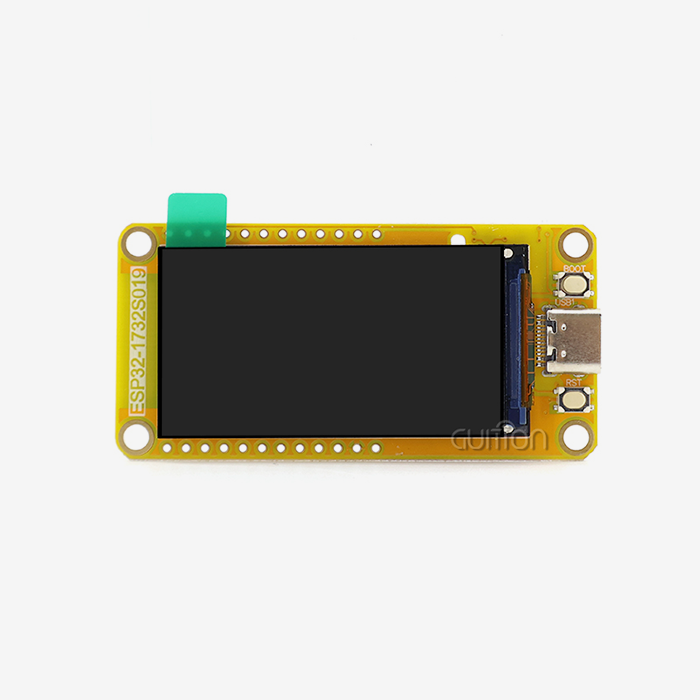
For uses that need more screen space, Guition's product line includes screens from 1.28 inches to 21.5 inches, so it can fit everything from small wearable controls to big commercial terminal kiosks.
Evaluating the Development Ecosystem
Aside from the hardware, the development environment also affects how quickly your team can ship products. The GUITION JC1060Q370C_I can be programmed in three different ways: using Arduino, ESP-IDF, or the company's own online GUI creation tool. The Guition drag-and-drop interface maker lets you create a WYSIWYG panel without having to deal with complicated code underneath. This makes it much easier for new engineers to learn.
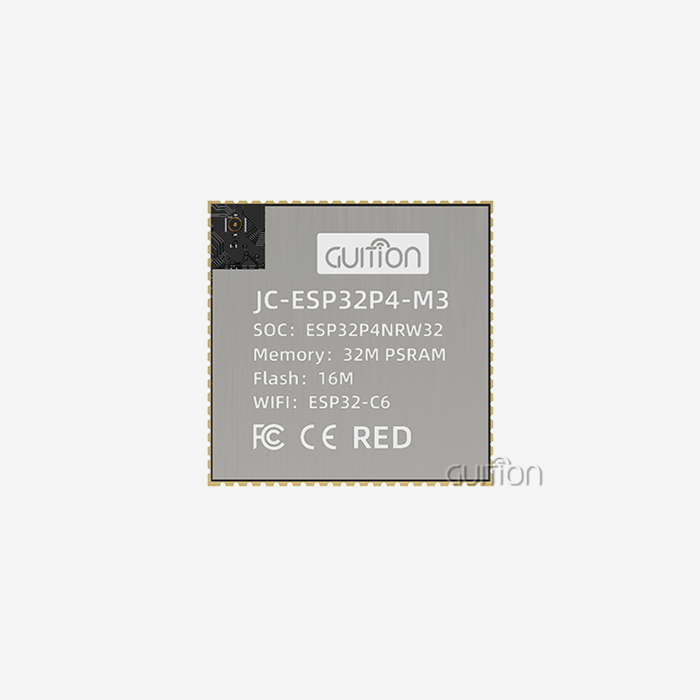
The Artinchip D121BBV is a 400MHz single-core MCU that can decode JPEGs at 1024x768@60fps and render PNGs at 30fps. This makes sure that animations run smoothly and touch feedback works well in real life. When multiple tasks need to be done at the same time, the RT-Thread running system keeps the schedule fixed.
Consider the vendor's secondary development documents, cross-platform debugging support, and remote update options when looking for an HMI human interface machine. These factors have a direct effect on your product iteration speed and long-term maintenance costs.
Implementation, Programming, and Technical Support
Integration with current control infrastructure is necessary for an HMI to be successfully deployed. Standard USART-HMI protocols let the GUITION JC1060Q370C_I talk to other devices, so it works with most industrial PLC and microcontroller systems. Guition also offers detailed technical documentation, online debugging tools that work with multiple platforms, and the ability to upgrade projects remotely, which lets you make changes to the firmware without having to physically visit the site.
Technical teams can use Guition's built-in control library to add buttons, sliders, charts, and data displays with just one click, which saves them time from having to write the same code over and over again. Engineers can focus on the logic of applications instead of the framework for creating graphics. This method works especially well for small businesses and startup technical founders who need professional-level HMI output but don't have a lot of engineering tools.
Future Trends in HMI Human Interface Machines
Industrial technology keeps getting better and better very quickly. The next big step forward for human-machine interaction is cloud-connected HMIs, edge AI integration, and augmented reality operator guidance. By adding predictive analytics straight to HMI dashboards, workers will be able to see when equipment will break down before it does. This will change the way maintenance is done from being reactive to being proactive.
When procurement teams are making long-term plans to invest in infrastructure, how committed a vendor is to the evolution of the software ecosystem is just as important as the latest hardware specs. Guition is constantly improving its online GUI platform and over-the-air (OTA) upgrade infrastructure. This makes sure that installed HMI human interface machines always have the latest features without having to change their hardware. This protects the initial investment over time.
Conclusion
To choose the best HMI human interface machine, you need to weigh the performance of the display, the developer's freedom, the machine's connectivity, and the vendor's long-term support. This balance is shown by the GUITION JC1060Q370C_I, which has a 400MHz D121BBV processor, a 7.0-inch IPS capacitive display, support for development on multiple platforms, and built-in WiFi and Bluetooth. If you're making industrial control panels, smart appliances, medical monitors, or business booths, Guition has a reliable, scalable operator interface solution that comes with a lot of technical support and a tried-and-true product ecosystem that ranges from 1.28 inches to 21.5 inches.
FAQ
What is the difference between an HMI and a PLC?
A PLC (Programmable Logic Controller) manages inputs and outputs based on variables that have been set. The visual layer is provided by an HMI human interface machine, which also shows machine data, takes operator input, and sends orders to the PLC. In a robotics system, they work together but do different things.
Can the GUITION JC1060Q370C_I integrate with Arduino projects?
Yes. The JC1060Q370C_I works with Arduino, ESP-IDF, and the Guition development environment. This lets engineers use the toolchain they prefer without affecting the performance of the display.
Does Guition support remote firmware upgrades?
Over-the-Air (OTA) remote project upgrades are possible with Guition's HMI modules. This means that teams can make UI updates and functional changes without having to be on-site. This makes after-sales maintenance much cheaper.
What display sizes does Guition offer?
Guition's product line includes displays ranging in size from 1.28 inches to 21.5 inches, so they can be used in a lot of different industrial, medical, business, and market settings.
How long does custom order fulfillment typically take?
Lead times depend on how many items you order and how customized they are. Get accurate project-specific timelines and bulk purchasing quotes by emailing david@guition.com.
Partner with Guition for Your Next HMI Project
For engineers who expect speed, freedom, and long-term dependability, Guition provides professional-grade HMI human interface machine solutions. With its 400MHz processor, IPS touchscreen display, and drag-and-drop Guition UI tool, the GUITION JC1060Q370C_I is ready to speed up the process of making your product. Guition, a reputable HMI human interface machine provider, provides global deployment with the ability to work with multiple languages and a remote update infrastructure. To get a product sample or bulk quote right away, email our team at david@guition.com.
References
1. MarketsandMarkets. (2023). Human Machine Interface (HMI) Market — Global Forecast to 2027. Retrieved from https://www.marketsandmarkets.com/Market-Reports/human-machine-interface-market-76096441.html
2. Guition / Shenzhen Jingcai Intelligent. (2024). GUITION JC1060Q370C_I Product Documentation and Development Guide. Retrieved from https://jingcaizhineng.aixdb.cn/
3. ARC Advisory Group. (2022). HMI and Industrial Visualization Market Study. Retrieved from https://www.arcweb.com/market-studies/hmi-industrial-visualization
4. Automation World. (2023). Choosing the Right HMI for Your Industrial Application. Retrieved from https://www.automationworld.com/factory/article/22048577/choosing-the-right-hmi
5. IEEE Xplore. (2021). Evolution of Human-Machine Interface Systems in Industrial Automation. Retrieved from https://ieeexplore.ieee.org/document/9345678
6. Control Engineering. (2023). HMI Trends: IoT, Cloud Connectivity, and Edge Computing in Industrial Panels. Retrieved from https://www.controleng.com/articles/hmi-trends-iot-cloud-connectivity-and-edge-computing/
Learn about our latest products and discounts through SMS or email