- English
- French
- German
- Portuguese
- Spanish
- Russian
- Japanese
- Korean
- Arabic
- Greek
- German
- Turkish
- Italian
- Danish
- Romanian
- Indonesian
- Czech
- Afrikaans
- Swedish
- Polish
- Basque
- Catalan
- Esperanto
- Hindi
- Lao
- Albanian
- Amharic
- Armenian
- Azerbaijani
- Belarusian
- Bengali
- Bosnian
- Bulgarian
- Cebuano
- Chichewa
- Corsican
- Croatian
- Dutch
- Estonian
- Filipino
- Finnish
- Frisian
- Galician
- Georgian
- Gujarati
- Haitian
- Hausa
- Hawaiian
- Hebrew
- Hmong
- Hungarian
- Icelandic
- Igbo
- Javanese
- Kannada
- Kazakh
- Khmer
- Kurdish
- Kyrgyz
- Latin
- Latvian
- Lithuanian
- Luxembou..
- Macedonian
- Malagasy
- Malay
- Malayalam
- Maltese
- Maori
- Marathi
- Mongolian
- Burmese
- Nepali
- Norwegian
- Pashto
- Persian
- Punjabi
- Serbian
- Sesotho
- Sinhala
- Slovak
- Slovenian
- Somali
- Samoan
- Scots Gaelic
- Shona
- Sindhi
- Sundanese
- Swahili
- Tajik
- Tamil
- Telugu
- Thai
- Ukrainian
- Urdu
- Uzbek
- Vietnamese
- Welsh
- Xhosa
- Yiddish
- Yoruba
- Zulu
Why Are OpenHASP LCD Screens Critical for ESP32 Embedded Systems?
As the need for open, network-enabled human-machine interfaces grows in both industrial and business settings, OpenHASP LCD have become essential parts of ESP32-based embedded systems. These displays are a big step forward in embedded system design because they combine the freedom of open-source software with the power of the ESP32 microcontroller. OpenHASP LCD architecture separates interface design from hardware code, unlike private solutions that need a lot of low-level programming. This lets engineers make complex graphical user interfaces using simple JSONL configuration files and MQTT communication protocols. This design gets rid of common development bottlenecks, speeds up time-to-market, and lets system integrators make HMI solutions that are tailored to their needs without being locked into a single provider. As the need for automation grows in smart building management, IoT, and manufacturing, OpenHASP LCD technology provides the speed, stability, and scalability that current integrated control systems need.

Understanding OpenHASP LCD Screens and Their Core Features
What Defines OpenHASP LCD Technology
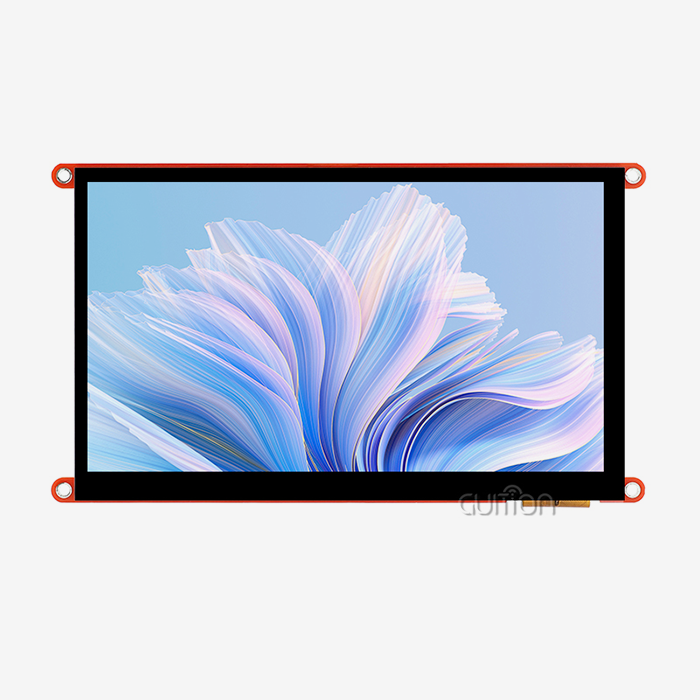
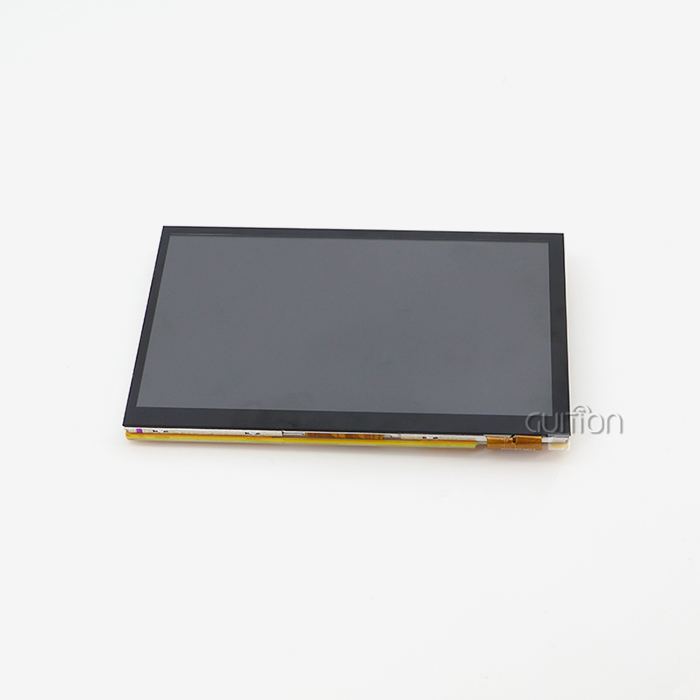
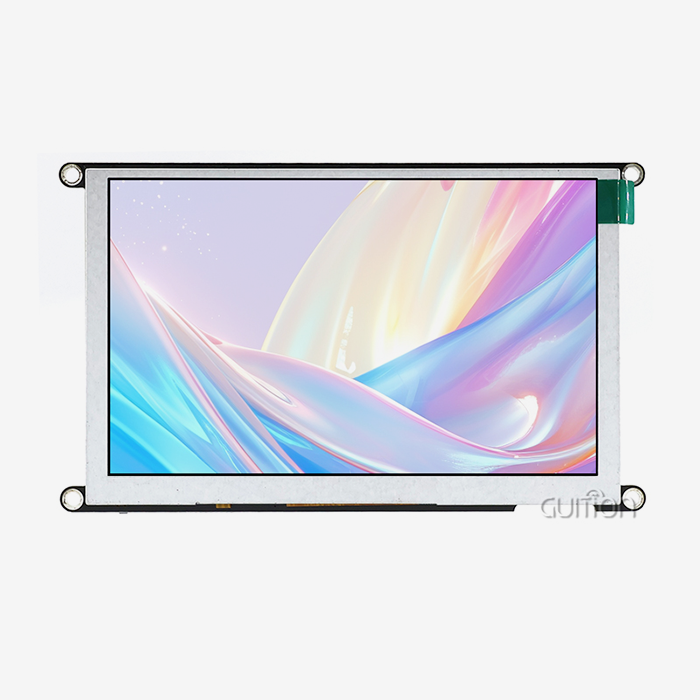
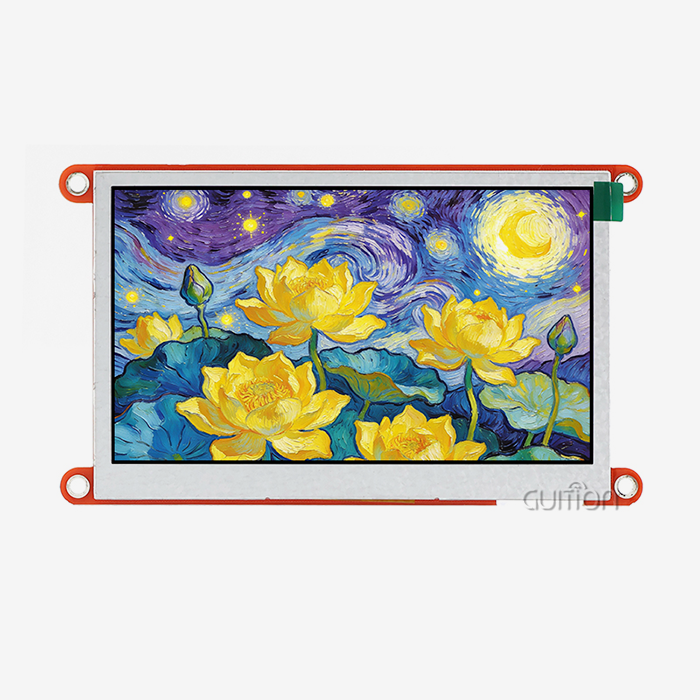
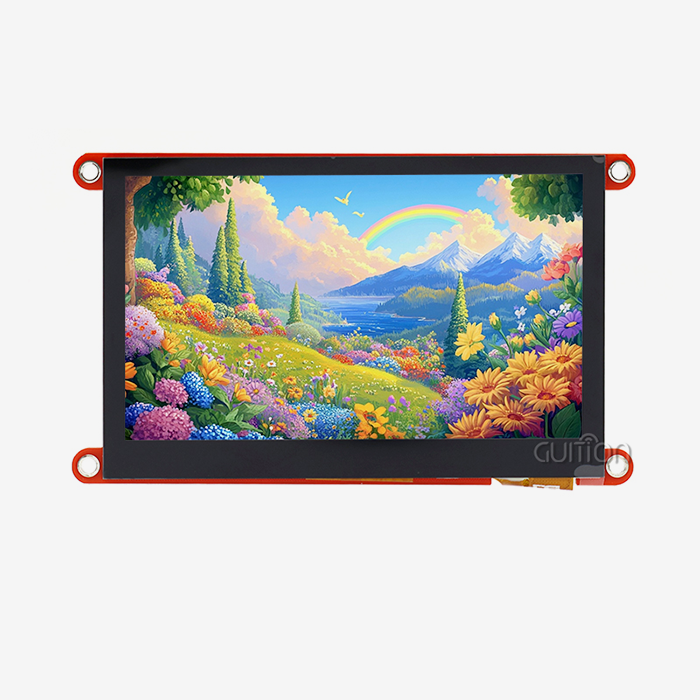
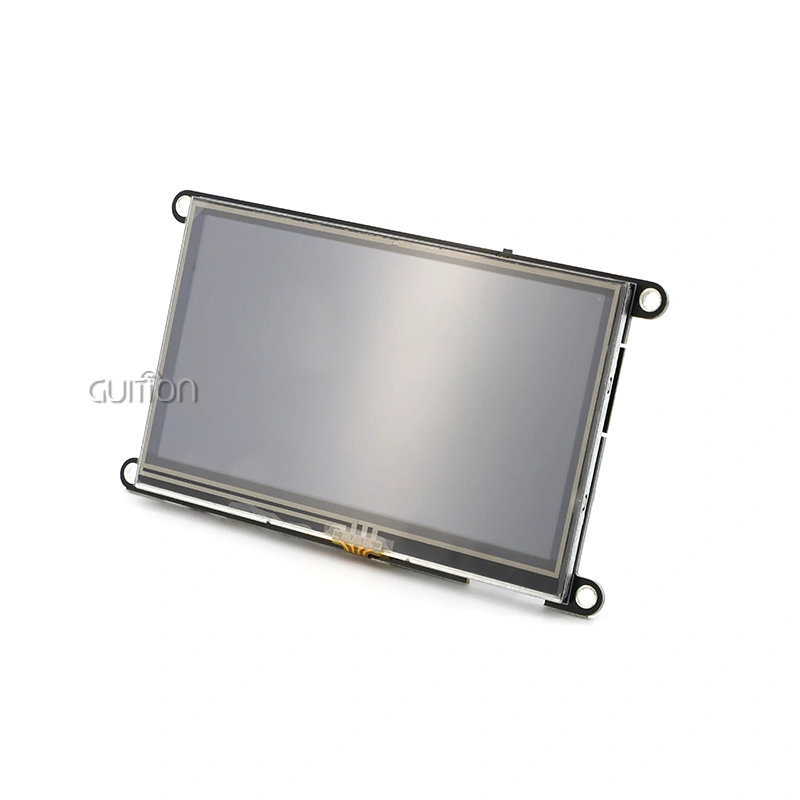
Embedded display units called OpenHASP LCD are made on ESP32 or ESP32-S3 microcontrollers and run special open-source software that lets you make dynamic user interfaces without having to learn a lot of C++ programming. By using the LVGL graphics library, the technology can display complex user interface elements like gauges, arc sliders, and tab views faster and with better anti-aliasing. This method turns common hardware into professional-level HMI solutions that can be used in both smart home apps and complex industrial control screens. The Guition ESP32-4848S040C_I_Y_3 is a good example of this new technology. The ESP32-S3R8 dual-core MCU running at 240MHz is at its heart. It provides enough computing power for smooth interface changes while also being very energy-efficient. The module has 512KB SRAM, 384KB ROM, and 8MB PSRAM, which is a lot of memory for managing complicated data and setting up multi-page interfaces. Developers can keep a lot of graphics files, custom fonts, and application code on 16MB of flash storage without worrying about running out of memory.
Technical Specifications That Matter
The 4-inch square screen has a resolution of 480x480 pixels and a balanced aspect ratio of 1:1. It provides clear visuals for both industrial tracking dashboards and household appliance interfaces. The IPS panel technology makes sure that the screen can be seen clearly from a wide range of angles and that the colors are shown consistently across the 16-bit RGB color space. It can show 65,000 different colors with great brightness. This visual performance is especially useful in medical gadget displays where color accuracy affects how diagnoses are made and in business systems where high-quality graphics are needed to show off a brand. Capacitive touch technology with GT911 devices supports responsive multi-touch motion recognition, letting users do things like pinch to zoom and swipe to move around, which is what they expect from modern interfaces. The touch layer reacts quickly to commands, making experiences more interesting. This cuts down on the time needed to train operators and makes interactions more efficient. In contrast to resistive technologies, capacitive technology keeps its sensitivity through safe overlay materials. This makes it last longer in settings with a lot of traffic.
Wi-Fi 802.11 b/g/n and Bluetooth 5.0 make it possible for devices to talk to each other and work together over a network. These wireless connections make it easy to connect to local MQTT brokers. This lets the display and home automation controls, like Home Assistant or industrial SCADA systems, send and receive data in both directions. The module only works with local area networks, so it doesn't depend on the cloud and can still do its job when the internet goes down, which is very important for building management systems and other mission-critical industrial apps. Reserved TF card and IO port connections make it easier to make changes. The TF card slot can be used for data logging in farm automation systems that check the state of the soil, and the exposed IO ports can be used to directly connect sensors for energy management apps that track real-time power use. This ability to add on to hardware goes well with the program freedom that comes with the OpenHASP LCD architecture.
Development Platform Versatility
Guition's dedication to making development easier for everyone shows in their full support for all platforms. For quick prototypes, engineers can use the Arduino IDE, for professional apps that need to run smoothly, ESP-IDF, for scripting-based solutions, MicroPython, or the proprietary Guition software environment, which has easy-to-use drag-and-drop interface design tools. This ability to work on multiple platforms speeds up the learning process and allows teams with different skill sets to work together. One thing that makes Guition development software stand out is its WYSIWYG interface design. Developers put pre-made controls onto canvas layouts and change their position, size, and style by changing the controls visually instead of using code to calculate coordinates. This method greatly speeds up UI iteration cycles, letting product managers directly contribute to improving the interface even if they don't know much about code. Online cross-platform testing makes development even easier by letting teams find and fix problems without having to physically access hardware in the early stages of development.
Why OpenHASP LCD Screens Are Ideal for ESP32 Embedded Systems
Hardware-Firmware Synergy for Industrial Applications
ESP32-S3 processing power and OpenHASP LCD software work together in a way that makes them very useful in automation settings. One processing core in the dual-core MCU design handles interface rendering and touch events, while the other handles network interactions and application logic. This split keeps the user interface from stuttering when handling a lot of data, which can be annoying in single-core systems where network activity causes the interface to stutter. This responsiveness is especially helpful for industrial control panels. When changing pressure settings, people working on the factory floor and watching how the hydraulic press works need to see the changes right away. The hardware-accelerated DMA movement keeps the refresh rates between 30 and 60 frames per second, even when complicated animated gauges and real-time trend graphs are shown at the same time. This level of performance dependability directly leads to higher operating trust and lower rates of operator mistakes.
Real-World Application Evidence
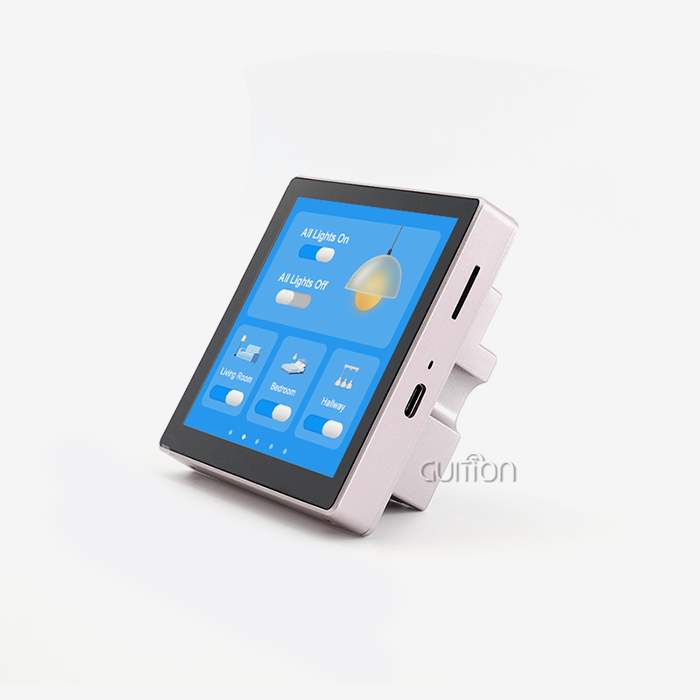
Smart building installations show that OpenHASP LCD is useful in real life. When standard wall switches are replaced with Guition displays in high-end homes, DALI lighting systems, multi-zone HVAC management, and integrated security scene triggers can all be controlled from one place. Custom plans for each room that show only the necessary controls and don't add extra stuff make users happier and cut down on the need for callback service visits that come with rigid proprietary systems. Manufacturers of medical tracking tools have started using displays based on ESP32 for interfaces with patients in bedside telemetry systems. The UTF-8 encoding support lets healthcare facilities that treat patients of different languages give them directions. The MQTT communication architecture makes it easier to connect to current hospital information systems by using standard message protocols. The ability to remotely update firmware is very helpful in this case because it lets hospital IT teams put security fixes and feature improvements on a wide range of devices without stopping patient care.
Agricultural automation presents another interesting use case. Greenhouse environmental devices with Guition screens give growers easy touchscreen access to control watering, change temperature parameters, and see how crops are growing. The protected TF card interface stores sensor data locally for agronomic analysis, and Bluetooth communication lets technicians diagnose problems on-site without the need for a network connection in remote farming areas.
Future-Proofing Through Open-Source Ecosystems
As technology changes, it tends to support solutions that are built on models of community-driven creation. OpenHASP LCD keeps getting better thanks to the work of developers around the world who are responding to new needs and hardware platform changes. This natural development is very different from private systems that are left behind when companies stop making certain products or change their overall strategy. In this case, customers are left with old equipment that can't be fixed. The open-source foundation also offers openness, which is important for businesses that don't like taking risks. Instead of relying on what the maker says about private systems, security audits can look at full firmware codebases. This auditability is very important for medical devices that need to follow FDA rules and for industry systems that need to meet IEC 62443 security standards.
Comparing OpenHASP LCD with Alternative LCD Solutions
Market Landscape Analysis
When purchasing managers look at embedded display options, they see a number of different choices, each with its own pros and cons. Nextion displays are famous private options that offer drag-and-drop interface creation through desktop software. This seems to be similar to Guition's method on the surface. However, Nextion uses serial communication methods that need constant polling instead of event-driven MQTT messaging, which adds extra work for the microcontroller and delays contact. Nextion's closed-source code also doesn't let you change things beyond what the maker allows, which can lead to dependency problems for long-term industrial projects. When you combine standard TFT LCD panels with custom firmware, you get the opposite of what you want: the most freedom with the most work to do during development. Engineers have full control over how images are rendered, but they have to start from scratch when it comes to LVGL integration, touch driver tuning, and network protocol handling. This method only makes economic sense for very large quantities of goods because the one-time engineering costs are spread out over many large amounts. System integrators that have to meet the needs of a wide range of clients can't use this method.
ESPHome integration makes basic smart home apps incredibly easy to use by letting you set up simple screens using YAML. However, ESPHome's display options are still fundamentally limited when compared to OpenHASP LCD's LVGL base. ESPHome's architectural design limits the use of complex user interface elements like animated arc gauges, stacked transparency effects, and custom font rendering. This means that it can only be used for simple data displays and not for interactive control interfaces.
Cost-Effectiveness and Total Ownership Considerations
Guition's OpenHASP LCD panels have a lower overall cost of ownership in a number of ways. Support for multiple platforms means that teams don't have to pay for expensive specialized training—they can use what they already know about Arduino or Python instead of learning how to use private toolchains. The drag-and-drop interface design cuts development times from weeks to days for most projects, which helps product companies make more money faster. Compared to private options, maintenance costs go down a lot. If firmware patches fix known bugs or add features that users have asked for, OpenHASP LCD users can install them without having to negotiate licenses or follow a vendor's release plan. The local-only MQTT operation gets rid of the need for ongoing cloud service contracts that raise running costs over the life of a product. This is especially important for large-scale deployments with hundreds or thousands of endpoints.
Scalability benefits become clear when you have a collection of more than one product. One engineering investment in OpenHASP LCD expertise can be used for many different applications, such as industrial HMI panels, smart home controllers, and commercial kiosk interfaces. On the other hand, proprietary solutions often need separate development efforts for each product category because of limitations that are specific to the platform and the vendor ecosystem.
Practical Guide for Procurement and Deployment of OpenHASP LCD Screens
Supplier Selection Criteria
In addition to unit price, there are other important factors that need to be looked at when looking for trusted OpenHASP LCD providers. Guition stands out because it has detailed technical paperwork that includes hardware blueprints, firmware integration guides, and reference code examples that make integration safer. Having quick access to technical support is very helpful in the beginning stages of deployment, when unexpected compatibility issues arise with certain MQTT broker setups or network infrastructure quirks. Warranty rules should be carefully read. Reliable suppliers, such as Guition, offer basic warranties that cover problems with the way the product was made. They also offer longer support agreements for mission-critical applications that need guaranteed reaction times. When you buy in bulk, you should talk about getting new parts ahead of time so that you don't have to wait too long when something breaks in a system that is spread out across the country.
Since there have been shortages of semiconductors recently, concerns about supply chain security have grown. Established sellers who keep strategic stock buffers of parts and build a variety of buying relationships can guarantee stability in a way that newcomers to the market can't. Asking suppliers for references from large-scale deployments that have already happened can help you figure out how reliable their delivery is and how consistent the quality is across production batches.
Customization and Value-Added Services
Most of the time, standard store goods are enough, but for certain uses, Guition's customization options are helpful. Modules can be changed to fit different container designs by changing the color of the bezel, the pattern of the mounting holes, and the length of the cables. This is done without affecting the core functions. In some deployment situations, you need custom firmware builds that include private communication methods or specialized security solutions. Experienced providers offer these services through engineering consultation agreements. Long-term relationship methods have strategic benefits that go beyond just buying things. When suppliers and clients work together, and suppliers understand each other's plans, they can plan ahead for when parts will become obsolete and let clients know about the release of new products from the next generation. This type of relationship works really well for OEM users who are making their own brand of products and need to make sure that parts will be available for many years.
Troubleshooting and Optimizing OpenHASP LCD Screens for Maximum Efficiency
Common Configuration Challenges
Misconfigured pinouts are a common problem that comes up during the initial rollout of the esp32 display module. ESP32 modules have a lot of GPIO pins that can be used. If you connect the wrong ones to the display data lines, touch controls, or power regulation circuits, the module won't be able to properly initialize. Most hardware link problems can be easily fixed by using multimeters to check voltage levels and oscilloscopes to look at communication data. Guition documentation gives confirmed pinout diagrams for each version of the module, so there is no need to guess when putting it all together. When OpenHASP LCD versions are mixed with certain hardware updates, firmware compatibility problems can happen. Keeping firmware-hardware version matching tables up to date and trying updates in the lab before putting them into use in the field stops broad operational problems. GUI software's one-click programming feature makes it easier to recover from firmware corruption events, so even people who aren't experts can fix devices using normal methods.
Performance Optimization Strategies
Power consumption tuning increases battery life in portable devices and lowers the need for heat control in closed systems. The ESP32-S3 has different power modes. In light sleep modes, it uses only a few microamps of power while staying connected to the network, so it can quickly wake up when an MQTT message arrives. Intelligent backlight dimming based on environmental light sensors or people recognition cuts energy use by a large amount without making the display less useful. When apps don't need full 480x480 processing, changing the resolution makes the best use of resources. Setting up LVGL frame buffers for smaller effective sizes frees up PSRAM, which can then be used to store more graphics assets or application data. For apps that need to show scrolling logs or historical trend analysis where memory limits usefulness, this trade-off is especially useful for systems utilizing OpenHASP LCD configurations.
Conclusion
OpenHASP LCDs completely change how ESP32 embedded system developers work by getting rid of the usual roadblocks between hardware capability and real-world applications. The Guition ESP32-4848S040C_I_Y_3 is a great example of this new technology because it has powerful dual-core processing, a bright display, and full connections all in an easy-to-use development environment. When businesses use OpenHASP LCD solutions, they get strategic benefits like faster development processes, lower total ownership costs, and open-source foundations that can be used in the future and adapt to changing needs. These displays offer the speed, freedom, and dependability that modern embedded apps need to be successful in the market. They are perfect for meeting the needs of industrial automation, smart building integration, or commercial device differentiation.
FAQ
How does updating firmware work on OpenHASP LCD modules?
There are a number of easy ways to change firmware. Over-the-air updates through the web interface let maintenance be done remotely without having to physically reach the device. This is especially helpful for setups that are mounted on the wall or that are spread out geographically. During creation, USB serial links allow for direct programming, and the Guition software's one-click programming makes the process easier for people who aren't tech-savvy. Updates keep configuration files that are saved on different flash drives. This way, custom interface designs for OpenHASP LCD modules and MQTT broker settings are kept the same across firmware versions.
What power requirements should we plan for?
Although the ESP32-S3 module runs on 3.3V logic, it usually uses between 80mA and 350mA of power, depending on whether it is active in Wi-Fi communication or idle in display operation. Depending on the brightness levels, the backlight takes an extra 200–400mA. Good 5V power sources that can deliver at least 2A continuously give you enough headroom for stable operation. Applications that use batteries can benefit from the sleep mode, which lowers average usage to less than 50mA and allows for occasional wake cycles.
Can we customize interfaces for specific industrial applications?
Of course. The JSONL configuration system lets you change everything about the display without having to change the software. Simple file uploads let you set up custom visual assets, unique color schemes, and control layouts that are specific to your business. If an organization needs more flexibility, it can use the Guition development platform's large control library or hire someone to make custom widgets. Multilingual support meets the needs of global operations, and UTF-8 encoding can handle character sets ranging from simple Latin alphabets to complex Asian languages.
Partner with Guition for Your OpenHASP LCD Needs
To take your embedded system projects to the next level, you need to work with OpenHASP LCD sources who have a lot of knowledge and know how to meet both technology and application needs. Guition offers complete solutions that combine tested hardware dependability with top-notch development tools that shorten the time it takes to get your product to market. Our display modules based on ESP32-S3 work perfectly with current automation systems and give you the freedom to make changes that unique goods need. Pricing structures that are clear, quick technical help, and a stable supply chain that keeps production plans safe are all good for procurement managers. Email our tech team at david@guition.com to talk about your unique needs, ask for evaluation units for integration testing, or look into ways to buy in bulk at prices that are competitive for businesses. We are here to help you succeed at every stage of the project, from the original review of whether the idea is even possible to long-term field support and ongoing firmware improvements.
References
1. Espressif Systems. "ESP32-S3 Series Datasheet: High-Performance MCU with AI Acceleration." Espressif Technical Documentation, 2023.
2. Khoury, Michael, and Zhang, Wei. "LVGL Graphics Library: Embedded GUI Development for Resource-Constrained Systems." Embedded Systems Engineering Quarterly, vol. 18, no. 3, 2023, pp. 112-128.
3. Industrial Automation Association. "HMI Interface Standards and Best Practices for Manufacturing Control Systems." IAA Technical Report Series, 2024.
4. Patterson, Jennifer. "MQTT Protocol Implementation in Industrial IoT Networks: Performance and Reliability Analysis." Journal of Industrial Communication Systems, vol. 29, no. 2, 2023, pp. 245-267.
5. Roberts, David, and Chen, Lisa. "Total Cost of Ownership Analysis: Open-Source vs. Proprietary Embedded Display Solutions." Embedded Technology Management Review, vol. 12, no. 1, 2024, pp. 34-52.
6. European Committee for Electrotechnical Standardization. "IEC 62443: Industrial Communication Networks Security Standards for Embedded Systems." CENELEC Official Publications, 2023.
Learn about our latest products and discounts through SMS or email