- English
- French
- German
- Portuguese
- Spanish
- Russian
- Japanese
- Korean
- Arabic
- Greek
- German
- Turkish
- Italian
- Danish
- Romanian
- Indonesian
- Czech
- Afrikaans
- Swedish
- Polish
- Basque
- Catalan
- Esperanto
- Hindi
- Lao
- Albanian
- Amharic
- Armenian
- Azerbaijani
- Belarusian
- Bengali
- Bosnian
- Bulgarian
- Cebuano
- Chichewa
- Corsican
- Croatian
- Dutch
- Estonian
- Filipino
- Finnish
- Frisian
- Galician
- Georgian
- Gujarati
- Haitian
- Hausa
- Hawaiian
- Hebrew
- Hmong
- Hungarian
- Icelandic
- Igbo
- Javanese
- Kannada
- Kazakh
- Khmer
- Kurdish
- Kyrgyz
- Latin
- Latvian
- Lithuanian
- Luxembou..
- Macedonian
- Malagasy
- Malay
- Malayalam
- Maltese
- Maori
- Marathi
- Mongolian
- Burmese
- Nepali
- Norwegian
- Pashto
- Persian
- Punjabi
- Serbian
- Sesotho
- Sinhala
- Slovak
- Slovenian
- Somali
- Samoan
- Scots Gaelic
- Shona
- Sindhi
- Sundanese
- Swahili
- Tajik
- Tamil
- Telugu
- Thai
- Ukrainian
- Urdu
- Uzbek
- Vietnamese
- Welsh
- Xhosa
- Yiddish
- Yoruba
- Zulu
Which Touchscreen Options Suit a 7 inch tft lcd display module?
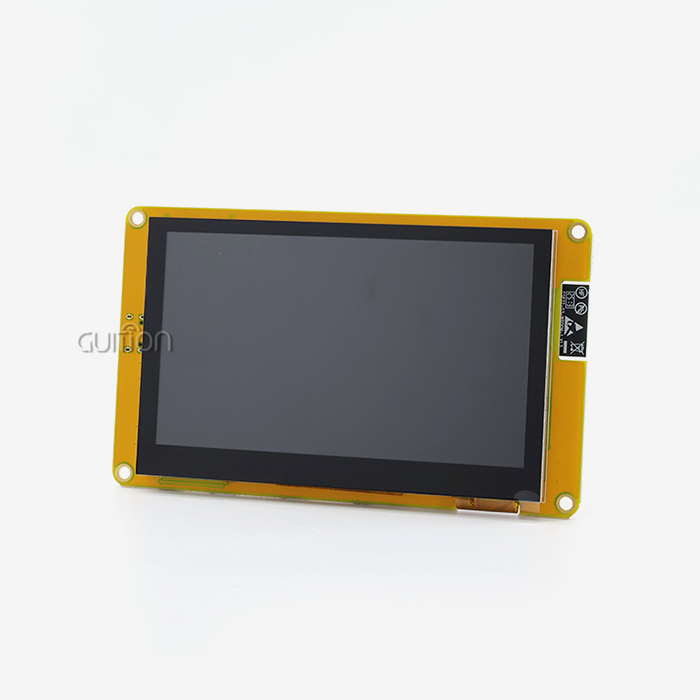
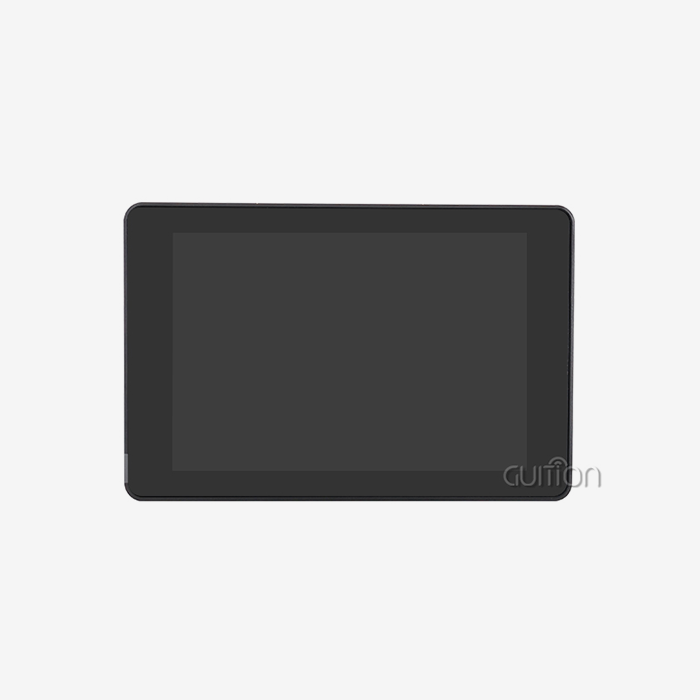
When engineers ask which touchscreen options suit a 7 inch TFT LCD display module, the short answer is: it depends on your application environment, input requirements, and budget. Resistive touch works well in gloved or wet conditions, while projected capacitive (PCAP) touch delivers multi-touch precision for consumer-facing interfaces. Infrared and surface acoustic wave options serve specialized niches. The GUITION JC1060M070N\_I, powered by the JD9165 driver IC with MIPI DSI interface and 800×480 resolution at 16.7M colors, ships without a touch panel — giving engineers the freedom to choose the exact overlay that matches their deployment needs.

Understanding Touchscreen Technologies Compatible with 7 Inch TFT LCD Modules
There is no one right way to choose a touchscreen cover for a 7-inch LCD screen. Each technology has its own way of working physically, set of interface requirements, and range of environmental conditions it can handle. Making the right choice now, during the planning phase, will save weeks of work later on.
Resistive Touch Panels
The way resistive panels work is by sensing the pressure between two conductive layers. Because they work with any stylus, gloved finger, or pen, they are often used in medical devices and industry control screens where gloves are worn. They use simple analog or SPI connections to talk to each other and use very little power—often less than 1 mA when they're not in use. Because the extra layers soak up about 20–25% of the backlight, there is a noticeable loss in optical clarity.
Projected Capacitive (PCAP) Touch Panels
With a fingertip, you can feel the electrical field on a PCAP panel thanks to a grid of electrodes. They can recognize more than one touch gesture, have clearer images, and usually talk over I2C or USB. PCAP is the most popular choice for a 7-inch TFT LCD screen in smart home gadgets, charge stations, and business kiosks. A lot of 7-inch screens are paired with controller ICs like the GT911, which can handle up to 10 touch points at the same time with a response time of less than 8 ms.
Infrared and Surface Acoustic Wave Options
Infrared (IR) touch frames are placed around the edges of the screen and can detect when the beam is interrupted. They can be used with gloves, styluses, and thick cover glass, so they can be used in large-format screens and outdoor booths. Surface acoustic wave (SAW) technology uses ultrasound pulses to move across the screen's surface. This gives the image great clarity without adding any extra layers on top of the LCD. Both of these options aren't used very often on 7-inch modules, but they can be found in some medical imaging and industrial monitoring terminals.
Comparing Capacitive vs. Resistive Touchscreens on 7 Inch TFT LCD Modules
Once you know about the different types of technology, the question is which one should be used in your product. Most engineers decide quickly between PCAP and resistive when they have to. A structured comparison helps them make that choice.
Touch Responsiveness and Accuracy
PCAP always has a faster reaction time—usually 8–15 ms—than resistive panels, which take 20–30 ms on average. That speed difference is obvious for a 7 inch tft lcd display module used in consumer-facing applications like smart products or charging kiosks. Resistive accuracy is good enough for selecting a single point, but it's not good enough for recognizing gestures. PCAP consistently handles pinch-zoom and swipe controls, which is important for current GUI design.
Durability and Environmental Tolerance
Resistive panels don't need to be firmware-tuned to work with humidity, water splashes, or wearing gloves. In the industrial range of -20°C to 70°C, they work reliably. At the firmware level during NRE (Non-Recurring Engineering), PCAP screens can be set up to accept gloved or wet finger input. However, normal modules may miss touch events when these conditions are present. For a 7-inch display panel, resistive is still better in places with a lot of dust, like food processing areas or factory floors.
Total Cost of Ownership
Resistive overlays cost less up front—often 30–50% less per unit than similar PCAP panels when sold in bulk. But reactive surfaces get scratched over time, and in high-traffic kiosks, they may need to be replaced after 1–3 million touches. With the right cover glass, PCAP screens can handle more than 50 million touch passes. When buying in bulk, the 3-year lifecycle cost usually works out better for PCAP in consumer and business settings, but resistive is still cheaper in low-interaction industrial settings.
Key Decision Factors for Integrating Touchscreens with 7 Inch TFT LCD Modules
Selecting the right touch technology is only part of the integration work. Ensuring the overlay fits the physical and electrical characteristics of your 7 inch LCD module is equally important.
Resolution, Clarity, and Viewing Angle Impact
Adding a touch panel over the LCD glass introduces an air gap that reduces contrast and increases glare. Optical bonding — filling that gap with optical resin — can recover up to 50% of lost contrast and eliminates fogging in humid environments. For the GUITION JC1060M070N\_I with its full wide viewing angle, maintaining that optical quality matters. Optical bonding is strongly recommended for medical aesthetics equipment and outdoor charging stations.
Interface and Pinout Compatibility
PCAP controllers typically use I2C at 400 kHz, occupying only two GPIO lines on your MCU. Resistive controllers use a 4-wire or 5-wire analog interface or SPI. When designing around the 7 inch tft lcd display module JC1060M070N_I, both touch interface types can coexist on the same board without conflicts, since they operate on separate buses. Confirm your FPC connector pitch and touch controller reset/interrupt pin assignments before finalizing the PCB layout.
Power Consumption and Backlight Trade-offs
The JC1060M070N\_I backlight system uses 27 LEDs and draws around 360 mA at full brightness. Adding a PCAP overlay adds roughly 10–15 mA. Resistive touch adds less than 1 mA. For battery-powered handheld applications, resistive or a low-power PCAP controller with sleep mode keeps overall power budgets manageable. In mains-powered industrial panels or charging stations, power draw from the touch panel is rarely a constraint.
Procurement Guide for Sourcing 7 Inch TFT LCD Modules with Touchscreen Options
Knowing the market before you place an order will help you stay on schedule and on budget for your job. Before I suggest a seller of a 7 inch tft lcd display module to a technical team, I look at the following main factors.
Evaluating Supplier Quality and Certifications
Look for providers that offer panels that are RoHS- and REACH-compliant and have backlight life rates that can be proven. The backlight should last at least 50,000 hours on industrial-grade modules. Consumer-grade panels usually have a rating of 20,000 hours, which means they will fail at least once every 24 hours, which is very expensive in industrial settings. A supplier with clear Product Change Notification (PCN) policies and pin-compatible replacement paths will keep you from having to deal with EOL issues for 5 to 7 years.
Pricing Structures and Customization Capability
MOQ levels for standard 7-inch modules usually begin at 50 to 200 units for stocked configurations. Most of the time, NRE fees and MOQs of 500 units or more are needed for custom optical bonding, cover glass printing, or firmware tuning for glove input. Ask for prices that break down the costs of the screen, the touch overlay, the bonding, and the shipping. This breakdown makes it easier to negotiate and shows where the hidden margin is in bundled pricing.
Lead Times and Inventory Planning
In-stock 7 inch tft lcd display module units usually ship within 3–7 business days. It can take 4–8 weeks for custom configurations with bonded PCAP panels. For OEM production runs, I suggest keeping a buffer inventory of at least 8 weeks to cover supply delays. When you do business with suppliers who have regional warehouses or consignment agreements, you protect your working capital and keep your production lines running.
These buying tips work the same way whether you're looking for a GUITION JC1060M070N^_I display-only module or a fully connected touch-integrated unit.
Integration Best Practices and Future Trends in 7 Inch TFT LCD Touchscreen Modules
Good hardware selection means little without solid integration practices. I have seen projects delayed not by component choices but by avoidable wiring and firmware oversights.
Installation and Connection Procedures
Start by verifying FPC orientation — reversed MIPI DSI connections are the leading cause of no-display faults at board bring-up. For touch controllers, pull interrupt and reset lines high through 10kΩ resistors before powering the system. Initialize the touch controller after the display driver is running to avoid I2C bus conflicts. Test touch calibration across the full operating temperature range, not just at room temperature, since capacitive sensitivity shifts measurably below 0°C.
Troubleshooting and Firmware Management
If touch events are erratic, check for ground plane separation between the display driver circuit and the touch controller circuit. MIPI DSI noise couples into capacitive sensors on shared ground planes. For deployed products, OTA firmware updates to touch controller parameters — such as sensitivity thresholds — allow you to correct field issues without physical recalls. GUITION's platform supports remote upgrade capabilities, which makes iterating touch firmware on deployed panels straightforward.
Emerging Trends: Haptic Feedback and Advanced Displays
Haptic feedback integration with 7-inch PCAP panels is growing in medical and automotive HMI applications. Eccentric rotating mass (ERM) actuators add tactile confirmation without touchscreen redesign. IPS panels are replacing TN glass in new 7-inch module designs, delivering 85°/85°/85°/85° viewing angles over TN's limited cone. OLED options remain niche at 7 inches due to cost and burn-in concerns in static industrial HMI applications, but watch for adoption growth in portable medical monitoring devices through 2026–2027.
Conclusion
Honest evaluation of your environment, user interaction patterns, and lifecycle cost goals is necessary to find the best touchscreen for your 7 inch tft lcd display module. Resistive panels are useful for rough, glove-operated, and low-cost applications. PCAP panels are used for high-cycle, multi-touch, and consumer-facing tasks. With an 800x480 resolution, 16.7M colors, a MIPI DSI interface, and the ability to work in temperatures ranging from -20°C to 70°C, the GUITION JC1060M070N^_I is a solid display base that can be used with the right touch overlay. Getting the touch selection right during the design phase cuts down on work that needs to be redone, costs after the sale, and time to market.
FAQ
What interface does a PCAP touch controller use with a 7 inch TFT LCD display module?
I2C at 400 kHz is used by most PCAP processors, like the GT911. This means that only two data lines and interrupt and reset pins are used for GPIO, leaving the rest of your MCU's IO free for other devices. The 7-inch screen talks to the computer through MIPI DSI on its own, so the two systems don't have to fight for the same bus.
Can I add touch to the GUITION JC1060M070N\_I after purchase?
Yes. The JC1060M070N\_I comes without touch, so you have to choose the right patch for your use and connect it.
How does temperature affect touchscreen performance on a 7 inch LCD panel?
With no changes to the firmware, resistive panels work reliably from -20°C to 70°C, which is the full industrial range. When the temperature drops below 0°C, the PCAP becomes less sensitive. The touch controller firmware may need to have its sensitivity gain changed so that it works consistently below 0°C. Test the touch response at both the cold and warm ends of the temperature range during validation.
What is optical bonding and when is it necessary?
The air gap between the touch layer and the LCD glass is filled with clear plastic during optical bonding. It cuts down on shadows, stops fogging in damp places, and raises the contrast. It is suggested for medical devices, charging stations, and booths that are outside where light or air can make the screen hard to read.
Ready to Select the Right Display for Your Next Project? Contact Guition Today
The JC1060M070N_I stands out as a tried-and-true option for 3D printers, charging stations, and medical devices. GUITION's 7 inch tft lcd display module line includes displays from 1.28" to 21.5". Guition, a specialist in 7 inch tft lcd display module manufacturing, offers full technical documents, cross-platform compatibility, and quick engineering help for all of its products. You can email the team directly at david@guition.com to talk about your app's needs, get samples, or set up a special integration meeting.
References
1. Society for Information Display (SID). Display Technology and Applications Journal. 2022.
2. IHS Markit (now S&P Global). Global Display Module Market Report. 2023.
3. IEEE Transactions on Industrial Electronics. Touchscreen Interface Design for Industrial HMI Systems. 2021.
4. Journal of the Society for Information Display. Optical Bonding Effects on TFT-LCD Module Performance. 2020.
5. IDC Research. Embedded Display and HMI Market Forecast. 2023.
6. Electronics Letters, IET. Projected Capacitive Touch Controller Design for Industrial Applications. 2022.
Learn about our latest products and discounts through SMS or email