- English
- French
- German
- Portuguese
- Spanish
- Russian
- Japanese
- Korean
- Arabic
- Greek
- German
- Turkish
- Italian
- Danish
- Romanian
- Indonesian
- Czech
- Afrikaans
- Swedish
- Polish
- Basque
- Catalan
- Esperanto
- Hindi
- Lao
- Albanian
- Amharic
- Armenian
- Azerbaijani
- Belarusian
- Bengali
- Bosnian
- Bulgarian
- Cebuano
- Chichewa
- Corsican
- Croatian
- Dutch
- Estonian
- Filipino
- Finnish
- Frisian
- Galician
- Georgian
- Gujarati
- Haitian
- Hausa
- Hawaiian
- Hebrew
- Hmong
- Hungarian
- Icelandic
- Igbo
- Javanese
- Kannada
- Kazakh
- Khmer
- Kurdish
- Kyrgyz
- Latin
- Latvian
- Lithuanian
- Luxembou..
- Macedonian
- Malagasy
- Malay
- Malayalam
- Maltese
- Maori
- Marathi
- Mongolian
- Burmese
- Nepali
- Norwegian
- Pashto
- Persian
- Punjabi
- Serbian
- Sesotho
- Sinhala
- Slovak
- Slovenian
- Somali
- Samoan
- Scots Gaelic
- Shona
- Sindhi
- Sundanese
- Swahili
- Tajik
- Tamil
- Telugu
- Thai
- Ukrainian
- Urdu
- Uzbek
- Vietnamese
- Welsh
- Xhosa
- Yiddish
- Yoruba
- Zulu
Which OpenHASP lcd Certifications Matter for Global Projects?
The certifications that matter for an OpenHASP LCD depend on where you sell it, because OpenHASP is open-source firmware, not a hardware approval programme. In the United States, I look first at FCC Part 15 evidence for the radio and the finished device, plus listed power supplies. Canada adds ISED, and Europe adds CE under the Radio Equipment Directive, RoHS, and REACH. Each document must match the exact production build, including the ESP32 radio module, antenna, and enclosure. Compatibility testing and compliance review are separate steps, and a good project completes both before volume orders.

OpenHASP lcd Certification vs. OpenHASP Compatibility
What OpenHASP Does and Does Not Certify
OpenHASP runs on ESP32 hardware, pulls screens from JSONL files, and talks to systems like Home Assistant, Node-RED, and OpenHAB via MQTT. Which means it is a firmware choice, not a government regulatory badge. There is no logo on the project to show that the screen meets FCC, CE, or safety regulations. When I judge an OpenHASP LCD, I consider the board, the touch controller, the ESP32 radio, the power source, and the housing. If you are a business that makes parts or integrates parts or distributes parts, you need to have valid proof for each market you want to serve. The proof must cover the whole build.
How to Test Compatibility with the Guition ESP32-4848S040C_I_Y_3
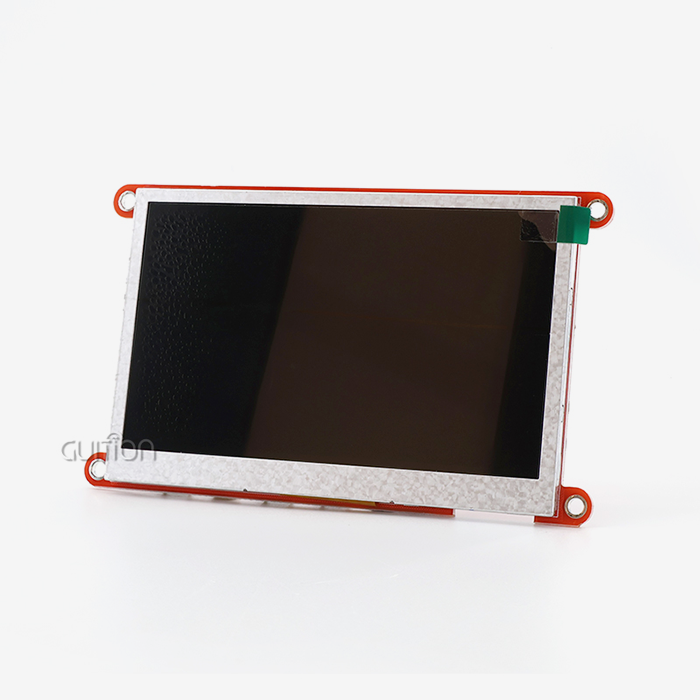
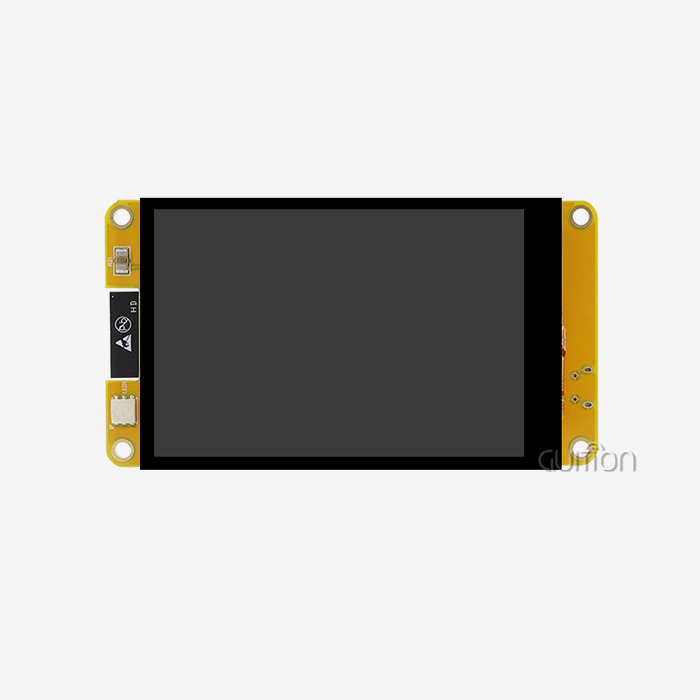
Compatibility is dependent on several variables such as ESP32 hardware, drivers, resolution, touch controller, and configuration files. The Guition ESP32-4848S040C_I_Y_3 OpenHASP LCD module is built around an ESP32-S3R8 dual-core MCU running up to 240MHz and comes with 512KB SRAM, 384KB ROM, 8MB PSRAM, and 16MB Flash. The 4-inch IPS display is capacitive touch with a resolution of 480x480 pixels. The board integrates touch control and backlight circuits, a TF card slot, and reserved IO lines. It is possible to develop using Arduino IDE, ESP-IDF, MicroPython, and the Guition tool. I would suggest requesting a sample and pinouts to test your own pages and MQTT messages.
Why I Use a Two-Stage Approval Process
CE, FCC, or RoHS paperwork does not guarantee the OpenHASP screen works properly. Moreover, a working demonstration does not necessarily mean a product is safe to legally ship. I split an OpenHASP LCD build into two gates. Gate one is technical — pinout, touch response, WiFi stability, firmware behaviour on real hardware. Gate two is market compliance: test reports, declarations, labels, and importer duties for each country. This saves retest time and keeps the schedule predictable. A common failure is teams designing a custom enclosure and then finding that the radio documents do not match the enclosure.
The Most Important Certifications for Global OpenHASP LCD Projects
FCC and ISED Evidence for the United States and Canada
United States: 47 CFR Part 15. Radiofrequency devices. OpenHASP LCD with Wi-Fi and Bluetooth: Intentional radiator. Requires an FCC grant. Many teams use a radio module with a modular approval under 15.212. Even then, the final host product typically needs to be tested under Part 15 Subpart B for unintentional emissions, and the module must stay within its grant conditions, e.g., by using an approved antenna. Canada has added ISED requirements, including ICES-003 for digital equipment and RSS-247 for Wi-Fi and Bluetooth equipment. I ask suppliers for grant listings and test reports for the specific module and antenna being manufactured.
CE, RED, and UKCA for Europe and the United Kingdom
The Radio Equipment Directive 2014/53/EU is applied to all wireless products sold within the European Union and covers safety, EMC, and radio spectrum use. From August 1, 2025, Delegated Regulation (EU) 2022/30 will also require some internet-connected radio equipment to comply with cybersecurity standards. Many products in Great Britain use the UKCA mark, but the government will accept the CE mark for many categories at this time, so I always check the latest regulations before I ship. If a team is going to export OpenHASP LCD products, they should ask for these files early so that new labels, files, and tests are not needed later.
Why Market-by-Market Review Beats One Universal Certificate
No one certificate works for every border. FCC authorisations are not in line with European regulations, and CE marking does not authorise sales in the USA or Canada. Each region looks at different things about the product. Radio approvals are about the module and antenna. Safety is about the power design and housing. Environmental rules are about the materials. These are different for each design. A certificate for a related LCD model will not support an OpenHASP LCD project. I tell clients to get declarations, test reports, and labelling instructions for the exact production setup and document which country each file is for.
Safety, EMC, and Environmental Compliance for an OpenHASP LCD Touchscreen
Electrical Safety and Power Adapters
The safety review includes both the display board and the finished article. UL and CSA distribute North American editions of IEC 62368-1, which covers safety requirements for audio, video, information and communication technology equipment. A naked LCD module may not be under these rules, but an OpenHASP LCD wall panel or smart-home controller often is. The power adapter needs separate evidence of its own. This might be a listing by a nationally recognised testing laboratory like UL or ETL for the US, or CE documents for sales in Europe. Another flammability rating for enclosure plastics is UL 94.
EMC and ESD Testing
If emissions and immunity are not managed, ghost touches or resets can occur on a touchscreen near a Wi-Fi radio, relays, or long cables. EMC testing examines the emissions from the device and its susceptibility to interference. References include FCC Part 15 Subpart B, ICES-003, and EN 55032 or EN 55035. The ESD tests are performed according to IEC 61000-4-2, which is important for the wall panels that are always in contact with humans. I suggest doing pre-compliance testing on a sample with the real enclosure, cables, and power supply before freezing the design. It is much cheaper to fix problems at this stage than to redesign after a failed final test.
RoHS, REACH, and WEEE Documentation
European sales and distributor onboarding requires environmental documentation. RoHS (Directive 2011/65/EU) restricts, amongst others, lead, mercury, cadmium and hexavalent chromium. Evidence has to cover the whole assembly: LCD glass, backlight, FPC, touch panel, PCB, connectors, cables and housing. REACH (Regulation (EC) No 1907/2006) demands that suppliers inform about the presence of a Substance of Very High Concern above 0.1% by weight in an article. WEEE regulations add marking, recycling, and registration obligations for the importer or brand owner. Big customers might also ask for conflict minerals statements, ISO 14001 records, or California Proposition 65 labelling.
How to Verify Documents and Choose an OpenHASP LCD Supplier
Match Every Document to Your Exact Configuration
A certificate only provides value if it describes your specific product configuration. You must verify the model number, hardware revision, screen size, radio module, touch panel, antenna, power design, and factory location. Supplier declarations should be kept separate from third-party laboratory reports. A mark stating "FCC ready" is not sufficient evidence; a valid report must confirm the laboratory name, accreditation, test standard, sample description, and report number. These files should be stored alongside the OpenHASP LCD firmware version and wiring notes so that engineering and purchasing teams reference the same records.
Questions to Ask Before You Choose a Supplier
Here are the checks I use when comparing suppliers for a global build:
- Engineering support: Ask the team if they can set up the ESP32 hardware, try the OpenHASP software, make Home Assistant work, and make sure the touchscreen works right. This will help with engineering. It will take less time to validate, and there will be less back-and-forth between engineering and buying if the seller gives samples, pinouts, and an easy way to get in touch with them for technical questions.
- Documentation quality: Specs, controller data, wiring files, test results, and RoHS and REACH declarations should all be included. Make sure they match the sample you tried. Check with the supplier about how they handle changes. If the radio module or touch controller changes, old paperwork might not work anymore.
- Supply continuity: To make sure there is a steady supply of the part, you should look at its lifecycle, lead time, MOQ, safety stock, and technical change notes. Learn about things like inspection records, burn-in testing, the dead-pixel strategy, and how to keep track of things. If the plan changes after it has been accepted, the compliance review can begin again.
Common Certification Mistakes
Treating "OpenHASP compatible" as proof of global compliance is a significant mistake; it does not replace FCC, ISED, CE, safety, or environmental files. Teams often erroneously reuse documents from a different ESP32 module, antenna, or enclosure. Additionally, CE, RoHS, and FCC cover distinct areas and are not interchangeable. Buying based solely on unit price can backfire, as retesting, customs delays, and redesigns resulting from unstable configurations often cost far more than a slightly higher initial quote for an OpenHASP LCD.
Application Tests and a Compliance Checklist by Project Stage
Industrial, Commercial, and Smart-Home Conditions
Application environments can introduce requirements beyond basic compliance. A wall-mounted OpenHASP LCD panel needs evaluation for ESD resistance, temperature range, touch durability, and enclosure safety. Industrial and commercial interfaces may require vibration, shock, ageing, and burn-in tests, especially near electrical noise. If a supplier labels a display "industrial", you should request measured data and stated operating limits. Specialised products for medical, automotive, or aviation sectors must follow additional standards like IEC 60601-1, along with rigorous traceability and risk management.
Checklist from Prototype to Production
Compliance planning begins at the prototype stage. During proof of concept, verify OpenHASP LCD operation, ESP32 networking, touch response, and MQTT integration. Engineering validation involves thermal, ageing, power-consumption, and EMC pre-compliance tests before freezing the design. Production validation confirms the exact components, final labeling, packaging, and firmware version control. After launch, all technical files, declarations, and batch traceability must remain current, as any new component or firmware build can impact the product's compliance status.
Building a Compliance Matrix
A compliance matrix is a table that identifies what each market requires and the owner of each document. For the US, list FCC Part 15, safety evidence, and rules like California SB-327 for connected devices. Include ISED for Canada and CE, RED, RoHS, REACH, and WEEE for Europe, adding UKCA for Great Britain where applicable. The matrix should include columns for product type, radio function, voltage input, and testing laboratory. Reviewing this matrix with an importer or local compliance representative before production helps identify gaps while changes to the project are still cost-effective.
Conclusion
An OpenHASP LCD project's certifications depend on the customer base, the finished product, and the exact production setup, not on the firmware. OpenHASP gives you control over things with JSONL pages and MQTT, but you still need to make sure they work together and get permission from the law. In the US, proof and power sources that are on FCC Part 15 come first. Canada's next one is ISED, and Europe's are CE, RED, RoHS, REACH, and WEEE. Safety, EMC, and ESD tests are done at the product level, and more checks can be added by the program. In the papers, the type, version, radio module, antenna, and case must all match. A staged checklist and a compliance matrix make it easy to see these things from the prototype to the launch.
FAQ
Q: Does OpenHASP issue certifications for LCD hardware?
A: Not at all. OpenHASP doesn't approve screens because it is free software that anyone can use. People who want to buy a finished item must get proof from the FCC, ISED, CE, safety, and the environment.
Q: Does a modular radio approval cover my whole product?
A: Not all the time. A modular grant pays for the radio as long as certain conditions are met, like using an antenna that has been approved. A lot of the time, the host product still needs to be checked for safety and emissions.
Q: Is CE marking enough for the United States?
A: Not at all. The CE mark is only used in Europe. You need to show proof from the FCC in order to sell a wireless device in the US. There may be other safety or state rules that also apply.
Q: What should I request before ordering an OpenHASP lcd?
A: As for the model and version you want, you should ask for specific RoHS and REACH statements, firmware proof, test reports, and controller datasheets, pinouts, and test reports. That way, your team can first look at the pages and MQTT messages to test the OpenHASP lcd.
Request a Compliance-Ready OpenHASP LCD Sample from Guition.
Planning a global build? Guition is an OpenHASP LCD seller that provides the ESP32-4848S040C_I_Y_3 module and screens ranging from 1.28 to 21.5 inches. Send your target countries, display size, application, and OEM/ODM needs to david@guition.com, and we will review sample options and documentation for your configuration. You can also visit https://jingcaizhineng.aixdb.cn/ to learn more.
References
1. European Parliament and Council, Directive 2014/53/EU on Radio Equipment (Radio Equipment Directive), 2014
2. European Parliament and Council, Directive 2011/65/EU on the Restriction of Hazardous Substances (RoHS), 2011
3. European Parliament and Council, Regulation (EC) No 1907/2006 on REACH, 2006
4. International Electrotechnical Commission, IEC 62368-1: Audio/video, information and communication technology equipment – Safety requirements, 2018
5. U.S. Government Publishing Office, Code of Federal Regulations, Title 47, Part 15: Radio Frequency Devices, 2023
6. California Legislature, Senate Bill 327: Information Privacy, Connected Devices, 2018
Learn about our latest products and discounts through SMS or email