- English
- French
- German
- Portuguese
- Spanish
- Russian
- Japanese
- Korean
- Arabic
- Greek
- German
- Turkish
- Italian
- Danish
- Romanian
- Indonesian
- Czech
- Afrikaans
- Swedish
- Polish
- Basque
- Catalan
- Esperanto
- Hindi
- Lao
- Albanian
- Amharic
- Armenian
- Azerbaijani
- Belarusian
- Bengali
- Bosnian
- Bulgarian
- Cebuano
- Chichewa
- Corsican
- Croatian
- Dutch
- Estonian
- Filipino
- Finnish
- Frisian
- Galician
- Georgian
- Gujarati
- Haitian
- Hausa
- Hawaiian
- Hebrew
- Hmong
- Hungarian
- Icelandic
- Igbo
- Javanese
- Kannada
- Kazakh
- Khmer
- Kurdish
- Kyrgyz
- Latin
- Latvian
- Lithuanian
- Luxembou..
- Macedonian
- Malagasy
- Malay
- Malayalam
- Maltese
- Maori
- Marathi
- Mongolian
- Burmese
- Nepali
- Norwegian
- Pashto
- Persian
- Punjabi
- Serbian
- Sesotho
- Sinhala
- Slovak
- Slovenian
- Somali
- Samoan
- Scots Gaelic
- Shona
- Sindhi
- Sundanese
- Swahili
- Tajik
- Tamil
- Telugu
- Thai
- Ukrainian
- Urdu
- Uzbek
- Vietnamese
- Welsh
- Xhosa
- Yiddish
- Yoruba
- Zulu
Which HMI interactive interface Certifications Matter?
When you source an HMI interactive interface for industrial, medical, or smart-device applications, certifications are not optional paperwork — they are proof that the display module meets safety, electromagnetic, and quality thresholds your application legally requires. The right certifications protect your end product from market rejection, field failure, and liability exposure. This guide breaks down which certificates actually affect procurement decisions, how to verify them, and how Guition's JC4827W543R_I fits into a compliant development workflow.

Understanding Why HMI Display Certifications Matter
Certifications are proof from a third party that an HMI interactive interface works correctly in certain situations. If you don't have them, you could face fines, delays at customs, or product refunds, all of which cost a lot more than just making sure you're following the rules.
They Reduce Procurement Risk
A certified human-machine interface has already been tested and found to work by a third-party lab. That proof cuts down on the time it takes to qualify you and gives your legal team written proof that you did your research.
They Signal Supply Chain Stability
Quality management systems are bought by suppliers who keep their certifications up to date. The IEC says that manufacturers with ISO 9001 certification have much lower rates of defects. A stable provider is less likely to make quick changes to the design that make your own compliance paperwork useless.
They Enable Global Market Access
Different areas need different grades. If you want to sell a control panel in the EU, it needs to be CE marked. If you want to ship it to North America, it needs to be UL or FCC recognized. If your hmi display module is approved in more than one country, it's easy for your product to reach foreign markets without having to go through expensive re-testing.
Key Certifications That Matter for HMI Interactive Interfaces
Not every ticket is worth the same amount of money. The ones below show up most often on procurement qualification checklists for solutions with HMI interactive interface embedded displays.
Safety and Regional Compliance Marks
The CE marking (EU Directive 2014/35/EU and 2014/30/EU) shows that an HMI touch screen module meets the rules for low voltage and electromagnetic compatibility in Europe. For industrial control equipment in North America, UL listing (UL 508) is the same thing. Both of these are basic requirements for selling in their own markets. ATEX / IECEx certifications are important when the display is used in places like oil rigs, chemical plants, and food storage facilities that are prone to explosions or high gas levels.
Communication and Interoperability Standards
In a plant that is networked, an HMI control panel must be able to consistently share data with PLCs, SCADA systems, and cloud platforms. The OPC UA certification shows that the communication stack of the device meets the IEC 62541 standard for industrial interoperability. Fieldbus certifications, like PROFIBUS, EtherNet/IP, and Modbus compliance, show that the integration works at the protocol level. If you look at these marks before you buy, you can avoid having to buy expensive software later on.
Cybersecurity and Data Integrity Standards
Attacks on industrial control systems went up 300% from 2020 to 2023, according to the U.S. Cybersecurity and Infrastructure Security Agency (CISA). What does this mean? IEC 62443 sets the security levels for industrial automation networks, and ISO/IEC 27001 verifies that the supplier manages information security well. In RFQs for medical monitoring equipment and energy management systems, these certificates are becoming more and more important.
How to Verify and Evaluate HMI Interface Certifications When Procuring
It's not enough to just know which certificates are important. Before signing a purchase order, you should also make sure that it is real and covers what you want to buy.
Cross-Check the Issuing Body
There is a unique certificate number and the name of an approved testing laboratory on every real certificate. These testing laboratories include SGS, TÜV Rheinland, Bureau Veritas, UL Solutions, and others. Type that number right into the public database of the licensing body. Should the record not match the product type shown on the supplier's document, that should be seen as a problem that rules out the possibility of the record being valid.
Match Certification Scope to Your Installation Context
A CE mark that was issued for a quiet office does not immediately cover an industrial setting with a lot of motor-driven EMI, even when an HMI interactive interface is used.
Review Certification Validity Against Firmware Versions
Hardware certifications are tied to a specific product configuration. Ask the supplier for the technical file or Declaration of Conformity and make sure that the testing conditions match your deployment environment in terms of temperature range, ingress protection class (IP rating), and EMI exposure levels. If the supplier sends a firmware update that changes how a Wi-Fi-enabled HMI display sends and receives radio waves, testing may need to be done again. When looking at modules that can be updated over-the-air (OTA), make sure you ask the supplier how firmware updates are handled within the certification limits.
Comparison of Certified HMI Interactive Interface Brands and Solutions
Procurement teams can make faster, more solid choices when they know how different providers present their certification portfolios.
Enterprise Platforms: Siemens, Rockwell Automation, Schneider Electric
There are safety approvals for multiple regions, a wide range of fieldbus options, and IEC 62443-checked cybersecurity measures from these providers. Their products are good for big brownfield projects where compliance paperwork is already set up, and audit trails are needed. In exchange, the cost per unit is higher and the lead time is longer, which can make agile development cycles less smooth.
Embedded Module Suppliers: Guition JC4827W543R_I
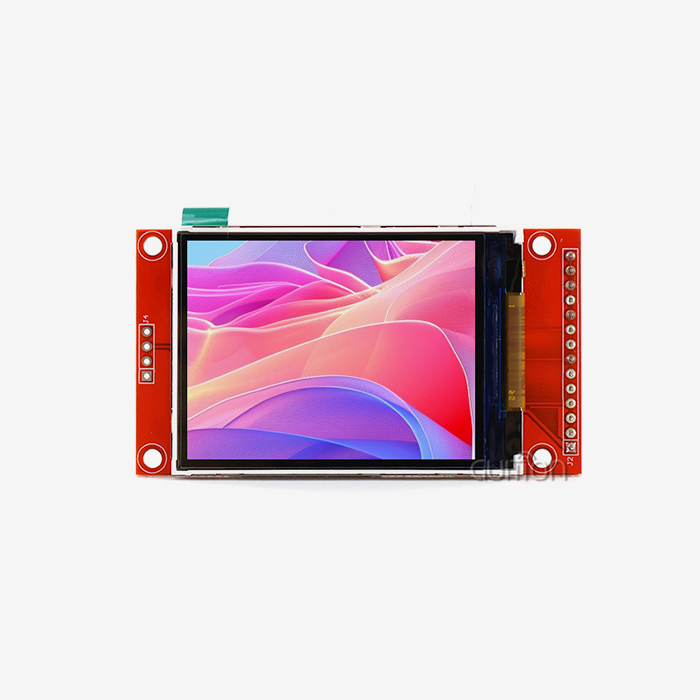
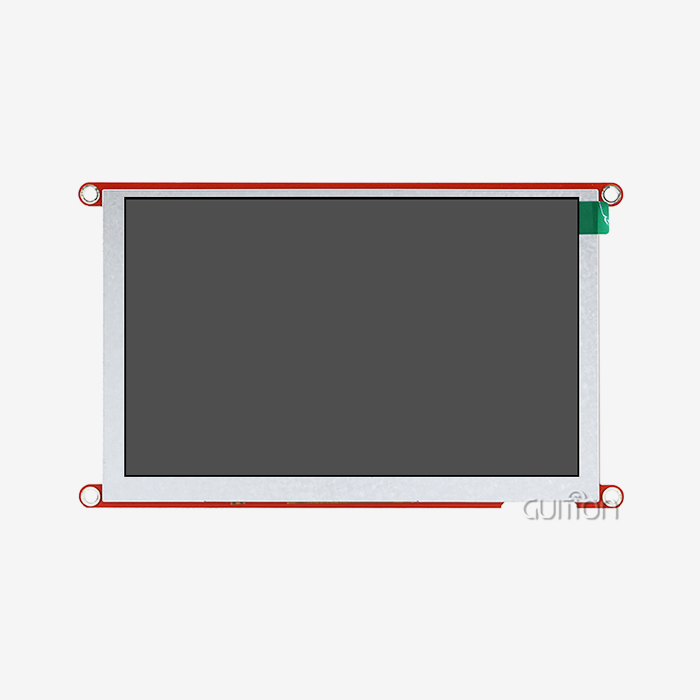
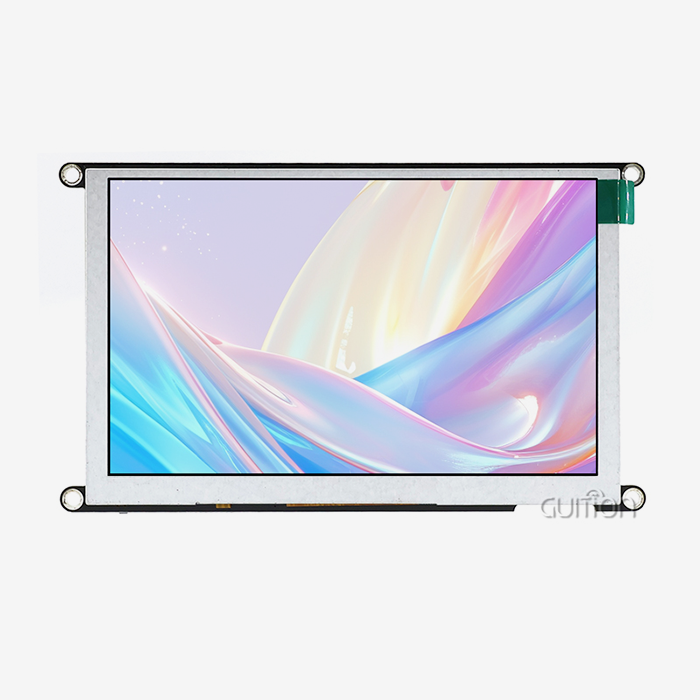
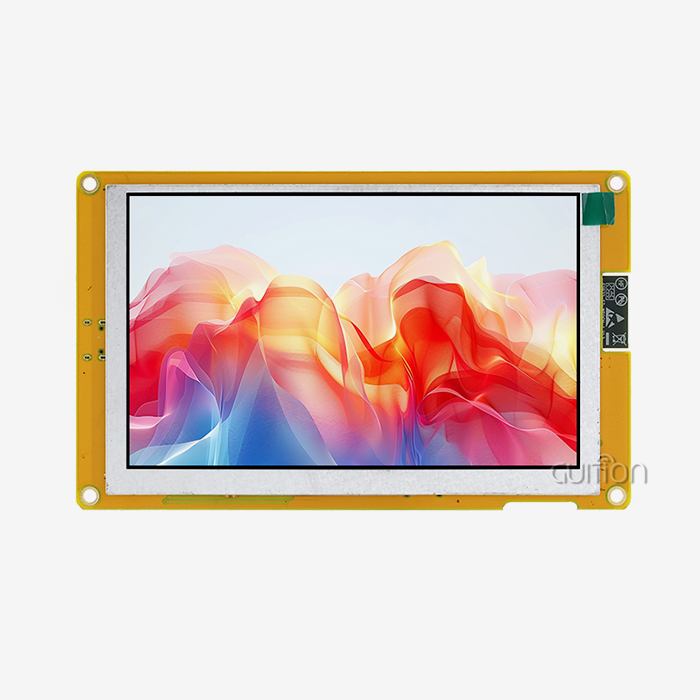
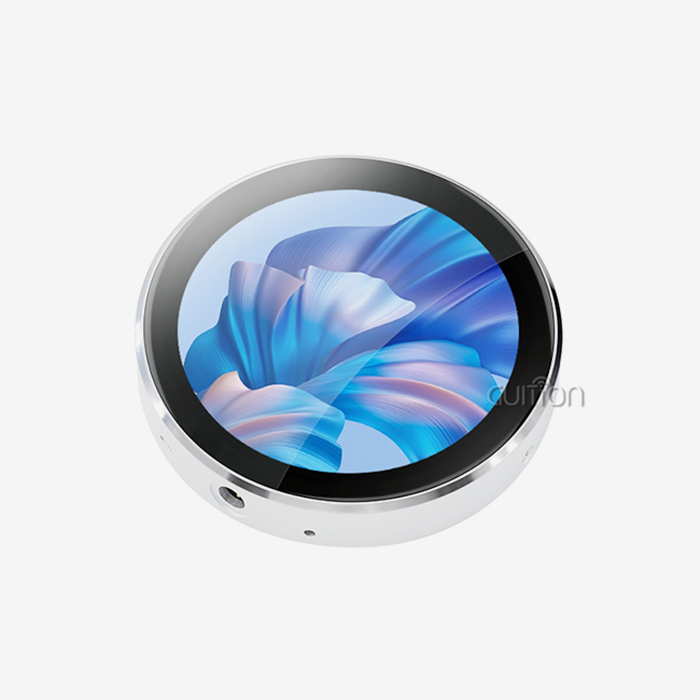
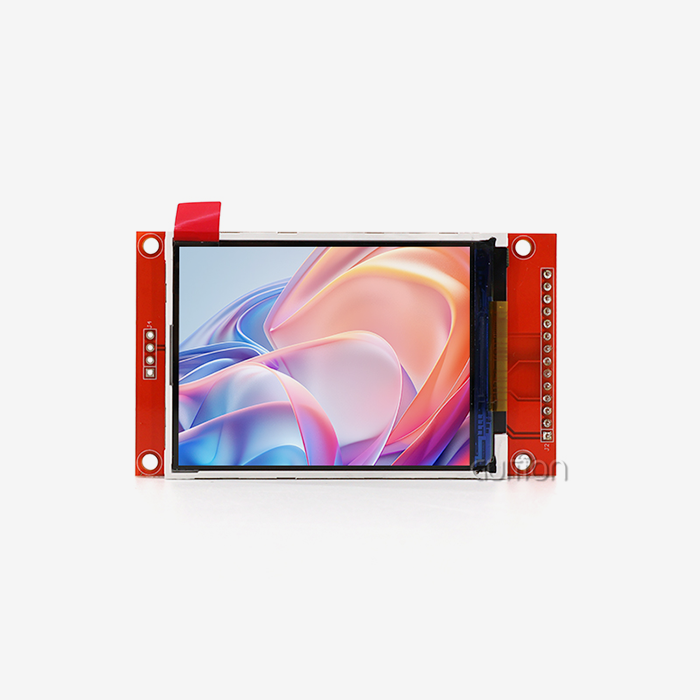
Guidance is for engineers who need a certified, flexible HMI interactive interface but don't want to pay the high costs of buying something for the whole company. The JC4827W543R_I is a 4.3-inch resistive-touch LCD module that is based on the ESP32-S3R8 dual-core processor (240 MHz, 8 MB PSRAM, 4 MB Flash). It has Wi-Fi and Bluetooth built in, and it works with Arduino IDE, ESP-IDF, MicroPython, and the built-in Guition development environment. It also has a TF card interface and up to 10 I/O pins that can be configured. Teams can check how the hardware works before writing a single line of application code because the module comes with factory test firmware. Guition's product line includes screens from 1.28" to 21.5", so you can get all of your display needs met by a single provider. This includes everything from mobile diagnostic tools to industrial control panel terminals. The company's Guition UI tool has drag-and-drop features that get rid of the need for low-level graphics code and greatly reduce the time needed for UI development. Support for multiple languages in UTF-8 and the ability to upgrade over-the-air (OTA) remotely help with both global deployment and lowering after-sales costs.
Best Practices to Ensure Certification Compliance in Your HMI Procurement
A planned approach to compliance management for an esp32 display module cuts down on the time needed for qualification and keeps your product safe after it's been released.
Build a Certification Checklist Before Issuing an RFQ
Figure out who your product is meant for, where it can be installed, and what kinds of connection methods it needs. Turn those requirements into a list of certifications that must be met. Add that list to your RFQ so that all of the suppliers will be responding to the same set of criteria. This will keep you from being surprised after the fact.
Engage Suppliers Early on Documentation
Ask for the Declaration of Conformity, test reports, and certificate numbers when you ask for a quote, not after you've placed an order. Early review of the paperwork shows gaps while you still have negotiating power and time to check out a different source if needed.
Track Certification Expiry Dates
Certifications are only good for a certain amount of time, usually three to five years, and are tied to certain updates to hardware and software. Keep a compliance chart that shows when renewals are due 90 days in advance. For modules that can update firmware over-the-air (OTA), like the Guition JC4827W543R_I, make sure that any remote firmware update doesn't go beyond the current certification limits or start the re-qualification process.
When these steps are taken regularly, audit findings go down, time-to-market goes faster, and the total cost of keeping a certified embedded display product over its lifetime goes down.
Conclusion
Certifications show if an HMI interactive interface can legally work in the market you want to reach, last in the installation setting, and work with your current network setup. Each type of safety mark (CE and UL), communication standard (OPC UA), and cybersecurity framework (IEC 62443) deals with a different type of risk. Three things that prevent compliance failures are checking certificates against databases of certified bodies, making sure that the scope of the certificate matches the installation context, and keeping track of when the certificate expires. Guition's JC4827W543R_I gives teams building approved ESP32 Display Module products at any size a well-documented and adaptable base.
FAQ
What is the difference between CE marking and UL listing?
With a technical file, CE marking is the manufacturer's way of saying that the product meets EU regulations. UL listing is given by UL Solutions, a separate NRTL (Nationally Recognized Testing Laboratory), after the product has been tested physically. CE is for the European Economic Area, and UL is for countries in North America. For some things, you need both.
Do software certifications matter as much as hardware certifications?
Yes, IEC 62443 talks about software security levels in industrial control systems in a very clear way. Even if your certified hardware enclosure has firmware that hasn't been checked, it can still let hackers into your network.
How often do HMI certifications need to be renewed?
Most safety certifications need to be renewed every three to five years or whenever the hardware or software setup changes in a way that is important. During the sourcing stage, check with your supplier about when the contract will be renewed.
Can a single HMI display module carry certifications for multiple regions?
Yes. A lot of modules are tested at the same time for CE (EU), FCC (USA), and RoHS. Ask your provider for a full certification grid that lists all the marks and the certificate numbers that go with them.
How does OTA firmware update capability affect certification status?
Remote software updates can change how RF signals work, how secure they are, or how they operate. Talk to your provider to make sure that updates are handled within the certified product limit or that there is a way to re-qualify the product.
Partner With Guition for a Certified HMI Interactive Interface Solution
Guition gives engineers and product teams display modules that are fully compliant, have flexible development settings, and are reliable for the long run. One product in a range that goes from 1.28" to 21.5" is the JC4827W543R_I, a 4.3-inch HMI interactive interface module powered by ESP32-S3R8. Get in touch with the Guition team directly if you are looking for HMI interactive interface makers for your next project in medicine, industry, or smart devices. To get datasheets, licensing paperwork, and help with your application, email david@guition.com.
References
1. International Electrotechnical Commission. IEC 62443: Security for Industrial Automation and Control Systems. IEC, 2023.
2. International Electrotechnical Commission. IEC 62541: OPC Unified Architecture. IEC, 2020.
3. Underwriters Laboratories. UL 508: Standard for Industrial Control Equipment. UL Solutions, 2021.
4. European Commission. Low Voltage Directive 2014/35/EU and Electromagnetic Compatibility Directive 2014/30/EU. Official Journal of the European Union, 2014.
5. International Organization for Standardization. ISO/IEC 27001: Information Security Management Systems — Requirements. ISO, 2022.
6. Cybersecurity and Infrastructure Security Agency (CISA). ICS-CERT Annual Vulnerability Coordination Report. U.S. Department of Homeland Security, 2023.
Learn about our latest products and discounts through SMS or email