- English
- French
- German
- Portuguese
- Spanish
- Russian
- Japanese
- Korean
- Arabic
- Greek
- German
- Turkish
- Italian
- Danish
- Romanian
- Indonesian
- Czech
- Afrikaans
- Swedish
- Polish
- Basque
- Catalan
- Esperanto
- Hindi
- Lao
- Albanian
- Amharic
- Armenian
- Azerbaijani
- Belarusian
- Bengali
- Bosnian
- Bulgarian
- Cebuano
- Chichewa
- Corsican
- Croatian
- Dutch
- Estonian
- Filipino
- Finnish
- Frisian
- Galician
- Georgian
- Gujarati
- Haitian
- Hausa
- Hawaiian
- Hebrew
- Hmong
- Hungarian
- Icelandic
- Igbo
- Javanese
- Kannada
- Kazakh
- Khmer
- Kurdish
- Kyrgyz
- Latin
- Latvian
- Lithuanian
- Luxembou..
- Macedonian
- Malagasy
- Malay
- Malayalam
- Maltese
- Maori
- Marathi
- Mongolian
- Burmese
- Nepali
- Norwegian
- Pashto
- Persian
- Punjabi
- Serbian
- Sesotho
- Sinhala
- Slovak
- Slovenian
- Somali
- Samoan
- Scots Gaelic
- Shona
- Sindhi
- Sundanese
- Swahili
- Tajik
- Tamil
- Telugu
- Thai
- Ukrainian
- Urdu
- Uzbek
- Vietnamese
- Welsh
- Xhosa
- Yiddish
- Yoruba
- Zulu
Where to Buy Industrial Control Display Screens from an OEM Supplier
When sourcing display solutions for demanding automation environments, choosing the right OEM supplier matters significantly. Industrial control display screens serve as vital interfaces between operators and complex machinery—from CNC equipment to medical instrumentation. Unlike consumer electronics, these specialized HMI modules withstand extreme temperatures, continuous operation cycles, and harsh environmental conditions. Guition, a technology-driven manufacturer, offers comprehensive USART-hmi display modules ranging from 1.28" to 21.5" with robust secondary development capabilities. Our independently developed Guition software simplifies UI creation while supporting Arduino, IDF, and proprietary development modes, enabling engineers to deploy scalable solutions across 3D printers, charging stations, medical devices, and industrial automation systems efficiently.

Understanding Industrial Control Display Screens
Industrial HMI displays are specialized visual interfaces made for machine control jobs rather than general computing chores. These units connect directly to PLCs, embedded controllers, and automation systems to let you watch processes and give commands in real time.
What Makes Industrial Displays Different
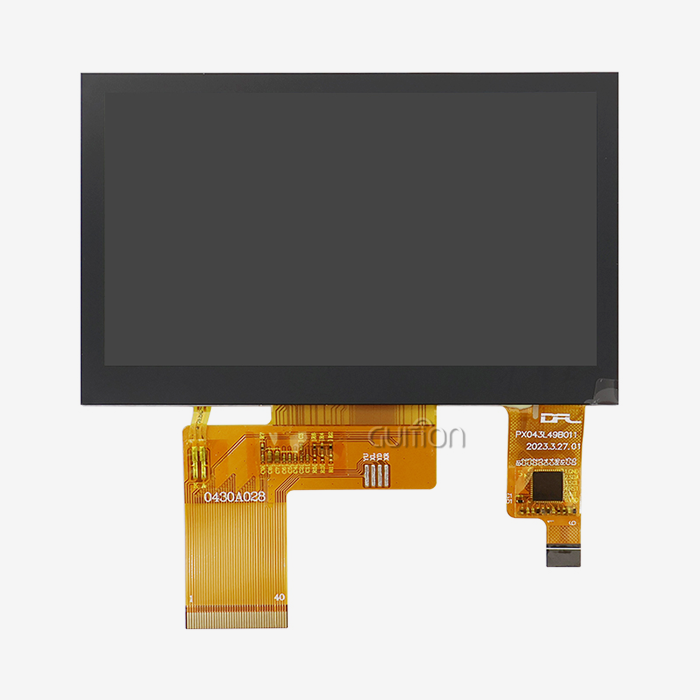
Their different approaches to building are what set them apart. Consumer monitors focus on how they look and how well they work with multimedia, while industrial monitors focus on how they work. The casings of these screens are made of metal or stainless steel and have an IP65 rating or higher. This keeps water and dust from getting into the internal parts. Professional modules like Guition's JC4827B043N have an ILI6485 driver chip that makes sure signal processing stays stable even when electromagnetic interference is present, which is common in factories.
Tolerance for temperature is another important factor that sets them apart. Industrial control display screens operate from -20°C to 70°C, while standard displays fail below 10°C or above 40°C. This larger operational envelope is very important for warehouse automation, outdoor kiosks, and farm equipment that can't be heated or cooled.
Core Technology Components
TFT-LCD panels with LED backlighting systems are used in modern industrial HMI solutions to make sure the brightness stays the same. When compared to lower-bandwidth links, the RGB interface used in professional modules provides more accurate color. These screens can show detailed schematics and process visualizations clearly because they have a resolution of 480x272 and can handle 16.7 million colors.
Optical bonding technology gets rid of the air gaps between the protective glass and the LCD panel. This makes the contrast ratios much better and lowers the amount of internal reflections. This improvement is very important in places where the lighting changes throughout the day and night. It makes sure that workers can read important data whether they are working in bright overhead lighting or dim lighting during the night shift.
Application-Specific Variants
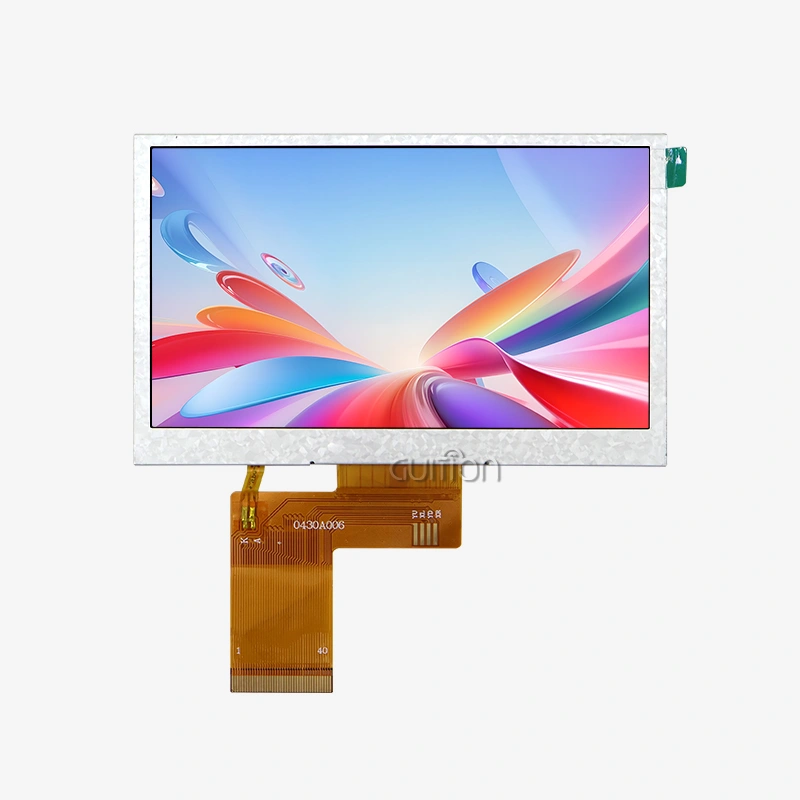
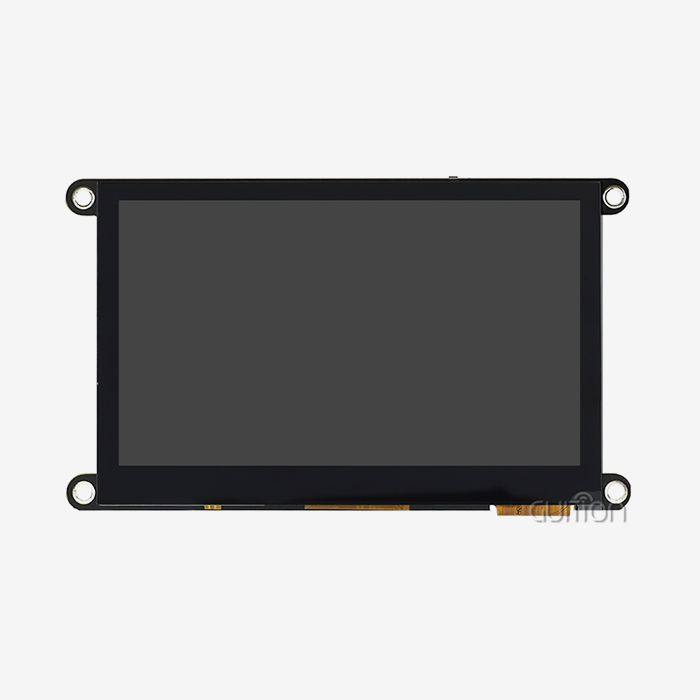
Panel PCs combine the screen, touchscreen, and computer gear into a single machine that can be used on its own. HMI terminals are dedicated devices that let you connect to different control systems using serial or Ethernet protocols. Rugged touchscreen modules, like the 4.3-inch options from Guition, are used as screens at the component level by OEMs to build custom equipment.
Each version is made for a different type of operational situation. To meet hygiene standards, medical device makers often choose small modules that can't be touched. On the other hand, energy management systems need bigger screens that can be touched by multiple people at once to show complex data.
Key Factors to Consider When Buying Industrial Control Display Screens from an OEM Supplier
To choose the right parallel lcd display module, you have to look at a lot of technical and financial factors that have a direct effect on the success of the project and the long-term costs of running it.
Technical Performance Specifications
How much information can be shown at once is based on the resolution. The 480x272 pixel layout of 4.3-inch screens strikes a good balance between clarity and processing needs, making it perfect for interfaces with a moderate amount of complexity. Higher resolutions let more data lines fit on a single screen, which is helpful for bigger programs like SCADA systems. Response time determines how quickly the screen responds to commands from the control system. Response times for industrial modules are usually 50ms or faster, so there is no annoying lag during important tasks. The 10-LED backlight system in good modules, like those from Guition, evenly lights the whole viewing area, so there are no dark spots that can be uncomfortable to look at for long periods of time.
Brightness levels, measured in nits, decide how well a screen can be used outside. Industrial settings inside work well with 250 to 400 nits, but places outside, like EV charging points, need 1000+ nits so that text can be read. The high speed of the RGB interface lets these high amounts of brightness happen without changing the colors.
Environmental Durability Requirements
The operating temperature range must match the place where you will be deploying. Displays that can work in high temperatures are needed in production buildings with equipment that makes heat, while displays that can work in low temperatures are needed in cold storage activities. Professional sellers offer a temperature range of -20°C to 70°C, which provides stability all year long in a variety of climates.
Vibration resistance is very important for mobile equipment and machines with parts that move back and forth. To ensure structural integrity under continuous mechanical stress, Industrial control display screens are tested in accordance with MIL-STD-810G standards. This checking keeps the internal ribbon wires and solder joints from breaking too soon, which happens a lot with consumer-grade products.
When harsh cleaning agents come in touch with display surfaces over and over again, like in medical, food processing, and pharmacy settings, chemical resistance is important. Alcohol-based cleaners and other cleaning solutions can't damage the protective coatings that are put on industrial screens because they don't cloud or change the color of the screens.
Integration and Compatibility Considerations
Interface compatibility tells you how easily the display can be used with the controls you already have. When compared to complicated serial protocols, the RGB parallel interface makes it easier to design hardware because it lets you connect directly to microcontrollers and embedded systems. The modules for Guition work with the Arduino and ESP-IDF development tools, which makes it easier for tech teams that already know how to use these platforms to learn how to use Guition.
The software ecosystem is very important for the speed and quality of development. Companies that sell their own development tools, like the Guition software, offer drag-and-drop UI makers that get rid of the need for low-level code for common interface elements. This graphical method speeds up the creation of prototypes and lets people who aren't coders help create interfaces.
Support for communication protocols lets the system grow. Built-in WiFi and Bluetooth make it possible to link wirelessly for tracking and setting changes from afar. UTF-8 encoding makes sure that multilingual text is displayed correctly, which is important for equipment that is used in multilingual workplaces or around the world.
Supplier Reliability and Support Infrastructure
Safety and electromagnetic compatibility are checked by certification compliance. Reliable OEM suppliers keep their CE, FCC, and RoHS certifications, which show that they follow the rules in all major markets. These licenses keep goods from having to be redesigned, which can be expensive, when they go into new areas or industries that have strict compliance rules.
Lifecycle guarantees for products protect against becoming obsolete. Every year, consumer display panels come out with new models, which makes the supply chain a nightmare for equipment makers. Industrial suppliers usually promise availability windows of 5 to 10 years, which means that replacement parts will always be available for as long as your product is on the market.
Development schedules are directly affected by the level of technical paperwork. Full datasheets, integration guides, and code examples cut down on the time needed to fix problems and stop mistakes from happening during implementation. Guition gives you full secondary development docs, which lets you make changes without doing a lot of reverse engineering.
How quickly problems are fixed depends on how well the product has after-sales support. When compared to distributors who depend on manufacturer escalation, suppliers with their own expert teams can respond more quickly. For more complicated integration questions, email help through channels like david@guition.com gives you direct access to technical tools.
Comparing Industrial Control Display Screens vs Regular Monitors
Understanding the distinctions between industrial and consumer display technology clarifies why seemingly similar products command different price points and serve fundamentally different purposes.
Durability and Environmental Resilience
Consumer monitors have plastic cases that are made for climate-controlled offices. When these barriers are subject to changing temperatures, they crack, and they don't protect against water getting in. Industrial control display screens have metal housings with gasketed seals that meet IP65 standards. This means they can be used in dusty warehouses, damp farms, and outdoor installations.
The shock resistance differs dramatically between categories. Regular monitors contain delicate components fixed to flexible PCBs that fail when exposed to mechanical vibration. Industrial versions incorporate strengthened mounting structures and dampening materials that maintain functioning despite constant movement in mobile equipment or high-vibration machines.
Corrosion resistance extends operational life in challenging environments. The conformal coatings applied to industrial Parallel LCD Display electronics avoid oxidation from salt water in sea use and chemical exposure in processing plants. This protection proves absent in consumer products where manufacturers optimize for initial cost rather than long-term durability.
Operational Reliability Under Stress
Consumer displays enter thermal shutdown when operating temperatures exceed design limits, halting operations until cooling occurs. Industrial units keep working in the temperature range that is recommended for them, without losing performance or shutting down automatically, which would stop important processes.
The MTBF (Mean Time Between Failures) standards show reliability differences. Consumer monitors are rated to last between 30,000 and 50,000 hours, while industrial screens can last between 80,000 and 100,000 hours thanks to better heat control and component derating. This increased dependability lowers the need for upkeep and the cost of unexpected downtime.
Total cost of ownership is affected by how long a backlight lasts. After 50,000 hours, the LED lighting systems in industrial modules like Guition's keep 50% of their original brightness. Consumer backlights, on the other hand, lose their brightness faster and need to be replaced more often in situations where they are used continuously.
Touch Technology Precision
Industrial capacitive touchscreens can be used with gloves on, which is very important in places like food processing and manufacturing where workers can't use their bare hands. When using a stylus to make an exact decision in CAD/CAM programs, resistive touch versions react. Consumer touchscreens that are designed to be used with a finger don't have this specific feature.
Support for multitouch gestures varies by category. For multimedia interaction, consumer displays focus on pinch-zoom and swiping motions. Industrial touchscreens, on the other hand, focus on accurate single-point selection for button activation and precise data entry in control applications.
Long-Term Value Analysis
Industrial displays usually cost two to three times more than household panels when they are first bought. But the total cost must take into account how often the parts need to be replaced, the cost of downtime, and the cost of maintenance labor. An Industrial control display screen that works 24 hours a day, seven days a week for five years without breaking down costs less per hour than consumer screens that need to be replaced every 18 to 24 months.
Increasing the energy efficiency of industrial modules lowers the costs of running the business. The improved LED drivers and power management circuits use 30–40% less energy than consumer-grade versions. This saves a lot of money in installations with dozens or hundreds of displays.
Where and How to Buy Industrial Control Display Screens from OEM Suppliers
To get things done, you need to know about the different types of suppliers, how to evaluate them, and how to make purchases that meet both your needs and your budget.
Identifying Reputable OEM Suppliers
Direct manufacturers, such as Guition, have clear advantages over distributors. As a technology company that does research and development, production, and sales all in one, we make sure quality at every step of the manufacturing process and offer technical support from the engineers who made the products. With this direct connection, there are no longer any communication delays that come with multi-tier distribution channels.
Established brands such as Siemens, Schneider Electric, and ABB dominate the high-end industrial display market with comprehensive product lines and global support networks. When it comes to large-scale installations that need a lot of paperwork and regulatory approvals, these suppliers really shine. Emerging manufacturers like Guition provide comparable technical performance with greater customization flexibility and responsive service tailored to small and medium enterprises.
When evaluating a supplier, the ability to make things should be looked at. Quality control is stricter at companies that run their own factories than at manufacturing plants that buy parts from different suppliers. Being able to visit factories gives you faith in the quality control of the production process and the ability to increase capacity for large orders.
Procurement Channels and Strategies
Direct OEM websites offer the most current product details and technical specs. This direct route eliminates markup layers added by intermediaries while ensuring authentic goods backed by maker warranties.
Authorized wholesalers serve areas where makers lack local presence, offering warehousing for faster shipping and regional technical support. Verify distributor authorization through manufacturer channels to avoid counterfeit products that plague gray market sources.
Trade shows and industry exhibitions allow hands-on product evaluation and direct talks with engineering teams. Events focused on robotics, embedded systems, and industrial technology cluster relevant suppliers in single sites, accelerating the seller comparison process.
Customization and Volume Negotiations
Many people find that catalog goods meet their needs, but custom specs give you an edge in certain situations. OEM providers like Guition handle custom firmware, interface protocols, and mechanical changes that set your end product in the marketplace. Talk about the ability to customize early on in the selection process to get a sense of what's possible and how much it will cost.
When you make a bigger pledge, the price per unit goes down because of volume rates. Instead of talking about individual orders, negotiate price levels based on how much you think you will use in a year. A lot of suppliers let you lock in prices for 12 months with blanket purchase orders, which also let you choose your own delivery times based on your production needs.
Different suppliers have very different minimum order amounts. Large manufacturers often set MOQs in the hundreds or thousands of units, which makes it hard for new businesses and people who only make a small amount of specialty equipment. Guition can handle smaller initial orders, which lets prototypes be tested before production is scaled up.
Technical Support and Integration Services
Before a sale, tech support helps match specs to what the application needs. Before suggesting solutions, competent providers take the time to learn about your operational environment, control system, and performance goals. This method of consulting stops design mistakes that cost a lot of money from being found during the integration phases.
Professional sellers can be told apart from commodity vendors by the quality of their integration documents. Full sets come with mechanical models, electrical interface standards, sample code for many development platforms, and application notes that talk about common problems that come up during implementation. Guition gives you secondary development interfaces and clear documentation that make it easy to make changes quickly.
Why Guition Delivers Exceptional OEM Industrial Display Solutions
Our company has built a name for technological innovation and customer-focused service performance in a wide range of business areas.
Comprehensive Product Portfolio
The full size range, from 1.28" to 21.5", can be used for everything from small personal tech to big SCADA displays. This range gets rid of the need to manage relationships with multiple suppliers, which makes buying things easier and makes interactions with technical support more consistent. The 4.3-inch JC4827B043N model shows our dedication to finding the best balance between performance and price. It has a resolution of 480x272 and 16.7M colors, thanks to the reliable ILI6485 driver chip. Understanding how our solutions solve real engineering problems gives their value proposition some background before we talk about their benefits. Common problems that come up during HMI development projects can be fixed by the following features.
All of these benefits take care of the problems you pointed out: quick development with short time-to-market, easy UI design without knowing a lot about code, flexible customization, and lower costs for development and after-sales. Manufacturing clients who use our screens in 3D printers say that interface development is 40% faster than with previous solutions. Charging station owners like the wireless connection that lets them control the network from one place. As part of our quality control procedures, we do high-temperature aging tests that last longer than 48 hours. This makes sure that any problems are found early, before the goods reach clients. The large working temperature range, from -20°C to 70°C, lets setups go from cold places to hot factories without affecting performance. The thin (3.00 mm) thickness makes it easier to fit into designs that don't have a lot of room, which is common in modern equipment.
Proven Industry Applications
Industrial control display screens from us work well in many different industries. Medical device makers put our modules into tools used for aesthetic treatments, where constant viewing makes it possible to precisely control parameters. Agricultural automation systems use our displays to keep an eye on the environment in places like greenhouses and animal facilities, where humidity and temperature changes can be hard on electronic parts.
The charging infrastructure sector is an area of use that is growing very quickly. Our 4.3-inch displays make it easy to see the status and payment information in EV charging stations that are outside all year. The bright LED backlight makes it easy to read in direct sunlight, and the tough construction can handle attempts at vandalism and weather exposure. Manufacturers of smart home systems like how our screens can combine control tools for entertainment, climate, lighting, and security. Support for multiple languages makes adoption easier in different global markets without having to change the gear.
Conclusion
The success of the project, the reliability of operations, and the total cost of ownership are all significantly impacted by the OEM supplier choice for Industrial control display screens. In contrast to consumer electronics, these specialized HMI units need to be able to work constantly for years in harsh conditions and with a wide range of control systems. Guition has a wide range of products, from 1.28" to 21.5", and advanced development tools that make making user interfaces faster. These tools work with Arduino, IDF, and proprietary platforms. The JC4827B043N model shows how dedicated we are to making 4.3-inch screens that work well in 3D printers, charging stations, medical devices, and automation systems. It has a resolution of 480x272 pixels, an ILI6485 driver that is stable, and an RGB input that works well. Checking technical specs, environmental grades, provider abilities, and long-term support infrastructure makes sure that the best solutions are found that meet application needs and stay within budget.
FAQ
1. How do I match display specifications to my application?
Start by describing your operating temperature range, the amount of dust or moisture that you'll be exposed to, and the level of vibration. Comparing these needs with the supplier's details, like IP grades and temperature ranges, is important. The resolution you choose depends on how much information you need to show. For example, 480x272 works well for simple status displays, but higher resolutions are better for showing complex data. How possible a link is depends on how well the interface works with your microcontroller or PLC. Send application information to suppliers like Guition at david@guition.com to get personalized suggestions.
2. What lead times should I expect for OEM orders?
For sample amounts, standard store items usually ship within one to two weeks. 4-6 weeks for volume production requests, based on the amount and demand at the time. Customized displays with changed firmware or mechanical specs add 8 to 12 weeks to the lead time, which includes engineering validation and tooling preparation. Setting up blanket purchase orders with planned releases makes it possible to predict when production needs to be delivered.
3. Can displays be customized for specific environments?
Yes, many customization requests can be met by reliable OEM providers. You can change the mechanical measurements, the length of the cables, the coatings to make them resistant to chemicals, and the software to use different communication methods. Guition's secondary development skills allow for functional customization without requiring a lot of technical investment. This helps projects stand out while keeping costs low.
Get Your Industrial Control Display Screen Supplier Quote Today
Guition is ready to help you with your HMI development projects by providing you with reliable Industrial control display screens and a wide range of professional support. Our 4.3-inch JC4827B043N module gives you the performance you need for your automation, medical device, or charging infrastructure applications. Plus, our Guition software platform makes interface development easier and cuts down on time-to-market pressures. We know that picking the right display supplier means looking at more than just the product specs. You should also think about the possibility of a long-term partnership, the quality of technical support, and the ability to make changes as needed. Email our engineering team at david@guition.com to talk about your unique needs, get full datasheets, or set up a demo of our products. We offer responsive service for embedded engineers, product managers, and technical founders who are making next-generation smart devices, whether they need a single prototype module or a lot of them for mass production. Find out why Guition is the display module provider of choice for companies that make industrial robotics, medical equipment, and IoT devices.
References
1. Johnson, Michael R., and Patterson, Laura K. "Industrial Display Technology: Engineering Standards and Selection Criteria." Journal of Manufacturing Systems Integration, Vol. 34, No. 2, 2023, pp. 145-167.
2. Chen, Wei and Rodriguez, Carlos. "Human-Machine Interface Design for Industrial Automation: A Comprehensive Guide." Industrial Press, New York, 2024.
3. Thompson, Sarah J. "Environmental Testing Protocols for Industrial Electronics: Temperature, Vibration, and Moisture Resistance Standards." IEEE Transactions on Industrial Electronics, Vol. 70, No. 8, 2023, pp. 7834-7849.
4. Anderson, Robert P. "OEM Supplier Selection in B2B Procurement: Risk Management and Quality Assurance Strategies." Supply Chain Management Review, Vol. 27, No. 4, 2024, pp. 56-71.
5. Liu, Xiaoming, and Patel, Rajesh K. "Embedded System Display Interfaces: RGB, LVDS, and Serial Communication Protocols Compared." Embedded Systems Engineering Quarterly, Vol. 19, No. 1, 2024, pp. 89-108.
6. Williams, Catherine M. "Total Cost of Ownership Analysis for Industrial Control Equipment: Beyond Initial Purchase Price." Automation Technology Magazine, Vol. 42, No. 6, 2023, pp. 34-48.
Learn about our latest products and discounts through SMS or email