- English
- French
- German
- Portuguese
- Spanish
- Russian
- Japanese
- Korean
- Arabic
- Greek
- German
- Turkish
- Italian
- Danish
- Romanian
- Indonesian
- Czech
- Afrikaans
- Swedish
- Polish
- Basque
- Catalan
- Esperanto
- Hindi
- Lao
- Albanian
- Amharic
- Armenian
- Azerbaijani
- Belarusian
- Bengali
- Bosnian
- Bulgarian
- Cebuano
- Chichewa
- Corsican
- Croatian
- Dutch
- Estonian
- Filipino
- Finnish
- Frisian
- Galician
- Georgian
- Gujarati
- Haitian
- Hausa
- Hawaiian
- Hebrew
- Hmong
- Hungarian
- Icelandic
- Igbo
- Javanese
- Kannada
- Kazakh
- Khmer
- Kurdish
- Kyrgyz
- Latin
- Latvian
- Lithuanian
- Luxembou..
- Macedonian
- Malagasy
- Malay
- Malayalam
- Maltese
- Maori
- Marathi
- Mongolian
- Burmese
- Nepali
- Norwegian
- Pashto
- Persian
- Punjabi
- Serbian
- Sesotho
- Sinhala
- Slovak
- Slovenian
- Somali
- Samoan
- Scots Gaelic
- Shona
- Sindhi
- Sundanese
- Swahili
- Tajik
- Tamil
- Telugu
- Thai
- Ukrainian
- Urdu
- Uzbek
- Vietnamese
- Welsh
- Xhosa
- Yiddish
- Yoruba
- Zulu
Where Are Resistive touch display module Solutions Used?
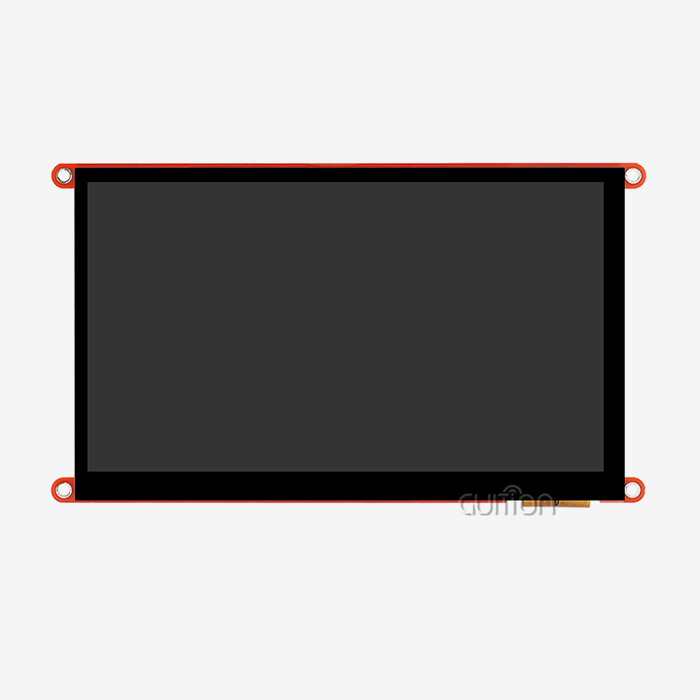
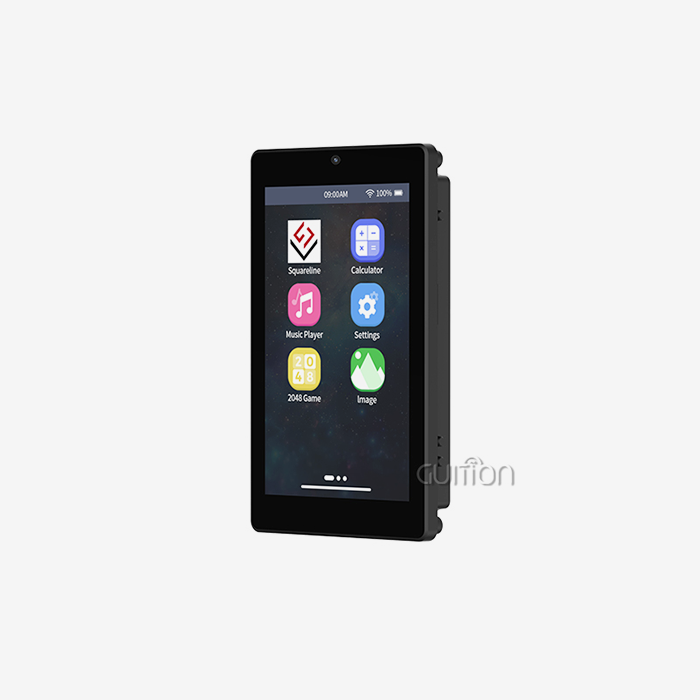
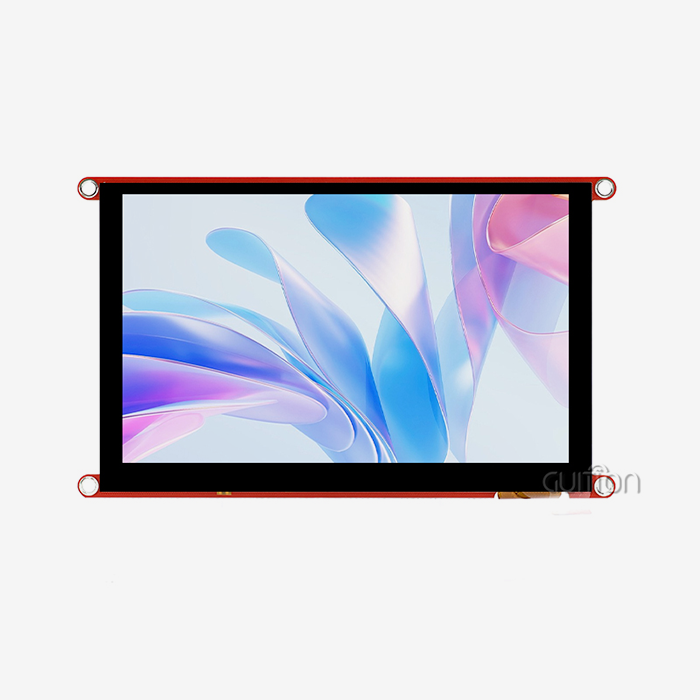
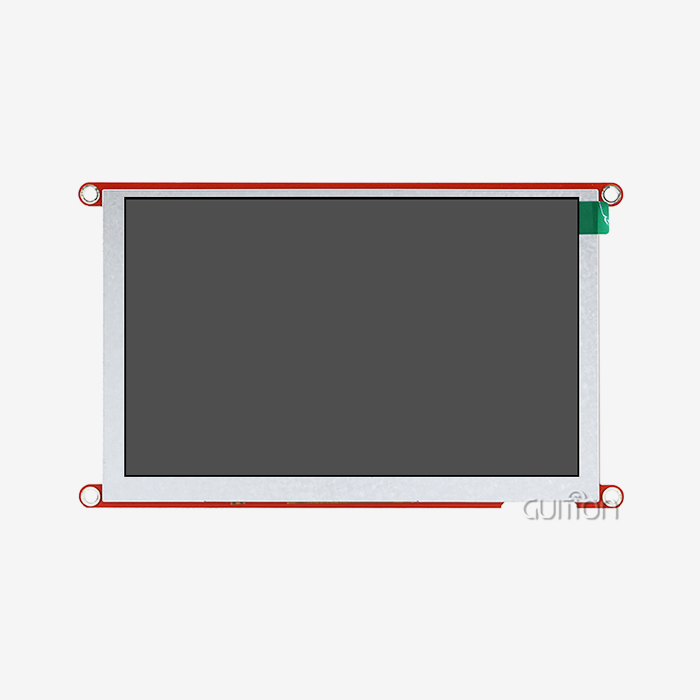
Resistive touch display module solutions appear across a wide range of industries in the United States and globally. From factory floors and hospital wards to retail counters and smart home panels, these pressure-sensitive HMI screens handle input where other touch technologies struggle. Unlike capacitive screens, a resistive touch display module responds to any physical contact — a gloved finger, a stylus, or even a fingernail — making it the go-to choice when input accuracy and environmental durability matter most.

Understanding Resistive Touch Display Modules
A Resistive touch display module works through two conductive Indium Tin Oxide (ITO) layers separated by tiny spacer dots. When you put pressure on the levels, they touch and record a location. This way of detecting things based on pressure is what makes resistive screens different from sensitive ones.
How the Technology Works
To figure out where the touch is, the module measures voltage changes along the X and Y axes. Linearity error margins on high-quality units stay below 1.5%, which means that the entered coordinate is very close to where you actually hit. In places like medical infusion pumps and industry control screens, this level of accuracy is important.
4-Wire vs. 5-Wire Variants
In a 4-wire Resistive touch display module, both layers carry active signals. This means that the top film bends over and over again, and each touch point can usually handle about 1 million actuations. All of the active electrodes on a 5-wire design are on the bottom glass. The top film only serves as a probe. This makes the estimated lifespan longer, to more than 10 million operations. This is a big plus for high-frequency point-of-sale systems or HMI panels on production lines.
Key Physical Properties
It is said that most resistant screens have a surface hardness of 3H pencil hardness, and that 75% to 85% of light can pass through them. This is a little less than glass-on-glass sensitive screens, but it means that these modules are very resistant to Electromagnetic Interference (EMI), which means they can be used near heavy motors, welding equipment, or electronics that aren't protected.
Key Application Areas of Resistive Touch Display Modules
A Resistive touch display module's best feature is that it can handle accurate input in situations where sensitive screens would get confused or stop working, like when they are wet, very hot, or covered in dust and operator gloves.
Industrial Automation and HMI Panels
People who work in factories usually wear thick safety gloves and are close to oil mist or metal shavings. Input is only recorded by a Resistive touch display module when pressure is applied on purpose, which stops machines from turning on by mistake. This type of intentional input is useful for control panels in CNC machines, conveyor systems, and process monitoring units.
Medical Devices and Point-of-Care Equipment
Latex or nitrile gloves are often worn by medical staff who work with IV pumps or patient monitors. Resistive screens work even when you're wearing gloves, and they can be cleaned regularly with strong chemical disinfectants. Capacitive screens, on the other hand, often show "phantom touches" when they get wet, which is not acceptable in medical settings.
Retail POS, Logistics, and Outdoor Kiosks
Handheld data collection and signature capture pads need to be able to read signatures that are made with a pen. Resistive touch display module technology works reliably from about -20°C to +70°C. This means that outdoor kiosks and logistics scanners can be used all year, even when it's raining or sunny outside.
Resistive vs. Capacitive Touch Display Modules: Making the Right Choice
Which of these two technologies you choose depends on your budget, operating environment, and input needs.
Where Resistive Panels Hold the Advantage
When you buy a lot of them, Resistive touch display module parts are cheaper per unit than capacitive panels. They can be activated by any item that puts pressure on them; a conductive touch is not necessary. When water splashes on a resistive screen in a food processing plant, it doesn't cause false touches because the technology works on physical depression instead of electrical charge. Capacitive screens can get water drops mixed up with finger touch, which could stop production lines.
Where Capacitive Screens Excel
Projected capacitive (PCAP) screens are better for viewing and allow multiple touch gestures. PCAP is the right choice for consumer-facing gadgets that users expect to be able to pinch to zoom or swipe to move around. But for business-to-business uses in harsh conditions, the fact that resistive touch panels can work with gloves and are not affected by liquids often makes them more useful than gesture-based ones.
Matching Technology to Your Application
If your team is making industrial control panels, medical monitoring devices, farm automation terminals, or energy management displays, a Resistive touch display module is probably a better choice for your budget and working requirements. Capacitive may work better if you are making a shop kiosk for customers or a gadget that connects to a smartphone. The setting comes first, then the cash, and finally the feature set.
Spotlight: GUITION JC2432S028R Resistive Touch Display Module
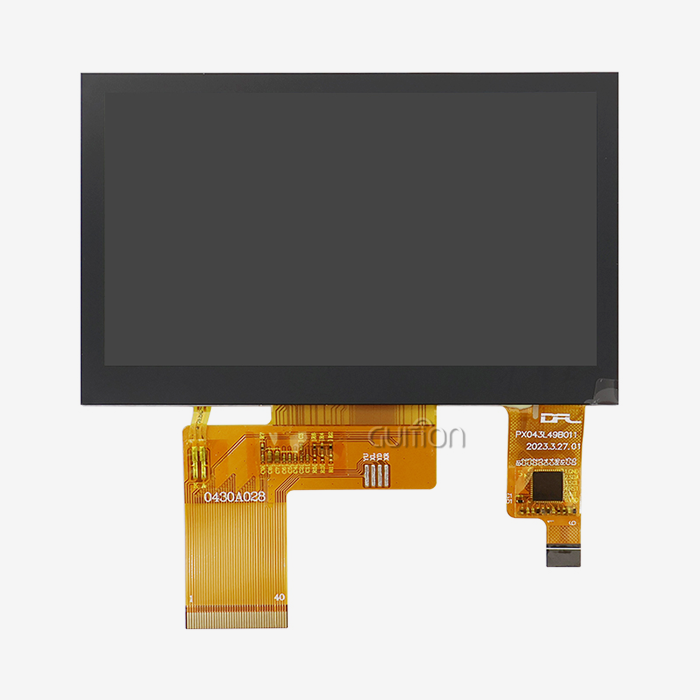
The ILI9341 driver IC is at the heart of the 2.8-inch GUITION JC2432S028R Resistive touch display module. It communicates using 4-wire SPI, has a size of 240x320 pixels, and comes with hardware for controlling the backlight and an optional circuit for controlling the resistive touch screen. This gadget has a lot of useful benefits that make it a good choice for embedded engineers and product makers.
- Minimal IO Demand: The SPI serial bus design requires only a few IO pins to drive the full display, freeing up system resources for additional functions in your firmware.
- Onboard SD Card Slot: Designers can store fonts, graphics, or interface data directly on a card without external memory chips, which simplifies PCB layout and reduces BOM cost.
- Ready-to-Use Code Examples: GUITION provides sample programs compatible with Arduino, ESP-IDF, and Guition development environments, so teams can begin integration without writing drivers from scratch.
- Military-Grade Process Standards: The module is manufactured to meet rigorous quality thresholds, supporting long-term stability across temperature cycling and mechanical vibration conditions.
- Remote OTA Upgrade Support: Teams managing deployed devices can push firmware and UI updates without physical access — a direct reduction in after-sales service costs.
Onboard SD Card Slot: Designers can store fonts, images, or interface data directly on a card, so they don't have to use extra memory chips. This makes PCB planning easier and lowers the bill of materials (BOM) cost.
Procurement Guide for Resistive Touch Display Modules
When looking for a large Resistive touch display module, you should look at four things: quality assurance, supplier openness, the ability to customize, and support after the sale.
Quality Verification Standards
Ask for results from linearity tests that show that the X/Y gradient is the same across all of the ITO levels. Ask about Newton Ring inspection methods; high-quality modules have an anti-Newton ring surface treatment that stops interference patterns from happening when the module is at rest. Make sure that the external stress testing includes both FPC bond strength testing and high-temperature/high-humidity storage testing (for example, 60°C/9% RH for 240 hours). This will protect against signal failure during shaking.
Evaluating Supplier Credibility
A reliable Resistive touch display module seller does both production and research and development in-house. Shenzhen Jingcai Intelligent Co., Ltd. (GUITION) does research and development, production, and sales all in one place. This cuts down on response times and improves quality control. Their product range goes from 1.28" to 21.5", including various spi display module options, so engineers can choose from a variety of displays for a wide range of project sizes without having to move sources.
Customization and Long-Term Supply
For OEM projects, make sure the provider lets you change the PCB structure, UI software, housing design, or communication protocol. When product specifications change between development cycles, GUITION offers personalized customization services that are in line with the needs of the actual project. This cuts down on the cost of re-engineering.
Future Trends in Resistive Touch Display Modules
The market for Resistive touch display module is dynamic. Industrial buyers are leaning more and more toward two directions.
Hybrid Touch Architectures
Engineers are starting to put resistive and capacitive sensing layers together on one panel. They want to get the best of both worlds by using resistive technology that works with gloves and capacitive input that can recognize gestures. At the moment, these hybrid units aren't very common, but they're getting attention in the medical and industry fields.
Durability and Sensitivity Improvements
Manufacturers are improving the ITO covering methods so that 5-wire module rates can go above 35 million actions. At the same time, improvements to controller firmware are making it less necessary to continually re-calibrate, which used to be a problem with 4-wire Resistive touch display module designs.
Conclusion
In industrial automation, medical devices, logistics, energy management, and smart home uses, Resistive touch display modules continue to be a useful and affordable input option. Their operation is based on pressure, so they can confidently work with gloves, liquids, and tough conditions. The GUITION JC2432S028R shows how a modern Resistive touch display module design using the ILI9341 driver, SPI efficiency, and Guition software tools can cut down on development time and integration complexity for both embedded engineers and product teams. A well-designed SPI Display Module can further enhance communication efficiency and simplify system integration in various embedded applications. To choose the right touch technology, you must first understand your surroundings. Resistive technology is still the best choice for many B2B apps.
FAQ
What environments suit a resistive touch display module best?
Environments with moisture, dust, grease, or gloved operators are ideal. Manufacturing plants, food processing lines, medical wards, and outdoor kiosks all benefit from pressure-based input that ignores surface contamination.
Can a resistive touch display module support multi-touch?
Standard resistive panels detect a single pressure point. Dual-touch resistive variants exist but are uncommon. For true multi-touch gesture support, projected capacitive technology is the appropriate choice.
How do I address calibration drift?
Drift typically occurs when ITO layers shift due to temperature changes. Modern controllers store calibration data in EEPROM to compensate automatically. Older 4-wire units may require periodic software recalibration.
Why choose resistive over PCAP in a food processing plant?
Water on a PCAP screen registers as touch input, triggering unintended commands. A resistive touch display module requires physical depression, so water splashes produce no false inputs, keeping production lines running without interruption.
Is the GUITION JC2432S028R compatible with Arduino?
Yes. The JC2432S028R supports Arduino, ESP-IDF, and Guition development modes, giving teams the flexibility to work within their existing toolchain.
Partner With GUITION for Your Next Resistive Touch Display Module Project
GUITION offers Resistive touch display module options in all sizes, from 1.28" to 21.5", with quality standards that have been checked and committed expert support from the time of pre-sale consultation all the way through the lifecycle of the product. Our team is ready to help you find a reliable Resistive touch display module provider, whether you need a single trial unit or a lot of OEM units. You can email David directly at david@guition.com or go to https://jingcaizhineng.aixdb.cn/ to talk about your needs.
References
1. IEEE Transactions on Industrial Electronics — "Touch Screen Technologies for Industrial Human-Machine Interfaces," 2021.
2. Journal of Display Technology — "Comparative Analysis of Resistive and Capacitive Touch Panel Performance," 2019.
3. Medical Device and Diagnostic Industry (MD+DI) — "Touch Interface Requirements for FDA-Regulated Medical Devices," 2022.
4. IPC-A-610 Acceptability of Electronic Assemblies, IPC Standards — "Flexible Printed Circuit Bonding Integrity Requirements," 2020.
5. Display Supply Chain Consultants (DSCC) Annual Report — "Global Touch Panel Market Forecast and Technology Segmentation," 2023.
6. Embedded Computing Design — "Selecting Touch Screen Technology for Harsh Environment HMI Applications," 2022.
Learn about our latest products and discounts through SMS or email