- English
- French
- German
- Portuguese
- Spanish
- Russian
- Japanese
- Korean
- Arabic
- Greek
- German
- Turkish
- Italian
- Danish
- Romanian
- Indonesian
- Czech
- Afrikaans
- Swedish
- Polish
- Basque
- Catalan
- Esperanto
- Hindi
- Lao
- Albanian
- Amharic
- Armenian
- Azerbaijani
- Belarusian
- Bengali
- Bosnian
- Bulgarian
- Cebuano
- Chichewa
- Corsican
- Croatian
- Dutch
- Estonian
- Filipino
- Finnish
- Frisian
- Galician
- Georgian
- Gujarati
- Haitian
- Hausa
- Hawaiian
- Hebrew
- Hmong
- Hungarian
- Icelandic
- Igbo
- Javanese
- Kannada
- Kazakh
- Khmer
- Kurdish
- Kyrgyz
- Latin
- Latvian
- Lithuanian
- Luxembou..
- Macedonian
- Malagasy
- Malay
- Malayalam
- Maltese
- Maori
- Marathi
- Mongolian
- Burmese
- Nepali
- Norwegian
- Pashto
- Persian
- Punjabi
- Serbian
- Sesotho
- Sinhala
- Slovak
- Slovenian
- Somali
- Samoan
- Scots Gaelic
- Shona
- Sindhi
- Sundanese
- Swahili
- Tajik
- Tamil
- Telugu
- Thai
- Ukrainian
- Urdu
- Uzbek
- Vietnamese
- Welsh
- Xhosa
- Yiddish
- Yoruba
- Zulu
What Touchscreen Options Are Available for an NMminer display?
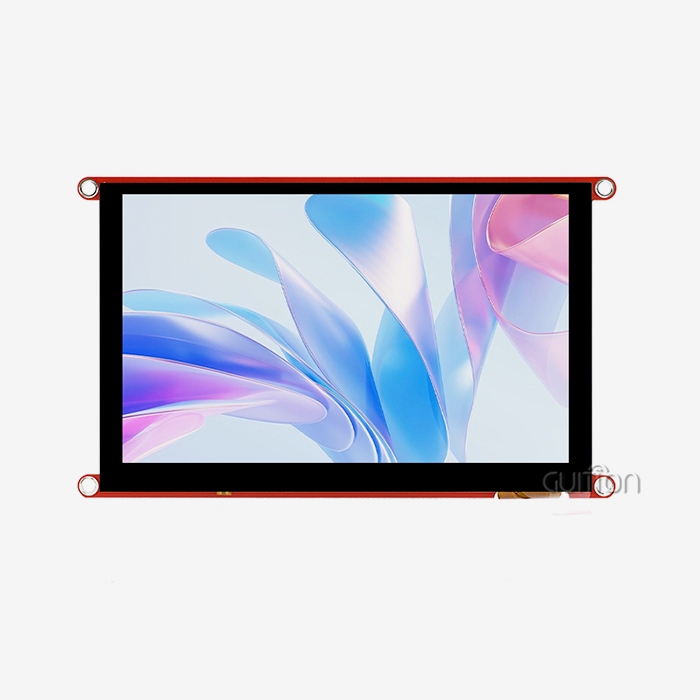
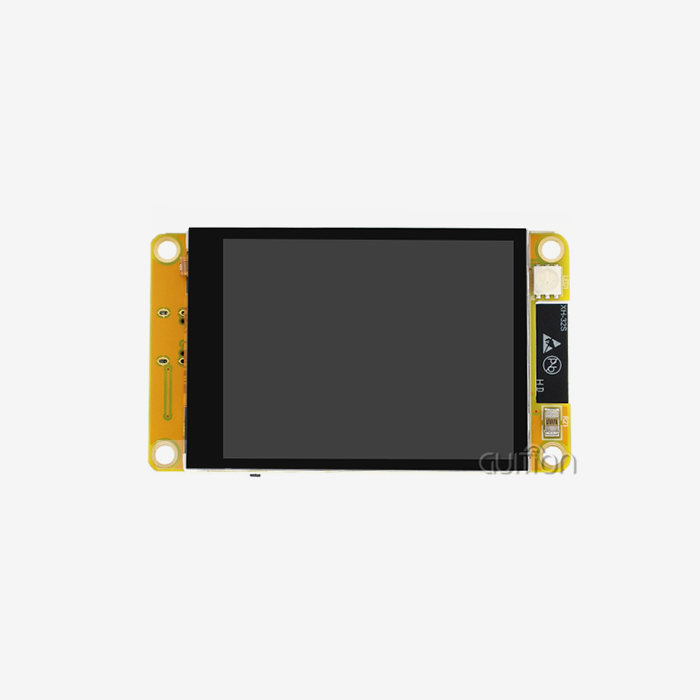
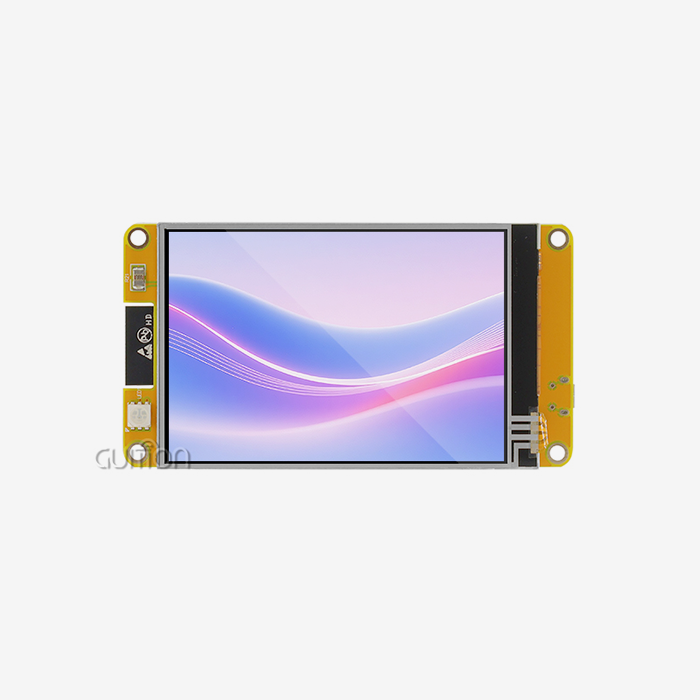
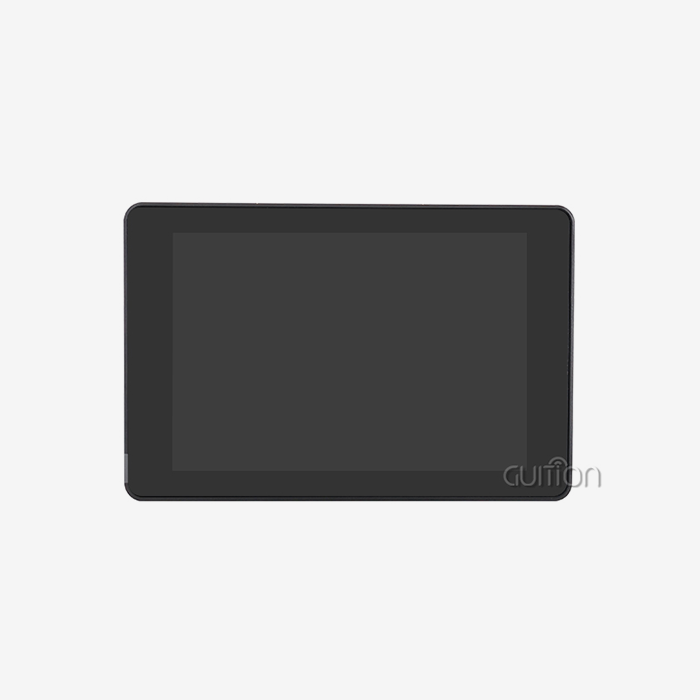
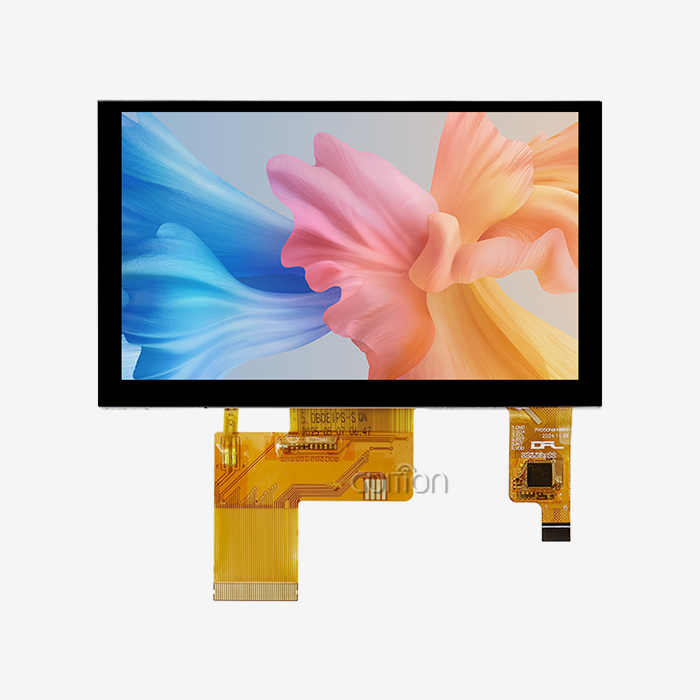
The GUITION JC2432W328C NMminer display ships with a projected capacitive (PCAP) touchscreen as its standard interface. This 2.8-inch module integrates a capacitive touch control circuit directly onto the ESP32-driven board, delivering multi-point touch recognition at 240×320 resolution. For engineers sourcing an NMminer display for mining rigs, industrial panels, or IoT monitoring nodes, the capacitive layer is the primary—and currently the sole—factory-configured touch option on this model. Understanding how that technology performs across different operating conditions helps procurement teams make well-grounded decisions.

Understanding the Basics of NMminer Displays
What Defines an NMminer Display
Industrial-grade LCD modules are used in the NMminer display so it can work all the time and under a lot of stress. A two-core ESP32 MCU with 520 KB SRAM, 448 KB ROM, and 4 MB Flash is used for the GUITION JC2432W328C type. Up to 240 MHz is how fast the MCU can work. The NMminer display has Wi-Fi and Bluetooth built in, so it doesn't need any extra radio units to be used in networked settings.
Key Technical Specifications That Affect Touch Compatibility
The screen size is 2.8 inches, and it has 240x320 pixels. The board has an RGB-LED control circuit, a tablet control circuit, a backlight control circuit, a speaker drive circuit, and a sensor circuit. There is room for a TF card, a USB port, a DHT11 temperature and humidity monitor, and extra IO ports to finish off the gear. It says in these specs which touch layers can be attached to the panel without messing up the signal.
Interface Protocols and Development Ecosystem
This NMminer display works with MicroPython, Arduino IDE, ESP-IDF, and GUIition, which is GUIITION's own platform for making GUIs. With cross-platform support, embedded writers and HMI designers can use toolchains they already know how to use. Because Guition has a drag-and-drop interface builder, teams can make professional screens without having to write graphics code at the low level. This cuts down on the time it takes to get smart device interfaces, mining rig controllers, and industrial panels on the market.
Exploring Available Touchscreen Technologies for NMminer Displays
Projected Capacitive (PCAP) Touch — The Standard on the JC2432W328C
Projected capacitive touch is the factory-fitted technology on the NMminer display model JC2432W328C. PCAP layers sense the electrical field distortion caused by a bare finger or a thin-gloved hand. They support multi-touch gestures, respond with low latency, and carry no moving mechanical parts, which extends service life in high-cycle environments such as crypto-mining control rooms running 24/7.
Resistive Touch — A Secondary Consideration for Harsh Glove Use
Resistive panels register pressure rather than electrical capacitance, so they work reliably with heavy gloves, stylus tools, or wet hands. They cost less per unit and tolerate surface contamination better than PCAP in certain scenarios. However, resistive technology does not support multi-touch, wears faster under sustained point-of-use pressure, and is not the configured option on the JC2432W328C. Teams requiring resistive input should verify compatibility with GUITION's engineering team before procurement.
Infrared and Optical Touch — Large-Format Alternatives
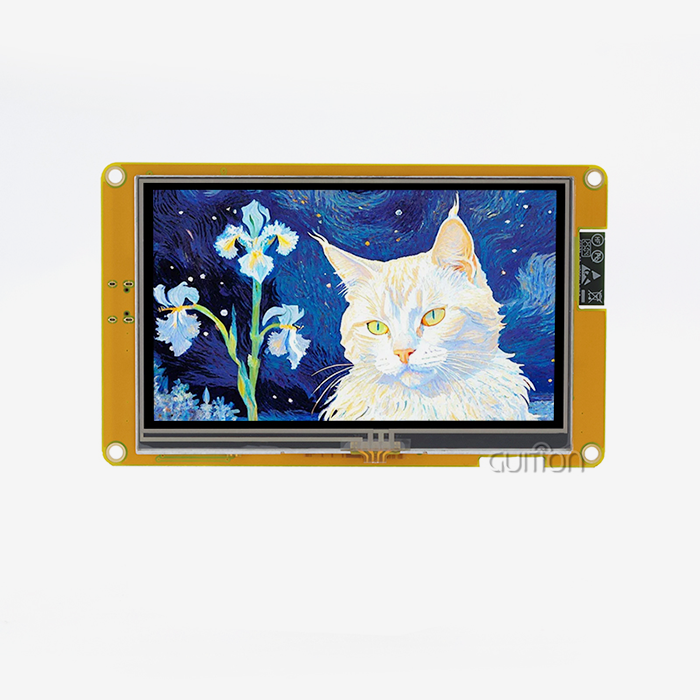
Infrared (IR) and optical touch overlays work by detecting interruptions in a grid of light beams across the screen perimeter. They scale effectively to panels above 10 inches and require no surface coating, so they preserve optical clarity. These technologies apply to larger NMminer display variants in GUITION's 1.28-inch to 21.5-inch product range, not the 2.8-inch JC2432W328C specifically. For commercial kiosk or industrial control panel projects calling for larger screens, IR or optical overlays merit evaluation.
Comparing NMminer Touchscreen Options: Performance and Application
Environmental Durability Across Touch Technologies
Because the detecting layer is under the cover glass and there is no gap that can be seen, the NMminer display JC2432W328C works well with dust and light moisture. The module is made with an industrial-grade method that can handle high temperatures and small particles, like those found in factories and mines. This is done so that it will be stable for a long time.
Responsiveness and Input Accuracy
The PCAP touch on the JC2432W328C takes input quickly and with little movement, so it can be used to enter data on mine monitors and process control screens in real time. Otherwise, resistive screens might take a little longer to work when heavy gloves are worn, and they need to be calibrated often. People who wear thin gloves or use their bare fingers always do better on capacitive touch tests than resistive touch. This is especially true on smart appliance controls or medical monitoring terminals.
Integration with the Guition Software Ecosystem
You can already map the touch control circuit on the NMminer display to the ESP32 GPIO design. This means that Guition's GUI tool will notice when you touch the screen without you having to set up the driver. A software download that only needs one click sends changes to the user interface (UI) right to the board. Getting third-party touch controllers and writing custom drivers would take a lot more time to integrate than this close link between hardware and software. For R&D managers who are in a hurry to get goods out the door, this is a clear efficiency boost.
Making the Right Touchscreen Choice for Your NMminer Display
Procurement Criteria for Engineering Teams
To pick the right touch technology, you need to think about three things: how the operator usually enters data (bare finger, gloved hand, pen), the environment (humidity, dust, temperature), and the touch gestures you need (single-point vs. multi-touch). To judge deals, buying teams should keep these things in mind:
- Input method compatibility: PCAP on the JC2432W328C handles bare-finger and thin-glove input reliably. Heavy-glove environments may need resistive or a PCAP layer tuned with specialized firmware algorithms.
- Environmental rating: For dust-heavy or moisture-prone installations, verify the ingress protection rating of the full module assembly, not just the touch layer alone.
- Development toolchain: Confirm that your preferred environment—Arduino IDE, ESP-IDF, or MicroPython—exposes the touch API you need without additional middleware.
- Total cost of ownership: Factor in calibration frequency, expected replacement cycles, and remote OTA upgrade capability, which the NMminer display supports natively via its Wi-Fi module.
Compatibility with input methods: The JC2432W328C's PCAP works well with both bare fingers and thin gloves. If there are a lot of gloves in the area, you may need a resistive or PCAP layer that is tuned with special software.
If you're installing something that will get a lot of dust or water, make sure you check the ingress protection rating of the whole module assembly, not just the touch layer.
Real-World Application Scenarios
The PCAP layer of the NMminer display is used in industrial control screens at mining sites so that workers can quickly see hashrate measurements and thermal data without putting on gloves. Smart appliance brands use the same chip in energy trackers for homes. To get information from the world around us, the RGB-LED control circuit and DHT11 sensor link are used. Medical device developers who want to use the JC2432W328C module for bedside monitoring can do so because it has a low-power ESP32 architecture and has been stable for 24 hours a day, seven days a week.
Support, OTA Upgrades, and Long-Term Reliability
So that product managers don't have to go to the site to make changes, GUITION lets them do it over Wi-Fi to installed NMminer display units. The cost of service after the sale goes down. You can get full secondary development help and cross-platform testing help from the company so that teams can quickly fix problems during integration. All of GUITION's screen sizes—from 1.28 inches to 21.5 inches—have stable long-term supplies. This means that as their product lines grow, procurement managers only have to deal with one source.
Conclusion
The NMminer display JC2432W328C from GUITION has a projected capacitive touchscreen that can handle most HMI tasks in mining, IoT, and industrial settings. PCAP gives you reliable, low-maintenance input without having to do extra work to calibrate it. It also works well with the ESP32 ecosystem and the Guition software platform. There are more sizes of GUITION's products, from 1.28 inches to 21.5 inches. This makes it easier to find the right one for apps that need resistive or large-format IR touch. You'll save time and money in the long run if you choose touch technology that works well with the way you work from the start.
FAQ
Which touchscreen type delivers the best value for the JC2432W328C?
The NMminer display JC2432W328C has a PCAP layer that works well and doesn't cost too much for most industrial and IoT uses. As long as it works with multiple touches and the ESP32 touch API, it doesn't need to be tuned. This keeps the cost of development low.
Can I upgrade the touch technology on an existing NMminer display module?
Should you decide to change the touch layer after purchasing the board, you will need to make changes to the hardware, which could affect the integrity of the signal and the warranty coverage. Contact the GUITION tech team before you try to replace the touch layer. They can let you know if it's possible and give you good advice.
How does each touch type affect power consumption on the ESP32 board?
In a 240 MHz dual-core system, the standby current is a little different between PCAP and resistive controllers, but we can't tell the difference. More than the choice of touch technology, the brightness control circuit in the NMminer display affects the total amount of power used. Controlling the backlight duty cycle saves more money in battery-powered apps.
Does the NMminer display support multi-language UI on its touch interface?
Yes. You can switch between languages on the Guition development platform. Data is encoded in UTF-8, so when you touch a UI element, it can show text in any language that supports it. This is helpful for business tools used around the world where people speak different languages.
Partner with Guition for Your NMminer Display Needs
It has tried-and-true hardware and a programming tool that was made to help your team ship faster. The JC2432W328C NMminer display manufacturer packs a lot of features into a small module. It supports full secondary development, works with multiple platforms, can receive updates over-the-air (OTA), and can speak more than one language. If you need a custom price, a detailed talk, or help going from a prototype to production, our team is ready to help. You can email us at david@guition.com or visit https://jingcaizhineng.aixdb.cn/ right away.
References
1. Bhalla, M. R., & Bhalla, A. V. (2010). Comparative Study of Various Touchscreen Technologies. International Journal of Computer Applications, 6(8).
2. Srinivasan, R. (2019). Human-Machine Interface Design for Industrial Applications. Springer.
3. Aziz, S. M., & Pham, D. M. (2015). Energy Efficiency of Embedded Systems for IoT Applications. IEEE Transactions on Industrial Electronics, 62(7).
4. Espressif Systems. (2023). ESP32 Series Datasheet v4.4. Espressif Systems.
5. Guo, F., & Sharlin, E. (2008). Using Paper Prototyping in the Design of Tangible User Interfaces. Proceedings of the SIGCHI Conference on Human Factors in Computing Systems, ACM.
6. International Electrotechnical Commission. (2020). IEC 60529: Degrees of Protection Provided by Enclosures (IP Code). IEC.
Learn about our latest products and discounts through SMS or email