- English
- French
- German
- Portuguese
- Spanish
- Russian
- Japanese
- Korean
- Arabic
- Greek
- German
- Turkish
- Italian
- Danish
- Romanian
- Indonesian
- Czech
- Afrikaans
- Swedish
- Polish
- Basque
- Catalan
- Esperanto
- Hindi
- Lao
- Albanian
- Amharic
- Armenian
- Azerbaijani
- Belarusian
- Bengali
- Bosnian
- Bulgarian
- Cebuano
- Chichewa
- Corsican
- Croatian
- Dutch
- Estonian
- Filipino
- Finnish
- Frisian
- Galician
- Georgian
- Gujarati
- Haitian
- Hausa
- Hawaiian
- Hebrew
- Hmong
- Hungarian
- Icelandic
- Igbo
- Javanese
- Kannada
- Kazakh
- Khmer
- Kurdish
- Kyrgyz
- Latin
- Latvian
- Lithuanian
- Luxembou..
- Macedonian
- Malagasy
- Malay
- Malayalam
- Maltese
- Maori
- Marathi
- Mongolian
- Burmese
- Nepali
- Norwegian
- Pashto
- Persian
- Punjabi
- Serbian
- Sesotho
- Sinhala
- Slovak
- Slovenian
- Somali
- Samoan
- Scots Gaelic
- Shona
- Sindhi
- Sundanese
- Swahili
- Tajik
- Tamil
- Telugu
- Thai
- Ukrainian
- Urdu
- Uzbek
- Vietnamese
- Welsh
- Xhosa
- Yiddish
- Yoruba
- Zulu
What Resolution Suits Your Colour LCD Display Module Application?
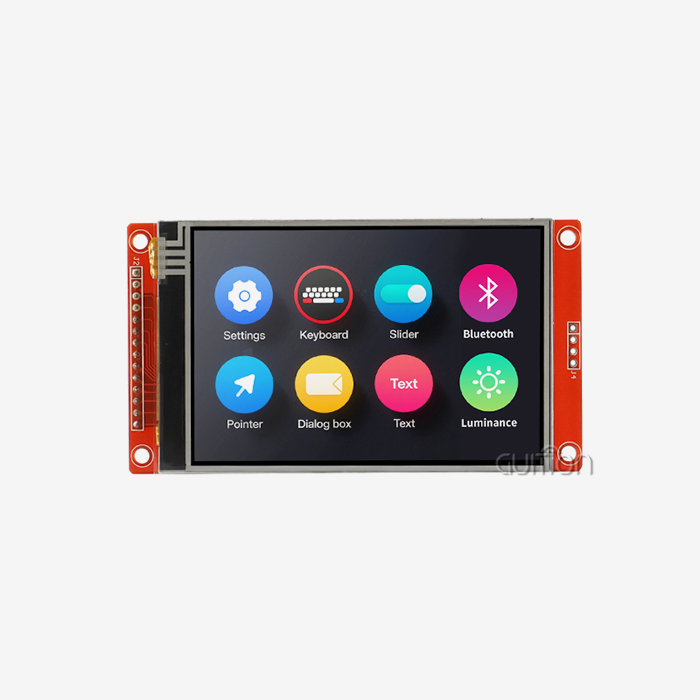
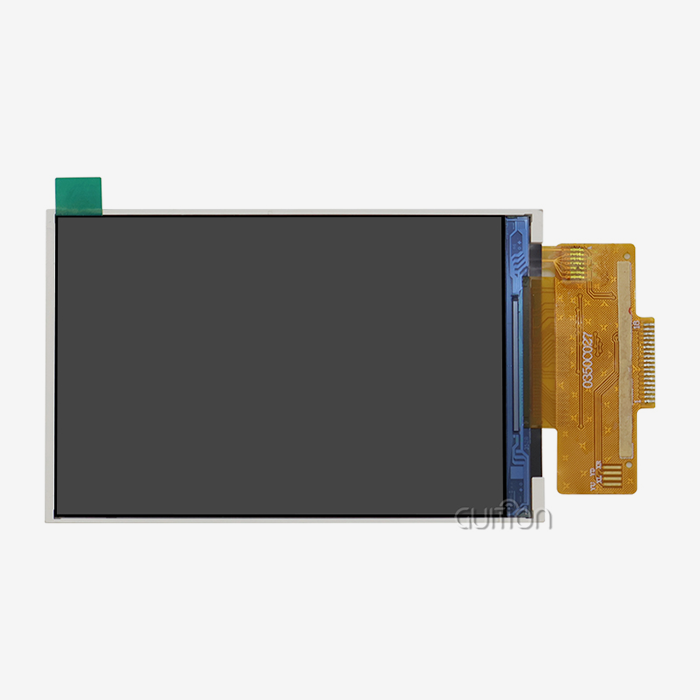
Choosing the right resolution for your colour LCD display module directly determines image clarity, system performance, and total project cost. A mismatch between resolution and application requirements leads to wasted resources, poor readability, or unnecessary hardware overhead. For embedded engineers, R&D managers, and procurement teams working across industrial, medical, and IoT sectors, this guide breaks down how to match resolution tiers to real-world use cases — including a practical look at the GUITION JC3248S035R, a 3.5-inch colour LCD display module with 320×480 resolution built for efficient integration.

Understanding Display Resolution in Colour LCD Modules
This is the number of pixels that make up the width and height of a screen. A Color LCD display module works better when it has a higher pixel density, but resolution by itself doesn't show everything it can do.
Pixel Count, PPI, and Perceived Sharpness
Pixels per inch (PPI) measures how clear something is from a certain distance. There are about 165 pixels per inch on a 3.5-inch screen with a size of 320x480. This is enough for small embedded systems that need to show clear text, icons, and status markers. The GUITION JC3248S035R, which is powered by the ILI9488, can show 65K colors (16-bit) at this resolution with smooth brightness and few color bands.
Resolution Standards from QVGA to FHD
Most color LCD display modules have resolutions of QVGA (320x240), HVGA (320x480), WVGA (800x480), HD (1280x720), and FHD (1920x1080). The amount of memory, computer power, and talk time needed for each level are different. So that they can choose the right module, procurement teams should check these standards against how much memory their controller can handle.
Resolution vs. Other Display Parameters
The sharpness of the Colour lcd display module should be looked at along with the color depth, update rate, and brightness of the lights. Ghosting will show up on a high-resolution panel with a slow refresh rate in interfaces that move around a lot. The same is true for a screen with a poor resolution and 24 bits of color depth. When all of the parameters are matched to the needs of the application, the best balance of quality and cost is reached.
Core Criteria to Choose the Right Resolution for Your Application
Not just the display specs are important when picking the right screen. You also need to think about the apps and their settings. You need to think about these things whether you want one sample or a lot of them.
Application Precision Requirements
Medical monitoring equipment needs finer pixel detail to get a more accurate waveform, while industrial control panels care more about labels and button states than picture detail. An HVGA Color LCD display module like the GUITION JC3248S035R can handle most industrial HMI and smart device tasks without putting too much stress on the processor.
Viewing Distance and Display Size
To read a 3.5-inch screen from 30 to 50 cm away, you need about 150 to 200 PPI. Bigger screens can use less PPI without losing quality when viewed from a farther distance. It is better to match the PPI to the average operator distance than to over-specify it. This also keeps the bill of materials costs down.
Environmental and Power Constraints
For use outside, you need backlights with a lot of light, which use more power no matter what screen you choose. It takes less energy to refresh and store frames in IoT devices that run on batteries when the resolution is lower. A 4-wire SPI interface on the GUITION JC3248S035R frees up GPIO pins and cuts down on power use, which is helpful for designs that need to save space or power.
Comparison of Colour LCD Module Resolutions for Popular Use Cases
If engineers and product managers know where each resolution level works best, they won't have to over- or under-specify their screens. The table below shows how three different resolution bands are usually used.
Low-Resolution Modules (QVGA and Below)
Low-resolution Colour lcd display module units (128x128, 320x240, or 640x240) work best for simple status displays, menus, and cheap consumer goods. They work well with 8-bit MCUs and don't need a lot of extra hardware. But they can't clearly show small UI details or fonts that don't glitch.
Medium-Resolution Modules (HVGA to WVGA)
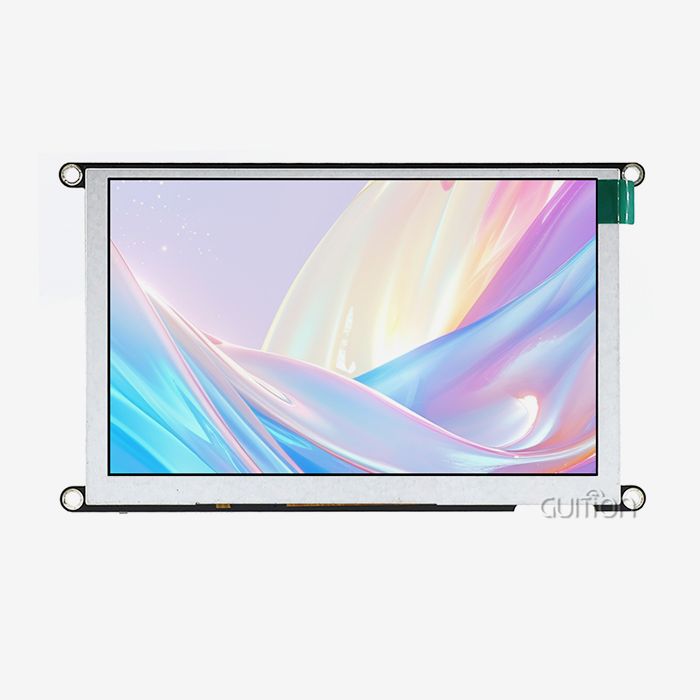
320x480 and 800x480 tiles are in this range, which is used by a lot of industrial HMI panels, smart home controls, energy management terminals, and farm automation interfaces. The GUITION JC3248S035R is at this level and has a good mix of clear graphics and easy interaction. You can use it with Arduino, ESP-IDF, and the UI builder Guition. You don't have to write low-level driver code to make interfaces with this tool. These are some of the great things about this tool:
- ILI9488 Driver IC: Provides stable, wide-compatibility operation across popular embedded platforms including Arduino and ESP32-based systems.
- 4-Wire SPI Interface: Requires only a handful of IO pins, freeing GPIO resources for sensors, relays, or communication modules.
- Optional Resistive Touch: Adds operator input capability without increasing board complexity, supporting interactive control panels and kiosk applications.
- Built-in SD Card Slot: Allows local storage of UI assets, fonts, and log files without external memory modules.
- Compact PCB Form Factor: Fits space-constrained enclosures found in handheld instruments, smart meters, and wall-mounted controllers.
Since these things are true, the JC3248S035R is a good choice for teams that need to cut down on development time without lowering the show's quality. As a result, the Guition software environment speeds up UI development. This helps product teams that need to get their products to market quickly.
High-Resolution Modules (HD and Above)
You can find HD and FHD color LCD display panels in places like medical imaging stations, car dashboards, and business booths where it's important to see fine details. Plus, these modules need bigger frame buffers, MIPI DSI or LVDS ports, and support for dedicated GPUs. All of these things make them more expensive, take up more space on the PCB, and make the software harder to understand.
How Resolution Affects Integration, Programming, and Maintenance
Resolution choice has direct consequences on the software stack, memory allocation, and long-term support burden. Teams that underestimate these effects face schedule overruns and debugging cycles.
Interface and Pin Count Implications
SPI-based colour LCD display modules like the JC3248S035R connect with four signal lines, making them easy to integrate with low-pin-count microcontrollers. Parallel RGB interfaces used in higher-resolution modules consume 18–24 data lines, which constrains PCB routing and increases EMI management effort.
Memory and Processing Overhead
A 320×480 frame buffer at 16-bit colour depth requires approximately 300 KB of RAM. An FHD frame buffer at the same colour depth exceeds 4 MB. This difference determines whether a standard MCU or an application processor is needed, which affects both BOM cost and power budget.
Maintenance, OTA, and Long-Term Stability
Guition's platform supports remote OTA upgrades for user projects, meaning firmware updates and UI revisions can be pushed without physical access to the device. This reduces after-sales service costs for deployed systems in agricultural automation, energy management, or distributed industrial sites. Stable supply from a single colour LCD display module supplier also reduces re-qualification risk during long production runs.
Procurement Considerations: Selecting and Buying the Right Resolution Module
Making sure the specs are right when you buy something saves a lot of money on redesigns later on. Resolution should be seen as a small part of a bigger review that buying teams do.
Cost vs. Performance Trade-offs
Color LCD monitor screens with a medium resolution are the best value for money for most business-to-business uses. Going to HD usually requires a more expensive host processor and raises the cost of the module by 30 to 60%. Before you pick a resolution level, write down the UI content you need.
Supplier Qualification and Documentation Quality
A reliable company that sells color LCD displays will give you full datasheets, tried-and-true sample code, and quick expert help. Guition UI creation tools, cross-platform example code, and direct tech help are all used to support the JC3248S035R. This cuts down on the hidden costs of fixing bugs and setting them up.
Custom Specifications and Global Supply
For projects that need non-standard resolutions, interface types, or mounting setups, it's better to work directly with a Color LCD display module maker that takes custom orders than to change a standard part. Guition comes in sizes ranging from 1.28 inches to 21.5 inches, so it can meet the needs of most businesses and people.
Conclusion
Resolution is a technical choice that has real effects on the timetable and budget. Set the resolution to the right level for your program instead of setting it to the highest level immediately. This will save you money and time. A well-specified Colour lcd display module such as the 320x480 variant can be used for many industrial HMI, smart appliance, and embedded system uses without making things more complicated than they need to be. Before you place an order for sourcing, you should think about the size of your screen, how far away you will be watching, the features of your device, and the limits of your interface.
FAQ
Can I upgrade my colour LCD display module to a higher resolution later?
No. Resolution is fixed by the panel and driver IC. Upgrading requires replacing the entire module and revising the interface circuitry. Plan your resolution requirement before finalizing the hardware design.
Does higher resolution always mean better image quality?
Not necessarily. A higher-resolution colour LCD display module viewed from a distance beyond its effective PPI range shows no perceptible improvement. Match resolution to actual viewing distance and display size for the best result.
How does resolution affect power consumption?
Higher resolutions increase frame buffer size and data transfer rates, which raise both processor and backlight power draw. The 4-wire SPI design of the JC3248S035R keeps data throughput and power consumption low compared to parallel-interface panels.
What resolution suits industrial HMI panels?
HVGA (320×480) to WVGA (800×480) covers most industrial panel applications. The GUITION JC3248S035R at 320×480 handles status displays, control menus, and sensor readouts clearly within this standard range.
Is resistive touch sufficient for industrial use?
Yes. Resistive touch works reliably with gloved hands and in environments with surface contamination, making it practical for factory floors, agricultural equipment, and outdoor enclosures.
Connect With Guition for Your Next Colour LCD Display Module Project
Your team needs a Color LCD display module supplier that backs up its products with real engineering support. The JC3248S035R is one of many products that Guition makes that range from 1.28 inches to 21.5 inches. All of these can be made with the Guition UI design tool, can be updated over-the-air (OTA), and can write in more than one language. To get examples, datasheets, or a custom price, email our team at david@guition.com or visit https://jingcaizhineng.aixdb.cn/.
References
1. Bhattacharjee, D. TFT-LCD Technology and Applications. Society for Information Display, 2018.
2. Castellano, J. A. Handbook of Display Technology. Academic Press, 2019.
3. Society for Information Display. SID Display Week Symposium Digest of Technical Papers. SID, 2023.
4. ILI Technology Corp. ILI9488 TFT LCD Single Chip Driver Datasheet. ILI Technology, 2020.
5. Moini, A. Vision Chips: Implementing Vision Algorithms with Analog VLSI Circuits. Springer, 2017.
6. Lueder, E. Liquid Crystal Displays: Addressing Schemes and Electro-Optical Effects. Wiley, 2021.
Learn about our latest products and discounts through SMS or email