- English
- French
- German
- Portuguese
- Spanish
- Russian
- Japanese
- Korean
- Arabic
- Greek
- German
- Turkish
- Italian
- Danish
- Romanian
- Indonesian
- Czech
- Afrikaans
- Swedish
- Polish
- Basque
- Catalan
- Esperanto
- Hindi
- Lao
- Albanian
- Amharic
- Armenian
- Azerbaijani
- Belarusian
- Bengali
- Bosnian
- Bulgarian
- Cebuano
- Chichewa
- Corsican
- Croatian
- Dutch
- Estonian
- Filipino
- Finnish
- Frisian
- Galician
- Georgian
- Gujarati
- Haitian
- Hausa
- Hawaiian
- Hebrew
- Hmong
- Hungarian
- Icelandic
- Igbo
- Javanese
- Kannada
- Kazakh
- Khmer
- Kurdish
- Kyrgyz
- Latin
- Latvian
- Lithuanian
- Luxembou..
- Macedonian
- Malagasy
- Malay
- Malayalam
- Maltese
- Maori
- Marathi
- Mongolian
- Burmese
- Nepali
- Norwegian
- Pashto
- Persian
- Punjabi
- Serbian
- Sesotho
- Sinhala
- Slovak
- Slovenian
- Somali
- Samoan
- Scots Gaelic
- Shona
- Sindhi
- Sundanese
- Swahili
- Tajik
- Tamil
- Telugu
- Thai
- Ukrainian
- Urdu
- Uzbek
- Vietnamese
- Welsh
- Xhosa
- Yiddish
- Yoruba
- Zulu
How Can a 1.9 inch ESP32S3 display module Meet Custom Project Requirements?
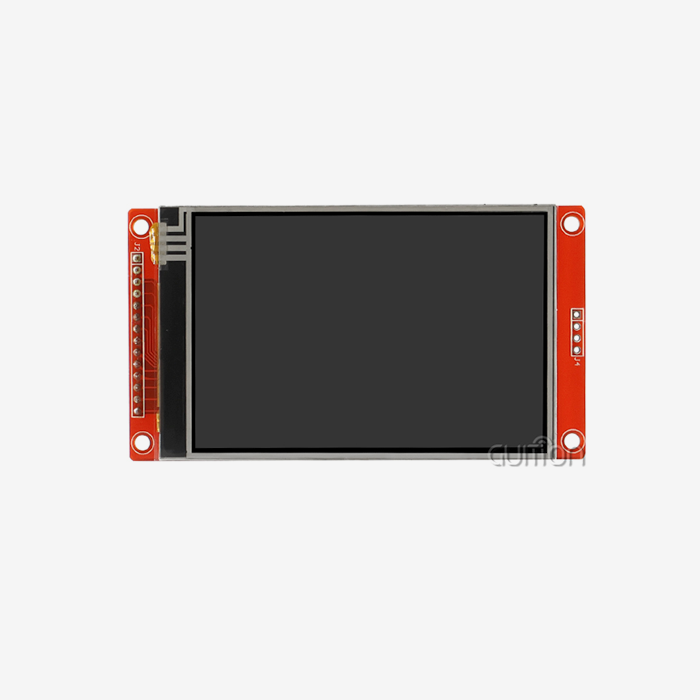
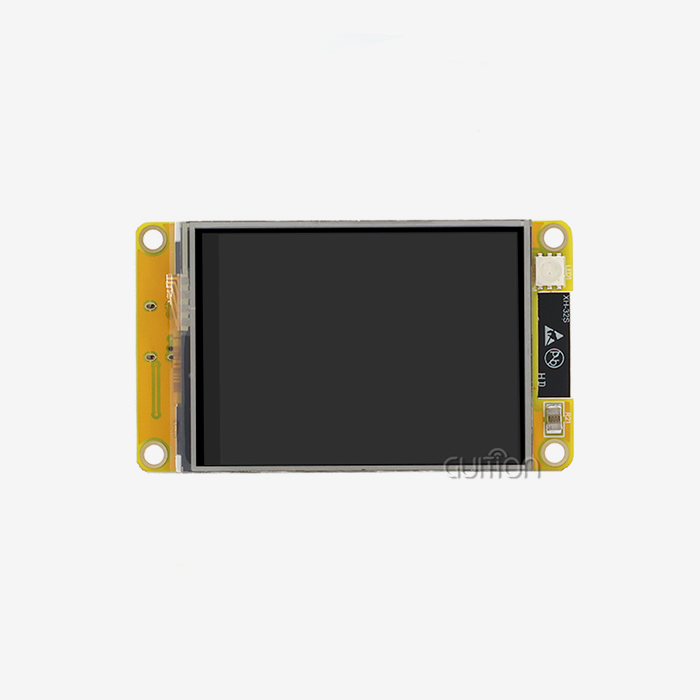
If you are building a custom IoT device, industrial controller, or smart appliance, the right display module can make or break your project timeline. The 1.9 inch ESP32S3 display module — specifically the GUITION ESP32-1732S019N-I — answers that challenge directly. Powered by the ESP32-S3-WROOM-1 dual-core MCU running at 240MHz, paired with a 170×320 IPS panel, 8M PSRAM, and 16MB Flash, this compact module integrates Wi-Fi and Bluetooth natively. It supports Arduino IDE, ESP-IDF, MicroPython, and Mixly, so engineers at any skill level can deploy a working HMI quickly without rewriting low-level drivers from scratch.

Understanding the Core Features of the 1.9 Inch ESP32S3 Display Module
Before choose a display, embedded engineers and procurement teams need to know more about it than just its top specs.
Processing Power and Memory
The ESP32-S3-WROOM-1 chip in this ESP32-1732S019N-I has 512KB of SRAM, 384KB of ROM, 8M of PSRAM, and 16MB of Flash. The 1.9 inch ESP32S3 display module is able to buffer complex graphic frames, run LVGL animations smoothly at 30–60 FPS, and handle wireless tasks at the same time thanks to this memory configuration.
IPS Display vs. Standard TFT
The 170x320 IPS screen on this ESP32 LCD panel has 16 bits of color, and you can see it from 80° all the way around. It is better for colors to be shown on IPS screens instead of regular TFT screens, and there is less blur when lighting isn't direct. For things like medical tracking gear or industrial control panels where people see screens from different angles, this difference is important.
Connectivity and Interface Architecture
You don't need any extra wireless chips because it has Wi-Fi 802.11 b/g/n and Bluetooth 5.0 built in. You won't have to add much wiring because the IO port link and lighting control circuit are already there. There is test software already on the module, so you can check the display as soon as you turn it on for the first time.
How to Integrate the 1.9 Inch ESP32S3 Display Module into Your Custom Projects
Though it's simple to put a display module on a breadboard, there is a set way to get it ready for use in a real product. This is how the process of integration works in real life.
Wiring and Peripheral Interfacing
Data tools, sensors, and relays can all use the ESP32-1732S019N-I's IO port interface. When you are wiring the ESP32S3 display module, connect your 3.3V logic parts straight to the GPIO headers. The module works with 3.3V, so 5V devices need to be level-shifted before they can connect via USB-C. This keeps the design clean and cuts down on the time needed to fix voltage problems.
Programming Workflow Across IDEs
One of the best things about the GUITION 1.9 inch ESP32S3 display module is that it supports multiple IDEs. People who have the Arduino IDE can load the given code, call the display init function, and start drawing shapes or text in very little time. When they need to get things done quickly, ESP-IDF writers can get to lower-level register control. This is also true for people who use MicroPython and Mixly, like teachers and people who need to make samples fast. It takes a lot less time to train new team members when they have this much freedom.
Real-World Application Examples
A lot of different things have been done with this ESP32 LCD module by engineers, such as
- Industrial automation controllers running Modbus RTU over UART while displaying live sensor readings on the IPS screen.
- EV charging station interfaces using the onboard Wi-Fi to push status updates to a cloud dashboard in real time.
- Medical and healthcare equipment requiring stable, low-flicker displays for continuous patient monitoring.
- Financial terminals and POS systems where compact footprint and reliable wireless connectivity are both mandatory.
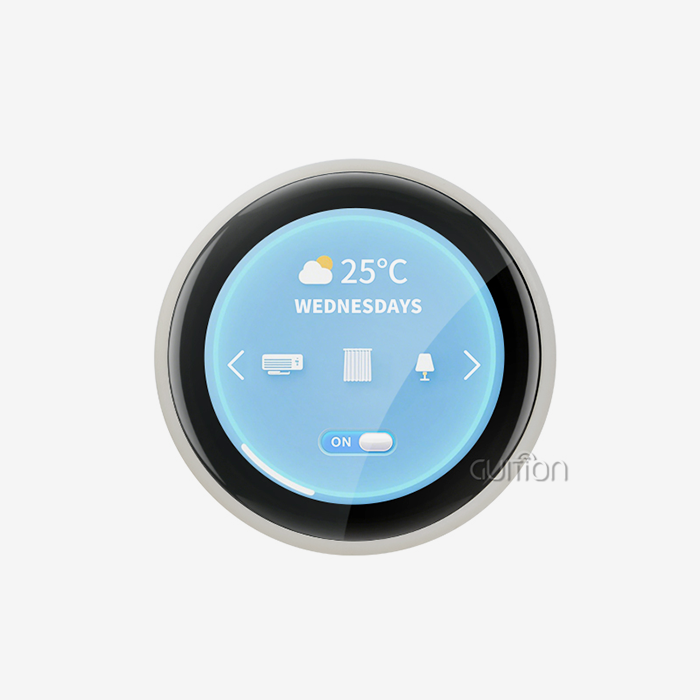
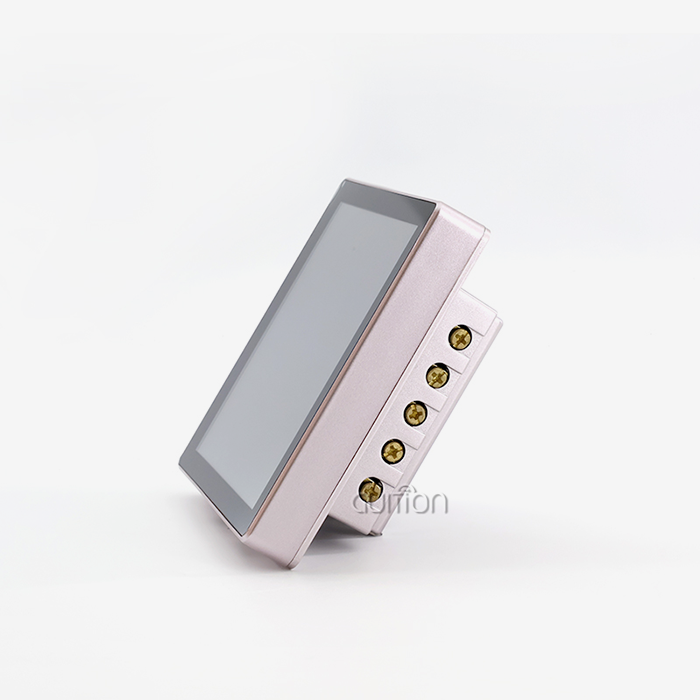
- Smart home control panels managing lighting, HVAC, and security from a single wall-mounted interface.
— things used in industry that run Modbus RTU over UART and show real-time sensor readings on an IPS screen.
EV charging station interfaces use the built-in Wi-Fi to send status updates to a cloud dashboard in real time.
Choosing the Best 1.9 Inch ESP32S3 Display Module for Your Business Needs
Not every ESP32S3 display module on the market offers the same level of integration, documentation quality, or supply reliability. When sourcing at volume, the decision criteria extend well beyond the datasheet.
Evaluating Resolution and Panel Quality
A 170×320 IPS panel at the 1.9-inch form factor yields a pixel density that renders crisp fonts and clean icons — particularly important for HMI applications where operators read small status labels. Modules using lower-quality TFT panels at the same size often show color banding at off-axis angles, increasing field returns.
Multi-Platform Software Support as a Selection Factor
GUITION's independently developed Guition UI software gives engineers drag-and-drop control placement without writing layout code manually. This capability meaningfully reduces UI development hours on each project iteration. When comparing suppliers, ask whether the software tool is actively maintained and whether example projects are available for your target IDE. GUITION provides complete secondary development documentation for all four supported environments: Arduino, ESP-IDF, MicroPython, and Mixly.
Bulk Procurement and Supply Stability
For B2B buyers planning production runs, supply chain continuity is as important as technical specs. GUITION operates as an integrated R&D, production, and sales organization covering display sizes from the 1.9 inch ESP32S3 display module up to 21.5". This range means you can standardize on one supplier relationship across multiple product lines, reducing vendor management overhead and negotiating stronger pricing for larger orders.
Benefits of Using a 1.9 Inch ESP32S3 Display Module in Custom Embedded Systems
The benefits of this ESP32-S3 display module become very clear when you think about the issues that engineers and product managers have to deal with every time a new product is made.
This is the main reason the GUITION ESP32-1732S019N-I is a good choice for projects that need an embedded system: You can test the device's functionality right away after delivery with pre-loaded test software. This way, you won't have to spend hours fixing problems with blank screens during early integration. The team can make sure the show is healthy before they write a single line of application code.- "OTA upgrade support" through the onboard Wi-Fi lets people update software on goods that have already been sent. This is especially helpful for units that are put in hard-to-reach places, like on the roof of a building or on energy management panels outside.*With a bigger spot for TF cards, the app can store picture images, log files, and font libraries locally. Systems that measure the quality of the air or check the health of machines don't have to rely on the cloud to store data.
- Pre-loaded test firmware allows immediate functional verification after delivery, eliminating the blank-screen troubleshooting that costs hours during early integration. The team can confirm display health before writing a single line of application code.
- OTA upgrade support through the onboard Wi-Fi means deployed products can receive firmware patches remotely. This is particularly valuable for units installed in hard-to-access locations such as warehouse ceilings or outdoor energy management panels.
- TF card slot for expandable storage lets the application store image assets, log files, and font libraries locally. Systems processing air quality data or machinery diagnostics can archive readings without relying solely on cloud connectivity.
- Multi-language and UTF-8 encoding support allows the same firmware build to display English, Spanish, or other character sets, supporting global product deployment from a single SKU.
The main things that cause HMI projects to go over budget are late debugging, field returns, and support calls after the system has been put in place. All of these benefits take care of those issues. By taking care of these problems at the component level, the 1.9 inch ESP32S3 display module, the GUITION module, helps teams reach their technical and financial goals more quickly.
Procurement and Support: How to Source and Maintain Your ESP32S3 Display Module
It's cheaper and faster to make things when you get the display module right the first time.
Verifying Module Authenticity and Quality Standards
GUIDANCE modules are checked in accordance with the standards set by IPC-A-610 during the purchase step. To do this, the temperature must be changed from -20°C to +70°C for 48 hours and dead pixels must be checked. The RF must be calibrated in protected test settings to make sure the Wi-Fi output power is right. People who buy a lot of something should ask for test results to make sure that each batch is the same.
Technical Documentation and After-Sales Support
You can get full instructions for all four IDEs through GUITION. This includes pinout diagrams, steps for setting up the driver, and example projects. With cross-platform live debugging, engineers can find and fix problems again and again without having to send gear back to the factory. This makes it a lot faster to fix problems after the sale.
Long-Term Scalability
Because GUITION's screens range in size from 1.28" to 21.5", a product builder can use a standard connector to make a hardware base that can work with screens of different sizes. This way, the design won't be limited to a single screen size in the future.
Conclusion
From quick UI prototyping to production quality control and over-the-air (OTA) updates after release, the GUITION ESP32-1732S019N-I 1.9 inch ESP32S3 display module covers the entire lifecycle of a custom embedded project. It has an IPS screen with a resolution of 170x320 pixels, 16MB Flash, 8M PSRAM, and built-in Wi-Fi and Bluetooth. It's a very powerful HMI node that doesn't need any extra chips or hard driver work. For teams that want to work quickly, reliably, and with more than one IDE, this tool is a great technical and business choice.
FAQ
Can the GUITION 1.9 inch ESP32S3 display module run LVGL smoothly?
Yes. The dual-core ESP32-S3 architecture combined with 8M PSRAM and the high-refresh IPS panel makes LVGL animations achievable at 30–60 FPS. Most UI transitions render without visible lag in testing.
What development environments does the ESP32-1732S019N-I support?
The module supports Arduino IDE, ESP-IDF, MicroPython, and Mixly. All four environments have documented example projects provided by GUITION, reducing setup time for new engineers.
Does the module support OTA firmware updates?
Yes. The onboard Wi-Fi module enables remote OTA upgrades, allowing deployed products to receive updates without physical access. This is valuable for industrial or commercial installations.
What causes a black screen after uploading code to the ESP32S3 LCD module?
This is usually a backlight pin logic issue. Verify that the BL pin is driven to the correct voltage level for your batch. Also confirm that your driver initialization sequence matches the ST7789 variant used in your specific module version.
Is the ESP32-1732S019N-I suitable for medical device projects?
It is used in medical and healthcare equipment prototypes. However, final medical device certification depends on your system-level compliance testing, not the module alone.
Ready to Build with the GUITION ESP32S3 Display Module?
GUITION is a trusted 1.9 inch ESP32S3 display module manufacturer serving industrial, IoT, and medical device teams across the United States and globally. The ESP32-1732S019N-I combines processing power, wireless connectivity, and multi-IDE support into one compact unit — helping your team cut development time and reduce per-unit costs. Contact our technical team today to discuss bulk pricing, sample requests, or custom configurations. Reach us at david@guition.com or visit https://jingcaizhineng.aixdb.cn/ to get started.
References
1. Espressif Systems. ESP32-S3 Technical Reference Manual. Espressif Systems, 2022.
2. Maier, A., Sharp, A., & Vagapov, Y. "Comparative analysis of IoT embedded platforms for edge computing." IEEE International Conference on Internet of Things, 2019.
3. Krupka, L., Vojtech, L., & Neruda, M. "The issue of LPWAN technology coexistence in IoT environment." IEEE International Conference on Future IoT Technologies, 2016.
4. Raj, P., & Raman, A. C. The Internet of Things: Enabling Technologies, Platforms, and Use Cases. CRC Press, 2017.
5. Sehrawat, D., & Gill, N. S. "Smart sensors: Analysis of different types of IoT sensors." IEEE 3rd International Conference on Trends in Electronics and Informatics (ICOEI), 2019.
6. IPC Association. IPC-A-610: Acceptability of Electronic Assemblies. IPC, 2020.
Learn about our latest products and discounts through SMS or email