- English
- French
- German
- Portuguese
- Spanish
- Russian
- Japanese
- Korean
- Arabic
- Greek
- German
- Turkish
- Italian
- Danish
- Romanian
- Indonesian
- Czech
- Afrikaans
- Swedish
- Polish
- Basque
- Catalan
- Esperanto
- Hindi
- Lao
- Albanian
- Amharic
- Armenian
- Azerbaijani
- Belarusian
- Bengali
- Bosnian
- Bulgarian
- Cebuano
- Chichewa
- Corsican
- Croatian
- Dutch
- Estonian
- Filipino
- Finnish
- Frisian
- Galician
- Georgian
- Gujarati
- Haitian
- Hausa
- Hawaiian
- Hebrew
- Hmong
- Hungarian
- Icelandic
- Igbo
- Javanese
- Kannada
- Kazakh
- Khmer
- Kurdish
- Kyrgyz
- Latin
- Latvian
- Lithuanian
- Luxembou..
- Macedonian
- Malagasy
- Malay
- Malayalam
- Maltese
- Maori
- Marathi
- Mongolian
- Burmese
- Nepali
- Norwegian
- Pashto
- Persian
- Punjabi
- Serbian
- Sesotho
- Sinhala
- Slovak
- Slovenian
- Somali
- Samoan
- Scots Gaelic
- Shona
- Sindhi
- Sundanese
- Swahili
- Tajik
- Tamil
- Telugu
- Thai
- Ukrainian
- Urdu
- Uzbek
- Vietnamese
- Welsh
- Xhosa
- Yiddish
- Yoruba
- Zulu
What Quality Standards Should an SPI LCD Display Manufacturer Meet?
The quality of an SPI LCD Display may make or break your whole development cycle when buying a display module for your next project. Manufacturers need to achieve set requirements in the hardware, software, and compliance aspects, from the uniformity of raw materials to the maintenance of firmware after sales. Whether you’re an embedded engineer choosing a TFT module or a product manager assessing an SPI LCD supplier for a medical device project, knowing about these standards helps you prevent expensive rework and supply delays.

Understanding the Core Quality Dimensions of SPI LCD Display Manufacturing
When making a display, quality isn't just one checkpoint; it's a series of decisions that start with choosing the parts and end with making sure the shipment is correct.
Raw Material and Component Selection
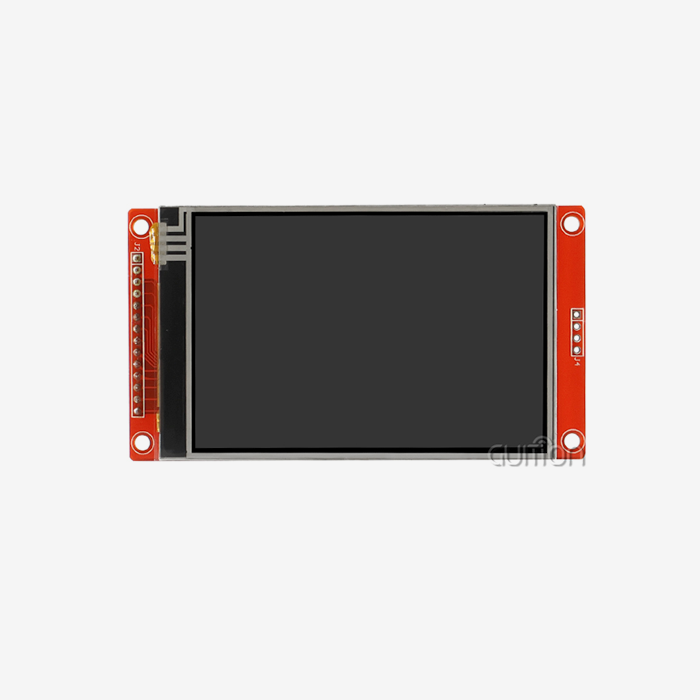
A reliable SPI LCD Display starts with consistent panel glass, a driver IC that works well with the display, and a flex wire that is rated appropriately. Driver ICs, like the ST7796 used in the GUIDE JC3248A035C, need to be within certain electrical ranges. The dielectric ratings of PCB substrates should be known. Inconsistent sourcing at this point directly leads to color banding, flickering, or failure before its time.
Assembly Process Controls and Automated Testing
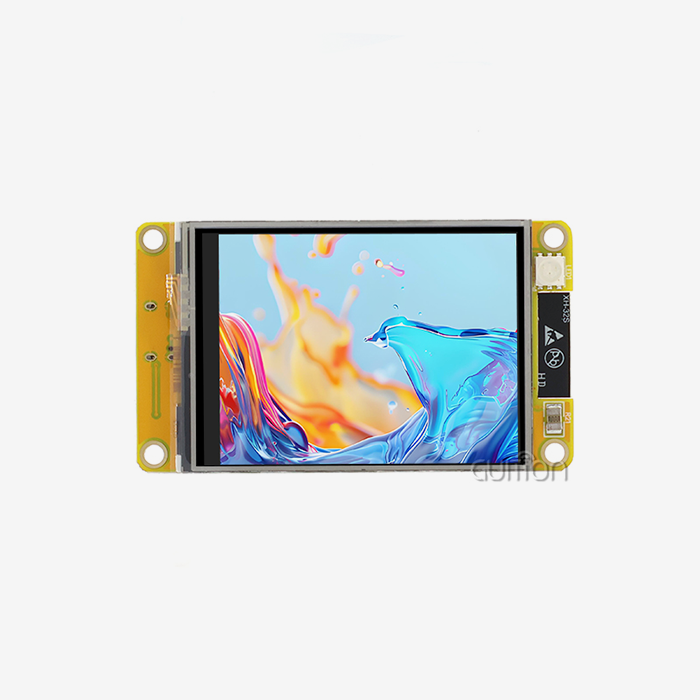
Reputable manufacturers have built-in quality checks along the production process. Automated optical inspection (AOI) checks for defects in the solder, and testing stations ensure the pixels are uniform in color and the colors are correct. As part of the 320x480 SPI LCD Display module, all the units should be checked for backlight strength, touch calibration (for the capacitive version), and SPI transmission stability before leaving the line.
Compliance Certifications: RoHS, CE, and ISO 9001
Labels on products are not the same as certifications; they have legal and practical weight. RoHS compliance makes sure that the display doesn't contain any banned dangerous chemicals. The CE mark means that the product meets European safety and health standards. A formal quality management system controls every step of the process, from buying materials to delivering them. This is shown by ISO 9001 certification. For legal clearance in the U.S. and EU markets, global buyers need these licenses.
Critical Performance Indicators for Evaluating SPI LCD Display Manufacturers
Technical parameters tell you whether a display module will perform in your specific application. They also reveal how seriously a manufacturer treats engineering discipline.
Resolution, Color Depth, and Refresh Rate
A 320×480 resolution with 65K RGB color depth — as seen in the GUITION JC3248A035C — produces visibly sharper graphics than lower-resolution alternatives in the same form factor. Manufacturers should publish tested refresh rates. SPI interfaces typically achieve 30–60 frames per second at HVGA resolution with DMA-enabled controllers. A manufacturer who cannot confirm these values in a datasheet is not production-ready.
SPI Interface Precision and Documentation Quality
The SPI LCD interface requires accurate timing diagrams, pin definitions, and initialization code. Errors in MOSI, SCK, or CS assignments add days to integration. A quality manufacturer provides verified datasheets, sample code in C or MicroPython, and tested libraries for platforms like Arduino and ESP-IDF. The GUITION development ecosystem includes cross-platform debugging support specifically to reduce this integration friction.
Power Consumption Data and Validation Testing
Manufacturers should provide lab-measured active and sleep-mode current draw statistics for battery-powered and energy-limited applications. An SPI LCD with six LED backlights, such as the JC3248A035C, should include both usual and maximum backlight current so that engineers can properly design the power supply. Downstream design problems due to unverified power data.
Comparing SPI LCD Display Quality: What Sets Top Manufacturers Apart?
There isn't a uniform amount of engineering effort among companies that make display modules. When you look at driver IC selection, product range breadth, and supply chain stability, you can see the differences.
SPI vs. I2C and OLED: Why Interface Choice Matters
Because it sends data faster than I2C, SPI is the best choice for graphical user interfaces that need to be updated in real time. I2C works fine for simple letter screens, but it gets too busy when full-frame pixels need to be written. OLED panels have a lot of contrast, but they lose brightness over time and cost more as they get bigger. For factory control screens and 3D printer connections that need to work with different lighting, an SPI LCD Display with an LED backlight and a wide working temperature range (-20°C to +70°C) is the best choice.
Controller IC Portfolio and Module Design Innovation
Leading manufacturers pick driver ICs based on the bandwidth and resolution needs of the application. The JC3248A035C's ST7796 controller works well with 65K color output and can work with both 3-wire and 4-wire SPI modes. When manufacturers keep a variety of integrated circuits (ICs) in stock, ranging in size from 1.28" to 21.5", like ILI9341, ST7789, and GC9A01, they can meet more client needs without having to remake boards as the projects get bigger.
Supply Chain Consistency and OEM Order Reliability
Benchmark makers like Newhaven and Waveshare have built their names in part on making sure that each batch is of high quality. For big OEM orders, consistent FPC connector specifications and color uniformity from lot to lot keep the assembly line from stopping. Jingcai Intelligent makes GUITION, which has a full-size product line so that procurement teams can get everything they need from a prototype to mass production from a single source.
Procurement Considerations: Ensuring Quality Through Supplier Selection
A structured supplier evaluation process protects your project from hidden quality risks that do not surface until production begins.
Evaluation Criteria: Specs, Certifications, and Sample Testing
Always get a technical datasheet before choosing a provider, check the certifications claimed, and buy sample units for bench testing. For an SPI LCD, ensure the resolution, color depth and touch responsiveness are suitable for your application UI needs. Test the initialization code against your target MCU (ESP32, STM32, or Arduino) before you approve a supplier for bulk purchases.
Customization Options and Flexible MOQ
Good providers will customize at the module level: bezel size, connection type, or firmware loading. GUITION modules provide support for secondary development using open APIs and prebuilt controls, minimizing the technical work needed to create a display for a particular product. Startup and SME product teams may evaluate hardware with no risk of huge inventory, due to the flexible minimum purchase quantities.
Transparency, Warranties, and Defect Management
You may be certain that the warranty conditions are clearly specified by the SPI LCD display manufacturer and that there is a documented mechanism for returning defective products. Buyers should obtain formal quality assurance agreements that establish acceptable failure rates (usually ≤0.5% for display modules in industrial applications). Suppliers who provide the option to make remote OTA upgrades – as GUITION provides – add long term value by offering firmware changes without the need to undertake physical hardware recalls.
Future Quality Trends and Innovations in SPI LCD Manufacturing
The display module industry is moving toward higher reliability testing, greener manufacturing, and integrated smart features — all of which raise the quality bar for suppliers.
Emerging Testing Protocols and Advanced Driver IC Technologies
New reliability standards are pushing manufacturers to implement HTOL (High Temperature Operating Life) testing and thermal cycling beyond the conventional -20°C to +70°C range. Advanced driver ICs now support higher SPI clock speeds (up to 80MHz) and built-in gamma correction, improving out-of-the-box color accuracy without manual calibration.
Eco-Friendly Materials and Energy-Saving Design
RoHS compliance is now a baseline expectation, not a differentiator. Leading manufacturers are moving toward halogen-free PCBs and lower-power backlight designs. GUITION's six-LED backlight configuration on the JC3248A035C is engineered for brightness efficiency rather than raw power draw, supporting products targeting energy certification programs.
Touch Integration and Smart Connectivity as Quality Criteria
Capacitive touch panels — like the one integrated in the JC3248A035C — are increasingly evaluated on touch latency, multi-touch accuracy, and interference rejection rather than just basic functionality. Built-in WiFi and Bluetooth modules, supported in GUITION's product line, are becoming quality features evaluated during procurement as products move toward connected HMI architectures.
Conclusion
An SPI LCD Display maker must meet quality standards for the materials used, the controls used during production, the paperwork, and the help given after the sale. Each measure affects the total cost, the time it takes to create, and how reliable the product is. As an example of a quality-aligned display module in real life, the GUITION JC3248A035C is equipped with a ST7796 driver, a 320x480 resolution, 65K color output, and capacitive touch. Before you place an order with an SPI LCD Display supplier, make sure that their written standards match the real needs of your application.
FAQ
What certifications should an SPI LCD display manufacturer have?
Look for RoHS approval, CE marking, and ISO 9001 recognition at the very least. RoHS makes sure that controlled substances are used correctly, CE makes sure that EU safety rules are followed, and ISO 9001 makes sure that the quality management process is written down. For industrial or medical uses, you may need extra certifications like FCC or IEC standards.
What driver ICs are commonly used in SPI LCD displays?
The ST7796, ILI9341, ST7789, and GC9A01 are all common driver ICs. The ST7796 used in the GUIDE JC3248A035C has a resolution of 320x480, a color output of 65K, and can work with both 3-wire and 4-wire SPI setups. The choice of driver IC has a direct effect on the color depth, refresh rate, and compatibility with other platforms.
How do I verify the quality of an SPI LCD display before mass production?
Get sample units and test them with the MCU technology you want to use. Check the initialization code, make sure the panel's colors are all the same, measure the current draw when the backlight is on normally, and make sure the capacitive modules' touch response latency is correct. Write down the pass/fail criteria before you approve a supplier.
What is a typical defect rate for quality-grade display modules?
In B2B contracts for industrial-grade SPI LCD Display modules, a defect rate of less than 0.5% is normal. Suppliers should write down how they handle defects and what the terms of their warranties are.
Elevate Your Project with a Trusted SPI LCD Display Manufacturer — Get a Quote from GUITION Today
The Guition UI creation tool, cross-platform flexibility, and OTA update support are all features of the reliable SPI LCD Display product line from Jingcai Intelligent, which ranges from 1.28" to 21.5". The JC3248A035C is ready to be used in smart devices, medical equipment, and factories. Get in touch with our team right away to ask for a sample of our product or to talk about your needs for an SPI LCD Display supplier. david@guition.com or https://jingcaizhineng.aixdb.cn/ to get in touch with us.
References
1. IEEE Transactions on Consumer Electronics — "Serial Peripheral Interface Performance in Embedded Display Systems," 2021.
2. IPC-A-610: Acceptability of Electronic Assemblies, IPC Standards, 2020.
3. RoHS Directive 2011/65/EU, European Commission Official Journal, revised 2019.
4. ISO 9001:2015 Quality Management Systems — Requirements, International Organization for Standardization, 2015.
5. SID Display Week Proceedings — "Driver IC Architecture for TFT-LCD Modules in Industrial Applications," Society for Information Display, 2022.
6. Electronics Weekly — "Quality Benchmarks in Global LCD Module Supply Chains," 2023.
Learn about our latest products and discounts through SMS or email