- English
- French
- German
- Portuguese
- Spanish
- Russian
- Japanese
- Korean
- Arabic
- Greek
- German
- Turkish
- Italian
- Danish
- Romanian
- Indonesian
- Czech
- Afrikaans
- Swedish
- Polish
- Basque
- Catalan
- Esperanto
- Hindi
- Lao
- Albanian
- Amharic
- Armenian
- Azerbaijani
- Belarusian
- Bengali
- Bosnian
- Bulgarian
- Cebuano
- Chichewa
- Corsican
- Croatian
- Dutch
- Estonian
- Filipino
- Finnish
- Frisian
- Galician
- Georgian
- Gujarati
- Haitian
- Hausa
- Hawaiian
- Hebrew
- Hmong
- Hungarian
- Icelandic
- Igbo
- Javanese
- Kannada
- Kazakh
- Khmer
- Kurdish
- Kyrgyz
- Latin
- Latvian
- Lithuanian
- Luxembou..
- Macedonian
- Malagasy
- Malay
- Malayalam
- Maltese
- Maori
- Marathi
- Mongolian
- Burmese
- Nepali
- Norwegian
- Pashto
- Persian
- Punjabi
- Serbian
- Sesotho
- Sinhala
- Slovak
- Slovenian
- Somali
- Samoan
- Scots Gaelic
- Shona
- Sindhi
- Sundanese
- Swahili
- Tajik
- Tamil
- Telugu
- Thai
- Ukrainian
- Urdu
- Uzbek
- Vietnamese
- Welsh
- Xhosa
- Yiddish
- Yoruba
- Zulu
How to Choose a Reliable RGB LCD Screen Manufacturer for OEM Projects?
Picking the best RGB LCD screen manufacturer for an OEM project might effect your product’s visual quality, manufacturing timeframe, and long-term support. You want a provider that can supply exactly the technical requirements you need - resolution, color depth, interface type - and who can produce consistent quality throughout manufacturing runs. Certifications like ISO, RoHS, CE are required to enter markets. Equally critical is the supplier’s capacity to offer paperwork, driver support and after-sales service. A good procurement selection begins by matching the manufacturer’s skills with your project scope, whether you are looking for a TFT LCD panel for industrial control or a display module for medical equipment.

Understanding the Core Requirements of RGB LCD Screens for OEM Use
You need to know exactly what your application needs before you call any display module suppliers. Skipping this step will cost a lot in redesigns later on.
Define Your Technical Specifications
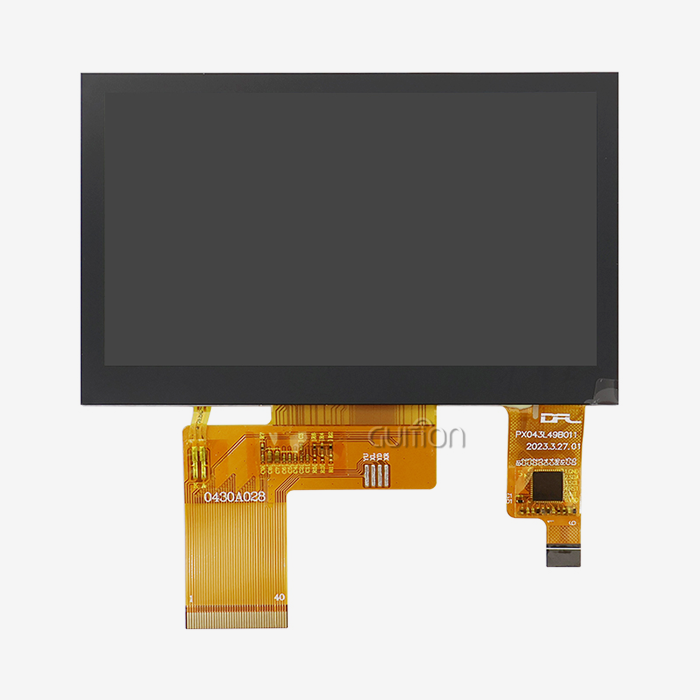
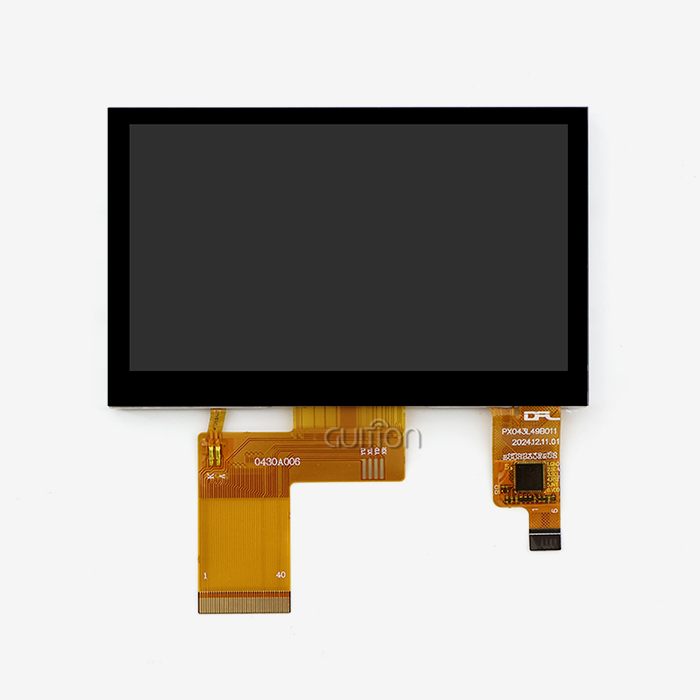
You can 't adjust the essentials . Resolution , color depth , refresh rate . The GUITION JC8048B070N is a 800x480 TFT LCD panel running at 60Hz with 24-bit color, supporting most industrial HMI and medical display demands. This module uses the EK9716 chip to drive the RGB parallel interface, so you can render frames at a very high speed all the time without the bandwidth constraints of SPI or I2C.
Compare RGB LCD Technology Against Alternatives
In the bigger than 5 inch screen size, RGB LCD screens are cheaper and have greater information density than monochrome displays compared to OLED displays. TFT LCD technology with LED lighting is more stable in terms of power and projected lifetime than organic display choices for OEM projects that need long-term operation in varying temperatures.
Match Display Performance to Environmental Conditions
Industrial control panels, 3D printer interfaces, charging stations, medical beauty gadgets all demand varied levels of heat and light. The GUITION JC8048B070N is a dependable solution for applications with operating temperatures of -20°C to 70°C – suitable for warehouse automation, outdoor charging stations, and clinical environments with wide temperature swings.
Establishing Evaluation Criteria for Selecting Manufacturers
Once your specifications are locked, apply a structured set of criteria to every potential display module supplier you evaluate.
Verify Quality Certifications
Any RGB LCD screen supplied into North American or European markets must meet ISO production requirements, RoHS compliance and CE labeling at a minimum. RoHS bans the use of hazardous compounds in electronic components, whereas CE marking indicates compliance with European Union safety standards. Don’t simply take a verbal assertion, ask for paperwork before you go further with any source.
Assess R&D and Customization Depth
The degree to which the manufacturer’s R&D team may customize pinout configurations, adjust interfaces and pick driver ICs will be determined. GUITION’s technical staff provides assistance for secondary development with extensive API documentation and cross-platform compatibility (Arduino, ESP-IDF, Guition’s own development mode). This level of personalization is important for projects that can’t use a basic off-the-shelf TFT display.
Evaluate Supply Chain Reliability
Whether a display panel supplier can expand with your manufacturing depends on lead times, minimum order quantities, and logistical consistency. Ask for historical on-time delivery rates . Ask for clarification on buffer stock rules. A manufacturer that maintains safety stock and provides flexible contract terms greatly decreases supply chain risk for OEM projects with seasonal demand surges.
Comparing Market Options: Leading RGB LCD Screen Manufacturers and Their Offerings
Several well-known companies cater to different customer profiles in the RGB LCD screen provider industry.
Waveshare and Newhaven Display have vast catalogs and lively development groups, making them convenient to utilize for teams in the prototype stage. Hobbyists and engineers who don’t need to purchase a lot of stuff can obtain what they need from Adafruit and SparkFun, but industrial customers generally require OEM contract flexibility and bulk pricing. Seiko Instruments is bringing automotive and precision-grade display expertise. However, smaller manufacturers may find it difficult to deal with lead times and MOQ.
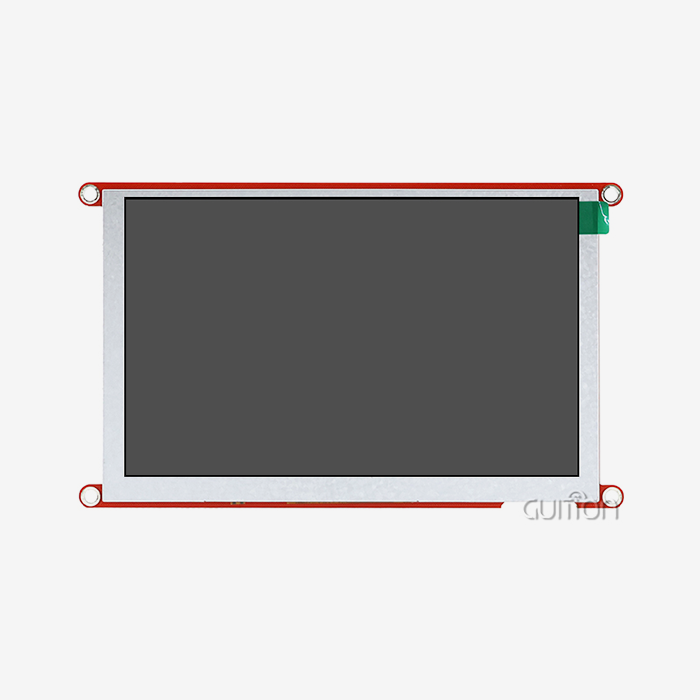
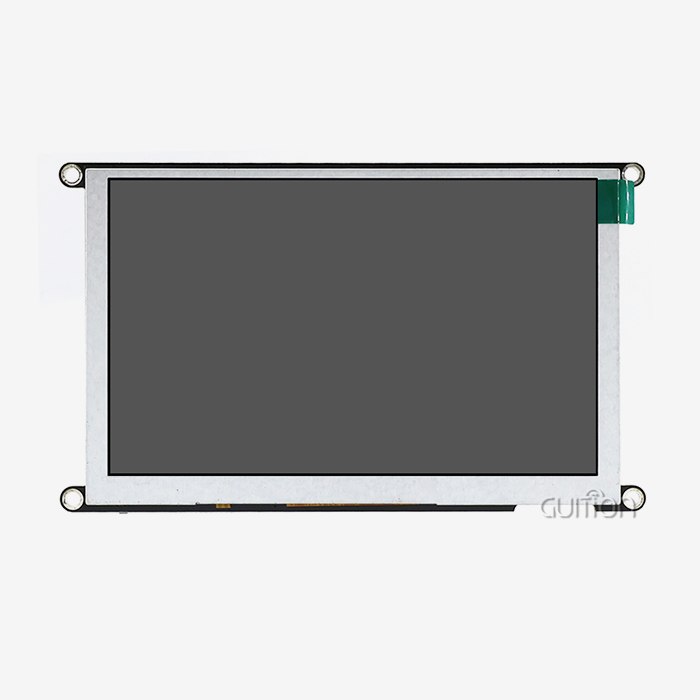
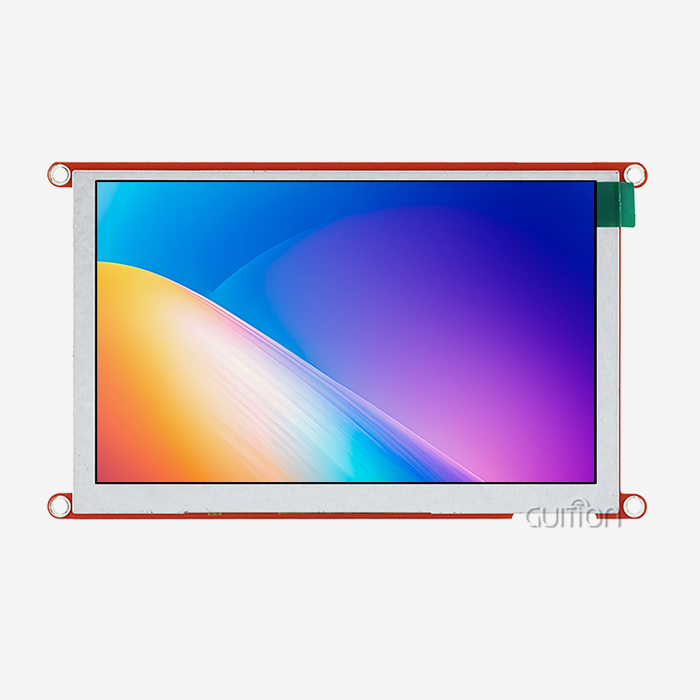
GUITION is beneficial for industrial OEM buyers. The JC8048B070N is a 7.0-inch RGB LCD screen having a resolution of 800 x 480, 16.7 million colors accessible via a 24-bit RGB interface, and an 18-LED lighting system with consistent brightness. Its EK9716 driver IC has a specified integration route for STM32 and NXP CPUs. This reduces the time to bring up at board level.
Here are the major advantages of the GUITION JC8048B070N that you should bear in mind while comparing prices:
- RGB 24-bit can display 16.7 million colors: The full-color parallel interface provides vivid, professional graphics for industrial panels, ATM terminals, and diagnostic displays without the bandwidth problems of serial display modules.- 800x480 LED Edge Lighting Pixels: Text-heavy interfaces and graphical HMI layouts may be easily read at 7,000 pixels per inch. The 18 LED backlight provides even illumination of the active area, even in strong background light situations such as factory floors or outdoor kiosks.- **Operating temp: -20°C to 70°C** This temperature range makes it suitable for use in many diverse locations such as cold warehouses, outdoor charging outlets, and industrial buildings with fluctuating weather.
- 24-bit RGB 16.7M Colors Color Output: Full-color parallel interface provides vivid, professional-level graphics for industrial dashboards, ATM terminals, and diagnostic panels without the bandwidth limitations of serial display modules.
- 800×480 7.0 inches Resolution LED Backlight: The pixel density on 7.0 inches makes it simple to read, whether you have text-heavy interfaces or graphical HMI designs. The 18 LED backlight provides uniform illumination of the active area in high ambient light environments like production floors or outdoor kiosks.-20 °C to 70 °C Working Range: Reliable functioning in situations ranging from cold storage warehouses and outdoor charging stations to industrial locations with changing temperatures.
These advantages derive from a single verified display module that tackles typical OEM issues of visual quality, environmental tolerance, and fast integration.
Avoiding Common Pitfalls When Selecting RGB LCD Screen Suppliers
Even experienced procurement teams make avoidable mistakes when sourcing TFT LCD panels. Knowing the warning signs saves time and budget.
Watch for Inflated Spec Claims
Some suppliers list peak brightness figures or contrast ratios that only apply under lab conditions. Request test reports from third-party optical inspection equipment. For RGB LCD screens sold into medical or industrial applications, signal integrity data—including dot clock jitter measurements—should be available on request.
Demand Complete Technical Documentation
A missing or incomplete datasheet is a serious red flag. You need VSYNC, HSYNC, and DE timing parameters, FPC pinout diagrams, and recommended driver IC configurations before you can commit to PCB layout. GUITION provides full technical documentation for the JC8048B070N, including EK9716 register maps and reference schematics.
Order Samples Before Full Commitment
Always validate a display panel sample against your target hardware before placing a volume order. Test for Mura defects, dead pixels, and FPC bonding integrity under thermal cycling. Running an OTA firmware update or a cross-platform UI test on the sample using your actual MCU eliminates integration surprises at scale.
Making the Final Decision: Matching Manufacturer Capabilities to OEM Project Needs
The last step is to make sure that what you know about each source fits the size and complexity of your project.
Align Display Size and Interface to Application Type
Control panels for 3D printers, commercial kiosks, and the interfaces of medical esthetic devices can all benefit from a 7.0-inch RGB LCD screen. Modules with smaller form factors, like 1.28" or 3.5", work well with worn or pocket tech. GUITION's product line includes sizes from 1.28" to 21.5", so OEM buyers only have to deal with one provider for a wide range of products.
Balance Price, Quality, and Delivery Terms
The LCD module provider with the lowest pricing is seldom the one with the lowest overall project cost. Debugging hours, after-sales assistance calls, and rework rates are all things to consider when determining the value of a service. GUITION’s multi-language UTF-8 encoding and remote over-the-air (OTA) upgrading capability reduce the maintenance expenses after a product has been sent throughout the globe.
Build a Long-Term Supplier Relationship
The best way to source an OEM display is jointly. When suppliers offer engineering resources, sample policies, and timely technical assistance to help you effectively integrate their goods beyond the component itself, value is added. Consider buying an RGB LCD screen source as a long-term investment in technology, not a one-time expenditure.
Conclusion
It takes more than just comparing datasheets to find the best RGB LCD screen manufacturer for an OEM project. You need to check the supplier's certifications, put the technical documentation through its paces, figure out how customizable it is, and make sure that the supplier's production capabilities match yours. The GUITION JC8048B070N shows how a well-specified 7.0-inch TFT display module—with a resolution of 800x480, support for 16.7M colors, and a tested EK9716 driver path—can work well in a wide range of industrial and commercial settings. If you choose your maker as a smart move, your display integration will work reliably from the pilot to the production run.
FAQ
What interface does an RGB LCD screen use, and why does it matter for OEM design?
An RGB LCD screen uses a parallel interface carrying VSYNC, HSYNC, DOTCLK, and DE signals. Unlike SPI or I2C, this architecture supports high-speed frame rendering—typically 60Hz or above—without internal display memory, making it the standard for 5-inch and larger TFT panels in industrial HMI applications.
What certifications should I require from an LCD display module supplier?
At minimum, request ISO manufacturing certification, RoHS compliance documentation, and CE marking for any RGB LCD screen intended for North American or European markets. These certifications confirm environmental safety and electrical standards compliance.
How do I verify after-sales support quality before committing to a bulk order?
Request a sample unit and test the supplier's technical support response time with real integration questions. Evaluate datasheet completeness, driver IC documentation quality, and whether the supplier offers remote debugging assistance.
What is a realistic lead time for bulk RGB LCD panel orders?
Standard production lead times for TFT LCD modules typically range from 4 to 8 weeks for volume orders. Suppliers with safety stock programs can reduce this to 1 to 2 weeks for catalog models.
Can an Rgb lcd screen support touch functionality?
The RGB interface carries only video data. Touch input—resistive or capacitive—requires a separate I2C or SPI controller connected via an independent tail or combined FPC connector, handled by a dedicated touch driver on the host processor.
Start Your OEM Display Project with Guition Today
A reputable Rgb lcd screen provider with extensive technical experience is needed for your upcoming OEM project. The GUITION JC8048B070N is a 7.0-inch, 800x480 TFT display module that can display 16.7M colors and work with drivers from different platforms. It is ready to be used in business, medicine, and industry. The team at Guition helps with secondary development, deployment in multiple languages, and over-the-air (OTA) upgrades, which lowers your overall engineering cost. To get an example or talk about your Rgb lcd screen manufacturer needs right now, email us at david@guition.com or go to https://jingcaizhineng.aixdb.cn/.
References
1. Bhowmik, A. K. Flat Panel Displays: Advanced Organic Electroluminescent Displays. Wiley-SID, 2020.
2. Den Boer, W. Active Matrix Liquid Crystal Displays: Fundamentals and Applications. Newnes/Elsevier, 2005.
3. International Electrotechnical Commission. IEC 61747-20-1: Liquid Crystal Display Devices – Part 20-1: Measuring Methods for Colour Displays. IEC, 2012.
4. International Organization for Standardization. ISO 13406-2: Ergonomic Requirements for Work with Visual Displays Based on Flat Panels. ISO, 2001.
5. Morozumi, S., and Araki, R. "TFT-LCD Technology and Applications in Industrial Display Systems." Journal of the Society for Information Display, Vol. 29, No. 4, 2021.
6. Lueder, E. Liquid Crystal Displays: Addressing Schemes and Electro-Optical Effects. 2nd ed. Wiley, 2010.
Learn about our latest products and discounts through SMS or email