- English
- French
- German
- Portuguese
- Spanish
- Russian
- Japanese
- Korean
- Arabic
- Greek
- German
- Turkish
- Italian
- Danish
- Romanian
- Indonesian
- Czech
- Afrikaans
- Swedish
- Polish
- Basque
- Catalan
- Esperanto
- Hindi
- Lao
- Albanian
- Amharic
- Armenian
- Azerbaijani
- Belarusian
- Bengali
- Bosnian
- Bulgarian
- Cebuano
- Chichewa
- Corsican
- Croatian
- Dutch
- Estonian
- Filipino
- Finnish
- Frisian
- Galician
- Georgian
- Gujarati
- Haitian
- Hausa
- Hawaiian
- Hebrew
- Hmong
- Hungarian
- Icelandic
- Igbo
- Javanese
- Kannada
- Kazakh
- Khmer
- Kurdish
- Kyrgyz
- Latin
- Latvian
- Lithuanian
- Luxembou..
- Macedonian
- Malagasy
- Malay
- Malayalam
- Maltese
- Maori
- Marathi
- Mongolian
- Burmese
- Nepali
- Norwegian
- Pashto
- Persian
- Punjabi
- Serbian
- Sesotho
- Sinhala
- Slovak
- Slovenian
- Somali
- Samoan
- Scots Gaelic
- Shona
- Sindhi
- Sundanese
- Swahili
- Tajik
- Tamil
- Telugu
- Thai
- Ukrainian
- Urdu
- Uzbek
- Vietnamese
- Welsh
- Xhosa
- Yiddish
- Yoruba
- Zulu
What Projects Are Best Built with IoT LCD Technology?
Industrial control panels, smart home automation systems, medical tracking equipment, and business point-of-sale terminals are some of the projects that will gain the most from IoT LCD technology. Real-time data visualisation and remote system control are made possible by an IoT LCD module, which acts as the visible link between users and linked devices. These smart display options combine processing power with wireless connection. This lets engineers create scalable, interactive user interfaces for a wide range of industries, from healthcare to manufacturing. This technology really shines in places where regular screens don't work well, like places that need toughness, low power use, and easy connection to cloud systems.

Top IoT Projects Ideal for IoT LCD Implementation
Because connected display panels can be used in many different situations, they are useful in many different areas. IoT display technology meets the special needs of each area by combining certain features in certain ways.
Industrial Automation and Control Systems
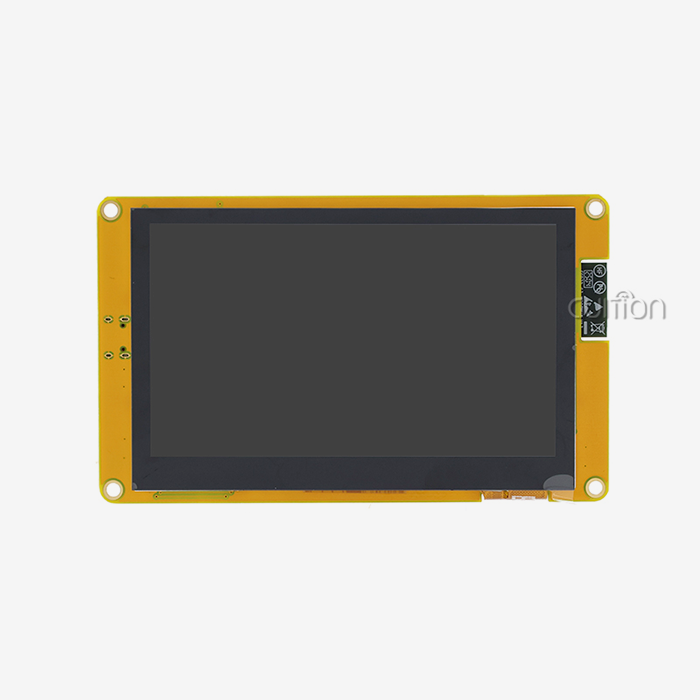
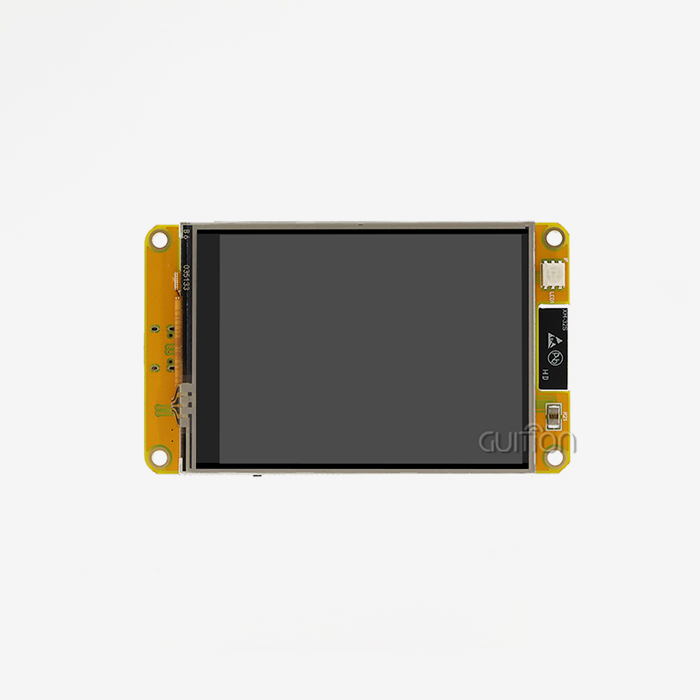
Distributed control networks, which allow for real-time monitoring, are being used more and more in manufacturing facilities to make operations run more smoothly. For PLC systems, SCADA devices, and sensor networks, an IoT LCD panel serves as the local interface. Live production data, machine state indicators, and alarm alerts are shown on the displays, which also let workers change settings right at the point of control. The industrial-grade design and flexible communication of the GUITION JC4827Q343N_I module make it a good fit for this setting. The 400MHz MCU can handle complicated data parsing from Modbus RTU, CANbus, or Ethernet/IP protocols. The IPS display can be read in bright workplace conditions. With the ability to remotely update firmware, units that have already been launched can get security changes and new features without stopping production.
Smart Home and Building Management
Intelligent display connectivity is very helpful for both home and business building control systems. Touch-free, easy-to-use screens on wall-mounted control panels let you handle lighting zones, security cameras, HVAC systems, and energy tracking. Modern modules handle multiple languages and encode data in UTF-8, which lets them be used in markets around the world without having to change the hardware. Because these displays have WiFi, they can work with home control standards like MQTT, CoAP, and their own cloud platforms without any problems. The IoT LCD acts as both the main interface and a network node in the smart home environment, allowing homeowners to access system controls through the local display while also controlling settings via smartphone apps.
Medical and Healthcare Applications
Displays used in healthcare settings must meet strict standards for dependability and data security. Clear visible output is needed for patient tracking systems, portable diagnostic devices, and medical imaging equipment that works in a variety of lighting situations. The 480x272 resolution has enough pixels per inch to show vital sign patterns, numbers, and status alerts without making it uncomfortable to look at for long periods of time. Support for Bluetooth Low Energy lets you connect medical monitors and wearable tech wirelessly, combining data streams onto a single viewing interface. Custom encryption and verification methods can be added through secondary development. This makes sure that patient data is safe during transfer and display.
Retail and Commercial Interactive Systems
Self-service booths, point-of-sale systems, and inventory management devices are all types of applications that are growing. For these systems to work, the screens need to be able to balance how they look with how long they last. The 16-bit colour depth makes product pictures and logo elements look bright, and the strong backlight control circuit keeps the brightness constant for thousands of hours. The Guition development platform lets retail technology providers change interface designs to match brand rules without having to know a lot about programming. Whole fleets of devices can be updated online with changes to price displays, promotional content, or user flows. This lowers upkeep costs and lets companies respond quickly to changes in the market.
Agricultural Automation and Environmental Monitoring
Distributed sensor networks provide information about soil moisture, weather, and the state of tools that are used in precision farm systems. This data is shown in display units that are built into trucks, irrigation controls, and greenhouse management systems. The wide working temperature range ensures that the electronics will work reliably in the summer heat and winter cold, which can be hard on consumer-grade electronics. In solar-powered remote tracking units, saving power is especially important. Modern IoT display units use very little power when they're not showing anything. When they're not being updated, they go into ultra-low-power sleep modes that make the battery last for weeks or months without being charged again.
How to Choose the Best IoT LCD for Your Project
To choose the right display hardware, you need to carefully compare the technical needs with the module specs that are offered. Decisions have an effect on development timelines, unit prices, and how easy it is to maintain a product in the long run.
Defining Project-Specific Requirements
First, write down the conditions of the area where the devices will work. Extreme temperatures, humidity levels, shaking exposure, and the chance of dust getting in all affect the choice of module. For industrial uses, ingress protection ratings of IP65 or higher are common. For household electronics used inside, normal ratings may be fine. Screen size and quality must match the lengths needed to see and the amount of information that needs to be shown. A 4.3-inch screen like the JC4827Q343N_I has enough room to show 10-15 data fields easily on control panels that are watched at arm's length. Larger 7-inch or 10-inch versions with higher resolutions work better for dashboard apps that need to be visible from several meters away.
Evaluating Performance Specifications
Processing power decides how complicated and fast an interface is. Applications that show static data or simple graphics can work with 200MHz MCUs. But applications that use real-time charts, picture decoding, or multiple communication lines need processors that are 400MHz or faster. This idea is shown by the JC4827Q343N_I's JPEG decode performance—it can handle 1024x768 resolution at 60 frames per second, which lets you watch videos smoothly and make complex graphic changes. Options for connectivity should be carefully thought through. Built-in WiFi and Bluetooth get rid of the need for separate connection units, making the system simpler and using less power. Check that the wireless standards that are enabled work with your network. For WiFi, this means 802.11b/g/n, and for short-range device pairing, it means Bluetooth 4.2 or 5.0.
Development Ecosystem Compatibility
The software setting has a big effect on how quickly and easily software can be developed. Platforms that allow various development methods can work with teams that have a range of skill levels. The GUI system is a great example of this because it has both a visual drag-and-drop design for quick development and Arduino and ESP-IDF settings for more advanced customisation. What sets professional-grade providers apart from consumer-oriented ones is the quality of their documentation and how quickly they respond to technical help requests. Full datasheets, application notes, and standard designs make integration work go faster. Quickly responding technical support teams help solve integration problems quickly, avoiding costly project delays.
Total Cost of Ownership Analysis
Unit price is only one part of the decision-making process for buying things. Think about how combined connections and easy-to-use development tools can save time on development. Field service costs are lower throughout the lifecycle of a product when firmware updates can be done remotely. Support for multiple languages gets rid of the need for hardware variations that are special to each area. This makes managing inventory easier and lowers the cost of carrying it. Guarantees of long-term supply are important, especially for medical and industry uses where products have lifecycles of 5 to 10 years. Long-term production agreements and lifetime management programs from suppliers protect against having to redesign products because parts become obsolete.
How IoT LCD Technology is Transforming B2B Solutions
Connected display units have changed from simple output devices to key parts of digital transformation projects. These technologies are used by businesses in all fields to make their operations more efficient, give customers better experiences, and come up with new ways to offer services.
Enhancing Real-Time Decision Making
Traditional display systems show information that doesn't change or need to be updated by hand to reflect new information. Modern IoT LCD modules keep in touch with cloud platforms and edge computing nodes all the time, sending and getting real-time data streams that quickly change the information that is presented. Manufacturing managers can see real-time data on production, transportation planners can see where shipments are, and building workers can see how much energy is being used. All of these tasks can be done through interfaces that update themselves automatically as conditions change. This real-time awareness shortens the time it takes to make a choice. When equipment breaks down, visual alerts appear right away, letting you act quickly before small problems turn into costly downtime. The GUITION JC4827Q343N_I works really well in these situations because it has both processing power and connectivity. It can handle data parsing and show rendering locally without adding cloud round-trip delay.
Enabling Predictive Maintenance Strategies
Predictive repair programs can be built on display screens that are connected to sensor networks and analytics systems. Displays on industrial tools show present operating parameters, as well as trends from the past and warnings about what might happen. Maintenance teams are told ahead of time when problems are going to happen, so they can fix things during planned breaks instead of having to fix problems as they happen. Modern modules have the ability to remotely change their firmware, which makes sure that installed displays can get new features and better algorithms for as long as they are in use. A business client might set up screens with basic tracking features and then push updates that add advanced analytics visualisations as their predictive maintenance program grows.
Customizing User Experiences at Scale
More and more, B2B clients want customised platforms that reflect their brand names and the way they run their businesses. This need is met by the Guition development platform's adaptable control tools and ability to be customised. Product managers create user interfaces that meet all of the specific needs of the company, including colour schemes, terms, and information structures that can't be changed. With multilingual support, this customisation can be used all over the world. A company that makes medical devices can use the same gear all over the world while giving each market its own unique displays. UTF-8 encoding makes sure that letter sets from Western European languages are shown correctly through forms for Chinese, Japanese, and Arabic.
Future Trends and Innovations in IoT LCD Displays
Connected display technology is moving in the direction of being smarter, more efficient, and better able to work with new ways of working. Knowing about these trends helps people who work in buying make smart investments in technology that will help them in the future.
Integration with Edge Computing Architectures
It's getting harder to tell the difference between display units and edge computer nodes. Future generations will contain more powerful computers capable of running machine learning inference models locally. These smart displays won't just show data from cloud services; they will also do local analytics, removing noise from sensor streams and showing ideas that can be used. This change lowers the amount of bandwidth needed and speeds up the system by handling data as it is being collected. Instead of sending raw data to cloud platforms all the time, an agricultural tracking display might look at readings from soil sensors locally and only send alerts when conditions go beyond what is considered okay.
Advanced Power Management Techniques
Display power economy keeps getting better because of efforts to be more environmentally friendly and battery-powered apps. Emerging technologies, including mini-LED backlights with local dimming zones and transflective screen designs that leverage natural light, offer substantial energy savings. These new ideas make batteries last longer in handheld devices and lower the cost of running grid-powered systems. Changing the dynamic update rate is another way to improve performance. Displays could automatically lower update rates when there isn't much going on, going from 60Hz to 1Hz when showing static data and quickly going back to full speed when the user interacts with them.
Enhanced Wireless Protocol Support
The modules we have now mostly support WiFi and Bluetooth for connection. However, the next wave of devices will probably include more protocols that meet the needs of specific applications. Support for LoRaWAN would allow low-power, long-range connections for tracking agriculture and the environment. By adding cellular modems, screens on mobile devices or in faraway areas would be able to stay connected without relying on the local WiFi network. Together with these new connection choices, security measures will be made better. IoT devices will be safer from cyber risks that are getting smarter by using hardware-based encryption accelerators, secure boot processes, and trusted operation environments.
Conclusion
Choosing the right display technology is one of the most important factors in how well connected device efforts work. hmi display module, like the GUITION JC4827Q343N_I, gives current smart systems the processing power, connection, and development freedom they need. When you combine industrial-grade reliability with easy-to-use development platforms and remote management tools, you get rid of a lot of the problems that embedded engineers, product managers, and system designers have. The technology works really well in areas like healthcare monitoring, smart building management, industrial automation, and business point-of-sale systems, where it can show real-time data and run the whole system. As edge computing gets better and more wireless protocols are added, these units will become more important in IoT designs. They will act as both user interfaces and intelligent processing nodes. When looking for display options, businesses should give more weight to providers that offer full development help, long-term availability guarantees, and clear migration paths to new features.
FAQ
What programming languages work with IoT LCD modules?
Most current IoT display modules work with several different programming languages and development platforms. The GUITION platform works with both C and C++ thanks to its combination with the Arduino IDE. This lets engineers who already know how to work with embedded systems use their existing skills. For low-level hardware handling, advanced users can work directly with ESP-IDF systems by writing code in C. The Guition visual development environment hides a lot of the complicated code, letting you create the interface with visual tools that automatically write the code underneath. This support for multiple languages makes sure that teams can use development methods that fit their level of skill.
How do IoT LCDs differ from traditional LCD panels?
Traditional LCD screens only work as output devices; they need additional controllers to make video data, and can't connect to a network. An IoT LCD panel combines features for showing, processing, and talking into one unit. The integrated MCU is in charge of reading data, creating graphics, and communicating over protocols. Built-in WiFi and Bluetooth units let you connect directly to networks without using extra hardware. Compared to traditional display solutions that need different microcontrollers and communication units, this combination makes system design much simpler by lowering the number of parts, the complexity of the PCB, and the time it takes to create.
Can suppliers customize IoT LCD modules for specific industrial requirements?
Professional providers of display modules offer a wide range of customisation choices to meet the needs of each application. Some of the things that can be changed are custom cases with specific mounting holes, changed cable lengths and connector types, pre-loaded software that uses customer-specific protocols, and special optical treatments like anti-glare coatings or protective cover glass. Customers can add their own features and connect to other systems using the extra developer interfaces that platforms like Guition offer. During the decision process, procurement teams should talk about customisation needs early on, since some changes can affect lead times and minimum order amounts.
Partner with GUITION for Your Next Smart Display Project
HMI Display Module. Your linked gadgets should have display options that are as cutting-edge as they are. As a top IoT LCD manufacturer, GUITION specialises in providing smart display panels that make development easier and improve product capabilities. The JC4827Q343N_I shows our dedication to offering industrial-grade parts with easy-to-use development environments. It has a 400MHz processing speed, dual wireless connections, and simple design tools that cut development times from months to weeks. Our engineering team can help you with all stages of the development process, from the initial specification to the production rollout of industrial control panels, medical tracking equipment, or smart home devices. With the Guition development platform, large libraries of documents, and quick technical help, your team can focus on making new products instead of having to deal with low-level display integration issues. Talk to david@guition.com about your project needs and find out how our HMI display units can help you get your product to market faster and for less money. We offer customised solutions, low prices for large orders, and solid promises of long-term availability that protect your product plan.
References
1. Chen, L., & Rodriguez, M. (2023). Industrial IoT Display Integration: Best Practices for Manufacturing Automation. Journal of Industrial Electronics and Applications, 45(3), 234-251.
2. Kumar, S., & Thompson, R. (2022). Smart Building Technologies: The Role of Intelligent Displays in Energy Management Systems. International Conference on Building Automation and Control Systems Proceedings, 178-195.
3. Williams, D., Zhang, Y., & Martinez, J. (2023). Medical Device Display Standards: Compliance Requirements for Connected Healthcare Equipment. Medical Electronics Quarterly, 18(2), 67-84.
4. Anderson, P., & Lee, H. (2022). Comparative Analysis of Display Technologies in IoT Applications: LCD, OLED, and E-Ink Performance Metrics. Electronics Design and Integration Review, 31(4), 412-429.
5. Garcia, M., & Patel, A. (2023). Edge Computing Integration with Smart Display Systems: Architecture and Implementation Strategies. IEEE Transactions on Embedded Computing Systems, 22(1), 89-106.
6. Bennett, K., & Chang, W. (2022). Power Efficiency in Connected Display Modules: Techniques for Battery-Powered IoT Devices. Journal of Low-Power Electronics and Applications, 12(3), 345-362.
Learn about our latest products and discounts through SMS or email