- English
- French
- German
- Portuguese
- Spanish
- Russian
- Japanese
- Korean
- Arabic
- Greek
- German
- Turkish
- Italian
- Danish
- Romanian
- Indonesian
- Czech
- Afrikaans
- Swedish
- Polish
- Basque
- Catalan
- Esperanto
- Hindi
- Lao
- Albanian
- Amharic
- Armenian
- Azerbaijani
- Belarusian
- Bengali
- Bosnian
- Bulgarian
- Cebuano
- Chichewa
- Corsican
- Croatian
- Dutch
- Estonian
- Filipino
- Finnish
- Frisian
- Galician
- Georgian
- Gujarati
- Haitian
- Hausa
- Hawaiian
- Hebrew
- Hmong
- Hungarian
- Icelandic
- Igbo
- Javanese
- Kannada
- Kazakh
- Khmer
- Kurdish
- Kyrgyz
- Latin
- Latvian
- Lithuanian
- Luxembou..
- Macedonian
- Malagasy
- Malay
- Malayalam
- Maltese
- Maori
- Marathi
- Mongolian
- Burmese
- Nepali
- Norwegian
- Pashto
- Persian
- Punjabi
- Serbian
- Sesotho
- Sinhala
- Slovak
- Slovenian
- Somali
- Samoan
- Scots Gaelic
- Shona
- Sindhi
- Sundanese
- Swahili
- Tajik
- Tamil
- Telugu
- Thai
- Ukrainian
- Urdu
- Uzbek
- Vietnamese
- Welsh
- Xhosa
- Yiddish
- Yoruba
- Zulu
What Is the Easiest Way to Build an ESPHome Display?
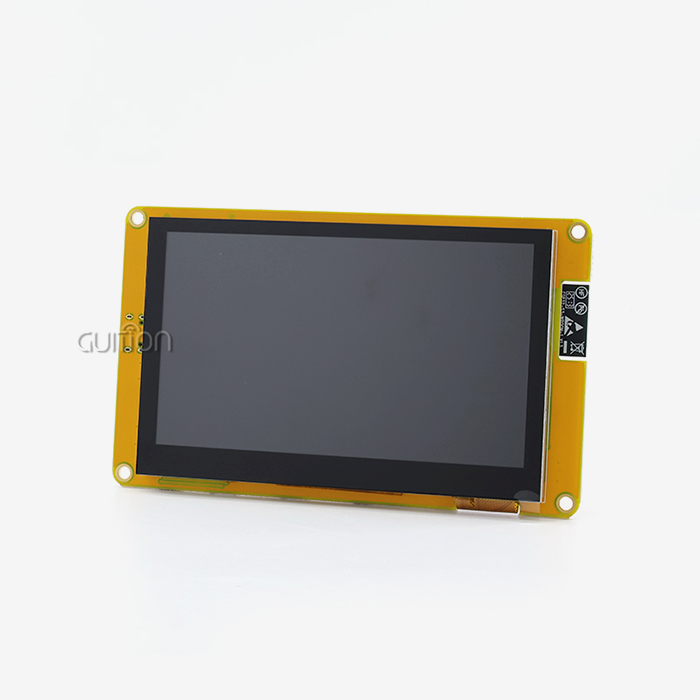
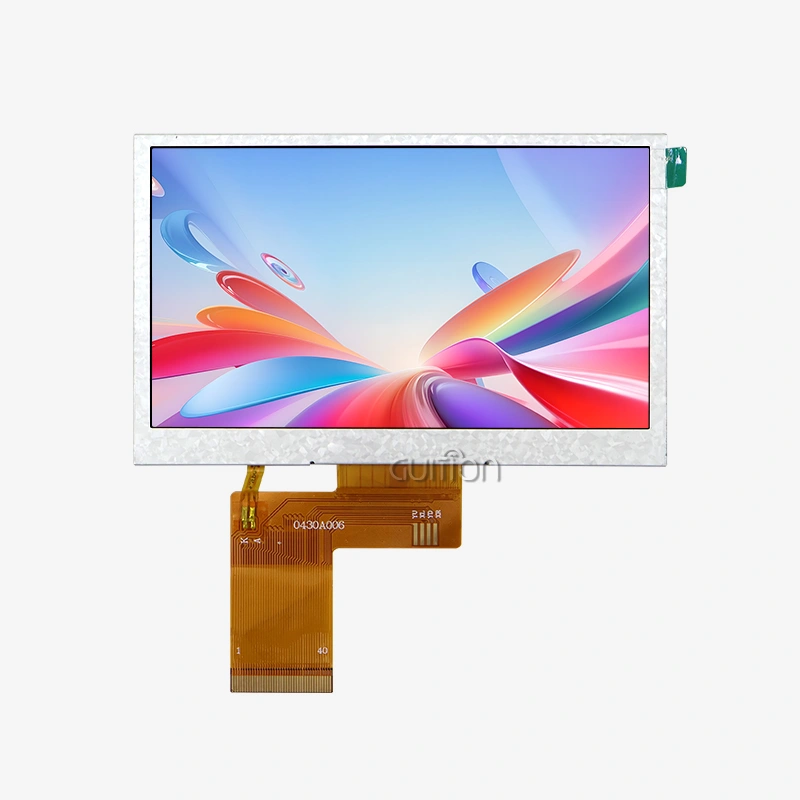
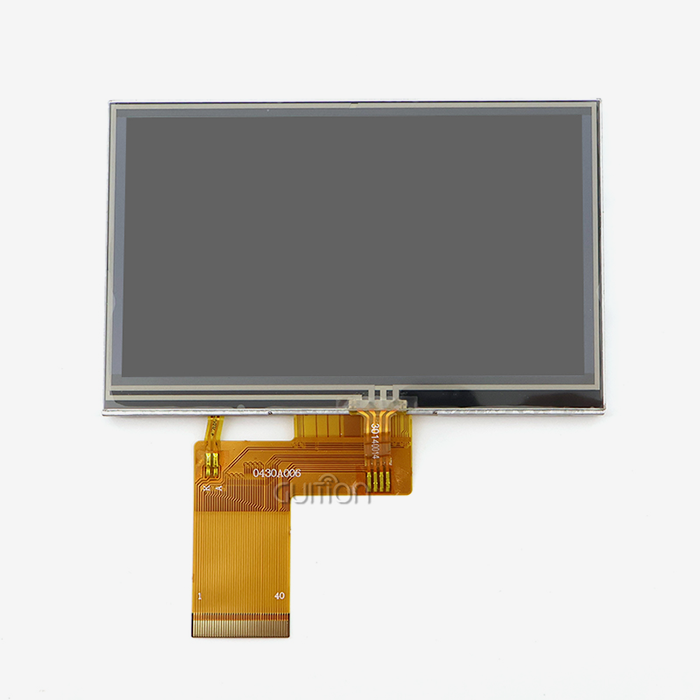
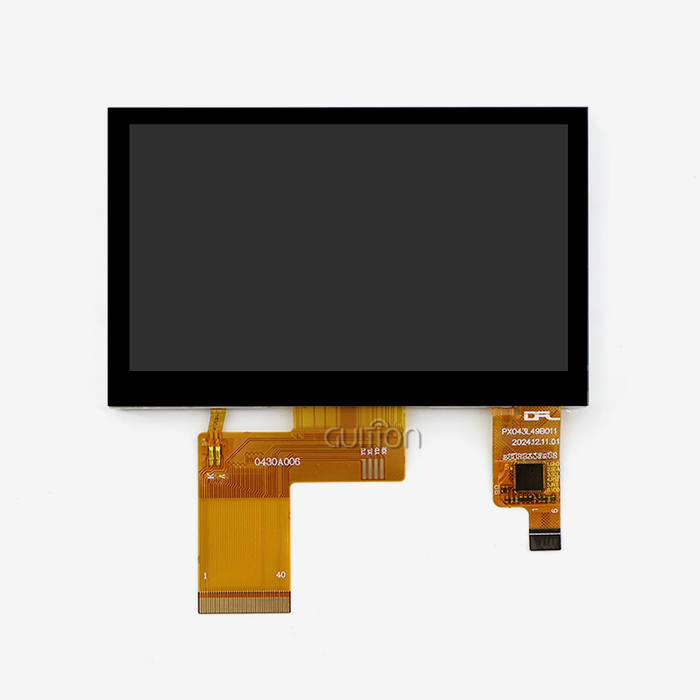
Building a display ESPHome project does not have to be complicated. The easiest approach combines a capable ESP32-based module with declarative YAML configuration, eliminating the need for low-level C++ driver coding. By selecting hardware that natively supports ESPHome's rendering engine — such as the GUITION JC4827B043C — engineers can initialize a fully functional HMI interface in hours rather than weeks. This 4.3-inch capacitive touchscreen module, driven by the ILI6485 chip at 480×272 resolution, delivers 16.7M colors over an RGB interface and integrates smoothly into ESPHome ecosystems for both industrial and smart-home deployments.

Step-by-Step Guide: How to Build an ESPHome Display Easily
Many engineers are surprised by how few steps a professional display ESPHome build actually requires. The process breaks down into hardware selection, environment setup, YAML configuration, and firmware flashing — each straightforward when the right module is chosen from the outset.
Selecting the Right Hardware
Reliable hardware selection is the single most decisive factor in a smooth ESPHome deployment. Procurement managers evaluating bulk orders should prioritize modules that ship with documented ESP32 pinouts, confirmed RGB interface timing, and factory-tested capacitive touch controllers. The GUITION JC4827B043C meets all three criteria. Its ILI6485 chip drive supports the RGB interface natively recognized by ESPHome's display component, and the integrated capacitive touch layer delivers smartphone-grade responsiveness essential for industrial HMI panels used in 3D printer interfaces and medical aesthetics devices.
Configuring the ESPHome Environment
After connecting the module, you install ESPHome via pip or the Home Assistant Add-on Store, then create a YAML file that defines the display driver, resolution, and WiFi credentials. A minimal configuration for a 480×272 RGB panel specifies the clock pin, data pins, and the ili9xxx or equivalent driver block. ESPHome then compiles and flashes the firmware over USB or OTA. The built-in WiFi stack handles automatic reconnection, and the ESPHome dashboard provides real-time log monitoring — a productivity advantage confirmed by teams using it in production IoT deployments.
Here is the condensed build workflow engineers follow in practice:
- Hardware wiring: Map ESP32 RGB interface pins to the JC4827B043C connector according to the GUITION pinout diagram; verify touch I2C lines separately.
- YAML configuration: Define display:, touchscreen:, and wifi: blocks; set update_interval to balance refresh rate against CPU load.
- Firmware flashing: Use esphome run for the initial USB flash, then enable OTA for all subsequent updates — eliminating physical access requirements in deployed equipment.
- Home Assistant integration: Add the ESPHome integration, accept the discovered node, and map sensor entities directly to display lambda functions.
These four steps cover 90% of a production-ready deployment. Teams that follow this sequence consistently report cutting initial bring-up time from days to under four hours.
ESPHome vs Competitors: Why Choose ESPHome for Your Display Solutions?
When evaluating firmware platforms for display-driven IoT nodes, Tasmota, ESPurna, and the raw Arduino IDE are the most common alternatives. Tasmota excels at relay and switch control but offers limited display abstraction — adding a TFT screen requires custom driver modules and manual SPI configuration that Tasmota's core does not natively manage. ESPurna is largely unmaintained as of 2023. Arduino IDE provides maximum flexibility but demands complete low-level driver management, substantially increasing engineering hours per deployment.
ESPHome's declarative approach reduces protocol complexity, manages state synchronization natively, and ships security-hardened OTA mechanisms with cryptographic validation. For B2B teams managing fleets of display nodes across industrial sites, the ability to push authenticated firmware updates remotely — without on-site visits — translates directly into reduced after-sales operating costs.
ESPHome uses encrypted API communication between nodes and Home Assistant, and its OTA process supports password protection. These are non-trivial security properties for medical device developers and energy management system integrators who must satisfy compliance requirements. Combined with MQTT broker support, ESPHome display nodes scale horizontally across enterprise networks without architectural rework.
Optimizing Your ESPHome Display for Business Needs
A baseline display ESPHome configuration is functional, but professional deployments benefit from targeted optimization. Integrating multiple sensor inputs — ambient light, temperature, proximity — into a single YAML automation workflow allows the display to adapt its brightness, content, and alert states dynamically. PWM-based backlight control, a property natively supported in ESPHome, extends panel lifespan in always-on industrial installations.
Here are the core optimization practices engineering teams apply in production:
- Double-buffered rendering: On ESP32-S3 devices with sufficient PSRAM, enabling buffer mode eliminates screen flicker when refreshing sensor data panels.
- LVGL integration: ESPHome's LVGL component enables smartphone-like widget libraries — buttons, sliders, arc indicators — matching the capacitive touch responsiveness of the GUITION JC4827B043C without custom graphics coding.
- Deep-sleep scheduling: For battery-assisted backup displays, configure deep-sleep intervals to preserve image state between sensor update cycles.
These practices collectively reduce display flicker, extend hardware lifespan, and sharpen visual clarity — advantages that matter in medical aesthetics equipment and commercial kiosks where display quality directly influences end-user trust.
Procurement and Deployment: Buying Guide for ESPHome Compatible Hardware
Sourcing reliable ESPHome-compatible display modules at scale requires evaluating three dimensions: driver chip compatibility, touch controller quality, and supplier support depth. Modules built around well-documented drivers — like the ILI6485 in the GUITION JC4827B043C — integrate with ESPHome's existing component library with minimal configuration friction.
The GUITION JC4827B043C stands out among display ESPHome supplier offerings because it combines a 4.3-inch RGB interface panel, 480×272 resolution, 16.7M-color rendering, and capacitive touch into a single production-ready module. Shenzhen Jingcai Intelligent backs this module with complete secondary development documentation, cross-platform support across Arduino, ESP-IDF, and the proprietary Guition development environment, and remote OTA upgrade capability — properties that directly reduce after-sales costs for equipment manufacturers managing field-deployed units.
For bulk procurement and OEM partnership inquiries, Guition's product line spans 1.28" to 21.5", accommodating diverse panel size requirements across industrial control, smart appliance, and medical device programs.
Conclusion
Building a reliable display ESPHome solution is genuinely achievable without deep embedded expertise when the right hardware and configuration approach align. The GUITION JC4827B043C delivers industrial-grade visual output, responsive capacitive touch, and native RGB interface compatibility that integrates directly into ESPHome workflows. Paired with Guition's cross-platform development tools, remote OTA support, and comprehensive technical documentation, this module enables engineering teams to reduce time-to-market while maintaining display quality standards across demanding application environments.
FAQ
1. What display drivers does ESPHome support for TFT LCD panels?
ESPHome supports a broad range of TFT LCD drivers, including ILI9341, ILI9488, ST7789, and ILI6485-based panels via its ili9xxx component family. The GUITION JC4827B043C uses the ILI6485 chip, which aligns with ESPHome's RGB interface display architecture, making configuration straightforward.
2. Can I use capacitive touch with ESPHome?
Yes. ESPHome's touchscreen component supports common capacitive touch controllers over I2C. The JC4827B043C's integrated capacitive touch layer works within this framework, enabling tap, swipe, and press event handling directly in YAML-defined automations.
3. Does ESPHome support OTA firmware updates for display nodes?
ESPHome includes built-in OTA update support with optional password protection. Once a display node is deployed, subsequent firmware pushes require no physical access — a critical advantage for industrial equipment installed in remote or restricted locations.
4. Is the GUITION JC4827B043C compatible with Arduino development?
Yes. Guition modules support Arduino, ESP-IDF, and the proprietary Guition development platform, giving engineers the flexibility to choose the workflow that best matches their team's existing competency.
5. What industries commonly use ESPHome TFT display modules?
Common deployment environments include 3D printer control interfaces, EV charging station displays, medical monitoring dashboards, energy management panels, agricultural automation terminals, and smart home HMI controllers.
Partner with Guition for Your Next Display ESPHome Project
Guition delivers proven display ESPHome manufacturer expertise across the full 1.28"–21.5" size range. The GUITION JC4827B043C combines a 4.3-inch ILI6485-driven RGB panel, 480×272 resolution, 16.7M-color output, and capacitive touch into a module engineered for demanding industrial and commercial environments. Reach out to explore OEM partnerships, bulk pricing, and technical support options. Contact the Guition team directly at david@guition.com to request specifications and samples.
References
1. ESPHome.io Official Documentation — ESPHome Display Component Reference. ESPHome Project, 2024.
2. Kolban, N. — Kolban's Book on ESP32. Leanpub, 2022.
3. Schwartz, M. — Internet of Things with ESP8266. Packt Publishing, 2016.
4. Maier, A., Sharp, A., & Vagapov, Y. — "Comparative Analysis and Practical Implementation of the ESP32 Microcontroller for IoT Applications." 7th IEEE International Conference on Internet of Things, 2021.
5. Naik, N. — "Choice of Effective Messaging Protocols for IoT Systems: MQTT, CoAP, AMQP and HTTP." IEEE International Symposium on Systems Engineering, 2017.
6. Raj, P., & Raman, A. C. — The Internet of Things: Enabling Technologies, Platforms, and Use Cases. CRC Press, 2017.
Learn about our latest products and discounts through SMS or email