- English
- French
- German
- Portuguese
- Spanish
- Russian
- Japanese
- Korean
- Arabic
- Greek
- German
- Turkish
- Italian
- Danish
- Romanian
- Indonesian
- Czech
- Afrikaans
- Swedish
- Polish
- Basque
- Catalan
- Esperanto
- Hindi
- Lao
- Albanian
- Amharic
- Armenian
- Azerbaijani
- Belarusian
- Bengali
- Bosnian
- Bulgarian
- Cebuano
- Chichewa
- Corsican
- Croatian
- Dutch
- Estonian
- Filipino
- Finnish
- Frisian
- Galician
- Georgian
- Gujarati
- Haitian
- Hausa
- Hawaiian
- Hebrew
- Hmong
- Hungarian
- Icelandic
- Igbo
- Javanese
- Kannada
- Kazakh
- Khmer
- Kurdish
- Kyrgyz
- Latin
- Latvian
- Lithuanian
- Luxembou..
- Macedonian
- Malagasy
- Malay
- Malayalam
- Maltese
- Maori
- Marathi
- Mongolian
- Burmese
- Nepali
- Norwegian
- Pashto
- Persian
- Punjabi
- Serbian
- Sesotho
- Sinhala
- Slovak
- Slovenian
- Somali
- Samoan
- Scots Gaelic
- Shona
- Sindhi
- Sundanese
- Swahili
- Tajik
- Tamil
- Telugu
- Thai
- Ukrainian
- Urdu
- Uzbek
- Vietnamese
- Welsh
- Xhosa
- Yiddish
- Yoruba
- Zulu
What Is an ESP32P4 LCD Module? A Buyer's Guide
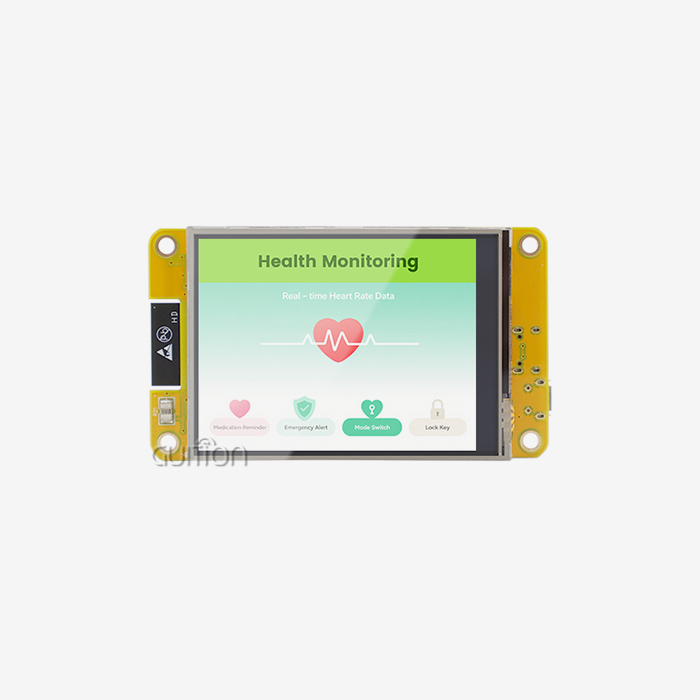
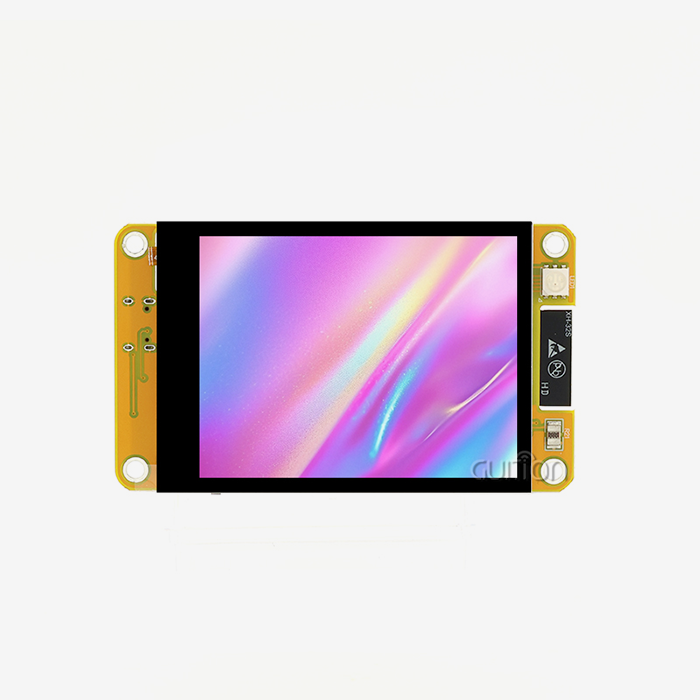
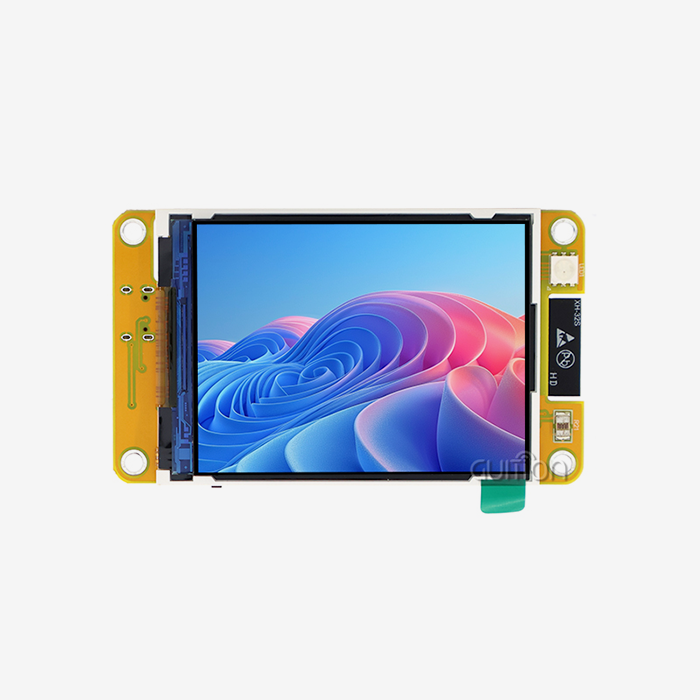
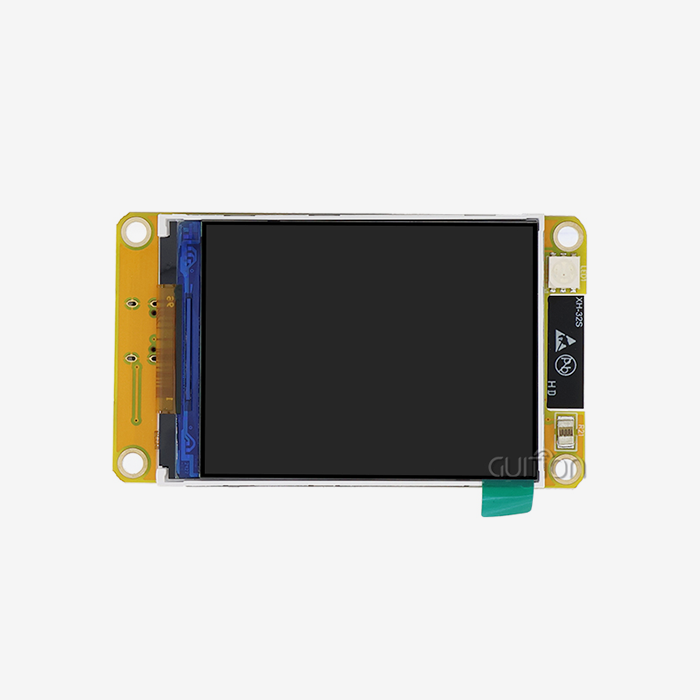
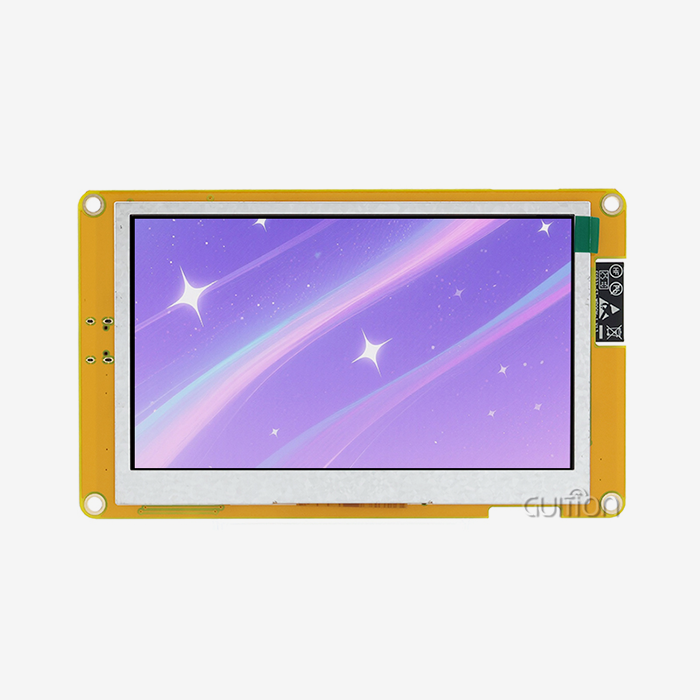
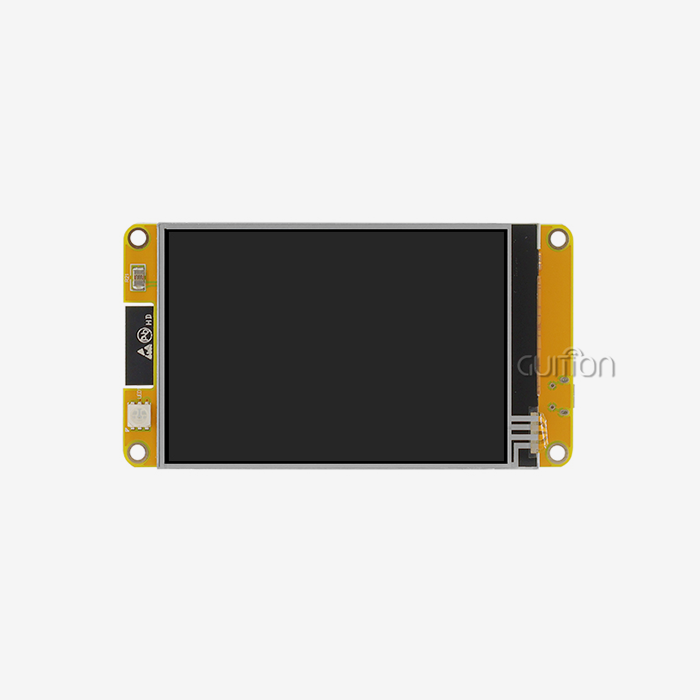
An ESP32P4 LCD module is an integrated display solution that combines Espressif's high-performance ESP32-P4 dual-core processor with an LCD screen, touch controller, and connectivity peripherals on a single board. This module integrates all of these components into a single device. It provides seamless user interface rendering, wireless connection, and flexible development support, and it was designed specifically for embedded human-machine interface applications. This category is shown by the GUITION JC4880P443C_I_W, which is a 4.3-inch IPS touchscreen module that operates at up to 360MHz and has 32MB of PSRAM, 16MB of Flash, built-in WiFi and Bluetooth, and native support for the Arduino IDE, ESP-IDF, MicroPython, and the Guition development platform.

How to Choose the Best LCD Module for Your ESP32P4 Application?
To choose the best embedded display solution, you need to make sure that the technical requirements match the real-world project requirements. The size of the screen, its resolution, how well it responds to touches, the software community, and the operating system all affect this choice.
Matching Display Size to Application Context
Guition makes handheld terminals, wall-mounted control panels, and industrial kiosks in sizes ranging from 1.28 inches to 21.5 inches. The 4.3-inch JC4880P443C_I_W is the right size for multi-widget dashboards while still being small enough for DIN-rail enclosures or tools that sit on a table. HVAC controls, point-of-care medical monitors, and energy management terminals all like this display footprint.
Evaluating Development Ecosystem Compatibility
A strong development environment makes it easier for new users to get started. You can use Arduino IDE, ESP-IDF, MicroPython, and Guition's own visual programming tool with the JC4880P443C_I_W. Here are the main benefits that engineering teams get from this support for multiple platforms:
- Arduino IDE compatibility lets hobbyist-to-professional teams prototype rapidly using familiar libraries, with GUITION-provided sample sketches accelerating common display tasks.
- ESP-IDF support unlocks the full peripheral set of the ESP32-P4, including real-time task scheduling with FreeRTOS, essential for industrial automation and medical monitoring workflows.
- MicroPython compatibility empowers rapid scripting for IoT data dashboards without recompiling firmware, cutting iteration cycles significantly.
- Guition drag-and-drop UI builder enables HMI/UI designers to assemble pixel-perfect interfaces visually, exporting directly to the module without writing graphics-layer code.
All of these benefits make engineering work easier throughout the whole development process, from making the pilot to mass production. Teams don't have to keep up with multiple sets of code for each setting anymore—one module handles all the main processes.
Integration and Programming: Getting Your ESP32P4 LCD Module Up and Running
When the ESP32P4 lcd module is shipped factory-programmed, physical fitting into a product case or evaluation bench is simple. The JC4880P443C_I_W comes with test software already installed, so you can check it right away after powering it on without having to write a single line of code.
Wiring, Initialisation, and Display Driver Setup
The special IO port interface on the module lets you access the GPIO, UART, SPI, and I2C pins. These headers are where engineers add extra parts like sensors, relay boards, and secondary screens. The GUITION hardware abstraction layer takes care of lighting PWM, touch I2C timing, and frame buffer transfers on its own. The display is initialised internally.
Advanced Programming Techniques and Troubleshooting
The LVGL (Light and Versatile Graphics Library) framework is the standard for graphics on ESP32-based display modules. The JC4880P443C_I_W LVGL drivers come pre-configured from GUITION, so teams don't have to do the most time-consuming setup work. Frame buffer double-buffering uses the 32MB PSRAM to prevent screen tearing when switching between scenes. The technical instructions for GUITION, which can be accessed through the support channel at david@guition.com, goes into great detail about common interface problems like UART pin conflicts, not enough decoupling on the 3.3V rail, and TF card SPI arbitration.
Procurement Insights: Where and How to Buy ESP32P4 LCD Modules for Your Business?
Industrial procurement teams put reliability of the supplier, certification compliance, and technical support after the sale at the top of their list of priorities. These factors should be taken into consideration when selecting an ESP32P4 lcd module supplier.
Evaluating Supplier Credibility and Certification
GUITION is a company run by Jingcai Intelligence that does research and development, production, and sales all in one. Its products meet industrial-grade standards and follow clear, documented quality control procedures. Request CE/FCC certification paperwork, RoHS compliance statements, and sample units with factory-loaded firmware when sourcing an ESP32P4 lcd module for sale in large quantities. Before you commit to a production order, you should talk to the seller directly about lead times, minimum order quantities, and the level of customising that is possible.
Cost Structure and Customization Options
The price of embedded display units goes up or down in a predictable way with volume. It's best to test interaction with small orders before committing to bigger runs. GUITION lets you change the hardware, such as the enclosure, the touch overlay, or the firmware that it loads before use. This lowers the cost of integration further down the line. The IO expansion headers and TF card interface also make the module last longer, protecting your hardware investment as firmware needs change.
Comparing ESP32P4 LCD Modules with Alternatives: Making an Informed Decision
Figuring out where the esp32p4 display module stands in comparison to other platforms helps procurement teams defend their choices within the company.
ESP32P4 vs. ESP32-S3 Display Modules
There are many integrated displays that use the ESP32-S3, but they can't handle resolutions higher than 480x480 because they only work with SPI or 8-bit parallel connections. The ESP32-P4 has built-in MIPI-DSI support and a hardware 2D Pixel Processing Accelerator, which lets it handle 480x800 or higher at 60 frames per second with a lot less CPU waste. For industrial HMI and smart device uses that need fluid graphics and wireless processing at the same time, the extra cost is worth it because the performance is better.
LCD vs. OLED for Industrial and Commercial Deployments
OLED screens have great contrast ratios and thin profiles, but they cost more per unit, last less long in high-brightness environments, and are more likely to burn in on industrial dashboards with a lot of static electricity. The JC4880P443C_I_W uses IPS LCD panels, which have consistent brightness, a wider colour gamut at scale, and a longer service life. This makes them the best choice for applications like commercial kiosks, energy management terminals, and agricultural automation controllers.
Conclusion
For skilled embedded HMI programming, the ESP32P4 lcd module category has grown into a reliable base. GUITION's JC4880P443C_I_W is an example of a well-designed module. It has 360MHz dual-core processing, 32MB PSRAM, a 480x800 IPS capacitive touch screen, WiFi and Bluetooth connectivity, a TF card slot for expansion, and a development ecosystem that includes the Arduino IDE, ESP-IDF, MicroPython, and the Guition visual builder. When making their choice, procurement teams that are looking at ESP32-P4 based display options should put memory architecture, the size of the development environment, and the quality of the provider documentation at the top of their list.
FAQ
What is the typical power consumption of an ESP32P4 lcd module?
How much power the JC4880P443C_I_W uses depends on how busy the CPU is, how bright the screen is, and how much wifi activity there is. Expect 300–600mA at 5V when the UI isn't working too hard and WiFi is turned on. When the backlight is dimmed using PWM, it uses a lot less power when it's not being used.
Does the JC4880P443C_I_W support multi-language UI?
Yes, GUITION's programming platform supports UTF-8 encoded multilingual font rendering. This means that a single firmware can be used for English, Chinese, European, and other character sets without having to rebuild the system, which is critical for goods that are sold all over the world.
How does the capacitive touch interface integrate with LVGL?
I2C is how the capacitive touch controller talks to other devices. GUITION gives developers an LVGL-compatible input driver that connects touch coordinates directly to LVGL's input device API, so they don't have to make their own middleware.
What is the difference between SPI and I2C for display communication?
SPI has a much better bandwidth than I2C (40–80Mbps vs. 400Kbps), which is why it is the usual way to send data between pixels. I2C is only used for devices with a low bandwidth, like touch controllers and sensor ports on the same module.
Connect With Guition—Your Trusted ESP32P4 LCD Module Supplier
Guition offers ESP32P4 lcd modules that are ready for production, along with full technical manuals, multi-platform SDK support, and quick engineering help. Whether you need sample units or to buy a lot of them, our team can help you from the design stage all the way through deployment. You can email us at david@guition.com or go to https://jingcaizhineng.aixdb.cn/ to get the JC4880P443C_I_W datasheets, cost information, and information on how to customise it today.
References
1. Espressif Systems. ESP32-P4 Technical Reference Manual. Espressif Systems, 2024.
2. Maier, A., Sharp, A., & Vagapov, Y. "Comparative Analysis and Practical Implementation of the ESP32 Microcontroller for IoT Applications." International Journal of Advanced Computer Science and Applications, 2017.
3. Ganssle, J. Embedded Systems Design: A Step-by-Step Guide. CMP Books, 2008.
4. LVGL Documentation: Embedded Graphics Library for Microcontrollers. LVGL Project, 2023.
5. Baxter, J. & Gilmore, R. "Touch Screen Technologies and Their Application in Industrial HMI Systems." IEEE Transactions on Industrial Electronics, 2019.
6. IHS Markit. Embedded Display Module Market Report: Trends in Industrial and IoT Display Procurement. IHS Markit Technology, 2023.
Learn about our latest products and discounts through SMS or email