- English
- French
- German
- Portuguese
- Spanish
- Russian
- Japanese
- Korean
- Arabic
- Greek
- German
- Turkish
- Italian
- Danish
- Romanian
- Indonesian
- Czech
- Afrikaans
- Swedish
- Polish
- Basque
- Catalan
- Esperanto
- Hindi
- Lao
- Albanian
- Amharic
- Armenian
- Azerbaijani
- Belarusian
- Bengali
- Bosnian
- Bulgarian
- Cebuano
- Chichewa
- Corsican
- Croatian
- Dutch
- Estonian
- Filipino
- Finnish
- Frisian
- Galician
- Georgian
- Gujarati
- Haitian
- Hausa
- Hawaiian
- Hebrew
- Hmong
- Hungarian
- Icelandic
- Igbo
- Javanese
- Kannada
- Kazakh
- Khmer
- Kurdish
- Kyrgyz
- Latin
- Latvian
- Lithuanian
- Luxembou..
- Macedonian
- Malagasy
- Malay
- Malayalam
- Maltese
- Maori
- Marathi
- Mongolian
- Burmese
- Nepali
- Norwegian
- Pashto
- Persian
- Punjabi
- Serbian
- Sesotho
- Sinhala
- Slovak
- Slovenian
- Somali
- Samoan
- Scots Gaelic
- Shona
- Sindhi
- Sundanese
- Swahili
- Tajik
- Tamil
- Telugu
- Thai
- Ukrainian
- Urdu
- Uzbek
- Vietnamese
- Welsh
- Xhosa
- Yiddish
- Yoruba
- Zulu
What Is a Round LCD Display Arduino Module?
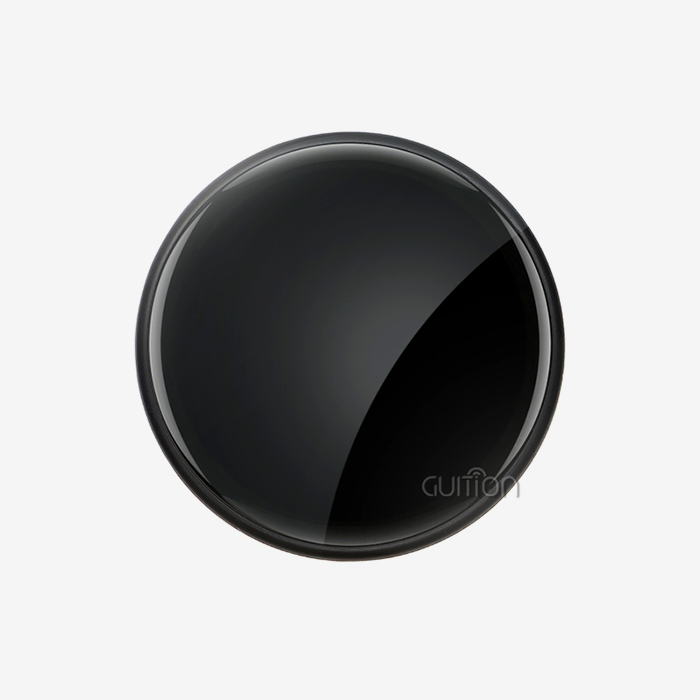
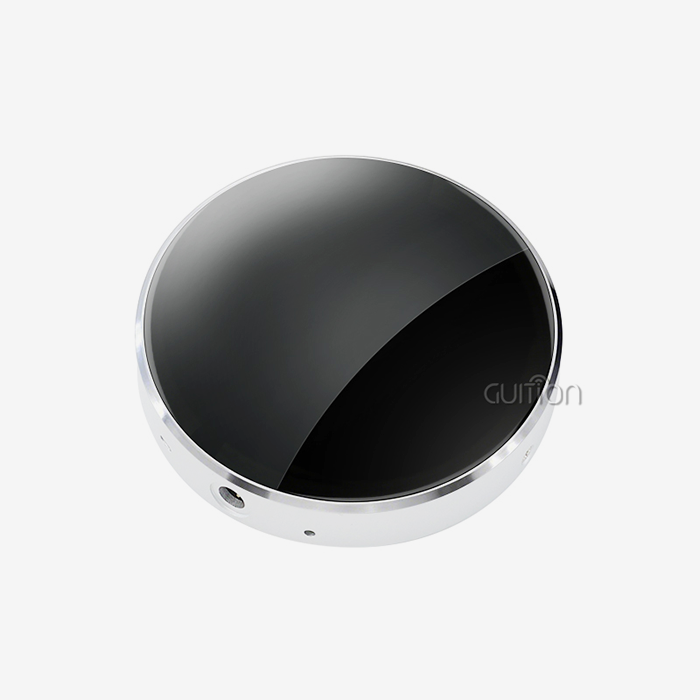
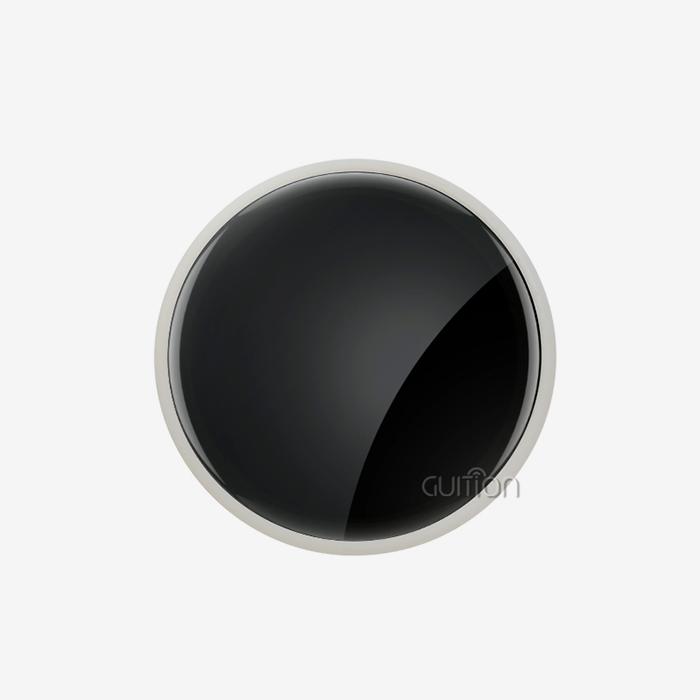
A round LCD display Arduino module is a circular liquid crystal display unit designed to interface directly with Arduino microcontrollers and other embedded platforms. Unlike standard rectangular screens, these modules use a circular pixel grid managed by a dedicated driver IC — such as the GC9A01 — to render native circular visuals. Engineers working on wearables, industrial gauges, and IoT devices use this type of round LCD display Arduino to build cleaner, more contextually appropriate user interfaces without physical masking or awkward corner cropping.

Understanding Round LCD Display Arduino Modules
What Makes Circular Displays Different
A normal LCD shows information in a frame that is rectangular. In comparison, pixels are rendered within a physically circular border by a round LCD display Arduino. The driver IC maps the coordinates, so there are no corner pixels in the hardware. In simple cases, this gets rid of the need for software-level masking and gives the image a finished look right away.
Core Components Inside the Module
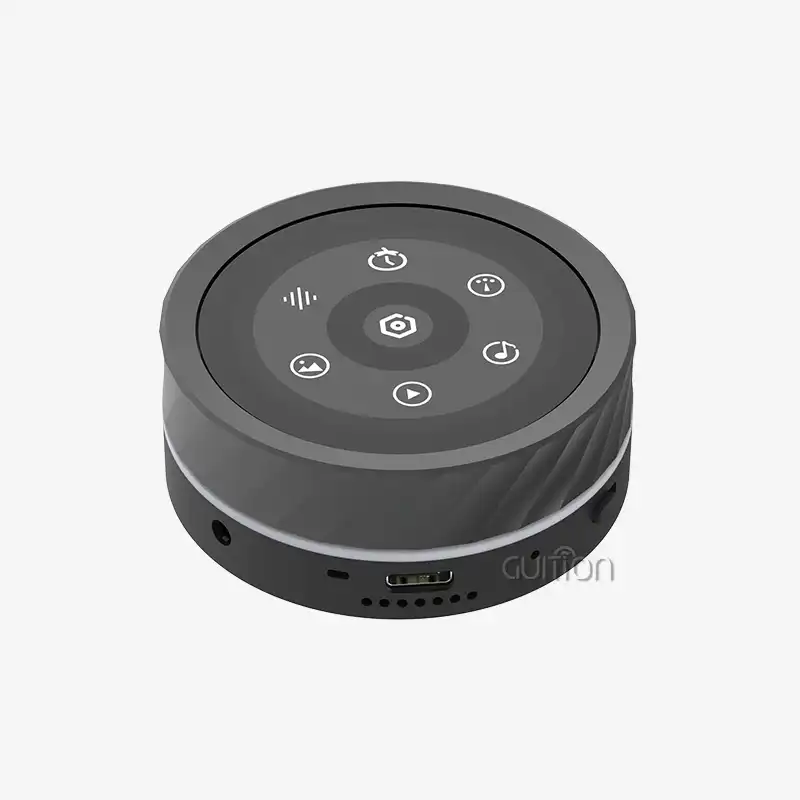
It's easy to see how these modules are put together in the GUITION JC2424S012N_I. On a single small PCB, it has a 1.28-inch IPS LCD screen, backlight control circuitry, and a GC9A01 driver IC. A 4-wire SPI port is used for communication. The 240x240 pixel resolution gives you about 261 pixels per inch (PPI), which is good for making text, gauge lines, and panels with icons look good on a small round surface.
Where These Modules Get Used
A circular display that works with Arduino can be used in a lot of different areas. A display that fits the shape of the enclosure is good for smart home temperature knobs, medical vital-sign monitors, automobile tachometer overlays, and fitness tracker faces. In industrial settings, they are also used to make small status signs that wouldn't look right with a rectangular display.
How to Use a Round LCD Display with Arduino: Step-by-Step Tutorial
Wiring and Pinout Configuration
The JC2424S012N_I has five main lines that connect to an Arduino or ESP32 board. These are VCC, GND, SCL (clock), SDA (MOSI), and CS (chip select). It also has a DC pin and a hardware reset pin. Users connecting the module to a 5 V Arduino Uno must add a logic level switch to all data lines because the module works at 3.3 V logic. Skipping this step could damage the GC9A01 driver IC in a way that can't be fixed.
Recommended Libraries and Initialization
For driving GC9A01-based Round lcd display arduino modules, the TFT__eSPI library is the most popular choice. Engineers change the User_Setup.h file to name the right driver (GC9A01_DRIVER) and give pin numbers that match their wiring after installing the library. If you call tft.init() and then tft.fillScreen(TFT_BLACK), it means that the setup went well. When working on projects that need animated widgets or multi-screen navigation, the LVGL graphics library and TFT_eSPI work well together.
Common Troubleshooting Steps
When you turn the computer on and see a white or blank screen, it almost always means that the startup process failed. The two most common reasons are wrong pin settings in the library setup file and a hardware reset pulse that is missing or not timed right. To keep the signal strong on Arduinos built on the AVR, the SPI speed must stay below 8 MHz. With DMA, ESP32 boards can handle SPI clock speeds of up to 80 MHz, which lets you get frame rates above 30 FPS for smooth motion.
Comparison of Round LCD Displays with Other Display Technologies for Arduino
Round IPS LCD vs. OLED
Because each pixel turns off by itself, OLED screens have deeper blacks and use less power when dark material is shown. But OLED burn-in is a problem in industrial uses that need to be on all the time, and OLED costs a lot more per unit when used in large quantities. A round LCD display, Arduino-based and using IPS technology, keeps the brightness constant over the lifetime of the panel and can handle static images without any problems, making it better for deployments in large numbers.
Round LCD vs. Standard TFT Rectangular Displays
Standard TFT displays have bigger screens and lower unit costs, but they force goods that would be better in a circle to have rectangular casings. Without adding a lot to the price, the Round LCD display arduino solves the form-factor issue. IPS-type circular modules offer viewing angles greater than 160 degrees, which is something that most TFT screens don't do. This difference is important for gauge-style readouts that are seen from different angles on the factory floor.
Resolution and Size Benchmarks
At 1.28 inches, the 240x240 resolution means that there are about 261 pixels per inch, which is about the same as many basic monitor screens. Better round ones, 2.1 inches, can reach 480x480 pixels, which is about 290 pixels per inch. 240x240 is enough for most embedded HMI apps. If engineers are going for high-end medical or automotive products, they should look at 480x480 choices that can be read easily in bright sunlight above 400 lux.
Buying Guide: How to Choose and Where to Source Round LCD Display Arduino Modules
Key Evaluation Criteria
There are a lot of technical and business factors to think about when choosing the right circular display module. Before committing to a supplier, procurement teams should look at these main factors:
- Driver IC compatibility: The GC9A01 has the broadest library support across Arduino, ESP-IDF, and STM32 HAL environments. Modules using less-documented drivers extend development time significantly.
- Operating temperature range: Industrial deployments require at minimum -20°C to +70°C. Confirm the manufacturer's published specification rather than relying on estimated values.
- Interface voltage: 3.3 V SPI is standard. Confirm whether the module includes onboard level-shifting for 5 V systems or requires external components.
- Backlight control: PWM-controllable backlight circuitry allows power management and adaptive brightness, which matters for battery-powered wearables and medical portables.
These factors together decide if a module makes it through the prototyping phase and into long-term production without needing expensive redesigns.
Supplier Landscape
Circular display units for makers and small batches are sold by Adafruit, Waveshare, Newhaven Display, and SeeedStudio. Purpose-built manufacturers like GUITION offer a more direct way to buy for B2B buyers who need volume discounts, OEM customization, and direct technical support. GUITION's product line ranges from 1.28 inches to 21.5 inches and comes with full paperwork packages, sample code repositories, and technical support, all of which lower the total cost of the project beyond the price per unit.
Pricing and Sourcing Channels
Prices for 1.28-inch GC9A01 spi display module vary from $4 to $12 per unit, depending on where you buy them. This number goes down a lot when you have direct OEM deals for more than 500 units. When looking for medical or industrial certification pathways, buyers should ask for RoHS compliance certificates and PCBA test reports. These are needed for regulatory submissions in the US market.
Benefits and Future Applications of Round LCD Display Arduino Modules
Operational Advantages for Production Products
Because a circular display and a circular enclosure fit together perfectly, there is no need for decorative borders. This saves money on enclosure casting and cuts down on assembly time. IPS screens in modules like the JC2424S012N^_I keep the colors correct across the whole viewing angle, which is important in workplace settings with shared views. The GC9A01's deep-sleep command set lets programmers drastically lower power use when the device is not in use, which is especially helpful for IoT nodes that are powered by batteries.
Emerging Application Areas
One of the fastest-growing market areas for Round LCD display Arduino modules is smart rotary encoder knobs for industrial HMI screens. Putting a 1.28-inch display inside a physical knob makes a real-time parameter display that changes as the knob is turned, which makes it easier for machine workers to do their jobs. In 2024 and beyond, circular displays are becoming more popular in three more areas: aftermarket gauge clusters for cars, portable agricultural sensor readers, and wearable patient monitors.
Long-Term Technology Direction
Touch controls are being built straight into GC9A01-class ICs by companies that make display drivers. This cuts down on the number of parts needed for capacitive touch versions. GUITION already has versions of their circular modules that can be used with touch screens. Wireless display protocols and partial-refresh rendering are also making their way into the circular display market. This lets engineers make low-power dashboard products that only update the changing part of the screen instead of painting the whole 240x240 frame every cycle.
Conclusion
The gap between round product cases and practical integrated displays is filled by a Round lcd display arduino module. The GUITION JC2424S012N^_I has a 240x240 IPS screen, a 4-wire SPI Display Module interface, and a GC9A01 driver. It gives engineering teams a production-ready starting point that works with Arduino, ESP32, and STM32 platforms. Circular LCD modules are a useful and cost-effective display choice for teams that want to make prototypes quickly, keep the look of their products clean, and make sure they have a reliable supply chain for the long term. They can be used in industrial, medical, consumer, and IoT applications.
FAQ
What is the best library for a GC9A01-based round LCD on Arduino?
TFT_eSPI is the most widely used and actively maintained library for GC9A01-based circular displays. It supports hardware SPI, DMA on ESP32, and integrates cleanly with LVGL for advanced widget rendering. Set the driver to GC9A01_DRIVER in User_Setup.h and confirm your pin assignments before running the initialization test sketch.
Can I use this display outdoors or in industrial environments?
Yes, provided the module meets the temperature and luminance specifications of your application. The JC2424S012N_I operates reliably across standard industrial temperature ranges. For outdoor readability, confirm the backlight luminance specification exceeds 400 nits, and consider adding an anti-reflective coating to the glass surface.
Why does my round LCD display Arduino show a white screen on startup?
A persistent white screen indicates the initialization command sequence did not complete. Check that your CS, DC, and RST pins match the library configuration exactly. Also confirm that the RST pin receives a clean low-to-high transition at startup — many failures trace back to a floating or incorrectly timed reset line rather than incorrect SPI wiring.
Does the GUITION JC2424S012N_I support touch input?
The standard model is display-only. An optional touch-enabled variant is available. Touch-capable versions add I2C lines (SDA, SCL, INT) for the capacitive touch controller. Specify the touch option when placing your order or contacting GUITION's engineering team for configuration guidance.
Is this module compatible with ESP32 and STM32 platforms?
Yes. The 4-wire SPI interface and 3.3 V logic make the JC2424S012N_I directly compatible with ESP32, STM32, and other 3.3 V microcontroller platforms without additional level-shifting. On 5 V AVR Arduinos, a logic level shifter is required on the SPI data lines.
Partner with GUITION for Your Next Round LCD Display Arduino Project
Engineering teams in the industrial, medical, and IoT sectors can get tried-and-true circular display units from GUITION, like the JC2424S012N_I Round LCD display Arduino. As a round LCD display arduino maker with a full range of products from 1.28 inches to 21.5 inches, GUITION offers OEM customization, volume prices, full technical documentation, and direct engineering support. You can email us at david@guition.com to get samples or talk about the needs of your project.
References
- Horowitz, P., & Hill, W. The Art of Electronics (3rd ed.). Cambridge University Press, 2015.
- Grewal, M. S., & Andrews, A. P. Kalman Filtering: Theory and Practice Using MATLAB. Wiley-IEEE Press, 2014.
- Bhatt, A. "SPI Communication Protocol and Display Driver Integration in Embedded Systems." IEEE Transactions on Consumer Electronics, 2021.
- Semiconductor Components Industries. GC9A01 TFT LCD Controller Datasheet. Galaxycore Inc., 2020.
- Maxim, T. "Designing Human-Machine Interfaces for Industrial Control Panels." Control Engineering Magazine, 2022.
- Monk, S. Programming Arduino: Getting Started with Sketches (3rd ed.). McGraw-Hill Education, 2022.
Learn about our latest products and discounts through SMS or email