- English
- French
- German
- Portuguese
- Spanish
- Russian
- Japanese
- Korean
- Arabic
- Greek
- German
- Turkish
- Italian
- Danish
- Romanian
- Indonesian
- Czech
- Afrikaans
- Swedish
- Polish
- Basque
- Catalan
- Esperanto
- Hindi
- Lao
- Albanian
- Amharic
- Armenian
- Azerbaijani
- Belarusian
- Bengali
- Bosnian
- Bulgarian
- Cebuano
- Chichewa
- Corsican
- Croatian
- Dutch
- Estonian
- Filipino
- Finnish
- Frisian
- Galician
- Georgian
- Gujarati
- Haitian
- Hausa
- Hawaiian
- Hebrew
- Hmong
- Hungarian
- Icelandic
- Igbo
- Javanese
- Kannada
- Kazakh
- Khmer
- Kurdish
- Kyrgyz
- Latin
- Latvian
- Lithuanian
- Luxembou..
- Macedonian
- Malagasy
- Malay
- Malayalam
- Maltese
- Maori
- Marathi
- Mongolian
- Burmese
- Nepali
- Norwegian
- Pashto
- Persian
- Punjabi
- Serbian
- Sesotho
- Sinhala
- Slovak
- Slovenian
- Somali
- Samoan
- Scots Gaelic
- Shona
- Sindhi
- Sundanese
- Swahili
- Tajik
- Tamil
- Telugu
- Thai
- Ukrainian
- Urdu
- Uzbek
- Vietnamese
- Welsh
- Xhosa
- Yiddish
- Yoruba
- Zulu
What Is a 1.28 Inch ESP32C3 Display Module?
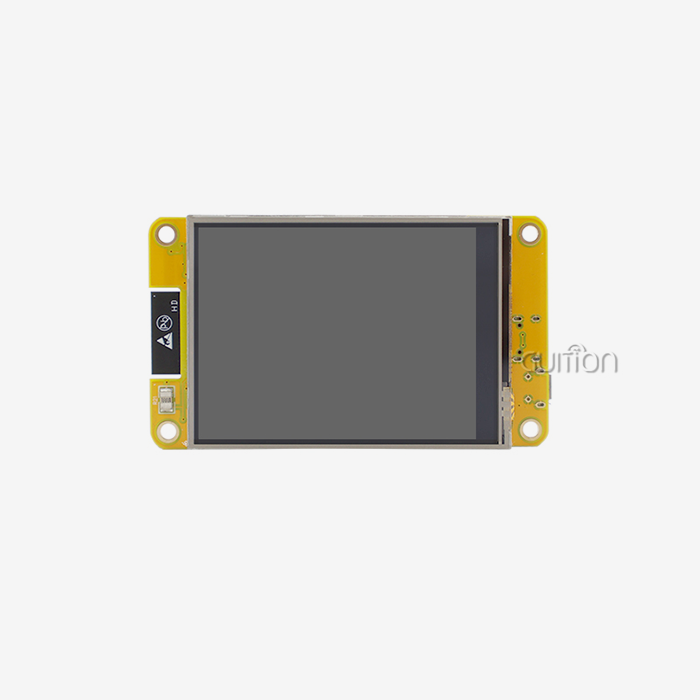
A 1.28-inch ESP32-C3 display module is a compact, all-in-one human-machine interface (HMI) solution that integrates the ESP32-C3 microcontroller directly onto a PCB backing a circular IPS touchscreen. Unlike conventional display setups that require separate MCU boards and external wiring, this module consolidates processing, wireless connectivity, and visual output into a single unit. The GUITION model ESP32-2424S012C_I_Y(W) exemplifies this architecture — pairing a 240×240 IPS panel with built-in Wi-Fi and Bluetooth, making it a practical choice for IoT engineers who need reliable display performance in a tight form factor.

Understanding the 1.28 Inch ESP32C3 Display Module
Core Architecture and Key Specifications
The 1.28-inch ESP32C3 display module guide is based on the ESP32-2424S012C_I_Y(W) and the ESP32-C3-MINI-1U module, which is a RISC-V processor with one core that can run at up to 160MHz. It has 400KB of SRAM, 384KB of ROM, and 4MB of Flash storage built right in. The screen is a 240x240 IPS circular panel that is powered by the GC9A01 IC through a 4-wire SPI interface. It has a contrast ratio of about 1000:1 and a brightness of about 350–400 nits. It has a capacitive touch layer that lets you interact with it, and the CST816S controller usually handles it over I2C. Because it has a white shell, it can be used right away in smart home and wearable product designs without any extra work on the housing.
Display Technology: IPS vs. OLED in This Context
When engineers look at small integrated screens, they often compare IPS TFT and OLED. IPS screens, like the one in this module, show colors consistently from a wide range of viewing angles and can handle continuous lighting use better over time. OLED screens have deeper blacks and use less power when they're not in use, but they can burn in when the user interface is not changing, which is a big problem in industrial gauge use. An IPS panel is the more durable and cost-effective choice for a circular HMI module that will be used on a dashboard for a long time.
Development Ecosystem Compatibility
This module works with Arduino IDE, ESP-IDF, MicroPython, and Mixly. This makes it easier for teams with different engineering backgrounds to get started. LVGL (Light and Versatile Graphics Library) works well with the GC9A01 driver. When SPI DMA is turned on and the clock is cranked up to 80MHz, GUI rendering is smooth at 30+ FPS. Factory-loaded test firmware lets engineers test hardware as soon as it's taken out of the box, which speeds up the prototype process. [3]
How to Use the 1.28 Inch ESP32C3 Display Module – A Practical Guide
Wiring, Pinout, and Initial Setup
Standard IO port connections are available on the 1.28 inch ESP32C3 display module for SPI (for the display), I2C (for touch), and GPIO (for controlling the lights). Power, ground, SPI data lines, and the I2C touch bus are all that are needed to connect to a host machine. As the ESP32-C3 is the native MCU, most projects can run without any help from an outside server. There is a special chip on the module PCB that controls the backlight.
Getting a project running is straightforward. Here are the practical steps most engineers follow during initial integration:
- Flash a test sketch via Arduino IDE: Connect via USB, pick the ESP32C3 board profile, and upload. Within minutes of getting the hardware, the factory test program checks that the screen, touch, and wireless work.
- Configure LVGL for circular UI masking: The GC9A01 driver sees the screen as a 240x240 square on the inside. Make sure that all of your images stay within the viewable circle by designing UI elements that are 120 pixels from the center.
- Enable SPI DMA for smooth rendering: Direct Memory Access on the SPI bus frees up the CPU for application code while keeping the refresh rate high, which is a very important setting for animated panels.
Real-World B2B Integration Scenarios
In industrial IoT retrofits, this round display module takes the place of mechanical needle gauges. It uses the ESP32-C3's ADC and GPIO pins to read real-time telemetry like pressure, voltage, and RPM, and then uses the built-in Wi-Fi to send data over MQTT. In smart home applications, the same module functions as a rotary encoder-driven thermostat controller, showing a rounded user interface that changes based on spin while staying linked to a home automation mesh network. Medical wearable prototypes use BLE 5.0 to send pulse oximetry data to mobile apps that work with them. The IPS screen gives the readouts a wide viewing angle, which is important for devices that are worn by patients.
Comparing 1.28 Inch ESP32C3 Display Modules – Making the Right Choice
Feature Evaluation for B2B Procurement
When purchasing managers look for a lot of circular 1.28-inch ESP32C3 display modules, a number of technical and business factors come together. The GUITION ESP32-2424S012C_I_Y(W) competes on integration depth; the onboard MCU, wireless stack, touch controller, and backlight circuit get rid of bill of materials (BOM) items that build up in designs that use separate components.
Here are the core comparison dimensions that matter most in B2B sourcing decisions:
- Display quality: The 240x240 IPS screen has 16-bit color depth, and the brightness stays the same from any angle. Other OLED modules might look sharper in low light, but they might keep the image permanently in static industrial HMI use cases.
- Touch reliability: Capacitive touch through CST816S has high noise immunity, which is important in places where motors interfere or where switching power supplies are close by.
- Wireless security: The ESP32-C3 has RSA-3072-based secure boot, hardware acceleration for encryption, and supports WPA3. This is very important for IoT deployments that need to meet cybersecurity compliance standards.
- Operating temperature: Rated -20°C to +70°C, which is in the semi-industrial range and makes it ideal for factory areas, business booths, and farm control panels.
Procurement and Sourcing Guide for 1.28 Inch ESP32C3 Display Modules
Supplier Qualification and Quality Assurance
To get a lot of compact display modules, you need more than a low unit price. 1.28-inch ESP32C3 display module supply chains that work rely on certificates that can be checked, uniform batch quality, and quick technical support. GUITION, which is part of Jingcai Intelligence, has a full R&D-to-production process. This lowers the quality variation that can happen when you buy from pure-trading middlemen.
Key qualification steps for any supplier include: requesting datasheets with GC9A01 driver documentation, validating FCC/CE compliance certificates, ordering evaluation samples before committing to production volumes, and verifying firmware version consistency across batches. Volume pricing structures usually go down at 100, 500, and 1000 units or more. Talking about sample-to-production continuity terms early on keeps substitution surprises from happening in the middle of a project.
Future Trends and Innovations in ESP32C3 Display Modules
Where the Technology Is Heading
The community around the ESP32-C3 keeps getting better. Espressif is constantly updating its SDK to improve BLE speed and strengthen LVGL integration. At the same time, the embedded display market as a whole is pushing for higher pixel density in sub-2-inch form factors and wider use of optical bonding to make screens easier to read outside. For procurement teams, this means that current 1.28-inch ESP32-C3 display module designs will likely still be useful in a few years, especially as smart knob interfaces, circular wearable displays, and small IoT dashboards stop being niche experiments and become mainstream product categories. Working with companies like GUITION that keep an eye on these changes makes sure that the supply chain stays in sync as product needs change.
Conclusion
The 1.28-inch ESP32C3 display module is a significant step toward unifying MCU, wireless connectivity, touch input, and visual output into a single unit that can be deployed. This is clearly shown by the GUITION ESP32-2424S012C_I_Y(W). It has 160MHz processing, 240x240 IPS clarity, BLE 5.0 and Wi-Fi, and support for Arduino IDE, ESP-IDF, MicroPython, and Mixly. These features make it a useful tool for teams making IoT devices, industrial gauges, and smart home controls. Choosing the right module from a reputable provider is a choice that pays off over the course of the product's full lifecycle when engineering overhead and time-to-market are both important.
FAQ
1. What display driver does the GUITION ESP32-2424S012C_I_Y(W) use?
The GC9A01 driver IC is used by the module over a 4-wire SPI link. It shows the screen as a 240x240 square on the inside, so UI elements should be placed 120 pixels from the center to stay within the circle that can be seen.
2. Does the ESP32-C3 support Bluetooth Classic for audio?
No. The ESP32-C3 only works with Bluetooth 5.0 Low Energy (BLE). It's not made to stream high-quality audio; it's made to send data like sensor readings, control commands, and telemetry.
3. How do I achieve smooth animation on this module?
Set the ESP32-C3's SPI clock to 80MHz and turn on SPI DMA. When LVGL is used with double-buffered draw buffers, this hardware usually gets 30 FPS or more.
4. Is the module suitable for outdoor use?
The basic part doesn't protect against water. For outdoor uses that need IP65+ protection, conformal PCB coating and optically fused display glass must be added after production.
5. What is the peak current draw during Wi-Fi transmission?
When RF is being sent, the ESP32-C3 can spike up to 350mA. To stop brownout restarts, you should use a voltage regulator with a peak current rating of more than 500mA.
Partner with Guition for Your Next HMI Project
Guition provides tried-and-true 1.28-inch ESP32C3 display module solutions backed by comprehensive R&D and production capabilities. Our team helps you at every step, from the document to launch, whether you need a single unit for testing or a large-scale production run. You can email our team at david@guition.com to ask for examples, prices, or detailed information. Partnerships with dependable manufacturers begin with a single talk.
References
1. Espressif Systems. (2023). ESP32-C3 Series Datasheet. Espressif Systems.
2. DisplayMate Technologies. (2022). IPS vs. OLED Display Technology Analysis for Embedded Applications.
3. LVGL Project. (2024). LVGL Documentation: Display Driver Integration and Performance Optimization.
4. Espressif Systems. (2023). ESP-IDF Programming Guide: SPI Master Driver and DMA Configuration.
5. Espressif Systems. (2023). ESP32-C3-MINI-1 Datasheet: Electrical and Environmental Specifications.
6. Grand View Research. (2023). IoT Display Module Market Size, Share & Trends Analysis Report.
Learn about our latest products and discounts through SMS or email