- English
- French
- German
- Portuguese
- Spanish
- Russian
- Japanese
- Korean
- Arabic
- Greek
- German
- Turkish
- Italian
- Danish
- Romanian
- Indonesian
- Czech
- Afrikaans
- Swedish
- Polish
- Basque
- Catalan
- Esperanto
- Hindi
- Lao
- Albanian
- Amharic
- Armenian
- Azerbaijani
- Belarusian
- Bengali
- Bosnian
- Bulgarian
- Cebuano
- Chichewa
- Corsican
- Croatian
- Dutch
- Estonian
- Filipino
- Finnish
- Frisian
- Galician
- Georgian
- Gujarati
- Haitian
- Hausa
- Hawaiian
- Hebrew
- Hmong
- Hungarian
- Icelandic
- Igbo
- Javanese
- Kannada
- Kazakh
- Khmer
- Kurdish
- Kyrgyz
- Latin
- Latvian
- Lithuanian
- Luxembou..
- Macedonian
- Malagasy
- Malay
- Malayalam
- Maltese
- Maori
- Marathi
- Mongolian
- Burmese
- Nepali
- Norwegian
- Pashto
- Persian
- Punjabi
- Serbian
- Sesotho
- Sinhala
- Slovak
- Slovenian
- Somali
- Samoan
- Scots Gaelic
- Shona
- Sindhi
- Sundanese
- Swahili
- Tajik
- Tamil
- Telugu
- Thai
- Ukrainian
- Urdu
- Uzbek
- Vietnamese
- Welsh
- Xhosa
- Yiddish
- Yoruba
- Zulu
Knob Display Module Supplier Guide: Quality and MOQ Checklist
Sourcing the right knob display module for your project demands more than a quick catalog search. Whether you are an embedded engineer prototyping a smart thermostat or a product manager scaling an industrial HMI panel, understanding supplier quality benchmarks and MOQ structures directly affects your timeline and budget. This guide walks through everything—from display technology and encoder types to pricing transparency and supplier evaluation—so you can make confident, well-informed procurement decisions.

Key Quality Factors When Selecting a Knob Display Module Supplier
Certifications, Materials, and Testing Protocols
Reliable Knob display module suppliers maintain ISO 9001-certified manufacturing processes and comply with RoHS directives for component materials. Quality assurance protocols typically include thermal cycling tests (operating ranges from -20°C to +70°C for industrial-grade units), salt spray resistance validation for appliance and marine applications, and EMC/EMI compliance screening to prevent display driver interference with RF components in the host device.
Manufacturing Depth and After-Sales Infrastructure
A supplier's manufacturing depth—whether they control PCB fabrication, display bonding, and firmware tooling in-house—directly correlates with their ability to support customization requests and manage supply continuity. Suppliers who provide prototype development services, complete technical documentation, and responsive troubleshooting channels reduce your engineering risk considerably.
Guition, developed by Jingcai Intelligence, exemplifies this integrated approach. Their Knob display module lineup is backed by a full secondary development interface, cross-platform debugging support, and remote OTA upgrade capability—meaning you can iterate product firmware post-deployment without physical servicing. For R&D managers and system architects juggling multiple product cycles, that operational continuity translates into real cost savings.
Minimum Order Quantity (MOQ) and Pricing Considerations
How MOQ Thresholds Shape Procurement Strategy
MOQ requirements across circular display module suppliers vary considerably—from single-unit sample orders on platforms like Mouser and Digi-Key to batch minimums of 100–500 units from direct manufacturers. Understanding where your volume falls within these tiers determines your negotiation leverage and per-unit pricing. Bulk commitments typically unlock tiered discounts, but over-ordering against uncertain demand creates inventory carrying costs that erode margin.
Smart procurement practice involves aligning MOQ commitments with your production roadmap rather than chasing the lowest unit price at unsustainable volumes. Trial orders—often available at reduced MOQs from manufacturers like Guition—allow engineering teams to validate the Knob display module in real application conditions before committing to full production quantities.
Cross-border transactions add another layer of cost to consider. Import duties, customs classification of display modules, and freight logistics to North American destinations can add 8–15% to landed cost calculations. Requesting a complete landed cost breakdown from your supplier before finalizing terms prevents budget overruns at the procurement stage.
Comparing Leading Suppliers: Features, Support, and Reliability
Evaluating Supplier Ecosystems Beyond Catalog Listings
Adafruit and SparkFun serve the maker and prototyping segment well—their documentation quality and community support are exceptional, but their MOQ flexibility and customization depth are limited for B2B production environments. Seeed Studio bridges maker culture and light manufacturing with accessible MOQs and reasonable lead times. Mouser and Digi-Key function as distributors rather than manufacturers, offering broad catalog access but limited ability to negotiate custom configurations or quality guarantees at the component level.
For teams building production-scale HMI solutions, partnering directly with a Knob display module manufacturer delivers advantages that distributor channels cannot replicate. Direct manufacturer relationships enable custom display resolutions, firmware pre-loading, branded packaging, and dedicated application engineering support.
Guition's JC3636W518C_I_Y stands out in this comparison. Powered by the ESP32-S3 dual-core processor running at 240MHz with 16MB Flash and 8MB PSRAM, this circular display module integrates WiFi and Bluetooth natively—eliminating the need for external wireless modules. Development teams can work across Arduino IDE, ESP-IDF, MicroPython, or Guition's proprietary software environment, making it one of the most flexible Knob display modules available at this price tier. The module also reserves a TF card interface, supporting expanded storage for media-rich applications like MJPEG video playback and digital photo frame functionality.
Here are the core technical advantages of this device that distinguish it from competing circular HMI modules on the market:
- Dual-core ESP32-S3 MCU at 240MHz with 512KB SRAM, 384KB ROM, 8MB PSRAM, and 16MB Flash—sufficient processing headroom for complex GUI rendering and wireless data handling simultaneously.
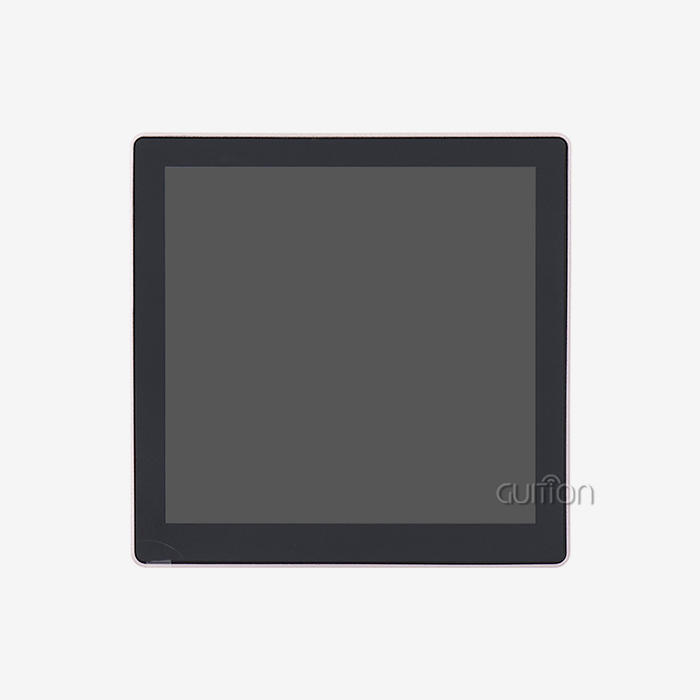
- 360×360 IPS capacitive touch display in a 58×58mm footprint, delivering precise touch response within a compact circular form factor suited for knob-style panel integration.
- Native WiFi and Bluetooth connectivity enables smart device integration, remote monitoring, and OTA firmware upgrades without additional wireless hardware.
- Cross-platform development support across Arduino IDE, ESP-IDF, MicroPython, and Guition software, accommodating diverse engineering team workflows without forced migration.
- TF card slot reservation supporting expanded storage for applications requiring local media playback, data logging, or firmware staging.
These advantages collectively reduce BOM complexity, shorten integration timelines, and future-proof your HMI design against evolving connectivity requirements.
How to Evaluate and Finalize Your Knob Display Module Purchase
Defining Requirements Before Supplier Outreach
Procurement decisions made without a clear technical specification document frequently result in costly revisions. Before contacting any Knob display module supplier, document your display size requirements, operating temperature range, communication interface preference (UART, SPI, or I2C), and connectivity needs. Establish whether your application demands industrial-grade durability or consumer-grade performance—this distinction filters supplier options rapidly.
Screen shortlisted suppliers against four criteria: product quality consistency evidenced by certification documentation, MOQ alignment with your production volumes, pricing transparency inclusive of shipping and duties, and the responsiveness of their technical support team during pre-sales engagement. A supplier who responds to detailed technical inquiries with depth and accuracy before you've placed an order typically demonstrates the same rigor in post-sales support.
Trial orders remain the most reliable validation mechanism. A single batch run through your real application environment reveals integration challenges that datasheets cannot anticipate. Build trial order terms into your supplier negotiation from the outset.
Conclusion
Selecting a Knob display module supplier is a decision that shapes your product's performance, your team's development velocity, and your supply chain's long-term stability. Quality certifications, encoder durability, display technology, MOQ flexibility, and ecosystem support all carry weight in the evaluation process. The GUITION JC3636W518C_I_Y demonstrates how a well-engineered circular display module can address these criteria simultaneously—combining a capable ESP32-S3 processor, native wireless connectivity, and multi-platform development support in a compact, production-ready package. Align your supplier selection with your actual project demands, and the right partnership will compound value across every product iteration.
FAQ
1. What is the typical MOQ for a Knob display module from a direct manufacturer?
MOQ ranges vary by supplier tier. Direct manufacturers commonly set minimum orders between 50 and 500 units for standard circular display modules, with sample quantities of 1–10 units available at prototype pricing. Guition offers flexible entry quantities suited for both evaluation and production-scale procurement.
2. Does the GUITION JC3636W518C_I_Y support over-the-air firmware updates?
Yes. The module supports remote OTA upgrades through its integrated WiFi capability, allowing post-deployment firmware iterations without physical device access.
3. What development environments are compatible with Guition's circular HMI module?
The JC3636W518C_I_Y supports Arduino IDE, ESP-IDF, MicroPython, and Guition's proprietary development software—covering the majority of embedded engineering workflows in use today.
4. How do I verify a supplier's quality certifications before placing a bulk order?
Request ISO 9001 certificates and RoHS compliance documentation directly from the supplier. Cross-reference certificate numbers with issuing bodies where possible, and ask for sample inspection reports from recent production batches.
5. Can the Knob display module handle capacitive touch in humid industrial environments?
The JC3636W518C_I_Y uses capacitive touch technology. For high-humidity deployments, confirm enclosure sealing specifications with your engineering team and ensure the mounting assembly achieves the required IP rating for your application.
Partner with Guition for Reliable Knob Display Module Supply
Guition manufactures Knob display modules engineered for serious development work. The JC3636W518C_I_Y delivers ESP32-S3 processing power, native wireless connectivity, and multi-platform IDE support in a compact 58×58mm circular form factor. As a trusted Knob display module supplier serving global B2B clients, Guition combines factory-direct pricing with dedicated application engineering support. Contact our team at david@guition.com to request samples, pricing, and technical documentation today.
References
1. Rouse, M. (2023). Human-Machine Interface (HMI): Definition and Applications.
2. IPC Association. (2022). IPC-A-610 Acceptability of Electronic Assemblies.
3. Procurement Leaders. (2023). MOQ Strategy in Electronics Component Sourcing.
4. U.S. Customs and Border Protection. (2024). Importing Electronics: Duties and Classification Guidelines.
5. Espressif Systems. (2023). ESP32-S3 Datasheet and Technical Reference Manual.
6. IEEE Standards Association. (2022). IEEE 1003.1: Standards for Embedded System Interface Design.
Learn about our latest products and discounts through SMS or email