- English
- French
- German
- Portuguese
- Spanish
- Russian
- Japanese
- Korean
- Arabic
- Greek
- German
- Turkish
- Italian
- Danish
- Romanian
- Indonesian
- Czech
- Afrikaans
- Swedish
- Polish
- Basque
- Catalan
- Esperanto
- Hindi
- Lao
- Albanian
- Amharic
- Armenian
- Azerbaijani
- Belarusian
- Bengali
- Bosnian
- Bulgarian
- Cebuano
- Chichewa
- Corsican
- Croatian
- Dutch
- Estonian
- Filipino
- Finnish
- Frisian
- Galician
- Georgian
- Gujarati
- Haitian
- Hausa
- Hawaiian
- Hebrew
- Hmong
- Hungarian
- Icelandic
- Igbo
- Javanese
- Kannada
- Kazakh
- Khmer
- Kurdish
- Kyrgyz
- Latin
- Latvian
- Lithuanian
- Luxembou..
- Macedonian
- Malagasy
- Malay
- Malayalam
- Maltese
- Maori
- Marathi
- Mongolian
- Burmese
- Nepali
- Norwegian
- Pashto
- Persian
- Punjabi
- Serbian
- Sesotho
- Sinhala
- Slovak
- Slovenian
- Somali
- Samoan
- Scots Gaelic
- Shona
- Sindhi
- Sundanese
- Swahili
- Tajik
- Tamil
- Telugu
- Thai
- Ukrainian
- Urdu
- Uzbek
- Vietnamese
- Welsh
- Xhosa
- Yiddish
- Yoruba
- Zulu
How to Choose a Resistive touch display module Supplier
Choosing the right resistive touch display module supplier shapes your entire product development cycle. A dependable supplier delivers modules with verified linearity accuracy, consistent ITO layer bonding, and documented durability ratings — not just a competitive unit price. You should evaluate certifications, customization depth, software ecosystem support, and post-sale responsiveness before committing to any vendor. Whether you are sourcing industrial HMI panels, medical terminals, or smart appliances, the supplier's technical capability and supply reliability directly determine your project's time-to-market and long-term maintenance cost.

Key Criteria to Evaluate When Choosing a Resistive Touch Display Module Supplier
These kinds of procurement choices have long-term effects. If a resistive touch display module breaks in the field after six months, it does a lot more damage to your brand's image than the savings in unit cost make up for.
Reliable providers give test results that show the linearity error (which is usually less than 1.5%), the activation force range (which is usually 20 g to 100 g), and the quoted actuation life. Premium 5-wire architectures can handle more than 10 million activations per spot, while standard 4-wire modules can handle about 1 million. Check to see if the supplier does environmental stress testing, like exposing the parts to 60°C/90% RH humidity for 240 hours, to make sure the adhesive bonds well and the ITO layer stays intact.
Before making a shortlist of sellers, here are the main factors you should use to evaluate them:
- Certifications and compliance: Make sure you have the ISO 9001 quality management certification and the necessary CE or RoHS paperwork for medical or industrial uses. These are basic requirements that can't be changed.
- Customization depth: A good provider can handle more than just color or size changes. They can also handle changes to the mechanical dimensions, printing on top, moving connectors, and making changes to the user interface at the software level.
- MOQ flexibility and payment terms: Development teams in the early stages need small amounts of prototypes without committing to big production runs. When suppliers offer engineering sample orders, it shows that they are sure of their product and want to work with you.
- After-sales support structure: Check to see if the seller assigns a technical liaison, gives driver-level code examples, and keeps answer SLAs for integration queries.
All of these criteria work together to make integration smoother and protect your supply chain from unplanned problems that might happen when you're scaling up production.
Matching Your Industry Needs with the Right Supplier
It's not true that every resistive touch display module supplier works with every industry. By matching the strengths of your supplier to the needs of your application, you can avoid costly misalignments.
EMI immunity, ruggedness, and a wide range of working temperatures are important to industrial robotics teams. Regulatory traceability and chemical disinfectant resistance are two more things that medical device developers add to that list. When distributors and OEMs buy in bulk, they need logistics systems that have been tested, batch quality that is always the same, and clear end-of-life plans.
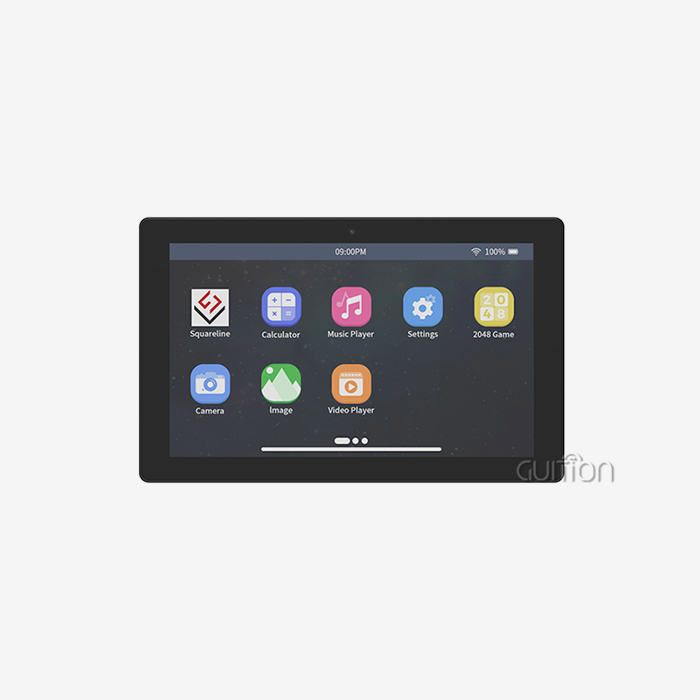
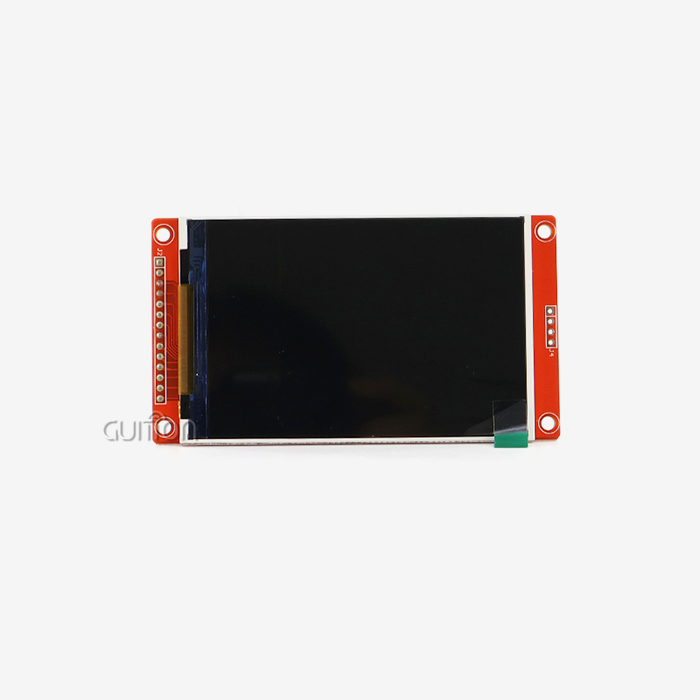
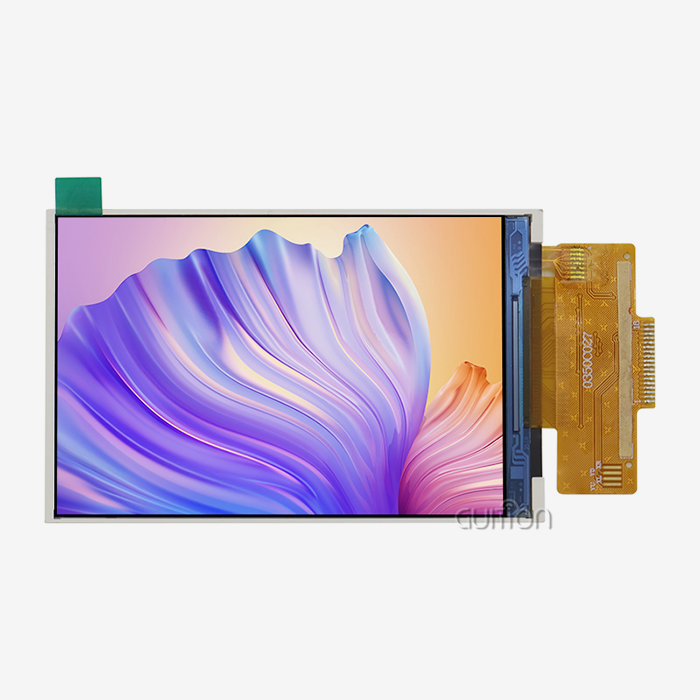
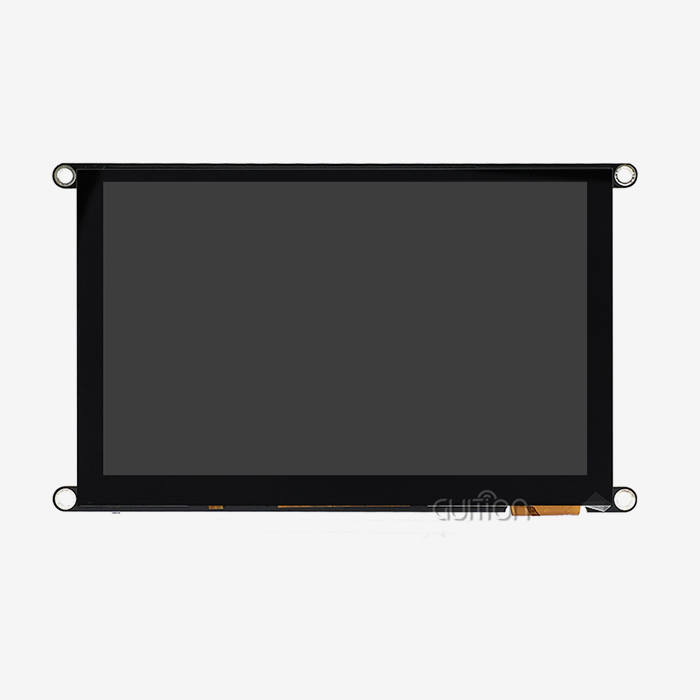
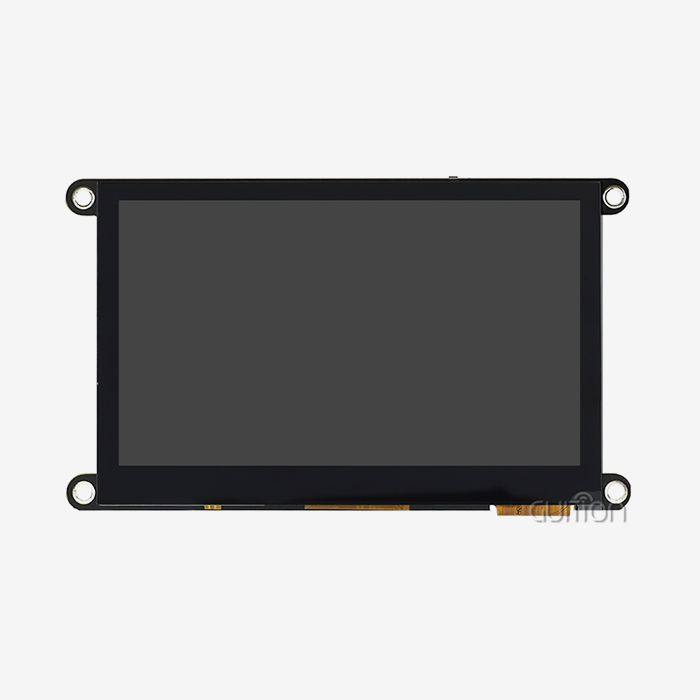
GUITION's product line — spanning 1.28" to 21.5" — addresses this range directly. The GUITION JC2432S028R is a good example of a module that works well with HMI projects that aren't too complicated. It has a 2.8-inch TFT-LCD screen that is powered by an ILI9341 IC, talks over 4-wire SPI to save the host MCU's IO pins, and can have a 4-wire Resistive touch display module overlay with a resolution of 240x320. The module also has an SD card slot for local storage of UI assets and fonts. This gets rid of the need for external memory chips and makes BOM management easier.
For expert creators and low-volume devs making prototypes, GUITION offers ready-to-use code examples that work with Arduino and ESP-IDF environments. This shortens the time it takes to go from receiving hardware to having a working UI demo.
Comparing Resistive Touch Display Modules and Suppliers: What Sets the Best Apart?
Not just the hardware specs show the difference between a good supplier and a great one; the software and ecosystem also play a big role.
Top providers combine their hardware with their own UI creation tools. Low-level graphics programming is not needed with Guition software, which was made by the company itself. Engineers can add controls with a click, move them around with drag-and-drop, and see what the interface looks like through cross-platform online debugging before flashing it to hardware. This process shortens development cycles in a way that can be measured. This is a real benefit for R&D managers who work with sprint schedules.
This way of thinking is shown by the JC2432S028R. Its military-grade manufacturing process makes sure that all production batches have the same dimensions, which is very important when the module is put into a housing that was planned months ago. With remote over-the-air (OTA) upgrades, deployed units can get better user interfaces without having to be physically recalled. This lowers maintenance costs, which are felt across large installed bases.
The module is truly global-deployment ready because it supports wireless connectivity (WiFi and Bluetooth) and full UTF-8 multi-language encoding. This makes it easier to adapt a single hardware design for multiple regional markets.
Practical Steps to Finalize Your Supplier Selection
To go from review to commitment, you need a structured method that keeps your company safe from both quality risk and supply disruption.
Before sending out a production order, you should ask for engineering samples. Make sure the module works at all of the temperatures you want it to, check the Resistive touch display module linearity at the screen corners (where drift happens most often), and put a lot of stress on the FPC tail connector by shaking it over and over. Send an official RFQ that includes your desired quantity, shipping schedule, and packaging needs. The quality of the supplier's answer and the accuracy of the wait time at this stage will show how reliable they will be in the production phase.
Make a weighted scorecard that includes item matching technical specs, sample quality, full paperwork, quick contact, and total landed cost. Talk about outline deals that include buffer stock rules and clear ways to handle problems with quality. Long-term relationships with manufacturers who do R&D, manufacturing, and sales all in one place, like GUITION does at Shenzhen Jingcai Intelligent Co., Ltd., cut down on coordination delays and make sure everyone is responsible.
Conclusion
A strategic choice that affects every stage of your product's lifecycle is choosing a resistive touch display module supplier. The best partner has tested hardware, a strong software ecosystem, the ability to adapt to different needs, and quick technical support. The JC2432S028R from GUITION shows what that combo looks like in real life: precise ILI9341-driven display performance, low IO overhead through 4-wire SPI, and full interaction with the GUITION development environment. Carefully consider providers, try before you commit, and give priority to partners who are invested in your long-term success.
FAQ
1. What is the main difference between 4-wire and 5-wire resistive touch architectures?
In 4-wire systems, active electrodes are on both the film and the glass. Over time, bending the film over and over again wears down the ITO covering, allowing for about 1 million activations per spot. In 5-wire designs, the bottom glass has all the active electrodes, and the top film is only used to measure the voltage. This makes the rated life longer than 10 million operations and makes it more durable in places with high-frequency input.
2. How do I verify a supplier's reliability before placing a bulk order?
Ask for written test records that include data for linearity error, activation force measures, and environmental stress screens. Ask customers in the industry you want to work in for references. Check the sample quality against the spec sheet and see how responsive the technical support is during the sampling phase. The quality of those interactions will reflect the quality of service you receive on a larger scale.
3. Can a resistive touch module function reliably in medical environments?
When chemical disinfectants are used over and over on Resistive touch display modules, they don't create phantom inputs, which is known to happen with capacitive alternatives when they get wet. Medical procurement teams should also make sure that the supplier gives them information on the safety of the materials and helps them keep track of the paperwork they need to send to regulators [6].
4. Does the GUITION JC2432S028R support Arduino development?
Because the JC2432S028R works with Arduino, ESP-IDF, and the native Guition development environment, tech teams can use the tools they already have.
Partner with Guition — Your Trusted Resistive Touch Display Module Supplier
The Guition UI development platform and proven hardware engineering work together to help your team ship faster. In a small 2.8-inch package, the JC2432S028R resistive touch display module offers ILI9341-driven accuracy, SPI efficiency, and the ability to be upgraded over the air (OTA). Our team is ready to help you, whether you need a single research example or a way to make production more flexible. To get a quote right away, email us at david@guition.com.
References
1. MarketsandMarkets. (2023). Human Machine Interface (HMI) Market — Global Forecast to 2028. MarketsandMarkets Research.
2. IPC — Association Connecting Electronics Industries. (2022). IPC-A-610H: Acceptability of Electronic Assemblies.
3. Ilitek. (2023). ILI9341 TFT LCD Single Chip Driver Datasheet (V1.13).
4. Renesas Electronics. (2023). HMI Design Guide: Accelerating UI Development for Embedded Systems.
5. Digi-Key Electronics. (2024). Sourcing and Evaluating Display Modules for Embedded Applications.
6. U.S. Food and Drug Administration. (2023). Design Controls for Medical Devices: Guidance for Industry and FDA Staff.
Learn about our latest products and discounts through SMS or email