- English
- French
- German
- Portuguese
- Spanish
- Russian
- Japanese
- Korean
- Arabic
- Greek
- German
- Turkish
- Italian
- Danish
- Romanian
- Indonesian
- Czech
- Afrikaans
- Swedish
- Polish
- Basque
- Catalan
- Esperanto
- Hindi
- Lao
- Albanian
- Amharic
- Armenian
- Azerbaijani
- Belarusian
- Bengali
- Bosnian
- Bulgarian
- Cebuano
- Chichewa
- Corsican
- Croatian
- Dutch
- Estonian
- Filipino
- Finnish
- Frisian
- Galician
- Georgian
- Gujarati
- Haitian
- Hausa
- Hawaiian
- Hebrew
- Hmong
- Hungarian
- Icelandic
- Igbo
- Javanese
- Kannada
- Kazakh
- Khmer
- Kurdish
- Kyrgyz
- Latin
- Latvian
- Lithuanian
- Luxembou..
- Macedonian
- Malagasy
- Malay
- Malayalam
- Maltese
- Maori
- Marathi
- Mongolian
- Burmese
- Nepali
- Norwegian
- Pashto
- Persian
- Punjabi
- Serbian
- Sesotho
- Sinhala
- Slovak
- Slovenian
- Somali
- Samoan
- Scots Gaelic
- Shona
- Sindhi
- Sundanese
- Swahili
- Tajik
- Tamil
- Telugu
- Thai
- Ukrainian
- Urdu
- Uzbek
- Vietnamese
- Welsh
- Xhosa
- Yiddish
- Yoruba
- Zulu
Can an Ips display module Deliver Better Color Accuracy?
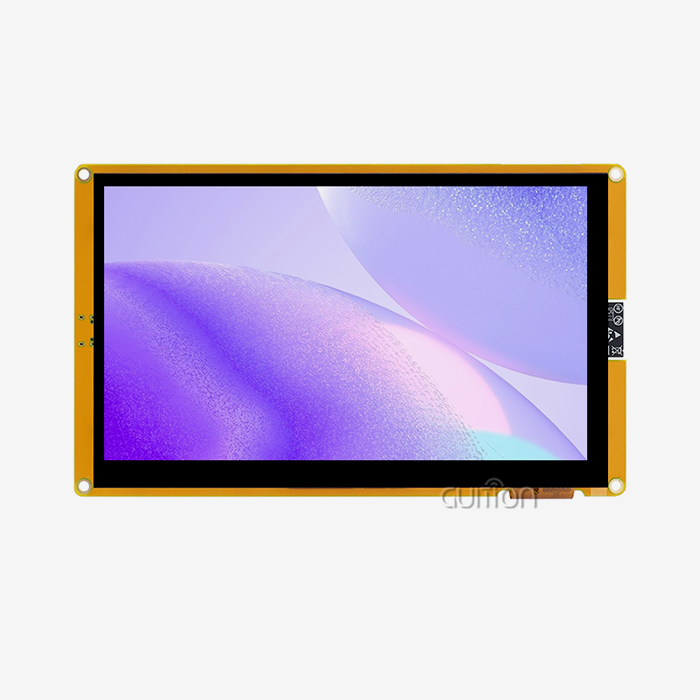
An IPS display module can deliver meaningfully better color accuracy than traditional TN or VA panels. IPS (In-Plane Switching) technology aligns liquid crystal molecules parallel to the glass substrate, which prevents the color shift and contrast inversion that plague off-axis viewing on older panel types. For engineers and product teams working in medical, industrial, or smart device sectors, this difference is not cosmetic — it directly affects how reliably operators read data, interpret visuals, and make decisions. The GUITION JC4848B040C_I IPS display module, for example, renders 16.7M colors with exceptional uniformity, making it a strong candidate for color-critical applications.

How IPS Display Modules Improve Color Accuracy
The way liquid crystals rotate is changed by IPS technology. In a TN panel, the crystals twist 90 degrees between the electrodes. In an IPS panel, they spin in a plane that is parallel to the substrate. Because the rotations are parallel, the light path through the cell changes much less as the point of view changes. This makes an image that is stable and predictable, and the colors stay true at 178°/178° viewing angles, which is pretty much the whole hemisphere in front of the screen.
IPS panels often cover more than 100% of the sRGB color space and often cover 72% or more of the NTSC color space. With contrast ratios of more than 1000:1, these screens show gradients and small changes in color with a level of accuracy that TN displays simply can't match. This consistency is required for HMI designers who are making interfaces where color tells you the state of something (green means "running," red means "fault," and amber means "warning").
When pressure is put on soft-film touch screens, an effect called "water ripple" shows up. IPS display modules don't show this. The IPS molecular structure is more mechanically stable, so touch interaction doesn't change the image underneath. This is very important for industrial and medical settings where capacitive touchscreens are used.
Evaluating IPS Display Modules for Your Business Needs
It takes more than just comparing brightness and pixel numbers to choose the best IPS display module. During the buying process, the working temperature range, interface compatibility, touch technology, source approval, and infrastructure for after-sales service should all be taken into account.
Here are the core technical and operational criteria worth evaluating:
- Color gamut and Delta E specification: Medical diagnosis and beauty equipment usually need E ≤ 2 under D65 illumination. Check to see if the seller gives you calibration data for each unit or each batch.
- Operating temperature range: Stability over a wide range of temperatures is needed in industrial settings. The GUITION JC4848B040C_I IPS display module works reliably from -20°C to +70°C, so it can be used in both cold warehouse automation and high-heat manufacturing floors without losing its performance.
- Interface and driver compatibility: The JC4848B040C_I has a MIPI DSI interface that is driven by the ST7701 chip. This chip works well with embedded systems that support Arduino, ESP-IDF, and Guition development modes, making the board less complicated and cutting down on development time.
- Touch technology: The JC4848B040C_I's capacitive touch gives you quick, accurate input without the tuning shift that comes with resistive overlays.
- Supplier quality assurance: To make sure they are a reliable provider, IPS display module manufacturers put their products through High-Temperature High-Humidity (HTHH) testing at 60°C/90% RH for at least 240 hours. They also do ESD testing at ±8kV touch and ±15kV air discharge, and for premium SKUs, they use AQL zero-bright-dot standards.
These factors together tell us if a display module will work reliably for the whole life of a product, not just while it's being tested on a bench. When procurement teams look over these specs, they often find that investing up front in a better IPS display module supplier cuts down on warranty claims and field replacement costs by a large amount.
Case Studies: IPS Displays Delivering Superior Color Accuracy
Industrial automation developers have seen a clear drop in operator mistakes after switching from TN-based control screens to IPS-based ones. Color-coded process states, especially amber and yellow, are easy to tell apart on an IPS panel from any workstation position, unlike TN panels that often get them mixed up when viewed at an angle. The 800x480 resolution on a small 4.0-inch IPS display module like the JC4848B040C_I makes things clearer, and reading long parameter lists is easier on the brain.
In medical aesthetics and therapeutic equipment, the correctness of skin-tone color reproduction has a direct effect on the design of treatment interfaces in medical esthetics and therapeutic tools. The 16.7M color depth and stable gamma curve that IPS technology offers are helpful for devices that show procedural guidance or visuals for patients. Several medical device makers who have used the JC4848B040C_I say that the ST7701 driver and MIPI DSI interface make it easier to create software, which cuts time-to-market by several weeks compared to custom display solutions.
EV charging stations represent another high-visibility application. The JC4848B040C_I's bright display effect and wide color gamut make it possible to read progress signs and payment interfaces in direct sunshine and a range of ambient conditions. This is something that lower-quality panels that are used in outdoor or partially outdoor enclosures often fail to do.
Future Trends in IPS Display Technology and Color Accuracy
Two new technologies that will soon change the way IPS color works are quantum dot enhancement layers and mini-LED backlighting. Quantum dot filters increase the native color gamut coverage to 120% DCI-P3, and mini-LED arrays make it possible to have finer local dimming zones. This makes the screen brighter and darker without losing the wide-angle consistency that makes IPS. These improvements are important for B2B buyers because they make IPS-based products more competitive for longer without having to redesign the platform.
Sustainability compliance is also changing how things are bought. In regulated markets, LED backlights that don't contain mercury and materials that are RoHS-compliant are becoming standard. Top IPS display module manufacturers are already building these standards into production-grade modules. Guition's product plan shows this direction, with ongoing investments in display systems that use less energy and can be used all over the world.
Conclusion
An IPS display module has objectively better color accuracy than TN or VA options. This difference has measurable commercial value for B2B uses where visual accuracy affects safety, diagnosis, or user trust. As a production-ready IPS display module, the GUITION JC4848B040C_I has a resolution of 800x480, 16.7M colors, capacitive touch, a MIPI DSI interface, a wide working temperature range, and works perfectly with both Arduino and ESP-IDF processes. This section provides a solid base for your team's work, whether they are making a 3D printer, a charging station, or a medical beauty device.
FAQ
1. What makes an IPS display module better for color accuracy than a TN panel?
Instead of turning the liquid crystals 90 degrees, IPS screens turn them in a parallel plane. This difference in structure keeps the optical path the same at all viewing angles. This stops the hue shift and contrast inversion that happen with TN panels when they are tilted.
2. What Delta E value should I target when sourcing an IPS display module?
For most professional uses, a Delta E number below 2 is thought to be reliable enough to be noticeable. Under normal D65 lighting settings, medical imaging and color inspection tasks usually need Delta E ≤ 1.
3. Can the GUITION JC4848B040C_I IPS display module work with Arduino?
Yes. The JC4848B040C_I can be used with a lot of different embedded engineering processes because the Guition development platform supports Arduino, ESP-IDF, and Guition-native development modes.
4. How long does the backlight on an IPS display module typically last?
In most cases, a high-quality IPS display module's LED lighting unit can last up to 50,000 hours at half brightness.
5. What is "IPS Glow" and does it affect color accuracy?
IPS Glow is a faint loss of brightness that can be seen near the corners of the screen when it's dark. It doesn't change the clarity of colors in normal lighting situations like those found in hospitals or industrial settings.
Partner with Guition for a Reliable IPS Display Module Supplier
Guition works with screens from 1.28" to 21.5" and offers both deep engineering knowledge and quick technical help. If you're ready to make your next product version, the IPS display module is ready for prototyping all the way through mass production. To get specs, samples, or development advice, email our team at david@guition.com. Let's work together to make something exact.
References
1. DisplayMate Technologies. (2023). Display Technology Shoot-Out: IPS vs. TN vs. VA Panel Comparison. DisplayMate.
2. Sharma, G., & Bala, R. (2002). Digital Color Imaging Handbook. CRC Press.
3. Society for Information Display (SID). (2022). Information Display: IPS LCD Technology Review.
4. Bhowmik, A. K., Li, Z., & Bos, P. J. (2008). Mobile Displays: Technology and Applications.
5. International Electrotechnical Commission. (2021). IEC 62977-1: Electronic Displays — Part 1: General.
6. DSCC (Display Supply Chain Consultants). (2024). Annual Display Industry Market Forecast Report.
Learn about our latest products and discounts through SMS or email