- English
- French
- German
- Portuguese
- Spanish
- Russian
- Japanese
- Korean
- Arabic
- Greek
- German
- Turkish
- Italian
- Danish
- Romanian
- Indonesian
- Czech
- Afrikaans
- Swedish
- Polish
- Basque
- Catalan
- Esperanto
- Hindi
- Lao
- Albanian
- Amharic
- Armenian
- Azerbaijani
- Belarusian
- Bengali
- Bosnian
- Bulgarian
- Cebuano
- Chichewa
- Corsican
- Croatian
- Dutch
- Estonian
- Filipino
- Finnish
- Frisian
- Galician
- Georgian
- Gujarati
- Haitian
- Hausa
- Hawaiian
- Hebrew
- Hmong
- Hungarian
- Icelandic
- Igbo
- Javanese
- Kannada
- Kazakh
- Khmer
- Kurdish
- Kyrgyz
- Latin
- Latvian
- Lithuanian
- Luxembou..
- Macedonian
- Malagasy
- Malay
- Malayalam
- Maltese
- Maori
- Marathi
- Mongolian
- Burmese
- Nepali
- Norwegian
- Pashto
- Persian
- Punjabi
- Serbian
- Sesotho
- Sinhala
- Slovak
- Slovenian
- Somali
- Samoan
- Scots Gaelic
- Shona
- Sindhi
- Sundanese
- Swahili
- Tajik
- Tamil
- Telugu
- Thai
- Ukrainian
- Urdu
- Uzbek
- Vietnamese
- Welsh
- Xhosa
- Yiddish
- Yoruba
- Zulu
What IP Rating Is Best for an Industrial HMI Panel?
When you’re picking a display module for a factory floor, outdoor kiosk, or food processing line, one issue arises sooner than almost any other: what IP rating does this panel really need? The quick answer is that IP65 will cover most indoor industrial applications, whereas IP66 or IP69K are needed for washdown or high-pressure conditions. When choosing an industrial HMI panel like the GUITION JC8048Q350N_I, the correct enclosure IP rating and a high-performance display core will provide a panel that lasts longer and keeps operators safer without over-engineering your budget.

Understanding IP Ratings and Their Relevance to Industrial HMI Panels
What the Two-Digit Code Actually Means
Two-digit IP grades are used in the IEC 60529 standard. The first number (0–6) tells you how well solid particle protection works against dust, debris, and metal shavings. The second number (0–9K) tells you how well it protects against liquids like drips, jets, and high-pressure steam. For instance, an industrial HMI panel with an IP65 rating can keep out dust and low-pressure water jets coming from any direction.
Why Engineers Cannot Ignore Enclosure Protection
Conditions in factories are always changing. Dust from CNC machines, condensation in cold storage areas, and oil mist from hydraulic systems can all get into cases that aren't secured and short-circuit PCBs inside. A study from 2022 by the International Society of Automation says that makers lose an average of $250,000 per hour every time their equipment breaks down without warning. Having the right ingress protection on your hmi display module lowers that chance right away.
How IP Ratings Connect to Long-Term Maintenance Costs
If you put a lower-rated panel in the wrong place, it will break down early, which will lead to warranty claims, the cost of new parts, and production stops. Picking the right IP level during the procurement process is not an extra cost; it is an investment that saves money and pays for itself over the entire lifecycle of the product.
Key IP Rating Levels for Industrial HMI Panels and Their Applications
IP54 and IP65: The Indoor Workhorses
IP54 protects against some dust and water splashes. Light production areas and dry control rooms are good places for it. IP65 is the next level of protection against dust and directed water jets. This level of protection is good for most industrial control panels and smart appliances. A front panel protection of IP65 is the standard for an Industrial HMI Panel used in building control or energy management systems.
IP66 and IP67: Outdoor and Wet Process Environments
IP66 is a specification for outdoor kiosks, agricultural automation systems, and certain oil and gas installations, since it can withstand powerful water jets. IP67 means it can be fully submerged for a short period (1 meter, 30 minutes), which is good for equipment that will be used to regulate irrigation or keep an eye on things at sea. Both of these grades are prevalent in logistics sorting facilities where high-pressure hoses are cleaned often between shifts.
IP69K: Washdown-Intensive Industries
IP69K is the highest rating of waterproofing. It can stand up to steam cleaning and high-pressure hot water jets at close range. Food and beverage processing lines, pharmaceutical cleanrooms, and dairy businesses need IP69K to satisfy FDA and GMP hygiene requirements. The standard in these fields is front frames made of stainless steel that are sealed to IP69K.
Comparison of IP Ratings and Their Impact on Industrial HMI Panel Performance
Balancing Protection with Display Quality
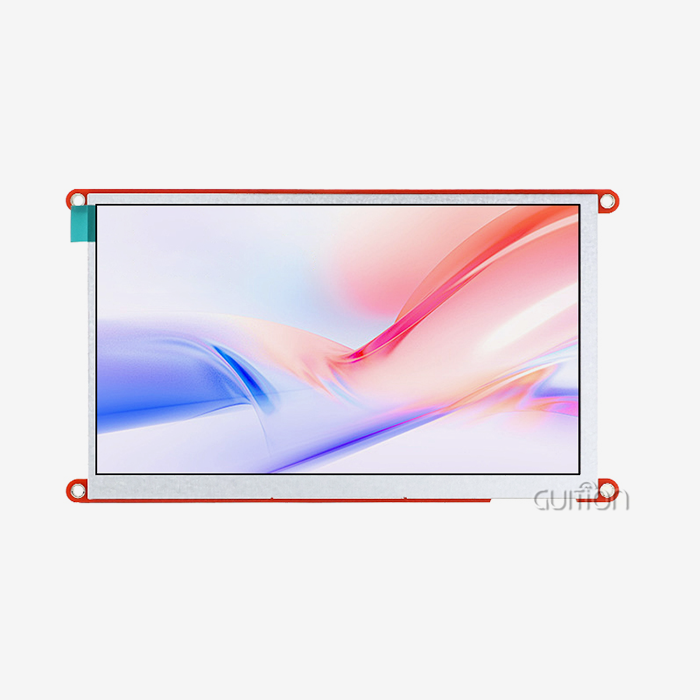
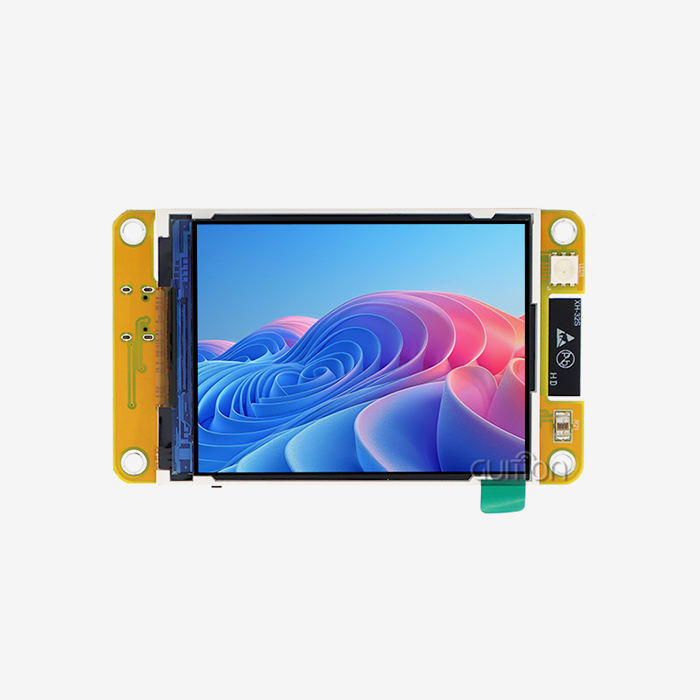
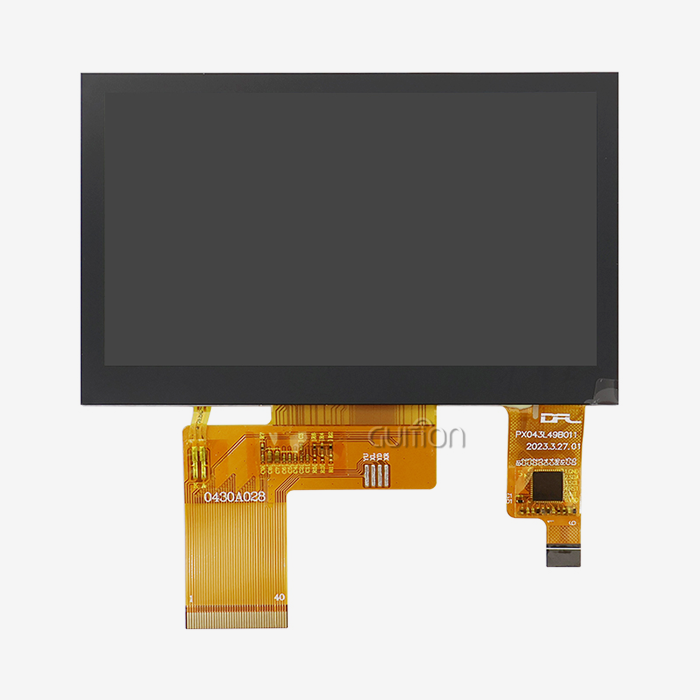
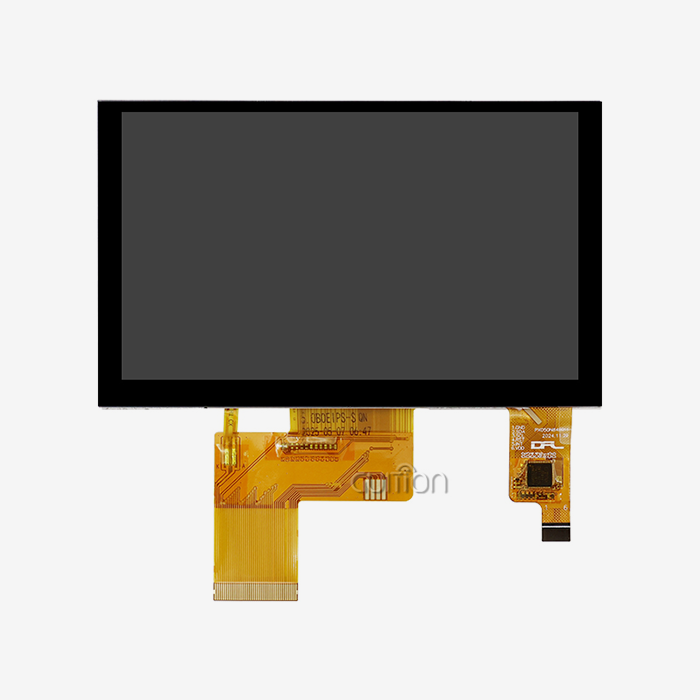
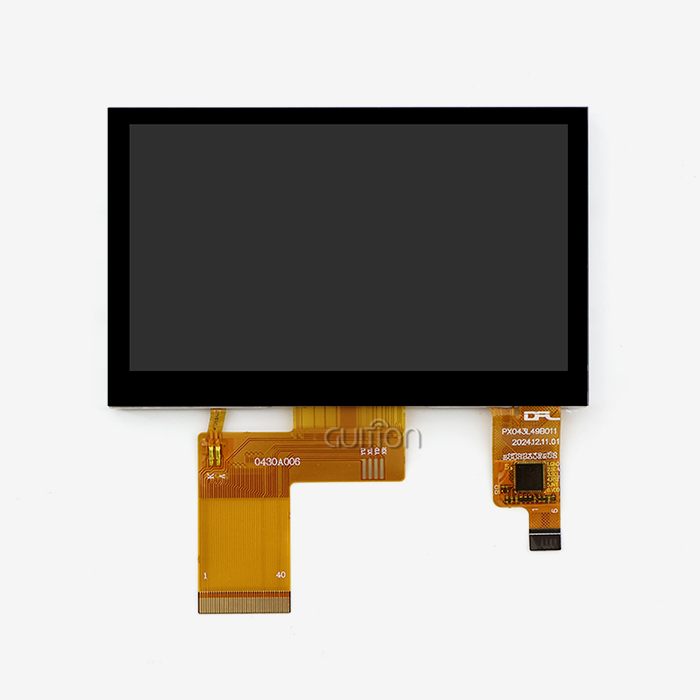
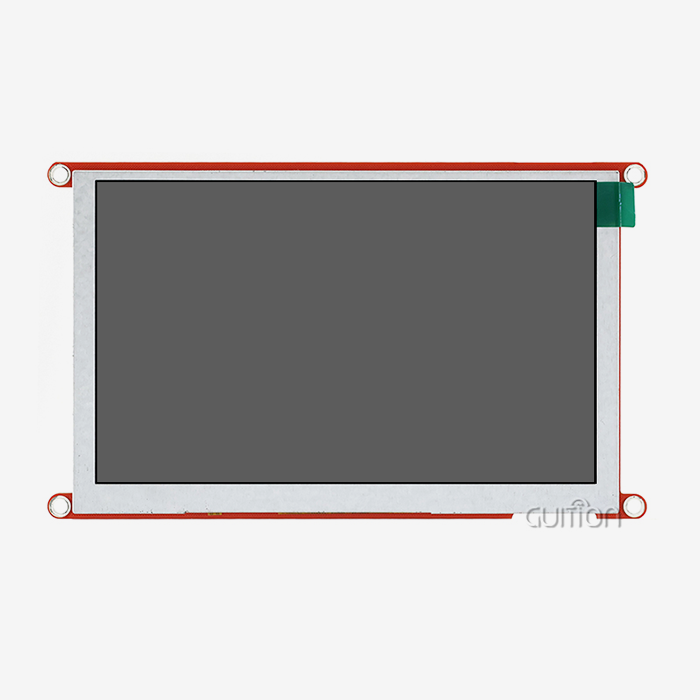
Optical function can be affected by higher IP shielding. If they aren't designed right, thick seals and protected glass covers can make touch less sensitive. Using IPS display technology with wide viewing angles, a well-designed industrial HMI panel makes up for this. For example, the GUITION JC8048Q350N_I has a 5.0-inch screen with an 800x480 IPS resolution and 16-bit RGB 65K color depth. This keeps the picture clear even when the front panel is locked.
Ruggedized Design Beyond IP Ratings
IP ratings are only to get folks in. Temperature control, electromagnetic compatibility (EMC), and vibration prevention have varied needs. A metal enclosure without fans silently dissipates heat without introducing moving elements that collect dust. Surge protection with wide-range DC voltage inputs (9V to 36V) provides an additional measure of electrical robustness. All of these criteria, in combination with the IP rating, will tell you just how robust a display module actually is.
Wireless Connectivity Inside Sealed Enclosures
Putting WiFi or Bluetooth into a fully sealed case needs engineering to figure out where to put the antennas. Metal enclosures can weaken the signal that goes to internal antennas. The GUITION JC8048Q350N_I has WiFi and Bluetooth built in, and its IO port interface lets engineers connect antennas through sealed cable glands without affecting the IP security of the case. This means that even inside IP66-rated cabinets, OTA upgrades and online tracking can still work.
How to Choose the Best IP Rating for Your Industrial HMI Panel
Start with a Realistic Environmental Assessment
Walk around the location of the exhibit. Monitor the contaminants (metal dust, chemical vapors, and water jets) and the cleaning procedures utilized. Check your results against the table of IP digits. Don’t assume, since erroneous ideas at this point lead to costly field replacements later.
Align with Regulatory and Industry Standards
Some industries have rules that everyone must follow. Lines that process food must follow EHEDG and 3-A Sanitary Standards. Equipment used in dangerous areas is categorized by ATEX or NEC. IEC 60601-1 is used for medical device environments. Your IP target is narrowed down before you even open a product catalog if you know which standard your program follows.
Why the GUITION JC8048Q350N_I Fits the Development Side of This Decision
Once you know what IP address you need, the display panel that powers your HMI still needs to work. Artinchip D121BBV is the heart of the GUITION JC8048Q350N_I. It is a 400MHz single-core MCU. Its online GUI creation tool, Guition, lets you build windows using drag-and-drop, so you don't have to know a lot about low-level programming. It cuts down on development time by a lot and works with Arduino, IDF, and Guition development modes. Here are some of the best things about this device:
- 400MHz MCU processing speed for responsive real-time interface updates without lag.
- 800×480 IPS display at 16-bit RGB 65K color, delivering clear visuals in any ambient light condition.
- Built-in WiFi and Bluetooth for network connectivity and OTA project upgrades without on-site access.
- Drag-and-drop GUI tool that cuts UI development time and lowers the learning curve for new engineers.
- Cross-platform debugging across Arduino, IDF, and Guition modes, reducing integration friction for diverse development teams.
The Industrial HMI Panel comes with built-in WiFi and Bluetooth, letting you connect to the internet and make changes to projects without having to be on-site. It also provides a drag-and-drop GUI tool that speeds up UI development and makes it easier for new engineers to learn.
Troubleshooting IP Rating Issues and Maintaining Your Industrial HMI Panel
Recognizing Early Signs of Ingress Failure
When gasket seals have worn down, you may see condensation on the inside of the display glass, phantom touches on the touchscreen from time to time, and the backlight flashing. Silicone gaskets used in IP65 and higher enclosures have a limited useful life—usually three to five years when exposed to UV light or chemicals—and need to be checked every so often.
Preventive Maintenance Protocols
All container seals should be looked at visually every three months. To keep the seal from breaking down, clean the outside with pH-neutral cleaners. If the panel mounting screws are hit or shaken, tighten them again to the manufacturer's recommended levels. For installations with an IP69K rating, check the seals after every wash cycle, not just once a month.
When to Upgrade to a Higher IP Rating
If you keep seeing ingress-related faults even though the installation was done correctly, the operating environment has probably changed. For example, there may be new cleaning equipment, higher humidity, or a move of the production line. It is much cheaper to raise the enclosure rating before a component fails than to replace it in an emergency. When you pair a higher-rated housing with the GUITION JC8048Q350N_I's remote OTA update feature, your software setup stays the same after the hardware swap, so you don't have to reprogram it on-site.
Conclusion
Your investment is protected, workers are kept safe, and your industry's regulatory requirements are met by matching your Industrial HMI panel to the appropriate IP rating. IP65 is good for most control applications inside; IP66 and IP69K are better for environments that get a lot of wetness and washdown. Besides the case, the display module itself needs to offer fast processing, clear images, and easy development. With its 400MHz MCU, IPS display, and flexible development ecosystem, the GUITION JC8048Q350N_I meets these needs and is a solid base for your next industrial HMI display project.
FAQ
What does IP65 mean for an industrial HMI display?
IP65 means the display enclosure is fully dust-tight (6 out of 6) and protected against low-pressure water jets from any direction (5 out of 9). It is sufficient for most indoor industrial control panels and smart appliance applications, but not adequate for high-pressure washdown environments.
Can I use an IP54-rated HMI panel in a food processing facility?
No. Food processing facilities typically require IP66 at minimum, and IP69K for direct washdown zones. Using a lower-rated panel risks both equipment failure and regulatory non-compliance with FDA or GMP hygiene standards.
Does a higher IP rating affect display brightness or touch response?
It can, if the sealing design is poor. Well-engineered panels compensate through IPS display technology and correctly calibrated touch layers. Always verify the display specifications alongside the IP rating, not just the IP number alone.
How does IP rating relate to ATEX or hazardous area classification?
IP rating and ATEX are separate certifications. ATEX covers explosion risk from flammable gases or dust. An IP66-rated panel is not automatically ATEX-certified. If your application involves explosive atmospheres, verify both certifications independently before procurement.
How often should I inspect the seals on an IP69K-rated HMI?
Inspect seals after every high-pressure washdown cycle in demanding environments. In standard operations, a monthly inspection interval is a sensible baseline.
Get the Right Industrial HMI Panel Display Module from Guition
Picking the right IP rating is only half the battle. The display core behind your HMI still decides how fast it can be developed, how good the images look, and how long it will be supported. The 400MHz D121BBV MCU, 800x480 IPS display, and drag-and-drop GUI tools are all included in the JC8048Q350N_I, a reliable industrial HMI panel supplier choice from Guition. Need a single test unit or a large production order? Email our team at david@guition.com or visit https://jingcaizhineng.aixdb.cn/ to talk about your project needs right away.
References
1. International Electrotechnical Commission. IEC 60529: Degrees of Protection Provided by Enclosures (IP Code). IEC, 2013.
2. International Society of Automation. The True Cost of Downtime: Manufacturing Industry Analysis. ISA, 2022.
3. European Hygienic Engineering & Design Group. EHEDG Guidelines for Hygienic Design of Closed Equipment. EHEDG, 2021.
4. National Electrical Manufacturers Association. NEMA 250: Enclosures for Electrical Equipment. NEMA, 2020.
5. ARC Advisory Group. Human-Machine Interface Technology and Market Study. ARC Advisory Group, 2023.
6. Food and Drug Administration. 21 CFR Part 11: Electronic Records; Electronic Signatures. FDA, 2022.
Learn about our latest products and discounts through SMS or email