- English
- French
- German
- Portuguese
- Spanish
- Russian
- Japanese
- Korean
- Arabic
- Greek
- German
- Turkish
- Italian
- Danish
- Romanian
- Indonesian
- Czech
- Afrikaans
- Swedish
- Polish
- Basque
- Catalan
- Esperanto
- Hindi
- Lao
- Albanian
- Amharic
- Armenian
- Azerbaijani
- Belarusian
- Bengali
- Bosnian
- Bulgarian
- Cebuano
- Chichewa
- Corsican
- Croatian
- Dutch
- Estonian
- Filipino
- Finnish
- Frisian
- Galician
- Georgian
- Gujarati
- Haitian
- Hausa
- Hawaiian
- Hebrew
- Hmong
- Hungarian
- Icelandic
- Igbo
- Javanese
- Kannada
- Kazakh
- Khmer
- Kurdish
- Kyrgyz
- Latin
- Latvian
- Lithuanian
- Luxembou..
- Macedonian
- Malagasy
- Malay
- Malayalam
- Maltese
- Maori
- Marathi
- Mongolian
- Burmese
- Nepali
- Norwegian
- Pashto
- Persian
- Punjabi
- Serbian
- Sesotho
- Sinhala
- Slovak
- Slovenian
- Somali
- Samoan
- Scots Gaelic
- Shona
- Sindhi
- Sundanese
- Swahili
- Tajik
- Tamil
- Telugu
- Thai
- Ukrainian
- Urdu
- Uzbek
- Vietnamese
- Welsh
- Xhosa
- Yiddish
- Yoruba
- Zulu
What Affects the Cost of a Custom LCD Module for OEM Buyers?
When you're sourcing a bespoke LCD module, pricing is seldom a one-line number. This is the consequence of dozens of engineering choices taken before manufacturing even begins. All of these factors, from display tech and screen size to order volume and certification procedures, impact the ultimate unit cost. If you are an OEM buyer in industrial automation, medical devices, smart home systems, or commercial terminals, knowing these cost factors of a Custom LCD Module will assist you to budget properly, bargain boldly, and prevent costly specification errors. In this essay, we will review what precisely affects the cost of a bespoke LCD module, and how to make wiser purchasing selections.

Understanding Custom LCD Modules and Their Value
What a Custom LCD Module Actually Is
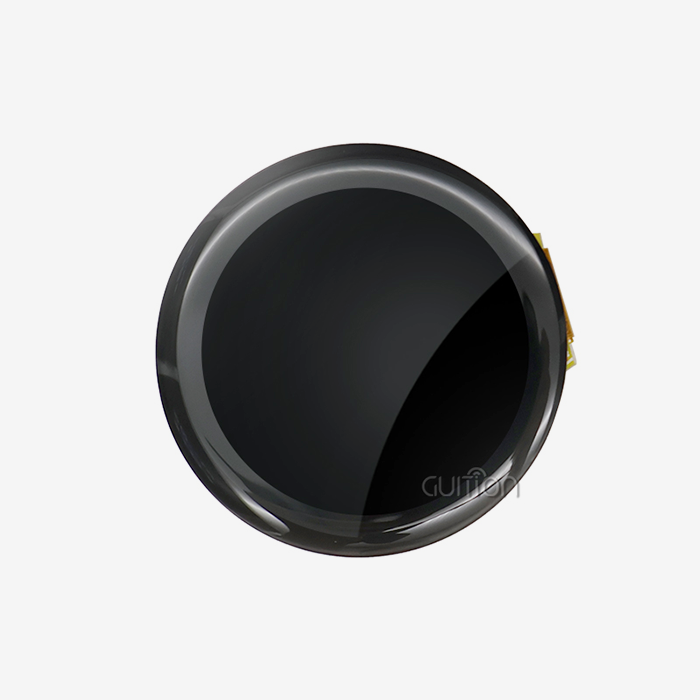
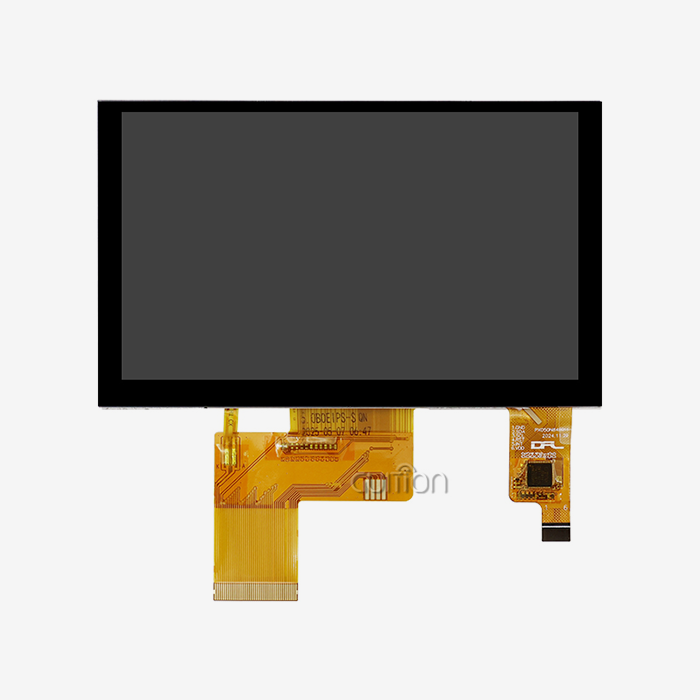
A custom LCD module is an LCD module that is designed to meet the mechanical, communication, and environmental requirements of a certain product. Custom modules are not the same as off-the-shelf panels, since they include the screen glass, lighting unit, driver IC, FPC layout, and maybe even a touch layer in one device. This translates to a better form factor and product fit, quicker integration, and longer supply stability. All of these characteristics are very critical for OEM product lines that are five to 10 years.”
Core Display Technologies and Their Price Implications
How much a screen costs and how well it works will depend on the tech you pick. TN screens are the cheapest, but you can only see things from a certain angle. There is no better choice for HMI screens in medical and industrial tools than IPS panels. They have true colors and a wide viewing range. OLED screens have better contrast and use less power, but they cost two to four times as much as an IPS screen of the same size. Don't pay extra for things you don't need if you choose the right tech for the job.
Why OEM Buyers Choose Custom Over Standard
Standard screens don't always line up properly with the layout, power, or temperature range of a product in order to work. A custom LCD module gets rid of the problem. For outdoor use, it can be set up to work in temperatures from -30°C to +85°C. It also has specific FPC pinouts, anti-glare or anti-reflective cover glass, and different brightness levels (300 to 2500+ nits). These customized features directly cut down on the work that needs to be done to integrate, the cost of redoing work, and problems that happen after the sale.
Key Factors That Influence the Cost of Custom LCD Modules
Screen Size, Resolution, and Display Panel Cost
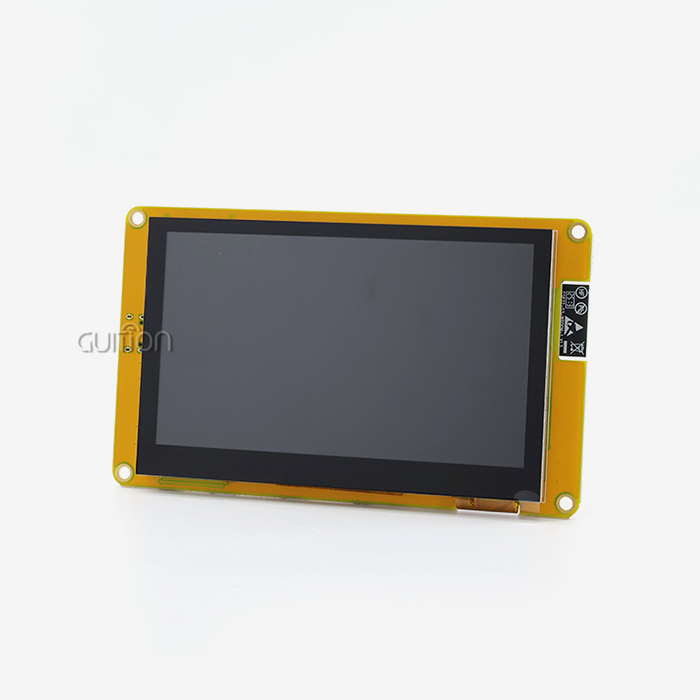
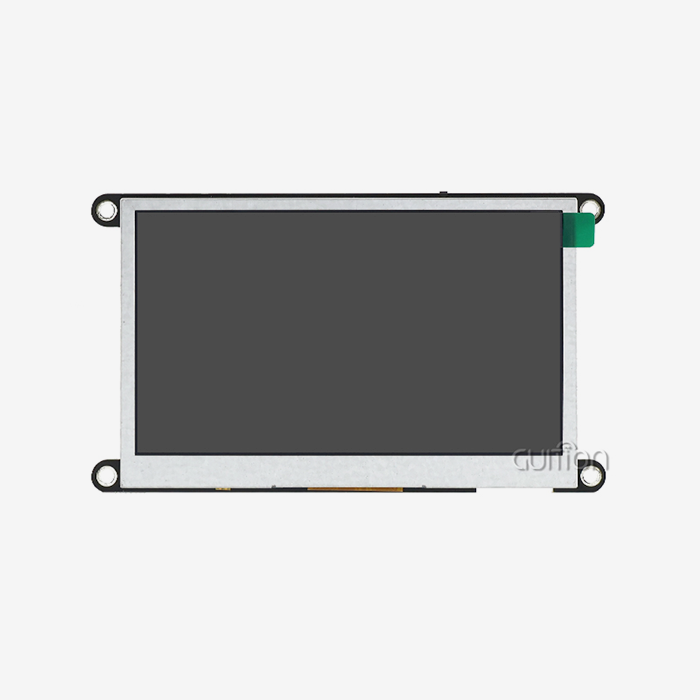
One of the major factors of pricing is screen size. Larger panels need more raw glass, a larger backlight array, and more complicated driver electronics. Resolution adds another layer; a 480×272 display has a lot less processing overhead than a 1920×1080 screen, which means a lower BOM cost. since an example, the GUITION JC4827Q343N_I has a 4.3-inch IPS panel with 480×272 resolution. This is a good mix between clarity and affordability since ultra-high-definition displays may be cost-prohibitive for HMI applications.
Touch Integration, Backlighting, and Interface Options
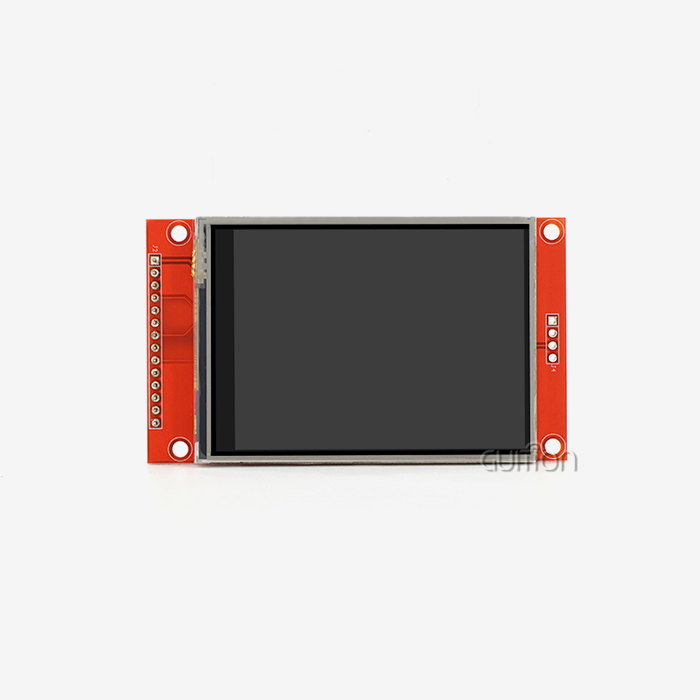
Adding touch capability — whether resistive or projected capacitive (PCAP) — increases module cost by introducing an additional sensor layer, controller IC, and firmware calibration. Backlight type also matters: standard LED backlights are cost-effective, while high-brightness or edge-lit arrays for sunlight-readable displays carry a premium. Interface selection (SPI, I2C, RGB, MIPI DSI, or LVDS) affects PCB complexity and driver IC cost. Choosing only what your application genuinely requires keeps the custom LCD module price within budget.
NRE Charges, Certifications, and Volume Pricing
Non-Recurring Engineering (NRE) fees cover tooling for custom glass masks, FPC layout, and backlight molds. These range from $500 to $5,000+ depending on the depth of customization. Regulatory certifications — CE, FCC, RoHS, REACH, or medical-grade ISO standards — add qualification testing costs that are distributed across the production run. Order volume directly offsets these fixed costs: a 500-unit sample run carries much higher per-unit NRE amortization than a 10,000-unit production order.
Comparing Custom LCD Modules to Standard and Alternative Displays
Custom vs. Standard LCD Modules: Trade-offs That Matter
You can get standard LCD panels for less money, but you might have to do more work on the PCB to make their pinouts, voltage levels, or mechanical footprint work with your product. This extra work to integrate could add more engineering hours and make things less reliable in the field over the course of a full production lifecycle. A custom LCD panel for OEM use gets rid of those options. There are some things that cost more to customize at first, but they generally pay for themselves in lower integration costs, fewer warranty claims, and longer supply security.
Custom LCD vs. OLED: Performance vs. Budget
It is possible to change the contrast at the pixel level with OLED screens, but they are much more expensive per unit and can burn in in static HMI setups. For a lot less money, an IPS-based Custom LCD panel has enough brightness, color depth, and longevity for most industrial control screens, medical monitors, and smart device interfaces. For situations where size or self-emitting contrast are very important, OLED is the only choice that makes sense.
Fixed Configurations vs. Fully Customizable Modules
Some companies offer semi-custom modules, which are fixed-size screens with FPC pinouts or cover glass designs that can be changed. These are in the middle of regular items and ones that are custom-made for you. You can save money on NRE costs with semi-custom options that still work with standard forms and interfaces if you are an OEM buyer who only needs a moderate number of units (500–5,000) and a standard form factor. Full customization makes sense when technical limitations, lighting needs, or working conditions can't be changed.
How to Choose the Right Custom LCD Module Supplier
Evaluating Technical Expertise and Development Support
How quickly your Custom LCD panel project goes from specs to mass production depends on how good your supplier's engineers are. It is best to find suppliers that offer full schematic documentation, support for development boards, and cross-platform compatibility with Arduino, ESP-IDF, or their own GUI tools. One of Guition's development tools is a drag-and-drop online GUI tool that lets programmers make HMI interfaces without having to write low-level display code. This makes it easier and faster to build things.
Quality Standards, Certifications, and Long-Term Supply
If you want to make sure the quality of a custom LCD module, you should use sampling guidelines from MIL-STD-105E or ISO 2859-1. You should ask for proof that the item has been tested for ESD protection up to ±8kV contact, temperature shock (-40°C to +85°C), and high humidity (60°C/90% RH for 240 hours). Also, make sure that the supplier uses driver ICs with long product roadmaps and offers last-time buy notifications and replacements that work with pins when products go out of service.
Lead Times and Ordering Process Transparency
This is how long a project for a custom LCD module will take: Making counter plans takes three to five days. Making tools and models takes three to five weeks. Making a lot of things takes four to six weeks, depending on how quickly the parts can be found. When suppliers make these goals clear, they help OEM sourcing teams plan when to launch new products without putting the schedule at risk. Before you sign a development deal, make sure that the wait times are written down.
Best Practices for Managing Custom LCD Module Procurement Costs
Align Specifications to Actual Application Requirements
If you give too many details about a show, you often end up adding costs that aren't necessary. A 500-nit IPS screen will work for your industrial control panel if it is inside and the lights is on. It doesn't have to be 1500-nit so that you can read it in direct sunlight. If you choose the right screen size, brightness, touch type, and interface for your app, you won't have to pay extra for features you won't use.
To keep the prices of display modules low, OEM buying teams do these main things:
- Start with a clear specification document that defines minimum acceptable performance thresholds — not aspirational maximums. This prevents suppliers from quoting premium configurations by default.
- Negotiate volume tiers early by sharing your 12-month and 24-month demand forecasts with potential suppliers. Even a commitment to a second purchase order can unlock meaningfully lower unit pricing.
- Account for total cost of ownership (TCO) by including integration labor, debugging time, OTA firmware update capability, and warranty coverage — not just the per-unit display price.
You shouldn't just look at the price of each display; you should also look at the total cost of ownership (TCO). This includes the work that goes into integrating it, the time it takes to fix bugs, the ability to update firmware over-the-air (OTA), and the coverage of the warranty.
Leverage OTA Upgrades and Remote Maintenance to Reduce Lifecycle Costs
People often forget about the cost of maintenance after launch. Updates to HMI software don't have to be done by field technicians when display modules allow firmware updates to be done from afar. Teams can use the GUITION JC4827Q343N_I to make changes to the user interface or fix bugs without having to touch the hardware that is already in use. With this option, you won't have to pay as much for service after the sale for at least five years.
Conclusion
For the price of a custom LCD module, you get more than just the screen. The final cost depends on the type of screen, its size, its resolution, its technology, its touch hardware, its certifications, NRE fees, and the number of orders. OEM buyers can pick specs that combine cost and effectiveness if they know about these things. It's more useful to choose a provider with good engineering support, clear wait times, and a stable long-term supply than to just compare unit prices. It's easy to see how the GUITION JC4827Q343N_I can show how a 4.3-inch IPS custom LCD module can offer 400MHz processing power, clear pictures at 480x272, and a drag-and-drop development tool—all at a price that makes sense for mass OEM production.
FAQ
What is the typical lead time for a custom LCD module?
For counter drawings, it usually takes three to five days. Item and tool making takes three to five weeks. How long it takes to make a lot of them relies on how quickly the driver IC and raw materials can be found. Sometimes projects move faster than those that need new glass masks or special backlight molds. One example is when all that needs to be changed on an FPC is the wiring.
Can I order samples before committing to mass production?
Yes. Most reputable custom LCD module providers send out sample units for functional and mechanical testing before they start mass production. Check to see if there are any NRE fees for sample orders and how those fees are added to your first production payment.
What certifications should a custom LCD module have for industrial or medical use?
If you want to use it in business, make sure it complies with RoHS, REACH, and CE. For medical device integration, you usually need IEC 60601-1 compatibility and EMI blocking documents. For applications that are used outside or in transportation, the temperature testing results may need to be longer as well.
How do I prevent cost overruns in a custom display project?
You should set minimum acceptable performance standards before you ask for quotes. To get tiered pricing, you should also share your multi-year volume expectations. When you figure out your total cost, you should always include the costs of integration labor and OTA maintenance.
Start Your Custom LCD Module Project with Guition
You can make a drag-and-drop GUI with the JC4827Q343N_I, which is a 4.3-inch IPS custom LCD module with a 400MHz D121BAV MCU and a resolution of 480x272. For screens from 1.28" to 21.5", Guition makes a full line of modules. We are a trustworthy company that sells custom LCD modules that work with Arduino, IDF, and Guition development modes. Our modules have built-in WiFi, Bluetooth, OTA update support, and multi-language UTF-8 encoding. Just email our team at david@guition.com or visit https://jingcaizhineng.aixdb.cn/ to find out more or get a quote.
References
1. Bhatt, D. (2020). Liquid Crystal Display Technology: Principles and Applications. IEEE Spectrum Publications.
2. Grand View Research. (2023). LCD Module Market Size, Share & Trends Analysis Report. Grand View Research.
3. International Electrotechnical Commission. (2021). IEC 62341: Organic Light Emitting Diode (OLED) Displays — Part 6-2: Measuring Methods of Optical and Electro-optical Parameters. IEC.
4. MarketsandMarkets. (2022). Display Technologies Market — Global Forecast to 2027. MarketsandMarkets Research.
5. Society of Automotive Engineers. (2019). SAE J1211: Recommended Environmental Practices for Electronic Equipment Design. SAE International.
6. Windhorst, R., & Bhattacharya, S. (2021). Embedded Systems Design with HMI Displays: Engineering Considerations for OEM Integration. Elsevier.
Learn about our latest products and discounts through SMS or email