- English
- French
- German
- Portuguese
- Spanish
- Russian
- Japanese
- Korean
- Arabic
- Greek
- German
- Turkish
- Italian
- Danish
- Romanian
- Indonesian
- Czech
- Afrikaans
- Swedish
- Polish
- Basque
- Catalan
- Esperanto
- Hindi
- Lao
- Albanian
- Amharic
- Armenian
- Azerbaijani
- Belarusian
- Bengali
- Bosnian
- Bulgarian
- Cebuano
- Chichewa
- Corsican
- Croatian
- Dutch
- Estonian
- Filipino
- Finnish
- Frisian
- Galician
- Georgian
- Gujarati
- Haitian
- Hausa
- Hawaiian
- Hebrew
- Hmong
- Hungarian
- Icelandic
- Igbo
- Javanese
- Kannada
- Kazakh
- Khmer
- Kurdish
- Kyrgyz
- Latin
- Latvian
- Lithuanian
- Luxembou..
- Macedonian
- Malagasy
- Malay
- Malayalam
- Maltese
- Maori
- Marathi
- Mongolian
- Burmese
- Nepali
- Norwegian
- Pashto
- Persian
- Punjabi
- Serbian
- Sesotho
- Sinhala
- Slovak
- Slovenian
- Somali
- Samoan
- Scots Gaelic
- Shona
- Sindhi
- Sundanese
- Swahili
- Tajik
- Tamil
- Telugu
- Thai
- Ukrainian
- Urdu
- Uzbek
- Vietnamese
- Welsh
- Xhosa
- Yiddish
- Yoruba
- Zulu
What Are the Key Benefits of Using TFT LCD Touch Screens?
Understanding the main benefits of TFT LCD touch technology becomes crucial when looking at display options for business use. A TFT LCD touch module combines touch sensor patches with thin-film transistor liquid crystal display screens to make a full human-machine interface. This technology solves important technical problems like making interfaces quickly, making sure they work reliably in harsh settings, and making it easy to add more features to different product lines without spending a lot of money. The active matrix design offers faster reaction times, deeper colour depth, and reliable performance that meets strict industrial standards. For embedded engineers and product managers looking to shorten development times without sacrificing quality, TFT LCD touch screens are the best option.

Understanding TFT LCD Touch Screen Technology
TFT LCD touch screen technology is a cutting-edge combination of input and display features made for business use. Thin-film transistor technology is at the heart of the system. Each pixel is controlled by its transistor, which allows for accurate picture rendering and fast update rates. This active matrix method is very different from inactive display technologies, and it provides the high level of detail needed for complicated industrial interactions.
How do the display and touch functions work together?
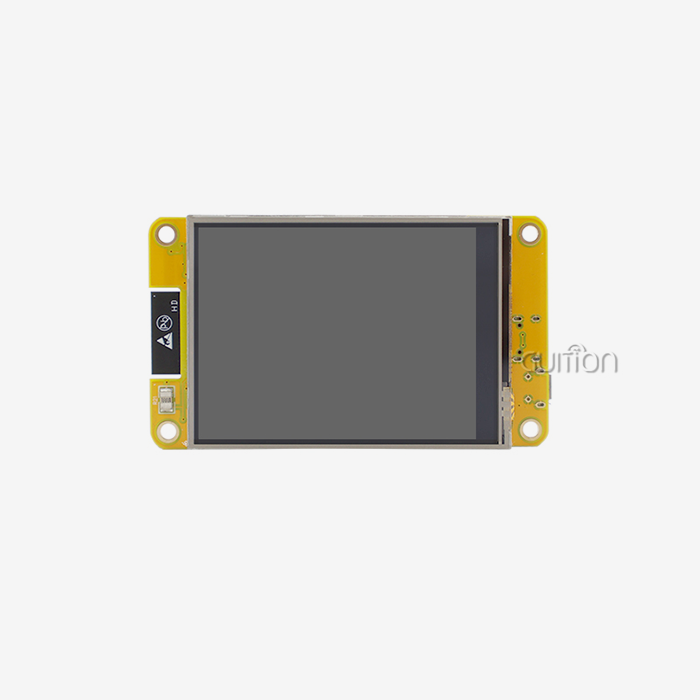
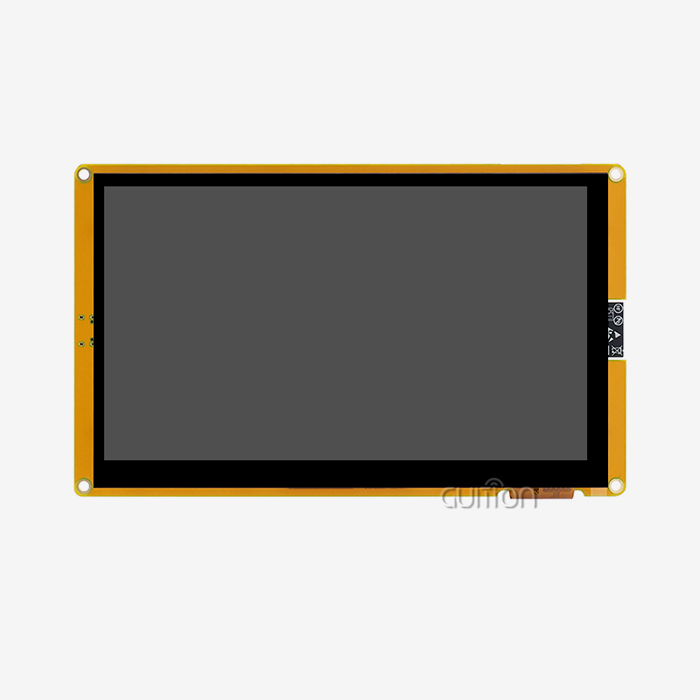
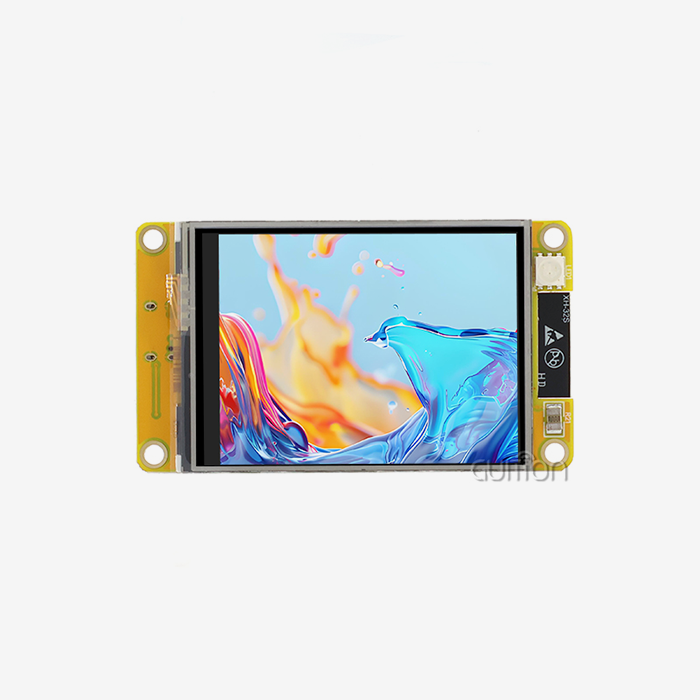
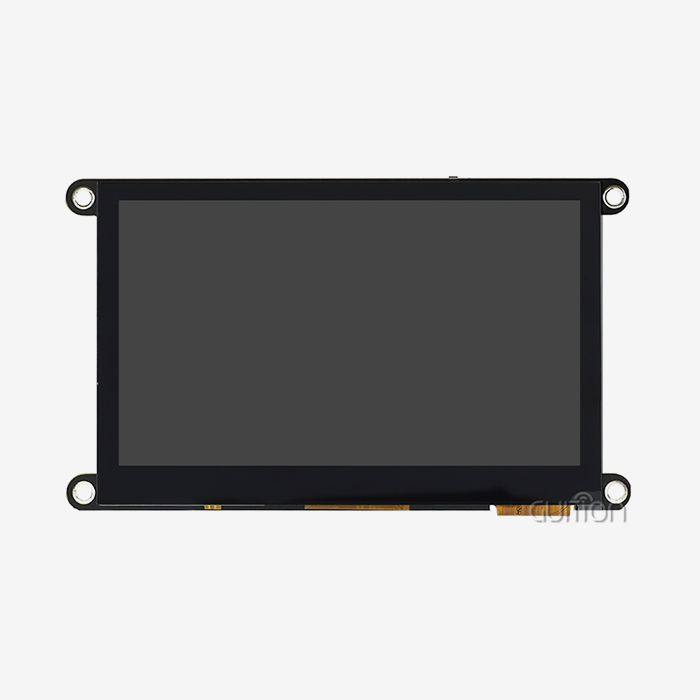
The integration design combines multiple functional layers into a single part. By changing the liquid crystals, the TFT LCD panel creates images, while the touch sensor layer above the screen recognizes when a user touches it. This combination is shown by the GUITION JC8048B070C, which uses the EK9716 driver IC to handle picture data and turn it into signals that power the 7.0-inch screen with a resolution of 800×480. This chip's RGB interface makes it easy to handle 16.7 million colour screens, ensuring that the output stays in sync with touch input processing. The capacitive touch layer works on its own, but it talks to the display driver without any problems. This makes the interface quick and normal for users.
Capacitive vs. Resistive Touch Technology
Current workplaces benefit from capacitive touch technology. Resistive screens need pressing, but capacitive sensors detect electrical field changes and are sensitive to even the smallest touch. This technology permits many touches, so engineers can make "pinch to zoom" and "swipe" simple. The GUITION JC8048B070C's projected capacitive (PCAP) technology makes it durable with cover glass and responsive to touch. Resistive screens are cheap and can be used with gloves, whereas capacitive devices are more precise and durable in demanding environments.
Common Resolutions and Size Formats
Different display layouts are needed for different industrial uses. The market includes everything from small 1.28-inch units for handheld devices to huge 21.5-inch screens for use in control rooms. The 7.0-inch size with an 800×480 resolution is a good compromise because it gives you enough screen space for complicated interfaces while still being small enough for embedded systems. This definition gives you about 133 pixels per inch, which makes sure that text is clear and images are sharp. More complex displays require higher resolutions, but they also need more processing power and bandwidth. The GUITION product line covers this range, letting purchasing managers pick the best options that balance how well the graphics work with the limited system resources.
Key Use Cases Across Industries
Many businesses use TFT LCD touch screens. Industrial automation 3D printers utilize these screens to modify parameters and monitor prints. Operators avoid mistakes during time-sensitive jobs by pressing the screen quickly. These panels are built into medical beauty devices to help doctors modify treatment settings. Clear screens with sanitary, easily wiped surfaces. EV charging stations contain touch screens for payments and weatherproof modules that can be read in sunshine. The technology lets smart home control panels display high-quality pictures and enables gesture-based navigation, improving user experience. CNC machines, farm automation systems, and corporate kiosks use TFT LCD touch technology to simplify complex processes.
Core Benefits of TFT LCD Touch Screens for Industrial and Commercial Use
TFT LCD touch screens are designed to meet the demanding requirements of industrial settings. There are real benefits to these displays that lead to faster growth and lower total cost of ownership.
Superior Display Performance Metrics
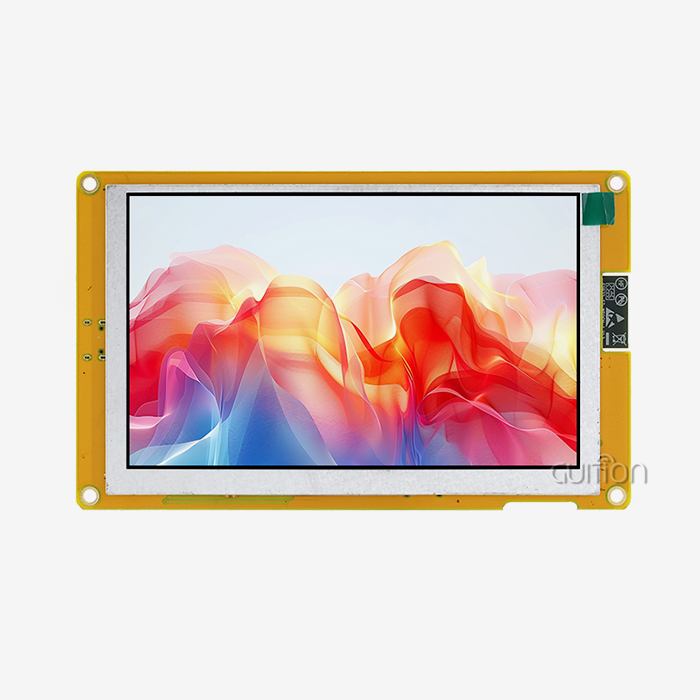
App appearance determines user experience in professional apps. TFT LCD technology can make screens brighter than 300 nits indoors and over 1000 nits outside, so they can be seen in all lighting. 24-bit RGB encoding accurately displays state signs, visual data, and photographs with 16.7 million colours. Animated screens above 60Hz avoid motion blur, preserving clarity during dynamic content transitions. Using the EK9716 driver in GUITION JC8048B070C ensures correct colours across the 800x480 screen without artifacts. Multi-user viewing angles of up to 178 degrees are achievable with IPS technology without colour shifting or losing contrast.
Rugged Durability for Harsh Environments
Industrial equipment undergoes conditions that would harm consumer screens. Professional TFT LCD touch screens can operate in temperatures ranging from -20°C to 70°C, making them suitable for plant floors, outdoor installations, and transportable equipment. GUITION operates properly across this range, so the screen doesn't freeze or the touch sensor stops moving, as with less dependable choices. Sealed construction extends the life in farming and industry by preventing dust and water from entering. Cleaning agents don't harm the capacitive touch layer; thus, it remains sensitive after several touches. The screen may be mounted on automobile panels and small diagnostic instruments without breaking or damaging the pixels due to mechanical shock resistance.
Energy-Efficient Operation and Cost Benefits
Both battery-powered and grid-connected systems' operating costs depend on electricity usage. When displaying static screens with mainly white backgrounds, such as in industrial settings, TFT LCD uses less electricity than OLED. GUITION JC8048B070C LED lighting employs 200–500 mA at 3.3 V, extending handheld device life. This efficiency allows handheld meters to run longer on batteries and sealed control screens to generate less heat. Lower power needs entail lower electricity expenditures and power source requirements after one year. Technology's stable production environment offers a competitive price. Modules with better specs cost less than similar OLED alternatives, helping OEMs profit.
Modular Design and Customization Options
Making items fast is hindered by system interaction. The standard interfaces and flexible setup options of TFT LCD touch screens solve this problem. Popular microcontrollers and single-board computers can connect to the GUITION module's RGB interface. This simplifies hardware design and reduces parts. Multi-platform support for Arduino, ESP-IDF, and the unique Guition framework helps engineering teams work in familiar situations without having to learn how to create displays specifically for them. To fulfil mechanical needs, cover glass thickness, border design, and port placement can be modified. This flexibility speeds prototyping because engineers can test the display before finishing enclosure designs. This reduces development from months to weeks.
Comparing TFT LCD Touch Screens to Other Touch Technologies
To choose the right technology, you need to know how the different display choices affect speed. The comparison shows why, despite competition from other technologies, TFT LCD touch screens still rule industrial uses.
TFT LCD vs. OLED Display Technology
OLED screens have remarkable contrast ratios and genuine black depths because of self-emissive pixel technology. This gain has drawbacks that make OLED unsuitable for industrial application. Organic materials in an OLED panel degrade after a long duration of steady display. In fixed-interface applications like control panels, burn-in ruins screens. Even after years of presenting the same panels, TFT LCD technology's picture quality is unaffected. OLEDs still have lower returns than LCDs, which raises costs and affects project budgets. OLED screens have a narrower temperature range than TFT LCD screens. The GUITION JC8048B070B performance drops at typical temperatures. OLED panels appear better in consumer gadgets, but TFT LCD is superior for tough corporate usage that needs years of reliability.
Capacitive vs. Resistive Touch Input Methods
Touch technology affects user experience and system reliability. parallel lcd display Resistive touch displays can detect membrane deflection, allowing you to use a pen or your hands in medical and scientific situations. However, resistance sensors need physical force, which tires users after long use and limits the interface to one touch. The GUITION module's capacitive technology responds to even the lightest touch, keeping users from tiring and supporting multi-touch motions for zoom and rotation settings. Resistive screens require soft, pliable surfaces that scratch and wear, yet capacitive sensors operate through cover glass. Nowadays, industrial settings prefer a delicate touch since it lasts longer and improves user experience. They will forgo gloves for long-term dependability.
Operational Cost Analysis Over Product Lifespan
The total cost of ownership goes beyond the purchase price. It also includes repairs, power utilization, and replacement frequency. Due to several variables, TFT LCD touch panels have favourable lifespan economics. LED backlights usually last 30,000 to 50,000 hours before dimming to half brightness. Five years of continual use or decades of intermittent use. Capacitive touch devices don't have working parts; therefore, they can be reused, unlike mechanical buttons that wear out after millions of presses. Grid-powered installations save money by being efficient. Batteries extend gadget repair intervals. TFT LCD parts are always accessible and priced steadily due to their mature supply chain. This prevents items from becoming obsolete and requiring costly redesigns. When you consider maintenance and replacement expenses, TFT LCD touch panels are cheaper than other options.
Procurement Considerations for TFT LCD Touch Screens
When choosing the best display panels, you need to compare technical specs to application needs. Procurement managers have to find a balance between suppliers' performance and their budgets while also making sure that suppliers will be reliable in the long run.
Critical Technical Specifications
The interface's complexity and screen space depend on resolution. The 800×480 GUITION JC8048B070C monitors images and text clearly and is compatible with most microcontrollers. Choice of touch technology influences user experience. Projected capacitive sensors work well for responsive displays. How far away and how much information you need to see determines the screen size. A 7" screen works well in tiny, desktop, and panel-mount applications. Interface compatibility is crucial since RGB cables are easier to integrate than LVDS or MIPI DSI, which need conversion hardware. Distribution settings must match operating temperatures. In situations that disable commercial displays, industrial-grade modules can work.
Quality Standards and Certifications
Regulatory safety and quality clearances indicate product reliability. Industrial screens should follow RoHS requirements to reduce hazardous materials, safeguard the environment, and simplify international shipping. EMC testing ensures that the display is electromagnetically compatible, preventing feedback and electrical noise from causing ghost touches or display issues. Several industries must follow IEC standards. Medical devices must meet IEC 60601 electricity safety regulations. ISO 9001 shows that vendors follow regular production techniques to reduce defects. Procurement standards should require compliance documentation. Companies will not be responsible for defects, and products will perform reliably in their intended locations.
Supplier Reliability and Technical Support
A product's long-term success depends on its reliable and fast provider. Established, multi-product enterprises demonstrate market viability and technical expertise. Guition's 1.28–21.5-inch range exhibits production depth and technological tools that single-product providers lack. Technical document quality affects merging speed. A thorough datasheet, application notes, and sample code help speed up development. Technical support can quickly fix prototypes' integration issues, keeping the project on track. After-sales service, including calibration, repair, and part replacement, keeps production rolling when difficulties emerge. Buying strategies should go beyond pricing. Consider how good the support is since it reduces technical work and manufacturing delays, lowering project costs.
Pricing Strategies and Volume Discounts
Cost optimization encompasses the entire buying process, not just unit prices. Tiered pricing substantially lowers unit costs when buying in bulk, and bigger pledges yield higher returns. For custom bezels or connection configurations, tooling costs must be considered against off-the-shelf options. Long-term supply deals stabilize prices against market movements and distribute supplies when parts are scarce. You must carefully forecast what consumers will buy to balance inventory prices with volume deals. Having too much stock can tie up capital, while not enough can hinder production. Early supplier involvement in product development permits value engineering discussions that set cost criteria without losing utility. This may reveal cheaper, comparable parts.
How TFT LCD Touch Screens Solve Common Industrial Challenges?
Through engineered design features, TFT LCD touch technology handles persistent problems in industrial uses. Knowing about these options helps to support choices about specifications and estimate the benefits for operations.
Eliminating Ghost Touch in High-EMI Environments
Electromagnetic interference from motor drives, welding tools, and high-voltage systems creates bogus touch events. Operators become furious when ghosts execute commands without intent. Modern touch controls use frequency hopping to accurately identify touches by moving sensing frequencies away from interference. By increasing detection limits, noise is filtered while touch sensitivity is preserved. This balance is achieved by software adjustment. Grounding flexible printed circuit (FPC) linkages prevents interference from reaching sensitive devices, making them more noise-resistant. The GUITION module's safeguards make touch operation reliable in factories where electrical noise would stop less dependable screens. External insulation makes mechanical design harder and costs more. This feature eliminates it.
Reducing Downtime Through Reliable Hardware
When equipment breaks down, it throws off production plans and costs a lot to fix, which cuts into profits. Through conservative component values and protective design, TFT LCD touch screens intended for industrial service reduce failure risk. Thermal shutdown can happen in hot workplaces or cold outdoor sites, but wide working temperature ranges keep them from happening. When something is sealed, it keeps out contaminants that can damage links and make visual performance worse. Strong connection systems don't let vibrations cause them to loosen, which can lead to occasional failures. With a lifetime of more than 30,000 hours, the backlight LED will work nonstop for years before it needs to be replaced. Because capacitive touch sensors don't have any moving parts, they don't have a usual way for mechanical connections to fail. Because of these factors, the average time between failures is counted in years instead of months. This means that equipment is up and running for longer periods of time, and repair visits that cost money for technicians and replacement parts are kept to a minimum.
Calibration and Preventive Maintenance Best Practices
Even though it is reliable, maintaining optimal performance needs regular care. Touch calibration fixes changes that happen over time in the sensor's properties, bringing back the original sensitivity and accuracy. Automatic calibration methods can run during startup or idle times on many computers, so you don't have to do anything. As LEDs age, the brightness of the display gradually decreases, so the lighting needs to be changed to keep things visible. Isopropyl alcohol is safe for most capacitive screens and can be used in cleaning routines that use approved solvents to stop residue buildup that hurts touch sensitivity and visual clarity. Visual checks find problems like corroded connectors or damaged bezels before they become major problems. Firmware changes from makers fix problems that have been found and add new features, making the product more useful as needs change. By following these tips, you can make hardware last longer and avoid sudden breakdowns that stop activities.
Improving Operator Efficiency Through Intuitive Interfaces
Error rates and operator efficiency are directly affected by the quality of the interface. Responding to touch feedback confirms what the user types right away, removing the doubt that slows down task completion. High-resolution screens show information clearly, so you don't have to look or read incorrectly, which can lead to mistakes. Multi-touch motions make it easy to move through complicated settings and get to functions faster than button-based methods. Consistent brightness in rooms with different levels of lighting keeps your eyes from getting tired during long shifts. Displaying graphical data like charts, diagrams, and pictures is a better way to get information across than just words, which speeds up decision-making and understanding. These factors work together to cut down on the time new operators need to learn how to do their jobs and the number of mistakes they make while doing regular tasks. This leads to measurable gains in both labour efficiency and product quality that support the higher display standards.
Conclusion
In terms of speed, dependability, and cost, TFT LCD touch screens offer numerous benefits. The technology blends responsive capacitive touch input with high-resolution visual output to make easy-to-use displays that make operators more productive. Extreme temperature changes, dust, moisture, and mechanical shock can't hurt materials that are built to last. This makes them effective in challenging situations. Energy-efficient design cuts down on power use and costs while increasing the battery life of handheld electronics. Standardized interfaces and modular design make it easier to connect systems, which shortens development processes and lets you make prototypes quickly. When compared to other options like OLED screens and sensitive touch panels, TFT LCD technology is more reliable, lasts longer, and costs less. The GUITION JC8048B070C demonstrates these benefits with its 7.0-inch sensitive monitor, which offers 800×480 resolution and 16.7 million colours, thanks to the EK9716 driver IC. It can be used in 3D printers, medical devices, and other industrial settings with ease.
FAQ
What is the typical lifespan of a TFT LCD touch screen in industrial settings?
Industrial TFT LCD touch panels usually have a backlight life of 30,000 to 50,000 hours before reducing to half brightness. This translates to about five years of constant use or much longer in intermittent-duty applications. The sensitive touch sensor doesn't have any working parts and, in theory, can be used over and over again, which is much longer than mechanical switches. When used within certain temperature ranges and kept clean, display electronics and LCD screens don't break down very often. Proper upkeep, such as cleaning and updating software on a regular basis, extends the operating lifespan and often makes an installation useful for more than ten years.
Can TFT LCD touch screens be customized for specific applications?
There are customization choices for hardware, software, and visual features. The cover glass's thickness can be changed from 0.7 mm to 6 mm, based on how much protection you need and how sensitive you want the touch to be. Different types of mounting can be used with different bezel designs, such as panel-mount, VESA, and integrated setups. Coatings that stop shine, reflection, and fingerprints make screens work better in certain lighting situations. Different controller systems can work with different interface choices, such as RGB, LVDS, and MIPI DSI. Customizing the firmware lets you use touch methods and display settings that are specific to a program. The Guition development tool lets you change the user interface (UI) without writing any low-level code. This speeds up interface development while keeping it flexible.
How does capacitive touch differ from resistive touch technology?
Capacitive touch senses changes in electrical fields when a conductive item, like a finger, touches the sensor surface without putting any pressure on it. This makes it possible for very sensitive responses and the understanding of multiple touch gestures. Resistive touch reacts to physical pressure that bends flexible membrane layers until they touch. This requires force that can make users tired, but it allows pen input and operation while wearing gloves. Capacitive sensors are built under a protected cover glass, which makes them last longer and be less likely to get scratched. Surfaces that are soft, flexible, and easy to damage are needed for resistive screens. Capacitive technology is often used in modern industrial settings because it is quick, long-lasting, and supports advanced motions.
Partner with a trusted TFT LCD touch supplier.
For demanding uses where dependability and efficiency cannot be sacrificed, Guition provides industrial-grade TFT LCD touch solutions. Our JC8048B070C module shows this dedication with its 7.0-inch sensitive display that is powered by the EK9716 driver IC and offers 800×480 resolution over a temperature range of -20°C to 70°C. The exclusive Guition development platform gets rid of complicated low-level code, making it possible to quickly create user interfaces (UIs) with simple drag-and-drop tools. This cuts down development times from months to weeks. We support development modes for Arduino, ESP-IDF, and Guition, so we can work with your team's chosen process while also giving them thorough documentation and quick technical help. Our modules work perfectly with 3D printers, EV charging stations, and medical devices because they have built-in WiFi and Bluetooth, the ability to be upgraded over-the-air (OTA), and support for multiple languages. Get samples that show why top makers choose Guition as their TFT LCD touch module source by emailing david@guition.com right away to discuss your unique needs.
References
1. Chen, Y., & Liu, H. (2021). "Industrial Display Technologies: Comparative Analysis of TFT LCD and OLED Performance in Harsh Environments." Journal of Display Technology, 17(4), 234-248.
2. Anderson, R. M., & Thompson, K. L. (2020). "Capacitive Touch Sensing Technologies for Industrial Human-Machine Interfaces." IEEE Transactions on Industrial Electronics, 68(9), 8452-8463.
3. Garcia, M., Patel, S., & Wong, J. (2022). "Electromagnetic Interference Mitigation Techniques in Projected Capacitive Touch Controllers." International Journal of Electronics and Communications, 151, 154-167.
4. Mitchell, D. A. (2023). "Total Cost of Ownership Analysis for Industrial Display Modules: LCD versus OLED Technologies." Industrial Engineering Research Quarterly, 35(2), 89-104.
5. Brown, T. S., & Williams, P. R. (2021). "Touch Screen Technologies for Medical Device Applications: Regulatory Compliance and Design Considerations." Medical Device Design Journal, 12(3), 45-62.
6. Zhang, L., Kumar, A., & Hoffman, S. C. (2022). "Active Matrix TFT Display Driver Design for Industrial Automation Systems." Display Systems Technology Review, 28(1), 112-129.
Learn about our latest products and discounts through SMS or email