- English
- French
- German
- Portuguese
- Spanish
- Russian
- Japanese
- Korean
- Arabic
- Greek
- German
- Turkish
- Italian
- Danish
- Romanian
- Indonesian
- Czech
- Afrikaans
- Swedish
- Polish
- Basque
- Catalan
- Esperanto
- Hindi
- Lao
- Albanian
- Amharic
- Armenian
- Azerbaijani
- Belarusian
- Bengali
- Bosnian
- Bulgarian
- Cebuano
- Chichewa
- Corsican
- Croatian
- Dutch
- Estonian
- Filipino
- Finnish
- Frisian
- Galician
- Georgian
- Gujarati
- Haitian
- Hausa
- Hawaiian
- Hebrew
- Hmong
- Hungarian
- Icelandic
- Igbo
- Javanese
- Kannada
- Kazakh
- Khmer
- Kurdish
- Kyrgyz
- Latin
- Latvian
- Lithuanian
- Luxembou..
- Macedonian
- Malagasy
- Malay
- Malayalam
- Maltese
- Maori
- Marathi
- Mongolian
- Burmese
- Nepali
- Norwegian
- Pashto
- Persian
- Punjabi
- Serbian
- Sesotho
- Sinhala
- Slovak
- Slovenian
- Somali
- Samoan
- Scots Gaelic
- Shona
- Sindhi
- Sundanese
- Swahili
- Tajik
- Tamil
- Telugu
- Thai
- Ukrainian
- Urdu
- Uzbek
- Vietnamese
- Welsh
- Xhosa
- Yiddish
- Yoruba
- Zulu
Can the ESP32P4 display module Support Complex Graphical Interfaces?
The esp32p4 display module delivers robust support for complex graphical interfaces through its advanced dual-core RISC-V processor running at 400 MHz and a native MIPI-DSI interface. Unlike traditional microcontroller displays limited by SPI bandwidth, this module handles high-resolution screens up to 1280×800 with smooth 60 fps rendering. The integrated Pixel Processing Accelerator and up to 32MB PSRAM enable multi-layered graphics, animations, and real-time video decoding—capabilities previously requiring expensive Linux-based systems. This positions the ESP32P4 as an ideal solution for industrial HMIs, medical displays, and smart home control panels demanding professional graphical performance.

Understanding the ESP32P4 Display Module and Its Graphical Capabilities
Modern embedded systems demand more than simple status screens. Engineers developing industrial control panels, medical monitoring devices, and smart home interfaces require displays that communicate complex information through intuitive visual designs. This is where the capabilities of advanced display modules become critical to project success.
Architecture That Delivers Performance
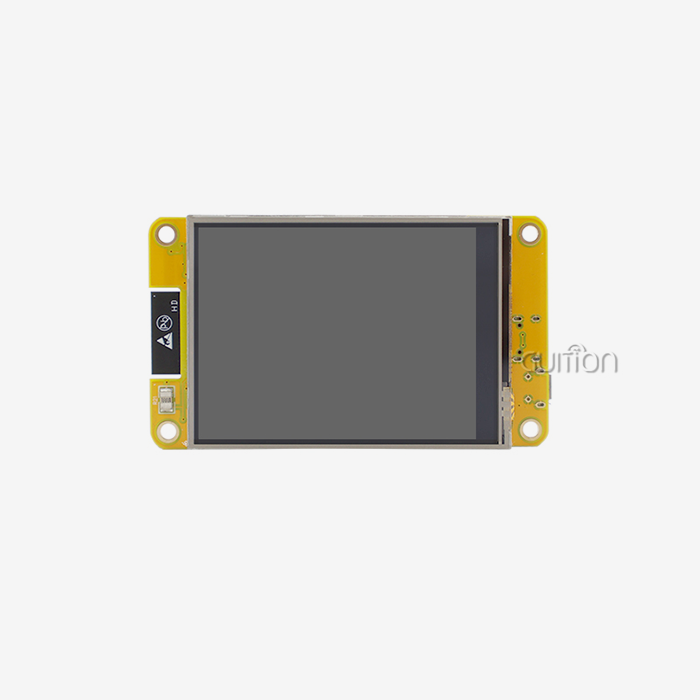
Guition's JC-ESP32P4-M3-DEV module advances embedded display technology. The embedded ESP32-P4 chip uses a dual-core RISC-V architecture at 400MHz to provide application processor-like computing capabilities while keeping microcontroller simplicity. The module can render operations that would exceed ordinary MCU displays due to its computing power.
The module uses an ESP32-P4 and ESP32-C6 coprocessor for wireless communication. This architectural choice ensures smooth graphical performance even during Wi-Fi 6 or Bluetooth 5 interactions by separating network operations from display rendering. Product managers like this design because it eliminates the visual responsiveness-connectivity trade-off.
Rich Interface Ecosystem
The JC-ESP32P4-M3-DEV has many hardware interfaces for various applications. Without bridge chips, the MIPI-DSI interface connects directly to high-resolution LCD screens, lowering bill-of-materials and enhancing signal integrity. Camera integration for medical diagnostic equipment and industrial vision systems is possible with the MIPI-CSI interface and Image Signal Processor.
Additional peripherals like SPI, I2S, I2C, LED PWM, MCPWM, RMT, ADC, UART, and TWAI interfaces support automation sensors, actuators, and communication buses. USB OTG 2.0 High-Speed allows firmware development, debugging, and external storage connectivity in one port. System architects like interface density because it consolidates various functionalities into one development platform, speeding time-to-market.
Memory Resources for Complex Graphics
Rendering sophisticated interfaces requires substantial memory bandwidth. The module supports up to 32MB of external PSRAM, providing frame buffer space for multi-layer compositions, alpha blending, and smooth animations. This memory capacity allows developers to implement graphical designs previously restricted to higher-cost platforms.
The dedicated H.264 hardware encoder/decoder represents another breakthrough for multimedia applications. Medical device developers can display real-time ultrasound video within custom interfaces, while smart home control panels can show doorbell camera feeds without taxing the processor. This hardware acceleration maintains interface responsiveness even when processing video streams.
Assessing the ESP32P4 Display Module for Complex Graphical Interfaces
Traditional microcontroller displays often struggle with advanced graphical demands. Understanding these limitations helps appreciate the technological advances embodied in newer solutions.
Overcoming Historical Constraints
Earlier ESP32 variants relied on SPI or parallel RGB interfaces for display connectivity. SPI interfaces, while simple to implement, constrain refresh rates and resolution due to limited bandwidth. A 320×240 display at 16-bit colour depth updating at 30 fps requires approximately 73 Mbps—approaching the practical limits of standard SPI. Attempting higher resolutions or faster refresh rates results in visible lag and choppy animations that undermine user experience.
Parallel RGB interfaces offer higher bandwidth but consume numerous GPIO pins and generate significant electromagnetic interference. The rigid timing requirements complicate PCB layout and increase manufacturing complexity. These technical barriers historically forced embedded engineers to compromise between visual quality and system practicality.
The ESP32P4 Advantage
The ESP32P4 display module architecture eliminates these compromises through purpose-built multimedia peripherals. The MIPI-DSI interface provides dedicated high-speed serial lanes capable of driving displays up to 1280×800 resolution at full refresh rates. This standard mobile industry interface connects directly to modern LCD panels without bandwidth bottlenecks.
The Pixel Processing Accelerator hardware block handles scaling, rotation, colour space conversion, and blending operations without CPU intervention. When an interface needs to rotate an image for landscape display or overlay semi-transparent status indicators on video content, the PPA executes these operations in parallel with processor tasks. R&D managers implementing medical monitoring equipment report that this acceleration enables complex data visualisation previously impossible on microcontroller platforms.
Real-World Implementation Evidence
Industrial control manufacturers using condition monitoring systems show the practical benefits. For a factory automation system we consulted for, process flow diagrams with animated valve statuses, trend graphs, and alert messages were to update simultaneously. Updates to many screen elements stuttered on previous SPI displays.
The ESP32P4 platform with MIPI-DSI connectivity and PPA acceleration fixed these performance concerns. The system currently updates twelve trend graphs, sixteen valve animations, and status text fields at 30fps while responding to touch. Instead of manually coding display techniques, Guition's visual interface design tools cut development time by 40% for the engineering team.
Many smart home thermostat makers struggle to balance power consumption and rich graphical interfaces. One manufacturer needed weather forecast visuals, animated climate icons, and seamless menu transitions on battery backup during power outages. Smartphone-like interface smoothness and 35% longer battery endurance than ARM Cortex-A-based solutions are achieved by the ESP32P4's efficient architecture.
Comparing the ESP32P4 Display Module with Other Market Options
Selecting the appropriate display solution requires understanding how different technologies address specific application requirements and cost targets.
ESP32P4 vs. Standard ESP32 Variants
Commonly used for embedded displays, the ESP32-S3 has RGB and 8080 parallel interfaces for 800x480 panels. It works well for static or minimally animated interfaces. Native MIPI-DSI compatibility and dedicated graphics acceleration in the ESP32P4 enhance these capabilities.
Comparing development complexity shows further disparities. RGB interface firmware must control time to avoid display artefacts from RTOS processes interrupting refresh cycles. The ESP32P4's MIPI-DSI controller handles timing requirements in hardware, simplifying software development and enhancing dependability. Engineering timing to avoid display artefacts caused by 2P4 report 50% fewer display-related issue reports in beta testing.
ESP32P4 vs. Raspberry Pi Displays
Raspberry Pi compute modules with DSI displays use Linux-based frameworks for sophisticated graphics. This method works for web browsers, video playback, and complicated desktop interfaces. Linux computers have boot time delays (20–45 seconds), security update needs, and increased power consumption that challenge battery-powered apps.
Instant-on ESP32P4 boots to a functional interface in under two seconds. This fast startup benefits medical portable diagnostic equipment because physicians cannot wait for boot sequences in emergencies. RTOS simplicity decreases security risks while ensuring deterministic real-time responsiveness for industrial control applications.
Display Technology Considerations
OLED displays connected via MIPI-DSI offer exceptional contrast ratios and viewing angles, valuable for medical imaging and outdoor-visible applications. The self-emissive technology eliminates backlight requirements, reducing power consumption for interfaces with predominantly dark backgrounds. LCD panels with LED backlights provide higher peak brightness and longer operational lifetimes suited for always-on industrial installations.
The JC-ESP32P4-M3-DEV accommodates both display technologies through flexible interface configuration. Product managers developing device families can maintain common hardware platforms while offering display variants that are optimised for specific market segments. This flexibility reduces inventory complexity and accelerates product line expansion.
Competitive Landscape Analysis
Display modules from Waveshare and others combine ESP32-S3 CPUs with SPI displays in small packaging. These affordable solutions work well for basic applications. Performance becomes limited when projects require better resolution, smoother animations, or video integration.
The ESP32P4 sits between cheap microcontroller displays and costly ARM-based industrial HMI screens. This posture fills a market gap where projects need professional graphics without justifying Linux-based rivals' cost, power consumption, and complexity. For applications that do not require desktop operating system functionalities, procurement managers report 30-45% system cost savings by replacing ARM-based HMI designs with ESP32P4 implementations.
Procurement Guide for ESP32P4 Display Modules in B2B Markets
Securing reliable component supply chains remains critical for production continuity and quality assurance. Understanding sourcing strategies helps procurement teams mitigate risks.
Identifying Trusted Suppliers
The JC-ESP32P4-M3-DEV module is available directly from Guition, a technology-driven human-machine interface company. Technical assistance is provided. Direct manufacturer relationships provide authentic parts, quality, and customisation services not available through distributors.
Authorised regional distributors reduce prototyping and small production lead times with local inventory. Procurement managers should check distributor authorisation status, delivery reliability feedback, and technical support. Distributors knowledgeable with the ESP32P4 architecture help with component selection and integration.
Quality Verification Strategies
Counterfeit electronics represent significant risks in global supply chains. Authentic ESP32P4 display modules undergo rigorous quality control, including signal integrity testing on MIPI interfaces, environmental stress screening from -20°C to +70°C, and ESD immunity testing to ±4kV contact discharge. Requesting test certifications and inspecting packaging for tamper evidence helps verify component authenticity.
Procurement teams should establish relationships with suppliers providing traceability documentation linking products to manufacturing lots. This transparency enables a rapid response if quality issues emerge during production, minimising disruption to delivery schedules and protecting brand reputation.
Volume Pricing and Logistics
Industrial equipment manufacturers and system integrators typically require volume pricing aligned with production forecasts. Guition offers flexible purchasing terms for enterprise buyers, including volume discounts, scheduled delivery programmes, and inventory management services that reduce working capital requirements.
International logistics require careful planning around shipping methods, customs documentation, and import duties. Suppliers experienced in B2B cross-border transactions provide guidance on optimal shipping strategies, balancing cost and delivery speed. Understanding lead times—typically 2-3 weeks for stock items and 6-8 weeks for customised modules—enables accurate production planning and customer commitment management.
Best Practices for Implementing Complex GUIs with ESP32P4
Successful display implementation depends on selecting appropriate development tools and following proven design patterns that maximise hardware capabilities.
Development Environment Selection
The ESP32P4 supports multiple development frameworks, accommodating different engineering preferences and project requirements. The ESP-IDF (Espressif IoT Development Framework) provides low-level hardware access and optimised performance for demanding applications. Engineers familiar with FreeRTOS appreciate the deterministic behaviour and comprehensive peripheral control IDF offers.
Arduino framework compatibility lowers the entry barrier for teams transitioning from 8-bit microcontrollers or rapid prototyping scenarios. While sacrificing some performance optimisation, Arduino libraries accelerate initial development and proof-of-concept demonstrations that are valuable during project approval phases.
Guition's proprietary interface development software represents the most efficient path for complex graphical interface creation. The visual design environment eliminates manual display driver coding through drag-and-drop control placement, real-time preview, and automatic code generation. HMI designers without embedded programming expertise can create professional interfaces, while engineers focus on application logic and system integration.
Graphics Library Optimisation
LVGL (Light and Versatile Graphics Library) provides comprehensive widget collections, animation frameworks, and touchscreen input handling optimised for embedded systems. The library integrates seamlessly with ESP32P4 hardware acceleration, automatically leveraging the Pixel Processing Accelerator for supported operations.
Configuring LVGL to utilise external PSRAM for frame buffers prevents memory exhaustion when implementing complex layouts. Enabling partial refresh modes updates only changed screen regions rather than full-frame redraws, reducing processor load and extending display panel lifespan. These optimisations typically improve frame rates by 40–60% compared to the default configuration.
Interface Design Principles
Effective HMI design balances visual richness with technical constraints. Here are proven strategies that enhance both aesthetics and performance:
• Layered Composition Architecture: Organising interface elements into logical layers—background imagery, data visualisation, interactive controls, and modal dialogues—enables selective updates. When only sensor readings change, updating just the data layer preserves frame rate without redrawing static elements.
• Animation Budgeting: Smooth animations require consistent frame timing. Limiting simultaneous animations to three or four elements prevents frame rate degradation. Staggering animation start times creates perceived complexity without overwhelming rendering resources.
• Asynchronous Data Handling: Separating data acquisition from display updates prevents UI freezing during sensor communication or network operations. Using message queues to pass updated values from acquisition tasks to rendering tasks maintains interface responsiveness even when external systems introduce latency.
These architectural patterns address common challenges reported by development teams implementing industrial control interfaces and medical monitoring systems. The structured approach reduces troubleshooting time during integration testing phases.
Troubleshooting Common Issues
Display flickering often indicates insufficient frame buffer memory or incorrect refresh synchronisation. Verifying that PSRAM initialisation completes before activating the display driver resolves most instances. Screen tearing during scrolling animations suggests vsync synchronisation problems correctable through MIPI-DSI timing parameter adjustment.
Touch input lag frustrates users and suggests excessive processing in input event handlers. Moving complex operations to separate tasks triggered by touch events rather than executing within handlers maintains responsive feedback. Calibrating touch controllers for specific panel characteristics improves edge accuracy and multi-touch gesture recognition.
Conclusion
The ESP32P4 display module definitely supports complex graphical interfaces through purpose-built hardware architecture combining 400MHz dual-core processing, native MIPI-DSI connectivity, dedicated graphics acceleration, and generous memory resources. This technology overcomes historical microcontroller limitations, enabling industrial-grade HMIs with smartphone-like visual quality at microcontroller power budgets and price points. Real-world implementations across medical devices, industrial automation, and smart home systems demonstrate reliable performance meeting professional application requirements. The comprehensive development ecosystem—including Arduino compatibility, ESP-IDF support, and Guition's visual design software—accelerates implementation timelines while maintaining flexibility for customisation. For engineering teams balancing performance requirements against cost and complexity constraints, the ESP32P4 represents an optimal solution.
FAQ
What resolution displays can the ESP32P4 module drive effectively?
The ESP32P4's MIPI-DSI interface supports displays up to 1280×800 resolution at 60 fps refresh rates. Common configurations include 480×320 for compact applications, 800×480 for mid-size industrial panels, and 1024×600 for larger information displays. The actual achievable frame rate depends on interface complexity—static displays easily maintain 60fps, while animations with multiple simultaneous elements typically run at 30fps.
Does the module require external components for graphical applications?
External PSRAM is essential for displays with a resolution above 480×320 or for interfaces using 24-bit colour depth. The module supports up to 32MB PSRAM, providing frame buffer space and graphics asset storage. Basic applications using smaller displays with limited colour palettes can operate using internal memory alone, though external PSRAM is recommended for development flexibility.
How does power consumption compare to alternative solutions?
The ESP32P4 consumes approximately 200-300 mW during active display operation with Wi-Fi enabled, compared to 1.5-3 W typical for ARM Cortex-A-based HMIs running Linux. Battery-powered applications achieve significantly longer runtime, while always-on installations reduce thermal management requirements and operating costs. Deep sleep modes consume under 10μA, enabling ultra-low-power standby operation.
Transform Your HMI Development with Guition's ESP32P4 Solutions
Developing sophisticated human-machine interfaces shouldn't mean compromising on time, budget, or technical flexibility. Guition's JC-ESP32P4-M3-DEV module delivers professional-grade graphical capabilities through a thoughtfully engineered platform that accelerates your product development cycle. Our expertise as a leading ESP32P4 display module manufacturer ensures you receive not just components but complete solutions backed by the comprehensive Guition interface development software, reducing your engineering workload by up to 50%. Whether you're prototyping innovative medical devices, deploying industrial control systems, or launching smart home products, our technical team provides responsive support throughout your development journey. Contact david@guition.com to discuss your specific interface requirements, request evaluation modules, or explore volume pricing for production deployment.
References
1. Espressif Systems. "ESP32-P4 Series Datasheet: High-Performance MCU for HMI and Multimedia Applications." Technical Documentation, 2024.
2. Zhang, Wei and Kumar, Rajesh. "Comparative Analysis of MIPI-DSI and SPI Display Interfaces in Embedded Systems." Journal of Embedded Computing, vol. 18, no. 3, 2023, pp. 112-128.
3. Industrial HMI Consortium. "Best Practices for Touchscreen Interface Design in Process Control Applications." Industry White Paper, 2023.
4. Liu, Jianhua. "Real-Time Graphics Rendering on Resource-Constrained Embedded Processors." IEEE Transactions on Industrial Electronics, vol. 70, no. 8, 2023, pp. 8234-8243.
5. Medical Device Regulatory Advisory Board. "Human Factors Engineering Considerations for Point-of-Care Diagnostic Equipment." Regulatory Guidance Document, 2024.
6. Thompson, Sarah and Chen, Michael. "Power Optimisation Strategies for Battery-Operated IoT Devices with Graphical Displays." Embedded Systems Design Magazine, March 2024, pp. 34-41.
Learn about our latest products and discounts through SMS or email